Blog

  • Atiku Raises Alarm Over IMF Report That ₦8.8 Trillion In Public Expenditures Is Unrecorded

    Atiku Raises Alarm Over IMF Report That ₦8.8 Trillion In Public Expenditures Is Unrecorded


    –  Says Tinubu-led APC Administration is Amassing Equivalent of 2% of Nigeria’s GDP as 2027 Election War Chest, While Nigerians Starve


    By Bassey Asuquo

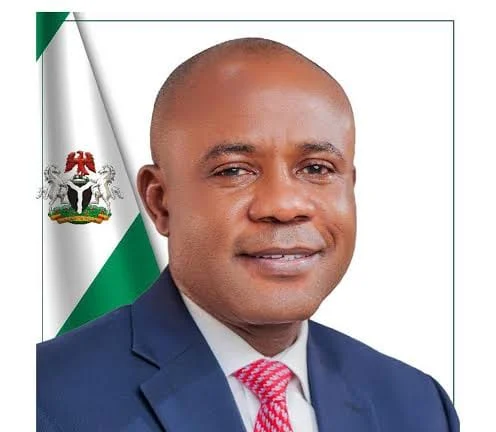
    Abuja (Flowerbudnews):  The Atiku Abubakar
    Presidential candidate of the African Democratic Congress (ADC) and former Vice President of Nigeria, Alhaji Atiku Abubakar has raised Atiku Raises Alarm Over alleged IMF Report That ₦8.8 Trillion In Public Expenditures Is Unrecorded

    Atiku raised the alarm in a press statement personally signed by him and made available to Newsmen on Saturday in Abuja.


    Atiku wrote:
    My attention has been drawn to a deeply troubling report by the International Monetary Fund, published on July 1, 2026 by Reuters, which reveals that the Tinubu-led APC administration failed to record public expenditures amounting to approximately 2 percent of Nigeria’s Gross Domestic Product in recent official budgets. At the current valuation of Nigeria’s economy at approximately ₦441.5 trillion, this figure translates to a staggering ₦8.8 trillion in public funds spent entirely outside the statutory framework of Nigeria’s official budget documents, unaccounted for, unaudited, and hidden from the Nigerian people.

    I view this revelation with the gravest alarm and call upon all Nigerians – the media, civil society, the National Assembly, and every democratic institution in this country – to set aside every distraction and direct their full attention to what is, by any reasonable standard, the most consequential act of fiscal impunity in Nigeria’s recent democratic history.

    A pattern of conduct, not an isolated incident, the IMF’s latest Article IV consultation, articulated by its resident representative in Nigeria, Christian Ebeke, confirmed that this staggering discrepancy arises from large-scale government projects executed entirely off-budget. Let us be absolutely clear about what this means: The Tinubu administration is awarding multi-trillion naira contracts, moving massive public capital, and commissioning infrastructure projects entirely beyond the reach of the Auditor-General, the nation’s procurement laws, and the legitimate oversight of the National Assembly. It is a parallel fiscal universe, one governed by executive whim, shielded from the constitutional accountability that the Nigerian people are owed.

    This conduct follows a pattern that is unmistakably familiar to anyone who has studied the fiscal governance of Lagos State under Bola Ahmed Tinubu as Governor. For years, Tinubu operated what has become widely known as the Alpha Beta arrangement, a revenue management structure under which between 10 and 30 percent of Lagos State’s internally generated revenue disappeared into private pockets before it was ever captured in the official budget. Revenues were siphoned at the point of collection, before they could be subjected to legislative appropriation, public scrutiny, or statutory accountability. The money simply vanished upstream, and what arrived in the treasury was already a fraction of what Lagosians had paid.

    What the IMF has now documented at the federal level is that same Lagos playbook, replicated at national scale and with national consequences. The man who perfected the art of the off-budget economy in Lagos has brought that “Beta” form to Abuja, and the price is being paid by 220 million Nigerians.

    This shadow economy does not operate only through unrecorded expenditures. It also operates through illegal extractions. We draw the attention of Nigerians to the ₦800 billion that has been illegally deducted from the statutory allocations of state governments, funds belonging to the federating units of this republic, unlawfully withheld and diverted without the authorisation of the National Assembly, without a court order, and without any constitutional basis whatsoever.

    State governments across Nigeria under the aegis of the Progressives Governors Forum have had their allocations raided to fund projects and purposes that have never been disclosed to the Nigerian public. We state clearly and without equivocation that this ₦800 billion, combined with the ₦8.8 trillion in unrecorded federal expenditures, points unmistakably to the construction of a massive, multi-source political war chest being assembled ahead of the 2027 general elections.

    When a government operates a secret treasury of this scale at precisely the moment it needs to purchase electoral outcomes, the conclusion is not difficult to reach. The Tinubu administration is not reforming Nigeria’s economy. It is financing its own political survival with money that belongs to the Nigerian people.

    The recent public controversy over the ₦1.3 billion inserted into the 2026 Federal Budget for the so-called Presidential Foreign Intervention Promotion Council, an agency the administration itself was forced to acknowledge did not exist, is now rendered far less surprising in this broader context. When a government can move ₦8.8 trillion in public money entirely outside its own official bookkeeping, the boundary between what exists and what is a phantom, between what is appropriated and what is stolen, ceases to have any practical meaning. The ghost agency and the shadow budget are not separate scandals. They are two expressions of the same governing philosophy: that public money belongs to those in power, to be deployed as they see fit, beyond the reach of the law and the knowledge of the public.

    The moral obscenity at the heart of this scandal demands to be named plainly. For three years, the Tinubu administration has subjected ordinary Nigerians to an unrelenting programme of economic austerity without precedent in our democratic era. The removal of the fuel subsidy, executed without preparation, without social safety nets, and without honest public accounting of the savings, detonated the cost of living across every stratum of Nigerian society. The Naira has been serially devalued, wiping out the purchasing power of workers, traders, small business owners, and pensioners. Interest rates have been driven to levels that have effectively shut small and medium enterprises out of the credit market, strangling the productive base of the economy and accelerating unemployment at a time when Nigeria’s youth population is growing faster than any other demographic on earth.

    Nigerians have been told, repeatedly and firmly, that the treasury is empty, that there is no alternative to the pain being administered, and that sacrifice today is the price of prosperity tomorrow. The government has borrowed at punishing interest rates on international markets, adding to a debt burden that will constrain the fiscal choices of Nigerian governments for a generation, all the while telling the public that every kobo of expenditure is being carefully accounted for and prudently managed.

    The IMF has now exposed that narrative as a big fat lie. While the poor were told to bleed, the government maintained access to a ₦8.8 trillion shadow treasury, entirely outside public view, entirely beyond legislative oversight, and entirely at the disposal of those who hold executive power. The interest rates crushing Nigerian businesses, the weak Naira destroying Nigerian savings, and the economic stagnation hollowing out Nigerian households are not the unavoidable consequences of global headwinds. They are, at least in part, the direct result of a government that has removed from the productive economy ₦8.8 trillion that should have been transparently appropriated, competitively allocated, and deployed in ways that create jobs, reduce the cost of capital, and strengthen the naira. This explains why contractors are owed and civil servants are not paid their salaries.

    I wish to place this figure in concrete human terms. In the 2023 presidential election, I presented to Nigerians a comprehensive economic recovery programme anchored on a $10 billion stimulus package, an intervention designed to recapitalise the productive economy, restore exchange rate stability, reduce the cost of borrowing for Nigerian businesses, and create millions of jobs across the agricultural, manufacturing, and technology sectors. Critics and supporters of the Tinubu administration dismissed that proposal as ambitious, even unrealistic, asking where the resources would come from. The IMF has now answered that question. ₦8.8 trillion, the equivalent of approximately $5.5 billion at current exchange rates, was available. It was not unavailable. It was not non-existent. It was simply being spent in the dark, by unaccountable hands, on undisclosed purposes, beyond the reach of the Nigerian public and their elected representatives. Had that money been transparently appropriated and deployed as part of a structured economic stimulus programme, Nigerian businesses would not be drowning in 35 percent interest rates. The naira would not be trading at levels that make the importation of basic inputs prohibitively expensive for manufacturers. Unemployment would not be at the catastrophic levels that are fuelling insecurity, emigration, and social despair across every geopolitical zone of this country.

    The poverty of Nigerian citizens today is not fate. It is policy, or more precisely, it is the consequence of the absence of transparent, accountable, productive economic policy, replaced by the private management of public resources for political purposes under the Tinubu-led APC administration.

    I hereby demand the following immediate actions from all relevant institutions:
    One, the National Assembly must convene emergency investigative hearings on the IMF’s findings without further delay. The revelation of ₦8.8 trillion in unrecorded public expenditures is a constitutional emergency, not a matter to be managed through ministerial press conferences or diplomatic qualifications.

    Two, the Auditor-General of the Federation must be immediately empowered and directed to conduct a full, independent audit of all off-budget expenditures referenced in the IMF’s Article IV consultation, and those findings must be published in their entirety and placed in the public domain without redaction.

    Three, the Federal Government must provide a full and transparent public account of every Naira spent outside the official budget, identifying every project, every contractor, every procurement process followed, and every individual who authorised and benefited from these transactions.

    Four, the Federal Government must immediately restore to state governments the ₦800 billion unlawfully deducted from their statutory allocations and provide a complete account of how those funds were deployed.

    Five, the Economic and Financial Crimes Commission, the Independent Corrupt Practices and Other Related Offences Commission, and every relevant law enforcement and anti-corruption agency must open formal investigations into both the unrecorded expenditures and the unlawful deductions from state allocations, independent of any political direction from the Presidency.

    Six, Nigeria’s civil society, the professional community, the business sector, and the international community, particularly the international financial institutions whose credibility is implicated when their findings are ignored, must respond to this disclosure with the urgency it demands.

    A government that governs in secret spends in secret. A government that spends in secret does not govern, it plunders. The Tinubu administration has been exposed, not by its political opponents and not by partisan advocacy, but by the International Monetary Fund, the most authoritative multilateral financial institution in the world, whose Article IV consultations carry the full weight of international economic credibility. The evidence is on the record. The figures are not in dispute.

    The only question that now confronts every Nigerian citizen, every elected representative, and every democratic institution in this republic is whether we will summon the collective will to demand accountability, or whether we will allow ₦8.8 trillion in unrecorded public expenditure, built on the same architecture of fiscal concealment that defined Lagos under Tinubu to become the accepted, unremarkable condition of governance in Nigeria.

    We will not accept it. And we call on every Nigerian who believes in the integrity of the public treasury, the sovereignty of the Nigerian people over their own resources, and the future of this republic to refuse to accept it as well.

    (Atiku Abubakar
    Presidential candidate of the African Democratic Congress and Vice President of Nigeria, 1999-2007 Abuja 04 July 2026.)

  • NAFDAC DG Reaffirms Commitment to Combating Drug Abuse, Illicit Trafficking

    NAFDAC DG Reaffirms Commitment to Combating Drug Abuse, Illicit Trafficking


    .(NADAC DG Representative, Dr. Timothy Bamgnose speaking at the event)


    By Biola Lawal
    Abuja (FLOWERBUDNEWS): NAFDAC Director General, Prof. Mojisola Adeyeye has reaffirmed the Agency’s commitment to combating drug abuse to further enhance and protect public health.

    Prof. Adeyeye said that the NAFDAC would continue to work hard to prevent the misuse of controlled medicines by strengthening regulatory measures against illicit drug trafficking.

    The NAFDAC Boss gave the assurance in a goodwill message at the NAFDAC event held to commemorates the 2026 International Day Against Drug Abuse and Illicit Trafficking (World Drug Day).

    Prof. Adeyeye, who was represented by her Technical Assistant, Dr. Timothy Bamgbose, said this year’s theme, “The World Drug Problem: Persisting Issues, New Challenges, Innovative Responses,” highlighted the need for stronger collaboration and innovative approaches to address the evolving threats posed by drug abuse and illicit trafficking.

    She noted that the proliferation of synthetic drugs, the misuse of pharmaceutical products, increasingly sophisticated trafficking networks, and the exploitation of digital platforms require intelligence-driven regulation, enhanced surveillance, public awareness, and coordinated stakeholder action.

    Prof. Adeyeye reiterated NAFDAC’s commitment to strengthening regulatory oversight, preventing the diversion and misuse of controlled medicines.

    She also reaffirmed NAFDAC commitment to ensuring access to safe medicines for legitimate medical and scientific purposes.

    She urged government institutions, healthcare professionals, educational institutions, community leaders, civil society organisations, families, and young people to work together in promoting prevention, early intervention, treatment, rehabilitation, and evidence-based regulatory solutions to build healthier, safer, and drug-free communities.

    A social media user, commended NAFDAC describing the NAFDAC advocacy event Initiative as ”impressive”, urging: ”I wish this can also be done across universities in Nigeria”. (FLOWERBUDNEWS)


  • ADC Demands Full Probe of Gbajabiamila, Others Over PFIPC Alleged Scandal

    ADC Demands Full Probe of Gbajabiamila, Others Over PFIPC Alleged Scandal


    The African Democratic Congress (ADC) has called for a comprehensive investigation into the controversy surrounding the Presidential Foreign Intervention Promotion Council (PFIPC), releasing a detailed list of government officials, agencies and institutions it believes should be scrutinised over the matter.

    In a statement issued on Friday by the party’s National Publicity Secretary, Mallam Bolaji Abdullahi, the ADC argued that the scandal has raised serious concerns about transparency, accountability and national security under President Bola Tinubu’s administration.

    The party said it had reviewed the Presidency’s July 1 response, delivered by the Special Adviser on Information and Strategy, Bayo Onanuga, but maintained that the explanation failed to address critical issues.

    According to the ADC, while the Presidency described PFIPC as a non-existent organisation, evidence suggests it allegedly interacted with government ministries, public institutions and foreign diplomats, receiving official recognition despite its disputed status.

    The opposition party insisted the controversy extends beyond allegations against one individual and now affects the credibility of government institutions.

    It therefore demanded the establishment of an independent Judicial Panel of Inquiry to uncover the truth.

    The ADC wants the following officials and institutions investigated:

    1. Chief of Staff to the President, Femi Gbajabiamila, over documents allegedly issued from his office and claims that Prince Adeniyi Adeyemi paid bribes ranging from N200 million to N600 million.

    2. Prince Adeniyi Adeyemi, to determine his role in establishing and promoting PFIPC, verify the authenticity of documents he used, and investigate his claims of making payments to senior government officials.

    3. Secretary to the Government of the Federation, George Akume, to clarify whether PFIPC received any official approvals or documentation.

    4. Head of the Civil Service of the Federation, Didi Esther Walson-Jack, to explain reports that over 300 civil servants were recruited into an organisation now described as fictitious.

    5. Director-General of the Budget Office, Tanimu Yakubu, to account for how PFIPC allegedly appeared in the 2026 Appropriation Act with a multi-billion-naira allocation.

    6. Federal Ministry of Foreign Affairs, over PFIPC’s reported interactions with foreign diplomats.

    7. Office of the National Security Adviser, to explain why the alleged activities were not detected sooner.

    8. Department of State Services (DSS) and Nigeria Police Force, to account for their investigations and whether earlier intervention could have prevented the alleged operations.

    9. Office of the Accountant-General of the Federation and the Central Bank of Nigeria (CBN), over allegations that public funds may have been accessed by the organisation using forged documents.

    10. National Assembly oversight committees, including the Senate and House Appropriations Committees, the Senate Committee on Anti-Corruption and Financial Crimes, and the House Committee on Treaties, Protocols and Agreements, to explain why official correspondence and invitations were allegedly sent to PFIPC.

    The ADC argued that Nigerians deserve clear answers on how the organisation reportedly secured recruitment approvals, budget allocations, diplomatic engagements and official correspondence if it never legally existed. Conversely, if PFIPC was legitimate, the party questioned why the Presidency denied its existence.

    The party further accused the Tinubu administration of applying double standards, claiming political opponents are swiftly investigated while senior government officials linked to the scandal have not been asked to step aside.

    It warned that if the current administration fails to conduct a transparent probe, an ADC-led government would revisit every approval, financial transaction, budget allocation and official decision connected to the PFIPC controversy, insisting that no individual would be exempt from accountability.

  • Cleric lauds NDLEA for intercepting illicit drugs, dismantling criminals network

    Cleric lauds NDLEA for intercepting illicit drugs, dismantling criminals network

    By Salisu Sani-Idris

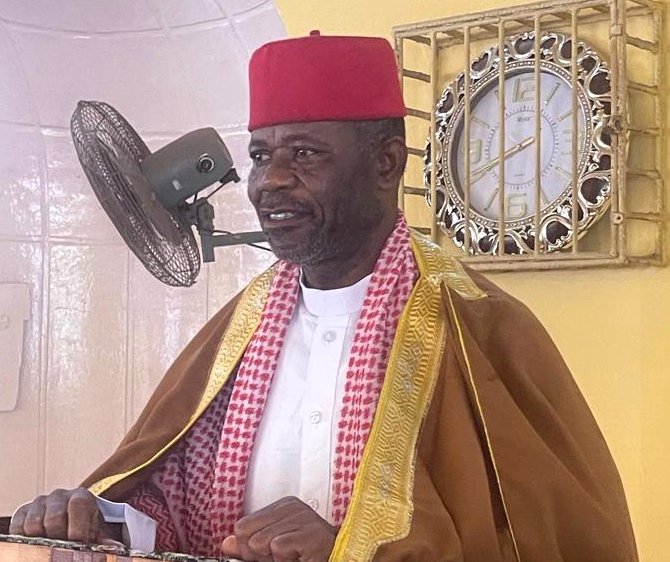
    An Abuja Based Islamic Cleric, Yahya Al-Yolawi, has commended the National Drug Law Enforcement Agency (NDLEA) for
    intercepting large quantities of illicit drugs and dismantling criminal drug networks.
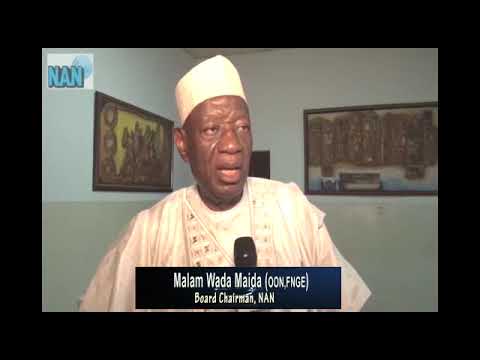
    Al-Yolawi, who is the Chief Imam of Area 10 Jumu’ah Mosque, Garki, Abuja, made the commendation in an interview with the News Agency of Nigeria (NAN), on Saturday.
    The News Agency of Nigeria (NAN) reports that the Nigeria Customs Service (NCS) and NDLEA intercepted nine containers of illicit drugs worth N53.39billion at Apapa Port following joint intelligence operations.
    The cleric said that NDLEA and other agencies have continued to play a vital role in combating drug trafficking, preventing drug abuse, and rescued victims of addiction through rehabilitation programmes.
    Al-Yolawi also applauded the NDLEA for improving public awareness on the dangers of illicit drugs.
    “The agency has recorded significant successes in intercepting large quantities of illicit drugs, dismantling criminal drug networks, and prosecuting offenders.
    “NDLEA has expanded drug prevention campaigns in schools, communities, airports, seaports, and border areas.
    ” These efforts contribute to protecting our youth and strengthen the security and well-being of our nation.
    “We commend the dedication and sacrifices of the Chairman of NDLEA, retired Brig.-Gen. Buba Marwa, and all personnel of the agency, as well as other security agencies working tirelessly to safeguard our nation. “
    The cleric urged all Nigerians to cooperate with lawful authorities in promoting righteousness, preventing crime, and protecting society from every form of evil.
    “Intoxicants and drug abuse are among the greatest threats to our religion, our families, our health, and our future.
    ” They destroy faith, damage the body, weaken the mind, increase crime, break homes, and rob young people of their potential.
    “Let every one of us resolve today to protect ourselves, our families, and our communities.”
    “Parents should remain vigilant, teachers should continue to educate, scholars should continue to advise, leaders should continue to lead with justice, and young people should choose the path of righteousness.”
    NAN recalls that the NCS Comptroller-General, Bashir Adeniyi, had on Wednesday in Lagos disclosed the seizures of cannabis sativa, codeine syrup, tramadol and expired pharmaceuticals concealed inside vehicles, spare parts, and household items.
    Adeniyi stated the operation followed painstaking intelligence gathering, scanning analysis, physical examination and collaboration with NDLEA.
    (NAN)
    (www.nannews.ng)

  • Court orders final forfeiture of N150m linked to Rep Nicholas Mutu

    Court orders final forfeiture of N150m linked to Rep Nicholas Mutu


    The Federal High Court in Abuja has ordered the final forfeiture of N150 million linked to a member of House of Representatives, Rep Nicholas Mutu, to the Federal Government.

    Justice Joyce Abdulmalik granted the order on Thursday while delivering a ruling on a motion for final forfeiture moved by counsel to the Economic and Financial Crimes Commission (EFCC), Ekele Iheanacho, SAN.

    The News Agency of Nigeria (NAN) reports that the application was brought pursuant to Section 44(2) of the 1999 Constitution and Section 17 of the Advance Fee Fraud Related Offences Act, 2006.

    The court had earlier granted an interim order and also directed the publication of the order in a national newspaper.

    Iheanacho told Justice Abdulmalik that the anti-graft agency had complied with the order of court by publishing the interim forfeiture order in a national daily.

    The senior lawyer said after the publication was made, no sufficient cause was shown why the funds under the interim forfeiture should not be finally forfeited to the Federal Government.

    After considering the application, the objections, and various affidavits filed by counsel to Mutu and his company, Airworld Technologies Ltd, the judge held that the commission’s motion had merit.

    She, thereafter, ordered the final forfeiture of the said funds to the Federal Government of Nigeria.

    The EFCC had presented the findings of its investigation to the court which revealed that Mutu, who represents Bomadi/Patani Federal Constituency of Delta, had agreed and received as kickbacks totalling the sum of N400, 159, 689.63.

    The fund was said to have been received from a Niger Delta Development Commission (NDDC) consultant (Starline Consultancy Services), while serving as the House of Representatives chairman on NDDC.

    The funds were said to have been received and laundered through the Heritage Bank accounts of the lawmaker’s companies; Airworld Technologies Ltd and Oyien Homes Ltd.

    According to EFCC, Mutu, a six-term member of the lower house, is not just a director in these companies, he maintains the highest shares in the companies while the other sharesholders and directors are his wife and members of his immediate family.

    The NDDC consultant had approached Mutu’s committee to assist them recover debts owed by oil and gas companies operating in the Niger Delta region.

    The consultant had sought the assistance of the House committee to use its powers to compel the oil and gas companies to pay up their debts.

    Following the intervention of Mutu’s committee, in this regard, the oil and gas companies were invited to the House where the consultant were able to meet with them and reconciled figures.

    The committee issued payment demands notices to the companies and eventually, over N100 billion, was recovered for NDDC.

    While the consultant received their fees, Mutu’s companies received part of the funds.

    While the EFCC’s investigation was ongoing, the lawmaker was alleged to have procured the NDDC consulatnt to issue a subcontract letter to his company Airworld Technology Ltd so as to cover up the kickback payments he received.

    The commission said this was done to deceive the investigation and pervert the course of justice.

    During the investigation, Mutu was said to have returned the sum of N150 million but later claimed he did not do so voluntarily.

    He was said to have claimed that the funds received by his companies were based on lawful transactions relying on sub-contract documents.

    Delivering the judgment, Justice Abdulmalik found that the said N150 million refunded by Mutu constituted proceeds of unlawful activities.

    The judge, consequently, ordered that the money be finally forfeited to the Federal Government.

    NAN recalls that Justice Folashade Giwa-Ogunbanjo of a sister court had, recently in a money laundering charge preferred against Mutu and his company, discharged and acquitted the defendants of all the counts.

    The EFCC had, however, appealed against the judgment by Justice Giwa-Ogunbanjo.

  • Tinubu hails Adeniyi on re-election as WCO Council chair

    Tinubu hails Adeniyi on re-election as WCO Council chair


    By Muhyideen Jimoh

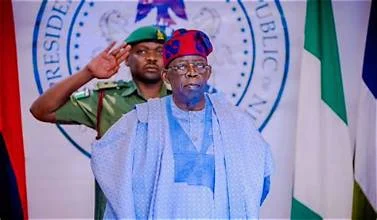
    Abuja:   President Bola Tinubu has congratulated the Comptroller-General of the Nigeria Customs Service (NCS),  Adewale Adeniyi, on his re-election as Chairperson of the World Customs Organisation (WCO) Council.

    Adeniyi was re-elected during the organisation’s 147th and 148th Council Sessions held in Brussels, Belgium.

    Tinubu described the re-election as a historic endorsement of Adeniyi’s visionary leadership and Nigeria’s growing stature in global customs administration.

    This is contained in a statement issued by Presidential Spokesperson, Mr Bayo Onanuga, on Friday in Abuja.

    The president said his recent approval of Adeniyi’s tenure extension as Comptroller-General of Customs reflected his commitment to sustaining ongoing reforms in the NCS.

    He said the overwhelming endorsement by the international customs community validated Adeniyi’s efforts at strengthening institutional capacity and modernising customs administration.

    Tinubu noted that the NCS  had recorded remarkable progress in revenue generation, trade facilitation, anti-smuggling operations, border management and stakeholder engagement under Adeniyi’s leadership.

    He also commended the Service’s technology-driven reforms, particularly the deployment of the indigenous B’Odogwu customs clearance platform.

    The president said the platform had simplified cargo clearance, reduced reliance on foreign systems, improved transparency and enhanced operational efficiency.

    He also praised the implementation of the Authorised Economic Operator Programme, expanded non-intrusive inspection technology and improved inter-agency collaboration.

    Tinubu said the reforms had strengthened the Service’s alignment with international customs standards and supported Nigeria’s competitiveness.

    “Adeniyi’s unanimous re-election is not only a personal honour, but also a recognition of Nigeria’s growing influence in global customs administration.”

    “His leadership of the Nigeria Customs Service has been marked by bold initiatives that have improved revenue generation, strengthened border security, facilitated legitimate trade and modernised customs operations through homegrown innovations such as B’Odogwu.”

    Tinubu expressed confidence that Adeniyi’s second term would deepen international collaboration and promote secure and efficient global trade.

    “I am confident that his second term at the WCO will further deepen international collaboration, promote secure and efficient global trade, and bring even greater honour to our country,” he said.

    The president wished Adeniyi strength, wisdom and success as he discharges his renewed global responsibilities while sustaining the transformation of the Nigeria Customs Service. (NAN)(www.nannews.ng)

  • Nwachukwu makes history as NIA’s first female chairperson

    Nwachukwu makes history as NIA’s first female chairperson


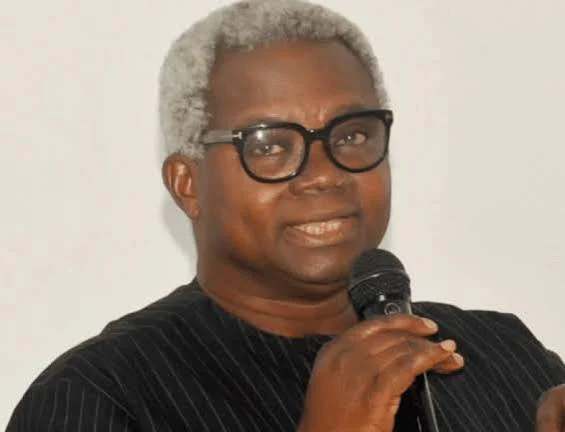
    Mrs Ebelechukwu Nwachukwu, newly inaugurated Chairperson of NIA and other dignitaries during her investiture on Friday in Lagos


    By Taiye Olayemi

    Lagos:   Mrs Ebelechukwu Nwachukwu was inaugurated on Friday as the 27th Chairperson of the Nigerian Insurers Association (NIA), becoming the first woman to lead the association in its 55-year history.

    Nwachukwu, Managing Director of Rex Insurance, assumed office during an investiture ceremony in Lagos, promising reforms aimed at strengthening public confidence and expanding insurance penetration nationwide.

    She urged insurers, brokers, agents, insurtech firms and marketers to embrace coordinated awareness campaigns instead of isolated promotional activities across the industry.

    According to her, such campaigns should align with the National Insurance Commission’s financial literacy programmes and inclusive insurance objectives to broaden insurance access nationwide.

    “I call on all insurers, brokers, agents, insurtechs and marketers to move beyond isolated campaigns and commit to coordinated industry-wide awareness initiatives,” she said.

    Nwachukwu stressed that operators must simplify insurance communication and eliminate technical language that discourages potential customers from embracing insurance products.

    “Let us replace jargon with clarity. Let us replace fear with proof. When we pay claims quickly and fairly, we do not just satisfy a customer.

    “Every paid claim is a testimony. Every testimony grows our market,” she added, describing prompt claims settlement as the industry’s strongest marketing tool.

    She also urged insurers to strengthen professional development, actuarial discipline, risk management and digital capability while making enforcement of compulsory insurance a central industry priority.

    Nwachukwu called for stronger collaboration among insurers, regulators, brokers, agents, reinsurers, banks and other financial institutions to deepen insurance penetration.

    According to her, strategic partnerships and digital distribution channels would transform insurance from a niche financial product into an everyday necessity for millions of Nigerians.

    The chairperson unveiled her administration’s A.C.E Agenda, anchored on awareness, capacity building and enforcement, to reposition Nigeria’s insurance industry for sustainable growth.

    She said the objective was transforming the sector from a low-penetration, fragmented and low-trust market into one that is trusted, accessible, high-performing and self-regulating.

    Earlier, the Commissioner for Insurance and Chief Executive Officer of NAICOM, Mr Olusegun Omosehin, congratulated Nwachukwu on her emergence as association chairperson.

    Omosehin expressed confidence that her leadership would accelerate growth, deepen professionalism and strengthen the insurance industry’s contribution to Nigeria’s economic development.

    He charged the association to provide industry leadership through prompt claims settlement, improved market discipline and greater adoption of digital innovation.

    “Every claim paid, every policy clearly explained and every customer treated fairly adds to the strength of the industry

    “My charge to the NIA is to make claims experience a market-wide priority. Let us publish our claims record. Let us compete on service.

    “Let Nigerians feel the impact of insurance,” the NAICOM boss added, urging operators to build trust through transparent claims management and outstanding customer service.

    Omosehin also called on the association to support stricter enforcement of compulsory insurance, noting that compliance protects policyholders while strengthening the industry’s credibility.

    He further urged insurers to accelerate digital adoption, making insurance products easier to access, understand and purchase through technology-driven solutions.

    Omosehin assured the association of NAICOM’s continued collaboration with operators while maintaining firm regulatory standards to build a stronger, more trusted and resilient insurance industry. (NAN) (www.nannews.ng)


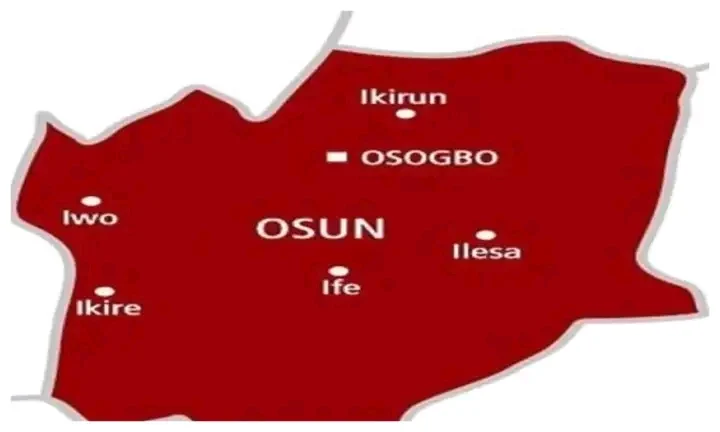
  • Osun election: I-G orders crackdown on criminals

    Osun election: I-G orders crackdown on criminals


    By Olajide Idowu
    Osogbo: Ahead of the Osun governorship election, the Inspector-General of Police, Tunji Disu, says it will no longer be business as usual for perpetrators of political violence in the state.

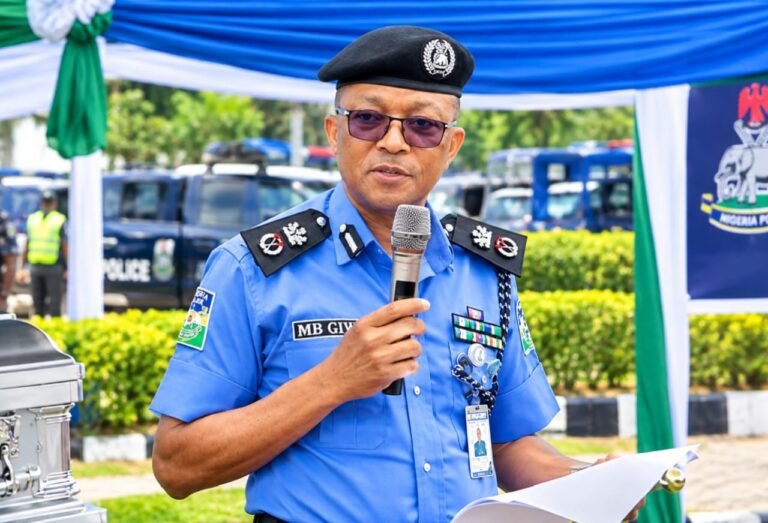
    Disu stated this at the Police Command Headquarters in Osogbo on Friday, while addressing political parties representatives and election stakeholders.

    The I-G expressed concern over the level of violence in the state in recent time.

    He, however, directed the Commissioner of Police, Ibrahim Gotan, to go after all suspects mentioned during the security engagements.

    Disu said nobody would commit crime and go scot-free, insisting that no one has the right to take another person’s life.

    He lamented that over 20 people had been killed in the past few months in the state.

    He said, “nobody will commit a crime and go scot-free. You can’t kill a person or anybody and think you can walk around freely.”

    He stated that the political parties were preparing for an election and not for war, urging them to go about their campaign peacefully.

    He said the police would provide adequate security during their campaigns.

    The News Agency of Nigeria (NAN) reports that representatives of the All Progressives Congress and Accord Party, traded accusations and counter-accusations during the meeting.

    The Independent National Electoral Commission (INEC), Resident Electoral Commissioner, Mrs Oluwatoyin Babalola, representatives of political parties and traditional rulers appreciated the efforts of the police at maintaining peace in the state. (NAN)(www.nannews.ng)

  • FRSC reaffirms commitment to road safety, calls for stronger highway safety measures

    From left to right: Dr Boboye Oyeyemi, President, Chartered Institute of Logistics and Transport; Mr Frank Nneji, founder of ABC Transport Plc and Assistant Corps Marshal, Mathew Olonisaye, Zonal Commanding Officer, Lagos Zonal Headquarters, Federal Road Safety Corps during 10th anniversary lecture of City Business News in Lagos


    FRSC reaffirms commitment to road safety, calls for stronger highway safety measures

    Lagos, June 25, 2026, The Federal Road Safety Corps (FRSC) on Thursday reaffirmed its commitment to safer highways, stronger enforcement and public education at the 10th anniversary lecture of City Business News in Lagos.
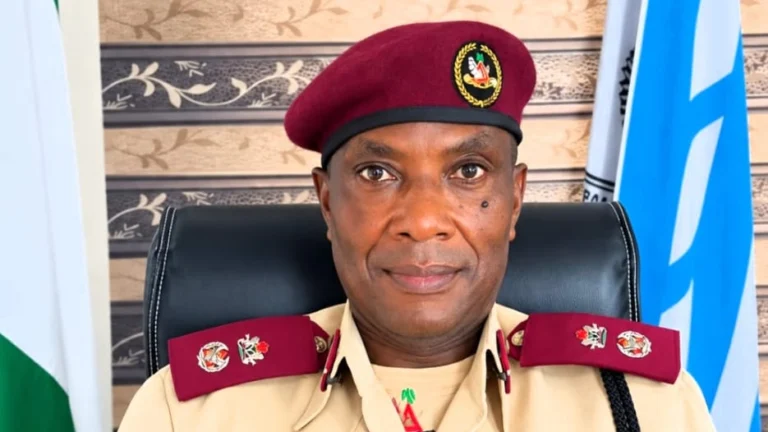
    Corps Marshal Shehu Mohammed said the FRSC will continue to promote safer road use through enforcement and advocacy.
    He said the Corps works with stakeholders to reduce crashes and prevent loss of lives on Nigerian highways.
    “The joy of FRSC is when we do not record loss of lives on our highways,” Mohammed said.
    He stressed the importance of cooperation between agencies and road users to improve safety outcomes.
    He said no organisation can achieve road safety goals alone without partnerships.
    “Partners will work with responsible organisations to achieve safety objectives,” he said.
    Mohammed said the FRSC will continue public enlightenment campaigns to encourage safe driving habits.
    He also said enforcement remains critical to reducing road crashes and improving compliance with traffic regulations.
    President of the Chartered Institute of Logistics and Transport (CILT), Dr Boboye Oyeyemi, supported stronger road safety enforcement.
    He said logistics efficiency depends on safe and well-managed road systems.
    Oyeyemi said road transport dominates Nigeria’s freight movement and requires strict safety standards.
    He linked poor road discipline and weak enforcement to increased accidents and infrastructure damage.
    Stakeholders praised FRSC efforts in improving awareness among road users.
    The said safety campaigns have helped reduce reckless driving behaviour in some sectors.
    They noted that transport safety contributes to business continuity and economic stability.
    The stakeholders also said that collaboration between regulators and private operators strengthens the transport ecosystem.
    The anniversary lecture brought together transport regulators, logistics operators, and industry stakeholders.
    Participants agreed that road safety remains essential to efficient logistics and national economic development.