South Africa Is Playing with Fire, and Its Elites Are Holding the Match
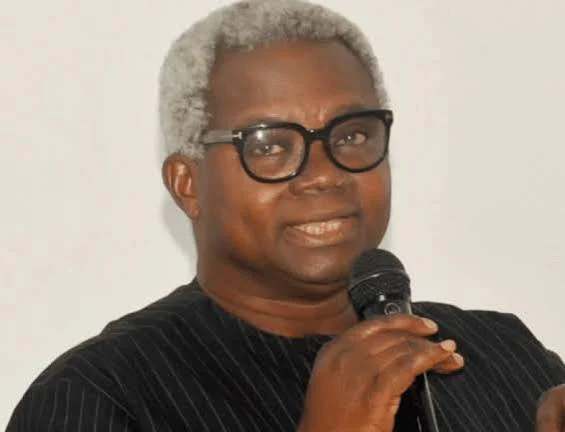
By Prof. Chiwuike Uba
South Africa is not merely “facing challenges.” It is staging a slow-burning political crisis, one that is being rationalised as dysfunction but increasingly resembles a struggle for power conducted through disorder. The polite language of governance failure no longer captures what is unfolding. This is not drift. It is pressure, calculation, and in some quarters, strategy.
For too long, analysts have hidden behind safe explanations such as unemployment, inequality, and historical injustice. All are true. All are insufficient. These are the dry leaves on the ground. What demands attention now is who is striking the match, who is fanning the flames, and who is quietly benefiting as the fire spreads.
Make no mistake, South Africa is burning in ways that are politically useful.
At the heart of this crisis lies a fractured elite compact. The old order has not fully collapsed, but it no longer commands coherence or loyalty. What has emerged instead is a contested arena where competing factions are probing the limits of the state, testing how far instability can be stretched before it snaps, and calculating how to convert public anger into political capital.

This is where the conversation becomes uncomfortable.
There is a growing, if often whispered, belief that networks aligned with former power structures have not retreated into history but have recalibrated. Their strategy is not necessarily to govern well, but to demonstrate that others cannot. In such a playbook, instability is not a failure. It is evidence. Every episode of unrest becomes a message that the current order is weak, ineffective, and incapable. The longer the system appears broken, the stronger the case for its replacement.
This is not about nostalgia. It is about the weaponisation of comparison. If the present can be made to look chaotic enough, the past, however flawed, begins to resemble order.
But this is only one side of the fire.
The second lies in South Africa’s deeply entrenched economic structure, where power has proven far more resilient than politics. Decades after apartheid, economic control remains heavily concentrated, and with it comes influence that is subtle, indirect, but decisive. In this environment, a weakened state is not necessarily a threat to all actors. For some, it is an opportunity.
A government that cannot enforce rules consistently creates room for those who can operate outside them. A state that struggles to regulate becomes easier to navigate, easier to influence, and easier to bypass. When governance falters, power does not disappear. It relocates.
Here lies the uncomfortable convergence. Political factions seeking relevance and economic actors seeking advantage do not need to coordinate to produce the same outcome. Their interests align in the erosion of state authority. One seeks to reclaim power. The other seeks to reshape it. Both benefit when the centre cannot hold.
The consequences of this convergence are visible in the streets.
Xenophobic violence in South Africa is often explained away as the rage of the excluded. That explanation is convenient. It absolves the system. It localises the problem. It turns a structural crisis into a community issue.

But the persistence, recurrence, and sometimes chilling coordination of these attacks suggest something deeper. Anger may be organic, but its direction is not always so. When violence repeatedly targets the same vulnerable groups, when it erupts in patterns that defy coincidence, and when it is met with inconsistent state response, it ceases to be merely social. It becomes political.
Xenophobia, in this context, is not just prejudice. It is diversion.
It redirects legitimate frustration away from structural failure and toward those least able to defend themselves. It fractures the solidarity of the poor, ensuring that those who should be united in demanding accountability are instead divided by fear and suspicion. It creates chaos that can be cited as evidence of national breakdown.
Perhaps most dangerously, it normalises violence as an acceptable language of grievance.
Then there is the state’s response, or lack of it.
A capable state does not eliminate violence entirely, but it responds decisively, predictably, and without bias. South Africa’s response has too often appeared hesitant, uneven, and opaque. Law enforcement oscillates between presence and absence. Administrative systems, particularly in immigration, are plagued by delays and inconsistencies that deepen vulnerability and fuel resentment.
Are these failures of capacity, of leadership, or of intent?
At this point, the distinction is becoming less important. In politics, perception hardens into reality. The prevailing reality is that the state appears either unwilling or unable to act with authority.

That perception is corrosive.
It erodes trust not only among citizens but across constituencies that already view each other with suspicion. Black South Africans see a state that has failed to deliver economic justice. White South Africans see a state that appears unstable and unpredictable. Migrants see a state that cannot or will not protect them. Each narrative reinforces the other, creating a feedback loop of distrust.
This is how legitimacy collapses. Not in a single dramatic moment, but in a thousand small fractures.
At the centre of it all sits a presidency that increasingly looks like a referee in a game where the players no longer respect the rules. Every move is second-guessed. Every delay is amplified. Every action is interpreted through the lens of weakness.
This is not merely a leadership problem. It is a structural trap. Govern too cautiously and you appear indecisive. Act too forcefully and you risk triggering backlash from powerful interests. In such a system, even competence can be framed as failure.
Politics does not reward nuance. It rewards perception.
The perception being crafted, deliberately or otherwise, is that South Africa is ungovernable.
That perception is not neutral. It is an argument. It is a campaign message without a slogan. It prepares the ground for what comes next, the battle for succession.
This will not be an ordinary political contest. It will be a struggle over the meaning of the crisis itself. Is South Africa failing because reform has been too slow, or because it has been misguided? Does the solution lie in strengthening institutions, or in bypassing them?
Expect the answers to be loud, emotional, and deeply polarising.
Populist forces will promise order through strength, clarity through simplicity, and justice through immediacy. Reformist voices will argue for patience, rebuilding, and restoring credibility step by step. Meanwhile, political outsiders will position themselves as alternatives to a system many citizens no longer trust.
In a stable environment, these debates would unfold within institutional guardrails. In the current climate, those guardrails are weakening.
That is where the real danger lies.
When political competition takes place in an environment of normalised disorder, the incentive shifts. It is no longer enough to win votes. One must shape the conditions under which voting occurs. Instability becomes a variable to be managed, and in some cases, manipulated.
This is how democracies begin to corrode from within.

The implications extend far beyond South Africa.
Economically, the country is not just another market. It is a continental anchor. Its financial systems, industrial base, and regional linkages make it central to African growth. Prolonged instability would ripple outward, constraining trade, deterring investment, and weakening regional integration.
Politically, South Africa has long been seen as a model of democratic transition and constitutionalism. If that model begins to fracture, it sends a powerful signal across the continent. It emboldens those who argue that institutional democracy cannot deliver, and it weakens reformist voices elsewhere.
Diplomatically, the stakes are equally high.
Xenophobic violence is not a domestic issue when it targets foreign nationals. It is an international concern that tests regional solidarity and diplomatic patience. Each episode forces other African governments to respond, balancing domestic outrage with the need to preserve bilateral relations.
Over time, that balance becomes harder to maintain.
It also raises serious questions under international law. The protection of non-nationals is a clear obligation, not a discretionary act. Persistent failure to uphold this responsibility undermines both legal commitments and diplomatic credibility.
South Africa, once a moral voice in global affairs, risks appearing increasingly inconsistent if its domestic realities contradict its international posture.
And here is the most provocative question of all.
What if the crisis is not being solved because, for some, it is not a problem to be solved?
What if instability has become too useful?
Too useful for those seeking to discredit incumbents.
Too useful for those seeking to renegotiate economic power.
Too useful for those preparing to present themselves as the only solution to a crisis they did not prevent.
If that is even partly true, then South Africa is not merely in trouble. It is in a contest where disorder has become currency.

Yet even now, the outcome is not fixed.
South Africa still possesses institutions that function, even if imperfectly. Its judiciary has demonstrated resilience. Its civil society remains active. Its citizens, despite frustration, are not disengaged.
But these strengths cannot remain passive.
What is required now is decisive action that breaks the cycle of perception. Law enforcement must act with clarity and consistency. Administrative systems must demonstrate competence. Political leadership must communicate intent and back it with visible results.
Above all, the narrative must change. Disorder must no longer define the country’s identity or its future.
Because if the current trajectory continues, South Africa risks crossing a threshold where instability is no longer a phase, but a permanent feature. And once a system internalises disorder as normal, reversing it becomes exponentially harder.
This is not a moment for polite analysis. It is a moment for honesty.
South Africa is playing with fire.
Unless those holding the match are confronted, whether they are political actors, economic elites, or compromised institutions, the blaze will not remain contained.
It will consume far more than those who believe they can control it.
About the Author: Prof. Chiwuike Uba, Ph.D., is a Professor of Economics and a governance and public financial management expert with over two decades of experience in public sector reforms, development policy, and institutional analysis across Africa. He is the Chairman of the ACUF Initiative for Policy and Governance, and has consulted for national governments, multilateral institutions, and international development partners. His work focuses on the intersection of political economy, accountability, and sustainable development.