Category: Foreign

  • Cuba’s president fires back at Trump over takeover remarks

    Cuba’s president fires back at Trump over takeover remarks

    Takeover

    Cuban President Miguel Díaz-Canel has fired back at comments by U.S. President Donald Trump about a possible takeover of Cuba.

    On Monday, Trump told reporters he thinks he will have the “honour of taking Cuba.”

    “I do believe I’ll be … having the honour of taking Cuba. That would be good. That’s a big honour,” he said during an executive order signing at the White House.

    On Tuesday, Díaz-Canel said the U.S. would face “unbreakable resistance” if it attempted a takeover.

    In a post on X, Díaz-Canel said the U.S. publicly threatened Cuba, almost daily, to overthrow the constitutional order by force.

    “This is the only way to explain the fierce economic war being waged as collective punishment against the entire people.”

    For weeks, Trump has been repeating that Cuba is on the brink of collapse.

    Under Trump, Washington has increased economic pressure on Cuba, aiming to cut off the flow of foreign currency and oil to the Caribbean island.

    The pressure intensified after U.S. authorities carried out an operation in January in which Venezuela’s president, Nicolás Maduro, was arrested in the capital Caracas and taken to the U.S.

    The move deprived Havana of one of its most important allies, which had long supported the island, particularly through oil supplies, amid the decades-long U.S. trade embargo with Cuba.

    Currently, Cuba is in one of its most severe economic crises since the revolution led by Fidel Castro in 1959.(dpa)

  • Iran strikes Tel Aviv with cluster warheads in retaliation for killing of security chief

    Iran strikes Tel Aviv with cluster warheads in retaliation for killing of security chief

    Retaliation

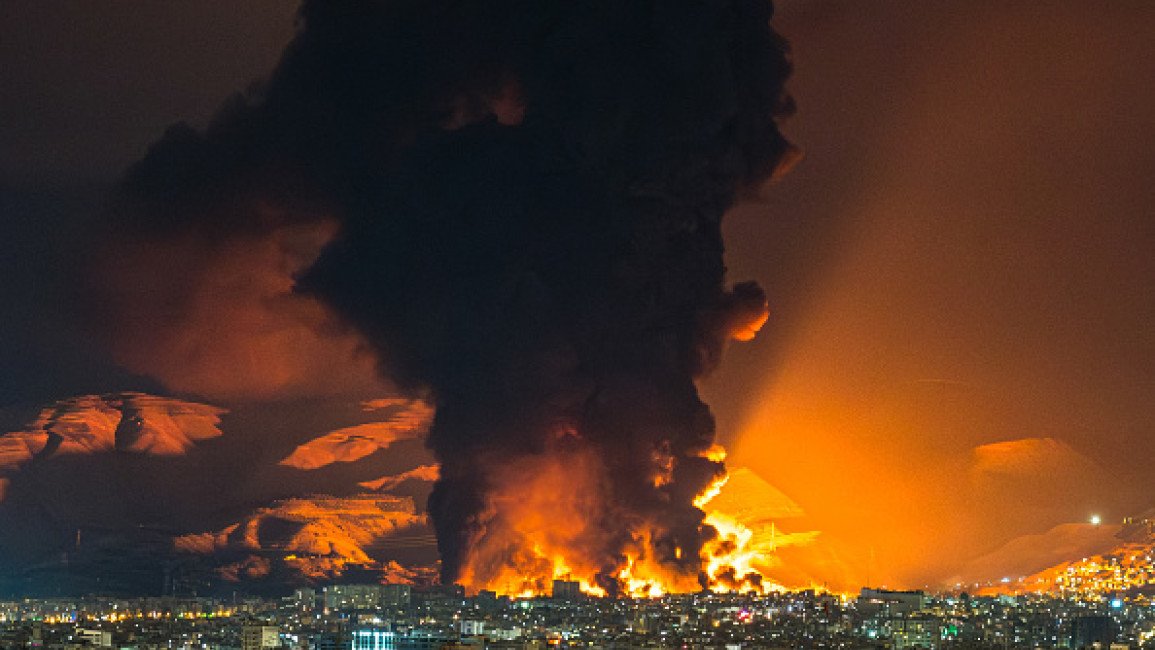
    Dubai/Tel Aviv, March 18, 2026 (Reuters) Iran targeted Tel Aviv with missiles carrying cluster warheads in what it said was retaliation for Israel’s assassination of Iran’s security chief Ali Larijani, Iranian state television reported ​on Wednesday.
    The attack overnight on Tuesday killed two people in a neighbourhood close to densely populated Tel Aviv, where there are also key military facilities, bringing the death toll in Israel from the war to at least 14.
    A statement by Iran’s ‌Islamic Revolutionary Guard Corps read on state TV said weapons used included Khorramshahr 4 and Qadr missiles, both with multi-warheads.
    Israel has said that Iran has repeatedly used cluster warheads, which disperse into multiple smaller explosives mid-air and spread over a wide area, making them difficult to intercept.
    In Iran, a projectile hit an area near the Budget nuclear power plant on Tuesday evening but caused no damage or injuries, Iran told the International Atomic Energy Agency (IAEA).
    IAEA chief Rafael Grossi reiterated his call for maximum restraint during the conflict to avoid the risk of a nuclear accident.
    Israel and the U.S. have said preventing Iran from developing a nuclear weapons programme was one of the goals of the attacks ​they launched more than two weeks ago, which killed the country’s supreme leader and many other top officials.
    The Iranian government on Tuesday confirmed the killing of Larijani, the most senior figure targeted since the U.S.-Israeli war’s first day, when an Israeli strike killed Iran’s ​Supreme Leader Ayatollah Ali Khamenei.
    Iran’s Supreme National Security Council, which Larijani led as secretary, said Larijani’s son and his deputy, Alireza Bayat, were also killed in an Israeli attack on Monday night.
    The targeted killings took place ⁠as the U.S.-Israeli war on Iran shows no signs of de-escalation.
    Iran’s new supreme leader, Mojtaba Khamenei, has rejected proposals conveyed to Iran’s Foreign Ministry for “reducing tensions or ceasefire with the United States,” according to a senior Iranian official who asked not to be identified.
    Khamenei, attending his first foreign-policy meeting since ​his appointment, said it was not “the right time for peace until the United States and Israel are brought to their knees, accept defeat, and pay compensation,” according to the official.
    The official did not clarify whether the younger Khamenei, who has not yet appeared in photos or on TV since being ​named last week to replace his slain father, had attended the meeting in person or remotely.
    Iran had executed a man convicted of spying for Israel, the Iranian judiciary’s media outlet Mizan said on Wednesday.
    The man, identified as Kurosh Keyvani, had been convicted of providing Israel’s spy agency Mossad with pictures and information about sensitive locations in Iran, it said.
    In Lebanon, an Israeli airstrike hit Beirut’s Bachoura neighbourhood in the centre of the city on Wednesday, a Reuters witness said.
    Loud explosions were heard in the area after the Israeli military warned residents to evacuate a building ahead of the strike.
    The attack was part of a broader wave of Israeli strikes ​on Lebanon on Wednesday, including raids on other parts of the Lebanese capital, as well as southern and eastern areas of the country, signalling an intensification of Israel’s campaign against the Iran-backed Hezbollah.
  • Erdogan warns Iran attacks threaten regional, global stability

    Erdogan warns Iran attacks threaten regional, global stability

    Istanbul, March 8, 2026.

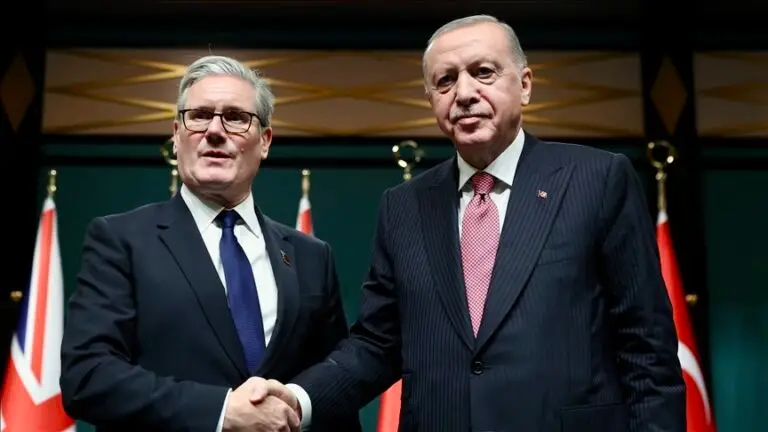
    Turkish President Recep Erdogan spoke with UK Prime Minister Keir Starmer on Saturday, highlighting concerns over the recent escalation following U.S.-Israeli attacks on Iran.

    “Türkiye is closely monitoring the process that began with the attacks on Iran.

    “If the interventions are prolonged, they could cause significant damage to regional and global stability.

    “There are still measures that can be taken to build a dialogue platform, and our peace-focused efforts continue,” he said.

    Erdogan was speaking during a phone call with Starmer, according to an official statement released by the Turkish Communications Directorate.

    The discussion also covered bilateral relations and broader regional and global issues.

    According to the statement, Erdogan reaffirmed Türkiye’s strong commitment to deepening cooperation with the UK across all sectors, particularly in the defense industry.

    The Turkish President added that his country would continue taking steps to advance the collaboration.

  • Oji River LGA receives delegation from US Consulate, deepens diplomatic, economic ties

    Oji River LGA receives delegation from US Consulate, deepens diplomatic, economic ties

    Oji River LGA receives delegation from US Consulate, deepens diplomatic, economic ties

    The Oji River Local Government Council in Enugu State, on Thursday, affirmed its readiness to deepen diplomatic and economic ties across various sectors with the United States (US) Consulate in Lagos.

    The Chairman of Oji River Local Government Council, Mr Greg Anyaegbudike, said this at the council headquarters in Oji River while receiving a delegation from the US Consulate Lagos. led by Julie McKay, Public Affairs Officer, US Consulate General Lagos.

    Anyaegbudike said that it was the first time US Consulate visited any local government area in Nigeria, adding that the visit reflected recognition of his administration to make great impacts and open opportunities in the council area.

    According to him, the US Consulate has continued to support individuals and governments in Nigeria to boost youth development, creativity, human resource development and to ensure general well-being of communities.

    “What has happened was US Consulate coming to identify with the Government of Oji River and to ensure that their own alumnus of United States Exchange Programme (International Visitor Leadership Program Alumnus) is doing well.

    “The visit is to forge areas of partnership moving forward. I am an alumnus of the United States Exchange Programme. My wife is also an alumna of the United States Exchange Programme.

    “We used the opportunity to launch a 5-year Oji River ICT Master Plan.

    “We also launched Oji River Website, which is ojiriverlga.en.gov.ng. It is through this website that we showcase Oji River to the world,” he said.

    The chairman said that the visit came with a lot of potentials for Oji River as American companies that want to invest in Oji River would now be looking out for investment opportunities in Oji River.

    Anyaegbudike noted that the council and the US Consulate discussed trade not aid; policy of American administration. We discussed commerce, industry and partnership for businesses in Oji River.

    “The Oji River Investment Promotion Agency (ORIPA) borne out of the Oji River Economic and Development Summit that took place in April 2025, made a presentation before the delegation on the movement so far.

    “ORIPA revealed that the agency had planned to bring $10 million investment every year for the next 10 years in Oji River. ORIPA has been engaging different organisations, including US Consulate to see to the investment in Oji River.

    “The beauty and potential of this visit can never be overemphasised. There are so many openings for Information and Communication Technology, trade, business and commerce for Oji River.

    “There are so many openings for partnership both technically and culturally for Oji River. There so many openings for Information and Communication Technology (ICT) for Oji River,” he said.

    Responding, the delegation led by Julie P. McKay, Public Affairs Officer, US Consulate General Lagos, explained that there would be more US Exchange Programmes.

    Mckay, who is also the Cultural Affairs Officer at the Consulate, said that the consulate looked forward for Oji River indigenes to take part in the exchange programmes.

    High point of the visit was the exchange of thoughtful and memorable gift items between the Council, wife of the Council’s Chairman, Mrs Uche Anyaegbudike, who is an alumna of the US Exchange Programme and members of the US Consulate delegation.

    There was a mammoth turnout of stakeholders, government officials and residents of the council area to welcome the visiting delegation.

  • IMPI reviews Tinubu’s record military assets acquisition in 18 months from the US

    IMPI reviews Tinubu’s record military assets acquisition in 18 months from the US

    IMPI reviews Tinubu’s record military assets acquisition in 18 months from the U


    ‎The Independent Media and Policy Initiative (IMPI) says the President Bola Tinubu-led federal administration has committed an impressive total of $801 million (over N1.15 trillion), to arms deals with the United States alone between 2024 and 2025 as part of its military modernization programme.

    ‎In a policy statement signed by its Chairman Omoniyi Akinsiju, the policy group posited that this is contrary to the impression created in the US President Donald Trump’s decision to redesignate Nigeria as a Country of Particular Concern (CPC).

    ‎It said: “In 2024 alone, Nigeria recorded its highest single-year expenditure on arms import in recent times with over N520 billion spent, representing a record-breaking surge in military asset acquisition for the country.

    ‎”This figure accounts for approximately 67% of the total arms import bill over the five-year period from 2020 to 2024, according to the National Bureau of Statistics (NBS). A substantial portion of this amount, ₦483.85 billion, was spent in the final quarter of the year.

    ‎”The military assets procurement includes the acquisition of 12 AH-1Z Viper attack helicopters, regarded as the world’s deadliest attack helicopter, a $455 million deal aimed at strengthening counterinsurgency capabilities.

    ‎The contract was awarded to Bell Textron, an American aerospace company, in March 2024.

    ‎”These helicopters are part of broader investments in military equipment and technology, intended to aid in tackling terrorism, piracy, and other forms of violent crimes across the nation, enhancing Nigeria’s ability to collaborate with international partners on security initiatives.”

    ‎”In addition, Nigeria completed a historic $346 million arms deal with the United States in August 2025, marking another impressive large single purchase of military hardware with objective on strengthening the military precision capabilities.

    ‎”The contract involves more than 1,000 MK-82 500-pound bombs, over 5,000 Advanced Precision Kill Weapon System (APKWS) rounds, programmable fuzes, airfoil groups, and extensive logistical and technical assistance.

    ‎”The acquisition will complement the existing counterinsurgency operations that Nigeria has been waging against Boko Haram, the Islamic State West Africa Province (ISWAP) and bandits which are still operational in some northern states.

    ‎”This, for us, underlines the administration’s commitment to boosting the operational readiness of security agencies in the war against terrorism and insurgency in the country.”

    ‎IMPI added that there has also been a clear demonstration of political will by the federal government to combat terrorism and safeguard the lives of Nigerians, as well as to guarantee unrestricted religious freedom and practices in the country.

    ‎According to the policy group, the US President may be holding out for more arms transactions between the two countries after claiming that the country is not doing enough to protect Christians from extremist attacks.

    ‎”Our consideration is that with a threat to storm Nigeria with “gun-a-blazing,” the US  President may be out to compel the Nigerian government to engage more with American arms manufacturers.

    ‎“This is especially so with the place of China, US perennial competitor in all sphere of engagements, in Nigeria’s arms supplies eco-system.

    ‎”In 2024, China supplied up to $152 million worth of VT-4 main battle tanks, ST1 light tanks, and SH-5 self-propelled howitzers.

    ‎ “This position is further reinforced by the American government’s call to its military hardware and software manufacturing sector to explore opportunities available in Nigeria for the supply of sophisticated tools and systems, such as surveillance technology, uncrewed aerial vehicles, and advanced detection equipment.

    ‎”This apparent business pitch coming from the US International Trade Commission holds much weight for an increased market share maneuver than a declaration of war on Nigeria by the US,” the think tank said.


    ‎ end

  • IMPI out with statement on Trump’s misguided Shaming of Nigeria

    IMPI out with statement on Trump’s misguided Shaming of Nigeria

    IMPI out with statement on Trump’s misguided Shaming of Nigeri


    POLICY STATEMENT O31 BY THE INDEPENDENT MEDIA AND POLICY INITIATIVE (IMPI): UNRAVELLING PRESIDENT TRUMP’S DESIGNATION OF NIGERIA AS A COUNTRY OF PARTICULAR CONCERN

    ‎On February 7, 2023, a statement issued by the United States of America’s State Department affirmed, for the umpteenth time, that, after a careful review, the Secretary of State had concluded that Nigeria did not meet the legal threshold for designation as a Country of Particular Concern (CPC) under the International Religious Freedom Act of 1998.

    ‎This conclusion has been the standard response to a plethora of petitions seeking to designate Nigeria as a country of concern every year, beginning in 2009.

    ‎Our investigation unearthed volumes of specious data profiling terrorists’ killings following attacks on Christian communities or places of worship in Nigeria.

    In line with its cautionary approach, the American government in those years put some of the data to the litmus test. What emerged was a sheer collection of manufactured figures of Christian killings in Nigeria, put together in a bid to nail the Nigerian government, something akin to calling a dog a bad name to hang it.

    US State Department officials saw through the campaign of calumny and the deployment of false data to justify Nigeria’s designation on the CPC list. However, just as in the present case, President Trump deviated from the historically principled and well-considered stance of the State Department by designating Nigeria as a CPC in December 2020.

    ‎Ironically, the then US Ambassador to Nigeria, Mary Beth Leonard, had denied the religious nature of the conflicts, as circulated by a heavily-funded lobby of Americans and Nigeria-based Christian Non-Governmental Organisations (NGOs), and other vested interests.

    Denouncing the insinuation of genocide against Christians in Nigeria, the Ambassador had explained that at the heart of the conflicts were issues around resource control.

    In her July 17, 2019, confirmation hearing, Ambassador Leonard also referred to the carnage in Nigeria’s Middle Belt as “banditry and inter-communal conflict” and “escalating farmer-herder and inter-communal conflict frequently based on resource competition.”

    This overview of the possible causes of conflicts and killings in the Middle Belt appropriately explained the nature of the killings in that region, away from the religious underpinnings often erroneously and deliberately attributed to the conflict by NGOs and some Christian bodies that routinely produce statistics of killings attributed to religion.

    ‎We note that in 2019, the Global Terrorism Index (GTI) reported a 39.1% decrease in terrorism deaths in Nigeria, from 2,043 in 2018 to 1,245 in 2019. The decline in fatalities, according to GTI, was primarily due to a fall in violence linked to Fulani extremists, despite a slight increase in common killings, the lowest since 2011.

    The GTI data is validated by Statista.com (Sasu, 2024). Though this 2019 terrorism data is in the public domain, an Onitsha-based International Society for Civil Liberties and Rule of Law (Intersociety), a Nigerian Human Rights NGO in Anambra State, claimed there were between 1,000 and 1,200 “Christian deaths” in the same year.

    ‎Another data contained in the ‘Ninth Annual Report on Lethal Violence in Nigeria’, which covers the period between January 1 and December 31, 2019, was collected by Vitus Nwankwo Ukoji, with the help of Abiola Victoria Ayodokun and Victor Chinedu Eze of the University of Ibadan, wherein the researchers submitted that fatalities from lethal incidents inched up by 5.6% in 2019 after a 1.4% decline. According to the Report, there were 11,277 violent deaths in 2019.


    ‎The import here is that Intersociety attributed virtually all reported fatalities to Christian deaths. This is an example of the deliberate inflation of data regarding killings in Nigeria to, in part, inflame divisive passion among the people, and to justify the designation of the country as a CPC by the American Government.

    The groups momentarily had their way in 2020, when, against all statistical sequences, indicating a reduction in terrorism-related killings, especially those linked to religious conflicts, Mr Trump, in the fourth year of his first term, declared and designated Nigeria as a CPC. It was a very questionable decision, given the declining number of terrorism-related deaths.

    ‎In 2020, Nigeria saw a significant reduction in terrorism-related fatalities, dropping to 1,245 from 2,043 in 2019, which represents a decrease from its peak in 2014. The Global Terrorism Index (GTI) for 2020, released in early 2021, noted the most significant reduction in deaths in Nigeria after Afghanistan, mainly due to a decrease in fatalities attributed to Fulani extremists.

    ‎Fallacy of jaundiced data

    ‎We are concerned about the inauspicious propagation of terrorism-related deaths in a singular religious conflict situation. However, for starters, we must acknowledge the sensitivity of this subject matter as it affects lives. For us, no single life is deserving of being extinguished for any reason. In the same vein, it is immoral to concoct all manner of death-related data to justify a point of view.

    ‎The circulation of falsehoods in the campaign to designate Nigeria a CPC jurisdiction has become a worrisome trend. Our findings showed that it became a tool exploited by both Nigerian and foreign-based NGOs, as well as other vested interests, to drive their demands.

    ‎To properly benchmark our comparative data, we have adopted data curated by the Australia-based Institute for Economics & Peace, which produces the Annual Global Terrorism Index. The GTI produces a composite score to provide an ordinal ranking of countries on the impact of terrorism.

    The GTI scores each country on a scale from 0 to 10, where 0 represents no impact from terrorism and 10 describes the highest measurable impact. The Global Terrorism Index (GTI) is a comprehensive study analysing the effects of terrorism on 163 countries, which account for 7 per cent of the world’s population. It reports on global terrorism trends and the associated number of deaths.

    Indeed, terrorism can be classified by its motivations, methods, or scope. Typical classifications include political terrorism, which is broken down into categories like revolutionary, nationalist-separatist, left-wing, and right-wing terrorism; religious terrorism, driven by extremist religious ideologies; and state-sponsored terrorism, which involves government support for terrorist groups.

    Other types include international (transcending national borders) and domestic (within a country’s borders), based on scope and location.

    As expected, a legion of controversial data was also circulated on social media platforms. In contrast to the reduction in fatalities recorded by GTI in 2020, Abayomi and Igbanoi (2021) posited that based on data gathered between January and December, 2020, there was an average of two violent attacks and nine deaths daily across the nation. This, according to them, amounts to at least 60 attacks a month and over 720 for the year, and in turn, over 270 and 3,240 deaths monthly and the year, respectively.

    One report stated that approximately 4,285 Christians were killed for their faith in Nigeria that year, accounting for about 90% of the global total of Christians killed for faith-based reasons. In character, Nigeria Watch.org, Nigeria recorded around 12,318 deaths from terrorism in 2020. According to the organisation, these deaths were the result of 2,677 lethal incidents.
    The violence was attributed to the Boko Haram insurgency and banditry. None of these figures provides a basis for verification or validation.

    ‎Nonetheless, on December 2, 2020, in accordance with the International Religious Freedom Act of 1998, as amended, the US Secretary of State designated Nigeria a “Country of Particular Concern” for having engaged in or tolerated particularly severe violations of religious freedom, and announced a waiver of sanctions that accompany designation in the “important national interest of the United States.”

    Apparently, the decision was deficient in logic and procedure, as the succeeding President Biden administration removed Nigeria’s CPC designation less than a year later, in November 2021. That brought a closure to the first attempt by Mr Trump to designate Nigeria a CPC state.

    ‎Tracking the smear campaign

    ‎Subsequently, the campaign to slam anew the CPC status on Nigeria began apace. On January 31, 2023, Congressman Chris Smith introduced a resolution in the House of Representatives to this effect, with bipartisan support. In response, on 7 February 2023, a State Department spokesperson said, again, that “after careful review,” Secretary of State Anthony Blinken decided not to put Nigeria back on the list of offenders of religious liberty.

    Long before this official response, merchants of tainted data had populated the social media space with obtrusive figures. The International Society for the Civil Liberties and Rule of Law (Intersociety) reported that 5,068 Christians were massacred in Nigeria in 2022, while Open Doors’ 2023 World Watch List reported that 5,014 Christians were killed for their faith in Nigeria in 2022, more than in the rest of the world combined.

    ‎Those figures definitely did not portray the reality on the ground.

    In contrast to the figures being bandied by these NGOs, the Global Terrorism Index (GTI) for 2022 noted that there were 6,701 deaths from terrorism globally, a 9% decrease from the previous year and 38% lower than the 2015 peak. The number of terrorism incidents globally also fell by nearly 28%, from 5,463 in 2021 to 3,955 in 2022, while
    deaths in Nigeria dropped to 392 in 2022, the lowest level since 2011.

    However, fatalities increased by 34 per cent in 2023 to 533, and further to 565 in 2024, but not anywhere near the inflated figures generated by Intersociety, which reported that 8,222 Christians were killed in Nigeria in the 12 months between January 1, 2023, and January 1, 2024, describing it as the “deadliest in recent years”. ‎Open Doors also reported that 82% of the 4,998 Christians killed globally for faith-related reasons in 2023 occurred in Nigeria, while the Observatory of Religious Freedom in Africa (ORFA) recorded 1,637 deaths of Christians between April and June 2023 alone.

    ‎The trend continued in 2024 with this same set of advocacy groups providing higher figures for faith-related killings. A report from Open Doors claimed that 3,100 Christians were killed in Nigeria in 2024.
    According to the group, this made it the country with the most Christians killed globally for faith-based reasons that year.

    Another source published in August 2024 documented at least 7,087 Christians massacred in the first 220 days of the year (Humanangle.com, 2025).

    However, the Global Terrorism Index reported a fatality figure of 565 for 2024. This speaks to the industry of falsehood underpinning the advocacy to get Nigeria redesignated as a CPC.

    ‎Yet, while we condemn any loss of life, the practical reality is that the data provided by GTI and Statista cannot, by any stretch of imagination, be described as genocide.

    Based on this background, we find it challenging to accept US President Trump’s decision to designate Nigeria as a CPC based on fictitious data circulated by a collection of NGOs.

    ‎We expect the US to verify and validate any data presented to President Trump before using it to make a decision.

    ‎Trump’s decision was based on false data

    ‎We submit in this regard that Mr Trump must either be of an impulsive disposition or he deliberately wants to engage in a red herring to divert attention from the real intent of the redesignation of Nigeria as a CPC.

    ‎To be impulsive would mean that Mr Trump consumes this Trojan data with such seriousness as to base a state policy on unverified data. However, to throw a red herring suggests that the US President may be holding a transactional card close to his chest.

    ‎While the real intent would soon unfold, we think that Mr Trump may want to hasten the crystallisation of the trade opportunities available in Nigeria for the American military equipment manufacturing sector.

    This is possibly the case because none of the listed sanctions in the International Religious Freedom Act bears any resemblance to military actions, as claimed by the American President in the Nigerian situation.

    ‎Is a transaction in the mix?

    ‎Our position is further reinforced by the American government’s call to its military hardware and software manufacturing sector to explore opportunities available in Nigeria for the supply of sophisticated tools and systems, such as surveillance technology, uncrewed aerial vehicles, and advanced detection equipment.

    Indeed, the Nigerian federal government, under President Bola Ahmed Tinubu, has invested heavily in enhancing security measures in response to the prevailing security challenges confronting the country.

    For instance, Nigeria’s military modernisation efforts include the acquisition of 12 AH-1Z Viper attack helicopters from the US, a $455 million deal aimed at strengthening counterinsurgency capabilities.
    ‎These helicopters are part of broader investments in military equipment and technology, intended to aid in tackling terrorism, piracy, and other forms of violent crimes across the nation, enhancing Nigeria’s ability to collaborate with international partners on security initiatives.
    ‎In addition, Nigeria completed a historic $346 million arms deal with the United States in August 2025, marking the largest single purchase of military hardware in recent times.

    The contract involves more than 1,000 MK-82 500-pound bombs, over 5,000 Advanced Precision Kill Weapon System (APKWS) rounds, programmable fuzes, airfoil groups, and extensive logistical and technical assistance. The action will complement the existing counterinsurgency operations that Nigeria has been waging against Boko Haram and the Islamic State West Africa Province (ISWAP), which are still operational in some northern states.

    These are clear indications of Nigeria’s seriousness in tackling insecurity by purchasing sophisticated military equipment from the United States.

    We further note with interest the observation by the US Commerce Department that cybersecurity is increasingly critical in Nigeria, especially as the country’s financial and telecommunications sectors expand.
    ‎It explained that Nigerian financial institutions, government agencies, and corporations managing large volumes of data are frequent targets for cybercriminals, with incidents such as phishing, ransomware attacks, and online fraud becoming increasingly common.

    Thus, the rise of digital banking and mobile financial services has also led to intensified efforts to protect user data and financial transactions.
    ‎To counter this, according to the US Commerce Department, Nigerian businesses and institutions are investing in cybersecurity measures, with a focus on areas such as threat intelligence, employee training, and stronger data protection frameworks.

    Government agencies, such as the National Information Technology Development Agency (NITDA), are also enhancing regulations and encouraging local firms to adopt cybersecurity best practices to mitigate risks.
    ‎Therefore, the safety and security sector in Nigeria, as considered by the US Commerce Department, has seen substantial growth, with security equipment and specialised training emerging as key subsectors.
    ‎It noted further that US companies remain preferred suppliers for advanced security technology, with Nigerian public and private stakeholders sourcing military jets, uncrewed aerial vehicles, explosive detection tools, surveillance systems, and covert cameras primarily from US manufacturers.

    Highlighting other military ware related opportunities in Nigeria, the US Commerce Department also explained that there is also a rising demand for surveillance equipment among Nigerian state governments, especially for aerial monitoring of borders and forests.
    ‎Additionally, opportunities for US companies to provide security training services have expanded to include Nigerian government agencies, private security firms, and corporate security teams.

    ‎These firms, according to the Department, can engage through direct sales or participate in public tenders published by relevant agencies, which are accessible via the Bureau of Public Procurement (BPP).

    On this count, the Commerce Department declared that because US companies maintain a strong competitive edge in supplying advanced security equipment to Nigerian entities, driven by a reputation for high-quality and reliable technology, there are substantial opportunities for these companies to provide the Nigerian government with sophisticated tools and systems, such as surveillance technology, unmanned aerial vehicles, and advanced detection equipment.

    It averred that procurement is facilitated through government tenders, enabling US firms to supply security resources that align with Nigeria’s increasing demand for advanced security solutions.

    There is also another possible explanation for Mr Trump’s decision to designate Nigeria a CPC. This angle is in connection with his Chief of Staff, Susie Wiles, who reportedly has a long-term relationship with elements of the Indigenous People of Biafra (IPOB).

    ‎She was co-chair of a lobbying firm hired by IPOB in 2019, and the two parties had extensively worked together, according to records.
    ‎According to a report by Foreignlobby.com in 2021, IPOB has a lobbying contract with Mercury Public Affairs, a company with links to Ms Wiles. A further probe into her records revealed that IPOB hired Wiles’ firm to lobby the US Congress and the State Department on the “promotion of human rights and democracy” in Nigeria.

    ‎The engagement, which began in October 2019, is valued at $85,000 per month; however, the firm only disclosed $254,000 in payments to the US Department of Justice for that year. According to media reports, the emergence of Donald Trump as the winner of the US presidential election intensified hope of an independent nation known as Biafra.
    ‎The jubilation that greeted Nigeria’s designation as CPC by some Nigerians in the diaspora with strong links to IPOB establishes a possible ‘voice of Jacob, but hands of Esau’ scenario in the saga.

    ‎Conclusion

    ‎Our submission is that this type of aggression, stemming from Nigeria’s redesignation as a CPC, is not the appropriate response to the prevailing situation in the country.

    The two jurisdictions are mutually in need of each other in combating terrorism, especially as Nigeria’s federal administration has, within 24 months, expended $801 million in acquiring US-made military hardware to stem the tide of insurgency and terrorism in the country.

    This is a clear demonstration of the Nigerian government’s political will to combat terrorism and safeguard the lives of Nigerians wherever they may be, as well as to guarantee unrestricted religious freedom and practices.
    ‎The critical thing, for us, is that Nigeria needs America as much as America needs Nigeria in combating terrorism in the Sahel, as both countries have shared experiences.

    ‎Omoniyi M. Akinsiju, PhD
    ‎Chairman,
    ‎Independent Media and Policy Initiative (IMPI)
    ‎November, 2025

  • ‎Genocide claims: Trump’s CPC decision on Nigeria based on jaundiced, obtrusive data – IMPI ‎

    ‎Genocide claims: Trump’s CPC decision on Nigeria based on jaundiced, obtrusive data – IMPI ‎

    ‎Genocide claims: Trump’s CPC decision on Nigeria based on jaundiced, obtrusive data – IMPI

    ‎A think tank group, the Independent Media and Policy Initiative (IMPI) has said the US President Donald Trump redesignated Nigeria as a Country of Particular Concern (CPC) on the basis of jaundiced, obtrusive data provided by local and international groups with ulterior motives.

    ‎In a policy statement signed by its Chairman, Dr Omoniyi Akinsiju, the think tank identified Intersociety, a local NGO, and Open Doors, a Christian charity, as two of the entities that have been spawning false data to misrepresent the security situation in Nigeria.

    ‎IMPI expressed concern at the manner groups with vested interests are manipulating terrorism-related data to paint Nigeria as a country where Christians are facing existential threats.

    ‎”We are concerned about the inauspicious propagation of terrorism-related deaths in a singular religious conflict situation. However, for starters, we must acknowledge the sensitivity of this subject matter as it affects lives. For us, no single life is deserving of being extinguished for any reason. In the same vein, it is immoral to concoct all manner of death-related data to justify a point of view.

    ‎”The circulation of falsehoods in the campaign to designate Nigeria a CPC jurisdiction has become a worrisome trend. Our findings showed that it became a tool exploited by both Nigerian and foreign-based NGOs, as well as other vested interests, to drive their demands.

    ‎“Long before this official response, merchants of tainted data had populated the social media space with obtrusive figures. The International Society for the Civil Liberties and Rule of Law (Intersociety) reported that 5,068 Christians were massacred in Nigeria in 2022, while Open Doors’ 2023 World Watch List reported that 5,014 Christians were killed for their faith in Nigeria in 2022, more than in the rest of the world combined. Those figures definitely did not portray the reality on the ground,” it added.

    ‎IMPI argued that its findings indicate that the total number of terrorism-related fatalities in Nigeria were not as high as the figures provided by InterSociety and Open Doors as data of Christian deaths alone.

    ‎The think tank said: “In contrast to the figures being bandied by these NGOs, the Global Terrorism Index (GTI) for 2022 noted that there were 6,701 deaths from terrorism globally, a 9% decrease from the previous year and 38% lower than the 2015 peak. The number of terrorism incidents globally also fell by nearly 28%, from 5,463 in 2021 to 3,955 in 2022, while deaths in Nigeria dropped to 392 in 2022, the lowest level since 2011.

    ‎” However, fatalities increased by 34 per cent in 2023 to 533, and further to 565 in 2024, but not anywhere near the inflated figures generated by Intersociety, which reported that 8,222 Christians were killed in Nigeria in the 12 months between January 1, 2023, and January 1, 2024, describing it as the “deadliest in recent years”. Open Doors also reported that 82% of the 4,998 Christians killed globally for faith-related reasons in 2023 occurred in Nigeria, while the Observatory of Religious Freedom in Africa (ORFA) recorded 1,637 deaths of Christians between April and June 2023 alone.

    ‎“The trend continued in 2024 with this same set of advocacy groups providing higher figures for faith-related killings. A report from Open Doors claimed that 3,100 Christians were killed in Nigeria in 2024.

    ‎“According to the group, this made it the country with the most Christians killed globally for faith-based reasons that year. Another source published in August 2024 documented at least 7,087 Christians massacred in the first 220 days of the year (Humanangle.com, 2025).

    ‎“However, the Global Terrorism Index reported a fatality figure of 565 for 2024. This speaks to the industry of falsehood underpinning the advocacy to get Nigeria redesignated as a CPC.

    ‎“Yet, while we condemn any loss of life, the practical reality is that the data provided by GTI and Statista cannot, by any stretch of imagination, be described as genocide.

    ‎“Based on this background, we find it challenging to accept US President Trump’s decision to designate Nigeria as a CPC based on fictitious data circulated by a collection of NGOs.

    ‎“We expect the US to verify and validate any data presented to President Trump before using it to make a decision.”

    ‎In tracking InterSociety’s activities, IMPI researchers found out that the group had since 2019 been cooking false data on what it called “Christian deaths” that were never in tandem with the Global Terrorism Index (GTI) and other reports on lethal violence in Nigeria.

    ‎“We note that in 2019, the Global Terrorism Index (GTI) reported a 39.1% decrease in terrorism deaths in Nigeria, from 2,043 in 2018 to 1,245 in 2019. The decline in fatalities, according to GTI, was primarily due to a fall in violence linked to Fulani extremists, despite a slight increase in common killings, the lowest since 2011.

    ‎“The GTI data is validated by Statista.com (Sasu, 2024). Though this 2019 terrorism data is in the public domain, the International Society for Civil Liberties and Rule of Law (Intersociety), a Nigerian Human Rights NGO in Anambra State, claimed there were between 1,000 and 1,200 “Christian deaths” in the same year.

    ‎“Another data contained in the ‘Ninth Annual Report on Lethal Violence in Nigeria’, which covers the period between January 1 and December 31, 2019, was collected by Vitus Nwankwo Ukoji, with the help of Abiola Victoria Ayodokun and Victor Chinedu Eze of the University of Ibadan, wherein the researchers submitted that fatalities from lethal incidents inched up by 5.6% in 2019 after a 1.4% decline. According to the Report, there were 11,277 violent deaths in 2019.

    ‎“The import here is that Intersociety attributed virtually all reported fatalities to Christian deaths. This is an example of the deliberate inflation of data regarding killings in Nigeria to, in part, inflame divisive passion among the people, and to justify the designation of the country as a CPC by the American Government.

    ‎“The groups momentarily had their way in 2020, when, against all statistical sequences indicating a reduction in terrorism-related killings, especially those linked to religious conflicts, Trump, in the fourth year of his first term, declared and designated Nigeria as a CPC. It was a very questionable decision, given the declining number of terrorism-related deaths,” it said.

    ‎IMPI added that a better understanding of the situation in Nigeria through government-to-government engagement would lead to the US withdrawing Nigeria from its CPC list.

    ‎End

  • CSOs cimmend Tinubu, NSO on security, back America’s disclaimer on Christians genocide in Nigeria

    CSOs cimmend Tinubu, NSO on security, back America’s disclaimer on Christians genocide in Nigeria


    Civil Society Organisations (CSOs), the *Inclusive Citizens Advancement Network (Inc-CAN)* and *Concerned Professionals Congress (CPC)* have given a thumps-up to President Bola Tinubu for leading Nigeria excellently well at the just-ended AQABA Process Heads of State high-level counter terrorism meeting in Rome, Italy.

    The CSOs in a review of the event particularly praised the delegation comprising some of the major drivers of the national security architecture, i. e, the minister of defence, Badaru Abubakar and the National Security Adviser (NSA) Nuhu Ribadu, who was accompanied by the national coordinator, National Counter Terrorism Center (NCTC), Major General Adamu Garuba Laka, and the director general, National Intelligence Agency (NIA),
    Ambassador Mohammed Mohammed.

    Also in the team were the minister of state for Foreign Affairs, Ambassador Bianca Odumegwu-Ojukwu, and other senior government officials.

    U.S President Donald Trump’s senior envoy, Massad Boulos’ dismissal of claims of Christian genocide in Nigeria which was another major positive fallout of the trip came in reaction to Republican Senator Tom Cruz’s ‘’Nigeria Religious Freedom Accountability Bill of 2025, a move to designate Nigeria as a ‘’Country of Particular Concern’’ (CPC) and impose sanctions on Nigerian officials which has already raised eyebrows among sections of the Nigerian polity.

    The swift dismissal of the contentious claims by Massad Boulos has introduced a sharp twist to the development thereby dousing the tension raised on the issue in the country.

    The concerned CSOs, in a joint statement in Abuja by Inc-CAN’s convener, Mr. Emeka Nwankpa and the Northern Regional Rapporteur of Concerned Professionals Congress (CPC), Baba Kasim Baba, hailed President Tinubu’s presentation at the event, describing it as ‘’brilliantly watertight’’ on Nigeria’s current highly impactful counter-terrorism initiatives.

    According to the CSOs, the swift dismissal by Pres.Trump’s senior advisor on Arab and African Affairs, Massad Boulous, of alleged state-sponsored Christian genocide in Nigeria threw the civil society community into a spontaneous frenzy, especially his valid assertion that terrorist attacks in Nigeria affected both Christians and Muslims equally if not more for the Muslims.

    Mr. Massad Boulous’ comments during his visit to President Tinubu on the sidelines of the Aqaba conference came amid growing calls by some U.S lawmakers urging the American government to designate Nigeria as a ‘’Country of Particular Concern’’ (CPC) over unproved genocidal claims. But the White House has yet to respond officially.

    Speaking to journalists after meeting with President Tinubu, Senior Envoy Massad Boulous maintained that terrorist attacks in Nigeria cut across ethnic and religious lines.

    ‘’Those who know the terrain well know that terrorism has no colour, no religion, no tribe. People of all religions and all trbes are dying as a result of terrorist attacks. Boko Haram and ISIS have actually killed more Muslims than Christians.

    ‘’People are suffering from all backgrounds. This is not specifically targeted at one group or the other. It’s not something that can be said to target any particular group’’, he said.

    He said that under President Tinubu, Nigeria had recorded tremendous progress in security across its diverse ethnic and religious groups that had coexisted for several decades.

    Mr. Emeka Nwankpa, in the statement by the CSOs endorsed the senior U.S presidential envoy’s assertion, describing it as a “frank and straightforward” commentary on Nigeria’s complex terrorism conundrum, noting that his assessment perfectly reflected the current reality in the country.

    ‘’The Senior U.S presidential advisor could not have put it any better. The truth is that purveyors of the genocide claims are either ignorant or dishonest or both. Nigeria’s complex security dynamics is far below the acceted United Nations definition of a genocide. There’s no correlation whatsoever.

    ‘’The mass killings being cited are not targeted against any specific religious group. Therefore drumming up claims of genocide is dumb and divisive. Besides, coming from external forces at this time that our defense forces are winning the war on terror is suspect. These are people that don’t want Nigeria’s unity. Our fellow patriotic Nigerians should be wary of them.

    ‘’They portray extreme ignorance of Nigeria’s internal dynamics where multifaceted conflicts, and not religion, are driven by criminality, ethnic rivalries, land disputes, etc.

    ‘’Since 2009, the sectarian Boko Haram has waged a relentless senseless war against the Nigerian state, not against any religion but mostly Muslims as its victims. Claims of one-sided persecution are just a simplistic narrative which the foreign commentators must understand before jumping into conclusion.

    ‘’To push these conflicts as evidence of Christian genocide as U.S Republican Senator Cruz and his cohorts in the American Congress are doing clearly distorts the reality and advertises their collective chicanery’’, Nwankpa said.

    ‘’In our view, a major danger is the often uninformed and sometimes mischievous media which present Boko Haram as fighters of Islam whereas they are a ragtag group alongside ISWAP and their bandit groups which are despised by both Muslims and Christians alike.

    ‘’Whoever opposes them, regardless of faith, is marked as enemy hence their offer mindless, violent and indiscriminate bombings of mosques, churches and killing of Muslims and Christians alike. To call this ugly spectacle as anti-Christian is pure propaganda.

    ‘’It is necessary to contextualize the issue. President Tinubu in May 2023 inherited a nation blighted by this brutal Islamist insurgency led by Boko Haram and its offshoot-Islamic State West African Province (ISWAP).

    ‘’The president’s crack team of capable military and security chiefs working with ex-EFCC chairman, NSA Nuhu Ribadu, and the NCTC national coordinator has designed and executed layers of new counter terrorism measures, and simultaneously prioritizing fights against Boko Haram in the northwest, farmer-herder conflicts nationwide, Indigenous People of Biafra (IPOB), and oil robbers in the south-south.

    ‘’Our gallant troops have sustained operational successes securing every inch of the Nigerian space through improved counter-terrorism, anti-banditry, anti-kidnapping, maritime security, and joint internal operations on the battlefield.

    ‘’The NCTC’s Multi-Agency Anti-Kidnapping Fusion Cell (MAAKFC) which was built in partnership with U.K’s National Crime Agency has made a difference as several kidnap victims are being rescued incrementally to the satisfaction of many affected Nigerian families.

    ‘’In real terms, the coordination by the NCTC-ONSA under Maj Gen Adamu Laka, in synergy with Defence Headquarters (DHQ) under Chief of Defence Staff, General Christopher Gwabin Musa leading the military chiefs, have since changed the narrative.

    ‘’We may not yet be where we want, but we are definitely not where we were. The new measures have continued to change the narrative in just a little over two years of President Tinubu in the saddle.

    ‘’There’s no perfect security anywhere, but the good news is that the country is getting safer notably the once-dreaded Abuja-Kaduna highway and the Birnin Gwari axis. Today, U.K has lifted its travel advisory to her citizens plying that axis as a result of highly improved security.

    ‘’Also, free movement of citizens, goods and services are being increasingly recorded in parts of the country where insecurity had hitherto imposed zero movement.

    ‘’This year’s AQABA meeting in Rome is viewed against Nigeria’s internal security outlook showing gradual rise, according to a recent Channels Television’s Nigeria Security Perception Index for September 2025 which indicated 50 percent respondents in Northern Nigeria and 57 percent in Southern Nigeria saying security was improving.

    ‘’Across the six geopolitical zones, the perception index rose between February and September. The North East improved from 52 to 56 percent, the South South climbed from 55 to 57 percent, while the North Central moved from 39 to 47 percent.

    ‘’The South West maintained a steady perception of 61 percent. Analysts attribute the progress to intensified coordination of operations by the nation’s security and military forces bouyed by precision intelligence-led strikes, and reductions in large-scale oil theft and mass kidnappings recorded in recent months.

    ‘’However, security forecasts for the last quarter of 2025 point to potential challenges. The Nigeria Security Outlook for Q4 2025 projects that insurgent attacks may persist in the Lake Chad Basin, while opportunistic assaults on schools, highways and religious institutions could occur.

    ‘’There are also concerns that bandit networks in the Northwest were adapting to recent military offensives. Spiked kidnap risks are envisaged in December due to anticipated increased travel and citizens’ migratory movements, with ransom kidnapping posing a key risk factor. But overall, analysts believe there’s hope in the horizon for a safer, more secure and stable polity.

    ‘’For example, the forces have neutralised over 1,600 terrorists, over 124, 000 fighters and their families surrendered, over 11,000 weapons and 252, 000 ammunitions confiscated in the northeast.

    ‘’The arrest of IPOB Commander, Ifeanyi Eze Okorienta, widely known as ‘’Gentle De Yahoo’’ has brought some normalcy to the southeast where the sit-at-home order are beginning to eclipse. More arrests of notorious criminals are still being made as several others are neutralised incrementally by our forces’’, said Nwankpa.

    Commenting, NSA Nuhu Ribadu has continued to express his satisfaction over the successes while restating President Tinubu’s commitment to ridding the country of every trace of criminality. He further disclosed that terrorism-related deaths had tumbled down from 2, 600 a month before May 2023 to a fewer than 200 today.

    In late August, he announced the rescue of 128 hostages in Zamfara State while DHQ also disclosed that security forces in 2024 killed over 3,100 terrorists, arrested 2,500 suspects, and freed more than 1,600 kidnapped victims.

    The Nigeria Police Force reported the rescue of 1,581 hostages and arresting over 30,000 suspects for various offences.

    Nuhu Ribadu further disclosed that between May 2023 and early 2025, more than 13,500 terrorists and armed criminals were neutralised, while over 124,000 insurgents and their families surrendered.

    Also, over 11,000 were rescued, and nearly 3,843 illegal refineries – key to the funding of insurgent and criminal activities – were dismantled nationwide. Significantly, the numbers point to a strategic shift to taking the fire into the enemy camp.
    Inside ONSA sources said that the new innovative MAAKFC has been a game changers in dismantling the enemy camps through the cell which collates actionable intelligence to coordinate rescue missions, track financial trails and impound same.

    Since its debut in December 2024, MAAKFC which is a crack collection of highly trained personnel of the military, para-military, intelligence, police, judicial and allied agencies, has achieved an 80% success rate in combating kidnap across the multi-million naira industry in the terror financing value chain. MAAKFC has successfully dismantled the entire architecture of the sophisticated kidnap business.

    Copious evidence of the gains are emergent, from settlements and communities in Southern Kaduna, long plagued by killings and abductions such as Birnin Gwari which is now in relative peace. Also in Zamfara State, a location once locked down by bandit warlords, the story has changed dramatically.

    The DHQ has almost concluded plans to open a another camp in Tsafe for its Operation Safe Corridor (OPSC), ten years after establishing its pioneer camp in Mallam Sidi in Gombe State for its Deradicalization, Rehabilitation and Reintegration (DRR) program for surrendered ex-Boko Haram fighters.

    In the Southeast, the unknown gunmen conundrum which had once paralysed daily business life with mind-boggling violence and Monday sit-at-home orders, have beaten a quick retreat in the volatile region owing to DHQ’s multi-pronged aggressive military operations in the zone.

    In the Northwest where banditry has killed more than 12,000 people and displaced entire farming communities, the counter-terrorism gains are also visible.

    The spectacular arrests of the Ansaru terrorist kingpins, Mahmud Muhammad Usman, the self-styled “Emir of Ansaru” his deputy Mahmud al-Nigeri (Malam Mahmuda), elimination of notorious warlords like Ali Kachalla, Halilu Sububu, and Boderi, alongside mass surrenders under the non-kinetic initiatives code-named the “Kaduna Model”, have shot down mass abductions.

    Though isolated attacks against soft targets occur as last kicks of a dying horse, the frequency and scale of kidnappings have since reduced.

    Senior Presidential Envoy Massad Boulous, an American-Lebanese citizen whose son is married to President Trump’s daughter commended President Bola Tinubu’s administration for increasing security efforts in volatile regions, noting that recent security improvements showed that the government’s measures were impacting positively.

    “The Nigerian government has recently taken additional measures and put more resources in those areas. We’ve seen some improvements in recent weeks. We appreciate those measures, and we definitely look forward to more of those,” he said.
    He praised Nigeria’s long-standing record of religious coexistence, saying that its diversity should continue to be a source of strength rather than division.

    “Nigeria is a country in which all sorts of religious groups and other groups, ethnic and tribal, are living together in harmony for centuries. The population is split 50-50 between Christians and Muslims, so this has never been a serious religious issue and should not be,” he said.

    He called for continued partnership between Nigeria and the United States to eliminate terrorism and sustain peace across all regions.

  • China reiterates commitment to Africa’s development

    China reiterates commitment to Africa’s development

    By Taiye Olayemi and Busayo Onijala

    The Consul General of the People’s Republic of China in Lagos, Ms Yan Yuqing, has said that China will remain committed to strengthening cooperation with Africa in the face of global instability.

    Yuqing stated this on Monday in Lagos at a reception to commemorate the 76th anniversary of the founding of the People’s Republic of China and the 65th independence anniversary of Nigeria.

    She reaffirmed China’s African policy anchored on sincerity, real results, amity and good faith, as well as the pursuit of the greater good and shared interests.

    The envoy said China would continue to deepen practical cooperation, strengthen strategic coordination, jointly address global challenges and make greater contributions to the development of the global South.

    Yuqing commended members of the Chinese community within her consular district for their role in advancing China-Nigeria friendship through investments, job creation and cultural exchanges.

    “With the vigorous promotion of the Chinese Consulate General in Lagos, local exchanges, economic and trade cooperation and people-to-people engagements have become increasingly vibrant.

    “In collaboration with Chinese enterprises and academic communities, we have continued to advance the ‘Renewed Hope, Rebirth from the Light’ public welfare initiative.

    “This initiative reflects China’s contribution to Nigeria’s poverty alleviation and hunger eradication efforts,” she said.

    She explained that the Consulate was guided by the principle of “diplomacy for the people,” working closely with Nigerian authorities to safeguard the legitimate rights and interests of Chinese citizens and institutions in the country.

    The consul general also expressed hope for greater cultural exchanges, saying: “We look forward to more Nigerian friends learning about China, visiting China and falling in love with China.”

    Also speaking, the Deputy Governor of Lagos State, Dr Obafemi Hamzat, congratulated the President and people of China on the occasion of the country’s 76th National Day celebration.

    Hamzat said that Lagos cherished its long-standing relationship with China, which had produced partnerships across key sectors such as infrastructure, manufacturing, technology and trade.

    According to him, these collaborations have contributed significantly to building a resilient and competitive Lagos.

    He recalled joint ventures between Chinese investors and the Lagos State Government, noting that such initiatives had generated jobs, fostered industrial growth and strengthened cultural and economic ties between both sides.

    Hamzat said the state looked forward to expanding cooperation in areas such as green energy, smart city development, capacity building and cultural exchanges to promote sustainable development.

    The deputy governor emphasised that Lagos drew inspiration from China’s remarkable transformation and would continue to nurture mutual respect and shared prosperity in its dealings with China.

    The Speaker of the Lagos State House of Assembly, Mr Mudashiru Obasa, commended China’s leadership role in maintaining global peace.

    Obasa said that China had been able to maintain peace by consistently advocating sovereign international conflict resolution through peaceful methods such as negotiations, consultations and dialogue rather than military intervention.

    He urged the government of China to continue its efforts toward ensuring the world becomes a more habitable and peaceful place for all.

    Also, Mr Jafaru Yakubu, Chairman of the House of Representatives Committee on China-Nigeria Relations, expressed the 10th Assembly’s commitment to strengthening China-Nigeria ties.

    He said this would be achieved through sustained legislative support, parliamentary diplomacy and policy innovation.

    “Let us continue to draw strength from our diversity, wisdom from our shared experiences, and hope from our common aspirations,” he said. (NAN)(www.nannews.ng)