

ORI OLOKUN: A Masterpiece of Yoruba Civilisation, Spirituality and Artistic Heritage
By Oluwaseyi Oduneye-Ogunwomoju
Dawodu Abigail Olateju, Conservator, the National Museum of Unity, Ibadan, has said that Ori Olokun, literally translated as “Head of Olokun,” is one of the most celebrated artistic and cultural treasures associated with the ancient Yoruba city of Ile-Ife, widely regarded as the cradle of Yoruba civilisation.
Olateju stated this while speaking to journalists at the National Museum of Unity, Ibadan, on the history of ORI OLOKUN
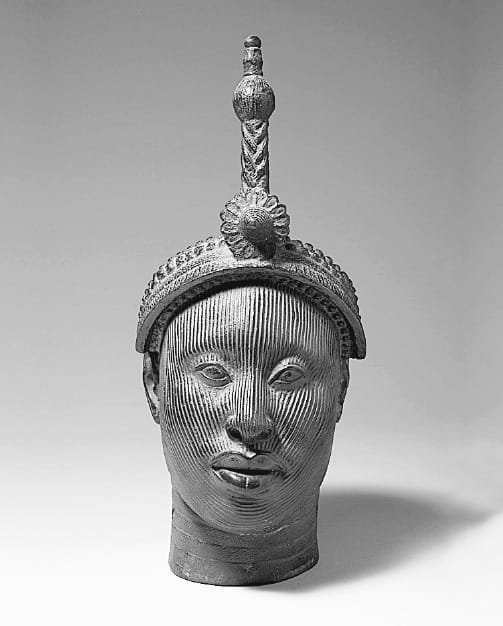
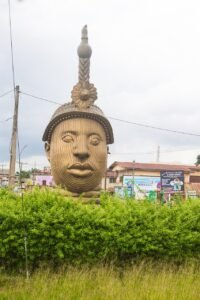
According to her , the name is also associated with the famous bronze head discovered in Ile-Ife in 1910. Dating between the 12th and 15th centuries, the sculpture showcases extraordinary craftsmanship and naturalism achieved through the lost-wax casting technique.
”Its remarkable realism challenged colonial-era misconceptions about African art and demonstrated the sophistication of ancient Yoruba civilisation.
”Reverenced for its exceptional craftsmanship, historical significance, and spiritual symbolism, Ori Olokun remains a powerful representation of the artistic sophistication, religious beliefs, and cultural identity of the Yoruba people.
”Discovered in Ile-Ife in the early twentieth century, Ori Olokun is a remarkable terracotta head renowned for its striking naturalism and technical excellence.
”The sculpture depicts a human head adorned with intricately carved facial markings, finely detailed features, and a regal expression that reflects dignity, wisdom, and authority.”
She stated further that its extraordinary realism challenged long-held misconceptions about African art and demonstrated that sophisticated artistic traditions flourished in West Africa centuries before European contact.
The name “Olokun” refers to the revered Yoruba deity associated with the deep sea, wealth, prosperity, fertility, and spiritual abundance. In Yoruba cosmology, Olokun is regarded as the custodian of immense riches and hidden mysteries beneath the ocean.
The association of the sculpture with Olokun highlights the profound relationship between spiritual power, kingship, and prosperity within Yoruba traditional belief systems.
As a result, Ori Olokun is often interpreted not merely as a work of art but as a sacred symbol embodying divine authority and supernatural protection.
Beyond its religious significance, Ori Olokun stands as a testament to the technological and artistic achievements of ancient Ile-Ife.
The sculpture reflects a highly advanced understanding of modelling, proportion, and aesthetics.
The precision of its facial features, the symmetry of its form, and the intricate scarification patterns demonstrate the expertise of Ife artists, whose works have earned global recognition as some of the finest examples of African classical art.