Category: Features

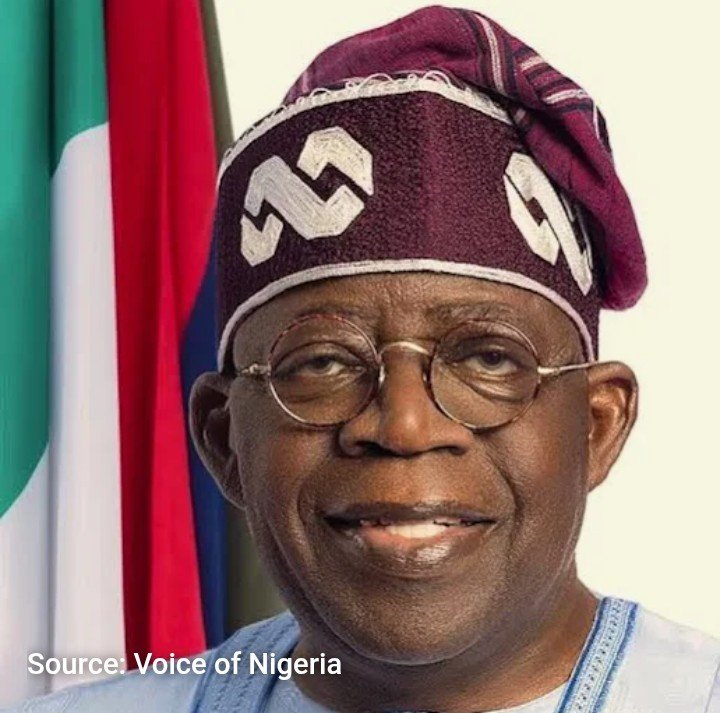
  • IN DEFENCE OF PRESIDENT TINUBU’S DEBTS-FOR-INFRASTRUCTURE POLICY

    IN DEFENCE OF PRESIDENT TINUBU’S DEBTS-FOR-INFRASTRUCTURE POLICY

    POLICY STATEMENT 037 BY THE INDEPENDENT MEDIA AND POLICY INITIATIVE (IMPI)


    • IN DEFENCE OF PRESIDENT TINUBU’S DEBTS-FOR-INFRASTRUCTURE POLICY

    The nation’s policy space is once again inundated with claustrophobic imputations by politically minded individuals and advocacy groups that stridently demonise the federal administration’s infrastructure policy debts, with a devious objective to disorient the masses against the administration.

    Our review of all imputations made in this regard points to a fallacy of generalisation, lacking an alternative workable solution to the historical limitations inherent in Nigeria’s infrastructure deficit and the consequential unproductive impact on the nation’s economy and development.

    Infrastructure development, in the context of this Policy Statement, encompasses the construction and maintenance of physical structures such as roads, bridges, power supply, transportation systems, and other enabling facilities that facilitate economic activity and improve the quality of life for citizens.

    Nigeria’s infrastructure challenges are vast. Road networks, crucial for trade and mobility, span around 195,000 kilometres. Yet, over 70 per cent of these roads are in poor condition, driving up transportation costs, delaying deliveries, and limiting access to markets, especially for small businesses and farmers.

    Nigeria’s rail infrastructure is also limited. Despite recent investments, the country has only 3,500 kilometres of operational tracks, insufficient for a population exceeding 220 million. Installed power capacity is 12,500 MW, but actual operational output often averages only 4,000 MW, leaving Nigeria’s per capita electricity consumption at just 144 kWh annually, far below the global average of 3,131 kWh. Businesses spend an estimated $29 billion annually on backup energy sources, including diesel generators. This infrastructural insufficiency was attributed to the exit of companies such as GSK and P&G, among others, over the years.

    *Valuation of Nigeria’s Infrastructure Deficit*

    Nigeria’s productivity and standard of living have been ascribed to the inadequacy of infrastructure over the years. While there is a seeming consensus on this assertion, there have been diverse estimates of the true value of the country’s infrastructure deficit.

    The World Bank, which categorises Nigeria as a middle-income economy, estimated the Nation’s total infrastructure stock to be approximately 30% to 35% of its Gross Domestic Product (GDP). This ratio falls well short of the World Bank’s 70% benchmark for middle-income economies. Thus, it is projected that Nigeria will need an accumulated investment of up to $3 trillion over 30 years to bridge the infrastructure gap.

    The African Development Bank (AfDB), on the other hand, estimated the value of the country’s infrastructure shortfall at $2.3 trillion, $700 billion lower than the World Bank’s estimate. According to its erstwhile President, Dr Akinwunmi Adesina, Nigeria needs $15 billion in annual investment over 20 years to bridge its infrastructure gap.

    The International Finance Corporation (IFC), on its part, estimated a lower figure of $2 trillion over 20 years to bridge it. Still, KPMG, the global audit firm, estimated a much lower annual infrastructure spending of $14.2 billion over 10 years, totalling a sum of $142 billion to close the country’s huge infrastructure gap.

    To establish which of the estimates can be realised in Nigeria’s perennially constricted revenue-generation circumstances, we put the different infrastructure deficit estimates to the test of probable outcomes, which determine the likelihood of specific results from a random event or experiment, often calculated as the ratio of favourable outcomes to total possible outcomes.

    Among all the estimates, KPMG’s $142 billion estimate aligned more closely with the Nigerian situation, with a probable outcome indicating that spending $14.2 billion annually over 10 years (a total of $142 billion) is a key target to bridge Nigeria’s infrastructure gap. Accordingly, sustained investment at this level, particularly in transportation, power, and digital infrastructure, will catalyse substantial economic growth and significantly reduce the deficit.

    While this estimate will not absolutely provide the full bouquet of required infrastructure, the investment will shift Nigeria from an infrastructure-deficient state to one with a rapidly modernised, connected, and sustainable system. Such investment could generate roughly 3 to 4 times as many jobs in the economy, significantly reducing unemployment and addressing the poor condition of road networks, enhancing air transport safety, and facilitating faster growth to support a modern digital economy, among other benefits.

    *Historical Budget Allocation and the Possible Realisation of the $142bn Infrastructure Target*

    Over the last 25 years, since 2000, no federal administration has budgeted more than $14 billion for capital spending in a single year, despite three oil booms between 2000 and 2014.

    In 2000, for instance, total federal government projected capital expenditure was $3.62 billion, but only the first quarter was fully disbursed, with lower disbursements recorded in the second quarter to the last. Though the 2001 fiscal year was marked by high oil revenues and windfall gains (excess proceeds), the capital budget was $3.87 billion, but only the first-quarter allocation was fully disbursed.

    In 2002, the total capital expenditure appropriated was $2.7 billion. Still, only about 38% of the capital budget was implemented, with appropriated capital expenditure declining to $2.25 billion in 2003 and recording a marginal increase to $2.6 billion in 2004.

    Though capital spending increased to $ 4.6 billion in 2005, it was still a far cry from KPMG’s $14.2 billion suggested benchmark per annum, especially given that it marked the year of the oil windfall, when projected crude oil sales reached $37.7 billion. But only 55% of the budget was implemented by December, 2005. The trend of low capital appropriation continued in 2006, with total federal infrastructure spending cited at $4.5 billion.

    In 2007, however, the capital budget ballooned to over $5 billion, propelled by an oil sale boom, but actual spending was about $3.9 billion. The same basic, relatively high capital budget appropriation was recorded in 2008, another oil price surge year, when about $6.7 billion was appropriated, with yet again a low implementation threshold. In 2009, approximately $7 billion was budgeted for capital expenditure, but only about 54.26% was released.

    In tandem with the oil boom of 2010, 2011, 2012, and 2013, appropriated capital expenditure increased to about $12.3 billion, $10.42 billion, $8.2 billion, and $9.9 billion, respectively. However, all the appropriated expenditures were reported to have performed below 70 per cent.

    We note that, beginning in 2014, after the global oil price upswing, capital expenditure returned to the $6 billion range. By 2015, however, earnings from crude oil had crashed, and that reflected in a reduced capital budget allocation of about $3.2 billion.

    Nevertheless, as of September 2015, only about $1 billion had been spent on capital projects.

    In 2016, there was a relative increase in both allocation and implementation, with about $3.95 billion released for capital projects. Paradoxically, the year of the oil crash recorded the highest capital release for infrastructure in the country’s history up to that point. The budget was successfully implemented through loans and related debts.
    About $2 billion was specifically injected to revive abandoned projects in the year. In 2017, proposed capital expenditure was roughly $7.3 billion; however, about $4.5 billion was released. In 2018, capital expenditure was quite ambitious at about $9.42 billion, again with about $4.4 billion released. This was replicated in 2019 when total capital expenditure released was roughly $3.9 billion out of the approved capital budget of $6.6 billion. In 2020, budgeted capital expenditure was about $5.0 billion.

    In 2021, planned capital expenditure totalled roughly $10.4 billion. However, the actual spending was about $5 billion. Beginning with the 2022 capital budget allocation, we observed an exponential increase in the capital budget to $13.34 billion; however, only about $4.29 billion was released. The value of capital expenditure declined to $9.3 billion in 2023, while actual performance was reported at $3.45 billion. Beginning in 2024, we observed a policy of rolling over outstanding appropriated expenditures into the following year to ensure their complete implementation. The 2024 capital expenditure was printed at about $13 billion, with a further increase to about $15 billion in the 2025 budget for restoration.

    We note at this juncture the near-perennial low budget implementation threshold since 2000, with the obvious inconsequentiality of appropriated expenditure on infrastructural development.

    However, at this time, we acknowledge the record-breaking fiscal milestone set by the President Tinubu-led federal administration, which matched and exceeded KPMG’s $14.2 billion annual infrastructure spending estimate for the first time in Nigeria’s fiscal history.

    Based on the approved 2026 Appropriation Act, the Nigerian government significantly expanded its fiscal framework, with the total budget breaking records. Remarkably, the budget allocated $23 billion (roughly half the total budget) to infrastructure and other capital expenditures.

    Without doubt, the 2026 budget is indicative of a new vista in the nation’s fiscal firmament with emphasis on securing debts for infrastructure development.

    The approved $23 billion infrastructure budget is about the same size as the budget deficit to be financed almost entirely through debt.

    This debt-for-infrastructure spending policy had roused a cacophony of concerns and, at times, condemnation in political opposition quarters and corporate advocacy groups. Some had orchestrated the fact that debts should not have been planned to finance the 2026 deficit since the removal of the fiscally ruinous fuel subsidy. The opposing argument is that the removal had saved the country about $10 billion, which should naturally revert to the federation account.

    Our retort, however, is that the $10 billion annual fuel subsidy was mostly funded by debt and did not account for the bulk of the financing required for capital spending at that time or now. The country definitely needed more than the $10 billion saved from subsidies to provide functional infrastructural facilities.

    Some other adversarial imputations have also argued that, rather than resorting to debt financing for infrastructure, the Public-Private Partnership (PPP) model should be vigorously adopted. We note, conversely, that several empirical studies have shown that PPPs in infrastructure financing face significant challenges, including high transaction costs, lengthy negotiation timelines, complex risk allocation, and political instability, which often result in projects being treated as off-balance-sheet liabilities.

    Other key obstacles include limited institutional capacity to manage contracts, weak legal frameworks, insufficient financial resources and abandonment.

    In addition, private investors are drawn more to jurisdictions that have demonstrated strong commitments to infrastructure investment because such commitments act as key indicators of economic stability, reduced operational risks, and enhanced profitability, unlike what obtains in Nigeria.

    A substantive indicator of the private sector’s reluctance to enthusiastically embrace the infrastructure PPP in Nigeria is that institutional assets, including pension and insurance funds, have exceeded $100 billion, yet less than 5% is invested in infrastructure, compared to 15% in South Africa.

    Private equity and venture capital flow to Nigeria reached $1.2 billion in 2023, but little of this was directed to infrastructure.

    The reality is that manifest government funding of infrastructure assets usually motivates and builds investors’ confidence in the jurisdiction of interest.

    Nonetheless, from both global and domestic indicators, there are growing signs of investors’ increased confidence in Nigeria’s debt instruments, evidenced by Nigeria’s sovereign Eurobonds yields, which fell last week to 6.89% from 8% for the first time on record. This signals improved sentiment among foreign portfolio investors towards the country and underscores the strength of demand for Nigeria’s external debt, even as global borrowing costs remain elevated.

    This positive development is despite rising US Treasury yields, which usually attract investors away from emerging-market debt. Instead, investors are increasingly pricing in Nigeria’s improved macroeconomic stability, reform momentum and more recently, the rally in oil prices following the U.S.-Iran war. Thus, it can be safely asserted that the global capital market will provide Nigeria with a cheaper cost of debt in the future.

    We also note that some Nigerian corporates express concerns about the crowding out of domestic companies from the debt market by the federal government’s borrowing there.

    Our submission in this regard is that, at this point in the nation’s developmental trajectory, all considerations should be subject to the requirements of development infrastructure investment, with borrowed funds directed to high-priority projects in transportation, power, digital, healthcare, and education that enhance long-term productivity and economic growth.

    We must add that the government’s issuance of domestic debt through bonds and treasury bills deepens local financial markets, helping to create a benchmark yield curve. This serves as a reference point for pricing private-sector debt and facilitates the growth of corporate bond markets.

    *Conclusion*

    Already, we are seeing clear signs of a rejuvenated Nigerian infrastructure, with the recent approval by the Tinubu-led Federal Executive Council of a record-breaking suite of infrastructure projects. These include $2.99 billion for rail projects in Lagos, Kano, and Kaduna, more than ₦7 trillion for road and bridge works nationwide, $billion worth of total reconstruction of major seaports in Apapa, Tin Can, Calabar, Warri, and Port Harcourt to address decades of neglect and ₦1.096 trillion for capital projects in the power sector, among others.


    Omoniyi M. Akinsiju, PhD

    Chairman,

    Independent Media and Policy Initiative (IMPI)

    May 17, 2026

  • Gov. Otu Predicts Stronger Showing for Tinubu in 2027, Cites Ongoing Reforms

    Gov. Otu Predicts Stronger Showing for Tinubu in 2027, Cites Ongoing Reforms

    By Nsa Gill

    Cross River State Governor, Senator (Prince) Bassey Edet Otu, has expressed strong confidence in President Bola Ahmed Tinubu’s prospects for the 2027 presidential election, predicting a significantly improved performance both in Cross River State and nationwide.

    The Governor made the remarks during an endorsement rally organized by the Cross River Southern Consultative Forum at the U.J. Esuene Stadium in Calabar on Wednesday, in support of President Tinubu and the All Progressives Congress (APC).

    Governor Otu attributed his optimism to the bold and ongoing reforms spearheaded by President Tinubu, citing initiatives such as the Tax Reform Law, federal backing for the Bakassi Deep Seaport, the extension of the Lagos-Calabar Coastal Highway into Cross River, and the rollout of Special Agro-Industrial Zones across the country.

    “President Tinubu is not shying away from tough but necessary decisions. He is driving reforms with boldness and clarity of purpose,” the Governor stated. He went on to predict that the President would secure over 90% of the vote in Cross River State in 2027, a notable turnaround from the 2023 election, where the APC fell short in the Presidential polls in the state.

    According to Governor Otu, like many speakers in the event, Governor Otu’s popularity, earned through impactful achievements in economic development, infrastructure, and security over the past two years, will be a major factor in galvanizing support for the President’s re-election bid.

    The endorsement event attracted political stakeholders; youths, women groups, trade bodies, and traditional leaders from the seven local government areas in the Southern Senatorial District: Akamkpa, Akpabuyo, Bakassi, Biase, Calabar Municipal, Calabar South, and Odukpani. It follows similar endorsements from the Central and Northern Senatorial Districts, suggesting growing statewide momentum.

    Barr. Eyo-Nsa Ekpo, Chairman of the Cross River Southern Consultative Forum, described the endorsement as a clear vote of confidence in both President Tinubu and Governor Otu. He lauded the Governor’s “people-oriented leadership” and his commitment to State development and citizen-led needs. “Governor Otu has redefined governance in Cross River by responding directly to citizens’ demands,” Ekpo said.

    In his address, Governor Otu expressed surprise at the massive turnout, which he interpreted as public affirmation of his administration’s efforts. He highlighted ongoing efforts to dismantle criminal enclaves, stimulate economic revival, restore tourism, and improve public service delivery. “I see myself as a servant, driven by a divine mandate,” he stated, echoing sentiments from religious leaders who noted that security has improved so significantly that churches have resumed overnight vigils without fear.

    Representatives from local government areas offered concrete examples of the Governor’s impact. In Akamkpa, residents cited ongoing road construction in Obun, the fulfilment of campaign promises, and the establishment of the new University of Education and Entrepreneurship. In Odukpani, the development of Nigeria’s largest gas field under Governor Otu’s watch was hailed as a historic economic milestone. In Biase, the Governor’s popularity is credited with rendering opposition parties virtually nonexistent.

    Traditional rulers also lent their voices to the endorsement. Professor Itam Hogan Itam, the Paramount Ruler of the Efuts, interpreted the light rain during the event as a sign of ancestral blessing. Etubom Architect Bassey Eyo-Ndem echoed this symbolism, calling it a divine endorsement; “our gods, the land, the wind and the sea are all in agreement”.

    The event not only affirmed the growing support for Governor Otu’s administration but also reinforced the alignment between his governance agenda and President Tinubu’s national vision anchored on the renewed hope agenda.

    While the 2027 elections remain two years away, the endorsements signal strong grassroots support and a positive trajectory for both leaders in Cross River State and across the South-south geo-political zone

    As Governor Otu crosses the midpoint of his first term, Wednesday’s rally stands as both a validation of his leadership and a potential foundation for sustained political and developmental success.

    Nsa Gill is the Special Adviser, Public Affairs to Governor Bassey Otu of Cross River State.
    ===========

  • APC Chairmanship tussle: Time to reward Al-Makura’s loyalty, sacrifices

    APC Chairmanship tussle: Time to reward Al-Makura’s loyalty, sacrifices

    By Mohammed Babadzuru

    There is no doubt, politics is all about interests. It involves give and take, it also involves alignments and realignments, adjustments and compromises here and there. It is also a game of win and lose.

    That is why some scholars describe politics as a complex game made only for the strong-hearted and for those with flexible hearts as, according to them, the moment one joins politics, one must learn to forgive fast because one’s opponent today could be his best ally tomorrow.

    Another most interesting part of the politics is that faithful loyalists to a group, association or political party are rewarded for their loyalty, faithfulness and contribution to the party at the due time.

    The current move and intrigues in the ruling party – the All Progressive Congress (APC), in respect of the chairmanship position of the party has caught the attention of most political watchers and analysts in the country.

    As the consultations and clandestine moves in preparation for the 2027 general election had since begun, the APC is also mapping out plans to ensure it retains power, especially at the centre, come 2027.

    This has resulted to speculations making the rounds suggesting that the chairmanship position of the party may return to the North Central part of the country, to hold firm the millions of voters in that region.

    Considering that the APC is made up of many blocks, political analysts believe that the Congress for Progressives Change (CPC) block should be compensated and appeased with the chairmanship position of the party.

    This, they say, is necessary, to prevent them from pulling out of the APC to join the new Social Democratic Party ?(SDP) coalition that is gradually mobilising to challenge the current president and possibly take power from the centre.

    Many members of the APC have, since the past few days, been pointing their hands towards the emergence of one of the key actors in the CPC block and a faithful and loyal member of the APC – Senator Tanko Al-Makura.

    Recall that Senator Almakura was Governor of Nasarawa State for 8 years. He won his first term under CPC and won the second term on APC platform.

    It is also worth recalling that Senator Al-Makura contested for the chairmanship of the APC when the tenure of Comrade Adams Oshiomhole elapsed but fate made it that Senator Abdullahi Adamu, from the same state with Senator Al-Makura, got the chairmanship position, instead.

    As it stands, many believe that it is time to reward Senator Al-Makura and the CPC block by giving him the chairmanship of the APC.

    Senator Al-Makura, in the political circle, is qualified and competent to drive the ship of the APC to success in the 2027 election because, analysts say about Nigerian politics right from the second republic.

    It is worth noting that Senator Al-Makura participated actively in running the affairs of the then National Party of Nigeria (NPN) which was the dominant political party in Nigeria during the Second Republic (1979–1983) when he served as a youth leader.

    Since then, Senator Al-makura had been in partisan politics and held very prominent party positions over the years. He was elected into the Constituent Assembly, representing Lafia- Obi Federal Constituency in 1988-1989.

    Senator Al-makura served as state secretary of the National Republican Convention (NRC), Plateau state, from 1990-1992 and was a founding member of the Peoples Democratic Party (PDP) in Nasarawa State.

    When he was elected Governor of Nasarawa state, in the 8 years of his tenure, Senator Al-makura proved to all that he is one politician who considers both the interest of his party and that of his people over and above all other personal interests.

    How he managed the PDP-dominated House of Assembly and the intrigues leading to the impeachment drama in the then House left even his haters in shock till date.

    In those 8 eventful years of being the Governor of Nasarawa State, Senator Al-Makura demonstrated that he is, indeed, blessed with the ability and wisdom to manage crisis.

    Ex-Governor Al-makura also demonstrated his talent and ability to manage crisis even at the party level nationally. He proved this when he was assigned to head the Peace and Reconciliation Committee for North East following a crisis arising from the APC governorship primaries.

    In all the six geo-political zones, North- East has the largest governorship aspirants but within a short time, Senator Al-makura was able to reconcile and restore peace to North- East APC to the satisfaction and admiration of all.

    Senator Al-makura achieved another feat in Ekiti, similar to the one he achieved for the APC in North-East. It would be recalled that at the heat of bitter rivalry among countless governorship aspirants in Ekiti APC, Senator Al-makura was invited by the national leadership of the party to go and resolve the confusion by conducting the APC primaries.

    As expected, Senator Al-makura, at the risk of his life, went to conduct APC primary elections in Ekiti. He conquered against all odds, conducted the freest primary election that saw the emergence of the then governor Dr. Kayode Fayemi.

    What Senator Al-makura did in North East and in Ekiti for the APC is his natural gift from the Almighty. He can replicate same in APC nationally and even in the Nigerian polity.

    As part of his contribution to the growth and development of the APC since its formative years, Senator Al-makura is the only person that delivered his state to President Buhari’s CPC; he is the first governor that hosted all the governors on the merger train to a meeting in Lafia that saw to the formation of the APC.

    His state, Nasarawa, was the only state CPC presented on the merger table during negotiations. In fact, Senator Al-makura is about the only governor who traversed the length and breadth of this country trying to ensure that the merger train arrives at the desired destination; and this came to fruition with the birth of the APC in 2015.

    A man with such political exposures and sagacity since 1999, who achieved much for the APC, need to be rewarded this time around. The time to reward him is now.

    Truly there is nothing APC can do to compensate Senator Al-makura for his entire efforts than to allow him occupy the office of the National Chairman.

    Anything short of this will be interpreted by many as high level injustice and ingratitude by the APC.

    It is therefore time for members of the APC to graciously and handsomely reward Senator Al-makura for his resilience, dedication, sacrifices, contributions, patience and loyalty to the party over the years. He has the experience and capacity to deliver the country to the ruling party in the 2027 general elections across board.

    Babadzuru writes from Minna.

  • In Rivers State, A Supreme Iniquity?

    In Rivers State, A Supreme Iniquity?


    By Chidi Anselm Odinkalu

    The political control of the resources of the territory known as Rivers State in Nigeria’s Niger Delta has been a site of curious jurisprudence since the Acting Consul of the Oil Rivers Protectorate, Harry Johnston, procured the judicial liquidation of King Jaja of Opobo in December 1887 in Accra, present capital of Ghana.

    The charge against King Jaja was the violation of a treaty obligation to assist the British “in the execution of such duties as may be assigned.” At the end of proceedings which lasted less than one day before a forum described by Elvar Ingimundarsson as a “Kangaroo court”, King Jaja was convicted and sentenced to exile.

    The court also prohibited the people of Opobo from designating a replacement for him.

    At the end of February 2025, Nigeria’s Supreme Court continued a tradition of afflicting the people of the territory of Rivers State with curious jurisprudence.

    Separated by 137 years, the decision of the Supreme Court in the latest of the legal disputes from the political rift between incumbent governor, Siminalayi Fubara, and his predecessor, Nyesom Wike, reprises essential parallels with the trial and exile of King Jaja with haunting similarity.

    Now, as then, the underlying dispute is really about “a treaty”; in this case allegedly between the governor and his predecessor, the terms of which also appear to be about “the execution of such duties as may be assigned….”

    The court orders are against a ruling figure (Governor Fubara) from Opobo and the political effect is to seek to exile him from office while precluding any other Opobo person from replacing him.

    Context is necessary to understand the case that the Supreme Court had to decide. Going into the 2023 election, the governor of Rivers State, Nyesom Wike, was term-limited.

    In 2020 and 2021, he publicly declared that he would not impose a successor on the state. In 2023, he did. His choice was a little-known public servant from Opobo-Nkoro, Sim Fubara. After the election, their relationship disintegrated. The reasons are subliminal in this case; the consequences are explicit.

    In December 2023, 27 members of the Rivers State House of Assembly loyal to Nyesom Wike, including the Speaker, Martin Amaewhule, ostentatiously announced that they had defected to the ruling All Progressives Congress (APC).

    In 2015, the Supreme Court of Nigeria ruled that such defection is permissible only if the political party from which the legislators seek to defect is so hopelessly splintered that it “makes it impossible or impracticable for [the] political party to function as such.” If not, according to the court, “the defector automatically looses (sic) his seat.”

    With the defection of Martin Amaewhule and his 26 other colleagues, the House of Assembly of Rivers State became factionalised. The remaining five members were loyal to the incumbent governor.

    Shortly after the defection of the Amaewhule faction in December 2023, the premises of the Rivers State House of Assembly were demolished ostensibly on the orders of the state government.

    The faction loyal to the state governor relocated to the Government House where, shortly thereafter, they purported to pass into law the 2024 Appropriation Bill for the State, which became law when the governor promptly assented to it.

    The outbreak of litigation that followed has been inexhaustible. The appeal determined by a five-person panel of the Supreme Court on 28 February 2025 is one them. Essentially, it sought orders to restrain the Central Bank of Nigeria from remitting to Rivers State, its share of the proceeds from the Federation Account except to finance a budget passed by the Amaewhule faction of the State House of Assembly. In other words, this was litigation asking the judiciary to take sides in what is in fact a very grubby dispute over control of Rivers State’s money.

    This case traveled up to the Supreme Court with supreme alacrity. The Federal High Court delivered judgment on 30 October 2024, a mere three and a half months after filing on 15 July. Not wishing to be outdone, the Court of Appeal delivered judgment on 13 December 2024, less than a month and a half later. The Supreme Court has been equally supersonic in bringing the case to judgment.

    The Supreme Court dealt with two issues when it should have addressed at least three. First, it affirmed the jurisdiction of the Federal High Court to hear the case. Next, on the question whether the rump of the House of Assembly of Rivers State loyal to the governor could constitutionally sit to pass the 2024 budget, it held that they could not. In support of this position, the court cited precedent applicable to when the legislature sits on impeachment, a special procedure for which the constitutionally prescribed parliamentary arithmetic is different.

    The third issue, it left unattended. The Court simply proceeded without deliberation or reasoning to grant all the orders asked for.

    An injunction, the principal relief sought in this case, is notoriously a remedy in equity, only granted deliberatively. Over one century ago, the path-breaking decision in The Lusitania laid down the principle that “as a general rule of both civil and common law… the remedy must be commensurate with the injury received.”

    There are four glaring problems with this Supreme Court judgment. The first is not what is in it but what is missing. Lawyers claim that “equity does not act in vain.” The Supreme Court did not bother to provide any reasoning or justification for its orders, leaving it open to legitimate accusations of having acted in vain or in a transaction. Granting the court every latitude on the violations that it found, its orders are an unreasoned overreach.

    Second, ordering the Central Bank to withhold Rivers state’s share of the Federation Account is at best a rogue order that punishes the people for a dispute between politicians. It violates the maxim that “equity regards the beneficiary (in this case the people of Rivers State) as the true owner.” Their right to their share of the Federation Account is antecedent to, independent of, and unconnected with the dispute in this case.

    Third, being aware of the ongoing litigation on the legal consequences of the defection of the Amaewhule faction of the State House of Assembly, the Supreme Court short-circuited a contingent appellate process and issued dispositions on a dispute that was neither before it nor necessary for the determination of the issues it was called upon to decide. In doing so, the court chose with a touch of injudicious shamelessness to accept the invitation to take sides in the underlying political dispute in Rivers State.

    Fourth, the Supreme Court announced revolutionary jurisprudence on the judicial fly, claiming that, in cases where there is a disputed defection, “only the [legislature] can declare a seat vacant for defection and not the Governor of a State. Not even the Courts can do so.” It takes heedless audacity for an apex court to castrate the judiciary. That is exactly what the court did with this line in italics. When the Supreme Court laid down the contrary principle in 2015, it was by a panel of seven Justices. This Supreme Court purports to overrule that principle without even citing, acknowledging, or considering its earlier decisions on the same point. Moreover, a five-person panel of the Supreme Court cannot overrule a seven-person panel.

    When Chief Justice of Nigeria, Kudirat Kekere-Ekun, showed up reportedly to turn the sod on proposed judicial digs with Nyesom Wike last October, there were unheeded warnings then concerning the prohibitive institutional costs of such dalliance with a notorious political litigant who has a reputation for instrumentalizing the courts. Many will look at will be argued that she was not on the panel; to which the response will be, she chose the judges and constituted the panel.

    On 1 December 1887, the Kangaroo court of Rear Admiral Walter Hunt-Grubbe ruled that the presence of King Jaja in Opobo “would be fatal” to British commercial interests and authorized his eventual exile to West Indies. The judgment was widely seen as a transactional travesty and its effect, it was said, was “to haunt the British colonial administration in West Africa for a long time.”

    It may similarly be said of what the courts of post-colonial Nigeria did in the 137th year of that iniquity that they sought in another transactional travesty to exile another figure from Opobo from his position because his presence would be fatal to the interests of Nigeria’s most prolific political litigant.

    *A lawyer and a teacher, Odinkalu can be reached on chidi.odinkalu@tufts.edu*

  • CHINA AND NIGERIA JOINING HANDS FOR A BRIGHTER FUTURE

    CHINA AND NIGERIA JOINING HANDS FOR A BRIGHTER FUTURE


    By Yu Dunhai

    From January 8th to 9th, H.E. Wang Yi, Member of the Political Bureau of the Central Committee of the Communist Party of China and Minister of Foreign Affairs, paid an official visit to Nigeria.

    During the visit, Foreign Minister Wang Yi met with President Tinubu and Foreign Minister Tuggar, which harvested fruitful results.

    (Yu Dunhai, Ambassador of the People’s Republic of China in Nigeria.)

    After 4 years since Foreign Minister Wang Yi’s last visit to Nigeria, this visit occurs amid the 25th Anniversary of the Founding of the Forum on China-Africa Cooperation (FOCAC) and the beginning of implementing the outcomes of the FOCAC Beijing Summit 2024, and aims to build on past achievement and guide the future for the China-Africa and China-Nigeria relations.

    This is another high-level exchange between China and Nigeria following the successive visits of Foreign Minister Tuggar and President Tinubu to China last year, which therefore is also a reunion between good friends. As the Chinese Ambassador to Nigeria, I had the honor and privilege to accompany and witness the visit, and I am happy to share my thoughts of this visit as follows.

    First, the visit bears extraordinary significance. This visit goes along with the established practice of Chinese diplomacy that the Chinese Foreign Minister would choose Africa as his first overseas destination at the start of every new year, a tradition lasting over the past 35 years.

    It reflects the mutual support and original aspiration of the China-Africa friendship, which plays a unique role in the history of international exchanges. The visit also demonstrates China’s resolve and commitment to working with Nigeria to implement the consensus reached by our two Heads of State and the outcomes of the FOCAC Beijing Summit, building an all-weather China-Africa community with a shared future for the new era, and leading the Global South in advancing solidarity and cooperation.

    The visit has greatly strengthened the synergies between the Belt and Road Initiative (BRI), the Ten Partnership Actions for China and Africa to jointly advance modernization, and the Priority Areas of the Renewed Hope Agenda of President Tinubu. The visit injected new impetus into our Comprehensive Strategic Partnership, deepened our cooperation, and enhanced the international coordination between our two countries.

    Second, the two sides reached a broad consensus. During the visit, Foreign Minister Wang Yi spoke highly of the China-Nigeria relations, stating that under the strategic guidance of the two Presidents, our bilateral relations have achieved three outstanding achievements, namely a new leap in positioning of the relations, a new platform created through solidarity and collaboration, and a new height in international cooperation. The Nigerian side noted that our relations is rooted in traditional friendship and is unbreakable. Nigeria particularly reaffirmed its commitment to the One-China principle and supporting China’s efforts in achieving national reunification, and its role on the world stage.

    Regarding regional issues, China reiterated that it would stand together with Nigeria to counter terrorism and maintain regional peace and stability in the Sahel region and West Africa. China also supports Nigeria in playing a more important role on the global stage. Both sides agreed to forge greater synergy in strategies, consolidate political mutual trust, jointly maintain regional peace and stability, strengthen coordination on international and regional affairs, and promote China-Nigeria relations to a higher level.

    Third, the visit charted the way forward for our cooperation. Practical cooperation has always been the driving force of the China-Nigeria relations. Such mega projects as the Lekki Deep Sea Port, four major Terminals, and the Ogun Free Trade Zone, have not only profoundly improved Nigerian people’s livelihood, but also constitute stellar examples in China-Africa cooperation. Foreign Minister Wang Yi’s visit further consolidates the ‘strategic’ nature of China-Nigeria cooperation. We will work together to translate the important consensus reached by the two leaders and the outcomes of the FOCAC Beijing Summit into actions. We will step up synergy in development strategies to achieve common development as well as to support the collective rise of the Global South. Foreign Minister Wang Yi’s visit also highlights the exemplary feature of China-Nigeria cooperation. Just before the visit, the People’s Bank of China and the Central Bank of Nigeria renewed the currency swap agreement, which was valued at 15 billion yuan or 3.28 trillion naira.  The China Development Bank issued the first loan of €245 million to support the Kano-Kaduna railway project. Foreign Minister Wang Yi also reiterated China’s support for the Nigeria railway modernization project. Besides the traditional infrastructure cooperation, our two sides also exchanged views on deepening cooperation in such areas as trade, new energy, mining, agriculture, people-to-people exchanges, and security. In the days to come, China-Nigeria cooperation will embark on a broader and faster lane.

    Hereby, I would like to take this opportunity to express my sincere thanks to Nigerian colleagues and friends, from the State House, the Ministry of Foreign Affairs, and other departments for their hard work to make the visit a great success, and their warm hospitality extended to the Chinese delegation.

    As a Chinese saying goes, even mountains and seas cannot distance people with shared aspirations. No matter how the international landscape evolves, China will always be Nigeria’s most trustworthy friend, most reliable partner in pursuing development, and the strongest backing on the international stage. We are willing to take this visit as an opportunity to deepen cooperation with Nigeria in various fields and jointly serve as the pioneers in redressing the historical injustices, the co-workers for the rise of the Global South, and the doers for the improvement of global governance.

    May our cooperation forever nourish, and our friendship never perish.

    -(- Yu is the Ambassador of the People’s Republic of China in Nigeria.)

  • Osun: Work in High Tempo on Lagere Flyover Bridge Project in Ife

    Osun: Work in High Tempo on Lagere Flyover Bridge Project in Ife


    – As Residents Wish Gov. Adeleke more administrative successes in 2025


    By Biola Lawal
    Ile-Ife (Osun) FLOWERBUDNEWS: As the new year 2025 rolls on gradually, tempo of work has increased on the construction of the Osun state Government’s Mega Flyover Bridge at Lagere Area of the ancient town of Ife.

    Flowerbudnews media team reports that most of the crucial base works, reinforcement and other strategic structural essentials were already being completed.

    The construction work is being undertaken by SAMMYA Nigeria Limited for the Osun State Government.

    No

    Meanwhile, the Construction of Abutment wall is also ongoing, while the Construction of base for the retaining wall is also undertaking steady progress, Flowerbudnews reports.

    Construction of piers (Columns) and pier caps were also successfully undertaken, with one of the supervising Engineers on the project, Engr. Tosin Osasona, confirming that all the fours piers and piers caps were 100% completed

    Engr. Toyin Osasona, who is in charge of monitoring standard and quality control, was full of commendation for Governor Ademola Adeleke for initiating the mega project for the benefit of the people of Ile-Ife.

    The Supervising Engineer, who is also a native of Ile-Ife, noted that Governor Adeleke’s policy of using local contents on the project had been very beneficial to the indigenes, many of whom are engaged profitably on the project.

    Flowerbudnews learnt that in terms of labour content, Governor Adeleke has earned a commendable goodwill, respect and love among Ife people as scores of indigenes were now earning profitable income from working on the project.

    Project Manager, Engr. Michael Adedayo had told Flowerbudnews in an interview that Governor Adeleke’s local content sourcing policy was being well implemented on the project.

    Engr. Adedayo disclosed that materials being used on the project were majorly sourced from Ife and adjourning areas to boost the local economy through patronage.

    Residents who spoke to FLOWERBUDNEWS generally commended Governor Adeleke with many of them making prayer for more divine guidance, help and support for him.

    Mr. Adekunle Ayodeji, a resident, urged the Governor to intensify his developmental efforts to bring more dividends of democracy to the people of Osun state.

    ”We pray that GOD continue to assist Governor Ademola Adeleke so that he can achieve more success in this 2025,” Mrs. Comfort Ayinde, another resident of Ife said in an interview with Flowerbudnews.

  • Shiites reject police allegation against Islamic group

    Shiites reject police allegation against Islamic group


    The Islamic Movement, also known as the Shiites, on Thursday, denied the allegation by the FCT Command that the group was responsible for some of the deaths of its officers in the year 2024.

    It would be recalled that the FCT Commissioner of Police, Olatunji Disu, had, in his end-of-the-year statement, alleged that some of his 140 active-duty officers died as a result of Shiites activity, other violent protests and high blood pressure in Abuja in 2024.

    Reacting during a press briefing in Abuja, Abdullahi Musa, a member of the movement, under the leadership of Sheikh Ibraheem El-Zakzaky(H), described the allegation as falsehood.

    “Even when we protest, we protest peacefully. Some of our members who wish to inform the police, to invite them for protection have done that and the police always come there to attack them.

    “So there was nothing like Shiite protest or violent protest in Abuja that would have led to the death of 140 police officers.

    “But I agree that blood pressure can lead to the death of police officers because they are being oppressed by the government under which they work for.

    “Most of the police officers were being denied their salaries and allowances. They know.

    “It is just that the constitution prohibited the police officers from protesting, you would have seen a lot of violent protest among the police officers.

    “So we vehemently reject this allegation of killing police officers. We don’t kill anybody.

    “They have killed us in several occasions, they follow us even to our houses to arrest us.

    “We have never attacked anybody. What we are doing is purely religion,” Musa said.

    He said that though former President Muhammadu Buhari spent eight years with nothing to show for it except for unprecedented poverty, economic hardship, hunger and ever-increasing insecurity that plagued the nation, Musa alleged that the government, however, used all the weapons in their arsenal and mobilised every security parastatal to fight the Islamic movement.

    “From campaigns of calumny in the media to arbitrary arrests, death threats and constant attacks on peaceful protesters; the demolition of buildings and graveyards; unlawful detention; and so many other acts of violence too numerous to mention; the Islamic movement, and in particular its leader Sayyid Ibraheem Ya’qoub El-Zakzaky (H), has endured one of the harshest state-sponsored acts of terrorism.

    “These and so many other actions that followed made various human rights groups and public affairs analysts come to the conclusion that the Zaria massacre was indeed a foreign agenda masterminded by former President Buhari,” he said.

    Musa alleged that President Bola Tinubu’s government is already towing the line.

    “To our dismay, we come to realize that the story is not different with the incumbent administration. The security operatives, with impunity, still continue to persecute the activists of the Islamic movement,” he said.

    According to him, these persistent acts of violence against Islamic activities being organised by the brothers and sisters of the Islamic movement are a direct attack on Muslims and Islam.

    “It’s high time that Bola Tinubu comes out in the open to declare his intention of continuing with the atrocities of his predecessor.

    “All we want to make clear is that the Islamic Movement is here to stay. It is our religion. It is an ideology. It is a concept and not an organisation. It can not be crushed or eliminated!

    “The Islamic Movement is here to stay, and no amount of persecution can deter us from carrying out our religious activities.

    “As a nation that claimed to be democratic, it’s a shame that some people are being marginalised by the state due to their religious beliefs,” he concluded.

  • ECOWAS Unravelling: Will Mahama’s 2nd Coming Be a Silver Lining?

    ECOWAS Unravelling: Will Mahama’s 2nd Coming Be a Silver Lining?


    *By Paul Ejime

    The Economic Community of West African States (ECOWAS) is 50 this year. However, for those who care about the future of the organisation once acclaimed as a trailblazer in regional economic integration, especially conflict management and resolution, the situation calls more for a deep reflection and introspection instead of popping Champagne cocks.

    From the time when some of its member countries were under military dictatorships or with one rebel government in the bush and another in the state capital, ECOWAS managed to evolve to a period when all its 15 member States practised one form of democratic government or another.

    For more than a decade after its formation on 28 May 1975 through the Treaty of Lagos, the organisation was seized with peace and security challenges involving sporadic conflicts and civil wars, beginning with the two civil wars in Liberia. Dozens of military coups also toppled elected governments.

    On each occasion, ECOWAS leaders ensured there was an eventual return to constitutional rule, using regional instruments with the carrot and stick approach, including suspension of membership or imposition of sanctions on errant members where diplomacy failed.

    But gradually, the regional leaders took their eyes off the ball, allowing unbridled alteration of national constitutions and election rigging for term elongation, gross violations of human rights, suppression of opposition and shrinking of the democratic space.

    The democratic regression continued unabated, until 2020 when former Col now General Assimi Goita and his military colleagues led the coup that ousted the government of elected President Ibrahim Boubacar Keita.

    By the middle of 2023, the region had witnessed more than half a dozen putsches, the game changer being on 26 July 2023 in Niger, led by the head of the country’s presidential guard General Abdourahamane Tchiani, who has since proclaimed himself the leader of a new military junta. Niger thus joined Mali, Guinea and Burkina Faso as ECOWAS countries now under military dictatorships.

    Instead of using its tried and tested strategies in whipping wayward member States into line, ECOWAS leaders mismanaged the situation by jumping headlong into the fray, imposing sweeping sanctions and threatening the use of military force to restore constitutional rule in Niger. Newly elected Nigeria’s President Bola Tinubu, who was still fighting legal battles to secure his election was made Chairman of the Authority of ECOWAS Heads of State and Government.

    Perhaps to reciprocate that gesture, he caused Nigeria to suspend electricity supply to neighbouring Niger, even though the bilateral power supply agreement was not covered under any ECOWAS protocol.

    Apart from the unpopular decision to use force in Niger, which was later abandoned, the role of France and its Francophone African allies, especially Cote d’Ivoire during the division between ECOWAS and its three Sahelian States of Mali, Burkina Faso and Niger, did not help matters.

    In December 2023, the three, called the Alliance of Sahel States, or AES, served notice of their intention to quit ECOWAS “immediately.”
    ECOWAS has since realised its mistake and changed tact, adopting diplomacy and negotiations to woo back the three countries, which have adamantly dug in their heels,

    At their last summit in Abuja last December, ECOWAS leaders still gave the junta leaders a six-month “cooling period” to reconsider their decision to pull their countries out of ECOWAS, failing which the separation would be deemed to have started in January 2025.

    Barring last ditch efforts, the divorce could mark an unprecedented turning point in the history in ECOWAS and regional integration in Africa, with potential far-reaching consequences.
    Mali, Burkina Faso and Niger, all landlocked countries, have expelled the troops of former colonial power, France, and the anti-French sentiments, which the junta leaders are riding on for their populist stance, have continued to grow.

    The Senegal government of President Diomaye Faye, the ECOWAS Chief negotiator charged with convincing the three renegade countries to return to the fold, has also told Paris to close the French military base in the West African country and so has Chad, a non-ECOWAS member State.

    General elections are due in Cote d’Ivoire this year and in what is seen as political expediency, or “a pre-emptive strike,” President Alassane Ouattara has also announced a phased withdrawal of French troops from one of the bases in the country.

    But to put issues in context, it is the citizens of the Francophone countries that are behind the anti-French sentiments. They started the movement, before the military juntas joined.

    Critics are unconvinced about the junta leaders’ sincerity of purpose. A critical examination of their careers would show that they are all beneficiaries of the French system. Several years after they seized power, there is little or no progress in their political transition programmes.

    In clear violation of regional and continental protocols, they have also indicated their intention to stand as candidates in elections for transition to civilian rule, which many consider a sign they are bent to perpetuate themselves in power and not “liberators” as they claim.

    The three countries still belong to the eight-nation West African Economic and Monetary Union, UEMOA, set up by France, which are members of ECOWAS and using the CFA franc, controlled by the French Treasury. The juntas grouse with ECOWAS, could be that it is the only organisation pressuring them to return to constitutional rule.
    Zimbabwe’s diplomat, Ambassador Arikana Chihombori-Qua, deserves much credit for consistently calling out the French for the “inhumane” colonial pacts it forced on leaders of former African colonies at independence. Through her, the outside world became aware that Paris was making some 500 billion dollars per year from the exploitation of Francophone Africa. Unsurprisingly, she was sacked from her role as the African Union’s representative to the United Nations in 2019.

    In the assessment of ECOWAS’ performance, it is not all gloom and doom, but perhaps, the proverbial half-full or half-empty cup. However, the undeniable truth is that all is not well with the organisation. By its standards, ECOWAS has under-performed, particularly in the last decade.

    In a dynamic world of shifting geopolitics and geostrategic ecosystem, with multilateralism yielding place to bilateral/unilateral pursuits and new nationalism, characterised by emerging global threats of terrorism, insurgencies, extremism, and the invasion of social media, disinformation/misinformation and fake news, it would be naive to expect ECOWAS to be static or immune to external influence/interference.

    Organisations, such as the United Nations and even the European Union, which are reference points, experience a bad patch or “wilderness” period. But life coaches will tell you that ‘it is not how many times you fall, but your ability to rise from each fall that determines your strength, sustainability and future.’

    Applying this maxim to ECOWAS, it is fair to say that while the organisation should be proud of its past achievements, such as the free movement of persons, goods and services, and the right to residence and establishment, the challenges and threats of regional disintegration are real and present.

    While, pre- and immediate post-independent African leaders did the heavy lifting by ensuring that much of Africa and its people were emancipated from slavery and colonialism, many African countries are still dependent and contemporary African leaders have failed their people by being self-serving instead of giving meaning to the nominal independence of their countries.

    For the wobbly ECOWAS, the worst-case scenario could be the eventual withdrawal of the three AES countries or the balkanisation of the economic bloc, which will be a major setback.

    On a positive note, the presence of Burkina Faso’s junta leader Capt Ibrahim Traore at the inauguration of Ghana’s new President John Dramani Mahama on 7th January 2025 could be a silver lining. Ghana has demonstrated democratic maturity by successfully conducting the ninth cycle of general elections with the fourth peaceful transfer of power between ruling and opposition parties for 33 years since its return of the multiparty system in 1992.

    For Mahama, it is a glorious comeback with an overwhelming victory of 56% vote and a commanding parliamentary majority, after a hung parliament and the best presidential outing since the country’s independence from Britain in 1957.

    He could deploy his experience and work to bequeath indelible legacies to his country which prides itself as the Black Star of Africa. At the regional level, Mahama could also team up with his colleagues, particularly Nigeria’s President Tinubu to reposition and refocus ECOWAS on the dreams of its founding fathers.

    Every organisation requires a pillar/leader, which ECOWAS has lacked over the past decade. Like their predecessors combined to galvanise other regional leaders to end the civil wars in Liberia and Sierra Leone, Tinubu and Mahama owe their countries and the region the duty and responsibility to provide the necessary leadership that will prevent ECOWAS from disintegration. Tinubu as ECOWAS Chair was Guest of honour at Mahama’s inauguration.

    *Ejime is a Global Affairs Analyst and Consultant on Peace & Security, and Governance Communications*