Tag: ECOWAS

  • Guinea-Bissau: ECOWAS, Presidential Claimant Clash Over Minister’s Controversial Statement

    Guinea-Bissau: ECOWAS, Presidential Claimant Clash Over Minister’s Controversial Statement


    By Paul Ejime

    ECOWAS and Fernando Dias da Costa, who claimed victory in Guinea-Bissau’s 23 November 2025 presidential election, have strongly disagreed over a controversial statement credited to Sierra Leone’s Foreign Minister and Chair of the ECOWAS Council of Ministers, Timothy Musa Kabba, on Guinea-Bissau’s leadership crisis.

    Also, in a joint statement, a Consultative Forum and the Popular Front, “platforms bringing together more than 50 social and civic organisations in Guinea-Bissau, express their deep indignation and astonishment at the profoundly irresponsible, extremely serious, and utterly unacceptable statements, as they constitute an attack on democratic values, the rule of law, and the principles of constitutional legality that ECOWAS claims to uphold.”

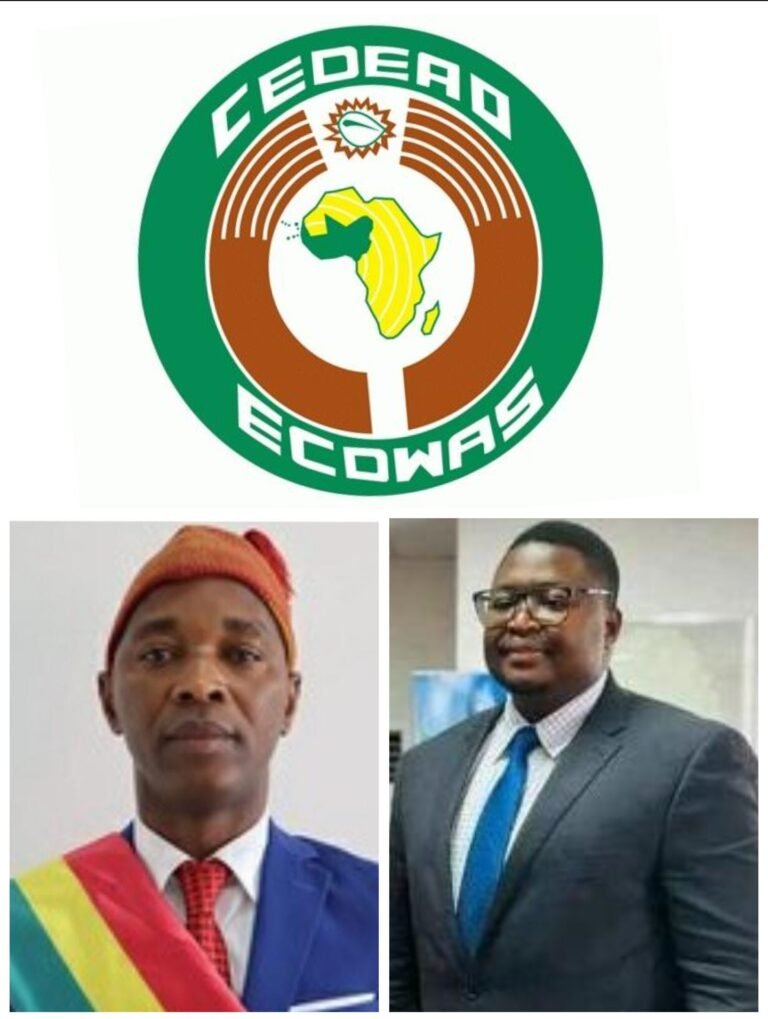
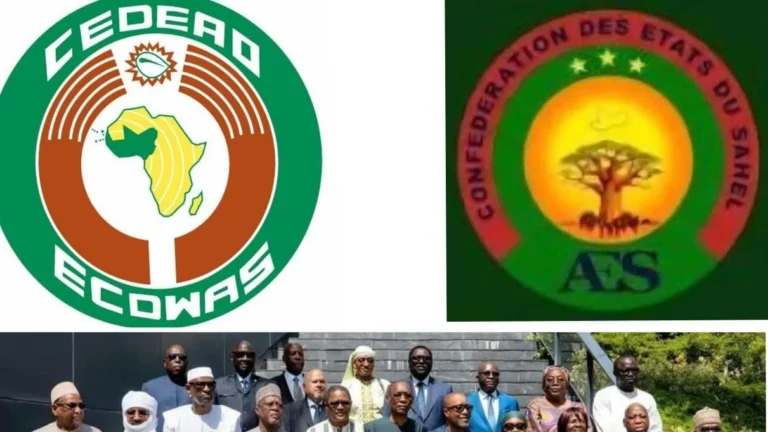
    (Top) ECOWAS Logo, (L-R bottom): Dr Fernando da Costa, Guinea-Bissau’s Presidential claimant & Timothy Musa Kabba, Sierra Leone’s Foreign Minister and Chair, ECOWAS Council of Ministers.)


    Minister Kabba led a delegation, which included the Foreign and Defence Ministers of Senegal, and the ECOWAS Commission President Omar Alieu Touray, to Bissau last weekend, and later told the media: “We are very pleased…” to be informed by the junta leader that general elections would be held on the 6th of December 2026 in Guinea-Bissau. He also stated that the junta regime had reviewed the constitution and electoral laws and that a referendum would follow.

    But in a swift reaction, da Costa’s Campaign Directorate rejected the minister’s comment and accused ECOWAS of “inconsistency.”

    “It is politically unacceptable that a representative of a brotherly state from the sub-region has taken the initiative to announce the holding of a referendum aimed at approving a Constitution promoted by the current transitional authorities – assuming a role that does not belong to him and which constitutes an inadmissible interference in a matter that exclusively concerns the people of Guinea-Bissau,” the Directorate said in its statement, which called da Costa Guinea-Bissau’s President-elect.

    The results of the 23 November 2025 presidential election have not been released due to the military coup of 26 November 2025, widely believed to have been orchestrated by former President Umaro Sissoco Embaló to avoid an electoral defeat.

    Da Costa’s Campaign Directorate said the Sierra Leone minister’s position “contradicts the (ECOWAS’) democratic principles and previous decisions regarding Guinea-Bissau,” and called on Bissau-Guinean citizens to “remain united, and defend their constitution and democracy,” and “uphold the popular will expressed in the presidential election of 23 November 2025.”

    “No foreign representative has the authority to announce or validate constitutional processes, such as a referendum or constitutional reform, on behalf of Guinea-Bissau citizens,” it said, and accused ECOWAS of “not being neutral,” noting that “Guinea-Bissau’s sovereignty is non-negotiable,” and “Only the Guinean people have the right to decide on constitutional changes.”

    The statement urged “ECOWAS to act with coherence, impartiality, and fidelity to its founding principles.”

    It also called on “the international community to remain vigilant regarding any initiatives that may undermine democratic legality, the sovereignty of Guinea-Bissau and the inalienable right of its people to freely decide their own destiny,” adding: “History shows that the will of a people is never defeated when it remains united in defence of its freedom, dignity and sovereignty.”

    Responding to the statement by da Costa’s Campaign Directorate, the ECOWAS Commission said “…the Head of Mission (to Guinea-Bissau) was speaking on behalf of ECOWAS in the discharge of a collective mandate, and not in any national capacity.”

    It explained, “…that the Mission was deployed pursuant to the mandate of the Authority of Heads of State and Government and acted exclusively within the framework of the Community’s responsibility to promote peace, constitutional order, political dialogue and regional stability.”

    “The Commission further wishes to clarify that the Mission neither announced nor validated any constitutional process on behalf of the people of Guinea-Bissau. It merely communicated the broad outlines of the political road-map discussed with the competent national authorities in the course of its consultations,” the statement said, adding: “Such communication should not be misconstrued as an attempt to determine the constitutional future of Guinea-Bissau, a sovereign decision that belongs exclusively to the institutions and people of the Republic of Guinea-Bissau, in accordance with their Constitution and applicable national laws.”

    “The Commission calls upon all political stakeholders to exercise restraint, engage in constructive dialogue and contribute to an atmosphere conducive to peace, national cohesion, and democratic consolidation. ECOWAS will continue to stand alongside the people of Guinea-Bissau in support of a peaceful, inclusive, and nationally owned political process that safeguards the country’s stability and strengthens democratic institutions,” it added.

    In their joint statement, the Consultative Forum and the Popular Front said there was “…a profound inconsistency between ECOWAS’ official rhetoric and its actual actions in Guinea-Bissau,” adding: “Such a stance undermines its (ECOWAS’) credibility and reveals a practical inability to prevent and respond to situations that represent a democratic setback and erosion of the rule of law…”

    They called on the ECOWAS Conference of Heads of State and Government “to ensure the implementation of its decisions and to maintain consistency between the principles it claims to uphold and its Institutional actions,” and warned against “…any initiative that might jeopardize the restoration of constitutional order and democratic legality and, consequently, legitimize the autocracy of Umaro Sissoco Embaló.”

    The group said it would “…hold ECOWAS accountable for all consequences arising from its repeated persistent conduct and complicity with subversive actions by the coup leaders in power in Guinea-Bissau.”

    Many analysts have noted that the transition programme being pursued by the Embaló-supported junta regime has little or no input from ECOWAS or other Guinea-Bissau stakeholders, especially the opposition parties and their leaders.

    According to diplomatic sources, da Costa is in Bissau without any security protection, having left the Nigerian Embassy, which provided him refuge following the Embaló self-coup.

    Domingos Simões Pereira, another prominent opposition leader, barred from participating in the November 2025 election along with his African Party for the Independence of Guinea-Bissau and Cape Verde (PAIGC), remains under house arrest after being accused by the junta government of involvement in at least two attempted coups in 2023 and 2025. This is despite calls for his release by ECOWAS and the Community of Portuguese Speaking Countries.

    ECOWAS will set a dangerous precedent by allowing fresh elections with the prospect of Embaló returning to power after a self-coup in a region notorious for tenure elongation and unconstitutional changes of government.

    Four of the ECOWAS 15 member States are now under military dictatorship, and three of them have already withdrawn their membership from the regional bloc, under the name of the Alliance of Sahel States, AES.

    Guinea-Bissau’s leadership crisis has become an existential litmus test for ECOWAS to redeem what is left of its past glory.

    *Ejime is a Global Affairs Analyst and Consultant on Peace & Security and Governance Communication*

  • ECOWAS Court Orders Prison Decongestion, an end to Prolonged Detention without Trial in Nigeria

    ECOWAS Court Orders Prison Decongestion, an end to Prolonged Detention without Trial in Nigeria


    *By Ajayi Osahon

    The ECOWAS Community Court of Justice has ordered the de-congestion of Nigerian prisons and a periodic review to end the prolonged detention of awaiting trial inmates in the country.

    According to 2024 official statistics, of the estimated 79,237 inmate population in Nigeria, 26,718 were convicted, while 52,519 were awaiting trial, representing nearly 66 per cent of the total prisoner population.

    In a judgement delivered on 15 May 2026 on case No ECW/CCJ/APP/05/25 filed by the Centre for Community Law, a Nigeria-registered NGO, over violations of the rights of awaiting-trial inmates in Nigeria’s correctional facilities, the ECOWAS Court held that the “prolonged detention of a substantial number of awaiting-trial inmates and the resulting overcrowded prison conditions breached the inmates’ rights to liberty, dignity, fair hearing, presumption of innocence, the right to be tried within a reasonable time, and equality before the law as guaranteed under the African Charter on Human and Peoples’ Rights (ACHPR).”

    The Court therefore ordered Nigeria to “undertake immediate institutional and corrective measures aimed at addressing the deficiencies within its criminal justice and correctional systems.”

    The country should also “introduce and implement a comprehensive prison de-congestion policy, including the adoption of non-custodial measures for minor and bailable offences,” and “within six months, submit a detailed compliance report to the Court, including statistical updates on the number of inmates released or tried.”

    The Centre for Community Law, which is engaged in the promotion and enforcement of Community laws and human rights protection, initiated the action in the public interest, challenging the prolonged detention of accused persons awaiting trial in Nigeria, as the respondent.

    The Centre, as the Applicant, further posited that many detainees were held for bailable offences and remained in detention for periods exceeding the maximum punishment prescribed by law.

    It also argued that custodial facilities were severely overcrowded and that the continued detention of large numbers of awaiting-trial inmates imposed an excessive burden on public resources.

    The Centre argued that the situation constituted violations of Articles 1, 3, 5, 6, 7, 22, and 26 of the African Charter, and other applicable international human rights instruments.

    In reaching its decision, the ECOWAS Court dismissed Nigeria’s preliminary objections, which challenged the Centre’s legal capacity to initiate the action.

    The Court further noted that under Article 9(4) of the 2001 ECOWAS Supplementary Protocol on Democracy and Good Governance, it has jurisdiction to determine cases of human rights violations occurring within Member States. On admissibility, the Court affirmed the doctrine of *actio popularis,* recognising the right of individuals and organisations to institute public interest actions on behalf of identifiable groups whose rights are allegedly violated.

    It was observed that the Applicant, as a duly registered NGO, had established its legal personality and standing to initiate the action against Nigeria.

    It also noted that the Applicant produced credible and corroborated evidence, including official records and public admissions by Nigeria’s correctional authorities.

    The Court said that Nigeria failed to rebut the evidence with any credible contrary material, adding that the prolonged detention without trial and prison overcrowding violated the rights of inmates to liberty, presumption of innocence, equal treatment before the law, respect for human dignity, the right to be tried within a reasonable time… and also breached the Respondent’s international obligation to adopt legislative, administrative, and institutional measures necessary to give effect to protected rights.

    The Court, however, found that the alleged violations of Articles 22 and 26 of the African Charter were not sufficiently established and dismissed those claims. It also ordered each party to bear its own legal costs.

    Professor Amos Enabulele, Executive Director of the Centre, welcomed the ECOWAS Court’s judgment, saying that it “exposes a deep structural problem within Nigeria’s custodial system.”

    He said the Centre “does not view the judgment as an indictment on Nigeria, but rather, a victory for the country, as it presents a timely opportunity to confront the longstanding suffering of prison inmates whose dignity and humanity have been diminished by decades of neglect and mismanagement of the correctional system.”

    Professor Enabulele also drew the attention of current policymakers to what he called “an uncomfortable but important reality of past policymakers, who fail to reform the deplorable prison conditions, and now find themselves incarcerated in the very facilities they never imagined they would enter.”

    According to him, “societies thrive when people who are not directly affected by injustice nevertheless stand up and fight against it as though they themselves were victims.

    *Ajayi Osahon is Media Manager at the Centre for Community Law)

  • How to Strengthen West Africa’s Security Against Terrorism, Violent Extremism

    How to Strengthen West Africa’s Security Against Terrorism, Violent Extremism


    *By Paul Ejime

    *Nigeria reached out to the U.S. and Ghana for cooperation before the American military strikes against Jihadist terrorist groups in December 2025, – Ghana’s Foreign Affairs Minister, Samuel Ablakwa*

    Africa’s Sahel region, extending to West Africa, is regarded as the epicentre of global terrorism, with insecurity disrupting governance and leading to unnecessary loss of lives and humanitarian displacements.

    The erstwhile multilateral frameworks, such as the G5 Sahel, the Accra Declaration on Terrorism and Unconstitutional Change of Government, and the Multinational Joint Task Force (MJTF), involving intelligence sharing and commitment to fight illicit financing of terrorism, have either stalled or are tottering.

    To address these hydra-headed issues, Nigeria’s Foreign Affairs Minister, Ambassador Yusuf Tuggar and his Ghanaian counterpart, Hon. Samuel Ablakwa, were special guests at a programme organised on Monday, 9th March, by Chatham House, London, UK’s prominent policy and research think tank, also known as the Royal Institute of International Affairs.

    Under the theme: *How can West Africa strengthen its collective security against violent extremism?* , the programme was streamed online and featured a Q&A session. Researchers, serving and former diplomats, government officials and journalists were among the attendees.

    On America’s military strikes against jihadists/terrorists in Nigeria on 25th December 2025, Minister Ablakwa disclosed that the Nigerian government “reached out to the U.S. and Ghana for cooperation,” before the operation, adding: “Ghana has no foreign military base, what is happening in the Middle East vindicates that position.”

    The Minister explained that Ghana handled military/security collaboration on a “case-by-case basis,” prioritizing its sovereignty and national interest.

    He outlined the country’s counterterrorism and security strategy, including the government’s “presence in all the country’s districts through the District Security Council (DISEC)” and a plan to establish a Warfare Centre at Tamale.

    Minister Ablakwa described violent extremism and terrorism as serious threats to the international community, requiring global cooperation to tackle.

    On the implications of a possible defeat of the Shiite Muslim-controlled Iran in the ongoing war, given the significant population of Shiite Muslims in some ECOWAS member States, he explained that Ghana prioritizes religious tolerance and inclusiveness over sect differentiation.

    As a demonstration of this, he said the Chief Imam, as the head of all Muslims in Ghana, celebrated his 80th birthday anniversary in a Catholic Church, while Christians and members of other faiths treated Muslims as brothers and sisters.

    Nigerian Minister Yusuf Tuggar began by describing the insecurity problem in the region as complex and warned against its “wrong framing,” adding: “it is wrong to categorise the problem in Nigeria as Christian genocide, because sometimes it is banditry and criminal acts” against adherents of all religions.

    He said the three Alliance of Sahel States, AES – Mali, Burkina Faso and Niger, pulled out of the 15 Economic Community of West African States (ECOWAS) by their junta leaders were still “integral to the regional security and anti-terrorism strategy.”

    Amb. Tuggar also reiterated his earlier position that the U.S. military strikes on terrorist groups in Nigeria were a joint operation, while noting that America’s role in Nigeria remained “indirect and supportive, and not direct boots-on-ground.”
    He explained that Nigeria and other ECOWAS member States have the capacity to manage conflicts as happened in Liberia and Sierra Leone.

    Minister Tuggar said Russia’s influence in West Africa, through the private military agency, Wagner, replaced by the state-run Africa Corps, “is not great”, although Moscow’s real intention “remains unclear.”

    He said Nigeria was still collaborating with the AES countries, including Niger, adding that a state visit was being planned for the leader of Chad, a neighbouring Central African country to Nigeria.

    Both foreign affairs ministers argued that the withdrawal of the AES countries has not weakened ECOWAS.

    Hon. Ablakwa said the AES countries “seeking a reset of their relations with France should be solidarized with… we need them onboard, and those kinds of discussions need to be held.”

    He also acknowledged that “corruption, collapse of states, climate change effects, inadequate grazing land, alienation of the grassroots and the absence of democratic dividends and dysfunctional social contract between government and the citizens,” fuelled discontentment in Africa.

    The minister emphasised a return to the vision of Ghana’s independence leader, Kwame Nkrumah, on African unity, the dismantling of artificial boundaries and greater intra-African trade and cooperation to reduce tensions among the continent’s estimated 1.3 billion people.

    While agreeing with Hon. Ablakwa on the need for government presence at the grassroots, Amb. Tuggar said that in Nigeria, the governance system was working at the Federal and State levels compared to the Local Government areas.

    Independent analysts link insecurity in West Africa to poor governance, disaffection among neglected/alienated segments of society, a lack of public trust, corruption, and mismanagement of national resources, coupled with complicity, denial, and misguided policies by political leaders, compounded by ineffective regional collaboration and external interference.

    The situation may not change, or could even worsen, in the region without an intentional recalibration of strategies to facilitate lasting solutions that prioritise the interests of the majority, rather than the current leaders’ laser focus on themselves, their families, and close associates in the privileged class.

    *Ejime is a Global Affairs Analyst and Consultant on Strategic Governance Communications*

  • ECOWAS Commission, Nigeria, Sued Over Alleged Unlawful Nomination of Judges

    ECOWAS Commission, Nigeria, Sued Over Alleged Unlawful Nomination of Judges


    By Taiwo Olamide Oluboyo

    The Trustees of the Centre for Community Law (CCL), a Nigerian-registered NGO, and ProfessorAmos Osaiogbovo Enabulele have instituted legal proceedings against the ECOWAS Commission and the Federal Government of Nigeria, challenging the “unlawful” nomination and appointment of judges to the Community Court of Justice.

    The suit filed at the ECOWAS Court of Justice in Abuja on 6th February 2026 was formally registered on 12th February 2026 with reference No. ECW/CCJ/APP/08/26,

    The CCL and Professor Enabulele are listed as Applicants, while the ECOWAS Commission and the Federal Republic of Nigeria are named as Respondents.

    The Applicants contend that the “process for nominating judges to the ECOWAS Court failed to comply with the mandatory provisions of the Rules of Procedure of the ECOWAS Community Judicial Council and Article 3(1) of the Protocol on the ECOWAS Court of Justice.”

    They are also praying the Court to determine, among other issues, “whether it is lawful for (ECOWAS) Member States, particularly Nigeria, to nominate and appoint judges (to the Court) without adhering strictly to the prescribed procedures and mandatory requirements, including wide publicity of vacancies and transparent selection processes.”

    The Applicants argue that the “ECOWAS Commission requested nominations from Member States without ensuring compliance with the established rules designed to guarantee transparency, competitiveness, and merit-based selection.”

    In support of their claims, the Applicants “rely on paragraph 47(xi) of the Final Communique” of the Sixty-Eighth Ordinary Session of the ECOWAS Authority of Heads of State and Government, held on 14th December 2025 in Abuja.

    The Communique, annexed as Exhibit C to the application, stated that Nigeria, Benin, Liberia, The Gambia and Togo were chosen to nominate the next college of judges for the ECOWAS Court.

    The Applicants said that, following the allocation, “the nomination process in Nigeria and at the level of the ECOWAS Commission did not comply with the requirements for public advertisement and transparent selection, thereby excluding qualified candidates and undermining due process”

    Enabulele, the first Applicant, is a Professor of Public International Law, Barrister and Solicitor of the Supreme Court of Nigeria, while the CCL, the second Applicant, is a non-profit advocacy organisation, whose objectives include monitoring compliance with ECOWAS laws and promoting accountability within Community institutions.

    The Applicants argue that unless the Court “intervenes, individuals may be appointed to the ECOWAS Court bench without following proper procedures, thereby affecting the integrity, independence, and credibility of the regional judicial institution.”

    In addition to the substantive suit, the Applicants have also filed an Application “for Expedited Procedure pursuant to Article 59 of the Rules of the Community Court of Justice, urging the Court to determine the matter urgently.”

    They said that the “Respondents are taking active steps to nominate and appoint judges and that any delay could render the case nugatory if appointments are concluded before judgment.”

    Furthermore, a Motion by the Applicants for Interim Orders “is seeking restraining orders against the Respondents to halt any further steps in the nomination and appointment of judges pending the determination of the suit.”

    Among the reliefs sought by the Applicants in the originating application are declarations that the nomination and appointment process must strictly comply with the Rules of Procedure of the ECOWAS Community Judicial Council and the Protocol on the ECOWAS Court of Justice.”

    They are also seeking “orders compelling the publication of vacancies for judicial positions and directing the Respondents to publish the names and curriculum vitae of nominated candidates to enable community citizens to comment.”

    The Applicants further pray the Court “to prohibit the Community Judicial Council from accepting nominations obtained without proper advertisement and to issue such further orders as may be necessary to preserve the integrity of the Court.”
    The Respondents are required to file their defence within fifteen days of service, failing which the Applicants may proceed, and judgment may be given in the Respondents’ absence.

    The Centre for Community Law said the “suit is aimed at safeguarding the rule of law within ECOWAS institutions and ensuring that judicial appointments to the Community Court reflect transparency, merit, and strict compliance with the governing legal instruments.” No date has been fixed for the case hearing.

    *Taiwo Olamide Oluboyo is a Lawyer with the Centre for Community Law*

  • ECOWAS: Halting A Drift Towards Disintegration and Looming Civil War in Guinea-Bissau

    ECOWAS: Halting A Drift Towards Disintegration and Looming Civil War in Guinea-Bissau


    By Paul Ejime

    More than 50 years after its formation, the Economic Community of West African States (ECOWAS) ought to be in a celebratory mood as arguably the best-performing Regional Economic Community (REC) in Africa.

    However, the regional economic bloc, once internationally lauded for its outstanding achievements, especially in preventive diplomacy, conflict management and control, now faces a devastating crisis of legitimacy, confidence and poor leadership at national, regional and institutional levels, with the risk of avoidable disintegration.

    A decade after its formation, crippling governance challenges underpinned by conflicts and security threats meant that the organisation’s most notable achievement was the ECOWAS Free Movement Protocol adopted in 1979, which made it the first region in Africa to introduce a visa-free regime across national boundaries, and the right of settlement for citizens in any member State.

    The institutional/reputation haemorrhage has been gradual but telling and consequential.

    Set up on 28th of May 1975, through the Treaty of Lagos as “a transnational framework for economic cooperation and sociocultural exchanges, with a view to eventual unity of the nations of West Africa,” ECOWAS has evolved and unravelled from a zone of authoritarian regimes and military dictatorships in the 1970s/80s to an assemblage of member States, which embraced multiparty democracy of various shades until 2020.

    The membership had increased from 15 to 16 nations before Mauritania withdrew in 2000. Yet, by 2025, the membership declined to 12 after military juntas withdrew Mali, Burkina Faso and Niger from ECOWAS to form the so-called Alliance of Sahel States, AES. Two other member States, Guinea and Guinea-Bissau, are under suspension.

    General Mamady Doumbouya, who seized power in Guinea in a September 2021 military coup, has transmuted to a civilian president after an election with no credible opposition. Guinea looks set to be readmitted by ECOWAS, even though Doumbouya has violated Article 1(e) of the 2001 ECOWAS Supplementary Protocol on Democracy and Good Governance, stipulating that “no serving member of the armed forces may seek to run for elective political.”

    Doumbouya achieved his political ambition through a controversial constitutional amendment and referendum. But he is not alone in the “unconstitutional change of government.” Junta leaders and elected civilians have perfected “constitutional and electoral coups” in Africa.

    From President Alassane Ouattara of Cote d’Ivoire in 2016, to deposed Alpha Conde of Guinea, who forced through a constitutional change in 2020 during the COVID-19 pandemic; Presidents Faure Gnassingbe of Togo in 2023, and Patrice Talon of Benin, in 2025, the method is similar.

    Ouattara, 81, recently won a fourth term in an election with no strong opposition, after he had repeatedly said he wanted to give younger candidates a chance.

    Conde’s third-term bid ended in his fall with the Doumbouya-led coup. Faure  and Talon have generally escaped without consequences after violating ECOWAS rules, particularly Article 2(1) of the 2001 Supplementary Protocol on Democracy and Good Governance against “substantial modification… of electoral laws in the last six (6) months before the elections…”

    Faure seized power after the death of his father, Gnassingbe Eyadema in 2005 and claimed victories in subsequent disputed elections. He changed the constitution a month before the April 2023 controversial legislative polls to change Togo to a parliamentary system. With the changes, parliament will elect a symbolic President of the Republic, while a powerful President of the Council of Ministers conducts the nation’s policy and leads the parliamentary majority.

    Talon has announced he will not seek a third-term in the April 2026 poll, but is believed to be supporting his finance minister, Romuald Wadagni, as his successor.

    Like many of his colleagues in the region, Talon has been accused of authoritarianism, having emasculated the opposition. He has also extended the tenure of the President from five to seven years under a constitutional alteration that introduced a bicameral legislature with a Senate of appointed members, comprising former Presidents and others, including himself. The tenure of the Senate head, which Talon is gunning for, will be unlimited.

    While business tycoon Talon might have been shaken by the 7 December 2025 coup attempt, which Nigeria and France helped him to foil, the repressive and authoritarian machinery he introduced persists.

    In The Gambia, Adama Barrow, an accidental candidate who won the 2016 presidential election after former dictator Yahya Jammeh had jailed the main opposition leaders, was inaugurated in Senegal because of political tension in his country.

    The Barrow government has since jettisoned a draft constitution that cost the country millions of donor funds to produce and backtracked on promised political reforms. He is laser-focused on his third-term re-election in December 2026, using the same 1997 Constitution that was in effect during Jammeh’s 22-year ruthless regime.

    As if these were not enough, on 26 November  2025, Umaro Sissoko Embalo, President of Guinea-Bissau, took the unconstitutional change of government to an absurd new level through a self-coup and handed power to his loyalists in the military.

    In an apparent move to avoid defeat in the 23 November 2025 presidential election, having excluded viable opposition and dissolved the parliament twice, Embalo announced the dubious coup. The head of his Presidential Guard, General Horta Inta-A is now the Transitional President, while  Ilídio Vieira Té, his Campaign Director in the botched election, is the junta’s Prime Minister and Minister of Finance.

    Defying ECOWAS, which has demanded a shorter transition, instead of demanding the release of the election results, the military regime has announced a 12-month transition programme, fixed elections for 6 December 2026 and unilaterally changed the national constitution, granting expanded powers to the President, unlike the previous system where the President and Prime Minister shared powers.

    The controversial constitutional changes and other violations of regional texts and protocols by ECOWAS leaders have largely gone unchallenged by the ECOWAS Commission, “…comprising experienced professionals (charged with) providing the leadership to achieve the vision of the (ECOWAS) founding fathers…”

    Over recent decades, the Commission has either failed to provide “quality advice/leadership” or its input has been dismissed/ignored by the ECOWAS Authority, the Supreme Institution, or both.

    While the political leaders or the Authority should take the highest responsibility for ECOWAS’ drift towards disintegration due to their anti-democratic dispositions, such as the repression of opposition, state capture, human rights violation, decline of the rule of law, and the shrinking of civic space, resulting in the resurgence of military rule in the region, the technocrats at the Commission cannot be completely exonerated.

    Military coups are an aberration, but are not the only form of unconstitutional change of government rejected by ECOWAS rules. When political leaders violate ECOWAS rules/protocols, the Commission is duty-bound to point out the breaches through various channels, including public statements; otherwise, it becomes complicit in the violations.

    It is natural for leaders in breach to resist being called out. Therefore, as the Commission’s professionals/technocrats are accountable to the Community citizens and not the politicians, their commitment should be to deliver on the overarching objectives of the ECOWAS founding fathers.

    The professionals should not be afraid of taking tough decisions or losing their jobs, but must prioritise their personal and corporate integrity of ECOWAS.

    Two examples come to mind. In 2009, the ECOWAS Commission suspended Niger after then-President Mamadou Tandja went ahead with controversial parliamentary elections, and in 2011, the Commission boycotted elections conducted by President Jammeh because of the “repression and intimidation” of opposition and the electorate, among other reasons.

    In contrast, after the junta has demanded the withdrawal of ECOWAS forces from Guinea-Bissau and shunned a regional military delegation, the estimated 500-strong ECOWAS Sustainability Support Mission (ESSMGB) are sitting ducks in that country with no clear directive from ECOWAS.  After his self-coup, Embalo continues to direct the junta regime from the background, with his portrait pictures still adorning government offices in Bissau.

    The Embalo-instigated crisis has left ECOWAS sharply divided.  Recent talks between the Bissau junta and a delegation comprising Sierra Leone’s President Julius Maada Bio, the current chair of the ECOWAS Authority, the Senegalese President Diomaye Faye and the Commission President Omar Touray, were anything but positive.

    The junta is digging in with Embalo’s main opponent, Fernando Dias, who claimed victory in the November election, still taking refuge in the Nigerian embassy in Bissau, while other opposition figures are either in detention or fled Guinea-Bissau, a “narco-state,” which has seen at least nine attempted and successful coups since independence from Portugal in 1974.

    The transitional Charter, adopted shortly after the coup, bars the junta leaders, including General Inta-A, from running in the transition election.

    However, the damage to ECOWAS’ reputation if violators of its own rules go scot-free or if Embalo should return to power after the self-coup will be difficult to imagine as Guinea-Bissau inches towards a civil war.

    Also, critical questions will be raised about the legacy of the four-year mandate of the Touray-led Commission, which ends in June.

    ECOWAS requires urgent redemption and reinvention, and Nigeria should step up as the regional hegemon.  A lot will depend on how the organisation tackles the Guinea-Bissau and other simmering crises in member States, coupled with a drastic restructuring of the Commission.

    *Ejime is a Global Affairs Analyst and Consultant on Peace & Security and Governance Communications*

  • Centre for Community Law Sues ECOWAS Over Appointment of Commissioner

    Centre for Community Law Sues ECOWAS Over Appointment of Commissioner


    *By Orimogunje Samuel

    The Registered Trustees of the Centre for Community Law (CCL), a Nigeria-based non-governmental organisation, have instituted a suit before the ECOWAS Community Court of Justice (CCJ) against key ECOWAS institutions over alleged violations of the ECOWAS Revised Treaty and established appointment procedures.

    In Suit *No. ECW/CCJ/APP/66/25,* dated 29th December 2025, the Centre dragged the Council of Ministers, the President of the ECOWAS Commission, and the President of the ECOWAS Court of Justice before the Court, challenging the process that led to the appointment and swearing-in of Dr Habibu Yaya Bappah as Commissioner for Internal Services at the ECOWAS Commission.

    According to the Applicants, the Respondents acted unlawfully and without due regard to the ECOWAS Revised Treaty in the handling of the appointment, particularly while a related matter was already pending before the ECOWAS Court.

    Through its counsel, Olufemi Ubose, Esq., the Centre is asking the Court to determine, among other issues, whether it was lawful for the President of the ECOWAS Court of Justice to swear in Dr. Bappah at the instance of the Council of Ministers; whether such action was permissible given that the President of the Court is currently presiding over a case relating to the same office; and whether the appointment complied with the provisions of the Revised Treaty, especially considering that no fresh interview was conducted.

    The Applicants contend that Dr. Bappah emerged third in the earlier selection interview, behind Prof. Nazifi Abdullahi Darma, who came first, and Mrs Chizoba Mojekwu, who came second.

    Citing the report of the ECOWAS Ad Hoc Ministerial Committee on the Selection and Evaluation of Statutory Appointees, the Centre argues that due process requires that the next highest-ranked candidate be appointed, not the lowest-ranked among shortlisted candidates.

    The suit is also anchored on Suit *No. ECW/CCJ/APP/54/25 (Prof. Nazifi Abdullahi Darma v. President of ECOWAS Commission),* which was filed to challenge Prof. Darma’s removal from office without a hearing.

    The Applicants expressed concern that the President of the ECOWAS Court, who is presiding over that matter, went ahead to swear in a successor, an action the Applicants describe as a breach of judicial integrity and a violation of the Court’s governing protocols.

    Among the reliefs sought, the Centre is asking the Court to declare the appointment and swearing-in of Dr Bappah unlawful; to hold that the President of the ECOWAS Court violated his oath of office; to rule that the appointment process breached ECOWAS rules on merit-based recruitment; and to order either the appointment of the second-ranked candidate or a fresh interview.

    The Applicants also seek guarantees of non-repetition and other consequential orders.

    The Centre warned that allowing the Respondents’ actions to stand would further erode public confidence in ECOWAS institutions and undermine the rule of law within the Community.

    The suit was filed by Olufemi Ubose, Esq., on behalf of the Centre for Community Law, an organisation committed to promoting and protecting the rights of ECOWAS citizens and upholding the rule of law within the Community.

  • ECOWAS, Coup Contagion and Nigeria’s C-130 Saga

    ECOWAS, Coup Contagion and Nigeria’s C-130 Saga


    By Paul Ejime

    The Economic Community of West African States (ECOWAS) on Tuesday, 9 December, declared a state of emergency across the region, the first time since the regional bloc was formed in May 1975.

    The President of the ECOWAS Commission, Dr Omar Touray, announced during the 55th Session of the Mediation and Security Council at the ministerial level in Abuja, saying that “recent developments underline the imperative of serious introspection on the future of our democracy and the urgent need to invest in the security of our community.”

    Touray gave no further details, but this followed the latest army takeover of power in Guinea-Bissau, an attempted coup in Benin and the arrest of a Nigerian military plane with its crew and personnel by the military junta in Burkina Faso.With a history of prolonged army rule, Nigeria is no stranger to military coups – successful and failed.

    However, since its return to civilian rule in 1999, reports of an alleged coup only surfaced in the country in October this year, after the Government had announced the cancellation of the country’s 65th Independence Day Anniversary Parade.

    In a statement, the Defence Headquarters DHQ said “the decision to cancel the October 1 parade had nothing to do with any alleged coup attempt, but was taken to allow President (Bola) Tinubu to attend a strategic bilateral meeting outside the country.”

    The statement added that “the move also enabled members of the Armed Forces of Nigeria (AFN) to sustain momentum in ongoing military operations against terrorism, insurgency and banditry.” However, the media later reported the arrest of some military officers over an alleged coup attempt.

    While Nigerians were internalising the impact of the alleged putsch, President Tinubu announced changes to his service chiefs, including the replacement of the Chief of Defence Staff, Gen. Christopher Musa, who has since been appointed the country’s new Defence Minister.

    Fast forward to 26 November, while the world was waiting for the announcement of the results of the 23 November parliamentary and presidential elections in Guinea-Bissau, President Umaro Sissoco Embalo strangely announced that he had been toppled in a military coup, which critics believe he stage-managed.At an extraordinary ECOWAS virtual summit that decided the suspension of Guinea-Bissau over the coup, President Tinubu was among the regional leaders who called for strong measures against the disruption of constitutional order and democracy in the region.

    The meeting by consensus agreed on dialogue.An ECOWAS mission has visited Bissau for mediation, but the junta is consolidating its hold on power. It has named a 28-member cabinet and announced a 12-month transition programme, while Embalo is believed to be remotely controlling affairs from an undisclosed refuge.On 7th December, the army struck again, this time in Benin, very close to Nigeria. Soldiers led by Lt.-Col Pascal Tigri, said they had toppled President Patrice Talon, citing “the neglect of fallen colleagues and their families,” a reference to casualties in the fight against jihadists, and also “cuts in health care and tax rises, as well as curbs on political activities.”But according to the Nigerian presidency, based on official requests by Benin, Nigeria swiftly deployed two Air Force fighter jets and some ground troops to assist the Benin armed forces in dislodging the “military mutineers,” in what later turned out to be a failed coup attempt.While President Tinubu and other Nigerians are praising the country’s armed forces for “defending democracy,” some critical questions have emerged.Did Nigeria act unilaterally? Was the intervention legal under the Nigerian constitution? And was it at the instance of France, following reports that French President Emmanuel Macron had called President Tinubu before the Nigerian intervention?Section 5(4)(b) of Nigeria’s 1999 Constitution (as amended) states that “…except with the prior approval of the Senate, no member of the armed forces of the Federation shall be deployed on combat duty outside Nigeria.”Section 5(5) “empowers the President, after consulting the National Defence Council, to deploy troops for limited combat; such deployment must relate strictly to the national security of Nigeria.” As expected, the Nigerian Senate on Tuesday approved Tinubu’s actions in Benin.Surprisingly, in his statements after the coup attempt, Talon did not mention the Nigerian military assistance, but Tinubu was believed to have “acted in self-preservation with the coup fever dangerously too close for comfort.”Benin is a strategic neighbour of economic and security importance to Nigeria, and there are bound to be implications or fall-outs, whether Abuja had acted or not over the Benin coup attempt.But coming at a time when the Nigerian military is struggling in the fight against terrorism and Boko Haram insurgency, coupled with the negative reactions to U.S. President Donald Trump’s recent threat to send troops to Nigeria over alleged Christian mass killings, and the argument about national sovereignty, how was Nigeria’s military able to deploy so swiftly against the coup in another country?The Communist Party of Benin, PCB has condemned the military intervention by Nigeria and France. While reiterating its opposition to military takeovers, the Party accused the Talon administration of being responsible for “widespread discontent” in the country.Also, while ECOWAS has issued statements condemning the Benin coup attempt with the Chair of Authority, Sierra Leone’s President Julius Maada Bio, authorising the “immediate” deployment of a regional Standby Force to Benin, it remained unclear if the Nigerian and ECOWAS interventions enjoy full membership and community support.President Tinubu visits Paris for his medical treatment, and the military juntas in Mali, Burkina Faso and Niger have cited the “overbearing influence of France”  as a major reason for pulling their countries out of ECOWAS to form the Alliance of Sahel States, AES.To compound matters for Nigeria, an official of the junta in Burkina Faso announced on state television on Monday that the country’s armed forces had detained a Nigerian military aircraft, which made an emergency landing in Bobo-Dioulasso, with its 11 military personnel. He accused the Nigerian aircraft of violating the AES’ airspace.However, in a statement on Tuesday, the Nigerian Air Force (NAF) said its C-130 “crew observed a technical concern… during its ferry mission to Portugal on 8 December 2025… which necessitated a precautionary landing in Bobo-Dioulasso, Burkina Faso, the nearest airfield, in accordance with standard safety procedures and international aviation protocols.”The statement further said that the “NAF crew is safe and has received cordial treatment from the host authorities.” It added that “the Nigerian Air Force appreciates the support received during this period and assures the public that NAF remains professionally committed to strict compliance with operational procedures and safety standards, ensuring the protection of its personnel while fulfilling its constitutional mandate.”It is obvious that the C-130 aircraft was in distress and did not deliberately violate the AES’ airspace. But the junta leaders, eager to see more successful coups in the region to swell their renegade ranks, are making unnecessary capital out of the incident. That propaganda cannot sell.Even so, ECOWAS political leaders have not covered themselves in glory, and there should be no support or encouragement for impunity in the name of defending democracy, just as military power grabs and opportunism must fail.Without justifying military coups or dictatorship as an alternative to democracy or good governance, many African political leaders have distanced themselves from the citizens they are supposed to serve through authoritarian policies, suppression of opposition, corruption and cronyism, manipulation of national constitutions for tenure elongation, rigging of elections and shrinking of the democratic space.Their “political, constitutional and ballot box coups,” which are as dangerous if not more damaging than military coups, are enabling unconstitutional change of governments.  The violations of the ECOWAS and African Union protocols and instruments persist without consequences, hence the growing military strikes. To regain their relevance or legitimacy, these inter-governmental organisations must stop the impunity of the political leaders, allow the rule of law to prevail with clear separation of powers, and respect for the independence of the three arms of government – the executive, legislative and the judiciary.More importantly, there should be an intentional, deliberate and effective political education and reorientation of all stakeholders towards building/nurturing a democratic culture, to ensure that citizens vote leaders with character, competence and credibility, and also hold them to account.Paul Ejime is a Media/Communications Specialist and Global Affairs Analyst

  • Breaking: ECOWAS Declares State of Emergency in West Africa


    The Economic Community of West African States, ECOWAS, has announced a state of emergency across the region.

    President of the ECOWAS Commission, Omar Touray, made the declaration on Tuesday during the 55th session of the Mediation and Security Council at the ministerial level in Abuja.

    The meeting was convened in response to a series of coups and failed mutinies affecting countries in the sub-region.

    Touray said the developments highlight the “imperative of serious introspection on the future of our democracy and the urgent need to invest in the security of our community.”

    Details shortly…


  • Benin Coup: ECOWAS Orders Immediate Deployment of Regional Force

    Benin Coup: ECOWAS Orders Immediate Deployment of Regional Force


    (President Talon )


    (Coup leader Lt.-Col Pascal Tigri on a foreign TV station)


    By Paul Ejime

    The current Chair of the ECOWAS Authority of Heads of State and Government, Sierra Leone’s President Julius Maada Bio has ordered the deployment of “elements of the ECOWAS Standby to Benin… with immediate effect” to “support the Government and the Republican Army of Benin to preserve constitutional order and the territorial integrity” of the country, the ECOWAS Commission said in a statement on Sunday, 7 December.

    “The Regional Force shall be made up of troops from Nigeria, Sierra Leone, Cote d’Ivoire, and Ghana,” said the statement, the second within 24 hours by the regional organisation following the coup attempt reported Sunday morning, which the Benin government officials said loyal forces had foiled.

    In its earlier statement, ECOWAS condemned the putsch announced by military officers led by  Lt.-Col Pascal Tigri.

    The group cited “neglect of fallen colleagues and their families,” a reference to casualties in the fight against jihadists, and also mentioned “cuts in health care and tax rises, as well as curbs on political activities.”

    President Talon appeared on state television late Sunday night hours after the reported coup attempt, stating that the “situation was now under control. “

    Paying tribute to the “loyal security forces for stopping the plot,” he said: “This treachery will not go unpunished.”

    Government spokesperson Wilfried Leandre Houngbedji said 14 people had been arrested in connection with the coup attempt.

    Coup leader Lt.-Col Pascal Tigri on a foreign TV station

    In a surprise development, Lt.-Col Tigri also appeared on a foreign television station appealing for public support for the coup, while criticizing a section of the French media for claiming that he had been killed. He also warned the French government to steer clear of Benin’s internal affairs.

    Diplomatic sources in Cotonou said Talon’s presidential residence was attacked by the coup makers, before he took refuge in the French Embassy, which was under security cordon.

    The statement by the ECOWAS Commission said the Standby force was being deployed “pursuant to the provisions of relevant ECOWAS instruments, in particular Article 25(e) of the 1999 Protocol Relating to the Mechanism for Conflict Prevention, Management, Resolution Peacekeeping and Security, and after consultation among members of the Mediation and Security Council at the level of Heads of State and Government.”

    At least two Nigerian Air Force fighter jets were seen over Cotonou airspace on Sunday, believed to be assisting the Benin armed forces to dislodge the mutineers. French military aircraft were also said to be in action, but their mission was unclear.

    Benin planned parliamentary elections in January 2026 to be followed by a Presidential poll in April. Talon, who has ruled Benin with an iron hand for 10 years, said he would not run for a third term, throwing his weight behind a favourite candidate.

    Several of his political opponents are either in jail or in exile abroad. One of them, a female opposition leader and former Justice Minister, Reckya Madougou was sentenced to 20 years in 2021 for terrorism in a trial, which Talon critics said was politically motivated.

    In January, two of Talon’s associates were sentenced to 20 years in prison for an alleged 2024 coup plot and last month, the country’s legislature extended the presidential term of office from five to seven years, keeping the term limit at two.

    The attempted putsch in Benin, which has been condemned by the Economic Community of West African States (ECOWAS) , the African Union and the Nigerian government, comes on the heels of the strange army takeover of government in Guinea-Bissau.

    Critics and President Umaro Sissoco Embaló’s opponents accuse him of masterminding the coup to stop an electoral process after sensing he would lose the 23 November presidential poll.

    Embaló announced the coup himself, on 26th November, a day before the electoral Commission had planned to announce the provisional results of the elections. Among the coup leaders and the 28-member cabinet are his close allies.

    Already, five of ECOWAS’ 15 member States are now ruled by the military, after military coups in Mali, Burkina Faso, Niger, Guinea and recently Guinea-Bissau.

    Mali, Burkina Faso and Niger have quit the regional organisation to form the Alliance of Sahel States, AES.

    (Paul Ejime is a Media/Communications Specialist and Global Affairs Analyst)