Category: Culture & Tourism

  • ORI OLOKUN: A Masterpiece of Yoruba Civilisation, Spirituality and Artistic Heritage

    ORI OLOKUN: A Masterpiece of Yoruba Civilisation, Spirituality and Artistic Heritage

    ORI OLOKUN: A Masterpiece of Yoruba Civilisation, Spirituality and Artistic Heritage

    ‎By Oluwaseyi Oduneye-Ogunwomoju

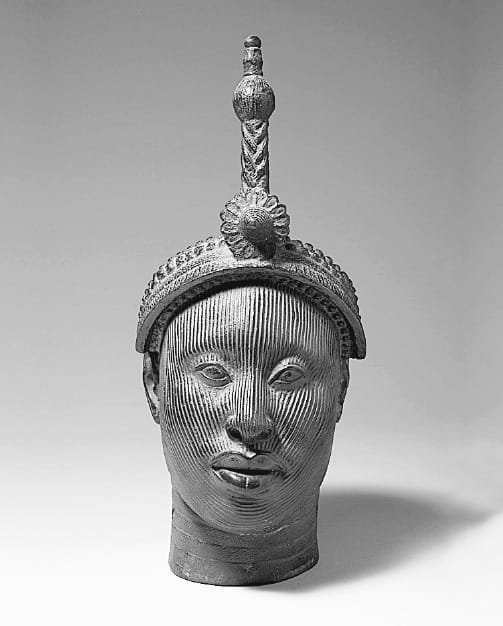
    ‎Dawodu Abigail Olateju, Conservator, the National Museum of Unity,  Ibadan,  has said  that  Ori Olokun, literally translated as “Head of Olokun,” is one of the most celebrated artistic and cultural treasures associated with the ancient Yoruba city of Ile-Ife, widely regarded as the cradle of Yoruba civilisation.

    Olateju stated this while speaking to journalists  at the National Museum of Unity,  Ibadan, on the history of  ORI  OLOKUN


    ‎According to her , the name is also associated with the famous bronze head discovered in Ile-Ife in 1910. Dating between the 12th and 15th centuries, the sculpture showcases extraordinary craftsmanship and naturalism achieved through the lost-wax casting technique.

    ‎”Its remarkable realism challenged colonial-era misconceptions about African art and demonstrated the sophistication of ancient Yoruba civilisation.

    ‎”Reverenced for its exceptional craftsmanship, historical significance, and spiritual symbolism, Ori Olokun remains a powerful representation of the artistic sophistication, religious beliefs, and cultural identity of the Yoruba people.

    ‎”Discovered in Ile-Ife in the early twentieth century, Ori Olokun is a remarkable terracotta head renowned for its striking naturalism and technical excellence.

    ‎”The sculpture depicts a human head adorned with intricately carved facial markings, finely detailed features, and a regal expression that reflects dignity, wisdom, and authority.”

    ‎She stated further that  its extraordinary realism challenged long-held misconceptions about African art and demonstrated that sophisticated artistic traditions flourished in West Africa centuries before European contact.

    ‎The name “Olokun” refers to the revered Yoruba deity associated with the deep sea, wealth, prosperity, fertility, and spiritual abundance. In Yoruba cosmology, Olokun is regarded as the custodian of immense riches and hidden mysteries beneath the ocean.

    ‎The association of the sculpture with Olokun highlights the profound relationship between spiritual power, kingship, and prosperity within Yoruba traditional belief systems.

    ‎As a result, Ori Olokun is often interpreted not merely as a work of art but as a sacred symbol embodying divine authority and supernatural protection.


    ‎Beyond its religious significance, Ori Olokun stands as a testament to the technological and artistic achievements of ancient Ile-Ife.

    ‎The sculpture reflects a highly advanced understanding of modelling, proportion, and aesthetics.

    ‎The precision of its facial features, the symmetry of its form, and the intricate scarification patterns demonstrate the expertise of Ife artists, whose works have earned global recognition as some of the finest examples of African classical art.

  • International Museum Day: Stakeholders Advocate Preservation of Nigeria’s Cultural Heritage ‎

    International Museum Day: Stakeholders Advocate Preservation of Nigeria’s Cultural Heritage ‎

    ‎International Museum Day: Stakeholders Advocate Preservation of Nigeria’s Cultural Heritage


    By Seyi Oduneye-Ogunwomoju

    ‎The Oyo State Commissioner for Culture and Tourism, Dr Wasiu Olatunbosun, has appealed to the Federal Government to provide adequate funding for the National Commission for Museums and Monuments (NCMM) to ensure the preservation of Nigeria’s history and cultural heritage.

    ‎Olatunbosun made the appeal on Thursday during the 2026 International Museum Day celebration organised by the National Museum of Unity, Ibadan.

    ‎The theme of this year’s celebration is “Museums: Uniting a Divided World.”

    ‎International Museum Day is observed annually on May 18 to highlight the role of museums in cultural preservation, education and societal development.

    ‎The commissioner also commended the Curator of the National Museum of Unity, Ibadan, Mrs Pamela Otuka, for the remarkable transformation taking place at the museum.

    ‎In his message to the event, the Director-General of the NCMM, Mr Olugbile Holloway, said that movable and immovable artefacts, archival documents and other historical materials play vital roles in promoting shared humanity and preserving collective memory.

    ‎Holloway, who was represented by Otuka, said the theme underscores the role of museums in fostering societal development and uniting communities across the world in the pursuit of peace.

    ‎“As we all know, the National Commission for Museums and Monuments in Nigeria has consistently fulfilled this role over time.

    ‎“The museum world, guided by the International Council of Museums (ICOM), has always been sensitive to global developments and has shaped its annual themes accordingly.

    ‎“Continuing this tradition, ICOM has focused on the disruptions in human relationships caused by crises, conflicts, wars and other troubling developments that threaten the progress humanity has made in recent times.

    ‎“While various groups continue to address these challenges with varying degrees of success, ICOM’s goal for 2026 is to redirect museum efforts toward leveraging resources through activities, events and dialogue that promote peace and understanding among individuals and communities,” he said.

    ‎The NCMM boss called on individuals, government agencies, non-governmental organisations and the private sector to partner with the commission in harnessing the vast resources available in museums nationwide and within the creative industry to promote peace and cultural understanding.

    ‎“The National Commission for Museums and Monuments, which is responsible for establishing public museums and facilitating private museums, has continued to introduce innovations aimed at enhancing visitors’ experiences.

    ‎“We have launched the country’s first digital museum and upgraded our Lagos exhibition facilities to meet international standards.

    ‎“These efforts reflect the vision of the current management, with plans underway to elevate selected museums across the country to similar standards.

    ‎“It is important to remember that museums, regardless of their location, belong to the public and should be supported and protected,” Holloway added.

    ‎Also speaking at the event, renowned artist and culture promoter, Prince Tunde Odunlade, stressed the need to preserve Nigeria’s history and cultural heritage.

    ‎“We must preserve our history with all the resources at our disposal. Greater efforts are needed to safeguard our heritage for future generations.

    ‎“This museum is very important. We have only four National Museums of Unity in Nigeria — located in Ibadan, Enugu, Maiduguri and Sokoto.

    ‎“Every ethnic group in Nigeria has a part of its identity represented in these museums. They serve as important centres for education and the preservation of our history.

    ‎“A society without art is like an asylum,” he said.


  • Cultural Preservation: KWASU Don advocates fusion of tradition with modernity

    Cultural Preservation: KWASU Don advocates fusion of tradition with modernity

    Cultural Preservation: KWASU Don advocates fusion of tradition with modernity


    Prof. Binta Sulaiman delivering KWASU’S 21st Inaugural Lecture


    By Bushrah Yusuf-Badmus


    A professor of Fine Arts and Art Education at the Kwara State University (KWASU), Prof. Binta Sulyman, has said that the preservation of indigenous cultural heritage enhances community cohesion and sustain peace within society.


    Prof. Sulyman made the submission on Wednesday during KWASU’s 21st Inaugural Lecture titled ‘The Ilorin Royal Dance Tradition

    (Ijo Olomo Oba): A Catalyst for Cultural Identity, Artistic Expression, and Creative Economy”.


    She highlighted the connection between fine arts and traditional performative dance, stressing the sustainability of Ijo Ọlọ́mọ Ọba, a traditional dance deeply rooted in the cultural identity of the Ilorin people.


    “Declining youth participation, poor documentation, inadequate institutional support, and the increasing dominance of Western cultural forms makes us perceive traditional arts as outdated.


    “This places valuable cultural heritage at risk of extinction.


    “Preserving cultural traditions does not require resistance to modernisation but rather a careful integration of traditional values with contemporary realities.


    “Such an approach would enable cultural practices to remain relevant to younger generations while retaining their historical significance,” she said.


    Prof. Sulyman also stressed the importance of incorporating indigenous music and performative arts into educational curricula.


    She recommended that Nigerian schools should give greater attention to teaching and performing traditional musical forms from ethnic traditions in Nigeria.


    “Eucation remains one of the most effective tools for transmitting cultural knowledge across generations that fosters a sense of identity and belonging among young


    “Beyond cultural preservation, indigenous arts helps in peace building and social development.


    “Cultural performances such as Ijo Ọlọ́mọ Ọba strengthen social cohesion, promotes intergenerational dialogue, and reinforce shared values that contribute to peaceful coexistence within communities.


    “Also, cultural heritage serves as a unifying force capable of bridging social divides and fostering mutual understanding among diverse groups, making it an important resource for community development and nation-building,” the don said.


    The professor however called for a holistic approach involving education, innovation, community participation, and institutional support to ensure the sustainability of Ijo Ọlọ́mọ Ọba.


    She expressed optimism that with deliberate preservation efforts, the dance would not only survive but also gain wider national and international recognition as a significant component of Nigeria’s rich cultural heritage.

  • NIHOUR’s Registration Impasse: FTAN reiterates position, commends members cooperation

    NIHOUR’s Registration Impasse: FTAN reiterates position, commends members cooperation

    … applauds Tourism Minister, PS push for PPP

    …says Hospitality Skill Sector not properly reconstituted

    The Federation of Tourism Associations of Nigeria (FTAN) has reiterated its position on the National Institute of Hospitality and Tourism (NIHOTOUR) Act 2022.

    This is as its distanced itself from the induction ceremony of some people as members and fellows performed last week in Abuja by the management of the National Institute for Hospitality and Tourism (NIHOTOUR).

    FTAN while restating its position on the NIHOTOUR Act 2022, pointed out that grey areas outlined by the Federation have not been addressed and cleared by the management of the Institute.

    The President of FTAN Dr Aliyu Ajayi Badaki, while clarifying these recent developments, lauded its Member-Associations, other discerning and well-meaning stakeholders across the tourism value chain for standing with the Federation and heeding its calls to abstain from any registration exercise being conducted by NIHOTOUR in whatever disguise.

    He also commended the Minister of Arts, Culture, Tourism and Creative Economy, Barrister Hannatu Musa Musawa, and the Permanent Secretary of the Ministry, Ibrahim Abdulkarim Ozi, for showing understanding over the issues at stake by making several efforts at resolving them and insistence on Private-Public Partnership, as the sound path to achieving tangible results and developments of the sector.

    This clarification, according to Badaki, became necessary, following the series of inquiries it has received from members, concerned interest groups and persons within the sector over last week’s induction ceremony by NIHOTOUR, which a section of the Nigerian media and stakeholders believed was based on the purported registration exercise of operators.

    Badaki noted; ‘‘for the avoidance of doubt, let is be made known and clear that FTAN was not part of the induction ceremony of operators as members and fellows performed last week in Abuja by NIHOTOUR.

    ‘‘The position of the Federation on NIHOTOUR Act 2022, is very clear and with no ambiguity whatsoever. The law has appropriated a lot of responsibilities besides the mandatory functions of training and development of manpower for the tourism sector, on NIHOTOUR, thereby infringing on other areas and functions that is not within the purvey of NIHOTOUR as a training institute.

    ‘‘We have pointed out these greys areas that need to be deliberated on, with acceptable pathway agreed on among the stakeholders, Ministry and NIHOTOUR, including NTDA, before implementation of the Act.’’

    He further disclosed that Musawa, based on the submission of FTAN, and the disruptions caused in the industry by the unorthodoxy tactics adopted by NIHOTOUR’s Director General, Dr Abisoye Fagade, on three different occasions directed Fagade, to put on hold the implementation of the Act, until a stakeholder forum is conveyed for the purpose of deliberating on the Act and fashioning out acceptable mode of implementation.

    Badaki, however, expressed disappointment over the posturing of the NIHOTOUR DG in trying to circumvent due process and adherence to the Minister’s directive, by resorting to different clandestine means instead; including the purported induction and registration exercise that was conducted last week, to enforce an ACT that go against the development of the industry and its operators.

    FTAN further condemned the recent unceremonious reconstitution of the Hospitality Sector Skill Council membership and its Board of Trustees by Fagade, noting that it was not properly constituted, with the right professionals and constituencies represented but rather by friends and cronies of the DG, who will further do his biddings of trying to undermine FTAN, cause disaffections and disruptions within the industry.

    Badaki also clarified that FTAN is not a trade union but rather a professional body that represents the interests of professionals and businesses, including investors, across the travel, tourism and hospitality trade, in the country.

    He commended the Federation Member-Associations for abstaining from the event, and standing solidly behind the Federation in its quest to ensure that the proper thing is done. He assured them of the commitment of the Executive Council and Board of Trustees, in pursuing through legal and legitimate means, the position of the Federation on the matter.

  • FG Reaffirms Commitment to Tourism Growth as NIHOTOUR Honors Stakeholders

    FG Reaffirms Commitment to Tourism Growth as NIHOTOUR Honors Stakeholders

    The Federal Government has restated its commitment to building a globally competitive hospitality, travel and tourism sector, as the National Institute for Hospitality and Tourism (NIHOTOUR) inducted professionals and conferred fellowship honours on distinguished stakeholders in Abuja on Thursday.
    Abuja ceremony
    The event, held at Merit House, Maitama, also featured the inauguration of the Governing Boards of the Hospitality and Tourism Sector Skills Council of Nigeria (HTSSCN), in what organisers described as a major step toward formalising and professionalising the industry.
    It brought together government officials, regulators, tourism operators, development partners, cultural institutions and industry leaders.
    Minister’s position
    Minister of Art, Culture, Tourism and the Creative Economy, Hannatu Musa Musawa, said no sector can achieve sustainable growth without structure, standards, institutional coordination and skilled professionals.
    She said Nigeria’s cultural diversity, heritage assets and tourism destinations could only be fully harnessed through professionalism, accountability, standardisation and competence.
    Musawa added that the NIHOTOUR Establishment Act had strengthened the institute’s mandate beyond training to include regulation, certification and standards-setting for practitioners in the sector.
    NIHOTOUR’s reform drive
    NIHOTOUR Director General, Dr. Abisoye Fagade, described the ceremony as a historic turning point for the industry, saying the induction, fellowship conferment and council inauguration marked a new era of competence and institutional governance.
    He said regulation and standardisation were now economic necessities if Nigeria intends to compete globally in hospitality and tourism.
    Fagade said NIHOTOUR is being repositioned as a facilitator and strategic partner focused on workforce development, competency-based certification and industry collaboration under President Bola Ahmed Tinubu’s Renewed Hope Agenda.
    Sector backing
    President of the Nigerian Bar Association, Mazi Afam Osigwe, said effective regulation remains the only sustainable path for scaling the hospitality and tourism industry in Nigeria.
    He said strong standards, licensing and accountability help build investor confidence and improve service quality.
    Other stakeholders, including the Director General of the Nigerian Tourism Development Authority, Olayiwola Awakan, and the Executive Secretary of the National Institute for Cultural Orientation, Biodun Ajiboye, praised NIHOTOUR’s reforms and called for stronger professional standards across the value chain.
    Honours and significance
    The ceremony also saw the conferment of fellowship honours on several prominent Nigerians, including Musawa, Fagade, Awakan, Ajiboye, NCAA Director General Chris Ona Najomo, former tourism officials and other industry leaders.
    According to NIHOTOUR, the inductions and honours are part of a broader effort to institutionalise professionalism, ethical practice and globally accepted standards in Nigeria’s hospitality and tourism space.
    Stakeholders at the event said the reforms could help unlock the sector’s potential for job creation, cultural diplomacy and economic diversification.

  • Oba Ajibola Advises Olubadan, High Chiefs to Steer Clear of Politics

    Oba Ajibola Advises Olubadan, High Chiefs to Steer Clear of Politics

    Oba Ajibola Advises Olubadan, High Chiefs to Steer Clear of Politics

    By Adewale Owoade

    The Balogun of Ibadanland, Oba Tajudeen Ajibola, has called on the Olubadan of Ibadanland, Oba Rasidi Adewolu Ladoja, to steer clear of partisan politics in order to safeguard the dignity and neutrality of the traditional institution.

    Oba Ajibola made the appeal during a press conference held at his residence in the Sanyo area of Ibadan, stressing those highly revered monarchs must remain non-partisan and rise above political interests.

    He also advised the Ekarun Balogun of Ibadanland, Senator Sharafadeen Alli, who represents Oyo South Senatorial District, to limit his involvement in political activities and concentrate on his traditional responsibilities within the Ibadan chieftaincy hierarchy.

    According to him, preserving the integrity of the traditional institution should be a collective responsibility.


    ‎“My advice to Baba Olubadan is offered with utmost respect. I hold him in high esteem and have no reservations about his person.

    “However, I do not want anything that could bring the stool into disrepute. The Olubadan is a revered symbol of unity, and his office must not be drawn into partisan politics.

    “He should tread cautiously and remain above political affiliations so that the institution continues to command respect and honour,” Ajibola said.

    Oba Ajibola also said that the Olubadan of Ibadanland, Oba Rashidi Ladoja  has no power to impeach Governor Seyi Makinde that it is a constitutional matter not traditional, said that it is all rumor, and even Oba Ladoja has never complained of gov Makinde to the Olubadan in Council


    The Balogun emphasised the need to protect the Ibadan traditional system from actions that could undermine its credibility, urging all stakeholders to uphold its long-standing values of neutrality, dignity, and unity.(NAN)

  • Palace Dismisses Allegations Against Timi of Ede

    Palace Dismisses Allegations Against Timi of Ede

    The palace of the Timi of Edeland has dismissed allegations circulating on social media accusing the monarch of double standards in his relationship with political leaders in the town, describing the claims as false and a calculated attempt to disrupt the peaceful atmosphere in Ede, Osun State.
    In a statement issued by the Director of Information and Protocol at Aafin Timi Agbale, Dapo Akinyele, the palace said a video released by a faceless woman and circulated on social media platforms alleging that the monarch had abandoned the political ambition of Osun State Governor, Ademola Adeleke, was a fabrication.
    The palace maintained that the Timi of Edeland, Munirudeen Adesola Lawal, has enjoyed cordial relations and tremendous support from the Adeleke dynasty since his ascension to the throne in 2008.
    According to the statement, the late Asiwaju of Edeland, Isiaka Adetunji Adeleke, supported the traditional institution during his lifetime, adding that the relationship had continued with the incumbent governor and other members of the Adeleke family.
    It also noted that the governor’s siblings, including Tajudeen Adedeji Adeleke and the Yeyeluwa of Edeland, Modupe Adeleke Sanni, have remained supportive of the Ede Traditional Council.
    The palace described the allegations as the handiwork of disgruntled elements and agents of fake news determined to create tension within the community.
    While appreciating the support of sons and daughters of Ede for the traditional institution, the palace called on politicians, regardless of party affiliation, to avoid propaganda capable of heating up the polity.
    It urged residents and political actors to embrace unity and work together to sustain peace and development in the ancient town.

  • Nanta Rounds Up zonal Elections, Heads To Ibadan In April To Celebrate Golden Jubilee

    **

    National Association of Nigeria Travel Agencies ( Nanta) has announced the successful conclusion of all its zonal elections , statutoryly conducted prior to its Elective Annual General Meetings.

    While the lagos zonal election had been announced and made public, including the eastern region with headquarters domiciled in Porthacourt, latest election results oversighted by the second national deputy president of the association, Dr Dagunduro Tukumbo who doubles as chairman of the electoral process, revealed that Muhammad salisu emerged as vice president of the zone for the first tenure in office unopposed.

    Others in the zone who were equally returned unopposed and subsequently sworn in, were kabiru yahaya suliaman, zonal secretary, farouk Aliyu, Public Relations officer, Alhaja sara sani umar, internal Auditor, Aminu Bala Bayero, Tressurer and Mustapha Zakariya, zonal financial secretary.

    From the western zone, comprising the six south West region, with headquarters in ibadan, the following were announced and sworn in by the electoral committee, Olaleye Abiodun Ajibade , vice president, Olatundun Olumide ,zonal secretary, Akintola opeyemi , Tressurer, Adegboyega Olufemi Peters, financial secretary, Temitope Ogunsebikan , Internal Auditor and Adewale Dada , Public Relations officer.

    The stand alone Federal Capital Territory zone returned Angela ike as vice president, Abdullahi Mansour, Internal Auditor, Adewale Adejumoke, Tressurer, Otobo Sunday stepped down forBasirat Gbemisola Okunola to emerge as Financial secretary , Chinenyenwa Nnamuchi , zonal Secretary and Joy Ogonna , Public Relations officer.

    Dr Yinka Folami, President of nanta expressed happiness at the successful outcome of the zonal elections, noting that the association has always conducted its electoral and administrative affairs without rancour, calling on the over three thousand members across the country to attend the Agm slated for ibadan in April.

  • Ministry Orders Immediate Enforcement of NIHOTOUR Act 2022, Regulations 2025

    Ministry Orders Immediate Enforcement of NIHOTOUR Act 2022, Regulations 2025

    Ministry Orders Immediate Enforcement of NIHOTOUR Act 2022, Regulations 2025
    Abuja, March 1, 2028
    The Federal Ministry of Art, Culture, Tourism and Creative Economy has ordered the immediate and full implementation of the NIHOTOUR Act 2022 and the NIHOTOUR Regulations 2025, directing the National Institute for Hospitality and Tourism (NIHOTOUR) to begin enforcement without delay.
    The directive was contained in a letter dated February 26, 2028, and signed by the Honourable Minister of Art, Culture, Tourism and Creative Economy, Hannatu Musa Musawa. The letter mandates the Director-General of NIHOTOUR, Abisoye Fagade, to proceed with immediate implementation in line with the powers conferred on the Institute by its Establishment Act and subsidiary regulations.
    The Ministry said the move is aimed at strengthening regulation within Nigeria’s hospitality, travel, and tourism sectors, describing it as a necessary step toward repositioning the industry as a structured, professional, and globally competitive contributor to the national economy.
    According to the Minister, regulating personnel and operators in the sector is critical to enhancing professionalism, improving service quality, protecting consumers, and promoting sustainable industry growth.
    “The regulation of personnel and operators within the hospitality, travel and tourism sectors, as specified in the Act, is essential to enhancing professionalism, service quality, consumer protection, and sustainable industry growth,” the Minister stated. “This regulatory framework establishes minimum standards for skills, ethics, safety, and operations. It will strengthen public confidence, improve competitiveness, and align the sector with national and international best practices.”
    The Ministry further noted that the implementation of the NIHOTOUR Act 2022 and the 2025 Regulations marks a strategic milestone in strengthening institutional governance and standardizing training and certification across the tourism value chain. It added that strict compliance with operational standards would boost investor confidence and ensure improved service delivery nationwide.
    NIHOTOUR has been directed to formally communicate the mandate to all departments, stakeholders, operators, and practitioners under its regulatory purview to ensure full and immediate compliance.
    Observers say the directive signals a renewed push by the Federal Government to formalize and regulate the hospitality and tourism ecosystem, a sector widely regarded as a key driver of employment, cultural promotion, and non-oil revenue generation.
    The Federal Ministry reiterated its commitment to building a vibrant, well-regulated, and globally competitive hospitality and tourism industry that reflects Nigeria’s rich cultural heritage while driving sustainable economic growth.