Tag: Russia

  • Why China and Russia are keeping out of the Iran war

    Why China and Russia are keeping out of the Iran war

    While condemning the war, China and Russia have refrained from providing military support, reflecting the limitations of their strategic partnerships with Iran

    Wars often reveal the true strength and limitations of international alliances and partnerships. During the 12-day war of June 2025, Iran was left to fight largely on its own.

    Apart from backing from Yemen’s Houthis, officially known as Ansar Allah, hardly any actors came to Tehran’s aid. The absence of meaningful action from China and Russia left many in Iran bitterly disappointed.

    Now, as the United States and Israel again wage war against Iran, the conflict is forcing a renewed examination of Tehran’s partnerships with Beijing and Moscow, and the extent to which the Chinese and Russians are willing to stand by the Islamic Republic.

    Beijing and Moscow’s early reactions

    In response to the launch of Operation Epic Fury late last month, the Chinese and Russian authorities issued strong condemnations of the United States and Israel.

    On 28 February, Chinese officials expressed deep concern but waited until the following day for China’s foreign minister, Wang Yi, to condemn the American and Israeli bombing of Iran as unacceptable.

    He called for an immediate ceasefire and a return to diplomatic talks. Speaking by phone with his Russian counterpart, Sergei Lavrov, Wang also denounced the assassination of Iran’s Supreme Leader Ali Khamenei as the “blatant killing of a sovereign leader”.

    A week later, Beijing’s top diplomat warned that “plotting a ‘colour’ revolution or seeking government change will find no popular support” in Iran, while urging the international community to respect Iran’s sovereignty and calling on Washington and Tel Aviv to halt their military operations immediately.

    Moscow responded in much the same vein. Russia’s Foreign Affairs Ministry condemned the American–Israeli assault on Iran as a “pre-planned and unprovoked act of armed aggression against a sovereign and independent UN member state”. President Vladimir Putin likewise denounced the assassination of Khamenei as a “cynical murder”.

    On 9 March, Putin sent Iran’s new Supreme Leader, Mojtaba Khamenei, a message of support. “I would like to reaffirm our unwavering support for Tehran and solidarity with our Iranian friends,” wrote the Russian leader, who added that “Russia has been and will remain a reliable partner” to Iran.

    “At a time when Iran is confronting armed aggression, your tenure in this high position will undoubtedly require great courage and dedication,” added Putin.

    Throughout this war, Iran’s leadership has stressed the importance of Tehran’s partnership with Moscow. On 8 March, Iran’s Foreign Minister Abbas Araghchi told NBC News’ “Meet the Press” that “cooperation between Iran and Russia is not something new, it’s not a secret” and that the Russians “are helping us in many different directions”.

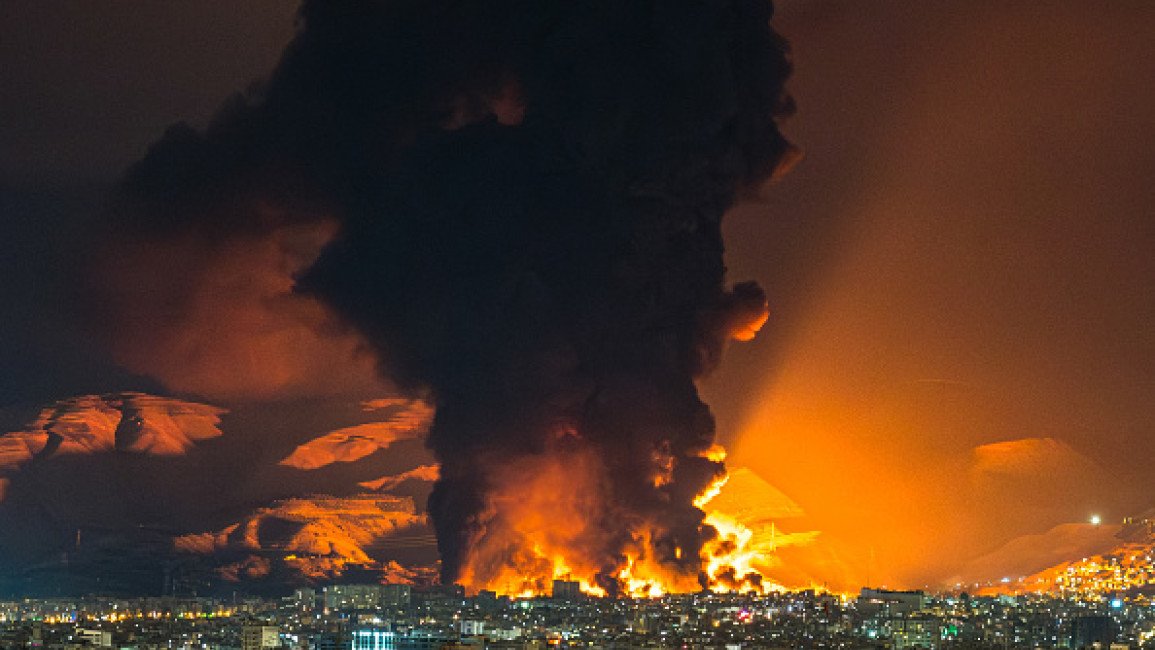
    	Smoke and flames rise at the site of airstrikes on an oil depot in Tehran on March 7, 2026. The United States and Israel launched strikes against Iran on February 28
    As the US and Israel again wage war, the conflict is forcing a renewed examination of Iran’s partnerships with Beijing and Moscow, and the extent to which they are willing to stand by the Islamic Republic. [Getty]

    Why China and Russia remain cautious

    Not even two weeks into the war, predicting how events in the region will unfold is extremely difficult. Nonetheless, there is likely good reason to expect that China and Russia will tread carefully to avoid becoming too entangled in the United States-Israel-Iran conflict.

    In Beijing’s case, its capacity to deter the American-Israeli alliance is extremely limited. While China wields significant economic influence in the Middle East, its willingness to intervene in regional crises through hard-power measures is low.

    A key factor is Beijing’s desire to avoid direct confrontation with Washington. Thus, although Iran’s missile program depends on Chinese technology, there is no guarantee that Beijing would supply missiles to Tehran while the war continues.

    President Xi Jinping will host Trump in China from 31 March to 2 April, and Beijing’s leadership will likely avoid responding to Middle East conflict dynamics in ways that could further complicate the delicate issues in China-US relations that the two leaders are set to address in person.

    “For the Chinese, the war is a lower priority than the Trump-Xi meeting at the end of March, where tariffs are expected to be discussed, among other issues. Again, supporting Iran overtly with military aid will only jeopardise the meeting,” explained Dr Li-Chen Sim, an Associate Fellow at the US-based Middle East Institute, in an interview with The New Arab.

    “China has ample supplies of oil in strategic and commercial reserves – enough to last three to four months – and they can engage in fuel switching from LNG to coal/pipeline gas from Russia and Myanmar in power plants to mitigate any prolonged supply issues from Qatar,” she added.

    Russia appears to be doing more than China to assist Iran in tangible ways. Moscow is reportedly providing Tehran with intelligence on the locations and movements of US troops, ships, and aircraft.

    These disclosures mark the first indication that Moscow may be seeking to involve itself in the United States-Israel-Iran war. Much of the shared information has reportedly come from Russia’s advanced network of reconnaissance satellites.

    However, it remains unclear what, if anything, Russia is receiving in return for this assistance, or whether any individual Iranian strike can be directly traced to Moscow’s targeting intelligence.

    Nonetheless, several Iranian drones have hit sites where there was a presence of US military forces. On 1 March, an Iranian drone struck a facility housing American personnel in Kuwait, killing six US service members.

    In any event, such reports about Russia assisting Iran with intelligence sharing highlight how Moscow continues to maintain a close relationship with Tehran, especially within the context of Iranian support for Russia in the Ukraine war.

    China and Russia are treading carefully to avoid becoming too entangled in the United States-Israel-Iran conflict. [Getty]

    Still, as some analysts have noted, Russia’s involvement in this conflict is, like China’s, largely about issuing statements condemning Washington and Tel Aviv’s aggression against Iran.

    Moscow’s overall calculus is that there is much to gain from Western powers becoming distracted by this war in the Middle East because that means the “less stringently secondary sanctions over its oil trade will be enforced – and this will present more wiggle room for China and India, its erstwhile customers, to buy its oil without too much fear of penalties,” Dr Sim told TNA.

    “The longer the war lasts, the fewer missiles the United States, Europe, and the United Kingdom can sell/transfer to Ukraine, a theatre that is more important to Russia than the Middle East. Consequently, the United States, Europe, and the United Kingdom will prioritise replenishing their own missile stocks over providing supplies to Ukraine,” she noted.

    Additionally, Dr Sim pointed out that the Northern Sea Route via Russia becomes more attractive as uncertainty over the Strait of Hormuz persists, ultimately making it easier for the Russians to, over time, reestablish their oil and LNG resources as credible alternatives to Middle Eastern hydrocarbon supplies.

    “[Russia] supporting Iran with overt military help at this point in time will jeopardise all of the above considerations,” she told TNA.

    “About the only thing Iran can count on is diplomatic outreach from Moscow and Beijing. They’re not going to go to bat for Iran militarily,” explained John Feffer, director of Foreign Policy in Focus at the Washington, DC-based Institute for Policy Studies.

    “Sure, Russia sells weapons to Iran, and China supplies some dual-use tech. But Israel has led these attacks in part because it has calculated that Iran is quite isolated,” he added.

    Economic stakes and regional stability

    None of this suggests that China and Russia lack high stakes in the conflict. Beijing is deeply concerned about long-term instability in the Gulf, largely for economic reasons. As the world’s largest importer of crude oil, China remains heavily reliant on the Middle East as a cornerstone of its energy supply.

    In recent years, roughly 90 percent of Iran’s oil exports have been directed to China, often at discounted prices that allowed Beijing to cushion sanctions-related risks and fluctuations in global markets.

    As some analysts note, however, what once served as a strategic advantage has increasingly become a source of vulnerability. Even the mere prospect of disruption in the Strait of Hormuz can send insurance premiums soaring, force tankers onto longer routes, and inject fresh volatility into global markets.

    Asian manufacturing economies are especially sensitive to sustained oil price increases. China’s economic model continues to depend heavily on industrial output and exports, meaning that rising energy costs come with tangible political risks.

    For Russia, one of the greatest concerns is the potential collapse of the Iranian state, which Trump recently stated is a probable outcome of this war. Instability stemming from a fragmented Iran could spill across neighbouring countries, potentially affecting the Caucasus and Central Asia. Put simply, for Moscow, the prospect of chaos in Iran hits uncomfortably close to home.

    China and Russia also have strong interests in maintaining peace and stability among the Gulf Cooperation Council (GCC) states – all six of which have been targeted by Iran’s retaliatory strikes.

    With Beijing and Moscow maintaining extensive economic and diplomatic ties with the Gulf monarchies, and with many of their citizens living in Dubai and other GCC cities, there is no denying that Iran’s actions since 28 February have alarmed both powers.

    All these factors help explain why Putin has sought to convince Trump that winding down this war as quickly as possible is necessary. On 9 March, the two leaders had their first phone conversation since the current war on Iran began.

    In what Trump said was a “very good call,” he and Putin addressed Iran and Ukraine. According to the Russian president’s foreign policy adviser, Yuri Ushakov, Putin set forth “several proposals” for concluding the US-Israel-Iran conflict.

    A more China-oriented Middle East?

    Despite their vested interests in seeing the conflict wind down, China and Russia will likely judge that maintaining distance from the United States-Israel-Iran war best serves their strategic goals, given the risks of deeper involvement.

    At the same time, both powers may take heart in the prospect of a more multipolar, less West-centric world emerging once the dust settles.

    With the Islamic Republic’s third Supreme Leader, Mojtaba Khamenei, now at the helm, Iran is extremely unlikely to have any opening to the West at any point in the foreseeable future. This means that Tehran is set to further double down on its ‘Look East’ foreign policy orientation.

    The GCC states, while angry at Washington for initiating what Gulf Arabs overwhelmingly see as an unnecessary and reckless war that undermined their security, despite diplomatic efforts by GCC members, especially Oman, to avert it, will likely feel greater urgency in pursuing a higher level of autonomy from the United States.

    How much this dynamic will draw the Gulf states closer to China and Russia remains uncertain, but it is a serious possibility given their declining confidence in Washington’s ability to act as a reliable security guarantor and promoter of regional stability.

    Beyond the Gulf and the wider Arab world, Washington’s latest war of choice in the Middle East carries significant geopolitical ramifications that extend far beyond the immediate conflict.

    “The Global South is looking for a power that can counterbalance the erratic United States. China, more so than the BRICS, has cohesive policies and the resources to serve as a stabilising force in geopolitics. This Iran War could be a turning point in terms of the balance of power on war and peace issues,” concluded Feffer.

  • Russia, Ukraine begin 2nd round of U.S.-brokered talks in Abu Dhabi

    Russia, Ukraine begin 2nd round of U.S.-brokered talks in Abu Dhabi


    ABU DHABI,  (Xinhua)/Flowerbudnews– The second round of U.S.-brokered talks between Russia and Ukraine started in Abu Dhabi, a member of the Ukrainian delegation said on Wednesday.

    “The next stage of negotiations in Abu Dhabi has begun,” Rustem Umerov, secretary of Ukraine’s National Security and Defense Council, said in a post on social media platform Telegram.

    According to Umerov, also a member of the Ukrainian delegation, the negotiation process started in a “trilateral format” involving Ukraine, the United States and Russia.

    “Next, work will be carried out in separate groups … after which a repeat joint synchronization of positions is planned,” he said.

    The Ukrainian official stressed that the delegation is working to “achieve a dignified and lasting peace.”


  • Western military units, facilities in Ukraine are Russia’s legitimate targets: Moscow

    Western military units, facilities in Ukraine are Russia’s legitimate targets: Moscow


    MOSCOW,  (Xinhua) /Flowerbudnews:  — Any military units and facilities deployed by Western countries on Ukrainian territory will be regarded as legitimate targets of the Russian Armed Forces, Russian Foreign Ministry spokeswoman Maria Zakharova said in a statement on Thursday.

    “These warnings have been issued repeatedly at the highest level and remain valid,” she said, adding that the deployment of Western facilities will be deemed foreign intervention, which poses a direct threat to the security of not only Russia but also other European states.

    The new militaristic declarations issued by the so-called coalition of willing parties and Kiev have turned them into a veritable “axis of war,” she said.

    Zakharova stressed that the West’s plan for the further militarization of Ukraine is far from a peaceful settlement, but rather aimed at continuing militarization, escalating and expanding the conflict.

    The statement said a peaceful settlement of the conflict is possible only by addressing its root causes, including restoring Ukraine’s neutral, non-aligned status, its demilitarization and “denazification,” respect for the linguistic, cultural and religious rights of ethnic Russians, Russian-speaking citizens and national minorities, and recognition of the current territorial realities.

    Zakharova said these goals would be achieved either through political and diplomatic means or through the special military operation, adding that Russian forces retain the initiative on the battlefield.

    Save

    Like

  • Muslim Tajik schoolboy stabbed to death by Neo-Nazi student in Russia

    Muslim Tajik schoolboy stabbed to death by Neo-Nazi student in Russia


    By Haris Tagari

    A 10-year-old boy of Tajik origin was stabbed to death by an older neo-Nazi student at a school near Moscow.

    Witnesses reported that the attacker asked students about their nationality before carrying out the fatal stabbing on Tuesday, 16 December.

    The attacker, a 15-year-old student named Timofey K., reportedly entered the school armed with a knife and a canister of pepper spray, then injured a security guard before turning on pupils.

    The suspect wore a T-shirt with the text “No Lives Matter” during the attack.

    The perpetrator also wore a protective helmet bearing multiple inscriptions, including the neo-Nazi slogan “Beat the Jews, Save Russia” and a quote linked to Dylann Roof, who carried out the Charleston church attack in the US in 2015.

    He also reportedly expressed admiration for Brenton Tarrant, the far-right terrorist responsible for killing 51 Muslim worshippers at two mosques in New Zealand in March 2019.

    The teenager filmed the attack on his phone and posted the footage online.

    The videos depict the suspect chasing pupils with a knife before fatally killing the Tajik boy.

    The suspect with Neo-Nazi slogans and symbols before the attack

    The victim was a fourth-grade pupil at Uspenskaya Secondary School in the Gorki-2 settlement of the Odintsovo district.

    This detail has raised serious concerns about ethnically motivated hostility and a possible Islamophobic motive, given the victim’s Tajik background and the attacker’s targeting of nationality.

    Footage of the incident was shared on social media by a Telegram channel after the attacker recorded parts of the assault on his phone.

    Authorities have opened a criminal case, and the boy’s death is under formal investigation by the Russian Investigative Committee.

    Response from Tajikista
    Tajikistan’s Ministry of Foreign Affairs has condemned the killing and summoned Russia’s ambassador, Semyon Grigoriev, demanding an immediate, objective and impartial investigation.

    The ministry has also issued a formal diplomatic note over what it described as the ethnically motivated killing of the schoolboy.

    Officials expressed their “deepest condolences” to the family and friends of the deceased child and called for full accountability under Russian law.

    Equipment and clothing of the suspectFinal moments of the 10 year old Muslim Tajik boy from the video recorded by the attacker.

    While Russian authorities have not officially labelled the incident a hate crime, the fact that the perpetrator asked pupils about their nationality before attacking has led community leaders and advocates to voice alarm over possible Islamophobic and xenophobic motivations.

    Consideration of motive remains central to the ongoing investigation.

    In the months following a major terror attack linked to Tajik suspects in 2024, xenophobic abuse, police raids and harsh enforcement actions have disproportionately affected Tajik workers and migrants in Russia, according to reports on migration law violations and raids in Moscow.

  • President Tinubu Receives Letters of Credence From the New Russian Ambassador to Nigeria

    President Tinubu Receives Letters of Credence From the New Russian Ambassador to Nigeria


    By Lawal Sale

    According to statement from the State House, in his meeting with the Russian ambassador, Leonidovich Podelyshev, President Tinubu highlighted Nigeria’s long-standing technical partnership with Russia and expressed a desire to expand cooperation in steel production, science, education, and nuclear energy to bolster electricity supply.

    “Our partnership has been fulfilling, but we need more technological support with our rapidly growing population”.

    The Ajaokuta Steel Complex, constructed by Russian companies, will only realise its potential when fully operational,” President Tinubu stated.

    In his remarks, Ambassador Podelyshev reaffirmed Russia’s readiness to expand cooperation, particularly in education and energy, emphasising ongoing agreements on nuclear power.

    Russia and Nigeria established diplomatic relations Nigeria and Russia (formerly the USSR) have a long history of diplomatic relations, established shortly after Nigeria’s independence in 1960.

    These relations have evolved through various interactions, including visits by both heads of state, agreements on cooperation, and assistance in various sectors, including military and economic support during Nigeria’s civil war.

  • UNDERSTANDING RUSSIA’S GREAT PATRIOTIC WAR AND VICTORY

    UNDERSTANDING RUSSIA’S GREAT PATRIOTIC WAR AND VICTORY


    By Lawal Sale

    BACKGROUND:    It has been 80 years since the forces of the Red Army of the Union of Soviet Socialist Republics (USSR) courageously stopped the Nazi German Army from annihilating the Soviet Union.

    Although the declaration of victory on the early hours of May 9, 1945 by the Soviet Red Army over the Nazi marauders came at a terrifying cost; it, nonetheless, demonstrated the unyielding strength, courage and patriotic will of a people who bore the main burden of the World War 2 and the defeat of the Nazi Germany.

    This final chapter of the Great Patriotic War climaxed in the Battle of Berlin, following a massive and brutal operation that sealed the fate of the Nazi invaders.

    The attack on Soviet Union started in the early hours of June 22, 1941 following the refusal of the Nazi Germany to adhere to the previous non-aggressive pact between the two countries.

    This non-compliance with the pact marked the beginning of Operation Barbarossa, the largest military invasion in human history and the escalation of World War 2.

    The Soviet Union then comprised of not only Russia but also Belarus, Ukraine, Estonia and 12 other Soviet Republics that fought together and lost about 27 million people in what is known today as “Great Patriotic War” in Russia.

    It is worthy to note that in spite of the involvement of the Allied Forces (the U.S., U.K and France, among others), the Soviet Union recorded more casualties than any other country during the war which lasted between June 1941 and May 1945.

    According to Sergy, son of a veteran of the war, the Russians will remember the heroism of the Red Army, which liberated countless prisoners of war and ultimately raised the flag of victory over Berlin.

    He emphasized that the valiant efforts of the Allied Forces that fought shoulder-to-shoulder against a common evil could not be easily forgotten, adding that the collective sacrifice liberated the world from the tyranny of Nazism, as every family in the former Soviet Union was touched by the tragedy in those four gruesome years.

    THE BATTLES

    Operation Barbarossa:

    This operation was the beginning of the invasion of the Soviet Union on 22nd June, 1941. More than 3.5 Wehrmacht troops invaded the western Soviet Union along the 2,900-kilometre front, with the main goal of capturing Soviet territory known as the A-A line.

    During the first week of the war, the Soviet Red Army suffered enormous losses; perhaps due to its unpreparedness for the surprise attack. However, the unprecedented courage and heroism demonstrated by Soviet soldiers and civilians, allowed the nation to withstand the initial onslaught and organise pragmatic resistance, setting the platform for a long and gruelling battle ahead.

    Battle of Moscow:

    Between October 1941 and April 1942, German troops reached the outskirts of Moscow, coming as close as 20-30 kilometres to the Soviet capital.

    In that battle, the Soviet soldiers displayed remarkable resilience and heroism, alongside the mobilisation of the entire civilian population and timely reinforcement from Siberia; they managed to halt the enemy’s advancement.

    The defence of Moscow was the first major defeat for Nazi Germany during the war.

    Siege of Leningrad:

    The siege of Leningrad lasted 872 days, making it one of the most tragic chapters in world history. Over one million civilians perished due to extreme hunger, freezing cold and constant artillery bombardments.

    The renowned “Road of Life”, which was established across the frozen Lake Ladoga, was the only lifeline.

    The frozen lake allowed the delivery of desperately needed food and supplies, while facilitating the evacuation of residents to safety.

    Battle of Stalingrad (July 1942 to February 1943):

    This battle was one of the longest, bloodiest and most decisive battles of the Great Patriotic War, symbolising both the profound tragedy and unparalleled heroism of Soviet people.

    Operation Uranus, a strategic operation successfully encircled approximately 300,000 German troops of the 6th Army under General Friedrich Paulus. Due to starvation and bitter winter conditions, the German forces eventually capitulated and surrendered to the Soviet Red Army in February 1943.

    Battle of Kursk:

    This battle was the largest tank engagement in the history of warfare and a pivotal moment in the Great Patriotic War. More than 2 million soldiers, 6,000 tanks, and 4,000 aircraft from both sides clashed in what would end in a decisive Soviet victory.

    The Red Army, not only halted the German advance but also launched counter-offensive campaigns – Operations Kutuzov and Rumyantsev – pushing the enemy back and liberating vast territories; marking the final loss of strategic initiative for Nazi Germany on the Eastern front.

    Liberation of Europe:

    Beginning from 1944, the Soviet Red Army launched a series of powerful offensives which resulted in the liberation of Eastern and Central Europe from Nazi occupation.

    One of the notable operations was Operation Bagration, during which the Red Army decisively crushed the German Army and liberated over 120,000 square kilometres of Soviet territory.

    Subsequent operations also led to the liberation of Poland, Romania, Hungary, Bulgaria, Czechoslovakia and Yugoslavia.

    Capture of Berlin:

    The final chapter of the Great Patriotic War was between April and May 1945 in the Battle of Berlin. It was a massive and brutal operation that finally sealed the fate of Nazi Germany.

    The Red Army, comprising over 2.5 million soldiers, 6,250 tanks, and 7,500 aircraft, launched the assault on April 16, 1945; breaking through the heavily fortified German defensive lines along the Oder River.

    As fighting raged, the celebrated heart of the Third Reich was reduced to rubble. On April 30, 1945, Soviet troops stormed the Reichstag and triumphantly raised the victory banner – a symbol of the Soviet people’s triumph over fascism.

    There is no dispute to the fact that Germany signed the instrument of surrender on the night of May 8, 1945 in Berlin, and that was a most defining moment of World War II. It ended Adolf Hitler’s advance in his vision of total conquest of the entire Europe.

    LEGACY OF VICTORY

    After the capture of Berlin, the phase of victory was set. It was a feeling of great sacrifice by Soviet/Russians after the war.

    Victory Day was first celebrated on May 9, 1945 with a massively expressive military parade at the Red Square in Moscow. The parade was commanded by Georgy Zhukov, one of the Russia’s/Soviet greatest military leaders, who was elevated to the rank of Marshal in January 1943 in recognition of his exceptional leadership and military prowess.

    The commemoration of the Victory Day against the Nazi Germany became an utmost priority for Russians as a result of the May 1945 unconditional surrender of the Nazi Germany.

    In fact, the captured German insignia was featured during the first Victory Day celebration.

    Indeed, Soviet/Russia’s Red Army was the main tool for Nazism’s destruction. The Soviet Union paid the harshest and immeasurable price for the victory over the fascists.

    More than 27 million Soviet/Russian lives, including soldiers, partisans, and prisoners of war, as well as countless civilian men, women and children, were lost in the war.

    In addition, the Soviet Union suffered colossal destruction, as over 1,700 towns and 70,000 villages, as well as thousands of factories, schools, and hospitals were either razed or completely destroyed.

    There is no gainsaying the fact that the victory in the Great Patriotic War became a defining moment in Russian and world history; an eternal symbol of sacrifice, resilience and unity in the face of inhuman brutality.

    It is a legacy that lives on not only in monuments and commiserations, but it is also the very foundation of modern peace.

    MOMENT OF TRUTH

    As Russia celebrates 80 years since its triumphant victory over Adolf Hitler’s Nazi Germany in coming days, the importance of preserving historical truth has been more evident.

    The Russian Federation has consistently stood against any and all attempts to whitewash Nazism.

    Every year, Russia introduces resolutions at the United Nations, urging nations to combat the glorification of Nazism and neo-fascist ideologies — a call that stems from the blood-soaked lessons of history and the responsibility to those who perished.

    Meanwhile, the Russian Ambassador to Nigeria, Andrey Podylshev, has conveyed Russia’s gratitude to all countries, including Nigeria, which have been supporting these initiatives and standing with Russia on the side of the truth and justice.

    Amb. Podylshev made this remarks during a photo exhibition organized by the Embassy in Abuja to commemorate of the 80th Victory Day Anniversary.

    Besides, Podylshev noted that it was heartening to remember that Africans also fought against fascism decades ago, adding that today, African nations had continued to value the ideals of anti-colonialism, anti-racism and human dignity, which were incompatible with any veneration of Nazism.

    — Sale is an Abuja-based Global South Affairs Analyst (lawalmaida1@yahoo.com)

  • Russian military completes operation to regain control of Kursk region — Kremlin

    Russian military completes operation to regain control of Kursk region — Kremlin


    MOSCOW:  (Xinhua)/FLOWERBUDNEWS:  — The Russian military has completed the operation to regain control of the border region of Kursk, and the results have been reported to Russian President Vladimir Putin, Kremlin spokesman Dmitry Peskov said Saturday.


  • Russia, Nigeria are bound by strong ties of friendship and cooperation, says Russian envoy

    Russia, Nigeria are bound by strong ties of friendship and cooperation, says Russian envoy


    By Lawal Sale

    The newly appointed Russian Ambassador Extraordinary and Plenipotentiary to Nigeria, His Excellency, Amb. Andrey Leonidovich Podelyshev, has described the extant Russia-Nigeria relations as “strong ties bound by strong ties of friendship and cooperation”.

    In a statement he personally signed, Podelyshev noted that diplomatic relations between the two countries were established on Nov. 25, 1960, adding that since then, the two countries had come a long way, strengthening mutual respect and the spirit of partnership among them.

    He said: “In 2001, our countries signed the Declaration on the Principles of Friendly Relations and Partnership, which was an important milestone in the development of ties between Russia and Nigeria.”

    Podelyshev stressed that the bilateral cooperation covered a wide range of areas, including economy, trade, culture, education and science, adding that “we cooperate to ensure regional and global security, peacekeeping, and sustainable development.“There are positive dynamics in the economic sphere.”

    He noted that “according to various estimates, trade turnover has exceeded 1 billion U.S. dollars, which testifies to the growing interest of businesses in mutually beneficial cooperation.”

    Besides, the envoy, in the statement, noted that a special attention had been paid to humanitarian ties, while Russian universities annually hosted hundreds of Nigerian students, giving them the opportunity to receive quality education in various fields.

    He also said that Nigerian delegations regularly participated in youth and women’s forums, educational conferences, as well as fairs on Russian education.

    Podelyshev emphasized that in addition to the traditionally constructive interactions at the United Nations (UN), Nigeria’s status as a partner country in BRICS had opened up new horizons.

    “I am convinced that deepening cooperation in the international arena, including within the framework of these structures, will serve both the interests of our countries and the goals of enhancing the authority and role of developing countries and the global South,” he said.

    The ambassador pledged that during his duty tour to Nigeria, he planned to build contacts, not only with Nigerian officials but also with representatives of business circles, the public and the academic community, as well as Russian compatriots and former graduates of Soviet and Russian tertiary institutions.

    He solicited the support and active participation of all stakeholders in strengthening Russia-Nigeria relations.”Together, we can achieve significant success and contribute to the prosperity of our people,” he stated.

    — Sale is an Abuja-based Global Affairs

  • RUSSIA/UKRAINE CRISIS:  TIT-FOR-TAT NOT A SOLUTION.

    RUSSIA/UKRAINE CRISIS:  TIT-FOR-TAT NOT A SOLUTION.


    (Opinion):  By Lawal Sale – Global Event Analyst

    Abuja (FLOWERBUDNEWS):  It wasn’t a surprise to witness an escalation in the more than two years of military conflict between Russia and Western backed Ukrainian forces. Also, it wasn’t a surprise to see Ukraine firing missiles supplied to it by the Western powers just a few days after getting permission to use them deep into Russian territories.

    Ukraine’s western partners have been reluctant in giving permission to Kiev to use its supplied ATCMS, Storm Shadow, Taurus cruise missiles etc, but in a surprise move, and days after his party and anointed candidate lost elections in the United States, President Joe Biden gave an express permission to President Vladimir Zelensky to use ATCMS deep into Russian territories.

    Similarly, Britain Prime Minister Keir Starmer swiftly approved using British Storm Shadow on Russian territories. All these happened in about 24 hours. Germany and France have not decided yet.

    Time without number, Russian President Vladimir Putin has been sounding words of warning that allowing Ukraine authorities to use long-range missiles into Russian territories means the West is directly and openly getting involved into the war against his country.

    President Putin while stating the basic principles for deterrence of a potential adversary from launching an aggression against the Russian Federation and/or its allies as top priorities of the state, said deterring an aggression shall be ensured by the entire combined military power of the Russian Federation including its nuclear weapons.

    Also, an aggression against the Russian Federation and/or its allies by any non-nuclear state with the participation of or support from a nuclear state shall be considered as their joint assault.

    As it was expected, in retaliation to Ukraines attacks on “deep” Russian territories, Russia fired its newest ever intermediate ballistic missile codenamed “Oreshnik” into the Ukrainian city of Dnipro. Though analysts say Dnipro attack was just a test by Russia, the calibre of the missile shocked everyone and everywhere in Ukraine.

    The Russian air strike which eyewitnesses described as unusual, triggered explosions that went on for hours. Oreshnik which means ‘Hazel nut tree’ or just a ‘nut’ is said to have the speed of more than 12,000 kmph and can hit multiple targets at the same time with near zero detection by air defences.

    President Zelensky, in his reaction after the Dnipro attack, turned to his Western partners and called for “better air defences.”

    This is a tit-for-tat war, so what was Mr. Zelensky thinking when he fired ATCMS and Storm Shadow missiles into Russian territories almost simultaneously?

    Instead of continued escalation of the conflict by arming Ukraine with more lethal weapons, Zelensky and his Western partners should start drawing a peace plan that will bring an end to the unnecessary carnage between the two neighbours.

    The use of new Oreshnik ballistic missiles by Russia means the war is taking a new dimension, and both Ukraine, its allies, and the world should know the dangers and find a lasting solution to the crisis before it turn out to WWIII.

    It is most unfortunate that people on both sides in the Donbas region, and Ukraini are the ones at the receiving end and have been losing everything since the beginning of crisis.

    It is worthy to note that, the Russia/Ukraine crisis did not start two years ago, it started almost immediately after the collapse of the Soviet Union in the early 90’s, but most prominently the crisis was degenerated in February 2014 after the western-led coup that culminated into what is today called “orange revolution”.

    Though, there had been several peace efforts including the ‘Minsk agreement’ of September 2014, but no result was achieved in all the peace efforts as a result of suspected interference by external forces.

    Peace is better than missile exchanges.

    — Lawal Sale is Abuja based Global analyst (lawalmaida1@yahoo.com)