Tag: Iran

  • Iran’s air defenses intercept U.S. aircraft over Bushehr province — media

    Iran’s air defenses intercept U.S. aircraft over Bushehr province — media


    TEHRAN:  (Xinhua) — Iran’s air defenses were activated Thursday night in the southern province of Bushehr, with an “invading” U.S. drone destroyed, Iran’s media reported.

    The semi-official Tasnim news agency cited a military source as saying that Iran’s air defenses intercepted an “invading” U.S. drone near Bushehr by firing missiles.

    Meanwhile, the semi-official Fars news agency said Iran’s armed forces fired missiles at certain targets from the country’s southern regions, with some local sources reporting the possibility of clashes in the Gulf.

    Concurrently, the semi-official Mehr news agency said the Iranian armed forces fired warning shots at four vessels near the Strait of Hormuz that sought to cross the waterway without coordination with Iran.

    Early Thursday, Iranian media reported three explosions east of the port city of Bandar Abbas.

    Multiple U.S. media outlets reported later that the U.S. military carried out fresh overnight strikes in Iran, targeting a military site that Washington said posed a threat to U.S. forces and commercial vessels in the region.

    Iran’s Islamic Revolution Guard Corps said it carried out strikes Thursday morning targeting a U.S. air base in response to the U.S. attacks against Bandar Abbas.


  • Hegseth threatens to bomb Iran’s “infrastructure, power and energy”

    Hegseth threatens to bomb Iran’s “infrastructure, power and energy”


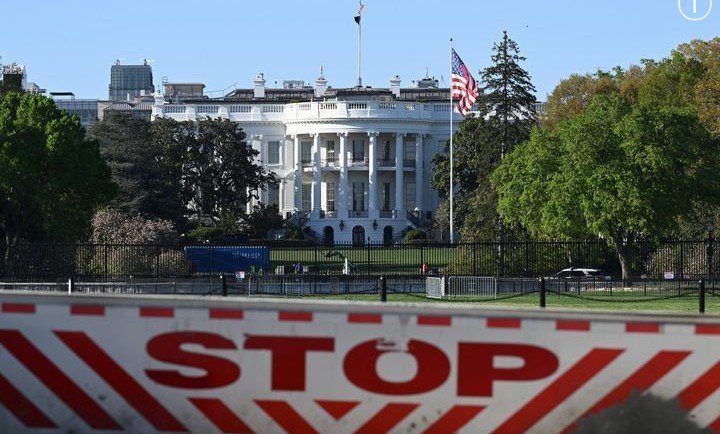
    WASHINGTON, April 16 (Xinhua)/Flowerbudnews : — U.S. Defense Secretary Pete Hegseth warned on Thursday that if Iran does not accept a deal, the U.S. military will strike Iran’s “infrastructure, power and energy.”

    The U.S. naval blockade of Iranian ports would continue as the White House is “maximizing economic pressure” unless Iranian leaders “choose wisely,” Hegseth said at a Pentagon press briefing.

    “In the meantime and for as long as it takes, we will maintain this successful blockade. But if Iran chooses poorly, then they will have a blockade and bombs dropping on infrastructure, power and energy,” he said, calling the blockade “the polite way to go.”

    The U.S. military was “maximally postured to restart combat operations” if Iran did not agree to a deal, he threatened.

    U.S. troops in the Middle East are “rearming” and “retooling” amid the ceasefire, Admiral Brad Cooper, head of the U.S. Central Command, said at the press conference.

    U.S. President Donald Trump said on Wednesday that the U.S.-Israeli war with Iran is “very close to being over,” while again failing to offer a clear timeline.

    The two-week ceasefire is to expire next week.


  • Why U.S.-Iran talks failed to reach an agreemen

    Why U.S.-Iran talks failed to reach an agreemen


    – “We only accept an end of the war with guarantees that we won’t be attacked again,” said Mojtaba Ferdousi Pour, head of the Iranian diplomatic mission in Cairo, ahead of the talk.


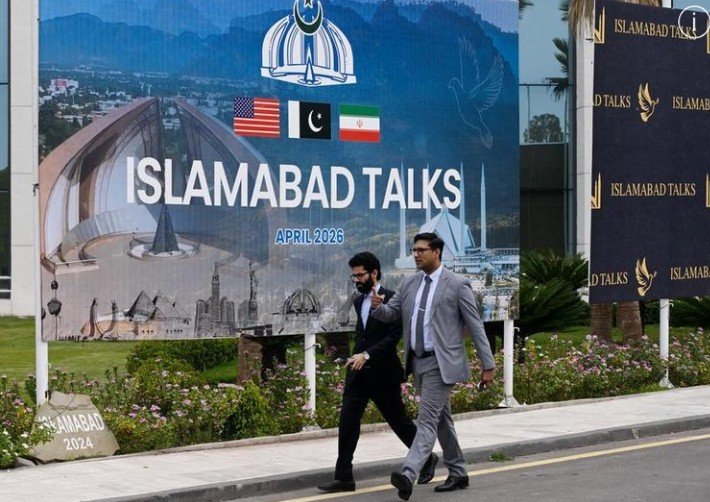
    BEIJING:  (Xinhua)/Flowerbudnews — After 21 hours of marathon-like negotiations, the United States and Iran failed to reach an agreement in the latest round of talks, U.S. Vice President JD Vance said on Sunday in Islamabad, Pakistan.

    Iran’s semi-official Tasnim news agency also reported that negotiations in Islamabad concluded without any outcome, as “excessive demands” by the United States hindered the development of a common framework and agreement.

    WHAT HAPPENED?

    The third round of face-to-face U.S.-Iran talks concluded within a two-week conditional truce window, more than a month after the start of joint U.S.-Israeli military strikes on Iran. The historic talks in Islamabad has drawn global attention amid ongoing turbulence.

    However, the talks failed to produce any breakthrough. Confirming his constant communication with U.S. President Donald Trump and others in the administration, Vance said the U.S. side had presented its “final and best offer” after continuous communication, adding that a number of substantive discussions were conducted in “good faith,” but the proposal had yet to secure any endorsement.

    Meanwhile, according to an Iranian Foreign Ministry spokesperson, the talks were conducted in an atmosphere of mistrust, and agreement shouldn’t be expected to be reached within a single session.

    “We only accept an end of the war with guarantees that we won’t be attacked again,” said Mojtaba Ferdousi Pour, head of the Iranian diplomatic mission in Cairo, ahead of the talk.

    KEY STICKING POINTS

    The U.S. vice president said the key question between the two sides is whether Iran is willing to demonstrate sustained intent to refrain from pursuing nuclear capabilities, not only in the immediate term but in the years ahead.

    Vance said Iran’s nuclear enrichment facilities have been “destroyed,” shifting the focus of negotiations to securing a long-term commitment from Tehran not to develop nuclear weapons.

    “The simple fact is that we need to see an affirmative commitment that they will not seek a nuclear weapon and they will not seek the tools that would enable them to quickly achieve a nuclear weapon,” Vance said. “That is the core goal of the president of the United States and that’s what we’ve been trying to achieve through these negotiations.”

    The Iranian side later confirmed that the two sides reached an understanding on several issues, but their views diverged on two or three critical ones.

    Earlier in the day, Iranian Foreign Ministry spokesman Esmaeil Baghaei said on X that discussions with the United States over the past 24 hours included the Strait of Hormuz, the nuclear issue, war reparations, the lifting of sanctions, and the complete end to the war against Iran.

    WHAT’S NEXT?

    Trump said on Saturday that it “makes no difference” to him whether both sides reach a deal.

    However, the failure to secure a deal has cast fresh doubt over the ceasefire’s durability, with disputes over its scope, including whether it extends to Lebanon. Uncertainty surrounding the Strait of Hormuz is adding to regional tensions.

    Despite the breakdown in talks, Pakistan reiterated its readiness to facilitate dialogue between the two sides.

    Pakistani Deputy Prime Minister and Foreign Minister Mohammad Ishaq Dar said on Sunday that Islamabad would continue to play a constructive role in promoting engagement between Iran and the United States.

    “We hope that the two sides continue with the positive spirit to achieve durable peace and prosperity for the entire region and beyond.”


  • Iran-U.S. ceasefire hailed worldwide

    Iran-U.S. ceasefire hailed worldwide


    BEIJING, (Xinhua)/Flowerbudnews :  — Iran and the United States have agreed to a two-week ceasefire as announced by U.S. President Donald Trump on Tuesday, a move that has been welcomed worldwide.

    The truce was announced less than two hours before a deadline set by Trump, and the two sides will hold negotiations in Islamabad, capital of Pakistan.

    Trump said Tuesday that he has agreed to “suspend the bombing and attack of Iran for a period of two weeks.”

    Iranian Foreign Minister Seyed Abbas Araghchi has promised safe passage through the Strait of Hormuz during the two-week ceasefire under “coordination” with Iranian armed forces, saying that Iran will cease “defensive operations” if attacks against it stop.

    The following remarks marked positive reactions worldwide.

    SUPPORT FROM UN Secretary-General:

    United Nations Secretary-General Antonio Guterres’ spokesperson Stephane Dujarric said in a statement Tuesday: “The Secretary-General underscores that an end to hostilities is urgently needed to protect civilian lives and alleviate human suffering.”

    “He calls on all the parties to the current conflict in the Middle East to comply with their obligations under international law and to abide by the terms of the ceasefire in order to pave the way toward a lasting and comprehensive peace in the region.”

    “He expresses sincere appreciation for the efforts of Pakistan and other countries involved in facilitating the ceasefire.”

    WELCOME FROM EUROPEAN UNION:

    EU foreign policy chief Kaja Kallas said in a X post on Wednesday:

    “The U.S.-Iran agreement on a ceasefire is a step back from the brink after weeks of escalation. It creates a much-needed chance to tone down threats, stop missiles, restart shipping, and create space for diplomacy towards a lasting agreement.”

    Meanwhile, she noted the Strait of Hormuz must be reopened to passage, stressing the importance of safeguarding a key global shipping lane as efforts continue to ease tensions.

    WELCOME FROM IRAQ:

    An Iraqi Foreign Ministry statement released Wednesday noted that the ceasefire agreement would contribute to reducing tensions, enhancing the prospects for de-escalation, and consolidating security and stability in the region.

    Meanwhile, it called for building upon this positive step by launching serious and sustainable dialogue channels that address the root causes of the disputes and strengthen mutual trust.

    WELCOME FROM TAJIKSTAN:

    Tajikistan’s Foreign Ministry said in a statement on Wednesday that it hopes the upcoming talks will lead to a long-term and comprehensive settlement, while warning that the continuation of conflict would further complicate the already fragile situation in the Middle East and cause enormous losses to all countries in the region.

    WELCOME FROM EGYPT:

    An Egyptian Foreign Ministry statement issued Wednesday said: “The move is positive towards de-escalation and the containment of regional tensions,” and called for full adherence to the ceasefire and respect for freedom of international navigation.

    Also on Wednesday, Egyptian Foreign Minister Badr Abdelatty hailed the move, in a phone conversation with U.S. Special Envoy to the Middle East Steve Witkoff, as an important step “for giving diplomacy a chance and working towards launching a serious negotiation process between Washington and Tehran.”

    WELCOME FROM SOUTH KOREA:

    South Korea’s foreign ministry said Wednesday the ceasefire agreement created momentum for the resumption of navigation through the Strait of Hormuz, while expressing hope that peace and stability in the Middle East would be restored at an early date.

  • Defense Shield Shattered: Iranian Ballistic Missile Slams Into Tel Aviv As Israel’s Iron Dome Crumbles

    Defense Shield Shattered: Iranian Ballistic Missile Slams Into Tel Aviv As Israel’s Iron Dome Crumbles


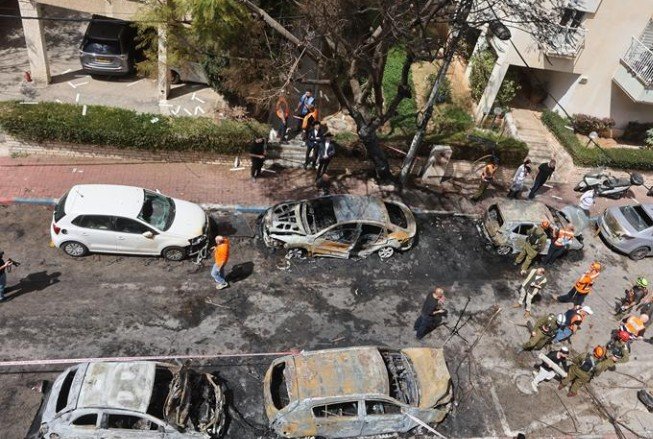
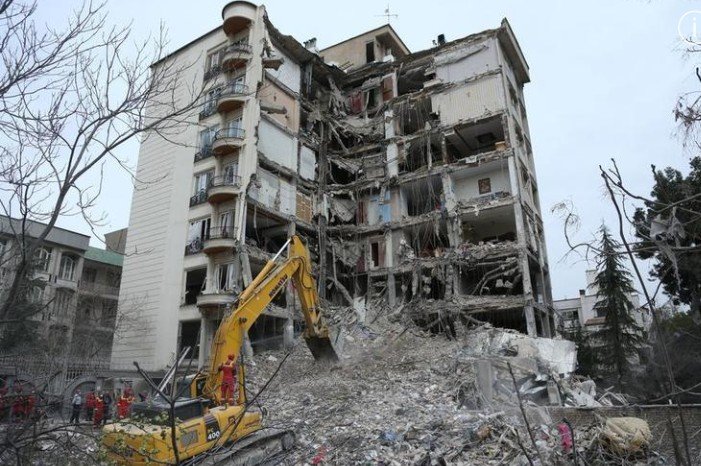
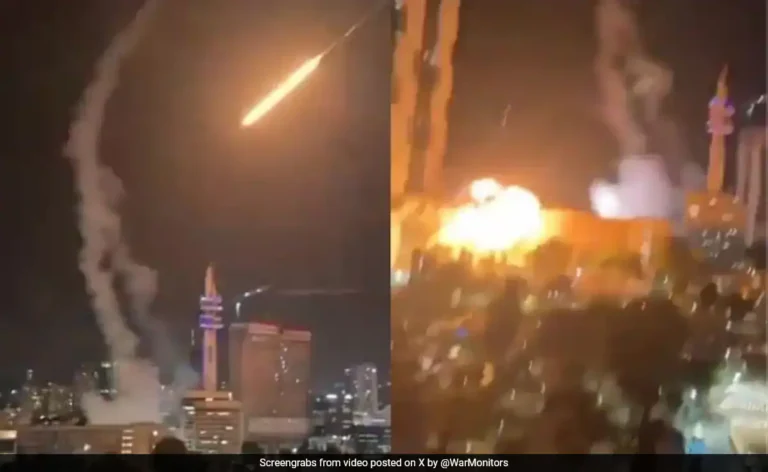
    TEL AVIV – In a catastrophic failure of the world’s most advanced air defense network, an Iranian ballistic missile has completely bypassed Israel’s multi-layered shield, slamming into the heart of central Tel Aviv and leaving a trail of “massive craters” and shattered buildings.

    Al Jazeera confirmed the direct hit on Thursday, April 2, 2026, marking a terrifying turning point in the five-week-old conflict. The strike, which hit a densely populated residential area, has sent shockwaves through the region as the myth of the “impenetrable” Zionist defense shield appears to have finally collapsed.

    The Strike that Broke the Shield
    Initial reports from the ground describe scenes of absolute chaos. The missile, reportedly carrying a heavy explosive warhead, carved a massive crater into the asphalt, leveling several structures and incinerating vehicles parked nearby. The blast was so powerful that it shattered windows for several blocks, sending glass rain down on residents who were scrambling for bomb shelters.

    “The Zionist defense shield has completely collapsed,” noted one regional correspondent. “This wasn’t just a stray shrapnel hit; this was a direct, unhindered strike on the heart of the city. The systems simply did not see it coming.”

    A High-Tech Failure
    The Israeli Defense Forces (IDF) are currently facing a crisis of confidence as they scramble to investigate why the Arrow 3 and Iron Dome systems failed to intercept the projectile. Military analysts suggest that Iran has successfully transitioned to using advanced cluster warheads and “stealth” flight paths that are overwhelming the IDF’s tracking sensors.

    This hit in Tel Aviv follows similar defense failures in Petah Tikva earlier this week, where Iranian missiles also bypassed Israeli defenses, causing significant structural damage. For the first time since the start of the hostilities, the IAF is admitting that its multi-billion dollar defense umbrella is no longer a guarantee of safety.

    Regional Fallout
    The successful strike on Tel Aviv has shifted the psychological balance of the war. As Israel reels from the direct hit on its commercial capital, Iran has signaled that this is only the beginning of a “new phase” of precision strikes. The IDF has responded with a wave of retaliatory sorties, but with the “Iron Dome” now proven vulnerable, the fear of an unrestricted ballistic exchange is higher than ever.

    Politics

    As of Friday morning, emergency crews are still working to secure the blast site in central Tel Aviv. While casualties were initially reported to be between four and five injured, the sheer scale of the building damage suggests the toll could rise as search-and-rescue teams dig through the rubble of the high-tech shield’s failure.

  • S. intel finds Iran retains significant strike capacity: report

    S. intel finds Iran retains significant strike capacity: report


    U.S. intel finds Iran retains significant s


    WASHINGTON, (Xinhua)/Flowerbudnews : — Latest U.S. intelligence assessments show that roughly half of Iran’s missile launchers are still intact and thousands of one-way attack drones remain in Iran’s arsenal more than one month after the United States and Israel launched massive strikes on Iran, CNN reported on Thursday.

    “They are still very much poised to wreak absolute havoc throughout the entire region,” a source familiar with the intelligence told the U.S. media outlet.

    The assessments also indicate that Iran retains a large number of missiles, as well as a significant portion of its coastal defense cruise missiles, a key capability for controlling the Strait of Hormuz, according to the report.

    Although Iran’s Navy vessels have largely been destroyed, the separate naval forces belonging to the Islamic Revolutionary Guard Corps still retain roughly half of its capabilities, with “hundreds, if not thousands, of small boats and unmanned surface vessels left,” according to sources cited by CNN.

    The intelligence shows that Iran’s use of underground facilities has helped preserve its missile launchers. The country has long hidden its launchers in extensive networks of tunnels and caves, making them particularly difficult to target.

    U.S. President Donald Trump on Wednesday put the timeline for completing U.S. military operations at two to three weeks. However, a source who has reviewed the intelligence assessments described the timeline as unrealistic.

    Israel, U.S. allies in the Gulf, as well as U.S. troops, have continued to face regular missile and drone strikes from Iran.


  • One month into U.S.-Israeli war with Iran, havoc with no end in sight

    One month into U.S.-Israeli war with Iran, havoc with no end in sight


    Regional experts believe that while mounting regional and global pressure against the war could pave the way for a fragile, short-term ceasefire, a true end to the fighting remains a long way off, and the conflict risks dragging on with no real political settlement in sight.

    Pointing to what they see as the United States and Israel’s disregard for international law in their heavy-handed strikes on Iran, analysts warn that the war is ratcheting up regional tensions and eroding the world order.

    CAIRO:   (Xinhua)/Flowerbudnews — As the U.S.-Israeli conflict with Iran approaches its one-month mark, the biggest flare-up in the Middle East in decades has caused widespread devastation across the region and severe shockwaves around the globe.

    Despite reports of possible talks between Washington and Tehran to halt hostilities, no substantive progress toward peace has materialized, as continued strikes and a military buildup further diminish hopes for a swift de-escalation.


    HEAVY TOLL

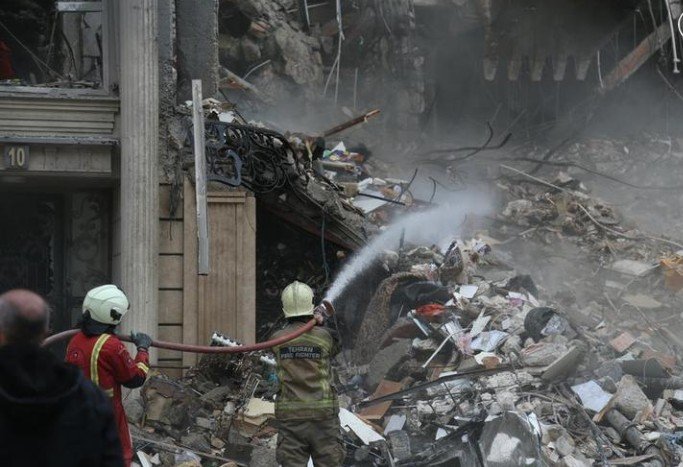
    The war erupted on Feb. 28 with U.S.-Israeli airstrikes on Tehran and several other Iranian cities. Since then, the attacks have continued, targeting key Iranian military command centers, missile installations, energy infrastructures and nuclear facilities.

    In response, Iran has launched over 80 waves of missile and drone strikes against Israel and U.S. military facilities across the Middle East, including those in Kuwait, Bahrain, Qatar, Jordan, Saudi Arabia and the United Arab Emirates.

    The conflict has resulted in heavy casualties, with Iranian deaths estimated at over 1,900 and more than 24,800 injured, including the confirmed deaths of then Supreme Leader Ali Khamenei, top security official Ali Larijani, and Intelligence Minister Esmaeil Khatib. Israeli and U.S. forces have also suffered losses, with at least 19 Israeli and 13 U.S. military fatalities reported.

    Meanwhile, several other countries have been hit by projectiles, suffering casualties. The Gulf’s status as a bastion of peace and prosperity is in doubt. Critical energy infrastructure across the region has been attacked, with residents fleeing to safe havens in Southeast Asia and Europe and the lives of millions upended.

    In the Levant, Hezbollah fired rockets into Israel on March 2 in a show of support for Iran, prompting Israeli airstrikes and a ground incursion into Lebanon that has reportedly killed 1,116 people and displaced over a million.

    In a major escalation, Iran has effectively blockaded the Strait of Hormuz, allowing only ships it considers non-hostile to pass. This maritime squeeze, along with damage to regional energy facilities, has pushed oil prices higher, keeping Brent Crude above 100 U.S. dollars a barrel and up more than 50 percent since the war began.

    According to a recent World Trade Organization report, sustained high energy prices could reduce projected global GDP growth in 2026 by 0.3 percentage points.


    NO CLEAR EXIT

    Israel’s Channel 12 reported Tuesday that Washington has delivered to Iran a 15-point plan for a month-long ceasefire deal. Tehran, however, considers it too “excessive and disconnected from realities,” Iran’s state-run Press TV reported Wednesday.

    Israeli Defense Minister Israel Katz announced Friday that Israeli strikes on Iran “will intensify and expand to additional targets.”

    Regional experts believe that while mounting regional and global pressure against the war could pave the way for a fragile, short-term ceasefire, a true end to the fighting remains a long way off, and the conflict risks dragging on with no real political settlement in sight.

    “The most likely short-term scenario is a limited ceasefire driven by international pressure and repositioning,” said Naji Ajeeb, a Sudanese conflict researcher. “Such a pause would be a tactical truce, allowing both sides to assess gains and prepare for further confrontation rather than achieving a comprehensive settlement.”

    Kamel Mansari, editor-in-chief of Le Jeune Independant, a French-language daily newspaper in Algeria, argues that the conflict could easily escalate into a prolonged war of attrition.

    “A cessation of hostilities would require each side to claim a symbolic ‘victory,’ which is not currently the case,” Mansari said. “If the United States and Israel do not cease their attacks against Iran, the conflict could escalate into a protracted asymmetric war.”

    In that case, regional players are likely to rely on indirect tools, including proxy attacks, limited strikes and cyber warfare, said Brigadier Pilot Adel Abdelkafi, security advisor to the Libyan High Council of State.

    So far, Israel has shown the least interest in ending the war, with officials repeatedly opposing any potential ceasefire and signaling plans to escalate military operations.

    Israeli political analyst Jonathan Lis observes that U.S. President Donald Trump’s push for a swift deal with Iran is heightening Israeli concerns over potential U.S. compromises.

    Israeli officials fear that the United States could show flexibility on critical issues, including Iran’s stockpile of highly enriched uranium, restrictions on its nuclear program, and limitations on its ballistic missile capabilities, Lis said.


    TEST FOR GLOBAL ORDER

    Pointing to what they see as the United States and Israel’s disregard for international law in their heavy-handed strikes on Iran, analysts warn that the war is ratcheting up regional tensions and eroding the world order.

    Batu Coskun, an Ankara-based independent political analyst, cautions that the war risks intensifying regional polarization into long-term bloc politics. “Even if active fighting subsides, unresolved grievances and shifting alliances are likely to sow the seeds for future conflicts,” Coskun said.

    “Selective adherence to international norms undermines institutional credibility and may encourage similar behavior elsewhere,” he said.

    Mostafa Amin, an Egyptian researcher on Arab and international affairs, said the war is causing a crisis in the international system as unilateral actions undermine the UN-based global order.

    “The broader international system faces a profound crisis as the United States increasingly sidelines the UN-based post-World War II global governance framework to facilitate its regional objectives,” Amin said. “This encourages a transition toward a multipolar disorder where the pursuit of narrow, short-sighted interests dominates over international law.”

    As the war rages on, there may be a glimmer of hope.

    “Calls for peace, particularly from countries like China, are significant in de-escalating tensions and encouraging dialogue among the parties involved,” said Ayman Yousef, a professor of political science at the Arab American University in the West Bank.

    But achieving lasting peace will require more countries to join a collective effort to uphold an international order rooted in multilateralism and coexistence, Yousef noted.

    “Ultimately, achieving stability requires a collective international approach that prioritizes dialogue, respects international frameworks, and works toward long-term political solutions rather than short-term military gains,” Yousef said.

    (Video reporters: Shadati, Chen Xiao, Dong Xiuzhu, Yang Yiran, Zhang Yanfang, Feng Guorui, Huang Zemin, Shen Feng, Duan Minfu, He Yiping, Luo Chen, and Xu Haofu; Video editors: Hong Ling, Li Qin, Liu Xiaorui, and Zheng Qingbin)

    Tr

    Like

  • BREAKING: German Chancellor Friedrich Merz enrages MAGA by announcing that Trump’s illegal Iran War is poised to fail — despite Trump already claiming victory

    BREAKING: German Chancellor Friedrich Merz enrages MAGA by announcing that Trump’s illegal Iran War is poised to fail — despite Trump already claiming victory


    BREAKING: German Chancellor Friedrich Merz enrages MAGA by announcing that Trump’s illegal Iran War is poised to fail — despite Trump already claiming victory.

    The entire world can see what time it is….
    “I’m just not convinced that what’s happening right now, what Israel and America are doing, will actually lead to success,” Merz said at a conference hosted by FAZ newspaper.

    “I have serious doubts about whether there is a strategy and whether that strategy is being implemented successfully. In that regard, it could take longer, and things probably won’t improve.”

    Merz said that Israel and America are “are becoming more deeply entangled in this conflict every day.”

    SEE ALSO:  Peter Obi Reacts As US Navy Seizes Nigerian-owned Supertanker, Called For Proper Investigation

    “Is regime change really the goal? If that’s the goal, I don’t think you’ll achieve it. It’s mostly gone wrong,” he added.

    The truth is that not even Trump knows what his goals are. Some days the administration claims that it’s a regime change war, other days they say that it’s about nuclear weapons or degrading Iran’s missile and rocket arsenals.

    At times it seems like their only goal is to force a reopening of the Strait of Hormuz — which was open before Trump launched his war.

    There’s nobody at the wheel here and innocent people are dying in droves because of it.

    SEE ALSO:  AGF Fagbemi Seeks Increased Funding for Justice Ministry, Cites Obsolete Laws and Sector Challenges

    Meanwhile, no American interests are being served as American service members are being killed.

    This war is being fought on behalf of Israel, which wants to destabilize Iran into a failed state so that they can continue their territorial expansion in the region uncontested.See more, details. .

  • News Analysis: Why U.S. fails to achieve decisive outcomes in Iran war?

    News Analysis: Why U.S. fails to achieve decisive outcomes in Iran war?


    by Mahmoud Fouly

    CAIRO,  (Xinhua)/Flowerbudnews : — Despite its verbal boasts of victory and so-called weapons superiority, the United States has struggled to achieve decisive results in its ongoing conflict with Iran as the regional war approaches the one-month mark.

    Analysts say that while Washington retains a clear edge in firepower, a lack of coherent strategy, mounting divisions with its allies, and an underestimation of Iran’s institutional resilience have prevented the world’s only superpower from achieving the outcomes it anticipated at the outset.

    Mohamed Mohsen Abo El-Nour, head of the Cairo-based Arab Forum for Analyzing Iranian Policies, said the war has demonstrated “a U.S. military superiority, yet an inability to transform this advantage into a decisive political or strategic resolution.”

    A recent editorial by The New York Times, titled Trump Can’t Spin His Way Out of This War, said President Donald Trump “went to war against Iran without explaining his strategy to the American people or the world,” adding that “it now appears that he might not have had much of a strategy at all.”


    Echoing this view, Egyptian expert on Gulf affairs and Iranian politics Abu-Bakr Al-Desouky said that “all indicators point to the absence of a clear strategy,” highlighting a stark contrast between reality and the statements of Trump, who has repeatedly claimed success and major achievements on the battlefield.

    Since last month’s U.S.-Israeli attacks on Iran, the country has endured losses but avoided the catastrophic damage initially claimed by Washington and Israel. Continuing to strike back, Iran’s retaliatory attacks have caused damage to both Israeli and U.S. assets, prompting the United States to deploy additional forces to sustain its confrontation with Tehran.

    Al-Desouky also questioned the underlying rationale of the war, describing it as lacking a clear political or moral foundation, and argued that Washington’s objectives remain vague and inconsistent.

    “Iran did not pose a direct threat to the United States, and it even offered unprecedented concessions during the latest Oman-sponsored negotiations, yet Washington did not negotiate with flexibility or in good faith,” he said.

    Divisions between the United States and its allies have further complicated the situation. Since the United States and Israel launched attacks, many of U.S. allies, including Spain and France, have expressed opposition to the military actions.

    In addition, the United States and Israel have also clashed over how the war is being conducted and its goals, including whether to strike Iran’s energy facilities.


    The recent resignation of Joe Kent, director of the National Counterterrorism Center, in protest against the war, has underscored growing dissatisfaction within parts of the U.S. administration.

    “It is clear that we started this war due to pressure from Israel and its powerful American lobby,” Kent wrote in his resignation letter.

    Al-Desouky described the resignation and opposition from the U.S. allies as “a strong indication of internal discontent within the administration itself, as well as dissent among the broader public.”

    Meanwhile, analysts argue that U.S. policymakers have misjudged Iran’s internal dynamics. Rather than sparking widespread unrest, external military pressure seems to have reinforced domestic cohesion.

    El-Nour noted that foreign strikes have fueled what he described as “defensive nationalism,” with various segments of Iranian society rallying behind the state in the face of external threats.

    “All segments of Iranian society unite in times of external danger,” Al-Desouky said, adding that even opposition groups tend to support the government when national sovereignty is perceived to be under attack.

    This internal cohesion, combined with Iran’s institutional resilience, has made the prospect of “regime collapse” increasingly unlikely.

    As the war drags on, it is sending shockwaves across the geopolitical and economic landscape, driving up oil prices, rattling international markets, and even boomeranging back on the United States itself.

    Observers warn that if Washington keeps pressing ahead blindly, ignoring the realities on the ground, the conflict could spiral into a protracted war of attrition, exacting a heavy toll on all sides involved.

    It is time for the United States to face the reality that the war is unlikely to achieve its objectives, El-Nour said, warning that without a comprehensive political solution, the military operations in Iran could entangle Washington in “a costly, open-ended conflict.”