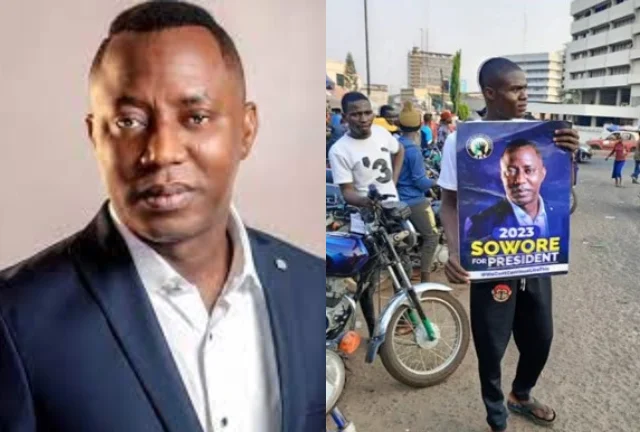
Tag: Sowore

  • DSS asks court to remand Sowore over alleged failure to fulfil bail conditions

    DSS asks court to remand Sowore over alleged failure to fulfil bail conditions


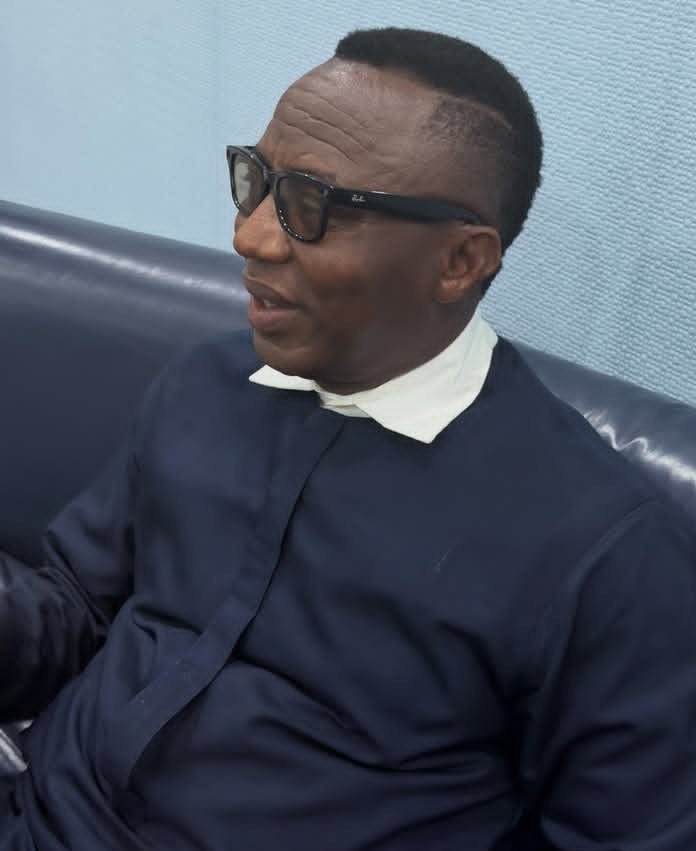
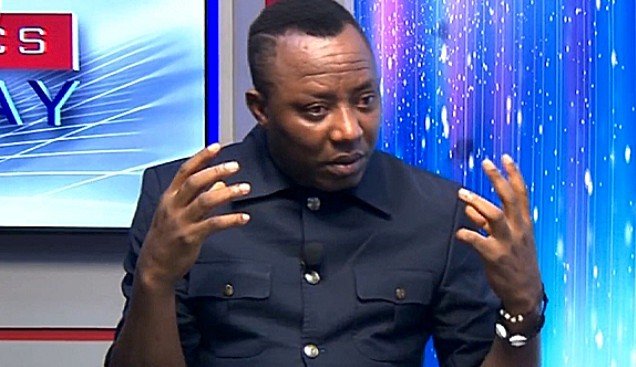
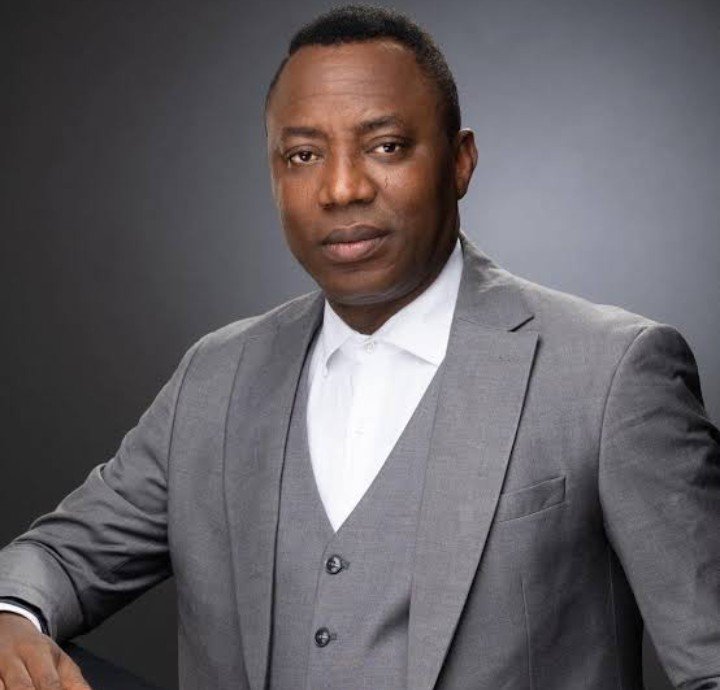
    The Department of State Services (DSS) on Monday prayed a Federal High Court in Abuja to order the remand of Omoyele Sowore, the presidential candidate of African Action Congress (AAC), over his alleged failure to fulfil the earlier bail terms.

    The DSS lawyer, Akinlolu Kehinde, SAN, made the oral application before Justice Mohammed Umar adjourned the day’s proceedings until July 13.

    Earlier on Monday, Sowore had opened his defence by calling his 1st defence witness (DW-1), Deji Adeyanju, a lawyer and an activist.

    Adeyanju, who was led in evidence-in-chief by the defence lawyer, Adeyinka Olumide-Fusika, SAN, tendered recordings of video evidence in a flash drive and a certificate of compliance in Sowore’s defence.

    Olumide-Fusika then sought an adjournment to enable them play the video recordings on the next adjourned date.

    Shortly after the application, Kehinde reminded the court of a subsisting court order for Sowore’s bail.

    The senior lawyer informed the court that the defendant was yet to fulfil any of the bail conditions made by the courr.

    “We urge your lordshio to make a necessary order for the remand of the defendant until the bail conditions are met,” he applied.

    Kehinde said Sowore, who was released to a lawyer that appeared for him on the last adjourned date pending when he filled the bail terms, was yet to meet the conditions.

    He said the defendant had not deposited his international passport to the deputy chief registrar of the court, he had not produced a tradition ruler from his community as surety nor produced another surety who has a landed property in Abuja as ordered by court.

    According to him, the defendant has not communicated to us whether that passport has been released to DCR.

    The lawyer, who argued that the court order cannot be toiled with, said such orders are not made in vain.

    However, Olumide-Fusika begged the coirt to exercise patience as the processes were ongoing for the perfection of the bail terms.

    “It is incorrect that the conditions have not been met. When you meet a bail conditions, the verification will have to be made by the court and this is ongoing my Lord,” he said.

    After both lawyers’ submission, Justice Umar held that although Sowore’s release order was signed on the last adjourned date, he would wait before the close of work to see what steps had been taken by the defence before making the order for Sowore’s remand.

    The News Agency of Nigeria (NAN) reports that Justice Umar had, on June 30, admitted Sowore to a N200 million bail with two sureties in the like sum.

    The judge, who ordered that one of the sureties must be a traditional ruler from Sowore’s community, held that the other must be a land owner in Abuja.

    He was also ordered to submit his travel document to the deputy chief registrar of the court among other conditions.

    Sowore’s bail revocation followed his failure to appear in court for his trial on Jine 16.

    The DSS is prosecuting Sowore for allegedly making false claims against the person of President Bola Tinubu by referring to him as “a criminal” in a post he made on his “X” and Facebook accounts.


    Details later

  • Breaking:  Court orders Sowore’s remand in Kuje Correctional Centre

    Breaking: Court orders Sowore’s remand in Kuje Correctional Centre


    The Federal High Court in Abuja on Monday ordered the remand of Omoyele Sowore, the presidential candidate of African Action Congress (AAC), in Kuje Correctional Centre.

    Justice Mohammed Umar, in a short ruling, ordered Sowore to be kept in the correctional centre pending the hearing and determination of his motion for stay of the order for revocation of his bail and bench warrant.

    Justice Umar also dismissed Sowore’s ealier application seeking the judge’s recusal from the case on the ground of alleged bias.

    The judge then adjourned the matter until June 24 for hearing of the application for stay.

    The News Agency of Nigeria (NAN) reports that the motion for stay was filed by the defendant’s new lawyer, Adeyinka Olumide-Fusika, SAN.

    NAN earlier reported that Sowore, also the publisher of Sahara Reporters, arrived at the court in company of members of his group with placards.

    Justice Umar had, on June 16 revoked a bail granted to Sowore following his failure to appear in court for his trial.

    Justice Mohammed Umar, in a ruling on an oral application made by the lawyer to the Department of State Services (DSS), Akinkolu Kehinde, SAN, also issued a bench warrant for his arrest.

    The DSS is prosecuting Sowore for allegedly making false claims against the person of President Bola Tinubu by referring to him as “a criminal” in a post he made on his “X” and Facebook accounts.


  • UPDATE: Court revokes Sowore’s bail, orders his arrest

    UPDATE: Court revokes Sowore’s bail, orders his arrest


    The Federal High Court in Abuja on Tuesday revoked a bail granted to Omoyele Sowore, the publisher of Sahara Reporters, over his absence in court for his trial.

    Justice Mohammed Umar, in a ruling on an oral application made by the lawyer to the Department of State Services (DSS), Akinkolu Kehinde, SAN, also issued a bench warrant for his arrest.

    The News Agency of Nigeria (NAN) reports that the DSSS is prosecuting Sowore for allegedly making false claims against the person of President Bola Tinubu by referring to him as “a criminal” in a post he made on his “X” and Facebook accounts.

    Justice Umar had, on June 5, fixed today for ruling on application by Sowore, through his lawyer, Marshall Abubakar, seeking the judge’s recusal ftom the case.

    Sowore had also, on the last adjourned date, opted to appear for himself in the case pending when he was able to reconstitute another legal team.

    However, when the case was called on Tuesday, Sowore was not in court and no lawyer appeared for him.

    Kehinde then informed the court that the matter was set down for ruling in respect of the defendant’s application.

    The lawyer said that despite the fact that Sowore was in court on Monday and the registrar informed parties that the matter would be coming up today, he was not in court for reason best known to him.

    He said Sowore, instead, sent a letter asking for an adjournment.

    “I will be applying for a bench warrant to be issued against the defendant also for the revocation of his bail.

    “I have seen a letter dated June 15th, 2026

    “The letter is of no moment. There is no reason advanced as to why he is not in court today.

    “It is a criminal trial and must be given all the seriousness it deserves,” he said.

    Justice Umar, in his ruling, agreed that he directed the registrar of the court to inform all parties in the cases scheduled for yesterday, including Sowore’s matter, that all the cases would be heard today.

    He said this was due to the fact that the court had just moved to another location on the 4th floor of the high-rise building and not yet composed of the clerical staff. .

    “The defendant is not in court today but sent a letter dated 15th of June, 2026.

    “The defendsnt applied that matter that is for ruling be set down for delivery on either the 2nd, 3rd, 14th, 15th, 17th, of July or September 8th, 9th, 10th, or any date subsequently as the court may deem convenience.

    “There is no reason at to why the adjournment should be made in favour of the defendant.

    “The defendant is also very much aware that this matter has been ordered to be heard day by day as enjoined by Section 39 (2) of Administration of Criminal Justice Act (ACJA), 2015.

    “The prosecution counsel, A. T. Kehinde, SAN, applied that the bail of the defendant be revoked and bench warrant be issued,” the judge said.

    Justice Umar, therefore, said that he was inclined to grant the prosecution’s application.

    According to him, the defendant did not take the trial in this court serious as it has reached a defence stage since the 16th of March, 2026.

    “The defendant has been delaying this case through one tactic or the other as all adjournments were at the instance of the defendant.

    “The defendant who is on bail is in clear disobedience of the order of this court to appear today without any reason,

    “Therefore, the bail of the defendant is hereby revoked and a bench warrant is hereby ordered to be issued against the defendant to compel him to appear in court on the next adjourned date,” the judge ruled.

    He adjourned the matter until June 22 for ruling.

    Sowore had, on June 5, indicated his readiness to represent himself in court pending reconstitution of a new legal team.

    He had told the judge that his lawyer, Abubakar and his team, who were not in court on that same day, told him that they would no longer appear in court because of the humiliation they suffered before the court.

  • Omoyele Sowore, NBA and the Crisis of Priorities: A Reflection on Decorum, Selective Outrage and Decay in Nigeria’s Administration of Justice

    Omoyele Sowore, NBA and the Crisis of Priorities: A Reflection on Decorum, Selective Outrage and Decay in Nigeria’s Administration of Justice


    By Sylvester Udemezue

    *INTRODUCTION

    The events of March 24, 2026, at the Federal High Court, Abuja, involving activist Omoyele Sowore and the subsequent response of the Nigerian Bar Association (NBA), have triggered a conversation that extends far beyond the narrow question of courtroom etiquette.

    By most accounts, the controversy arose when Sowore attempted to speak with journalists within the courtroom at a time the court was not in session, leading to a confrontation and, shortly thereafter, a strongly worded reaction from the NBA.

    The Association reiterated, quite correctly, that courtrooms are not venues for media briefings and described the conduct attributed to Sowore as inconsistent with courtroom discipline. Sowore, for his part, denied staging a press conference and accused the NBA of selective outrage. Yet, beyond the immediate facts lies a deeper and more consequential issue.

    This discourse is not about defending disorder. Courtrooms are solemn spaces and must be treated with restraint, dignity, and respect. No serious-minded person should encourage conduct that trivialises judicial proceedings. That is not the point. The real question is whether the intensity of the reaction reflects a deeper institutional imbalance, one that prioritises symbolic infractions while underreacting to the far more profound challenges undermining the administration of justice in Nigeria.

    *A QUESTION OF INSTITUTIONAL PRIORITIES*

    The NBA is undoubtedly on firm ground in insisting that the courtroom is not a theatre or a publicity arena. That principle is foundational and largely uncontroversial. However, a more pressing question arises: why does the Association often appear most animated when the issue is symbolic, yet comparatively restrained when the issue is systemic? If the legal profession must be stirred to righteous indignation, should that indignation not first be directed at the conditions that have steadily eroded public confidence in the judiciary? Reports over recent years have painted a troubling picture: declining public trust, a growing backlog of cases, and repeated warnings, even from within the judiciary itself, about delays in justice delivery. These are not marginal concerns; they go to the very heart of the justice system. Surely, these are the matters that ought to command the sustained attention, urgency, and collective energy of the Bar.

    *THE REAL THREATS TO JUSTICE*

    Nigeria’s judiciary is not under strain because a layman granted an interview within court premises, particularly when proceedings were not ongoing. It is under strain because of deeper, structural challenges: delays that turn justice into endurance; persistent allegations of corruption; executive pressure; manipulation of judicial processes; weak institutional discipline; and a growing crisis of public confidence. Analyses by governance and rule-of-law organisations have consistently pointed to issues such as political influence, inadequate funding, resource constraints, and internal ethical lapses as central threats to judicial independence and integrity. These are the real fault lines. This is where the crisis lies. This is the substance. This is the fire. And yet, too often, we leave the fire unattended while directing our attention to the smoke.

    *SELECTIVE OUTRAGE AND ITS CONSEQUENCES*

    Sowore’s central criticism, that the NBA reacts selectively, may be uncomfortable, but it is not without resonance. His question, in essence, is simple: where is the same institutional urgency when more serious violations of courtroom sanctity occur, particularly when such violations involve powerful actors or state institutions? Many Nigerians can readily relate to this concern. They see a justice system burdened by prolonged delays, weighed down by technicalities, and, at times, perceived as susceptible to influence. They observe a system where the ordinary litigant often faces a process that is slow, expensive, and uncertain. One need not endorse Sowore’s conduct to acknowledge the force of his question. And it is precisely here that greater institutional wisdom was required. An issue of courtroom etiquette could have been addressed firmly, calmly, and proportionately. It did not require the level of moral escalation that now risks presenting a single incident as emblematic of the most pressing dangers to justice delivery. It is not.

    *WHERE THE REAL UNDERMINING OCCURS*

    The more serious challenges confronting the administration of justice in Nigeria are well known and widely acknowledged. They include the troubling reality of cases that linger in courts for years, transforming litigation into a form of punishment. They include the growing perception that outcomes may sometimes be shaped not only by law and fact, but also by influence, pressure, and status. They include the continued reliance, in many instances, on non-legally trained personnel for criminal prosecution at the lower levels, despite statutory provisions aimed at professionalising the process. They include also the difficult welfare conditions faced by many legal practitioners, especially younger members of the Bar, and the structural distortions caused when election-related litigation consumes disproportionate judicial time and resources. Perhaps most damaging of all is the steady erosion of public confidence: fueled by recurring allegations of compromised processes, conflicting orders, and procedural manipulation. These are not peripheral issues. They are foundational.

    *A CALL FOR INSTITUTIONAL INTROSPECTION*

    There was a time when Nigerian courts commanded profound moral authority. That authority did not derive from ceremonial symbols or institutional posturing, but from a widespread belief that the courts were serious forums for the fair and impartial administration of justice. That confidence has diminished. And it did not diminish because of Sowore. It diminished because practices that should have remained exceptional gradually became normal: endless adjournments, selective urgency, procedural gamesmanship, weak disciplinary standards, and a professional culture that sometimes prioritises image over introspection. It is important to recognise that criticism is not hostility. In many instances, it is the highest form of institutional loyalty. To suggest that the NBA should focus more deliberately on substantive threats to justice is not to undermine the Association; it is to call it back to its foundational purpose.

    *CONSISTENCY AS THE MEASURE OF CREDIBILITY*

    If the dignity of the courtroom is to be preserved, it must be defended consistently. It must matter whether the perceived threat comes from an activist, a security agency, a politically exposed individual, or even members of the legal profession itself.

    If the rule of law is to be upheld, the same moral seriousness must be applied to executive interference, judicial delays, corruption allegations, and disobedience of court orders, as is applied to questions of courtroom conduct. Anything less risks creating the impression, fair or otherwise, that the profession is more adept at policing appearances than confronting substance. That impression is not only damaging; it is dangerous.

    *SOWORE AND THE REAL CRISIS*

    It must therefore be stated plainly: Omoyele Sowore is not among the central challenges facing the administration of justice in Nigeria. At most, the incident in question reflects an error of judgment. But an individual misstep is not equivalent to systemic failure. The true challenges are deeper, more entrenched, and far more consequential: delay, distrust, institutional weakness, perceived influence, and the widening gap between the ideal of justice and the lived reality of those who seek it. These are the issues that demand the attention of the Bar.

    *CONCLUSION: A CALL FOR PROPORTION AND COURAGE*

    This is not an argument for indiscipline. It is an argument for proportion. It is not an attempt to excuse what should be corrected. It is a plea that we do not exaggerate minor irregularities while underreacting to major deformities. A justice system is not undone by a single interview within a courtroom. It is undone when delay becomes entrenched, when public trust collapses, when influence overshadows principle, and when reform is overshadowed by performative outrage.

    The NBA remains too important an institution to be distracted by shadows. The Nigerian legal profession remains too noble a calling to be reduced to optics. And the administration of justice in Nigeria is in too fragile a state for us to misidentify the problem. Sowore is not the problem. The problem is the deeper rot that has long been visible, widely discussed, and yet insufficiently confronted. That is where the conversation must begin. That is where courage is required. And that is where meaningful reform must be pursued.

    Respectfully,

    (Sylvester Udemezue (udems)
    (Member, NBA, Lagos Branch)
    08021365545.
    udemsyl@gmail.com.
    (24 March 2026))

  • False claim against Tinubu: Court threatens to revoke Sowore’s bail


    The Federal High Court in Abuja, on Thursday, threatened to revoke the bail it granted Omoyele Sowore, the publisher of Sahara Reporters, following his absence in court in the ongoing trial on alleged defamatory remarks against President Bola Tinubu.

    Justice Mohammed Umar, who issued the threat, also said he would issued an arrest warrant for his forceful production should he fail to attend court on the next adjourned date.

    Justice Umar gave the warning following an application by lawyer to the Department of State Services (DSS), Akinlolu Kehinde, SAN.

    Kehinde had observed that Sowore chose not to attend court despite evidence that he was served with hearing notice through his team of lawyers.

    Sowore, also a politician, is being prosecuted by the DSS for allegedly making false claim against the person of Present Bola Tinubu by referring to him as “a criminal” in a post he made on his “X” and Facebook accounts.

    When the case was called on Thursday, neither Sowore nor any of his team of lawyers was in court.

    Reacting to the development, Kehinde said that the business of the day was for the defence to conclude his cross examination of the first prosecution witness.

    The prosecuting lawyer said he confirmed from the court’s registry that hearing notice was served on the defendant through his lawyers, just as the prosecution was also served.

    The senior lawyer said there was no reason given by the defendant for his absent in court.

    He equally said that no reason was given by his lawyers, who are about 30 in number, why they were not in court.

    Citing the provision of Section 352(1)&(2) of the Administration of Criminal Justice Act (ACJA), 2015, Kehinde prayed the court to among others, order the revocation of the bail granted the defendant and issue a bench warrant against him for his immediate production in court to face his trial.

    Ruling, Justice Umar, who confirmed that Sowore was duly served with hearing notice through his lawyers, however noted that the defendant had always attended court since the case began late last year.

    The judge also noted that past adjournments granted in the case had been at the instance of both the prosecution and the defence.

    He said the defendant should be given the benefit of the doubt since it was his first time of being absent in his trial.

    Justice Umar, however, said should Sowore fail to attend court on the next date, he would not hesitate to grant the prosecution’s request that the defendant’s bail be revoked and arrest warrant issued against him.

    The judge then adjourned the matter untill March 16 for continuation of trial.

    He also ordered that hearing notice be further issued on the defence.

  • False claim against Tinubu: Court adjourns Sowore’s trial over judge’s absence

    False claim against Tinubu: Court adjourns Sowore’s trial over judge’s absence


    The Federal High Court in Abuja, on Thursday, adjourned the trial of Publisher of Sahara Reporters, Omoyele Sowore, on alleged defamatory remarks against President Bola Tinubu, for continuation of hearing.

    The case, scheduled for Thursday, could not proceed due to the absence of Justice Mohammed Umar in court.

    Although lawyer to the prosecution, Akinlu Kehibde, SAN, and that of the defence, Marshall Abubakar, were in court, including the defendant and the prosecution witness, Justice Umar, the trial judge, was said to be in another official engagement.

    Sowore is being prosecuted by the Department of State Services (DSS) for allegedly making false claim against the person of Present Tinubu by referring to him as “a criminal” in a post he made on his “X” and Facebook accounts.

    Justice Umar had, on Feb. 4, rejected two documents tendered by Sowore in his ongoing trial.

    The judge, in a ruling, declined an oral application by Sowore’s lawyer, seeking an order admitting a set of documents, comprising print-outs of publications in evidence.

    The publications include media reports about DSS’ dismissal of 115 officials for misconduct; the Economic and Financial Crimes Commission (EFCC) charging five ex-governors with corruption; EFCC’s sacking 27 of its officials over fraud and misconduct and EFCC’s arrest of some ex-staff of the NNPCL over N7.2 billion fraud.

    In the ruling, Justice Umar agreed with DSS lawyer that the best opportunity for the defendant to tender the documents is during the conduct of his defence.

    The judge held that since the first prosecution witness (PW-1), Cyril Nosike, an operative of the secret police, being cross-examined by Abubakar, said he knew nothing about the publications contained in the documents, such documents could not be tendered through the witness.

    In the second ruling, the judge rejected another set of documents which comprised of print-outs of publications which Abubakar claimed showed that President Tinubu allegedly called former President Goodluck Jonathan “a drunkard and sinking fisherman,” and where he also called former President Olusegun Obasanjo “an expired meat.”

    The judge marked the documents rejected for the same reason he gave in rejecting the first set of documents.

    Justice Umar, however, frowned at the report by the prosecuting lawyer that a member of the defence team had live streamed previous proceedings in the case and urged the court to order an investigation to identify the person behind it.

    Although Abubakar denied that any member of the defence team was involved and claimed that it could have been done by the DSS or people in the presidency, the judge said such conduct amounted to contempt of court.

    Abubakar urged the court to only caution against a repeat of such incident, but to decline the request by the prosecuting lawyer that an investigation be ordered by the court.

  • Sowore Visits FCT Polling Units, Laments Low Voter Turnout

    Sowore Visits FCT Polling Units, Laments Low Voter Turnout

    …Says Recent Electoral law Killed Public Trust in elections


    By Danladi Ahmed

    Omoyele Sowore, Chairman of the African Action Congress (AAC), on election day visited several polling units across Kabusa, Asokoro, and Lugbe in the Federal Capital Territory to monitor the progress of voting.

    Speaking with journalists during the visits, Sowore described voter participation as “abysmal,” noting that turnout across the areas visited was significantly lower than expected.

    He attributed the low participation to declining public confidence in the electoral process, arguing that the refusal to strengthen transparency initiatives has discouraged many Nigerians from engaging in elections.

    Sowore specifically referenced recent amendments to the Electoral Act, stating that the removal or weakening of provisions mandating electronic transmission of results has eroded trust in the system.

    “When transparency mechanisms are diluted, people step away. Nigerians want to know that their votes count and that results cannot be manipulated,” he said.

    Following the visits to Kabusa, Asokoro, and Lugbe, Sowore proceeded toward Orozo, where the AAC is presenting a councillorship candidate. However, access to the area was reportedly obstructed by personnel of the Nigerian Army, who had mounted a blockade that caused heavy traffic gridlock, making it impossible for him to reach the community.

    The development further complicated election-day activities in the area.

  • DSS gives reason Sowore was charged to court


    The Department of State Services (DSS), on Tuesday, told the Federal High Court in Abuja reason Omoyele Sowore was charged for allegedly defaming President Bola Tinubu.

    Cyril Nosike, the 1st prosecution witness (PW-1) and an operative of the DSS, told Justice Mohammed Umar that Sowore, the publisher of Sahara Reporters, was sued because of the security implications of the post he made on social media against the president.

    Nosike states this while being cross-examined by Sowore’s lawyer, Marshall Abubakar.

    The News Agency of Nigeria (NAN) reports that the DSS filed the charge following a post by Sowore on his “X” and Facebook accounts referring to President Tinubu as “criminal.”

    Abubakar, who played a video in court showing President Tinubu promising to protect the rights of all Nigerians, including those abusing him and calling him names, asked the witness to explain why the DSS decided to file the charge against his client despite the president’s promise.

    In response, the witness said his organisation filed the charge because of the security implications of the post made by Sowore.

    The witness said the video of the president, posted by Sowore on his social media platforms, was made in Brazil when the president went on a state visit.

    Nosike said he was not in Brazil with the president and did not personally record the video, which was also played in court again on Tuesday at Abubakar’s request.

    The PW-1 said he downloaded the video when it was posted by the defendant, adding that he neither knew when the video was uploaded nor when it was made.

    The witness also said he neither knew who recorded the video nor
    where the video was made in Brazil.

    He said he did not interview the president regarding the video and that he did not also take any statement from the president to confirm if he was the person in the video.

    The witness also said he did not take statement from the president on the effect or otherwise of the video on him and that he did not know whether or not the president was aware of the post made by Sowore.

    He said he did not have before the court any defamation complaint from the president.

    The DSS officer, who said the president is the victim of the alleged post made by Sowore, said he was not aware that the DSS put Sowore on trial in 2019 for calling for a revolution in the country.

    The witness also said that he was not aware that 2019 trial of the defendant is on the website of the DSS and is equally unaware that the defendant’s phone had been with the DSS since 2019.

    He said he did not know anything about a judgment of the court asking the DSS to release Sowore’s three phones to him.

    At that point Abubakar tendered a certified true copy (CTC) order made on Feb. 19, 2024 by Justice Emeka Nwite of the Federal High Court in Abuja, which the defence lawyer claimed directed the DSS to release his client’s phones.

    Justice Mohammed Umar admitted the document in evidence.

    Abubakar also tendered a flash drive containing some videos, including one where President Tinubu, dressed in Igbo traditional attire, promised to protect the rights of all, and another one showing now Ambassador-designate, Reno Omokri, vowing not to accept any appointment under President Tinubu and calling him a drug lord during the last electioneering campaign.

    The video clips were later played in open court at Abubakar’s request.

    The witness said he did not know whether or not his agency carry out checks and screening of government’a appointees like judges, ministers and ambassadors.

    Nosike said he could not say why the DSS cleared Omokri, who called the president a drug lord, for ambassadorial appointment.

    Justice Umar adjourned the matter until Feb. 4 for continuation of trial.

  • Alleged cyberstalking: DSS plays video evidence in charge against Sowore

    Alleged cyberstalking: DSS plays video evidence in charge against Sowore


    The Department of State Services (DSS), on Thursday, played the video evidence of President Bola Tinubu’s speech made on Aug. 26, 2025, during his state visit to Brazil, in establishing its cyberstalking charge against Omoyele Sowore.

    The video recording was played while DSS lawyer, Akinlolu Kehinde, SAN, led Cyril Nosike, the 1st prosecution witness (PW-1) and an operative of the service, in evidence before Justice Mohammed Umar of the Federal High Court in Abuja.

    The prosecution also tendered Sowore’s message which he posted through his X handle and Meta, formerly known as Facebook, where he referred to the president as “criminal” and the reactions that followed, including a certificate of compliance.

    Justice Umar admitted them in evidence and marked them as exhibits after counsel for the defendant, Marshal Abubakar, reserved his objection until final written addresses stage.

    After the evidence-in-chief of the PW-1, Abubakar sought an adjournment to enable them study the witness’ statement and other documents front-loaded to them.

    The judge adjourned the matter until Jan. 27 for cross-examination of the PW-1 and continuation hearing.

    The News Agency of Nigeria (NAN) reports that, in the amended charge, marked: FHC/ABJ/CR/484/2025 and filed on Dec. 5, Sowore is named as sole defendant.

    Although Sowore, X Incorp (formerly Twitter) and Meta (Facebook) Incorp were named in the earlier charge as 1st, 2nd and 3rd defendants respectively, in the amended charge, the names of 2nd and 3rd defendants were dropped.