Category: Features

  • Nigerians mark Country’s 64th Independence Anniversary in UK

    Nigerians mark Country’s 64th Independence Anniversary in UK


    Nigeria is going through a rough patch with avoidable economic hardship, political turbulence and a surprisingly docile citizenry.

    Africa’s most populous nation was 64 on 1st October 2024 and to mark the occasion, the Nigerian Community in Dorset (NCD,) Southeast England, organised an annual get-together attended by friends, families and well-wishers including officials of local administrative authorities such as the Mayor Paul Hilliard of Christchurch Town Council and Tom Hayes, MP, Bournemouth East.

    Other notable attendees included Rev Fr. Anthony Ikhenoba of The Annunciation & St Edmund Campion Parish, Bournemouth, Madam Rose Kaye, NCD former Chairperson and other officials of the Community.

    The event featured traditional Nigerian music, a quiz on events and personalities from Nigeria and a performance by up-and-coming Nigerian London-based comedian *Tripple U.*

    Certificates of recognition were also presented to Community members who rendered outstanding services.

    NCD’s current Chairman Rupert Ogwuazor welcomed guests with a presentation based on Nigeria’s rich culture, tradition and political history.

    Councillor Hilliard and MP Hayes expressed willingness to partner with the Nigerian Community for the socio-economic development of their areas of jurisdiction.

    Dorset, with an estimated population of 400,000 has 82 Councillors at some 5,000 per Councillor.

  • Françafrique’s High Priest gives up his Secrets

    Françafrique’s High Priest gives up his Secrets


    (Book Review)

    A new book by the man who filled the “brown envelopes” casts scandalous light on the traffic in bribes between African and French politicians.

    Robert Bourgi, the 79-year-old last éminence grise of Françafrique, has revealed all – mostly – in a book about his 40-year career, first as a trusted lieutenant of President Jacques Foccart, and then after inheriting his mantle.

    President Charles De Gaulle had appointed Foccart to keep Francophone Africa – by fair means or foul – shackled to the old colonial power, along the way instituting a deep and lasting bond between his successors at the Elysée Palace and their counterparts in Francophone West and Central Africa.

    ‘Ils savent que je sais tout’ – Ma vie en Françafrique (‘They know I know everything’ – my life in Françafrique), takes the form of a series of interviews with Frédéric Lejeal and is published by Max Milo on 2 October in French, and in English two weeks later. It also contains innumerable notes and documents, such as President Omar Bongo Ondimba’s handwritten list of whom President Jacques Chirac should appoint to which Paris cabinet post.

    One gets the impression the juicy anecdotes on offer are only public now because the strategic purpose of Françafrique, is in the past, and the 12-year statute of limitations on bribery now applies to most of these doings.

    The personal is political here, as so often among men – almost always men – of the right, Françafrique’s home ground. Foccart and Bourgi’s political love affair was based on Foccart’s closeness to Mahmoud Bourgi, his Franco-Lebanese-Senegalese father, and the devotion of both older men to De Gaulle.

    The index is a treasure-trove of anecdotes which will long remain on journalists’ desks for quick reference to the indebtedness of the right-wing French political class to Africans.

    Most stories – uncheckable by their nature – reflect favourably on the author, if only on the level of personal honour since the immoral currency of cash, influence and favours is taken as unquestionable.

    Originally, Françafrique was the deal De Gaulle made with Francophone potentates in Africa to guarantee France’s independence on the world stage. In exchange for France’s exclusive access to their raw materials, such as Elf Aquitaine’s oil deals, and Areva’s uranium contracts, the French state protected the PREVIEW leaders against democracy or coups d’états, or both and insulated them from international criticism to restore some of the grandeur France had lost in World War II.

    With an independent oil supply and nuclear bombs, France stood tall and steered an independent course throughout the Cold War, unlike the United Kingdom, Germany and Japan.

    But soon, the occupants of the Elysée Palace found themselves dependent on the cash payments by the African leaders, Bourgi citing the roughly US$10 million Jacques Chirac received for each of the presidential elections he won, in 1995 and 2002. Chirac was the biggest beneficiary of African cash at the Elysée, most from Bongo.

    And yet, some interesting episodes in France’s relations with Africa escape mention, such as Jean-Bedel Bokassa’s links with President Valery Giscard d’Estaing, and Paris’s relations with Rwanda and Burundi.

    The personal governs Bourgi’s view, as he ascribes the demise of Françafrique less to globalisation and the end of the Cold War than to arrogance and ingratitude. In 2009 Chirac’s failure to receive Bongo prompted the dying Gabon president to persuade Bourgi to reveal all the secrets after he died.

    Bourgi began to honour that pledge in 2011 when he made public the funding Chirac and Dominique de Villepin, Chirac’s prime minister, he claimed had received from Bongo, which they denied. The current book, he says, fulfils his promise to the man who used to call him ‘fiston’ (‘son’). It also details the contributions made by presidents Laurent Gbagbo, Denis Sassou-Nguesso and Blaise Compaoré to the Elysée.

    The theme of ingratitude recurs when Bourgi recalls Zaire’s President Mobutu Sese Seko’s plea in 1996, when his armed forces were folding before Laurent-Désiré Kabila’s rebels and their Ugandan and Rwandan backers, for 1,000 men from the Service Action, the special forces, Foccart had created for France’s foreign intelligence service, to fly in and neutralise the threat.

    Foccart pleaded that the United States backed Kabila; how could France lose such a vast Francophone country? Chirac passed the plea to his prime minister, Alain Juppé, who refused to authorise the action.

    When Foccart died in 1997, Chirac called Bourgi to say that a ‘clean-up’ was needed at Foccart’s residences to remove all compromising evidence.

    Although both his homes were ringed with police Bourgi managed to fillet Foccart’s massive collection of data and documents for anything compromising to Chirac. No doubt for potential insurance purposes Foccart had hoarded receipts, documents, letters, telegrams, airline tickets and other proof of his work.

    In support of his plea to be seen as a man of honour, Bourgi even says that Foccart had learned of a plot against Pierre Péan, the indefatigable investigative journalist who made a career of exposing the excesses of Françafrique and corruption in France’s right-wing political parties – often in deep isolation.

    ‘Something is being prepared against him,’ he says Foccart told him. ‘Warn him.’ Bourgi says he did, asking Péan to pull his punches in his famous book, Affaires Africaines. There was a ‘contract’ on Péan, Bourgi says he told him, but the journalist did not flinch. Perhaps Péan might have dubbed this approach an attempt to intimidate him, but we cannot know as he died in 2019.

    Some of the narrative approaches the modern political era. Bourgi was close to the conservative politician François Fillon until they fell out disastrously over what Bourgi saw as his arrogance and dishonesty. While Fillon was campaigning for the presidency in 2017 and making much of his clean hands, Bourgi told the media that he had bought two expensive suits for him, enough to finish him off and clear the field for Emmanuel Macron’s bid for the top job.

    Sometimes Bourgi’s mask of honour and probity slips, as when he remarks on his advice to the elderly President Abdoulaye Wade of Senegal, and his son Karim Wade, to keep the old man out of the 2012 election and give up the attempt to finesse for himself a third term of office (AC Vol 52 No 13, One day, son). The advice was spurned and they fell out.

    He does not relate what Africa Confidential reported at the time, that Karim phoned Bourgi on 27 June 2011 as rioting raged in Dakar, pleading with the man we dubbed the ‘uncrowned king of Françafrique’ to organise a French military intervention to save their bacon (AC Vol 52 No 15, Don’t call us). But Bourgi turned him down and repeated the whole story to Radio France Internationale, humiliating Karim.

    More a reference book for historians and journalists than a cohesive biography, Bourgi’s fascinating dives into the depths of French political corruption need to be balanced against the impossibility of checking much of it, and the beneficent air in which it portrays its main character.

    *(Africa Confidential 2nd October, 2024)*

  • Tinubu approves creation of youth affairs secretariat in Abuja

    Tinubu approves creation of youth affairs secretariat in Abuja

    The Federal Capital Territory, FCT Minister, Nyesom Wike said President Bola Tinubu has approved the establishment of a mandate secretariat for youth affairs in the nation’s capital.

    Wike made the development public on Monday during an interactive engagement with stakeholders in the Bwari area council

    similar interactive session was held with residents of Gwagwalada, Kuje, Kwali, Abuja Municipal Area Council, AMAC and Abaji where Wike urged the people, particularly the youths, not to participate in the #EndBadGovernance protest.


    Speaking on Tinubu’s commitment towards Nigerian youths, Wike said, “On Saturday, I told the people of AMAC, when they requested the establishment of the youth secretariat, that I knew that when I met Mr President, he would approve it.


    “Yesterday, while in Kwali, I repeated what I said. I want to bring you good news. I saw the president last night, and he has approved the establishment of a secretariat for youth affairs.”


    During the function, the FCT Minister also called on the residents to shelve the planned nationwide protest scheduled for August 1 and 10.

    similar interactive session was held with residents of Gwagwalada, Kuje, Kwali, Abuja Municipal Area Council, AMAC and Abaji where Wike urged the people, particularly the youths, not to participate in the #EndBadGovernance protest.

    Speaking on Tinubu’s commitment towards Nigerian youths, Wike said, “On Saturday, I told the people of AMAC, when they requested the establishment of the youth secretariat, that I knew that when I met Mr President, he would approve it.

    “Yesterday, while in Kwali, I repeated what I said. I want to bring you good news. I saw the president last night, and he has approved the establishment of a secretariat for youth affairs.”


  • GOVERNANCE:  Ozekhome Advocates for Democracy, Wike’s Focus on the Powerful, Shettima’s Words on Tinubu: Possible Hidden Agendas and Prayers for His Health? Time Shall Tell

    GOVERNANCE:  Ozekhome Advocates for Democracy, Wike’s Focus on the Powerful, Shettima’s Words on Tinubu: Possible Hidden Agendas and Prayers for His Health? Time Shall Tell


    Courtesy: Opinion Nigeria

    -By John Egbeazien Oshodi
    The construction of the vice president’s residence, overseen by Wike at an enormous cost, brings forth a nuanced interplay between power, status, and public perception.

    The opulent expenditure on a political figure’s residence amidst widespread poverty highlights the dichotomy between the rulers and the ruled, suggesting a possible disconnect between the governing elite and the everyday experiences of the populace.

    The write-up provides a rich ground for a mental exploration, blending elements of reality with fantasy to delve, at face value or theoretically, into the minds of these political figures.

    In the heart of Abuja, amidst the grandeur of Nigeria’s capital, a debate unfolds that encapsulates the deep divide between two contrasting ideals. Professor Mike Ozekhome, a rights activist and constitutional lawyer, stands before the audience, his voice a clarion call for change.

    He speaks of the suffering that pervades the nation, a stark reality that he urges the government to confront with empathy and urgency. He noted, “Nigerians are suffering.

    Nobody should deceive the president. There is mass poverty, degradation, and anger in the land. Don’t let your minders tell you otherwise. Disguise yourself one night, go out, and see the anger and hunger in the land.”

    Nyesom Wike, Rivers state’s former governor and now the Minister of the Federal Capital Territory, responds with a tone that is both pragmatic and seemingly indifferent.

    He acknowledges the hardships, yet his words—”Who does not know Nigerians are suffering? That is no longer a story”—strike a discordant note, suggesting a weary acceptance of the nation’s plight.

    Wike’s statement is a reflection of the complexities he navigates. He recognizes the problem and the government’s role in addressing it, but his response is devoid of the passion and immediacy that Ozekhome’s critique warrants. Wike’s emphasis on the difference between theory and practice is a reminder of the gap between ideals and implementation, yet it also raises questions about the government’s commitment to bridging that gap.

    The tension between Wike and Ozekhome is more than a clash of personalities; it is a microcosm of the broader struggle within Nigerian politics. Ozekhome’s call for action is a plea for a government that is in touch with the suffering of its people, while Wike’s response hints at the challenges of governance and the weight of expectations.

    As Nigeria grapples with its myriad challenges, the debate between these two figures serves as a poignant reminder of the distance between acknowledging problems and enacting solutions. The onus is on Wike and the government to not only recognize the suffering but to transform that recognition into concrete actions that can bring about a better future for all Nigerians.

    Mike Ozekhome’s passionate defense of the poor and critique of Nigeria’s democracy could be seen as a manifestation of an idealist archetype, embodying the collective frustrations and hopes of the marginalized populace. His questions about the nature of democracy reflect a deeper psychological struggle with disillusionment and the desire for genuine change. Professor Ozekhome stands as a bastion for the poor and democracy, challenging the established order and calling for a system that truly represents the people’s will.

    On the other hand, Nyesom Wike’s defense of the government’s progress and focus on infrastructure symbolizes the pragmatic, perhaps more cynical perspective that sees power and wealth as necessary evils in the quest for stability and development. Wike’s stance represents the psychological defense mechanism of rationalization, where the shortcomings and moral compromises of the current system are justified by its perceived successes. Known for his political anger, stubbornness, and hunger for power, Wike’s confrontation with Ozekhome could be seen as more than just a clash of ideals; it may be a reflection of his deeper ambitions. His sudden focus on a residence left undone 14 years ago raises suspicions about his true motives.
    In this context, what drives Wike’s actions? Are they simply about fulfilling a mandate, or is there a broader ambition at play? Is his emphasis on the vice president’s residence a sign of a strategic move in the complex chess game of Nigerian politics? The answers to these questions remain speculative, but they certainly add layers of intrigue to the ongoing political narrative.

    Vice President Kashim Shettima’s reassurances about President Tinubu’s health touch on themes of fear, uncertainty, and the need for strong, unwavering leadership. The public’s concern for Tinubu’s health could be seen as a reflection of their anxieties about the nation’s future stability and prosperity. Shettima’s call for unity and his emphasis on Tinubu’s intellectual and leadership capabilities over physical health resonate with the psychological need for a father figure who embodies wisdom and guidance. Yet, even in Shettima’s comments, there appears to be an underlying question—whether arising from genuine concern or another motive—that hints at the delicate nature of Tinubu’s health and the potential changes in power dynamics. Perhaps directing the media to Tinubu’s doctors would avoid any misinterpretations or undue speculation.

    The construction of the vice president’s residence, overseen by Wike at an enormous cost, brings forth a nuanced interplay between power, status, and public perception. The opulent expenditure on a political figure’s residence amidst widespread poverty highlights the dichotomy between the rulers and the ruled, suggesting a possible disconnect between the governing elite and the everyday experiences of the populace. In a speculative light, Wike’s determination to complete the VP residence after years of neglect could be seen as more than just fulfilling a mandate. Some might wonder if Wike is preparing for a future where this residence could play a significant role, especially if Shettima were to ascend to the presidency amid concerns over Tinubu’s health.
    President Tinubu’s symbolic importance, emphasized by Shettima, and the massive investment in the VP’s residence, hint at a possible yearning for legacy and continuity.

    Tinubu is portrayed as an indispensable figure, a pillar of strength whose presence reassures the nation. Shettima’s consistent praise and admiration for Tinubu, to some, might seem unusually enthusiastic, leading to subtle speculations about his true intentions. This portrayal could be interpreted as a scenario where the stability of the state is tied to the persona of a single leader. However, while individual leaders are important, the emphasis should be on building stable institutions. As much as the nation values Tinubu’s leadership, there are subtle movements in the political landscape, with figures like Wike possibly envisioning their future roles in a changing political era.

    Is Wike fantasizing about being the VP for a future Shettima? This question opens a realm of political fantasy where ambitions and subconscious desires are projected onto the public stage. Is Wike’s significant role in working towards completing the VP’s residence and his visible support for the current administration despite different party affiliations reflecting a deeper, perhaps unspoken ambition to ascend to higher power? Could this ambition be viewed through the lens of psychological projection, where one’s aspirations are subtly communicated through actions and public displays of loyalty? Please note there is no attempt to psychologically assess any individual here. Wike and Shettima’s close relationship raises concerns about potential power plays, especially if Tinubu’s health deteriorates. Is there a possibility that Wike’s fantasy of becoming VP under a potential Shettima presidency looms large? It is a scenario that must be fervently prayed against.

    In conclusion, these theoretical or possibly realistic elements weave a tapestry of potential psychological motivations, fears, and ambitions. By analyzing the characters through a theory-based psychological and fantastical lens, we can gain deeper insights into the underlying dynamics of power, leadership, and public perception in Nigeria’s political landscape. As I explore these suspicions, I hope that these possible fantasies do not come to pass. Tinubu’s steady hand is crucial to guiding us through these turbulent times, and we must ensure that the ambitions of power-hungry individuals do not derail our nation’s progress. May the potential underlying fantasies of those who wish to exploit the situation for their gain be thwarted, and may our nation remain strong. We wish good health and long life to Tinubu and hope he continues to have the physical and mental strength to grow our democracy.

    Professor Ozekhome defends grassroots and democracy, Oga Wike aligns with the powerful, and Shettima’s periodic comments on Tinubu’s health leave room for speculation—are there possible hidden fantasies involved in all these narratives as noted in this writing? I think it makes sense to pray for Tinubu’s continued physical and mental strength and the stability of our nation. Only time will tell.

    ——
    John Egbeazien Oshodi

    Professor John Egbeazien Oshodi, born in Uromi, Edo State, Nigeria, is an American-based police and prison scientist, forensic psychologist, public policy psychologist, and legal psychologist. He’s a government advisor on forensic-clinical psychological services in the USA and the founder of the Dr. John Egbeazien Oshodi Foundation for Psychological Health. With a significant role in introducing forensic psychology to Nigeria through N.U.C. and Nasarawa State University, he’s also a former Secretary-General of the Nigeria Psychological Association. He’s taught at esteemed institutions like Florida Memorial University, Florida International University, Nova Southeastern University, and more, and is currently an online faculty member at Weldios University, Nexus International University, and Walden University. John.Oshodi@mail.waldenu.edu

  • The June 25 Rage in Kenya, which Country is Next?

    The June 25 Rage in Kenya, which Country is Next?


    By Paul Ejime

    Flowerbudnews:  Only politicians and their supporters numbed by greed and insensitivity to human suffering, and (there are many in Africa), did not anticipate the “Youth Revolt” of 25 June 2024 in Kenya.

    But this appears to be the beginning of a renewed “people power” revolution against bad governance, even though the death of more than 20 Kenyans was avoidable and unnecessary before President William Ruto could withdraw his government’s anti-people Finance Bill 2024 after the June 25 mayhem.

    He was probably riding on the crest of 15 minutes of fame from his recent well-choreographed validation-seeking photo-opportunity visits to Washington DC and Asia.

    The controversial bill was passed by 195 out of 304 members of Parliament and was then waiting for a presidential accent. But Kenyans, especially the youths said they have had enough.

    Widespread protests were unleashed on the country under the slogans *#RejectFinanceBill2024* and *“Seven Days of Rage.”*

    A week earlier, the government in a typically condescending official response, had announced the scrapping of some of the many tax increases under the bill. A proposed 16% value-added tax on bread and taxes on motor vehicles, vegetable oil and mobile money transfers, were among the taxes axed, but angry Kenyans were unimpressed.

    When demonstrators poured on the streets, the government responded by deploying military personnel to reinforce the overwhelmed police force.

    In scenes reminiscent of the 6 January 2021 invasion of the American Congress by defeated President Donald Trump’s supporters, aggrieved Kenyans on Tuesday 25 June, marched on their country’s Parliament in Nairobi and set part of the building alight.

    The ceremonial mace of the parliament was stolen, while the Nairobi City Hall, the Office of the Governor of Nairobi, was also set on fire.
    Kenya was in a forced shut-down, but despite disruptions to the Internet, the protesters still mobilised in their thousands against the Ruto government bill.

    Some of the protesters hurled stones at security forces, who responded by firing tear-gas and live bullets resulting in the deaths and dozens of the wounded.

    Former American President Barak Obama’s half-sister Auma Obama was among those teargassed.

    Kenya’s opposition leader Raila Odinga urged the government to “immediately stop the violence its agencies are meting out on citizens.”

    President Ruto’s former boss-turned-political opponent, ex-President Uhuru Kenyatta, has also called for restraint.

    The Embassies and High Commissions of Belgium, Canada, Denmark, Estonia, Finland, Germany, Ireland, the Netherlands, Norway, Romania, Sweden, the United Kingdom and the United States in Kenay, said in a joint statement that they “are especially shocked by the scenes witnessed outside the Kenyan Parliament.”

    The UN Secretary-General António Guterres, through his spokesman Stephane Dujarric called on the police and security forces to “exercise restraint.”

    At the same time, the African Union Chairperson Moussa Faki Mahamat appealed to “national stakeholders to engage in constructive dialogue to address the contentious issues that led to the protests in the supreme interest of Kenya.”

    Incidentally, there has been no report of any official reactions by regional organisations – Intergovernmental Authority for Development (IGAD), and the East African Community (EAC) to the Kenyan crisis.
    In his initial response, President Ruto said the security of families and property was his utmost priority. He said events marked a “critical turning point” in how the government responded, “to grave threats to our national security.”

    According to him, Kenya was “infiltrated and hijacked by a group of organised criminals.”

    “Today’s attack on Kenya’s constitutional order has resulted in the loss of lives… destruction of property and desecration of institutions and emblems of our sovereignty,” he said, adding that the government has mobilised all resources at the nation’s disposal to ensure that a situation of this nature will not recur again, at whatever cost.”

    However, after reality dawned on the embattled President Ruto, he announced the withdrawal of the controversial Finance Bill 2024.

    Like in many developing countries including in Africa, the Ruto government’s miscalculation is in trying to please external partners at the expense of their country and the well-being of their people.

    But beyond greed, selfishness, incompetence, lack of vision and lust for political power, or a combination of these vices, is there any reason African leaders would be adamant in sheepishly following externally driven economic policies destined to failure?

    Despite the well-documented and evidenced experiences that prescriptions by the two Bretton Woods Institutions – the World Bank and the IMF – have hardly lifted any countries from poverty, why are African leaders such as President Ruto, who should know better still falling victims?

    More than half a century ago, Walter Rodney in his 1972 book *”How Europe Underdeveloped Africa,”* argued that “centuries of slavery, exploitation and imperialism by Europeans led to the poor state of African political and economic development.”

    He said the “colonial and imperial powers did not merely enrich their empires but reversed economic and social development in Africa.”

    Rodney, therefore, concluded that a combination of power politics and economic exploitation of Africa by Europeans was responsible for the situation in the late 20th century, (and by extension today).

    If that was not enough, William Easterly, a former Economist with the World Bank in *The White Man’s Burden: Why the West’s Efforts to Aid the Rest Have Done So Much Ill and So Little Good” 2001* documented the pitfalls of international Development, foreign aid, and Western intervention, including by the World Bank and the IMF.

    The findings build upon themes and topics, which the author explored in another 2001 book – *”The Elusive Quest for Growth.”*
    And what about the *“Confessions of an Economic Hit Man,* a semi-autobiographical book by American economist and essayist *John Perkins,* first published in 2004 or the 1998 warning by *Robert J. Barro* a professor of economics at Harvard University and a senior fellow of the Hoover Institution?

    Citing IMF’s interventions in Brazil, Mexico, Russia and the role of the United States, 98_1207_imf_bw.pdf (harvard.edu), Professor Barro in an Op-Ed entitled *The IMF Doesn’t Put Out Fires, It Starts Them,* posits that “With help from the U.S., the fund encourages bad economic policy by rewarding failure with showers of money.”

    He concluded: “Countries such as Brazil and Russia, would have had the appropriate incentives to implement good policies instead of knowing that the IMF or the U.S. would respond to bad policies with showers of money.”

    The tragedy of Africa is that it ignores/neglects or kills its heroes but goes to bed with any foreign.

    When the World Bank and the IMF hoisted the *Structural Adjustment Programme (SAP)* on hapless so-called developing and least developed nations – many of which are in Africa – Nigeria’s late Professor Adebayo Adedeji and fellow pan-Africanist thinkers developed the *African Alternative Framework to Structural Adjustment Programme (AAF-SAP, 1989)* followed by the *African Charter for Popular Participation (ACPP, 1990),* as legendary blueprints for the continent’s home-grown development and governance paradigms.

    Mentioned in a 2006 publication as one of the world’s 50 influential thinkers on development, Adedeji after setting up the Economic Community of West African States (ECOWAS) advanced his integration campaign to the United Nations Economic Commission for Africa (UNECA) in Addis Ababa where he served as UN Under-Secretary-General and Executive Secretary for 16 years (1975-91).
    His dynamism under the UNECA platform also resulted in the creation of two more Regional Economic Communities (RECs) – the Common Market for Eastern and Southern Africa (COMESA) and the Economic Community of Central African States (ECCAS) in 1981 and 1983, respectively. He will also be remembered for his other ground-breaking initiatives, such as the *Lagos Plan of Action (1980),* and the *Final Act of Lagos (1980).*

    These timeless economic documents are as relevant today as they were decades ago. Why are African leaders groping in darkness, and hiding their Biblical lamps under the bushel?

    **Ejime is an Author, Global Affairs Analyst, and Consultant on Peace & Security and Governance Communications*

  • Africa’s Continental Criminal Court Can No Longer Wait

    Africa’s Continental Criminal Court Can No Longer Wait


    By Chidi An selm Odinkalu

    Flowerbudnews:    Less than a decade ago, the detention centre of the International Criminal Court (ICC) in Scheveningen on the outskirts of The Hague could easily have been mistaken for a committee meeting of leaders of the African Union.

    One of its long-term guests was Laurent Gbagbo, a former president of Côte d’Ivoire. From neighbouring Liberia, Gbagbo’s contemporary, Charles Taylor, kept up a punishing schedule on the tennis courts of the facility. With them there also was former Vice-President of the Democratic Republic of the Congo (DRC), Jean-Pierre Bemba.

    At about the same time, Kenya’s President, Uhuru Kenyatta; and his Deputy and future successor, William Ruto, were suspects on trial before the ICC. For over five years before that, since 2009, the Court had an arrest warrant still outstanding for Sudan’s President Omar Hassan Al-Bashir.

    Even as the ICC advanced towards an arrest warrant for Sudan’s then dictator, the African Union (AU) complained somewhat vainly that “abuse and misuse of indictments against African leaders have a destabilizing effect that will negatively impact on the political, social and economic development of States and their ability to conduct international relations.”

    The month before the ICC authorized the arrest warrant against Omar Al-Bashir, in February 2009, the summit of the African Union’s Heads of State and Government requested the Commission of the African Union “in consultation with the African Commission on Human and Peoples’ Rights, and the African Court on Human and Peoples’ Rights, to examine the implications of the Court being empowered to try international crimes such as genocide, crimes against humanity and war crimes, and report thereon to the Assembly in 2010.”

    In the wake of the onset of the crisis in Libya, the African Union decided that the ICC’s focus on the African continent was “discriminatory.”

    In Malabo, the capital of Equatorial Guinea, in June 2014, the AU adopted a treaty to confer on the court jurisdiction over international crimes. This treaty is known as “the Malabo Protocol”, after the city where it was adopted.

    It was the assessment of the AU then that the Bashir arrest warrant would “seriously undermine the ongoing efforts aimed at facilitating the early resolution of the conflict in Darfur.”

    More than five years after Omar Al-Bashir’s ouster and one and a half decades after the ICC’s arrest warrant for him, the current metastasis of atrocities in Darfur provides reason to reassess the African Union’s fears.

    At the time when the AU first voiced its fears and suspicions about the ICC in the first decade of this millennium, they were largely greeted with derision. This attitude was foundational to the existence of the ICC.

    At the adoption of the statute establishing the court in 1998, then UK Foreign Secretary, Robin Cook, infamously sniffed that “this is not a court set up to bring to book Prime Ministers of the United Kingdom or Presidents of the United States.”

    This colonial superciliousness did not preclude African countries from recognizing the opportunities in the ICC.

    The continent was the single largest source of resilient support to the project and process that culminated in the creation of the Court.

    With 33 of the 124 member states of the ICC, Africa provides over 26.6% of the signatories to the Statute establishing the Court, the largest single bloc of any continent.

    In January 2004, when few trusted the Court to exercise its functions with skill or responsibility, Uganda’s President Yoweri Museveni voluntarily referred the situation in the country to the court, yielding up the first case received by it.

    By the end of the first decade of its operations, the prosecutorial docket of the ICC read like a political geography of Africa: Central African Republic, Côte d’Ivoire, DRC, Kenya, Libya, Mali, Sudan, Uganda.

    A senior lawyer practising at the ICC accused it of being “a vehicle for its primarily European funders, of which the UK is one of the largest, to exert their influence and, particularly, in Africa.”

    For a long time, fundamentalists of the ICC dismissed this view as lacking in credibility.

    As the current prosecutor of the Court, Karim Khan, prepared to turn his attentions to the atrocities in the ongoing crisis in Gaza earlier this year, however, all the suspicions about the targeting of Africa by the court were confirmed.

    In a high profile interview with the Cable News Network (CNN) last month, Mr. Khan disclosed that an unnamed senior Western official seeking to dissuade him from seeking an arrest warrant against Israel’s Prime Minister, had told him that the ICC was “built for Africa and for thugs like Putin.”

    At about the same time, it emerged that the head of Israel’s much feared foreign intelligence agency, the Mossad, had “allegedly threatened a chief prosecutor of the international criminal court in a series of secret meetings in which he tried to pressure her into abandoning a war crimes investigation.”

    According to The Guardian in London, this was part of “an almost decade-long campaign by the country (Israel) to undermine the court (ICC).” In the wake of these disclosures, those who issue gratuitous lectures to Africa about the impunity and accountability have seen nothing and said even less.

    The Prosecutor whom they threatened was Fatou Bensouda, Gambia’s current High Commissioner to the United Kingdom whose courage in defending the independence of her office as the second Prosecutor of the ICC made her the subject of punitive sanctions by the United States.

    In the Malabo Protocol, the African Union, tired of protesting the pigmented project of the ICC, decided to endow an African Court of Justice and Human and Peoples’ Rights with jurisdiction over 14 crimes of an international or trans-boundary nature on the continent. These include aggression; war crimes; crimes against humanity; genocide; trafficking in persons, in hazardous wastes or in drugs; terrorism, corruption; money laundering; mercenarism; piracy; illicit exploitation of natural resources; and unconstitutional changes in government.

    Despite the truly capacious scope contemplated by this treaty, a sustained international campaign frightened most African states into losing their sovereign nerves about the establishment of the court.

    The current scandal around the skulduggery and double standards in relation to the ICC’s efforts to address Afghanistan and Palestine have finally persuaded African countries to return attention to the project of an African competence on international crimes.

    On 31 May, Angola became the first country to ratify the Malabo Protocol. That leaves 14 more to do so before the African Court of Justice and Human and Peoples’ Rights can be established. That cannot happen too soon.

    When it does, the new court will have 15 judges who will sit in three sections.

    The General Affairs section will handle cases on mostly trade, regional integration and continental institutions. The section on Human and Peoples’ Rights will focus on human rights cases. There will also be a section on International Criminal Law which will have a pre-trial, trial and appellate chamber.

    The new Court will house one prosecutor and also one registrar.
    Fundamentalists of the ICC mock the idea of an international crimes instance for Africa. In truth, in the period of just over two decades of its operations, the record of the ICC has been largely underwhelming. It can do with all the help that it can get.

    The continental criminal instance proposed by the AU should be seen as a pay-down by Africa on precisely that kind of assistance.

    Ten years after its adoption, there is no longer time to wait; Angola’s leadership in the push to bring the Malabo Protocol into force deserves to be quickly complemented by other African countries.

    *A lawyer and a teacher, Odinkalu can be reached at chidi.odinkalu@tufts.edu*

  • Zambian children embrace sports amid power cuts

    Zambian children embrace sports amid power cuts


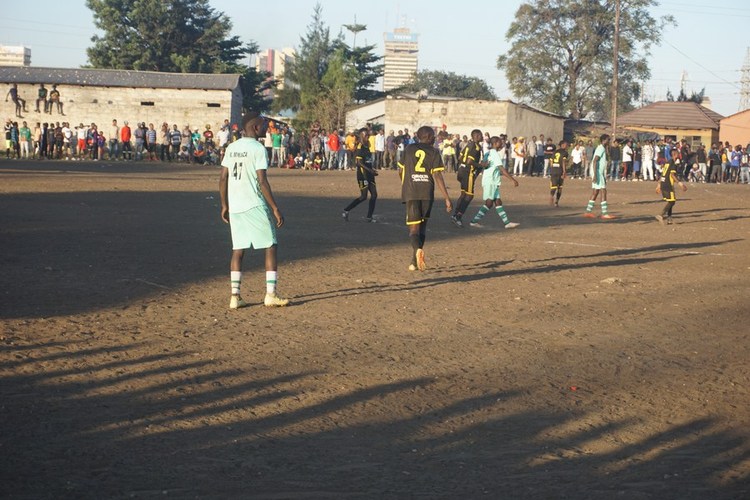
    Xinhua/Flowerbudnews:      For years, children in Zambia’s urban areas, as in many parts of the world, have been drawn to screens, spending hours in front of televisions, computers, phones, and gaming devices. However, the power cuts have forced them to find alternative ways to entertain themselves, leading to a resurgence of traditional and indigenous games.

    LUSAKA, June 16 (Xinhua) — It was 12:00 p.m., and 11-year-old Zanele Mbewe, a resident of Northgate Gardens in the Zambian capital of Lusaka, had just come home from school.

    After completing her homework, Zanele would head next door to play Nsolo, a simpler form of chess. She would also participate in other traditional and indigenous games with other children. This has been her routine for the past five days.

    “This week, the power goes off at 5 a.m. and comes back on at 5 p.m.,” she explained while looking at the power rationing timetable from Zambia’s national electricity supply company, ZESCO, stuck on the door of the refrigerator in her household.

    As homes and communities endure more than 10 hours of power cuts each day, children in Zambia are finding themselves with a newfound opportunity to engage in traditional indigenous games, replacing hours spent in front of televisions and other electronic devices.

    For years, children in Zambia’s urban areas, as in many parts of the world, have been drawn to screens, spending hours in front of televisions, computers, phones, and gaming devices. However, the power cuts have forced them to find alternative ways to entertain themselves, leading to a resurgence of traditional and indigenous games.

    In the densely populated community of the Mandevu Compound, on the northern side of Lusaka, children can be seen playing a variety of games, such as skipping rope, hopscotch, and tag, which were once part of the daily routine of previous generations.

    “Before the power rationing started, children were always indoors, glued to their screens, watching TV or playing video games. Now, with the lack of electricity for several hours each day, they have turned to playing traditional games,” Herald Kakomai, 62, a senior citizen residing in Mandevu Compound.

    He also noted that the lack of electricity has compelled children in his neighborhood to engage in various sports activities, building relationships that go beyond the virtual world.

    Justine Nyirenda, a traditional and indigenous sports promoter, asserted that the current electricity rationing in Zambia has unintentionally encouraged a return to age-old pastimes that involve teamwork, creativity, and physical activity, which are often overlooked in a digitally dominated world.

    Nyirenda, who heads Kombolani, an indigenous sports association, further said the resurgence of traditional and indigenous games has allowed children to connect with Zambia’s cultural heritage and learn about traditions that have been passed down from previous generations.

    “These games not only provide entertainment, but also serve as a way for children to connect with their roots and foster a sense of pride in their cultural identity,” he said.

    Interactions with different members of the public have shown that the decrease in screen time has also resulted in children becoming more physically active, decreasing sedentary behavior, and improving their overall health and well-being.

    Electricity rationing in Zambia has often been necessitated by low water levels at the Kariba Dam, a key hydroelectric generation point for the country. Low water levels at the dam are caused by insufficient rainfall and drought conditions.

    Zambian Minister of Energy Peter Kapala said in a statement in May that the Kariba Dam power station was producing only 166 megawatts out of an installed capacity of 1,080 megawatts, leaving communities without electricity for more than 10 hours a day.

    While the lack of access to electricity has posed challenges for households and businesses, it has created opportunities for children to embrace age-old games that were once at risk of being forgotten.

    As children across the country trade the glow of screens for the warmth of community interaction, the positive ripple effects of this unexpected situation will continue to serve as a silver lining to Zambia’s power cuts.

  • The new face of Calabar: A transformation story

    The new face of Calabar: A transformation story


    By Nsa Gill

    Welcome to Calabar, the capital city of Cross River State in the South-South geo-political zone and crude oil and gas-rich Niger Delta region of Nigeria, Known for its rich history and cultural heritage, a reputation that faced the challenge of neglect and near abandonment in the recent past.

    The current administration, under the leadership of Senator Bassey Edet Otu as Governor, within one year in office, has remedied the situation, and the city is regaining its long-cherished and enviable reputation.

    There are remarkable transformations.

    In the last year, the current administration fixed and rehabilitated many intra and inter-city roads. Commitment to urban renewal has been evident.

    Government has taken up the rehabilitation, remodeling and redesigning of infrastructure.

    The city’s roundabouts have received attention. The popular eleven-eleven roundabout now has a new stature. It is the Holy Bible. Artistically displayed with hand depicting the Bible opened to the particular verse that tells the reader, that God watches over the city. The design is modernised and allows the Bible to rotate geographically, according to wind movement and sunsets.

    Calabar-Calabar runabout is also receiving a facelift. Work is still ongoing.

    The remodelling of the zone six roundabout divided interests, but the government went ahead, and replaced the monolith sculpture that was there, for about twenty years, with a sculpture of a good shepherd and the sheep, equally designed in modern technology that sees the shepherd turns at intervals to watch his sheep that cluster round him.

    The government has not made official statement about the divided interests that greeted the change in the design option, but it is obvious that the government prefers the monoliths in the natural habitat scattered around the central senatorial districts of the state.

    The Cross River state tourism bureau is still empowered to promote same, as one of the state tourism attractions, which the state is richly endowed.

    Other public infrastructure like the governor’s office and government lodges, as well as offices, are also wearing a new look or work is ongoing.

    The public water supplies have also been brought back, and the public taps are flowing, once again.

    The present administration also inherited a situation where Calabar was struggling with issues of cleanliness and security concerns, but concerted efforts are being made by the state government and residents to revitalize and rejuvenate the beloved city.

    Commissioner for Information in the state, Erasmus Ekpang, stated that the current administration recognised the need to address the challenges facing Calabar, and embarked on a comprehensive plan to transform the city.

    He said: “Our focus Is on improving cleanliness, upgrading infrastructure, and enhancing security, in order to create a more livable and sustainable urban environment.”

    Ekpang also noted that one of the most noticeable changes in Calabar is its newfound cleanliness.

    He said: “The city’s streets are now free of litter and debris? Thanks to regular cleaning and waste management efforts. Beautification projects have also been implemented. Green spaces and public art installations that enhance the city’s aesthetic appeal are there for all to see.”

    The Commissioner of Police, Cross River State Command, CP Gyogon Grimah, said “residents of the state, who have been here for some years, can testify of the level of improvement in security since the inception of the present administration.”

    The police commissioner also hailed Governor Otu for the attention and support he has given to the security commands of the state.

    He stated: “If we are sincere to ourselves, we should boldly say that we have a better Cross River State today.”

    Grimah equally assured investors already in the state and intending ones, as well as all residents of Cross River state, that the entire security agencies in the state were collaboratively working round the clock to ensure that its pride of place as ‘the people’s paradise’ and most peaceful sub-national in the country remained intact.

    A religious leader, Bishop Emmah Isong, who is the General Overseer of Christian Central Chapel International, while articulating his views on the new Cross River state, told journalists that the glowing reviews from the citizens and residents of the state were eloquent testimonies of the huge impact the present administration had made in barely a year in the reins of government.

    Bishop Isong, who is also the National Spokesperson of the Pentecostal Fellowship of Nigeria (PFN), noted that it was only logical to begin the ongoing infrastructural revolution in Calabar, the seat of government, then, as it presently is, cascade to other parts of the state.

    On security, the eminent cleric maintained that the indices in the state had greatly improved, while declaring that it would be hypocrisy to say there were no minor issues of crime here and there, but added that attempts to discredit the government’s remarkable improvement in the security of lives and property, agriculture, infrastructure and other spheres were exaggerated conjectures.

    The State Security Adviser, South, Patrick Odiong, outlined a grassroots’ strategy to combat crime, highlighting the importance of community involvement.

    A traditional ruler, His Royal Majesty, Prof. Itam Hogan, the Paramount Ruler of the Efuts, also offered his assessment of the current administration in one year.

    The foremost monarch said: “I will want to take my assessment beyond infrastructure. The government has impacted on the people. The streetlights offer residents in some suburbs opportunity to stay outdoors at evening hours to enjoy natural fresh breeze.

    “The people are optimistic about what the future holds. They believe if the government continues at the same pace, better and prosperous economy and society is guaranteed.”

    Calabar is often referred to as the Canaan City, and sometimes, the Paradise City, but today, some may want to call it, the City of the Good Shepherd. (Flowerbudnews)

    (Nsa Gill,
    is the Chief Press Secretary to the Governor of Cross River State.)