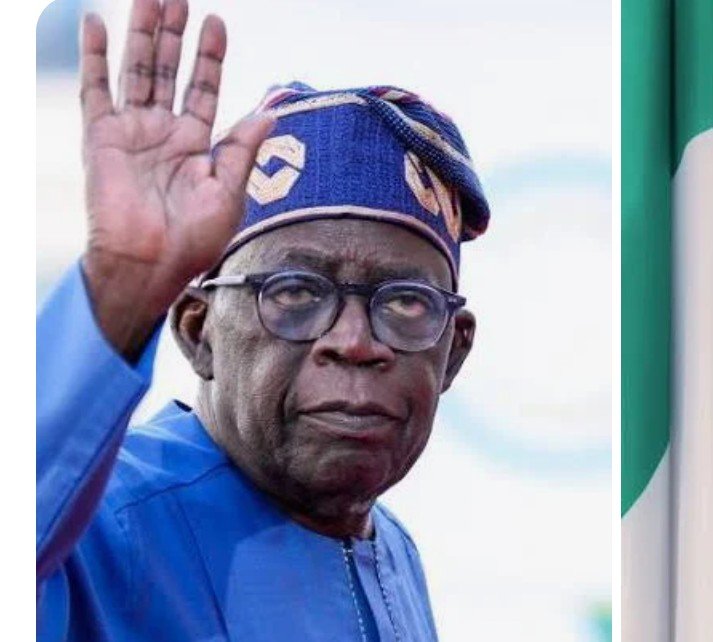
*Tinubu’s defence spending not shrouded in secrecy – IMP (more…)
Author: Mohammed Momoh
-

Restitution and Protection of Cultural Property: Felwine Sarr Calls for “Reimagining the African Museum”
The Museum of Black Civilisations (MCN) in Dakar hosted, on Thursday 4 December, several cultural actors and experts, including the Senegalese economist and thinker Felwine Sarr. At the heart of the discussions was a panel on “Restitution and Protection of Cultural Property”, organised as part of the Professional Meetings of the inaugural edition of the West African Festival of Arts and Culture (ECOFEST 2025).
Addressing a large audience, the author of Afrotopia called for a deep reconsideration of the museum, its history, its functions, and the narratives it upholds as African artworks dispersed across Western museums gradually return to the continent.
From the outset, Felwine Sarr stressed that restitution cannot be treated as a simple “transfer of objects from one place to another.” This return, he explained, “opens a far more profound question: the resocialisation of the objects, the meaning attributed to them, the spaces in which they are placed, and what this implies for the social body.”
According to him, “understanding the contemporary issues surrounding restitution requires returning to the origins of the Western museum, which emerged in the 19th century as a site of identity-affirmation, mandated to conserve the inalienable heritage of emerging nations”.
However, with colonisation, this model was distorted. He noted that “European expansion was accompanied by a massive expropriation of the cultural property of colonised peoples.”
Ethnographic museums then became, in his words, “museums of others”, housing objects that were interpreted and displayed in the absence of their creators. This displacement was accompanied by a process of “re-signification”: ritual objects were turned into ethnographic specimens or works of art, thereby losing part of their original meaning and social function.
“Their significance is altered; the scope of these objects is reduced,” he lamented, raising a fundamental question: “Has the object become something else? Can its original significance be restored, or must a new one be constructed?”
Sarr emphasised that the decolonisation of the museum requires the “pluralisation of narratives “He pointed to North American experiences where First Nations communities co-curate exhibitions.
However, he insisted that the most pressing challenge lies within Africa itself: to rethink museum institutions, their ecosystems, and their modes of display. The museum imported from the colonial model, he argued, is not a neutral framework.
“We must reimagine our own heritage systems and the spaces themselves,” he argued.
This involves drawing from precolonial traditions of royal, ritual, and contextual forms of display, in order to invent museum models suited to contemporary African societies.
Felwine Sarr also reflected on the notion of the universal, often invoked by major museums such as the Louvre to justify the possession of artworks originating elsewhere. The universal, he explained, is “performed” declared by those who claim custodianship of it.
Conversely, restitution and diversification of cultural spaces would help build a “pluriversal” approach—an understanding of the universal rooted in a plurality of cultural centres and voices.
“Objects in Dakar or Cotonou are just as universal as those in Paris,” he affirmed.
In conclusion, he praised the Museum of Black Civilisations, describing it as a “non-subaltern museum”, dynamic, open to transformation and creativity. It is, in his view, “an ideal model capable of restoring meaning to returned objects and, more broadly, renewing the narratives that African societies tell about themselves”. -

Tinubu’s emergency pronouncement, continuation of efforts to review security architecture – TMSG
The Tinubu Media Support Group (TMSG) has described fresh measures announced by President Bola Tinubu in response to emerging security challenges as a continuation of his ongoing efforts to reorder and reposition the country’s security architecture.
In a statement signed by its Chairman, Emeka Nwankpa and Secretary, Dapo Okubanjo, TMSG maintained that the measures were a follow-up to decisive actions taken earlier by his government.
It said: “When President Bola Tinubu unveiled several measures after declaring a national security emergency, it was understandably received with applause with many people saying it was better late than never.
”However, we affirm that virtually all the steps in that pronouncement are follow-up actions to initial measures which many people did not pay attention to when they were first introduced.
”For the record, the President had left none in doubt about his readiness to boost the ranks of the Police as well as ensure better training facilities. Which was why long before now the Tinubu administration approved the upgrade of police training facilities across the country.
”Also, there was an approval for the recruitment of 30,000 new policemen since December 2024 but the police authorities now have a mandate to recruit an additional 20,000 personnel.
”And of course, getting more personnel into the armed forces is also a good move that will bolster the ranks of the military
”As part of the Tinubu administration’s initiative on security, the President had long before now approved the recruitment of forest guards who are now to be deployed by the Department of State Services (DSS) to protect the nation’s vast ungoverned forests against banditry.
”On State Police, this is not the first time President Tinubu would be speaking on it, despite apprehension among a section of the public. But what he now did was to rally the National Assembly to speed up the process using their legislative mandate.
”Nigerians can also easily recall that the President created a ministry of livestock development with a mandate to promote modern livestock practices. Now, after at least one year of operation, we consider it a good move to urge herders’ associations to engage with the ministry with a view to abandoning open grazing in favour of ranching.”
The TMSG said it was convinced that the students abducted in Niger State a few days ago would regain freedom without much delay.
”We are convinced that after ensuring the release of Nigerians abducted from Eruku in Kwara State and Maga in Kebbi State, respectively, the remaining students abducted from a Catholic school in Niger State would soon be released and be reunited with their parents.
”We urge Nigerians to continue to show faith in the President’s ability to handle the situation by remaining calm, and vigilant, while also cooperating with security personnel,” TMSG added.
-

IMPI insists on 14 percent inflation rate end of year
*IMPI links Nigeria’s PMI to inflation decline, insists on 14% year-end projection*
Notable Think Tank , the Independent Media and Policy Initiative (IMPI) has established a link between the steady increase in Nigeria’s Purchasing Manager’s Index (PMI) and the decline in inflation in the country for the seventh consecutive month.
This according to the policy group is because the PMI reflects the state of health of the economy of a country.
In a statement signed by its Chairman Dr Omoniyi Akinsiju, IMPI posited that Nigeria’s PMI recorded eleventh consecutive month of expansion since the beginning of 2025.
It said: “By adopting the Predictive Regression (PR) model which uses Ordinary Least Squares (OLS) techniques to model inflation as a function of lagged values of key drivers, such as exchange rates or the Purchasing Manager’s Index (PMI), we were able to establish a consistent pattern of increased productivity and general price reduction with higher intensity beginning from August 2025.
”By our reading, we attest to the inverse relationship between Nigeria’s Purchasing Managers’ Index (PMI) and inflation rate movements. To put this in context, an increase in PMI reflects in a decline in inflation because a PMI hike is suggestive of a higher growth momentum in production and productivity measured across 36 sectors of the economy.
”Since the beginning of the year, the PMI has shown consistent expansion with the latest reading for October being 55.4, indicating a strong and broad-based growth. This marks the eleventh consecutive month of expansion, driven by growth in output, new orders, and employment across various sectors.
”The PMI has remained above the 50.0 threshold throughout 2025, signalling a sustained expansion in economic activities.
”This, essentially, is predictive of the general movement of household items’ prices as captured in the Consumer Price Index (CPI). This had been trending downward, effectively, since April 2025 when it eased to 23.71% year-on-year compared to March 2025, when it rose to 24.23% year-on-year from 23.18% in February 2025.”
It also noted that since April this year, Nigeria’s PMI had been recording sustained growth which reflected in the downward trend of inflation and added that whenever there is a slowdown, it also showed in the inflation figure.
”Reflecting the same quantum movement, the Central Bank of Nigeria (CBN) reported a composite Purchasing Managers’ Index (PMI) of 52.40 index points for April 2025, indicating a sustained expansion in economic activities.
”This was an increase from the 52.30 index points recorded in March 2025 and was driven by growth in both the services and manufacturing sectors.
”Nigeria’s PMI in May 2025, showed a slow uptick from a composite index of 52.1 index point for the month, indicating a 0.060 index point above the April 52.40 index point.
”The slow upward movement in PMI is evidenced in the equally slow decline in inflation rate to 22.97% in May from 23.71%, a 0.74% difference.
”Again, in June 2025, the CBN’s composite PMI expanded by a low 0.2 index point to 52.3 from the 52.1 recorded in May 2025. In the same token, Nigeria’s headline inflation rate eased to 22.22% in June 2025 on a year-on-year basis, and like the PMI movement between April and May, the reduction was by a low 0.75% from the 22.97% recorded in May 2025.
”In July, Nigeria’s economic expansion continued with the CBN PMI for the month at 52.7 showing another low 0.4% marginal growth between June and July which also reflected in the July 2025 year-on-year inflation rate that dropped to 21.88%, down from 22.22% in June with a marginal difference of 0.34%.
”However, in September, the trend with both the PMI and the inflation rate took on a higher momentum with the PMI rising to 54.0, indicating a stronger pace of economic expansion for the tenth consecutive month.
”This faster pace of increase in the PMI also reflected in the inflation rate which vastly improved from 20.12% in August 2025 to 18.02% in September 2025, a 2.1% decline from the August figure and by trend analysis, a quantum leap when compared to the rate of inflation decline.
”The trend in the relationship and movements between the PMI and inflation is further sustained by their respective October figures with the CBN Composite PMI recording 55.4 index points, a significant increase in the PMI recorded between April and September 2025.
”This larger margin of difference also reflected in the country’s headline inflation rate which declined at a much faster rate to 16.05% in October 2025 from 18.02% in September 2025, a decrease of 1.96%,” it said.
IMPI also affirmed its position on a 14% inflation figure by the end of the year as well as a reduction of the benchmark rate by the Central Bank’s Monetary Policy Committee.
”Going forward, we estimate further expansion in the PMI for the months of November and December 2025 which will also reflect in the inflation rates for the two months. In consideration of this, we reiterate that the inflation rate will decline to 14% by year end as projected in our Policy Statement 030.
”In addition, we also projected in Policy Statement 029 issued before the last meeting of the CBN Monetary Policy Committee (MPC) in September 2025 that we expect it to reduce the Monetary Policy Rate (MPR) by 150 basis points to 26% by year end. The Committee, as a first step, reduced the MPR by 50 basis points to 27% from 27.50%.
”Again, we reiterate that the softer inflation outlook validates the expectations for additional monetary easing by the CBN at its November policy meeting.
”We therefore expect as a follow-up to our earlier projection, that the MPC will reduce the MPR by 100bps to 26.0% when it meets on the 24th and 25th of this month to determine the country’s benchmark interest rate,” the think tank added.
END -

IMPI reviews Tinubu’s record military assets acquisition in 18 months from the US
IMPI reviews Tinubu’s record military assets acquisition in 18 months from the U
The Independent Media and Policy Initiative (IMPI) says the President Bola Tinubu-led federal administration has committed an impressive total of $801 million (over N1.15 trillion), to arms deals with the United States alone between 2024 and 2025 as part of its military modernization programme.
In a policy statement signed by its Chairman Omoniyi Akinsiju, the policy group posited that this is contrary to the impression created in the US President Donald Trump’s decision to redesignate Nigeria as a Country of Particular Concern (CPC).
It said: “In 2024 alone, Nigeria recorded its highest single-year expenditure on arms import in recent times with over N520 billion spent, representing a record-breaking surge in military asset acquisition for the country.
”This figure accounts for approximately 67% of the total arms import bill over the five-year period from 2020 to 2024, according to the National Bureau of Statistics (NBS). A substantial portion of this amount, ₦483.85 billion, was spent in the final quarter of the year.
”The military assets procurement includes the acquisition of 12 AH-1Z Viper attack helicopters, regarded as the world’s deadliest attack helicopter, a $455 million deal aimed at strengthening counterinsurgency capabilities.The contract was awarded to Bell Textron, an American aerospace company, in March 2024.
”These helicopters are part of broader investments in military equipment and technology, intended to aid in tackling terrorism, piracy, and other forms of violent crimes across the nation, enhancing Nigeria’s ability to collaborate with international partners on security initiatives.”
”In addition, Nigeria completed a historic $346 million arms deal with the United States in August 2025, marking another impressive large single purchase of military hardware with objective on strengthening the military precision capabilities.
”The contract involves more than 1,000 MK-82 500-pound bombs, over 5,000 Advanced Precision Kill Weapon System (APKWS) rounds, programmable fuzes, airfoil groups, and extensive logistical and technical assistance.
”The acquisition will complement the existing counterinsurgency operations that Nigeria has been waging against Boko Haram, the Islamic State West Africa Province (ISWAP) and bandits which are still operational in some northern states.
”This, for us, underlines the administration’s commitment to boosting the operational readiness of security agencies in the war against terrorism and insurgency in the country.”
IMPI added that there has also been a clear demonstration of political will by the federal government to combat terrorism and safeguard the lives of Nigerians, as well as to guarantee unrestricted religious freedom and practices in the country.
According to the policy group, the US President may be holding out for more arms transactions between the two countries after claiming that the country is not doing enough to protect Christians from extremist attacks.
”Our consideration is that with a threat to storm Nigeria with “gun-a-blazing,” the US President may be out to compel the Nigerian government to engage more with American arms manufacturers.
“This is especially so with the place of China, US perennial competitor in all sphere of engagements, in Nigeria’s arms supplies eco-system.
”In 2024, China supplied up to $152 million worth of VT-4 main battle tanks, ST1 light tanks, and SH-5 self-propelled howitzers.
“This position is further reinforced by the American government’s call to its military hardware and software manufacturing sector to explore opportunities available in Nigeria for the supply of sophisticated tools and systems, such as surveillance technology, uncrewed aerial vehicles, and advanced detection equipment.
”This apparent business pitch coming from the US International Trade Commission holds much weight for an increased market share maneuver than a declaration of war on Nigeria by the US,” the think tank said.
end
-

IMPI out with statement on Trump’s misguided Shaming of Nigeria
IMPI out with statement on Trump’s misguided Shaming of Nigeri
POLICY STATEMENT O31 BY THE INDEPENDENT MEDIA AND POLICY INITIATIVE (IMPI): UNRAVELLING PRESIDENT TRUMP’S DESIGNATION OF NIGERIA AS A COUNTRY OF PARTICULAR CONCERN
On February 7, 2023, a statement issued by the United States of America’s State Department affirmed, for the umpteenth time, that, after a careful review, the Secretary of State had concluded that Nigeria did not meet the legal threshold for designation as a Country of Particular Concern (CPC) under the International Religious Freedom Act of 1998.
This conclusion has been the standard response to a plethora of petitions seeking to designate Nigeria as a country of concern every year, beginning in 2009.
Our investigation unearthed volumes of specious data profiling terrorists’ killings following attacks on Christian communities or places of worship in Nigeria.
In line with its cautionary approach, the American government in those years put some of the data to the litmus test. What emerged was a sheer collection of manufactured figures of Christian killings in Nigeria, put together in a bid to nail the Nigerian government, something akin to calling a dog a bad name to hang it.
US State Department officials saw through the campaign of calumny and the deployment of false data to justify Nigeria’s designation on the CPC list. However, just as in the present case, President Trump deviated from the historically principled and well-considered stance of the State Department by designating Nigeria as a CPC in December 2020.Ironically, the then US Ambassador to Nigeria, Mary Beth Leonard, had denied the religious nature of the conflicts, as circulated by a heavily-funded lobby of Americans and Nigeria-based Christian Non-Governmental Organisations (NGOs), and other vested interests.
Denouncing the insinuation of genocide against Christians in Nigeria, the Ambassador had explained that at the heart of the conflicts were issues around resource control.
In her July 17, 2019, confirmation hearing, Ambassador Leonard also referred to the carnage in Nigeria’s Middle Belt as “banditry and inter-communal conflict” and “escalating farmer-herder and inter-communal conflict frequently based on resource competition.”
This overview of the possible causes of conflicts and killings in the Middle Belt appropriately explained the nature of the killings in that region, away from the religious underpinnings often erroneously and deliberately attributed to the conflict by NGOs and some Christian bodies that routinely produce statistics of killings attributed to religion.We note that in 2019, the Global Terrorism Index (GTI) reported a 39.1% decrease in terrorism deaths in Nigeria, from 2,043 in 2018 to 1,245 in 2019. The decline in fatalities, according to GTI, was primarily due to a fall in violence linked to Fulani extremists, despite a slight increase in common killings, the lowest since 2011.
The GTI data is validated by Statista.com (Sasu, 2024). Though this 2019 terrorism data is in the public domain, an Onitsha-based International Society for Civil Liberties and Rule of Law (Intersociety), a Nigerian Human Rights NGO in Anambra State, claimed there were between 1,000 and 1,200 “Christian deaths” in the same year.
Another data contained in the ‘Ninth Annual Report on Lethal Violence in Nigeria’, which covers the period between January 1 and December 31, 2019, was collected by Vitus Nwankwo Ukoji, with the help of Abiola Victoria Ayodokun and Victor Chinedu Eze of the University of Ibadan, wherein the researchers submitted that fatalities from lethal incidents inched up by 5.6% in 2019 after a 1.4% decline. According to the Report, there were 11,277 violent deaths in 2019.
The import here is that Intersociety attributed virtually all reported fatalities to Christian deaths. This is an example of the deliberate inflation of data regarding killings in Nigeria to, in part, inflame divisive passion among the people, and to justify the designation of the country as a CPC by the American Government.
The groups momentarily had their way in 2020, when, against all statistical sequences, indicating a reduction in terrorism-related killings, especially those linked to religious conflicts, Mr Trump, in the fourth year of his first term, declared and designated Nigeria as a CPC. It was a very questionable decision, given the declining number of terrorism-related deaths.In 2020, Nigeria saw a significant reduction in terrorism-related fatalities, dropping to 1,245 from 2,043 in 2019, which represents a decrease from its peak in 2014. The Global Terrorism Index (GTI) for 2020, released in early 2021, noted the most significant reduction in deaths in Nigeria after Afghanistan, mainly due to a decrease in fatalities attributed to Fulani extremists.
Fallacy of jaundiced data
We are concerned about the inauspicious propagation of terrorism-related deaths in a singular religious conflict situation. However, for starters, we must acknowledge the sensitivity of this subject matter as it affects lives. For us, no single life is deserving of being extinguished for any reason. In the same vein, it is immoral to concoct all manner of death-related data to justify a point of view.The circulation of falsehoods in the campaign to designate Nigeria a CPC jurisdiction has become a worrisome trend. Our findings showed that it became a tool exploited by both Nigerian and foreign-based NGOs, as well as other vested interests, to drive their demands.
To properly benchmark our comparative data, we have adopted data curated by the Australia-based Institute for Economics & Peace, which produces the Annual Global Terrorism Index. The GTI produces a composite score to provide an ordinal ranking of countries on the impact of terrorism.
The GTI scores each country on a scale from 0 to 10, where 0 represents no impact from terrorism and 10 describes the highest measurable impact. The Global Terrorism Index (GTI) is a comprehensive study analysing the effects of terrorism on 163 countries, which account for 7 per cent of the world’s population. It reports on global terrorism trends and the associated number of deaths.
Indeed, terrorism can be classified by its motivations, methods, or scope. Typical classifications include political terrorism, which is broken down into categories like revolutionary, nationalist-separatist, left-wing, and right-wing terrorism; religious terrorism, driven by extremist religious ideologies; and state-sponsored terrorism, which involves government support for terrorist groups.
Other types include international (transcending national borders) and domestic (within a country’s borders), based on scope and location.As expected, a legion of controversial data was also circulated on social media platforms. In contrast to the reduction in fatalities recorded by GTI in 2020, Abayomi and Igbanoi (2021) posited that based on data gathered between January and December, 2020, there was an average of two violent attacks and nine deaths daily across the nation. This, according to them, amounts to at least 60 attacks a month and over 720 for the year, and in turn, over 270 and 3,240 deaths monthly and the year, respectively.
One report stated that approximately 4,285 Christians were killed for their faith in Nigeria that year, accounting for about 90% of the global total of Christians killed for faith-based reasons. In character, Nigeria Watch.org, Nigeria recorded around 12,318 deaths from terrorism in 2020. According to the organisation, these deaths were the result of 2,677 lethal incidents.
The violence was attributed to the Boko Haram insurgency and banditry. None of these figures provides a basis for verification or validation.Nonetheless, on December 2, 2020, in accordance with the International Religious Freedom Act of 1998, as amended, the US Secretary of State designated Nigeria a “Country of Particular Concern” for having engaged in or tolerated particularly severe violations of religious freedom, and announced a waiver of sanctions that accompany designation in the “important national interest of the United States.”
Apparently, the decision was deficient in logic and procedure, as the succeeding President Biden administration removed Nigeria’s CPC designation less than a year later, in November 2021. That brought a closure to the first attempt by Mr Trump to designate Nigeria a CPC state.
Tracking the smear campaign
Subsequently, the campaign to slam anew the CPC status on Nigeria began apace. On January 31, 2023, Congressman Chris Smith introduced a resolution in the House of Representatives to this effect, with bipartisan support. In response, on 7 February 2023, a State Department spokesperson said, again, that “after careful review,” Secretary of State Anthony Blinken decided not to put Nigeria back on the list of offenders of religious liberty.
Long before this official response, merchants of tainted data had populated the social media space with obtrusive figures. The International Society for the Civil Liberties and Rule of Law (Intersociety) reported that 5,068 Christians were massacred in Nigeria in 2022, while Open Doors’ 2023 World Watch List reported that 5,014 Christians were killed for their faith in Nigeria in 2022, more than in the rest of the world combined.Those figures definitely did not portray the reality on the ground.
In contrast to the figures being bandied by these NGOs, the Global Terrorism Index (GTI) for 2022 noted that there were 6,701 deaths from terrorism globally, a 9% decrease from the previous year and 38% lower than the 2015 peak. The number of terrorism incidents globally also fell by nearly 28%, from 5,463 in 2021 to 3,955 in 2022, while
deaths in Nigeria dropped to 392 in 2022, the lowest level since 2011.However, fatalities increased by 34 per cent in 2023 to 533, and further to 565 in 2024, but not anywhere near the inflated figures generated by Intersociety, which reported that 8,222 Christians were killed in Nigeria in the 12 months between January 1, 2023, and January 1, 2024, describing it as the “deadliest in recent years”. Open Doors also reported that 82% of the 4,998 Christians killed globally for faith-related reasons in 2023 occurred in Nigeria, while the Observatory of Religious Freedom in Africa (ORFA) recorded 1,637 deaths of Christians between April and June 2023 alone.
The trend continued in 2024 with this same set of advocacy groups providing higher figures for faith-related killings. A report from Open Doors claimed that 3,100 Christians were killed in Nigeria in 2024.
According to the group, this made it the country with the most Christians killed globally for faith-based reasons that year.
Another source published in August 2024 documented at least 7,087 Christians massacred in the first 220 days of the year (Humanangle.com, 2025).However, the Global Terrorism Index reported a fatality figure of 565 for 2024. This speaks to the industry of falsehood underpinning the advocacy to get Nigeria redesignated as a CPC.
Yet, while we condemn any loss of life, the practical reality is that the data provided by GTI and Statista cannot, by any stretch of imagination, be described as genocide.
Based on this background, we find it challenging to accept US President Trump’s decision to designate Nigeria as a CPC based on fictitious data circulated by a collection of NGOs.
We expect the US to verify and validate any data presented to President Trump before using it to make a decision.
Trump’s decision was based on false data
We submit in this regard that Mr Trump must either be of an impulsive disposition or he deliberately wants to engage in a red herring to divert attention from the real intent of the redesignation of Nigeria as a CPC.To be impulsive would mean that Mr Trump consumes this Trojan data with such seriousness as to base a state policy on unverified data. However, to throw a red herring suggests that the US President may be holding a transactional card close to his chest.
While the real intent would soon unfold, we think that Mr Trump may want to hasten the crystallisation of the trade opportunities available in Nigeria for the American military equipment manufacturing sector.
This is possibly the case because none of the listed sanctions in the International Religious Freedom Act bears any resemblance to military actions, as claimed by the American President in the Nigerian situation.
Is a transaction in the mix?
Our position is further reinforced by the American government’s call to its military hardware and software manufacturing sector to explore opportunities available in Nigeria for the supply of sophisticated tools and systems, such as surveillance technology, uncrewed aerial vehicles, and advanced detection equipment.
Indeed, the Nigerian federal government, under President Bola Ahmed Tinubu, has invested heavily in enhancing security measures in response to the prevailing security challenges confronting the country.
For instance, Nigeria’s military modernisation efforts include the acquisition of 12 AH-1Z Viper attack helicopters from the US, a $455 million deal aimed at strengthening counterinsurgency capabilities.
These helicopters are part of broader investments in military equipment and technology, intended to aid in tackling terrorism, piracy, and other forms of violent crimes across the nation, enhancing Nigeria’s ability to collaborate with international partners on security initiatives.
In addition, Nigeria completed a historic $346 million arms deal with the United States in August 2025, marking the largest single purchase of military hardware in recent times.
The contract involves more than 1,000 MK-82 500-pound bombs, over 5,000 Advanced Precision Kill Weapon System (APKWS) rounds, programmable fuzes, airfoil groups, and extensive logistical and technical assistance. The action will complement the existing counterinsurgency operations that Nigeria has been waging against Boko Haram and the Islamic State West Africa Province (ISWAP), which are still operational in some northern states.
These are clear indications of Nigeria’s seriousness in tackling insecurity by purchasing sophisticated military equipment from the United States.
We further note with interest the observation by the US Commerce Department that cybersecurity is increasingly critical in Nigeria, especially as the country’s financial and telecommunications sectors expand.
It explained that Nigerian financial institutions, government agencies, and corporations managing large volumes of data are frequent targets for cybercriminals, with incidents such as phishing, ransomware attacks, and online fraud becoming increasingly common.
Thus, the rise of digital banking and mobile financial services has also led to intensified efforts to protect user data and financial transactions.
To counter this, according to the US Commerce Department, Nigerian businesses and institutions are investing in cybersecurity measures, with a focus on areas such as threat intelligence, employee training, and stronger data protection frameworks.
Government agencies, such as the National Information Technology Development Agency (NITDA), are also enhancing regulations and encouraging local firms to adopt cybersecurity best practices to mitigate risks.
Therefore, the safety and security sector in Nigeria, as considered by the US Commerce Department, has seen substantial growth, with security equipment and specialised training emerging as key subsectors.
It noted further that US companies remain preferred suppliers for advanced security technology, with Nigerian public and private stakeholders sourcing military jets, uncrewed aerial vehicles, explosive detection tools, surveillance systems, and covert cameras primarily from US manufacturers.
Highlighting other military ware related opportunities in Nigeria, the US Commerce Department also explained that there is also a rising demand for surveillance equipment among Nigerian state governments, especially for aerial monitoring of borders and forests.
Additionally, opportunities for US companies to provide security training services have expanded to include Nigerian government agencies, private security firms, and corporate security teams.These firms, according to the Department, can engage through direct sales or participate in public tenders published by relevant agencies, which are accessible via the Bureau of Public Procurement (BPP).
On this count, the Commerce Department declared that because US companies maintain a strong competitive edge in supplying advanced security equipment to Nigerian entities, driven by a reputation for high-quality and reliable technology, there are substantial opportunities for these companies to provide the Nigerian government with sophisticated tools and systems, such as surveillance technology, unmanned aerial vehicles, and advanced detection equipment.
It averred that procurement is facilitated through government tenders, enabling US firms to supply security resources that align with Nigeria’s increasing demand for advanced security solutions.
There is also another possible explanation for Mr Trump’s decision to designate Nigeria a CPC. This angle is in connection with his Chief of Staff, Susie Wiles, who reportedly has a long-term relationship with elements of the Indigenous People of Biafra (IPOB).She was co-chair of a lobbying firm hired by IPOB in 2019, and the two parties had extensively worked together, according to records.
According to a report by Foreignlobby.com in 2021, IPOB has a lobbying contract with Mercury Public Affairs, a company with links to Ms Wiles. A further probe into her records revealed that IPOB hired Wiles’ firm to lobby the US Congress and the State Department on the “promotion of human rights and democracy” in Nigeria.The engagement, which began in October 2019, is valued at $85,000 per month; however, the firm only disclosed $254,000 in payments to the US Department of Justice for that year. According to media reports, the emergence of Donald Trump as the winner of the US presidential election intensified hope of an independent nation known as Biafra.
The jubilation that greeted Nigeria’s designation as CPC by some Nigerians in the diaspora with strong links to IPOB establishes a possible ‘voice of Jacob, but hands of Esau’ scenario in the saga.
Conclusion
Our submission is that this type of aggression, stemming from Nigeria’s redesignation as a CPC, is not the appropriate response to the prevailing situation in the country.
The two jurisdictions are mutually in need of each other in combating terrorism, especially as Nigeria’s federal administration has, within 24 months, expended $801 million in acquiring US-made military hardware to stem the tide of insurgency and terrorism in the country.
This is a clear demonstration of the Nigerian government’s political will to combat terrorism and safeguard the lives of Nigerians wherever they may be, as well as to guarantee unrestricted religious freedom and practices.
The critical thing, for us, is that Nigeria needs America as much as America needs Nigeria in combating terrorism in the Sahel, as both countries have shared experiences.
Omoniyi M. Akinsiju, PhD
Chairman,
Independent Media and Policy Initiative (IMPI)
November, 2025 -

Genocide claims: Trump’s CPC decision on Nigeria based on jaundiced, obtrusive data – IMPI
A think tank group, the Independent Media and Policy Initiative (IMPI) has said the US President Donald Trump redesignated Nigeria as a Country of Particular Concern (CPC) on the basis of jaundiced, obtrusive data provided by local and international groups with ulterior motives.
In a policy statement signed by its Chairman, Dr Omoniyi Akinsiju, the think tank identified Intersociety, a local NGO, and Open Doors, a Christian charity, as two of the entities that have been spawning false data to misrepresent the security situation in Nigeria.
IMPI expressed concern at the manner groups with vested interests are manipulating terrorism-related data to paint Nigeria as a country where Christians are facing existential threats.
”We are concerned about the inauspicious propagation of terrorism-related deaths in a singular religious conflict situation. However, for starters, we must acknowledge the sensitivity of this subject matter as it affects lives. For us, no single life is deserving of being extinguished for any reason. In the same vein, it is immoral to concoct all manner of death-related data to justify a point of view.
”The circulation of falsehoods in the campaign to designate Nigeria a CPC jurisdiction has become a worrisome trend. Our findings showed that it became a tool exploited by both Nigerian and foreign-based NGOs, as well as other vested interests, to drive their demands.
“Long before this official response, merchants of tainted data had populated the social media space with obtrusive figures. The International Society for the Civil Liberties and Rule of Law (Intersociety) reported that 5,068 Christians were massacred in Nigeria in 2022, while Open Doors’ 2023 World Watch List reported that 5,014 Christians were killed for their faith in Nigeria in 2022, more than in the rest of the world combined. Those figures definitely did not portray the reality on the ground,” it added.
IMPI argued that its findings indicate that the total number of terrorism-related fatalities in Nigeria were not as high as the figures provided by InterSociety and Open Doors as data of Christian deaths alone.
The think tank said: “In contrast to the figures being bandied by these NGOs, the Global Terrorism Index (GTI) for 2022 noted that there were 6,701 deaths from terrorism globally, a 9% decrease from the previous year and 38% lower than the 2015 peak. The number of terrorism incidents globally also fell by nearly 28%, from 5,463 in 2021 to 3,955 in 2022, while deaths in Nigeria dropped to 392 in 2022, the lowest level since 2011.
” However, fatalities increased by 34 per cent in 2023 to 533, and further to 565 in 2024, but not anywhere near the inflated figures generated by Intersociety, which reported that 8,222 Christians were killed in Nigeria in the 12 months between January 1, 2023, and January 1, 2024, describing it as the “deadliest in recent years”. Open Doors also reported that 82% of the 4,998 Christians killed globally for faith-related reasons in 2023 occurred in Nigeria, while the Observatory of Religious Freedom in Africa (ORFA) recorded 1,637 deaths of Christians between April and June 2023 alone.
“The trend continued in 2024 with this same set of advocacy groups providing higher figures for faith-related killings. A report from Open Doors claimed that 3,100 Christians were killed in Nigeria in 2024.
“According to the group, this made it the country with the most Christians killed globally for faith-based reasons that year. Another source published in August 2024 documented at least 7,087 Christians massacred in the first 220 days of the year (Humanangle.com, 2025).
“However, the Global Terrorism Index reported a fatality figure of 565 for 2024. This speaks to the industry of falsehood underpinning the advocacy to get Nigeria redesignated as a CPC.
“Yet, while we condemn any loss of life, the practical reality is that the data provided by GTI and Statista cannot, by any stretch of imagination, be described as genocide.
“Based on this background, we find it challenging to accept US President Trump’s decision to designate Nigeria as a CPC based on fictitious data circulated by a collection of NGOs.
“We expect the US to verify and validate any data presented to President Trump before using it to make a decision.”
In tracking InterSociety’s activities, IMPI researchers found out that the group had since 2019 been cooking false data on what it called “Christian deaths” that were never in tandem with the Global Terrorism Index (GTI) and other reports on lethal violence in Nigeria.
“We note that in 2019, the Global Terrorism Index (GTI) reported a 39.1% decrease in terrorism deaths in Nigeria, from 2,043 in 2018 to 1,245 in 2019. The decline in fatalities, according to GTI, was primarily due to a fall in violence linked to Fulani extremists, despite a slight increase in common killings, the lowest since 2011.
“The GTI data is validated by Statista.com (Sasu, 2024). Though this 2019 terrorism data is in the public domain, the International Society for Civil Liberties and Rule of Law (Intersociety), a Nigerian Human Rights NGO in Anambra State, claimed there were between 1,000 and 1,200 “Christian deaths” in the same year.
“Another data contained in the ‘Ninth Annual Report on Lethal Violence in Nigeria’, which covers the period between January 1 and December 31, 2019, was collected by Vitus Nwankwo Ukoji, with the help of Abiola Victoria Ayodokun and Victor Chinedu Eze of the University of Ibadan, wherein the researchers submitted that fatalities from lethal incidents inched up by 5.6% in 2019 after a 1.4% decline. According to the Report, there were 11,277 violent deaths in 2019.
“The import here is that Intersociety attributed virtually all reported fatalities to Christian deaths. This is an example of the deliberate inflation of data regarding killings in Nigeria to, in part, inflame divisive passion among the people, and to justify the designation of the country as a CPC by the American Government.
“The groups momentarily had their way in 2020, when, against all statistical sequences indicating a reduction in terrorism-related killings, especially those linked to religious conflicts, Trump, in the fourth year of his first term, declared and designated Nigeria as a CPC. It was a very questionable decision, given the declining number of terrorism-related deaths,” it said.
IMPI added that a better understanding of the situation in Nigeria through government-to-government engagement would lead to the US withdrawing Nigeria from its CPC list.
End
-

IMPI cautions Nigerian leaders against repeating past economic mistakes
- IMPI cautions Nigerian leaders against repeating past economic mistake
The Independent Media and Policy Initiative (IMPI), has urged Nigerian leaders to learn from years of poor resource management that caused repeated poverty even during times of oil boom.
The IMPI said this in a policy statement signed by its Chairman, Dr Omoniyi Akinsiju on Friday in Abuja.
The think-tank said Nigeria’s poverty crisis was not caused by lack of resources, but by successive governments’ failure to manage the resources prudently and sustainably.
The group said the country’s experience between 1980 and 2015 showed how poor policy choices and neglect of critical sectors such as agriculture and manufacturing entrenched widespread poverty and economic vulnerability.
The group said the oil boom years exposed Nigeria to what economists described as the “Dutch disease”.
“This is where a sudden rise in oil revenues led to exchange rate appreciation, reduced competitiveness of local industries, and neglect of non-oil exports.
The massive inflow of oil income created a false sense of prosperity, but it distorted the economy, diverted labour from agriculture, and weakened domestic production capacity,” it said.
The IMPI said the so-called “Nigerian disease,” a situation where rural workers abandoned farming for urban jobs that offered temporarily higher wages, further worsened poverty and food insecurity across the country.
It said that while government spending during the oil boom focused on large capital projects, most of them were uncompleted or unproductive, creating little employment and limited long-term benefit to citizens.
“The misallocation of resources in agriculture included uncompleted irrigation projects, over-mechanisation, and policies that favoured wealthy farmers over smallholders. These errors worsened inequality and reduced productivity.
Even when the economy experienced growth spurts, poverty remained high because successive administrations failed to provide social protection for vulnerable groups or establish a sustainable safety net.
“After the collapse of oil prices in 1982, the economy faced inflation, debt, and foreign exchange rationing.
“This exposed the fragility of the system and revealed how weak policies had hollowed out the productive sectors,” it added.
The IMPI said the persistence of poverty amid growth emphasised the gap between economic expansion and inclusive development, stressing the need for reforms that prioritise human capital and domestic productivity.
The organisation urged current and future governments to ensure that macroeconomic growth was matched with effective social investment, transparency, and policy consistency.
It said that only a deliberate effort to correct the structural distortions of the past would guarantee lasting prosperity for Nigerians.
The group reaffirmed its commitment to supporting policy reforms that promoted economic diversification, social protection, and responsible governance as foundations for sustainable development.
IMPI noted
Tinubu Administration’s Bouquet of Social Interventions includinh subsidised access to dialysis: One of the federal administration’s poverty reduction programmes is the approval of a subsidy to ease the burden of kidney dialysis for Nigerians by slashing the cost per session from ₦50,000 to ₦12,000.The subsidy is already being implemented in federal hospitals across the six geopolitical zones.
Othwrs arw
agricultural loans and microfinance for farmers and small businesses: The federal government is to begin disbursing interest-free loans to smallholder farmers and micro-business owners across Nigeria before the end of 2025. The initiative is part of the Government Enterprise and Empowerment Programme (GEEP) being implemented under the Federal Ministry of Humanitarian Affairs and Poverty Alleviation.The loans of up to ₦100,000 per beneficiary will be offered under FarmerMoni, a scheme designed to support small-scale farmers engaged in poultry, aquaculture, livestock rearing, and crop production.
Beneficiaries will also enjoy a six-month grace period before repayment begins, allowing them to acquire critical inputs such as fertilisers, veterinary drugs, and farm tools.
These are not grants but repayable loans designed to help Nigerians grow their businesses, join the formal financial system, and create jobs (Blessing, 2025).
Monthly Pension Increase is another. All retired federal employees under the Contributory Pension Scheme (CPS) are to receive a N32,000 monthly pension increase.
The sum will be paid to each of them from a N758 billion bond approved by President Bola Tinubu for clearing all outstanding pension liabilities.
The President okayed the bond to ensure that the retirees also benefited from the National Minimum Wage Amendment Act 2024 and Consequential Adjustments.
The N32,000 is the baseline every retiree in the education and health sectors, as well as security and the Armed Forces on the CPS will earn monthly, irrespective of his or her accumulated savings (Chiejina, 2025).
Tertiary Institutions Staff Support Fund (TISSF): The federal government has launched an interest-free loan scheme to provide financial support and professional development for staff of tertiary institutions across Nigeria. The scheme is called the Tertiary Institutions Staff Support Fund (TISSF). It is described as a strategic platform to empower both academic and non-academic staff (Alausa, 2025).
Creative Economy Development Fund (CEDF): Nigeria’s federal government, through the Ministry of Arts, Culture and Creative Economy, has officially launched Phase 2 of the CEDF, featuring a brand-new user-friendly interface that simplifies access to funding. Youth-led and creative businesses across Nigeria from video gaming, film, music, animation, fashion, publishing, visual arts, culinary arts, and tourism, can now apply for grants, loans, and equity investments up to $100,000 to scale their operations, innovate, and contribute to sustainable economic growth.
It focused on mature creative projects seeking $100,000 or more, with project incubation and acceleration activities underway, and disbursements expected to start from January 2026. The first phase laid the groundwork for IP-backed financing, opportunity awareness, and capacity building across creative sectors such as film, digital arts, and cultural tourism.
Scrapping of Telecom Levy: As part of engendering a low-cost telecommunication access, the Federal Government of Nigeria has scrapped the 5 per cent excise duty on telecom services. The levy, which was initially suspended and now removed, is set to ease the pressure of voice and data service costs on over 170 million Nigerian subscribers.
Increasing the Reach of the Home-Grown School Feeding Programme: The federal government has set a target of reaching 20 million children through the Home-Grown School Feeding Programme by 2026. It is described as both an educational investment and a national security strategy (Shaibu, 2025)
Five million New Beneficiaries of RHGEEP: The Federal Government is in the process of enrolling five million new beneficiaries under the third phase of its Government Enterprise and Empowerment Programme, known as Renewed Hope GEEP (RHGEEP 3.0). The new phase, which was flagged off in Abuja, is designed to broaden financial inclusion and expand empowerment initiatives, particularly for women and youth, with a target of reaching five million Nigerians by 2027.
Innovation Development and Effectiveness in the Acquisition of Skills: The federal government has announced plans to train more than 30,000 youths under the second cohort of the Innovation Development and Effectiveness in the Acquisition of Skills (IDEAS) and Technical and Vocational Education and Training (TVET) initiative. The second phase of the project, which began on August 25, covered 36 skill areas. It is being implemented by the Federal Ministry of Education with funding from a World Bank-supported IDEAS project designed to strengthen Nigeria’s TVET system (Ikpefan, 2025).
Jobs for 20 million Nigerian Youths: The Federal Government has inaugurated a new national skills programme aimed at connecting 20 million young Nigerians to jobs, training, and entrepreneurship opportunities by 2030.
Cash Transfer for 15 million Nigerians: The government has revived its temporary cash transfer programme. This initiative aims to provide financial relief to 15 million vulnerable Nigerians and their families, helping them manage the rising living costs.
Digital Access and Livelihood Initiative (DALI): The Digital Access and Livelihood Initiative (DALI) is a demand-driven national talent pipeline designed to link foundational and work-readiness training directly to guaranteed jobs or enterprise pathways. The platform unifies government, private sector leaders, development partners, and the boundless energy of the nation’s youth under a single banner.
-

TMSG faults Trump’s stance on Nigeria, urges military not to be deterred in efforts to make all Nigerians safer
- TMSG faults Trump’s stance on Nigeria, urges military not to be deterred in efforts to make all Nigerians safe
The Tinubu Media Support Group (TMSG) has decried United States President, Donald Trump’s redesignation of Nigeria as a Country of Particular Concern (CPC), saying it’s a fatally flawed move capable of slowing down the ongoing war against terrorism and insurgency.
This is the second time the US under a Trump government would be taking such action against Nigeria over perceived genocide against Nigerian Christians.
However, in a statement signed by its chairman, Emeka Nwankpa, and Secretary, Dapo Okubanjo, TMSG maintained that the claims did not accurately reflect the true situation in Nigeria.
It said: “While we await full details of the decision announced by the United States President Donald Trump and its implications, like many Nigerians, we see the move as wrong, ill-conceived and fatally flawed.
”This is because the decision was predicated on a misleading claim of lack of religious freedom as well as a deliberate attempt to exterminate the Christian population under the watch of President Bola Tinubu.
”In the announcement made via his social media handle, Trump wrote that ‘Christianity is facing an existential threat in Nigeria’, which echoed what some US Congressmen leading the advocacy had been saying.
”But like the federal government and faith-based platforms had stridently argued, such claims are a gross mischaracterisation and an oversimplification of the security challenges the country had been battling since 2009.
”We are aware that there are people within the country who reignited the claim of genocide against Christians on political grounds, we expected the US government to take a broader view by considering Nigeria’s honest position before taking a decision that we believe will certainly kiss the dust as it once did.
”It is a fact that the US action could lead to the suspension of arms sales to Nigeria because it was one of the specific demands by the right-wing US legislators who were leading the so-called genocide campaign.
”One of them who was name-checked by Trump in his announcement had specifically called for a halt to arms sales until the Nigerian government demonstrates a ‘tangible commitment ‘ to ending the violence.
“It is also important for the US authorities to note that President Bola Tinubu, in a fresh shake-up, has ensured that Christians clearly dominate the top hierarchy of Nigeria’s military, security and intelligence architecture.” It therefore amounts to standing truth on its head to peddle claims that state-sponsored Christian genocide exists in Nigeria.
”We also recall that the US President had, in 2020, during his first term, designated Nigeria as a CPC under the International Religious Freedom Act (IRFA) of 1998, on the grounds of what his administration called “systematic, ongoing, egregious violations of religious freedom.
”But the decision was later reversed in 2021 by former President Joe Biden, whose administration rightly noted that although Nigeria faced severe security challenges, the government was not “directly engaged” in religious persecution.
”We know, as has been extensively canvassed by many, that Nigeria’s security is a complex subject, and has always been the character of the insecurity in Northern Nigeria which the Tinubu administration had been making efforts to resolve through kinetic and non-kinetic initiatives.”
TMSG seized the occasion to lash out at opposition elements for seeking to make political capital of the situation.
”Like many people, we are convinced that some opposition figures in the country were part of the odious advocacy even when they know that terrorist groups wreaking havoc in Northern Nigeria have been targeting Muslims and Christians in the worst hit areas.
”We also note that there are some other members of the political class who have carefully stayed away from commenting on the issue especially as they do not want to be seen to be on the wrong side of the Muslim population.
”But it is clear that the silence of opposition figures who almost always have something to say on every negative national issue is telling.
”For us, it is rather unfortunate that at a time when the political class should be united on an issue with likely consequences on national security, members of the opposition are hoping that they could use it to their advantage.
”We therefore urge Nigerians who are scandalised by the designation to take notice of those who would not mind the country being brought down as long as it would help their bid for political power,” the statement added.
TMSG, however, urged the Tinubu administration as well as the military, security and intelligence authorities to be undeterred in their efforts to clear the country of terrorists and insurgents.
End