





Year: 2026

  • Oborevwori restates Delta Govt commitment to environmental sustainability

    Oborevwori restates Delta Govt commitment to environmental sustainability


    By Dianabasi Effiong

    The Governor of Delta State, Rt. Hon. Sheriff Oborevwori has said that the policies and programmes of his administration are tailored towards environmental sustainability.

    Governor Oborevwori made this known on Wednesday at the Commissioning of the Newton Jibunor International Convention Center, Asaba.

    The Governor, who was represented by the Commissioner for Higher Education, Prof. Nyerhovwo Tonukari, said, “We recognise that safeguarding our environment is essential to securing our future. This is why my administration is committed to environmental sustainability through policies and programmes that promote ecosystem protection, climate resilience, afforestation, and sustainable land development.

    “I am delighted to join you today for the commissioning of the Newton Jibunor International Convention Centre, as we commemorate the 2026 World Desertification and Drought Day.

    “This world-class facility will serve as a centre for knowledge exchange, policy dialogue, innovation, and international engagement.

    “Also, we are drawing attention to one of the most pressing environmental challenges of our time, desertification, land degradation, and drought, which continue to threaten livelihoods, food security, biodiversity, and sustainable development across the world.

    “This occasion celebrates both a remarkable facility and a remarkable individual, Chief Newton Jibunor, an illustrious son of Delta State.

    “Naming this centre after the renowned ‘Desert Warrior” is a fitting tribute to a man whose lifelong dedication to environmental protection and relentless fight against desertification have inspired action and hope across generations, earning him national and international acclaim.

    “The observance of World Desertification and Drought Day reminds us that land degradation, climate change, and water scarcity remain serious threats to sustainable development, food security, and human well-being; these challenges demand collective action and long-term commitment.

    “Let this facility stand as a symbol of hope, progress, and shared responsibility; let it remind us that the future of our environment depends on the choices we make today and that every effort towards restoring degraded lands and preserving natural ecosystems is an investment in the prosperity of future generations.

    “Once again, I commend Chief Newton Jibunor and everyone for their vision and dedication, which made this project a reality.”

    Chief Jibunor at the occasion, narrated several stories about his expedition through the Sahara Desert and concluded by saying that it is a collective responsibility to save the Planet.

    “We have been taking and taking without giving back to the Planet and we must strive to make the Planet a better place because it is the only planet that has life in the whole universe,” Jibunor said.

    Earlier, the Minister of Environment, Balarabe Abbas Lawal, represented by the Director, Environmental Conservation, Delta State Ministry of Environment, Mrs. Oruma Rebecca Akuejuefor, praised Jibunoh for his outstanding contributions to environmental sustainability and land restoration in Nigeria and beyond.

    Some of the personalities who graced the occasion included the Deputy Governor of Delta State, Sir Monday Onyeme, Ph.D, who was represented by the Deputy Chief of Staff, Sir Christopher Osakwe, the Asagba of Asaba, Asagba Prof. Epiphany Azinge, the Emir of Kano, Aminu Ado Bayero, the Obi of Issele-Uku, Obi (Engr.) Nduka Nwosu, among others.

  • Breaking:  UK Court Acquitts Diezani of All Corruption Charges

    Breaking:  UK Court Acquitts Diezani of All Corruption Charges


    Former Minister of Petroleum Resources, Diezani Alison-Madueke, has been acquitted of all six bribery charges brought against her in the United Kingdom.

    A jury at Southwark Crown Court in London returned a unanimous verdict of not guilty on Wednesday after a 12-week trial that examined allegations of corruption during her tenure as Nigeria’s petroleum minister.

    Alison-Madueke, who served in the administration of former President Goodluck Jonathan between 2010 and 2015, had consistently denied all the allegations.

    The jury reached its decision after 46 hours of deliberations.

    Prosecutors had accused the former minister of accepting benefits from oil and gas industry figures seeking favourable treatment in relation to contracts and business interests in Nigeria.

    According to the prosecution, Alison-Madueke allegedly enjoyed a “life of luxury” in London funded through illicit benefits provided by individuals linked to the oil and gas sector.

    The court heard claims that she received £100,000 in cash, more than £2 million spent on luxury shopping at Harrods, £4.6 million for property refurbishments, private jet travel, chauffeur-driven vehicles and payments for domestic staff at luxury properties in London and Buckinghamshire.

    The prosecution alleged that the benefits were provided in exchange for influence and favourable treatment while she served as petroleum minister.

    Testifying in her defence, Alison-Madueke rejected all allegations of wrongdoing.

    She told the court that she never sought, requested or accepted bribes and did not abuse her public office.

    Her legal team argued that the case was politically motivated and that investigators had wrongly interpreted financial transactions and benefits associated with her.

    The trial, presided over by Justice Justine Thornton, focused on allegations said to have occurred between 2011 and 2015.

    Had she been convicted under the United Kingdom’s anti-bribery laws, Alison-Madueke faced a maximum sentence of 10 years imprisonment and an unlimited fine.

    The former minister was tried alongside oil industry executive Olatimbo Ayinde and her brother, Doye Agama.

    Ayinde faced one count of bribery relating to Alison-Madueke and another count involving the alleged bribery of a foreign public official.

    Agama was charged with conspiracy to commit bribery over alleged payments connected to his church.

    Both men denied the allegations throughout the proceedings.

    On Wednesday, the jury also acquitted them of all charges.

  • Olawepo-Hashim supporters hails Appeal Court ruling, says hope exist with Accord

    Olawepo-Hashim supporters hails Appeal Court ruling, says hope exist with Accord


    By Adeyemi Adeleye
    Lagos,m: The Gbenga Olawepo-Hashim Solidarity Movement (GOHSM), Lagos State chapter, has applauded the Court of Appeal’s judgment staying the execution of a Federal High Court ruling that ordered the deregistration of Accord Party and four other political parties.

    The General Secretary and Director of Organisation of the group, Mr Oluseyi Daniel, commended the appellate court in an interview with the News Agency of Nigeria (NAN) on Wednesday in Lagos.


    He described the appellate court’s decision as a victory for democracy, constitutional order and the rule of law.

    (Dr Gbenga Olawepo-Hassin, the Accord Party Presidential Candidate)


    Daniel said the judgment reaffirmed the independence of political parties and strengthened citizens’ confidence in democratic institutions.

    He commended the Court of Appeal for what he described as a courageous intervention in defence of democracy and judicial discipline.

    “The ruling has restored hope to members of Accord Party and millions of Nigerians who believe in a multiparty democratic system.

    “It is a victory not only for the affected political parties but also for democracy, justice and the constitutional rights of Nigerians to freely associate and participate in the political process,” he said.

    Daniel expressed concern over the conduct of Justice Peter Lifu of the Federal High Court, Abuja, whose judgment had ordered the deregistration of the affected parties.

    According to him, the appellate court’s observations on the matter underscore the need for accountability within the judiciary.

    He urged relevant authorities to investigate the circumstances surrounding the judgment and take appropriate measures to safeguard the integrity of the nation’s judicial system.

    The group also congratulated the leadership and members of Accord Party for remaining steadfast throughout the legal battle.

    Daniel said the judgment had further strengthened the resolve of party members and supporters across the country ahead of the 2027 general elections.

    He said the development had renewed confidence in the leadership qualities and vision of the party’s presidential candidate, Chief Gbenga Olawepo-Hashim.

    According to him, Nigerians are increasingly looking for credible leadership capable of addressing the nation’s economic and security challenges.

    “There is hope for the Nigerian masses with Gbenga Olawepo-Hashim as President in 2027.

    “We believe his track record, experience and commitment to national development place him in a strong position to provide the purposeful leadership Nigerians desire.

    “The country needs a leader who can unite the people, revive the economy and restore confidence in governance,” Daniel said.

    He urged Nigerians to continue supporting democratic institutions and participate actively in the nation’s political process.

    The News Agency of Nigeria (NAN) reports that Justice Peter Lifu of the Federal High Court, Abuja, on Monday ordered the deregistration of Accord Party, African Democratic Congress, Action Alliance, Action Peoples Party and Zenith Labour Party.

    The judge also directed the Independent National Electoral Commission (INEC) not to allow the affected parties to participate in subsequent elections, including the 2027 general elections.

    However, the Court of Appeal in Abuja on Tuesday ordered a stay of execution of a judgment directing INEC to deregister the African Democratic Congress (ADC), Accord Party and three other political parties.

    In a unanimous decision delivered by a three-member panel led by Justice A.B. Mohammed, the appellate court faulted the decision of the lower court to proceed with its judgment despite an earlier order directing a suspension of proceedings.

    The court described the action as a violation of the hierarchy of courts and granted reliefs sought by the affected political parties pending the determination of the substantive appeal. (NAN) (www.nannews.ng)

  • We secured N2bn funding for digitisation programme at UniUyo – Mgt.

    We secured N2bn funding for digitisation programme at UniUyo – Mgt.


    By Dianabasi Effiong

    The Chairman, Governing Council, University of Uyo (UniUyo), Muiz Banire, said on Tuesday in Uyo that the management secured not less than N2 billion to fund the noinstitution’s digitisation programme.

    Banire, a Senior Advocate Of Nigeria (SAN), made this known at the unveiling of the Ninth substantive Vice- Chancellor of UniUyo held at the institution’s main campus, Uyo.

    He added that unlike what prevailed in the past the funding secured by the Council was an addition to being from the Tertiary Education Trust Fund (TETFUND) for various projects at UniUyo.

    According to him, the University has been reaping from TETFUND after what he described as the crisis that led to the appointment of an acting Vice-Chancellor for UniUyo.

    “Today, we reap from TETFUND as if it is a rainfall. Today the University has achieved financial stability.”

    According to him, the institution now has surplus funds unlike what hapoened in the previous years.

    He lauded the outgoing Acting Vice-Chancellor, Prof. Samuel Odewumi for ensuring stability in the federal university adding that Odewumi came, saw, conquered, and ensured a successful transition following the appointment of Prof. Chris Ekong as the ninth substantive Vice- Chancellor of UniUyo.

    Banire said the University was lucky to have Ekong as its ninth Vice Chancellor, adding that Ekong was known for his passion for the UniUyo’s development.

    Addressing the ninth Vice Chancellor directly, Banire said, “Your appointment is a a testament that the voice of the people is the voice of God.’”

    In his inaugural speech, Ekong, a professor of Economics and one-time Chief Economic Adviser to the Akwa Ibom State government, assured that his administration would restore excellence and strengthen scholarship in the University.

    He thanked President Bola Tinubu and the Minister of Education, Olatunji Alausa, among others for his appointment.

    Ekong promised to return the admission process under the Unified Tertiary Matriculation Examination to departments and faculties in addition to giving the University a facelift in physical development and academic programmes.

    Also, the Secretary to Akwa Ibom State Government (SSG), Enobong Uwah, said that his foundation, would after consultation with the Vice-Chancellor to construct a building befitting the status of the University.

  • AI: Justice Uwa, Kachikwu, others task Margaret Lawrence University Law students on career pathways

    AI: Justice Uwa, Kachikwu, others task Margaret Lawrence University Law students on career pathways


    Various speakers at a Career Fair/Dinner organised by the Faculty of Law, Margaret Lawrence University Abuja, have advised law students and legal practitioners in the country to rise above ethical challenges posed by artificial intelligence (AI), and embrace new career pathways in the legal profession.

    Delivering a keynote speech titled: “GENZEEING YOUR WAY THROUGH THE LEGAL PROFESSION; Creating New Career Pathways in the Age of Artificial Intelligence”, a former Minister of State, Petroleum Resources, Prof. Ibe Kachikwu admitted that the Gen-Z generation is the most technologically equipped cohort of lawyers in human history.

    He noted that the advent of Artificial Intelligence (AI) in legal profession “is not a crisis, but a disruption” that “favours the prepared”.

    The Professor of Law reminded Law students that despite advantages in AI, it contains within it the seed of corresponding failure, stressing that, “Speed without depth is not efficiency. It is a liability dressed as productivity”.

    “If your generation uses AI to generate legal arguments it has not examined, drafts contracts it has not read, and produces opinions it does not understand, you will not be better lawyers than my generation” Prof. Kachikwu cautioned.

    He, therefore urged Law students and legal practitioners to take up specific career paths like Legal Technology; AI Compliance Lawyer; Legal Engineer; Legal Product Manager; AI Policy Advisor; and Legal Innovation Lead, in order to remain productive in the age of artificial intelligence.

    Chairman of the occasion, Senator Istifanus Gyang, commended the University, and it’s Law Faculty for coming up with the Career Fair with a thought provoking theme: “Gen-Z and the Legal Profession in the 21st Century.”

    Gyang told the students that they were born into a world of rapid technological advancement, and therefore must adapt to emerging trends.

    “Master Technology without losing the human touch. Learn to use AI as a powerful assistant, but never forget that the law is ultimately about people — their rights, their pains, their aspirations” Gyang advised.

    He reminded the students that the legal profession does not only need more lawyers, but that it desperately needs better lawyers who are technologically savvy, ethically grounded, commercially aware, and deeply committed to justice.

    Also speaking, Chairman of the Dinner section of the event held at the Fountain of Joy International Conference Centre, Margaret Lawrence University, Justice Chidiebere Uwa of the Supreme Court of Nigeria, counselled Law students to remain focused on their studies.

    “Whether at the Bar, the Bench or Academia, public service and leadership roles etc, understand that the legal profession places high expectations upon those who belong to it.

    “Your yes should be your yes. Do not swear affidavit or get people to swear affidavit that you know are false. It is not a do or die thing.You must uphold the integrity required of the profession, the jurist said.

    The Supreme Court Justice stated that Law Dinners preserve the culture, ethics, and traditions of the legal profession, adding that they provide an avenue for mentorship, intellectual exchange and professional bonding between the students and practitioners.

    “They also remind us that while the law profession is intellectually demanding, it is equally one built on courtesy, discipline, dignity, mutual respect, respect to the court, respect to your colleagues and amongst yourselves and to the client you represent whether in litigation, or in corporate practice. Even in paper work, you have to be polite.

    Specifically, Justice Uwa warned the Law students that if anything, “Do not be
    surprised that attendance of all Law school Dinners is a pre condition for admittance into the legal profession and it is taken very seriously.

    Earlier in her welcome address, the Dean, Faculty of Law, Margaret Lawrence University, Dr Lisa Ejenavi, said the institution organized the Career Fair/Dinner to keep the Law students abreast of career opportunities, professional networks and practical insights in the legal profession, following the advent of Artificial Intelligence (AI).

    Dr Ejenavi, noted that with artificial intelligence transforming research, documentation, compliance, and case management, the Career Fair/Dinner will help Law students understand how technology is reshaping legal practice and how to remain relevant.

    She submitted that Gen-Z Law students need awareness on new opportunities such as legal technolgy, data privacy law, cyber law, financial technology regulation, AI governance, intellectual property, and digital compliance.

    The Career Fair featured a panel discussion anchored by renowned lawyer and rights activists Frank Tietie; where Mr Ejembi Eko SAN, Mr Chris Adaapar Umar SAN, Deji Adeyanju, Dame Offonmbuk Akpabio and other legal experts shared insights on emerging opportunities in litigation, corporate law, alternative dispute resolution, public service, legal technology, and entrepreneurship.

    The Founder and Pro-Chancellor of Margaret Lawrence University Delta State and Abuja, Dr. Paul Odili, members of the University’s Governing Council, Management Staff, invited dignitaries, and some Senior Advocates of Nigeria graced the occasion.

  • State Police Is Not the Answer, Restructuring Nigeria Is; Public Memo

    State Police Is Not the Answer, Restructuring Nigeria Is; Public Memo


    By Obiageli Ezekwesili

    The (President Ahmed Bola) Tinubu administration’s renewed push for State Police has reopened one of the most consequential public policy debates in Nigeria’s democratic history.

    The proposal has gained momentum because it speaks directly to a painful reality confronting millions of Nigerians. The country’s security architecture is failing. Terrorism, banditry, kidnapping, violent extremism, communal conflicts, and organised criminality have overwhelmed the capacity of a centrally controlled police force to secure lives and property across a country of more than 230 million people.

    For many citizens, therefore, State Police appears to be an obvious and long overdue solution.The attraction of the proposal is understandable. Recent Afrobarometer findings show that 79 percent of Nigerians consider kidnapping and abduction a serious national problem; 33 percent personally know someone who has been kidnapped within the last five years; and 63 percent say they or a family member felt unsafe in their home or neighbourhood during the previous year.

    These are not merely security statistics. They are indicators of a profound crisis of state effectiveness and citizen confidence.Yet the fact that state police is necessary does not mean it is sufficient. The danger confronting Nigeria today is that the country may once again mistake a symptom for the disease itself.

    The security crisis is real, but it is not fundamentally a policing crisis. It is the manifestation of a deeper constitutional, governance, and political economic crisis that has steadily eroded state capacity, weakened accountability, and undermined the effectiveness of public institutions.The central question before Nigeria should not be whether governors ought to control police forces.

    The more important question is whether the constitutional architecture governing the Nigerian federation remains fit for purpose. It is this broader question that must frame the State Police debate. For the evidence increasingly suggests that Nigeria’s insecurity is inseparable from the country’s dysfunctional federal arrangement.At the heart of the problem lies a constitutional order that concentrates excessive authority, fiscal resources and political power at the centre.

    Although Nigeria describes itself as a federation, many of its institutional arrangements bear the characteristics of a highly centralised state. The most visible expression of this over-centralisation is found in the legislative lists established by the 1999 Constitution.

    The Constitution allocates powers among three categories – the Exclusive Legislative List, the Concurrent Legislative List and residual powers reserved for the states. In principle, such arrangements are common in federations. In practice, however, Nigeria’s distribution of powers is exceptionally skewed toward the federal government.

    The Exclusive Legislative List contains sixty-eight items reserved solely for the Federal Government, while the Concurrent List contains only a limited number of shared subjects. Constitutional scholars have long observed that this structure gives the federal government overwhelming dominance over governance and development functions.

    This imbalance matters because the State Police debate focuses on only one item among dozens. Police is merely one of sixty-eight subjects constitutionally monopolised by the Federal Government. The same Exclusive List centralises authority over prisons, mines and minerals, railways, arms and ammunition, and numerous other strategic functions. Consequently, removing policing from the Exclusive List without addressing the wider constitutional architecture would amount to treating a symptom while leaving the underlying condition untouched.The question therefore is not whether policing should be decentralised. It should. The deeper question is why policing alone should be decentralised while dozens of other functions remain trapped within a constitutional framework inherited from military command structures rather than democratic federal design. The State Police debate is ultimately a debate about symptoms. The Exclusive Legislative List is where the disease resides.This arrangement is neither accidental nor historically inevitable. Scholars of Nigerian federalism have documented how the concentration of powers accelerated during decades of military rule. Functions that were previously exercised by regions or shared among different levels of government were progressively transferred to the centre. The 1999 Constitution largely preserved that military-era command structure. What Nigerians often describe as federalism today is therefore, in many respects, a unitary system wearing federal clothing.The consequences of this constitutional distortion are evident across every major sector of national life. Insecurity is one manifestation. Economic under-performance is another. Weak public service delivery is yet another. The same constitutional structure that produces a distant and ineffective security architecture also generates fiscal dependency, weakens sub-national initiative, discourages productivity and reduces institutional accountability. Nigeria’s security crisis and economic crisis are therefore not separate phenomena. They are products of the same constitutional dysfunction.The geographical spread of insecurity further demonstrates this reality. What was once largely concentrated in the North-East and parts of the North-West has expanded across virtually every geopolitical zone. Recent incidents indicate that kidnapping networks have increasingly penetrated parts of the South-West, underscoring the national character of the crisis. The challenge facing Nigeria is therefore systemic, not regional.For this reason, the proper national conversation is not “State Police or no State Police.” The proper conversation is whether Nigeria is prepared to redesign a constitutional order that has concentrated too much power at the centre, weakened sub-national initiative, undermined accountability and constrained development.State Police will be necessary. But necessity does not make it the solution to a dysfunctional Nigeria.Nigeria does not merely need a new policing architecture. It needs a comprehensive restructuring agenda anchored in a new constitutional settlement- one that re-balances the Exclusive, Concurrent and Residual Lists; devolves powers to the lowest effective level of government; strengthens fiscal federalism; guarantees equal citizenship; promotes productivity and competitiveness; and restores sovereignty to the Nigerian people through a Citizens-led Sovereign National Conference and a referendum on a new constitution.

    That is the true restructuring agenda.Restructuring the dysfunctional territory and system that our beloved country has become is THE BOLD CONVERSATION AND ACTION that Nigerians can no longer afford to postpone. There are no other viable alternatives left for us at this point.And in my next Public Memo, I will make a case for immediate steps towards the agenda of actions for the restructuring and constitutional processes.

    Watch out for it.Let’s move immediately on the Restructuring Agenda through a brand-new citizens-led constitutional process and save our beleaguered country and people.No more tragically costly delays.


    (Dr Obiageli “Oby” Ezekwesili, a former Vice President, World Bank, Minister of Education and Solid Minerals, is an Advocate for Transparency, Accountability, Good Governance, and Founder, SPPG – School of Politics, Policy and Governance (TheSPPG.org)

  • 3-Year Scorecard: Rep Atu sponsors 17 bills, lists other achievements

    3-Year Scorecard: Rep Atu sponsors 17 bills, lists other achievements

    3-Year Scorecard: Rep Atu sponsors 17 bills, lists other achievements

    Rep. Chimaobi Atu (APC), member representing Enugu North and Enugu South Federal Constituency in the National Assembly, has sponsored 17 bills, four motions, and two petitions in the House of Representatives.

    Atu said this on Tuesday evening during a media chat and journalists’ dinner to mark his three years of legislative representation.

    The lawmaker said that the bills, motions and petitions were aimed at strengthening governance, improving service delivery, and advancing socio-economic development of his constituency and Nigeria in general.

    He noted that the bills included the proposed establishment of a Federal Medical Centre in Ugwuaji-Awkunanaw and a National Football Academy in Enugu State.

    “Others are a bill on Erosion Control and Prevention Commission in Enugu; a bill to repeal the Nuclear Safety and Radiation Protection Act No. 119 of 1995 and others contained in his Three-Year Score Card booklet,” he said.

    On other empowerment and human development programmes/projects, Atu said that elected officials owe the people periodic accounts of their stewardship.

    In education, the lawmaker said that over 800 public primary and secondary school pupils/students as well as tertiary institution students benefitted from his scholarship programmes in three years.

    He added that his office facilitated admissions, tuition support, school laboratory renovations, establishment of basic science labs, and construction of classroom blocks within the three years under review.

    “We promised our people during the campaign that we would strengthen education, and we want them to hold us accountable. Everything we have done can be verified with names and addresses,” he said.

    On empowerment, Atu said that over 350 constituents were trained in chemical production and given starter packs for them to engage in production of household items for commercial purpose.

    “Over 200 youths gained Artificial Intelligence (AI) skills and digital soft skill training; and farmers received fertilisers and inputs to increase agricultural yield, while some women benefited from poultry and related programmes,” he said.

    In health and infrastructure, the lawmaker said that his office conducted medical outreaches in rural communities and targeted the elderly; while installing solar streetlights across 26 wards of his constituency to help in fighting insecurity.

    He said that his office opened up rural access roads as well as facilitated road constructions and bridge projects, which had further opened up the constituency, increased agricultural, economic and general human activities.

    Atu commended President Bola Tinubu for his development initiatives in the South-East, including set-up and funding the South-East Development Commission (SEDC) and other Federal infrastructure projects.

    He also appreciated Gov. Peter Mbah of Enugu State for his efforts and huge investment in security, infrastructure, healthcare, agriculture, and education through smart school projects.

    The lawmaker noted that there was no need for unnecessary political conflict in the state and country at large; adding: “What our people need is development, and we must work together to deliver it.”

  • Appeal Court nullifies EFCC dismissal, holds commission cannot rely on invalid Staff Handbook to sack employee


    The Court of Appeal, Abuja Division, has dismissed an appeal filed by the Economic and Financial Crimes Commission (EFCC) against its former employee, Abraham Akoji Abutu, affirming that his dismissal from service was unlawful.

    The decision was delivered by Justice Okon Abang, JCA, sitting as a member of a three-man panel of the Court of Appeal in Appeal No. CA/ABJ/CV/563/2023.

    The judgment formed part of a remarkable body of work delivered by the jurist, who handed down five judgments on the same day apart from the instant appeal, and comes on the heels of a previous quarter in which he delivered more than twenty-eight judgments, underscoring a level of judicial industry that has increasingly distinguished him on the contemporary appellate bench.

    Upholding the judgment of the National Industrial Court, the Court of Appeal affirmed that Abutu’s dismissal was null and void and ordered his reinstatement.

    The appeal principally challenged the trial court’s decision to reject the written statement on oath of the EFCC’s witness (DW1) and the documents tendered through him.

    On that issue, Justice Abang held that the trial court erred in expunging the witness’s deposition and exhibits. Relying on the Supreme Court’s decision in Katungu v. Umar, His Lordship held that objections relating to defects in a witness statement on oath must be raised at the point of adoption and not at the stage of final written addresses.

    Since no objection was raised when DW1 adopted his deposition, the Court of Appeal restored both the witness statement and the documents tendered through him.

    Despite restoring the evidence, however, the court declined the EFCC’s request to remit the matter to the National Industrial Court for a fresh evaluation. Instead, it exercised its powers under the Court of Appeal Act and proceeded to determine the substantive issues itself.

    Justice Abang noted that the respondent had opposed a remittal and that the EFCC failed to respond to that argument, thereby being deemed to have conceded the point. The court further held that remitting the matter would serve no useful purpose.

    Upon reviewing the evidence, the court found that the EFCC failed to establish compliance with the Public Service Rules before dismissing Abutu.

    More significantly, the court identified fundamental defects in the EFCC Staff Handbook relied upon to justify the dismissal. Justice Abang observed that there was no evidence that the handbook had been validly approved, signed, or brought into force in accordance with Section 9(2) of the EFCC Act.

    The court further held that even the restored evidence of DW1 did not demonstrate compliance with the Public Service Rules governing the discipline and removal of officers in the respondent’s category.

    According to the court, Abutu was an established and pensionable employee whose appointment enjoyed statutory protection. Consequently, the EFCC lacked the authority to dismiss him without strictly complying with the applicable statutory procedures.

    The court therefore resolved the substantive issues in favour of Abutu, dismissed the EFCC’s appeal for lacking merit, affirmed the judgment of the National Industrial Court, and awarded N300,000 costs against the Commission.

    Background

    Abutu was employed by the EFCC on July 18, 2009, as a Deputy Detective Superintendent on Salary Grade Level 9, and his appointment was confirmed in December 2012.

    The dispute arose after allegations that he issued dud cheques to his landlord in Abuja.

    According to the facts before the court, he had rented a three-bedroom apartment and later sought to convert the tenancy into a six-month arrangement due to an anticipated transfer. Following a petition by the property manager, the EFCC issued him a query in February 2013.

    Although he responded to the allegations, the Commission disengaged and eventually dismissed him later that year.

    Abutu challenged the decision before the National Industrial Court, arguing that the Contravention and Disciplinary Policy Committee which recommended his dismissal was not recognised under the Public Service Rules.

    The trial court agreed, declared the dismissal unlawful, and ordered his reinstatement, prompting the EFCC’s unsuccessful appeal.

    The decision effectively reaffirms the legal infirmities surrounding the EFCC Staff Regulations and disciplinary instruments that have not been shown to have been validly brought into force under the EFCC Act.

    It underscores the settled principle that disciplinary proceedings in public institutions must strictly comply with applicable statutory provisions and the Public Service Rules.

    The judgment further demonstrates that public bodies cannot rely on internal regulations of doubtful legal validity to remove officers whose appointments enjoy statutory protection.

    Beyond its significance for public sector employment law, the judgment reflects Justice Abang’s characteristic approach to adjudication.

    Having corrected what he considered a procedural error by the trial court, he proceeded to undertake a comprehensive re-evaluation of the record and decisively determine the substantive dispute rather than prolong the litigation through a remittal.

    The decision is also consistent with the industrious judicial output for which Justice Abang has become increasingly known.

    Having delivered five judgments on the same day in addition to the instant appeal, and more than twenty-eight judgments in the preceding quarter, the jurist continues to distinguish himself through a combination of productivity, doctrinal clarity and willingness to confront difficult legal questions directly.

    The judgment therefore stands not only as a vindication of the respondent’s rights and a reaffirmation of the supremacy of the Public Service Rules, but also as another illustration of the decisional firmness, jurisprudential confidence and analytical rigour that have become hallmarks of Justice Abang’s tenure on the appellate bench.

    In unequivocal terms, the court made clear that the EFCC cannot lawfully dismiss a pensionable employee on the strength of an invalid staff handbook while disregarding the statutory procedures governing disciplinary action in the public service.

  • Dr Samuel Ngwu appointed senior visiting lecturer at UNN College of Medicine

    Dr Samuel Ngwu appointed senior visiting lecturer at UNN College of Medicine

    Dr Samuel Ngwu appointed senior visiting lecturer at UNN College of Medicine

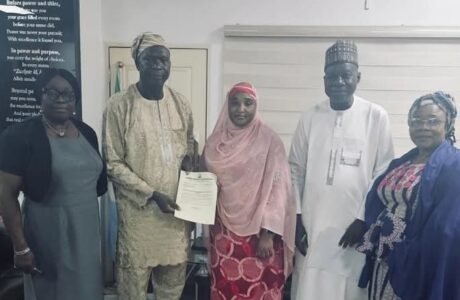
    The University of Nigeria, Nsukka (UNN) College of Medicine has appointed Dr Samuel Ngwu a senior visiting lecturer in the Department of Human Physiology, Faculty of Basic Medical Sciences.

    Dr Ngwu, who is a medical consultant, is the Chief Executive Officer/Medical Director of HopeCare Medical Centre, Enugu; and a former Commissioner for Health in Enugu State as well as a Fellow America College of Physicians.

    The appointment is contained in a letter issued by UNN Provost, College of Medicine, Prof. Hyginus Uzo Ezegwui, on behalf of the Vice Chancellor of the institution.

    The letter states that the appointment took effect from June 2, 2026.


    In his acceptance, Ngwu, who is a product of U.T. Southwestern Medical Centre, Dallas, Texas, USA, thanked the college for the offer, which would avail him opportunity to make impact on all levels of medical students of the institution.

    Ngwu would be bringing his wealth of both clinical and academic experiences spaning several decades to the students of medicine in UNN.