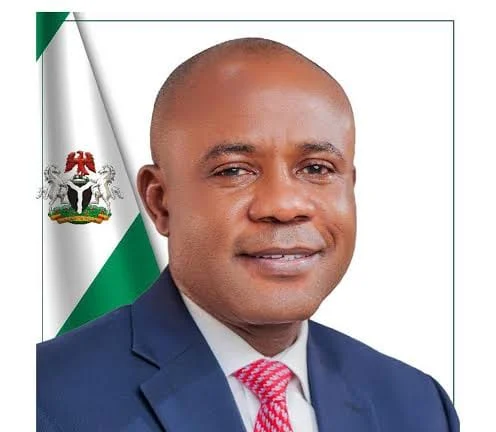


PPRO Ndukwe cautions against dangers of fake news, urges responsible communication
The Police Public Relations Officer (PPRO), Enugu State Command, SP Daniel Ndukwe, has cautioned against dangers of fake news, urging Nigerians to imbibe the culture of responsible communication.
Ndukwe said this in a lecture he delivered on the theme: “Policing and Fake News in Times of Insecurity.” at the Nigerian Institute of Public Relations (NIPR), Enugu State Chapter Monthly Public Relations (PR) Clinic held in Enugu on Monday.
He described fake news as unverified information presented or circulated as though it were factual.
Ndukwe explained that fake news exists in three major forms: misinformation, which involves the unintentional sharing of false information; disinformation, which is deliberately created and spread to deceive; and malinformation, where genuine information is intentionally used out of context or maliciously to cause harm.

He noted that while technology had accelerated the spread of fake news, human psychology remains one of its greatest enablers.
According to him, several cognitive biases influence people’s tendency to believe and share false information.
He said, “Among these are confirmation bias, where people readily accept information that aligns with their existing beliefs while rejecting contrary evidence.
“Selective exposure, which leads individuals to consume only information that reinforces their opinions; and belief perseverance, the tendency to continue believing false information even after it has been disproved.”

He highlighted the repetition effect, also known as the illusory truth effect, explaining that repeated exposure to false information often makes it appear credible.
He warned, “𝐲𝐨𝐮 𝐜𝐚𝐧 𝐛𝐫𝐞𝐚𝐤 𝐬𝐮𝐜𝐡 𝐧𝐞𝐰𝐬 𝐚𝐧𝐝 𝐛𝐫𝐞𝐚𝐤 𝐬𝐨𝐜𝐢𝐞𝐭𝐲,” emphasising the devastating consequences of irresponsible information sharing.
Other psychological factors he discussed included in-group bias, perceived authority bias, availability heuristic, emotional reasoning, negativity bias, and clout-chasing bias, all of which contribute to the rapid spread of misinformation.
Addressing the role of technology on the theme, Ndukwe observed that fake news is increasingly propagated through content manipulation tools and other digital technologies.

“This make it more difficult for the public to distinguish authentic information from fabricated content,” he said.
He stressed that law enforcement agencies, public relations practitioners, journalists, and citizens all have a shared responsibility to promote factual, timely, and responsible communication.
The PPRO urged the public to verify information before sharing it, rely on credible sources, and avoid allowing emotions or personal biases to influence their judgment.
Earlier, the Acting Chairman of NIPR Enugu State Chapter, Dr Onyedikachi Onovo, called on public relations practitioners, media professionals, government communicators, and members of the public to take deliberate steps to combat the spread of fake news.

Onovo said that fake news and outright misinformation remained a major threat to national security, public trust, and social stability.
The lecture was followed by an interactive question-and-answer session, where participants discussed practical approaches to tackling misinformation and strengthening collaboration among communication professionals, security agencies, the media, and government institutions.
The event was attended by participants from all works of life, including the Acting Secretary of NIPR, Mr Nduka Odo; Treasurer, Mrs Ihuoma Phillips-Daniel; Provost, Chief Amaechi Onah; Financial Secretary, Uju Onyemelukwe; Public Relations Officer, Mr Samuel Nneji; and many other members of the Institute.
The Public Relations (PR) Clinic forms part of the NIPR Enugu State Chapter’s continuous professional development programme, designed to equip practitioners with current knowledge and practical communication strategies for addressing emerging issues affecting the profession and society.