Category: General News

  • Sanwo-Olu says Aikhomu’s widow embodied humility, selflessness

    Sanwo-Olu says Aikhomu’s widow embodied humility, selflessness

    By Oladapo Udom

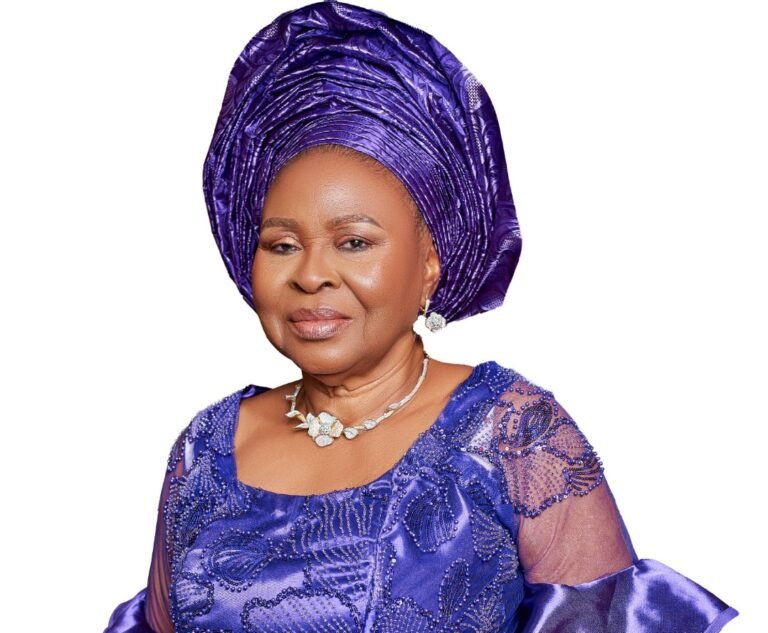
    Gov. Babajide Sanwo-Olu of Lagos State has described the widow of the late Admiral Augustus Aikhomu as an embodiment of patience, humility, selfless service and generosity.

    Sanwo-Olu said this on Friday during a commendation and holy communion service in honour of the widow, Rebecca, at the Cathedral Church of the Pentecost, Festac Town, Lagos.

    The governor was represented by the Secretary to the Lagos State Government, Mr Bimbola Salu-Hundeyin.

    The News Agency of Nigeria (NAN) reports that Rebecca was born on Aug. 4, 1940. She died on Dec. 11, 2025, at the age of 85 years.

    She served in the Nigerian Army and retired as a Captain.

    Sanwo-Olu said that her life set an example to the younger generations, especially women, that character, consistency and faith were virtues and evidence of a godly christian life.

    “On behalf of the government and people of Lagos State, I commend Mama for a life well lived, a christian family safely upheld, and a legacy that continues to inspire.

    “We celebrate not only the length of her years, but the depth of her impact and the clarity of her witness.

    “May the Almighty God and Saviour, Jesus Christ, continue to grant her soul eternal rest and let his perpetual light continually shine upon her gentle soul,” he said.

    The governor said that the late captain lived a life that showed that true greatness was not found in power or position, but in lives upheld and values defended.

    “May her legacy continue to inspire all those she left behind and generations yet to come.

    “May her memory endure. God bless her gentle soul with eternal rest and peace,” he said.

    The Bishop of the Diocese of Lagos SouthWest, Anglican Communion, Rt. Rev. Ebenezer Adewole, said that Rebecca lived a life of service to God and humanity.

    Adewole said that she would be remembered for her selfless service to humanity.

    “When I came in as a bishop in November 20, 2025, she was the first person I called for visitation.

    “On the day I was prepared to visit her, I called her to tell her that I was on my way but Mummy had already gone out for charity to the orphanage and those in need in the society.

    “I had to cancel my trip and reschedule for another day because she was busy doing the things of the Lord which is very commendable and admirable,” he said.

    Adewole said that three major things should be found in the life of anyone, who had truly accepted the gospel of Jesus Christ.

    According to him, they are: a deep break with the past, a growing relationship with Jesus through the Holy Spirit and a life of service to God and humanity.

    “Mummy had these three things; no wonder her life was a blessing.

    “Now her chapter has closed but people will keep saying good things about her because of the life she lived,” Adewole said.

    The Chief of Naval Staff, Vice Adm. Idi Abbas, said that Rebecca would be greatly missed as a former President of the Naval Officers’ Wives Association (NOWA).

    Abbas was represented by the Admiral Superintendent, Naval Dockyard Ltd., Rear Adm. Ibrahim Shehu.

    “There has always been a long affiliation between the Nigerian Navy and the Aikhomu family.

    “We will miss her wise counsel, her rich knowledge of navy history and all the warm advice she had been giving to all the past and present presidents of NOWA,” Abbas said.

    Rebecca’s eldest daughter, Susan, said that her mother was a woman of inestimable value.

    Susan said her mother would be missed for the love she showed on her children and her extended family, as well as her charitable works.

    “My mum was a disciplinarian who converted into a mentor and a friend.

    “She taught us about God, about service to mankind and other beautiful lessons.

    “She will be greatly missed,” Susan said.

  • Patjeda group advocates improved CSR initiatives to curb youth migration

    Patjeda group advocates improved CSR initiatives to curb youth migration

    By Taiye Olayemi

    Chief Ehiagwina Patrick, Group Managing Director of Patjeda Group, says effective corporate social responsibility (CSR) by private sector firms can curb the rising migration of Nigerian youths abroad in search of better opportunities.

    Patrick, during a policy dialogue on Corporate Social Responsibility and Sustainable Development in Nigeria on Wednesday, advised corporates to strengthen their CSR initiatives.

    The dialogue session was organised by PATJEDA Group.

    The GMD said stronger CSR in education, security and skills development would create jobs, boost youth confidence and encourage them to seek opportunities within Nigeria.

    Ehiagwina noted that CSR should go beyond philanthropy and be strategically aligned with sustainable development goals to create long-term impact.

    She encouraged companies to adopt structured and long-term CSR models, align social investments with national priorities, and focus on measuring impact rather than visibility.

    She urged corporate organisations to collaborate with government and civil society groups to design programmes that would empower youths and restore confidence in Nigeria’s economic prospects.

    “Many young Nigerians leave the country due to limited access to education, employment, skills development and economic empowerment. Deliberate CSR programmes could address these challenges.

    “There are children who have embraced hooliganism and drug abuse due to lack of support to attend school or develop skills; therefore, it is necessary for companies to prioritise CSR for national development.

    “This led PATJEDA to develop the back-to-school initiative which empowered no fewer than 300 pupils in 2025 and we look forward to empowering 500 pupils in 2026.

    “This will be extended to Anifowose Primary School in Ikeja, Ikoyi-Ekiti community in Ekiti State and other strategic locations.

    “Our educational CSR focuses on scholarships, bursaries, school support initiatives and assistance from primary to tertiary levels. We will also invest our “Feed the Widows Initiative in Ikeja,” she said.

    Patrick said it had become imperative to view CSR as a structured, value-driven tool for development and not as charity.

    According to her, this is neccesary at a time when Nigeria is grappling with complex socio-economic challenges, ranging from youth unemployment, gaps in access to education, infrastructure deficits and food insecurity.

    She said, “CSR must evolve from token gestures and isolated donations into strategic, sustainable, and people-centred interventions that align with national development priorities and measurable outcomes.

    “CSR, when properly designed, strengthens communities, de-risks environments, and builds long-term social capital.

    “To ensure sustainability, accountability, and focus, Patjeda Group’s CSR initiatives are driven through two dedicated foundations: Patrick Ejedawe Empowerment Foundation and Heart of Gold Support & Care Initiative.

    “These foundations operate as non-commercial, impact-focused platforms, allowing CSR activities to be community-responsive rather than publicity-driven.

    “In December, Patjeda Group intervened in making the Uromi axis of the Agbor–Auchi expressway, a federal road in dire need of palliative measure, motorable. This improved economic activity along the corridor.”

    Also speaking, Mr John Ighodalo, Executive Director of Corporate Services and Finance, Patjeda Group, urged corporate organisations to focus on policy alignment, scalability, and transparency to ensure that CSR initiatives become truly impactful.

    Meanwhile, Oba Ogundana Akinwande, Onikoyi of Ikoyi-Ekiti, lauded the significant impact of Patjeda’s CSR initiatives, noting that he had personally benefited from them both as a retired police officer and as a traditional ruler.

    Also, the Chairman of Ikeja Local Government, Mr Akeem Dauda, appreciated the company for its lasting impact on the community, describing it as the top contributor to local development.

    Dauda acknowledged Patjeda’s contributions, particularly in the areas of security and education.
    He noted that, given the significant challenges facing the council, he hopes for further support from the group to extend its assistance.

    Patjeda Group is a Nigerian-owned conglomerate with diversified interests spanning: Transportation and Logistics, Hospitality and Tourism, Oil and Gas, Security Support Services, Courier and Integrated Services, Retail, Agriculture, Education and Business Solutions.

    Since its incorporation in 2007, the group has expanded operations across Lagos, Aba, Abuja, Benin, Uromi, Port Harcourt, Owerri, Enugu, and Kaduna, contributing to employment generation, service delivery, and regional economic inclusion.

  • Badagry-Sokoto superhighway to unlock border communities, boost trade – Rep. Isiaka

    Badagry-Sokoto superhighway to unlock border communities, boost trade – Rep. Isiaka


    Gboyega Isiaka, representing Yewa North/Imeko-Afon Federal Constituency, says the Badagry–Sokoto superhighway will unlock economic opportunities for border communities and reposition the South-West as a major trade and industrial gateway.

    Isiaka spoke to newsmen on Friday in Imeko on the sidelines of a formal reception for defected leaders of the Peoples Democratic Party (PDP) to the All Progressive Congress in Imeko Afon local government area of Ogun.

    The House Committee Chairman on National Planning and Economic Development noted that the highway’s passage through Owode-Afon and its linkage to Imeko-Afon would significantly boost economic activities in the area.

    According to him, the scale of the Badagry–Sokoto project reflects a deliberate economic strategy by the federal government under President Bola Tinubu to drive growth through infrastructure development.

    He described the road as a strategic economic corridor linking coastal trade in Badagry with agricultural and commercial hubs in the North, while opening up border towns previously excluded from national economic planning.

    Isiaka added that the highway, connecting Owode in Ogun to Badagry and extending to sub-Saharan trade routes, would strengthen Nigeria’s participation in regional trade under the African Continental Free Trade Area (AfCFTA).

    He said the project would improve access to markets, reduce transportation costs, enhance food supply chains and create opportunities for agro-processing, logistics and light manufacturing.

    The lawmaker commended Tinubu for prioritising infrastructure-led industrialisation, noting that efficient logistics were essential to productivity, food security and national competitiveness.

    “This project shows an understanding of development as a system. Infrastructure remains the backbone of industrial growth and economic integration,” he said.

    Isiaka urged party members to complement political growth with responsible leadership and effective service delivery.

    He also called for unity within the party in Ogun, expressing optimism that the APC would record decisive victories in the 2027 general elections based on governance, infrastructure delivery and inclusive politics.

    The News Agency of Nigeria (NAN) reports that some of the defected leaders included Lisa Adejobi and Mujjidat Balogun

    NAN/FLOWERBUDNEWS

  • FG develops unified housing delivery framework for coherence with institutions, states

    FG develops unified housing delivery framework for coherence with institutions, states

    FG develops unified housing delivery framework for coherence with institutions, states

    By Bushrah Yusuf-Badmus


    Minister of Housing and Urban Development, Ahmed Dangiwa


    The Federal Government said it has developed a unified Housing Delivery Framework to ensure ‘One Coherent National Housing Delivery System’ in the country.


    The Minister of Housing and Urban Development, Alhaji Ahmed Dangiwa, made the disclosure on Thursday at the 14th National Council on Lands, Housing and Urban Development in Ilorin.


    The council has its theme as ‘Achieving Housing Delivery and Sustainable Cities through Effective Land Management, Urban Renewal, Promotion of Local Building Materials, and Public–Private Partnerships in Nigeria’.


    Dangiwa said the objective of this framework was to ensure that the ministry and all Federal Housing Institutions operate as ‘One Government’, with complementary and clearly defined roles.


    He said this would be done while providing the state and local governments with a predictable and credible framework for collaboration on housing delivery.


    ”This is particularly important at a time when many states are experiencing improved fiscal capacity and requiring structured ways to work with the Federal Government to deliver housing at scale.


    ”Under this framework, State Governments are to participate as active counterparts across four flagship federal programmes.


    “They are: The Renewed Hope Housing Programme, State-Led Social Housing Programme, State Urban Renewal and Inner-City Regeneration Programme and State Housing Public Private Partnership and Investment Platform.


    ”This Unified Framework represents a deliberate shift from fragmented interventions to coordinated national delivery,” Dangiwa said.


    He added that the Federal Government provides leadership, institutions, and finance while the states provide land and subsidies, execution, local leadership and counterpart or additional budgetary funding or interventions to complement federal efforts.


    Dangiwa, however, urged all the states to treat land reform not as a routine administrative matter, but as a deliberate economic growth strategy, that would increase IGR, empower the citizens and grow GDP.


    He said no country can solve its housing challenge without fixing its land system as secure land titles reduce risk, unlock capital, and empower citizens.


    In his remarks, Gov. Abdulrahman Abdulrazaq, said the theme of the council was interesting in the light of the contemporary challenges of population surge, affordable as well as decent housing, urbanisation, and sustainable and orderly living.


    The Governor, represented by his Deputy, Kayode Alabi, said over the past six years, his administration had executed bold measures to promote a more transparent as well as efficient land administration and management in the State.


    ”The Kwara State Geographic Information Service, (KWAGIS) had been restructured and strengthened for a more seamless land administration.


    ”The State is also actively pursuing a grand urban renewal agenda that prioritises enforcement of physical development regulations for orderly growth and sustainable living,” he said.


    The Chairman, House of Representatives Committee on Urban Development and Regional Planning, Hon. Abiante Awaji, pledged the house’s legislative support and oversight framework that promotes efficient land administration, sustainable urban renewal, and inclusive housing delivery across Nigeria.


    Awaji said the house was ready to work closely with the ministry and all other relevant stakeholders to translate the outcomes of this council into actionable legislation, oversight, and measurable impact.


    He said urban renewal consultations was not just about the physical revitalisation of the cities, but about restoring hope and enhancing the quality of life for the citizens.


    ”It provides an opportunity to reclaim neglected spaces and transform them into thriving communities that reflect our cultural heritage and aspirations,” Awaji said.


    The council meeting which started on Monday and climaxed on Thursday brought together key stakeholders, policymakers, professionals, and experts within the built environment.

  • BACSAAN, (Artisan Body) advocates training on latest technologies for professionalism

    BACSAAN, (Artisan Body) advocates training on latest technologies for professionalism


    (The Builders, Construction and Skilled Artisans of Nigeria (BACSAAN) National President, Mr Mohammed Jamiu Fasasi)


    By

    Ilorin; The Builders, Construction and Skilled Artisans of Nigeria (BACSAAN) has called on the Federal Government to organise trainings on the latest technology for its members to enhance their professionalism.

    BACSAAN National President, Mr Mohammed Jamiu Fasasi made the call on Wednesday on the sidelines of the ongoing 14th National Council on Lands, Housing and Urban Development in Ilorin.

    (BACSAAN Leaders with the Kwara State Commissioner for Housing and Urban Development, Dr. Segun Ogunsola (left)


    Fasasi while commending President Bola Tinubu’s administration for including its members in developmental programmes and policies, said the artisans needed to be kept abreast with the use of latest technologies.

    He said the trainings normally organized for some of their members was just a little improvement from what they used to know which is not in conformity with the latest trends.

    ”The Agencies gets us involved in their programmes and they train our members from time to time, but what they teach them is not totally different from what we have known for years.

    ”We are aware that there are technologies that can enhance our performances, but we do not have access to them, that is why we want the government to come to our aid.

    ”If the federal government can support us to send some artisans to other countries for a week or two-weeks training, it will go a long way for us,” he said.

    The BACSAAN president said Nigerian artisans were better than their Togolose or Malian counterparts that most people believed in, they just need to be brushed up a little.

    He said with an upgrade in their skills, individuals and organizations would not have to rely on foreign artisans for their jobs, as they would have been equipped.

    The 14th National Council is with the theme ”Achieving Housing Delivery and Sustainable Cities Through Effective Land Management, Urban Renewal, Promotion of Local Building Materials, and Public-Private Partnership in Nigeria”.

    The National Council Meeting is a forum that provides a strategic platform for aligning federal and state policies and accelerating reforms in the housing and urban development sector.

    “The meeting remains a critical avenue for strengthening intergovernmental collaboration, reviewing sectoral policies, and evolving practical solutions that will fast-track the delivery of affordable housing and sustainable urban development across the country.

    Participants at the meeting include; States’ Commissioners, Permanent Secretaries, Directors in charge of Lands, Housing and Urban Development, Chief Executives of Housing Corporations, Surveyor-Generals, professional bodies, and other key stakeholders, including BACSAAN, the artisan body in the built environment sector.

  • How stigma isolates children with Cerebral Palsy in Kwara

    How stigma isolates children with Cerebral Palsy in Kwara

    How stigma isolates children with Cerebral Palsy in Kwara

    By Bushrah Yusuf-Badmus


    Saturday, Feb. 9, was meant to be an ordinary haircut day for Mrs Oluwabusayo Olaoye and her two sons.


    However, barely two minutes into her younger son Michael’s haircut, the atmosphere in the small neighbourhood salon shifted.


    The barber paused, and politely refused to continue; not because Michael misbehaved, but because he has cerebral palsy.


    Within minutes, two other customers left, unwilling to remain in the same space with a child living with the condition.


    What should have been a quick weekend routine instead became a painful reminder of the stigma families of children with cerebral palsy face daily.


    “The older brother has often complained about people giving different attitudes whenever I ask him to bring Michael for a haircut,” Olaoye explained.


    “That’s why I decided to go with them myself this time. But the embarrassment was still overwhelming”.


    Although the barber tried to be polite, suggesting they return in the evening when fewer customers were around, the experience left the family humiliated and aware of how society treats children with cerebral palsy.


    “I can’t really blame the barber because it is his business, but it is unfortunate that children with cerebral palsy are treated like aliens, when they are supposed to be shown love,” she added.


    Cerebral Palsy (CP) is a group of disorders affecting movement, posture, and balance due to non-progressive damage to the developing brain, usually before, during, or shortly after birth.


    Globally, it affects approximately 1.2 per cent of children under five, with higher prevalence in low- and middle-income countries compared to high-income nations.


    In Nigeria, official data is scarce, but CP is believed to be among the most common neurological disorders.


    In 2017, researchers at the University of Lagos reported that around 700,000 Nigerians were living with the condition.


    A major cause of cerebral palsy in the country is untreated neonatal jaundice; a build-up of bilirubin in the blood, which gives a yellow tinge to a newborn’s skin.


    Most cases resolve within days with treatment, which involves exposing the baby to ultraviolet light to dissolve excess bilirubin.


    However, in Nigeria, this treatment is often unavailable or delayed, placing the country among the five nations with the highest incidence of neurological disorders caused by untreated jaundice, according to the World Health Organisation (WHO).


    Health experts insist that timely intervention is crucial, noting that treatment for neonatal jaundice must occur within the first ten days of life.


    They warn that any delay can result in permanent brain damage and severe cerebral palsy.


    Yet, beyond the medical challenges lies the persistent struggle of social stigma.


    Even when parents or caregivers follow professional advice to involve children in recreational and social activities for self-development, societal prejudice often hinders participation.

    Dr Aishat Abdulraheem, a physiotherapist at Lifeguard Hospital, advised parents to seek professional assessment and early intervention rather than isolating their children.


    “Isolation decreases self-esteem, increases social anxiety, and can cause more harm than good.


    “Early intervention enhances cognitive development, social skills, and emotional well-being, while regular assessments and social integration significantly improve motor skills, balance, and coordination,” she said.


    Similarly, Mr Alfred Abegunde, former Director of the Physiotherapy Unit at University of Ilorin Teaching Hospital, emphasised the need for inclusive healthcare and rehabilitation.


    He noted that caregivers focusing on abilities rather than disabilities can help children navigate schools and social environments more effectively.


    Sharing their experiences, Olaoye urged parents to showcase their children with pride.


    “Though the stigmatisation when walking on the road or attending events is overwhelming; as if it is a contagious disease, I urge parents to see their CP children as personal blessings.


    “Society should accept us for who we are. Many parents hide their children due to stigma, which hinders development. We must not let this define us,” she said.


    Hajia Fatimah Salau, another parent, explained how stigma affects her daughter’s physical and mental health.


    “Keeping her indoors due to the awkward stares leads to excessive weight gain, increased agitation, and less social interaction,” she said.


    Some parents argue that specialised schools could help reduce stigma in Kwara State.


    The State School of Special Needs, they say, cannot fully cater to children who are still dependent on caregivers.


    Mrs Shukurat Afolabi called on the government to establish a school specifically for cerebral palsy children or, at the very least, provide trained ‘shadow teachers’ to support their inclusion in mainstream schools.


    “Most private schools do not admit CP children because regular teachers cannot attend to their needs. Shadow teachers could provide necessary support and greatly improve their learning experience,” she explained.

    Mr Ifeoluwa Anishe, a CP advocate and founder of Ifeoluwa Cerebral Palsy Initiative, highlighted his own experience of stigma but stressed resilience and achievement.


    A master’s degree holder in Counselling Education from the University of Ilorin, Anishe called for specialised schools and employment opportunities for individuals with CP, emphasising that inclusion and support can unlock their potential.


    In spite of persistent stares, whispers and social exclusion, families of children with cerebral palsy continue to show resilience and determination.


    Their lived experiences reinforce a shared position among parents, health experts and advocates: the greatest challenge facing children with cerebral palsy is not the condition itself, but society’s failure to understand and accommodate it.


    To address this, stakeholders say urgent and coordinated action is required.


    State governments, especially in Kwara, are urged to strengthen inclusive education policies by deploying trained shadow teachers in public schools.


    They are also encouraged to expand access to physiotherapy and rehabilitation services, and to review existing special needs institutions to better cater for children who require ongoing support.


    Health authorities are also advised to intensify public education on neonatal care, especially the importance of early detection and timely treatment of neonatal jaundice, which experts identify as a major preventable cause of cerebral palsy in Nigeria. (NAN)

  • FG intensifies plans to establish local building materials manufacturing hub

    FG intensifies plans to establish local building materials manufacturing hub

    FG intensifies plans to establish local building materials manufacturing hub


    Permanent Secretary, Federal Ministry of Housing and Urban Development, Dr Shuaib Belgore


    The Federal Government says it will intensify efforts to deepen industrial capacity through the establishment of local building materials manufacturing hubs.


    The Permanent Secretary, Federal Ministry of Housing and Urban Development, Dr Shuaib Belgore, made the remark on Wednesday at the ongoing 14th National Council on Lands, Housing and Urban Development in Ilorin.


    The meeting is themed, “Achieving Housing Delivery and Sustainable Cities through Effective Land Management, Urban Renewal, Promotion of Local Building Materials, and Public–Private Partnerships in Nigeria.’’


    Belgore noted that Nigeria’s rapid population growth and accelerated urbanisation had resulted in a significant housing deficit, which was further compounded by challenges.


    He listed the challenges to include limited access to land, inadequate mortgage financing, high costs of building materials, insufficient infrastructure, weak land documentation systems, and shortages of skilled artisans and craftsmen.


    He, however, explained that the establishment of the manufacturing hub was aimed at reducing construction costs, shortening delivery timelines, and creating employment opportunities.


    Belgore said effective land management, urban renewal, promotion of local building materials, and Public–Private Partnership had proven to be critical catalysts for sustainable housing delivery.


    He added that land, which remained the principal resource in the sector, only became a true asset when it was properly titled, registered, digitised, and verified.


    “Urban renewal, through the regeneration and modernisation of ageing urban centres, improves liveability, optimises land use, and promotes sustainable human settlements.


    “In addition, the growing demands on public resources have made Public–Private Partnerships indispensable in complementing government efforts to scale up housing and infrastructure delivery,” he said.


    Belgore said that the importance of housing could not be overemphasised, as it had been a vital sector of the economy, transcending the provision of shelter.


    He added that housing remained a critical driver of a productive and stable society, explaining that sound physical planning, efficient land allocation, utilisation, policy formulation, and implementation were fundamental to sustainable housing development.


    The Permanent Secretary said that real estate and construction sectors contributed significantly to economic growth through employment generation, investment mobilisation, savings, and improved labour productivity.


    ”Moreover, the availability of decent housing directly influences public health, social well-being, and environmental sustainability,” he said.


    Belgore added that the Ministry was also working towards coordinating and harmonising policies, procedures, and institutional frameworks through sustained collaboration with public and private sector stakeholders.


    In his speech, Dr Segun Ogunshola, the Kwara Commissioner for Housing and Urban Development, noted that challenges affecting housing provision persisted, but that the state government had been implementing measures to address land and housing shortages.


    Ogunshola said the 20,000-unit Kwara Smart City project masterplan had been reviewed to improve liveability while measures were in place to achieve the project.


    The National Council Meeting is a forum that provides a strategic platform for aligning federal and state policies and accelerating reforms in the housing and urban development sector.


    Policymakers, key stakeholders, professionals were among those who attended the meeting.

  • Oyo State to Celebrate 50 Years with Carnival, Symposium, Awards

    Oyo State to Celebrate 50 Years with Carnival, Symposium, Awards


    Oyo State to Celebrate 50 Years with Carnival, Symposium, Awards


    By Adewale Owoade


    The Oyo State Government has unveiled a comprehensive programme of activities to commemorate the 50th anniversary of the creation of the state.


    The Chairman of the Oyo State @ 50 Anniversary Committee and former two-term member of the House of Representatives, Hon. Saheed Akinade-Fijabi, made this known during a press briefing held at the Governor’s Office Briefing Room, Secretariat, Agodi, Ibadan.


    Akinade-Fijabi said the golden jubilee celebration is aimed at celebrating Oyo State’s five decades of growth, development, cultural heritage and resilience.

    According to him, the anniversary is a collective celebration for all residents of the state, providing an opportunity to reflect on shared values, cultural expressions and to give thanks for the progress recorded by the Pacesetter State over the years.

    He disclosed that the Oyo State @ 50 celebration will commence with an opening ceremony at 10 a.m. on Monday, January 26, 2026, at the International Conference Centre, University of Ibadan, where Governor Seyi Makinde is expected to formally declare the activities open.

    The celebration will continue on Tuesday, January 27, 2026, with two major events — a Health Outreach and a Film Show.

    The Health Outreach, he said, will be conducted across the 33 local government areas of the state and will focus on residents aged 50 years and above, as well as others in need of medical attention.

    The Film Show will take place in Ibadan, Ibarapa, Oyo, Ogbomosho, Oke-Ogun I and Oke-Ogun II, aimed at reliving Oyo State’s rich legacy in theatre and entertainment.

    On Wednesday, January 28, 2026, an anniversary carnival walk will be held, featuring artisans, students, traders and other residents, who will walk from the historic Mapo Hall to the Lekan Salami Sports Complex, Adamasingba, Ibadan.

    One of the major highlights of the celebration is a symposium scheduled for Thursday, January 29, 2026, at the International Conference Centre, University of Ibadan, with the theme: “Consolidating the Legacy: Navigating the Present and Reimagining the Future.”

    The symposium will feature Prof. Olu Ajakaiye as the lead speaker, alongside other distinguished speakers including Prof. Olanrewaju Olaniyan, Prof. Dikirulahi Yagboyaju and Dr. Durodola Kamoru Ogunsesan.

    Religious activities will follow on Friday, January 30, 2026, with a Jumat Service at the Ibadan Central Mosque, while an Isese service for traditional worshippers will hold on Saturday.

    Akinade-Fijabi further disclosed that a novelty football match will take place on Saturday, January 31, 2026, at the Lekan Salami Stadium, Adamasingba, Ibadan, between a team led by Governor Makinde and another led by Oyo State-born football legend, Mutiu Adepoju.

    On Sunday, February 1, 2026, a Thanksgiving Service will hold at St. Peter’s Cathedral, Aremo, Ibadan. This will be followed by an event tagged “An Afternoon with the Elderly and Persons Living With Disabilities (PLWD),” scheduled for the Omololu Olunloyo Park, Airport Road, Ibadan.

    Activities will continue on Monday, February 2, 2026, when the Wife of the Governor, Her Excellency, Engr. (Mrs.) Tamunominini Makinde, will visit selected primary and secondary schools across the state to present gifts to pupils and students.

    In the evening, she will host a special programme to celebrate and empower women as part of the anniversary activities.

    The celebration will climax on Tuesday, February 3, 2026 — exactly 50 years after the creation of Oyo State on February 3, 1976 — with a Gala and Award Night to honour the 17 former Governors and Military Administrators who have served the state, as well as distinguished indigenes and non-indigenes who have contributed significantly to the state’s development.

    The event will take place at the newly built Banquet Hall, Government House, Agodi, Ibadan.

    Akinade-Fijabi called on indigenes and residents of Oyo State, both at home and in the diaspora, to actively participate in the golden jubilee celebrations.

    The press briefing was attended by the Secretary of the Committee, Mrs. Aderonke Adedayo; Executive Assistant to the Governor on Finance, Budget and Economic Planning, Alhaji Gafar Bello; Special Adviser to the Governor on Media, Dr. Sulaimon Olanrewaju; and the Senior Special Assistant to the Governor on Broadcast, Mrs. Bosede Sodiq.

  • FG intensifies efforts to address housing deficits, urban development challenges

    FG intensifies efforts to address housing deficits, urban development challenges


    (Participants and Stakeholders at the 14th Meeting of the National Council on Housing and Urban Development holding in Ilorin)


    The Federal Government says it is intensifying efforts to address Nigeria’s growing housing deficit through a new national housing strategy focused on land reforms, urban renewal, and public-private partnerships.


    The Minister of Housing and Urban Development, Ahmed Musa Dangiwa said this while declaring open the 14th meeting of the National Council on Lands, Housing and Urban Development on Monday in Ilorin.


    The News Agency of Nigeria (NAN) reports that the 14th National Council had the theme: ”Achieving Housing Delivery and Sustainable Cities Through Effective Land Management, Urban Renewal, Promotion of Local Building Materials, and Public-Private Partnership in Nigeria.”


    Represented by Alhaji Mukhtar Ilyasu, the Director of Planning, Research and Statistics in the ministry, Dangiwa said that the strategy placed effective land administration at the centre of housing delivery nationwide.


    He explained that the policy adopted urban renewal as a key tool for rebuilding Nigerian cities, while positioning private sector investment as the main driver of mass housing development.


    ”Nigeria’s housing deficit, estimated in the tens of millions, remains one of the country’s most pressing social and economic challenges, driven by rapid urbanisation, population growth and rising construction costs.


    “The new framework is expected to guide housing delivery, land administration, and urban development planning across the Federation in the coming years.


    ”Urban renewal and regeneration have been adopted as national policy tools to modernise cities, curb uncontrolled urban expansion, and respond to population pressure and climate challenges,” he said.


    The minister also disclosed that the Federal Government was prioritising the large-scale use of locally sourced building materials and construction technologies to reduce costs, improve affordability, and strengthen domestic industries.


    He said public-private partnerships would serve as the main engine for mass housing and urban infrastructure delivery across the country.


    The Kwara Commissioner for Housing and Urban Development, Dr Segun Ogunshola, said challenges affecting housing provision persisted, but the state government was implementing measures to address land and housing shortages.


    He said the 20,000-unit Kwara Smart City Project was already laying the foundation for a next-generation mega city, adding that the project’s master plan had been reviewed to improve livability.


    The commissioner added that municipal areas across the state had been upgraded with improved water supply, road networks, and other infrastructure to enhance urban development and beautification.


    Earlier in her remarks, the Permanent Secretary, Kwara State Ministry of Housing and Urban Development, Alhaja Risikat Abdulazeez, called for a holistic approach to reducing the housing deficit amid rapid urbanisation.


    The News Agency of Nigeria (NAN) reports that the National Council Meeting is a forum that provides a strategic platform for aligning federal and state policies and accelerating reforms in the housing and urban development sector.


    The meeting remains a critical avenue for strengthening intergovernmental collaboration, reviewing sectoral policies, and evolving practical solutions to fast-track the delivery of affordable housing and sustainable urban development across the country.


    Participants at the meeting include states’ commissioners, permanent secretaries, directors in charge of Lands, Housing and Urban Development and chief executives of Housing Corporations, Surveyor-Generals, professional bodies, and other key stakeholders in the built environment sector were also present.(NAN)


    About Flowerbudnews
    Established by Hon.  Biola Lawal, a former Acting Managing Director of the News Agency of Nigeria (NAN), FLOWERBUDNEWS is a consortium of active veteran journalists, experienced Multimedia broadcast experts and image makers.

    We are drawn from both public and private  sectors of Nigeria’s media Industry with a common  determination to enhance the practice of responsible journalism..

    Lawal, on his part, is also a former Honourable Commissioner for Information,Youth, Sports and Culture of Osun state, his home state.

    Biola Lawal had also successfully served two tenures as Press Secretary to the ECOMOG Force Commander in Liberia during the Liberian and Sierra Leone Civil wars. He was an outstanding NAN Defence and War Correspondent for many years.

    The retired NAN Acting Boss holds the honour of being the only journalist that served two terms on the ECOMOG international assignment due to his high professionalism and decency.

    He is a Co-Author of the book; ECOMOG, A BOLD ATTEMPT AT REGIONAL PEACEKEEPING! Edited Mrs Magaret Voght.  The book remains the most. factual, detailed and authentic book on the ECOWAS sponsored ECOMOG Military operation.