Category: Foreign

  • The cry of Dolores, the cry for freedom, By Owei Lakemfa

    The cry of Dolores, the cry for freedom, By Owei Lakemfa


    How wonderful the world might have been without the scourges of colonialism and neo-colonialism.

    By Owei Lakemfa

    The story of Mexico is not necessarily that of colonialism, heroic resistance and the large scale seizure or theft of its territories by the United States.

    It is more of the tragic human loss of one of the most sophisticated and beautiful civilisations in human history, which had the potential of taking human development in a different direction from the alienation and modernism we have today.

    The clatter in the hall went dead. Silence enveloped the gathering. What was now heard was the thud of boots. It grew louder as a uniform-clad personnel marched in through the door. Stretched before him was a big flag.

    He marched determinedly to the dais. Stopped before a solemn-faced Alfredo Miranda, the Mexican Ambassador in Nigeria. He handed over the vertically striped tricolour of green, white and red flag. The event was to mark the Mexican War of Independence, which began 214 years ago.

    The Mexican national flag, the Bandera de Mexico, was handed over to the Ambassador in Abuja on that night of Sunday, 15 September, in a gathering of mostly ambassadors accredited to Nigeria.

    The flag also has a central coat of arms made up of an eagle, a cactus and a serpent. It is the recall of an Aztec legend of a golden eagle sitting on a cactus, while devouring a serpent.

    Ambassador Miranda made a declaration, handed the flag back to the uniformed personnel who, after a number of sharp military turns, marched out of the hall.

    This ceremony was also performed simultaneously in Mexico by President Andre Lopaz Obrador, all mayors in the country and in all Mexican missions across the universe.

    It is the dramatisation of the scene on 15 September, 1810, when a priest, Miguel Hildago y Costilla, in the poor town of Dolores, rang the parish bell to summon the town flock to mass. But, rather than the usual service, Father Hildago told his congregation to revolt. He then issued a call to arms, the Grito de Dolores.

    His declaration of “down with bad government” was re-echoed from balconies. His small congregation armed itself with whatever weapons were available, including work tools, bows and arrows. It marched through Dolores to other towns, sacking government officials, smashing structures, and setting prisoners free. The ever-swelling mass of the people was more of a movement than an army, but they put the royalist army to flight.

    Mexico was one of the best human civilisations, but it had been destroyed by Spanish colonialists. Now the people, angered by economic inequality, lopsided land distribution and unrepresentative state institutions, wanted their country back by any means necessary.

    Mexico was one of the best human civilisations, but it had been destroyed by Spanish colonialists. Now the people, angered by economic inequality, lopsided land distribution and unrepresentative state institutions, wanted their country back by any means necessary.

    Spain had assumed that Mexico, which it called Viceroyalty of New Spain, would forever be part of its territory.

    Eventually, Hidalgo and some leaders of the liberation movement were captured and executed. Their heads were severed and hung in public to scare other liberation fighters. But that did not end the struggle; rather, it propelled it until 27 September, 1821 when the liberation fighters marched triumphant into Mexico City.

    The next day, they proclaimed the Declaration of Independence of the Mexican Empire. Eventually, the country adopted the name, United Mexican States.

    The eleven-year war ended 300 years of Spanish colonial rule, and established a unique Mexican identity. But defeated Spain would not accept the new reality; so for another decade, it refused to recognise Mexico as a separate and independent country with sovereign rights.

    The story of Mexico is not necessarily that of colonialism, heroic resistance and the large scale seizure or theft of its territories by the United States. It is more of the tragic human loss of one of the most sophisticated and beautiful civilisations in human history, which had the potential of taking human development in a different direction from the alienation and modernism we have today.

    It is all the more painful to realise that the destruction of such a great civilisation was done by a people who, by their own confession, were far less civilised and developed.

    Ambassador Miranda, in a 12 August paper at the International Conference to End Colonialism in the World held in Abuja, quoted two of such Spanish confessions by the invading Spanish forces.

    The first was by Spanish soldier and historian, Bernal Diaz del Castillo, who wrote: “We arrived at the wide causeway and headed towards Estapalapa. And from the moment we saw so many cities and towns populated in the water, and on firm land other large settlements, and that straight causeway going to Mexico, we were amazed, and we said it seemed like the things of enchantment told in the book of Amadís, for the great towers… and buildings they had in the water, all made of stone, and some of our soldiers even said that what they saw seemed like a dream…”

    As the night wore on at the Mexican Embassy with polite discussions, those events 214 years ago, weighed on my mind. I reflected on how wonderful the world might have been without the scourges of colonialism and neo-colonialism.

    The leader of the conquering Spanish military, Hernan Cortés, in a letter to the King of Spain, wrote: “There are very large cities with marvellous buildings and great trade and wealth, among which there is one more marvellous and rich than all others, called Tenustitlan, which is, by wonderful art, built over a large lagoon…”.

    It is this enchanting civilisation the Spanish invaders, whose primary motives were loot and territory, destroyed.

    Miranda said of that irrecoverable destruction: “After nearly three months of an implacable siege and a resistance as heroic as it was futile, the European invaders triumphantly entered the Aztec capital and immediately began the physical destruction of the city. Temples and palaces were demolished, and their stones were used to erect churches, many built on the foundations of Tenochca pyramids, and residences or houses for the conquerors.

    In this painful way, Tenochtitlán (Mexican central city) began to transform into Mexico City, which from its inception was the capital of a much vaster empire that replaced New Spain.”

    Thus, began the nightmarish 300 years of Mexican colonisation and decimation. Bulgarian-born Professor of History, 94-year-old Enrique Semo, famous author of The History of Capitalism In Mexico, wrote about the effects of the invasion on the Mexican people.

    In his The Conquest, he wrote that the Mexican populace was decimated, not just by the invasion and epidemics, but also by “slavery, mistreatment, famines, consequent physical weakening, as well as loss of will to live.”

    As Walter Rodney, author of the famous 1972 book, How Europe Underdeveloped Africa, noted: “Colonialism had only one hand – it was a one-armed bandit.” One of the best illustrations of the criminal nature and banditry that is colonialism, was the invasion of Mexico.

    Ambassador Miranda, speaking on his country’s past said: “As we reflect on this complex history, we acknowledge the strength and ingenuity of our ancestors, who forged a path through adversity to create a vibrant and diverse society. It is this enduring legacy that inspires us to continue striving for justice, equality, and the preservation of our cultural identity.”

    As the night wore on at the Mexican Embassy with polite discussions, those events 214 years ago, weighed on my mind. I reflected on how wonderful the world might have been without the scourges of colonialism and neo-colonialism.

    (Owei Lakemfa, a former secretary general of African workers, is a human rights activist, journalist and author. )

  • 5 people killed in Israeli strikes on southern Lebanon

    5 people killed in Israeli strikes on southern Lebanon

    Flowerbud News

    Five people, including a child, were killed on Friday in Israeli strikes in southern Lebanon, state-run media said.

    Lebanon’s National News Agency (NNA) said an Israeli drone struck a house in the town of Aita al-Jabal with two guided missiles, killing two people, including a 7-year-old child.

    An earlier Israeli strike on the town of Tayer Harfa killed three people, the Lebanese Health Ministry said.

    The pro-Iranian Hezbollah movement announced the death of three of its fighters, but did not specify where or when.

    Meanwhile, Lebanese security sources, however, said they died in the strike on Tayer Harfa.

    The Israeli army confirmed the strike, saying in a statement:

    “A terrorist cell that was planning to fire projectiles from the area of Tayer Harfa in southern Lebanon towards Israeli territory was identified by Israeli soldiers and was eliminated.”

    Furthermore, Hezbollah said that it targeted surveillance equipment in the Meron Air Base in north Israel, in response to Israeli attacks in south Lebanon.

    However, since the beginning of the war in the Gaza Strip, there have been daily military confrontations between the Israeli army.

    The Hezbollah militia in Lebanon and other groups in the border area between the countries.

    There have been deaths on both sides – most of them members of Hezbollah.

    dpa/NAN

  • Kamala Harris picks Walz as vice-presidential nominee

    Kamala Harris picks Walz as vice-presidential nominee

    Flowerbud News

    Democratic presidential nominee, Kamala Harris, has picked Minnesota Governor, Tim Walz, to be her vice presidential running mate in the race for the White House.

    With three months to go into the U.S. presidential election, this is Harris’ first major decision since becoming her centre-left party’s candidate to go up against former Republican president Donald Trump.

    She said, “I am proud to announce that I’ve asked Tim Walz to be my running mate,’’ Harris posted on social media.

    “As a governor, a coach, a teacher, and a veteran, he’s delivered for working families like his. It’s great to have him on the team.’’

    Her still-new campaign has had to move fast since President Joe Biden ended his flailing bid for re-election two weeks ago and passed the baton to Harris.

    Harris and Walz are now set to launch a tour of the key battleground states that would decide the outcome of the Nov. 5, election.

    At their first appearance together, at a rally in Philadelphia, Harris said the pair was the underdogs in the race to the White House.

    Harris said, ”But, we have momentum and I know exactly what we are up against.”

    Harris said she and Walz hailed from different corners of the U.S…

    She added, “But our values are the same. We both believe in lifting people up, not knocking them down,’’ she said.

    “We both know that the vast majority of us have so much more in common than what separates us.

    “And we see in our fellow Americans neighbours, never enemies. My promise to you is this: our campaign will reach out to everyone.’’

    Walz took a swipe at Trump during his address to the rally.

    He said, “Again, and again, and again, Trump weakens our economy to strengthen his own hand,’’ he said.

    “He mocks our laws, he sows chaos and division and that’s to say nothing of his record as president.’’

    Walz, 60, has been the governor of Minnesota since 2019.

    U.S. political analysts believed the former public school teacher and member of the U.S. Army National Guard could help Harris appeal to both working-class and progressive voters in the industrial Midwest where key battleground states are located.

    He was thrown into the spotlight last month for remarks in which he called Trump and his running mate, JD Vance, “weird.’’

    As use of the word went viral online, the Democratic Party began to adopt the label for Trump, too.

    Walz beat out Josh Shapiro, the governor of Pennsylvania and Andy Beshear, the governor of Kentucky.

    Arizona Senator and former astronaut Mark Kelly was also in the mix for the number two job.

    “It is the honour of a lifetime to join Kamala Harris in this campaign. I’m all in,’’ Walz wrote in his own social media post, which also showcased his folksy demeanour.

    Vice President Harris is showing us the politics of what’s possible. It reminds me a bit of the first day of school.

    dpa/NAN

  • Paris 2024 to unveil night edition of official posters

    Paris 2024 to unveil night edition of official posters


    PARIS:  (Xinhua)/Flowerbudnews — After the success of the official iconic posters for the Paris Olympic and Paralympic Games, the Paris 2024 organizing committee announced on Monday that they would once again collaborate with illustrator Ugo Gattoni to launch a night celebration version of the official posters, limited to 2,024 copies.

    In March, the daytime version of the official poster for Paris 2024 was released. Featuring the Olympic Games on the left and the Paralympic Games on the right, the poster includes many iconic elements of Paris and showcases all the sports at the upcoming Games.

    The upcoming nocturnal version of the posters will be available for online sales starting July 25, the day before the opening ceremony of the Olympic Games.

    In this limited edition, new reflections, new lighting effects and fireworks are added to the poster. According to organizers, the posters have all been printed in France in 70x100cm format on “fine art” paper by a Paris 2024 official licensee printer Oneart, and will be sold for 200 euros each.

    “Around Christmas time in 2023, as I was still working on the Paris 2024 iconic posters, I unintentionally reversed the colors of the drawing, and that created a nocturnal atmosphere with a tinge of neon. Inspired by this handling mistake, I started creating a new version of the poster, changing each color one by one, thus revealing some unexpected secrets of the drawing and paying homage to the beauty of Parisian nights,” said Gattoni.


  • 1st interview after Trump attack, Biden slams rival’s rhetoric

    1st interview after Trump attack, Biden slams rival’s rhetoric

    Flowerbud News

    In spite of his recent appeals for unity and restraint following the assassination attempt on Donald Trump, U.S. President Joe Biden didn’t hold back in an interview on Monday.

    He went back to accusing his Republican rival of inflammatory rhetoric.

    Trump talked about there’d be a bloodbath if he loses; Biden told NBC News anchor Lester Holt, two days after Trump was injured by a shooter at a campaign rally in Pennsylvania.

    Biden, who in the wake of the attack stressed the need “to lower the temperature in our politics.’’

    He said it was Trump’s own rhetoric not his that had heated up the campaign ahead of November’s presidential elections.

    Biden said, “Look, I’m not the guy that said I want to be a dictator on day one,.

    “I’m not the guy that refused to accept the outcome of the election’’ Biden said, referring to previous remarks made by Trump.

    “I’m not the guy who said that wouldn’t accept the outcome of this election automatically.

    “I have not engaged in that rhetoric. My opponent has engaged in that rhetoric.’’

    Following the attack on Trump on Saturday, Biden called for unity and condemned the attack several times.

    “In America, we resolve our difference at the ballot box, not with bullets.

    “The path forward through competing visions of the campaign should always be resolved peacefully, not through acts of violence,’’ Biden said in a formal Oval Office address on Sunday evening.

    Asked by NBC’s Holt what he could do himself to cool down the political debate, Biden said.

    “Continue to talk about the things that matter to the American public.’’

    “It matters whether or not you, for example, talk about how you’re gonna deal with the border instead of talking about people as being vermin, those things matter.

    `That’s the kind of language that is inflammatory.’’

    Some of Trump’s fiercest supporters have accused Biden of being partially responsible for the attack due to his rhetoric.

    Biden has repeatedly described his rival as an existential threat to democracy.

    dpa/NAN

  • NTAC DG Lauds FG on Commitment to Brotherhood Across ACP Countries as TAC Deploys 15 Volunteers to Uganda

    NTAC DG Lauds FG on Commitment to Brotherhood Across ACP Countries as TAC Deploys 15 Volunteers to Uganda


    Pledges More Efforts at Deepening South-South Cooperation,Using Technical Assistance to ACP countries_


    By Biola Lawal

    Abuja (Flowerbudnews): The Nigerian Technical Aid Corps (NTAC) is set  to deploy 15 academics from various fields of endeavour to different Universities in Uganda.

    Director General of the Nigerian Technical Aid Corps, Hon. Yusuf Buba Yakub, disclosed this while speaking at a ceremony held to offer pre-departure orientation to the Volunteers selected from among tertiary institutions across the country,

    Hon. Buba Yakub commended Pres. Bola Ahmed Tinubu for his commitment to the provision of technical manpower to countries of Africa, Caribbean and the Pacific regions.

    A statement by Nkem Anyata-Lafia, the
    Special Assistant on Media and Publicity to the NTAC DG disclosed that the 15 volunteers would be deployed to Uganda from tomorrow, Monday July 15.

    The NTAC Boss, a  former lawmaker, was represented on the occasion by Amb. Zakari Usman, Director of Programmes at the Agency.

    Hon. Buba Yakub also said that the Federal Government ‘s efforts were ‘:aimed at ensuring that development among the ACP nations was evenly spread and urged the Volunteers to count themselves lucky for having been selected out of the thousands of applications received by NTAC when it called for entry late 2023.

    Buba challenged the Volunteers to see their recruitment to serve in the TAC Scheme as a humanitarian effort to make humanity better and more prepared to face the daily challenges of life, including those posed by his environment.

    He said that the Scheme was a national call for actions that promote national interest and admonished the Volunteers to be wary of any actions or activities that may compromise the spirit and intent of the Scheme.

    Earlier, while thanking the Federal Government for the opportunity to represent the country in their new capacity.

    The Team Lead of the 15 Volunteers, Clement Gboyega Afolabi, a Professor of Plant Pathology at the Federal University of Agriculture, Abeokuta, who spoke earlier on behalf of his colleagues, thanked the Federal Government for the opportunity to represent the country in their new capacity,

    Prof. Afolabi expressed delight at the selection processes through which they were chosen, and promised that they would not to let Nigeria down in their host country.

    The University Don also expressed joy at the transparent nature of the processes involved in the exercise and thanked the Management and officials of NTAC  for their professionalism and commitment to the mandate of the Corps.

    Other Volunteers, who fielded questions with journalists, included Dr.Usman Bature Isyaku of the Department of Electrical and Electronics Engineering, Abubakar Tafawa Balewa University, Bauchi, and Dr. Peter Chika Uzomba of the Department of Economics, Federal University, Lokoja.

    They applauded the TAC Scheme, noting that it was in tandem with the three cardinal objectives of their responsibilities as academics, which Uzomba described as: Teaching, Research and Community Service.

    Among those present at the event were the Resource Person of the day’s event and former Director of Programmes at the Agency, Amb. Mohammed Shehu Kangiwa; Mr.Lawandy Bala, Special Assistant on Protocol Matters to the TAC DG, as well as Mr James Dung Pam, a Senior Counselor at the Corps, among many other officials and members of staff of the Agency. (Flowerbudnews)

  • The June 25 Rage in Kenya, which Country is Next?

    The June 25 Rage in Kenya, which Country is Next?


    By Paul Ejime

    Flowerbudnews:  Only politicians and their supporters numbed by greed and insensitivity to human suffering, and (there are many in Africa), did not anticipate the “Youth Revolt” of 25 June 2024 in Kenya.

    But this appears to be the beginning of a renewed “people power” revolution against bad governance, even though the death of more than 20 Kenyans was avoidable and unnecessary before President William Ruto could withdraw his government’s anti-people Finance Bill 2024 after the June 25 mayhem.

    He was probably riding on the crest of 15 minutes of fame from his recent well-choreographed validation-seeking photo-opportunity visits to Washington DC and Asia.

    The controversial bill was passed by 195 out of 304 members of Parliament and was then waiting for a presidential accent. But Kenyans, especially the youths said they have had enough.

    Widespread protests were unleashed on the country under the slogans *#RejectFinanceBill2024* and *“Seven Days of Rage.”*

    A week earlier, the government in a typically condescending official response, had announced the scrapping of some of the many tax increases under the bill. A proposed 16% value-added tax on bread and taxes on motor vehicles, vegetable oil and mobile money transfers, were among the taxes axed, but angry Kenyans were unimpressed.

    When demonstrators poured on the streets, the government responded by deploying military personnel to reinforce the overwhelmed police force.

    In scenes reminiscent of the 6 January 2021 invasion of the American Congress by defeated President Donald Trump’s supporters, aggrieved Kenyans on Tuesday 25 June, marched on their country’s Parliament in Nairobi and set part of the building alight.

    The ceremonial mace of the parliament was stolen, while the Nairobi City Hall, the Office of the Governor of Nairobi, was also set on fire.
    Kenya was in a forced shut-down, but despite disruptions to the Internet, the protesters still mobilised in their thousands against the Ruto government bill.

    Some of the protesters hurled stones at security forces, who responded by firing tear-gas and live bullets resulting in the deaths and dozens of the wounded.

    Former American President Barak Obama’s half-sister Auma Obama was among those teargassed.

    Kenya’s opposition leader Raila Odinga urged the government to “immediately stop the violence its agencies are meting out on citizens.”

    President Ruto’s former boss-turned-political opponent, ex-President Uhuru Kenyatta, has also called for restraint.

    The Embassies and High Commissions of Belgium, Canada, Denmark, Estonia, Finland, Germany, Ireland, the Netherlands, Norway, Romania, Sweden, the United Kingdom and the United States in Kenay, said in a joint statement that they “are especially shocked by the scenes witnessed outside the Kenyan Parliament.”

    The UN Secretary-General António Guterres, through his spokesman Stephane Dujarric called on the police and security forces to “exercise restraint.”

    At the same time, the African Union Chairperson Moussa Faki Mahamat appealed to “national stakeholders to engage in constructive dialogue to address the contentious issues that led to the protests in the supreme interest of Kenya.”

    Incidentally, there has been no report of any official reactions by regional organisations – Intergovernmental Authority for Development (IGAD), and the East African Community (EAC) to the Kenyan crisis.
    In his initial response, President Ruto said the security of families and property was his utmost priority. He said events marked a “critical turning point” in how the government responded, “to grave threats to our national security.”

    According to him, Kenya was “infiltrated and hijacked by a group of organised criminals.”

    “Today’s attack on Kenya’s constitutional order has resulted in the loss of lives… destruction of property and desecration of institutions and emblems of our sovereignty,” he said, adding that the government has mobilised all resources at the nation’s disposal to ensure that a situation of this nature will not recur again, at whatever cost.”

    However, after reality dawned on the embattled President Ruto, he announced the withdrawal of the controversial Finance Bill 2024.

    Like in many developing countries including in Africa, the Ruto government’s miscalculation is in trying to please external partners at the expense of their country and the well-being of their people.

    But beyond greed, selfishness, incompetence, lack of vision and lust for political power, or a combination of these vices, is there any reason African leaders would be adamant in sheepishly following externally driven economic policies destined to failure?

    Despite the well-documented and evidenced experiences that prescriptions by the two Bretton Woods Institutions – the World Bank and the IMF – have hardly lifted any countries from poverty, why are African leaders such as President Ruto, who should know better still falling victims?

    More than half a century ago, Walter Rodney in his 1972 book *”How Europe Underdeveloped Africa,”* argued that “centuries of slavery, exploitation and imperialism by Europeans led to the poor state of African political and economic development.”

    He said the “colonial and imperial powers did not merely enrich their empires but reversed economic and social development in Africa.”

    Rodney, therefore, concluded that a combination of power politics and economic exploitation of Africa by Europeans was responsible for the situation in the late 20th century, (and by extension today).

    If that was not enough, William Easterly, a former Economist with the World Bank in *The White Man’s Burden: Why the West’s Efforts to Aid the Rest Have Done So Much Ill and So Little Good” 2001* documented the pitfalls of international Development, foreign aid, and Western intervention, including by the World Bank and the IMF.

    The findings build upon themes and topics, which the author explored in another 2001 book – *”The Elusive Quest for Growth.”*
    And what about the *“Confessions of an Economic Hit Man,* a semi-autobiographical book by American economist and essayist *John Perkins,* first published in 2004 or the 1998 warning by *Robert J. Barro* a professor of economics at Harvard University and a senior fellow of the Hoover Institution?

    Citing IMF’s interventions in Brazil, Mexico, Russia and the role of the United States, 98_1207_imf_bw.pdf (harvard.edu), Professor Barro in an Op-Ed entitled *The IMF Doesn’t Put Out Fires, It Starts Them,* posits that “With help from the U.S., the fund encourages bad economic policy by rewarding failure with showers of money.”

    He concluded: “Countries such as Brazil and Russia, would have had the appropriate incentives to implement good policies instead of knowing that the IMF or the U.S. would respond to bad policies with showers of money.”

    The tragedy of Africa is that it ignores/neglects or kills its heroes but goes to bed with any foreign.

    When the World Bank and the IMF hoisted the *Structural Adjustment Programme (SAP)* on hapless so-called developing and least developed nations – many of which are in Africa – Nigeria’s late Professor Adebayo Adedeji and fellow pan-Africanist thinkers developed the *African Alternative Framework to Structural Adjustment Programme (AAF-SAP, 1989)* followed by the *African Charter for Popular Participation (ACPP, 1990),* as legendary blueprints for the continent’s home-grown development and governance paradigms.

    Mentioned in a 2006 publication as one of the world’s 50 influential thinkers on development, Adedeji after setting up the Economic Community of West African States (ECOWAS) advanced his integration campaign to the United Nations Economic Commission for Africa (UNECA) in Addis Ababa where he served as UN Under-Secretary-General and Executive Secretary for 16 years (1975-91).
    His dynamism under the UNECA platform also resulted in the creation of two more Regional Economic Communities (RECs) – the Common Market for Eastern and Southern Africa (COMESA) and the Economic Community of Central African States (ECCAS) in 1981 and 1983, respectively. He will also be remembered for his other ground-breaking initiatives, such as the *Lagos Plan of Action (1980),* and the *Final Act of Lagos (1980).*

    These timeless economic documents are as relevant today as they were decades ago. Why are African leaders groping in darkness, and hiding their Biblical lamps under the bushel?

    **Ejime is an Author, Global Affairs Analyst, and Consultant on Peace & Security and Governance Communications*

  • 15 police officers killed in attacks in southern Russia

    15 police officers killed in attacks in southern Russia


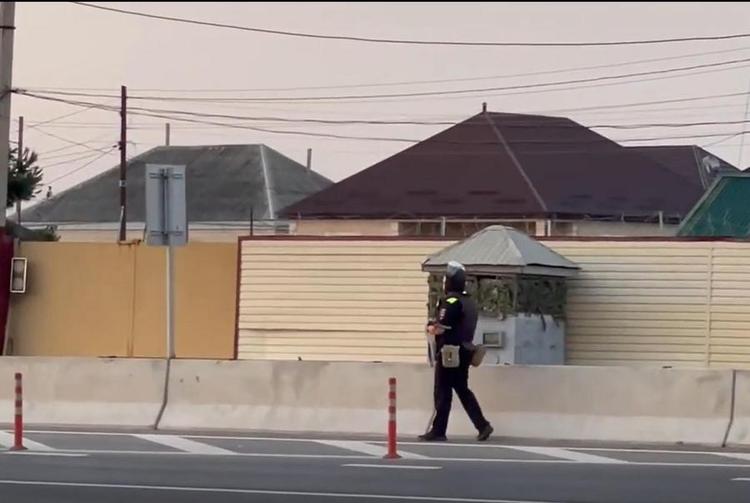
    MOSCOW,:  (Xinhua)/Flowerbudnews : — At least 15 police officers were killed in a series of attacks in southern Russia’s Republic of Dagestan, RIA Novosti reported on Monday, citing local authorities.

    The shootings, which also resulted in civilian casualties, occurred on Sunday at two orthodox churches, a synagogue and a traffic police post in the coastal city of Derbent and Dagestan’s capital city of Makhachkala, said the report.

    Sergei Melikov, head of the Republic of Dagestan, said that the situation has been brought under control. The fire ignited during the attacks at the synagogue in Derbent has been completely extinguished.

    “Six armed attackers have been killed,” Melikov said on social media, adding that law enforcement officers will continue the manhunt until all participants in the terrorist attacks are captured.

    The Russian Investigative Committee has initiated criminal cases under the article related with terrorist attack on the shootings and a counter-terrorist operation regime was introduced in Dagestan, according to the National Anti-Terrorism Committee.

    Dagestan, located in North Caucasian region, is one of the country’s most linguistically and ethnically diverse regions.

    Following the attacks, Alexander Boroda, the president of the Federation of Jewish Communities of Russia, called on people not to respond to provocations that could result from the attacks in Dagestan, TASS news agency reported.

    All entertainment events in Makhachkala and Derbent have been canceled until further notice, according to local authorities.

    On March 22, a terrorist attack at Moscow’s Crocus City Hall concert venue, followed by a massive fire, resulted in at least 144 deaths and 551 injuries, according to official statistics.¤

  • China strongly warns against crossing Taiwan red line

    China strongly warns against crossing Taiwan red line


    BEIJING,: (Xinhua)/Flowerbudnews: — A Chinese foreign ministry spokesperson stated on Monday that no country, organization, or individual should think they can cross the red line on the Taiwan question without facing consequences.

    On June 21, the Chinese foreign ministry announced its decision to take countermeasures against U.S. arms dealer Lockheed Martin Corp. and its executives.

    In response to a related query during a daily press briefing, spokesperson Mao Ning said the U.S. arms sales to Taiwan have seriously violated the one-China principle and the three China-U.S. joint communiques, meddled in China’s internal affairs, and undermined China’s sovereignty and territorial integrity. She added that China has taken countermeasures against the relevant company and its executives involved in the arms sales in accordance with the law.

    Mao emphasized that the Taiwan question is at the very core of China’s core interests and the first red line that cannot be crossed.

    “No country, organization or individual should underestimate the strong determination, firm will and strong ability of the Chinese government and the Chinese people to defend national sovereignty and territorial integrity, and should not dream of crossing the red line on the Taiwan question without paying a price,” Mao said.