


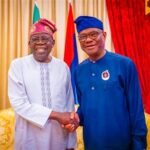





Actor Urges Makinde to Create Ministry of Creative Economy
By Oluwaseyi Oduneye – Ogunwomoju
An actor, Babatunde Ojobaro, popularly known as Mister Rain, has called on the Oyo State Government to establish a Ministry of Creative Economy, Arts and Culture.
Ojobaro said the creative industry would thrive better if given a dedicated place in the state’s governance structure.
He made the call while speaking on the need for deliberate policies to harness the economic potential of the creative industry in Oyo.
According to him, Lagos State has made significant progress in the creative sector because of the structures and policies put in place by its government.
“One of the smartest decisions Lagos made was separating the creative industry from Youth and Sports and giving arts, culture, tourism and the creative economy a dedicated place in government.
“Creativity stopped being treated as entertainment and started being treated as an economy,” he said.
Ojobaro urged the Oyo Government to emulate such a structure to maximise the state’s creative talents.
He said the creative industry was currently domiciled under the Ministry of Youth and Sports, whose responsibilities also included sports competitions, youth programmes and sporting infrastructure.
“There is absolutely nothing wrong with sports, but sports and the creative industry are two different economies with different needs, stakeholders and growth strategies.
“A ministry focused on football cannot simultaneously build policies for film, theatre, music, comedy, radio, television, fashion, publishing, digital content, animation, gaming and cultural tourism,” he said.
The actor said the creative industry deserved more than occasional concerts and event sponsorship, stressing the need for policies capable of accelerating its growth.
He described Oyo as an economic goldmine, given its population, market and large youth population.
“Oyo State is not a small market. It has one of Nigeria’s largest economies, with an estimated GDP of over N6 trillion, a population of more than eight million people, and one of the country’s largest youth populations.
“Now imagine if even a fraction of that economy is intentionally driven through creativity,” he said.
Ojobaro said Nigeria’s creative economy was already contributing significantly to the national economy and providing livelihoods for millions of people.
He noted that cities across the world were investing in film, music, gaming, fashion and cultural tourism because creativity had become a major economic sector.
“Why should Oyo State be left behind?” he asked.
The actor, who is also a movie director, suggested that if establishing a new ministry was not immediately feasible, the governor should appoint two Special Advisers with backgrounds in the creative industry.
“We’ll need a Special Adviser on Creative Economy and a Special Adviser on Arts, Culture and Entertainment.
“These should be experienced practitioners who understand both creativity and business; no political appointments, please.
“Their jobs should be simple: build policy, attract investment, develop talent and create opportunities,” he said.
Ojobaro said such measures would help create jobs for young people, increase internally generated revenue through tourism, hospitality and entertainment, and attract film productions, music festivals and other creative investments to Ibadan.
He added that the initiative would also promote cultural tourism around theatre, festivals and heritage sites, while positioning Ibadan as a major creative production hub.
The actor, however, urged creatives to take responsibility for developing the sector rather than waiting entirely for government intervention.
“We must build businesses, own intellectual property, embrace AI and digital distribution, collaborate more and think beyond local fame.
“Ibadan has the talent, history, institutions and the audience.
“What it needs now is intentional leadership and a creative ecosystem that sees entertainment not as a programme to sponsor but as an economy to build,” he said.
Ojobaro said the future of the state’s creative industry should not be measured by the number of concerts sponsored by government, but by the extent to which creativity was integrated into economic planning.
“When government invests in the creative economy, it is not investing in events. It is investing in jobs, wealth, tourism, culture, global relevance and the future of Oyo State,” he said.
2026-09-26