

Year: 2026

  • President Tinubu’s donation of salaries to the armed forces shows an unwavering commitment to national security-Group

    President Tinubu’s donation of salaries to the armed forces shows an unwavering commitment to national security-Group


    By Iyiola Olalere

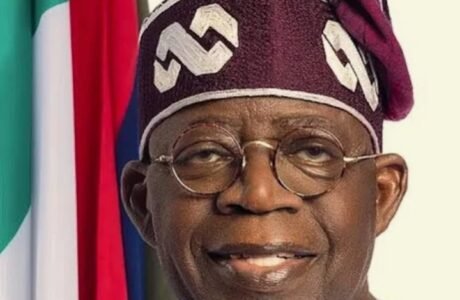
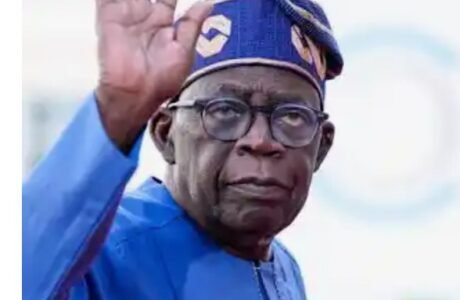
    The Tinubu Media Volunteers (TMV) has described President Bola Tinubu’s decision to donate his annual salary to the Nigerian Armed Forces as a clear demonstration and commitment to the well-being and welfare of the personnel of the security agencies.

    The statement, signed by its Chairman, Chukwudi Enekwechi, and Secretary, Segun Ogedengbe, also noted that it was a sign of the President’s personal concern about the security challenges afflicting the country.

    “We note that President Bola Tinubu, had as part of the activities marking his 74th birthday celebration, announced the establishment of a dedicated welfare fund to support the members of the armed forces, particularly those wounded in the line of duty, as well as the families of the fallen heroes.

    “It is also acknowledged that he directed the Accountant-General of the Federation to create the special account to care for the injured service members, their widows, dependents and children.

    “We consider this show of compassion on the part of the President as a sign of his determination that those who sacrifice their lives in the service of the country are not abandoned, neglected or forgotten.

    “For President Tinubu to shun any fanfare associated with birthday celebrations but rather opt for a sobering moment for introspection is worthwhile and a sign of statesmanship.
    “Similarly, the President has implored the private sector, well-to-do individuals, National Assembly members and well-wishers to contribute to the fund.

    “With this gesture, there is no doubt that he has discharged his solemn obligation as the country’s leader to show that Nigerian patriots who devote their lives to the service of the country will always be remembered dead or alive.
    “We also acknowledge that by doing so the administration is proving that their selfless service will be matched with dignity, care, and institutional support,” the statement added.

    The group commended the President for setting a good example by sowing a seed into the fund with all his annual salaries since 2023.

    End

  • My response to Peter Obi’s media people:

    My response to Peter Obi’s media people:


    By Bayo Onanuga

    I wonder why all these incompetent politicians are turning President Bola Tinubu into their favourite whipping boy. The President has nothing to do with Obi’s abandonment of the Labour Party or the jam he appears to have run into in the ADC.

    After using the Labour Party to vie for the highest office in the country, Obi dumped it in a classic case of use-and-dump. He failed to demonstrate leadership in resolving the party’s crisis.

    Instead, he went to the embrace of his IPOB base, the so-called Obidient movement, which is more active online. You would think the man would transform the movement into a political party. But no, he didn’t do any such thing. He is just incapable of building an organic party of his own.

    Because he knows he needs a political structure to realise his doomed dream of winning the presidency, he shopped for a cooked soup to partake in the ensuing party. The peripatetic politician moved to the hijacked ADC, an SPV bought by Atiku Abubakar from Ralph Nwosu. No due diligence appeared to have been conducted by the new owners, and thus, the nightmare they are confronting today.

    What is the connection of Tinubu with the ADC crisis? Absolutely none. Whatever problem they have is self-inflicted. Obi and his co-travellers need to get their acts together, clear the mess in their new party and then compete for the presidential ticket. Let them go and settle with Nafiu Gombe and other disenchanted ADC members. As of now, Obi, without being made a candidate, is inconsequential for 2027. The fact that he came third in 2023 does not mean he will have the same showing in 2027, if he ever becomes a candidate of any party. 2023 is not like 2027. President Tinubu is an incumbent with many achievements to flaunt, most of which Obi has been blind to acknowledge. First things first. Let the man become a candidate first. All this blackmail against the President is sheer baloney, a very unfair attempt to besmirch his democratic credentials.

  • Five Chinese Initiatives as Bedrock for Building a Shared Future for Mankind

    Five Chinese Initiatives as Bedrock for Building a Shared Future for Mankind


    By Lawal Sale

    In 2013, during his first official foreign trip as President of the People’s Republic of China, Xi Jinping introduced a new vision to the world while delivering a lecture at the Moscow Institute of International Relations (MGIMO). That vision was ‘building a global community with a shared future for mankind’. The idea of President Xi’s thought was to shape a new model of international relations at a time when protectionism and global instability were accelerating at an unprecedented speed.

    Similarly, in the same year, 2013, during his visit to Central and Southern Asia, President Xi unveiled the Belt and Road Initiative (BRI), which is widely regarded by experts as the first in a series of initiatives that are shaping the future of humanity today.

    In continuation with his vision for humanity, President Xi introduced four another series of important global initiatives, namely: -the Global Development Initiative in 2021, -the Global Security Initiative in 2022, -the Global Civilization Initiative in 2023, and -the Global Governance Initiative in 2025.

    Global South experts are of the view that these noble initiatives represent a coherent, layered strategy by the Chinese leadership to reshape a global system that is facing turbulence and uncertainties. They described the initiatives as pillars of China’s contemporary foreign policy and its vision for global order. Together, the initiatives aim to promote development and stability worldwide, particularly across the Global South.

    WHAT THE INITIATIVES MEAN FOR THE FUTURE OF MANKIND:

    In a clear and succinct effort, BRI, GDI, GSI, GCI, and GGI were proclaimed as drivers of development, stability, cooperation, and good governance for the shared future of mankind. Together, they reflect China’s vision of building a more inclusive and balanced international order, grounded in respect for sovereignty, non-interference, and mutually beneficial cooperation among Global South nations and the wider global community.

    As noted by the United Nations Secretary General Antonio Guterres, the initiatives proposed by China are totally compatible with the UN Charter. Notably, many countries view them as pragmatic and constructive solutions to the turbulence and uncertainties ravaging the global space.

    As global development continues to face challenges characterized by the widening North-South divides and compounded by food and energy crises, it has been established that more than 1 billion people around the world live in extreme poverty, while armed conflicts and unnecessary wars are also on the rise, causing loss of lives and displacement of people from their homes. Free trade infringement, sanctions, and bullying are on the increase, while hegemonism, unilateralism, and protectionism are resurging, placing multilateralism under growing pressure.

    Global South experts believe that the vision of building a community with a shared future for mankind aligns with broader trends of social development, emphasizing peaceful coexistence where all countries are treated equally and none should be left in isolation.

    There upon, many countries and regions around the globe are already working with China on building communities with shared futures in various forms. Significant achievements have also been recorded in human nature relations, humanitarian development, security, and infrastructure development.

    China has just begun the journey into its 15th Five-Year Plan period (2026-2030), and it is advancing steadily. The country has committed to serve as an anchor of certainty in an uncertain world; and as a source of stability for the future of mankind. According to its leadership, China will work with all interests to turn the vision of a community with a shared future for mankind into reality, with the sincere commitment to contribute to global development and progress for humanity.

    THE FIVE NOBLE INITIATIVES AND PURPOSES FOR THE GLOBAL FUTURE:

    (I) Belt and Road Initiative (BRI):

    It was unveiled by President Xi in 2013. Since inception, more than 152 countries and organizations have incorporated into its schemes including G20, Asia Pacific Economic Cooperation (APEC), South East Asian Nations (ASEAN), Forum on China-Africa Cooperation (FOCAC), Shanghai Cooperation Organisation (SCO) among others. BRI has also become a platform for achieving the United Nations 2030 Agenda for Sustainable Development.

    Popularly known as “New Silk Road,” BRI focuses on global connectivity, infrastructure development financing, and the promotion of multilateral cooperation among member countries.

    Often called the “project of the century”, BRI involves Chinese companies and investors financing the development of infrastructure around the globe such as ports, railways, power plants, highways, telecommunications, and building of dams.

    Notable BRI completed and on-going projects are the China-Laos Railway, Hungary-Serbia railway, Lagos Lekki deep seaport, Addis Ababa-Djibouti Railway, Nairobi-Mombasa railway, China-Europe freight train, China-Pakistan Economic Corridor, and China-Kyrgyzstan-Uzbek railway.

    (II) Global Development Initiative (GDI):

    This initiative was launched in 2021 with the aims of accelerating the UN’s 2030 Agenda for Sustainable Development (SDG’s) and to promote a people-centred and practical model of international development. As noted by President Xi Jinping, development holds the master key to solving all challenges.

    GDI is a contribution of Chinese wisdom and solutions to advancing global development and directly addresses the real challenges and inclusive global growth.

    In more than a decade, out of 169 specific targets of the 2030 SDG Agenda, many are stalled, with only about 35 per cent achieved, while about half are progressing slowly and 18 per cent regressed.

    As a result of the slow progress of the 2030 Agenda for SDG’s, the GDI was on hand to support the timely implementation of the Agenda’s goals by revitalizing global development partnership, promoting stronger, greener and healthier global communities.

    Over the years, the GDI has garnered support from more than 100 countries and international organizations, while about 70 countries have collectively joined the GDI Group of friends at the United Nations.

    (III) Global Security Initiative (GSI):

    Launched in 2022, the core idea of this initiative was to confront the emerging global security situation, aligning with the shifting international landscape by uniting the global community. The initiative emphasizes dialogue, mutual respect, and peaceful resolution of disputes.

    As President Xi noted, the Cold War mentality would only wreck the global framework, hegemonism and power politics would further endanger world peace, and bloc confrontation would only exacerbate security challenges in the 21st century. However, this observation offers profound insights on the root causes of the global security predicament.

    Typically, China has always been active in promoting dialogue wherever there is conflict, and it is the largest contributor with peacekeeping forces among the UN Security Council permanent members.

    China has also leveraged mechanisms such as the Shanghai Cooperation Organization and others to steadily contribute to regional stability.

    Specifically, there are “six basic commitments,” put forward by President Xi, including respect for sovereignty and territorial integrity, abiding by the UN Charter, peacefully resolving disputes, and maintaining security in traditional and non-traditional spheres.

    It indisputable that China’s concrete peace efforts were evident in the China brokered Saudi-Iran reconciliation deal and the recent China-Pakistan peace efforts that proposed five-peace initiatives to de-escalate the conflict in Iran and the Gulf arising from the attack on Iran by the U.S. and Israel. These are yet another important public good initiated by China for the world.

    (IV) Global Civilization Initiative (GCI):

    It is the third in President Xi’s series of four global initiatives after the BRI that were designed to manage different aspects of the global system.

    According to experts, GCI is the most philosophical of the initiatives before it. Launched in 2023, it advocates for respect for diversity of civilizations and rejects the hierarchy of values or the imposition of one civilization’s norms on others. For instance, some countries at present, pursue unilateralism and protectionism, clinging to the theories of the “clash of civilizations” and “civilizational superiority.”

    In response to these pressing global challenges, GCI offers a shared cultural foundation for countries to address their common struggles.

    GCI can be summed up into four advocacies: to respect the diversity of civilizations, to uphold the common values of humanity, to attach importance to inheritance and innovation of civilizations, and to strengthen international people-to-people exchanges and cooperation.

    (V) Global Governance Initiative (GGI):

    Unveiled in 2025 by President Xi during the occasion of the Shanghai Cooperation Organization (SCO) summit in Tianjin. Over the meeting, President Xi spiritedly delivered a very important historic declaration to the audience comprising leaders of countries of about half of the world’s population.

    The title of his statement was “Pooling the strength of the Shanghai Cooperation to improve Global Governance”. President Xi then unveiled a sweeping proposal for a new global order themed: “Global Governance Initiative (GGI)”, positioning it as a blueprint for fairness, and more inclusive international cooperation where all nations and people will be equal.

    According to President Xi, the proposed GGI was equally to promote the building of more just and equitable global governance system and work together for a community with a shared future for humanity.

    He called on nations to embrace multipolarity and reject hegemonism, maintaining that China is ready, together with all parties to uphold courageously the great principle and the common good of the world that will promote the correct historical perspective on World War II, resolutely safeguard the fruits of victory.

    GGI came at a time the global stage is experiencing uncertainties and turbulence to the extent that the UN and multilateralism as its principles are being challenged. GGI comprises of “Five Core Concepts” which include: Adherence to sovereign equality, Staying committed to international rule of law, Staying committed to multilateralism, Adhering to people-centred approach, and Focusing on taking real actions/results.

    Global South experts are of the view that the unveiling of the GGI was timely, at a time when the world is fraught with armed conflicts, particularly in Gaza, Ukraine, Sudan and Iran/Gulf region.

    Unequivocally, the introduction of GGI to the world by President Xi, will open more opportunities and strengthen institutions for the Global South nations in areas of good governance, security, development finances, technology transfer, corporate digitization, agro-economy, green economy, and skill training.

    It will also encourage stronger representation in Global Affairs, in particular South-South cooperation, just as most of the western powers dominate major multilateral institutions in global economic and financial governance. Global South accounted for about 80 percent of the world’s population and over 40 percent of economic output, yet it remains underrepresented in international institutions.

    CONCLUSION:

    Taken together, the five initiatives form a comprehensive framework for addressing development, security, governance, and cultural cooperation in an interconnected world. They offer pathways for inclusive globalization and stronger South-South cooperation.

    For the Global South, these initiatives provide opportunities to close development gaps, strengthen infrastructure, enhance peace and stability, and increase representation in global decision-making.

    — Sale is Abuja based Global South Affairs Analyst (lawalmaida1@yahoo.com)

  • Venezuela’s Delcy Rodríguez remain Venezuela’s acting president after her initial 90-day limit Expired

    Venezuela’s Delcy Rodríguez remain Venezuela’s acting president after her initial 90-day limit Expired


    CARACAS, Venezuela (AP) — Delcy Rodríguez remained Venezuela’s acting president on Monday, exceeding the 90-day limit on her temporary role set by the country’s high court following the U.S. capture of Nicolás Maduro in January.

    However, it’s unclear how much longer she will keep the post as lawmakers have not taken a public vote to extend her term past last Friday’s deadline.

    According to the court order, Maduro is still officially Venezuela’s president and his “forced” absence resulting from a “kidnapping” makes it temporarily impossible for him to fulfill his duties.

    Under Venezuela’s constitution, according to an article referenced by the court, temporary absences are to be filled by the vice president — which was Rodríguez’s former role — for up to 90 days. These interim appointments can be extended by the national assembly for an additional 90 days.

  • UN’s Top Post and Ndayishimiye’s Scandalous AU Ambush

    UN’s Top Post and Ndayishimiye’s Scandalous AU Ambush


    By Paul Ejime

    When Burundi’s tenth President, Évariste Ndayishimiye, 57, was elected Chairperson of the African Union (AU) last February, many political commentators paid little attention. It was only for one year and a routine rotational position of limited significance.

    The former military rebel leader is now using the position for self-aggrandizement, rubbishing his country, which gained political independence before his birth, and attracted international infamy to Africa’s foremost political body, a successor to the Organisation of African Unity (OAU), formed in 1963, and which fought for the liberation of African countries.

    Despite Ndayishimiye’s promises of reform, “Burundi remains a nation plagued by human rights violations, political repression, and a culture of impunity, with reports from Amnesty International, Human Rights Watch, and the United Nations (citing) continued atrocities, including extrajudicial killings, enforced disappearances, sexual violence, and severe restrictions on civil society and the media.”

    But that is not the focus of this article. Ndayishimiye has hogged the spotlight and brought public scrutiny upon himself, for all the wrong reasons, over his scandalous and non-procedural attempt to make former Senegalese President Macky Sall, a man with unsavoury political baggage, the AU candidate for the United Nations Secretary General’s position through the “backdoor.”

    According to diplomatic sources, the Permanent Mission of Burundi to the UN in New York, in a Letter dated 2 March 2026, addressed to the Presidents of the UN General Assembly and the UN Security Council, said that Sall had been nominated as a candidate for the UN’s top job.

    The letter read in part, “…my government, current Chair of the African Union, nominates His Excellency Macky Sall, former President of the Republic of Senegal, for the position of Secretary-General of the United Nations.”

    This came as a surprise to the diplomatic World and many African heads of state and government, who were not consulted before this important decision.

    To further compound the situation, President Ndayishimiye himself was reported to have attempted to force the hands of his colleagues to approve Sall’s nomination in flagrant violation of the AU procedure, by convening a poorly attended meeting, giving member states a “24-hour silence response” to rubber-stamp  Sall’s nomination for the UN top job.

    This has elicited outrage, with Nigeria and Senegal, Sall’s country, among AU member states that have taken strong exception to the diplomatic travesty and distanced themselves from the Burundi President’s plot.

    Sall was Chairperson of the AU from 2022-2023. He and Ndayishimiye cannot claim ignorance of the AU’s time-honoured tradition and procedure for the nomination of candidates to represent Africa in international organisations.

    The Burundi Permanent Representative, by writing to the UN in the name of the AU without prior consultation, and Ndayishimiye, to bend the rule by convening a kangaroo meeting for a fait accompli, is a slap in the face for Africa, by a leadership arrogance that must be purged. A continental organisation cannot be run as a personal fiefdom.

    Furthermore, under an unwritten agreement by the continents at the UN, it is Latin America’s turn to produce the next UN Secretary General. Two prominent Africans – Boutros Boutros-Ghali of Egypt, and Ghana’s Kofi Annan, had served the world body in that capacity without controversy. By breaking a standing accord at an international forum, Africa will make itself vulnerable and untrustworthy.

    Despite the failed attempt to con the AU, Sall and his supporters are doubling down in pursuit of the UN top job.  While it may be within his rights to pursue an ambition, he must earn or obtain official approval to represent Africa at an international organisation.

    Denying Senegal’s possible accomplice in the plot, the country’s Foreign Minister Cheikh Niang has told the local press that Sall’s UN candidature was not submitted by Senegal, which “was not involved in the process”.

    Also, to democracy advocates and his opponents, Sall should not represent Africa in an international organisation like the UN, given his political baggage and alleged atrocities committed, especially towards the end of his term of office.

    Sall had opposed the third-term plan of his predecessor, former President Abdoulaye Wade, but was prevented by Senegal’s resilient electorate from perpetuating himself in office.

    At a press conference in Dakar last week, Pape Abdoulaye Touré of the “Families of Martyrs Collective” accused Sall of “attempting to take refuge at the UN to escape prosecution,” adding that “he does not deserve to be the UN Secretary General.”

    Similarly, a Senegalese ruling party MP, Guy Marius, said: “We cannot accept that the UN be a ‘laundering facility’ for crimes of bloodshed and economic crimes.”

    For the record, Ndayishimiye is among a few leaders, if not the only one, whose inauguration in June 2020 was not attended by any foreign leader. The COVID-19 pandemic was cited as the reason, but his role in the unfolding scandal speaks volumes.

    A former rebel military leader from the Hutu tribe, he began studying law at the University of Burundi in Bujumbura, but his education was cut short in 1995 because of the inter-ethnic violence that targeted Hutu students during the Burundian civil war (1993-2006).

    Ndayishimiye joined the moderate rebel group, the National Council for the Defence of Democracy – Forces for the Defence of Democracy or Conseil National Pour la Défense de la Démocratie – Forces pour la Defense de la Démocratie, (CNDD–FDD), which was supported mainly by the Hutu population.

    After the war, the CNDD-FDD fighters were integrated into the Burundian Army, with Ndayishimiye rising through the ranks and holding senior positions such as Chief of Staff for Human Resource Management and Quartermaster.

    When the CNDD-FDD morphed into a political party in 2003, Ndayishimiye served as Minister of Interior and Public Security (2006-2007) and later became Chief of Military Cabinet to President Pierre Nkurunziza, a position he held until 2024, when he also obtained a degree from Burundi’s Wisdom University of Africa, and chaired his country’s National Olympic Committee.

    In 2018, Nkurunziza said he would not seek a fourth term and endorsed Ndayishimiye as the CNDD-FDD’s candidate for the May 2020 presidential election. Ndayishimiye claimed victory with about 68% of the vote for a seven-year initial mandate, although the opposition alleged that the election was flawed with irregularities.

    Nkurunziza was due to step down in August 2020; however, due to his sudden death in June, Ndayishimiye was sworn into office earlier than scheduled, even though under Burundi’s 2018 Constitution, “the Vice President of the Republic carries out the management of standard affairs” in the event of the death or absence of the elected president.

    Nkurunziza reportedly died from COVID complications, so attendees of Ndayishimiye’s inauguration were told to arrive early for the coronavirus measures – but once in the stadium, there was no social distancing.

    The World may be facing an assault on and disregard for international law and the normalisation of abnormalities. Still, the Burundian president’s utter disregard for the AU and Africa’s estimated 1.3 billion people should not be swept under the carpet, and the continent risks losing what is left of its relevance in international affairs.

    The current AU Commission Chairperson, Djibouti’s Mahmoud Ali Youssouf, has not been forceful in denouncing a plot to undermine the continental body, beyond a statement saying that the “draft decision tabled by the AU chairperson (Ndayishimiye) has not been adopted.”

    Ndayishimiye and Sall, with their supporters, whoever they may be, cannot take the continent for a ride, or they would set a dangerous precedent.

    Burundi is not Africa, and selfish, self-serving, corrupt, compromised, transactional and arrogant African rulers must learn that the continent and its people are more important than those who wield transient power.

    **Ejime is a Global Affairs Analyst and Consultant on Governance Communication*

  • Atiku Lobbying Misplaced: Zoning Convention Remains Albatross – Okechukwu

    Atiku Lobbying Misplaced: Zoning Convention Remains Albatross – Okechukwu

    Atiku Lobbying Misplaced: Zoning Convention Remains Albatross – Okechukwu


    Mr Osita Okechukwu, a Fellow of Nigeria Institute of Public Relations (NIPR) and a Chieftain of the All Progressives Congress (APC,) has expressed concern that the international lobbying strategy recently employed by former Vice President Atiku Abubakar, may not address the zoning convention which is the political albatross at home.


    Okechukwu, who is the former Director-General of the Voice of Nigeria (VON), said this on Monday in Enugu while responding to questions from journalists on the report that His Excellency, Atiku Abubakar, had engaged a Washington-based lobbying firm – Von Batten-Montague-York, L.C. – to enhance his international profile.


    He noted that while reputation management is a major tool in modern politics; however it cannot substitute for resolving the lingering issue of his blatant refusal to accept the zoning convention of rotation of president from north to south and vice versa.


    “One holds His Excellency Atiku Abubakar in high regard, especially given his longstanding political associations with my elder brother, Honourable Dubem Onyia of blessed memory; however, it is pertinent to recognise that domestic political conventions like rotation of power cannot be effectively addressed through external image-building alone.


    “For going by our local wisdom, it is illogical to go to Sokoto to look for what is in one’s Chokoto or Babaringa dress.


    “Was it not because of Zoning Convention that he stormed out of PDP in 2014? Is it not because of Zoning Convention that no Southern presidential aspirant contested in PDP’s presidential primary in 2018, where Waziri Adamawa triumphed?


    “Simply Zoning convention is in Atiku’s Babaringa, was his main albatross in 2023 presidential election, as it is today.” Okechukwu noted.


    He submitted that it is important to once again remind Atiku’s handlers that majority of Nigerians since the advent of the 4th Republic in 1999 hold fast and resolved that for fairness, brotherhood, inclusion, unity and harmonious existence of our dear country that power should rotate from north to south and vice versa.


    Okechukwu admonished that they should not gloss over the historical fact that without the zoning convention, which Northern political stalwarts like flamboyant Abubakar Rimi, Adamu Ciroma, Umaru Shinkafi, Dr Sola Saraki obeyed, Atiku could not had been Vice President in 1999.


    “Ultimately, sustainable political acceptance is built on trust, inclusiveness, and respect for established conventions. These are the foundations upon which lasting leadership is achieved,” he said.


    It is reported that the international lobbying strategy agreement is valued at $1.2 million, going by documents filed with the U.S. Department of Justice, signed on March 9 and 10, 2026, by the firm’s managing partner, Karl Von Batten, and Nigerian politician, Fabiyi Oladimeji, that represented Atiku.

  • Photo News: Dazzling Images from NAFDAC Stakeholder Engagement on Dangers of Excessive intake of Sodium

    Photo News: Dazzling Images from NAFDAC Stakeholder Engagement on Dangers of Excessive intake of Sodium


    (NAFDAC DIRECTOR GENERAL PROF MOJISOLA ADEYEYE actively participating in the stakeholders engagement)

    (Participants at the NAFDAC stakeholders engagement)

    (Participants stood for national anthem, pledge)


    (NAFDAC DG, Prof. Adeyeye in group photograph with participants)

    (Participants in a group photograph)


    By Biola Lawal
    Lagos (FLOWERBUDNEWS): The Director General of the National Agency for Food and Drug Administration and Control (NAFDAC)

    held an interactive Parley with its stakeholders on the need for reduction of sodium, especially, in prepacked foods.

    The all-important engagement was personally attended by the NAFDAC Director General,


    Prof. Mojisola Christiana Adeyeye, who used the occasion to caution Nigerians

    against excessive intake of sodium to prevent premature deaths from non- communicable diseases.

    She had disclosed that excessive intake of sodium has been confirmed as one of the major factors

    responsible for diet-related non-communicable diseases, such as

    hypertension, cardiovascular diseases, and

    stroke which are on the rise globally and within Nigeria

  • PRES. TINUBU APPROVES N3.3 TRILLION PAYMENT PLAN TO RESTORE RELIABLE ELECTRICITY

    PRES. TINUBU APPROVES N3.3 TRILLION PAYMENT PLAN TO RESTORE RELIABLE ELECTRICITY


    By Iyiola Olalere

    Abuja (FLOWERBUDNEWS): President Bola Tinubu has approved the payment plan to finally settle the outstanding debts under the Presidential Power Sector Financial Reforms Programme.

    The debt repayment plan followed the final review of the legacy debts that have beset the power sector for more than a decade, a statement by Bayo Onanuga, Special Adviser to the President on Information and Strategy.

    The long-standing debts accumulated between February 2015 and March 2025. Following verification, ₦3.3 trillion has been agreed as a full and final settlement, ensuring a fair and transparent resolution.

    Implementation has begun, with 15 power plants signing settlement agreements totalling ₦2.3 trillion. The Federal Government has already raised ₦501 billion to fund these payments. Out of the amount, N223 billion has been disbursed, with further payments underway.

    What this means for Nigerians: With payments reaching the power value chain, generation will be more stable. With power plants supported, electricity reliability will improve.

    And as the sector stabilises, more investment, more jobs, and better service will follow.

    “This programme is not just about settling legacy debts. It is about restoring confidence across the power sector — ensuring gas suppliers are paid, power plants can keep running, and the system begins to work more reliably,” explained Olu Arowolo-Verheijen, Special Adviser on Energy to President Tinubu.

    “It is part of a broader set of reforms already underway — including better metering and service-based tariffs that link what you pay to the quality of electricity you receive.

    “The government is also prioritising power supply to businesses, industries, and small enterprises — because reliable electricity is critical to creating jobs, supporting livelihoods, and growing the economy.

    “The goal is simple: more reliable power for homes, stronger support for businesses, and a system that works better for all Nigerians,” she added.

    President Tinubu has commended all stakeholders who supported efforts to resolve the legacy issues in the power sector. He has also confirmed that the next phase (Series II) will begin this quarter.


  • TMSG to ADC: You are a motley crew of power mongers, palace jesters

    TMSG to ADC: You are a motley crew of power mongers, palace jesters

    TMSG to ADC: You are a motley crew of power mongers, palace jesters

    The Tinubu Media Support Group (TMSG) has said it is the African Democratic Congress (ADC), a gang of failed, power-mongering politicians, not the All Progressives Congress (APC ) that is the real threat to democracy in the country.

    The group said that it is not surprised that many Nigerians are gravitating towards the All Progressives Congress (APC) because they have seen a political party that knows the road to the nation’s prosperity.

    In a statement signed by its Chairman Emeka Nwankpa and Secretary Dapo Okubanjo, the group argued that if the opposition party truly seeks to be considered as a credible alternative to the ruling party, it should put forward individuals who have never held public office.

    This, according to the group, is because many of those fronting as ADC leaders have held political office without a meaningful track record and extraordinary performance.

    “We have noticed how leaders of the African Democratic Party (ADC) have continued to posture, presenting themselves as credible alternatives to the ruling party but many of them who have held public office since 1999 failed woefully sinking the country into deeper depths of misery.

    “We invite Nigerians to exhume and scrutinise the antecedents of these politicians, right from the party chairman, Senator David Mark to the National Secretary, Rauf Aregbesola, and to former Vice President Atiku Abubakar who have held various political offices. Worse are some others in ADC’s front row whose woeful performance makes a huge mockery of their current de-marketing of the performing APC.

    “While it may be easy to fool younger Nigerians, we believe that many people who are old enough to witness the current democratic dispensation know those to be considered as real threats to democracy.

    “So we are not surprised that more Nigerians see APC as a better option especially as President Bola Tinubu’s bold reforms are gradually building a more resilient economy and turning things around to the utter chagrin of ADC members,” the statement added.

    The group cautioned that Nigerians should be wary of such failed politicians with no real history of achievements in public office.

    “We believe if leaders and members of ADC are really keen on proving that they are a different breed of politicians, they should put forward people without blemish and political baggage to run for office.

    “We dare say that a party that has former Vice President Abubakar and former Attorney General Abubakar Malami, for instance, among its ring leaders cannot really be taken seriously considering their lacklustre pedigree in office.

    “It is shocking that these are the people presenting themselves as worthy alternatives to the extent of calling APC a threat to democracy.

    “It should not surprise anyone that these people cannot even canvass and convince their children to join their political party. But what is surprising is their attempt to woo Nigerians to trust them with power at the centre,” it said.

    TMSG maintained that while ADC still has a long way to go if it truly wishes to unseat President Bola Tinubu and APC in 2027, the future of Nigerians and those yet unborn is too serious to be left in the hands of the opposition party which, at best, can be called a motley crowd of power mongers and palace jesters.

    End.