

Year: 2026

  • Gov. Adeleke Sacks Convicted Osun Monarch, Declares Stool Vacant

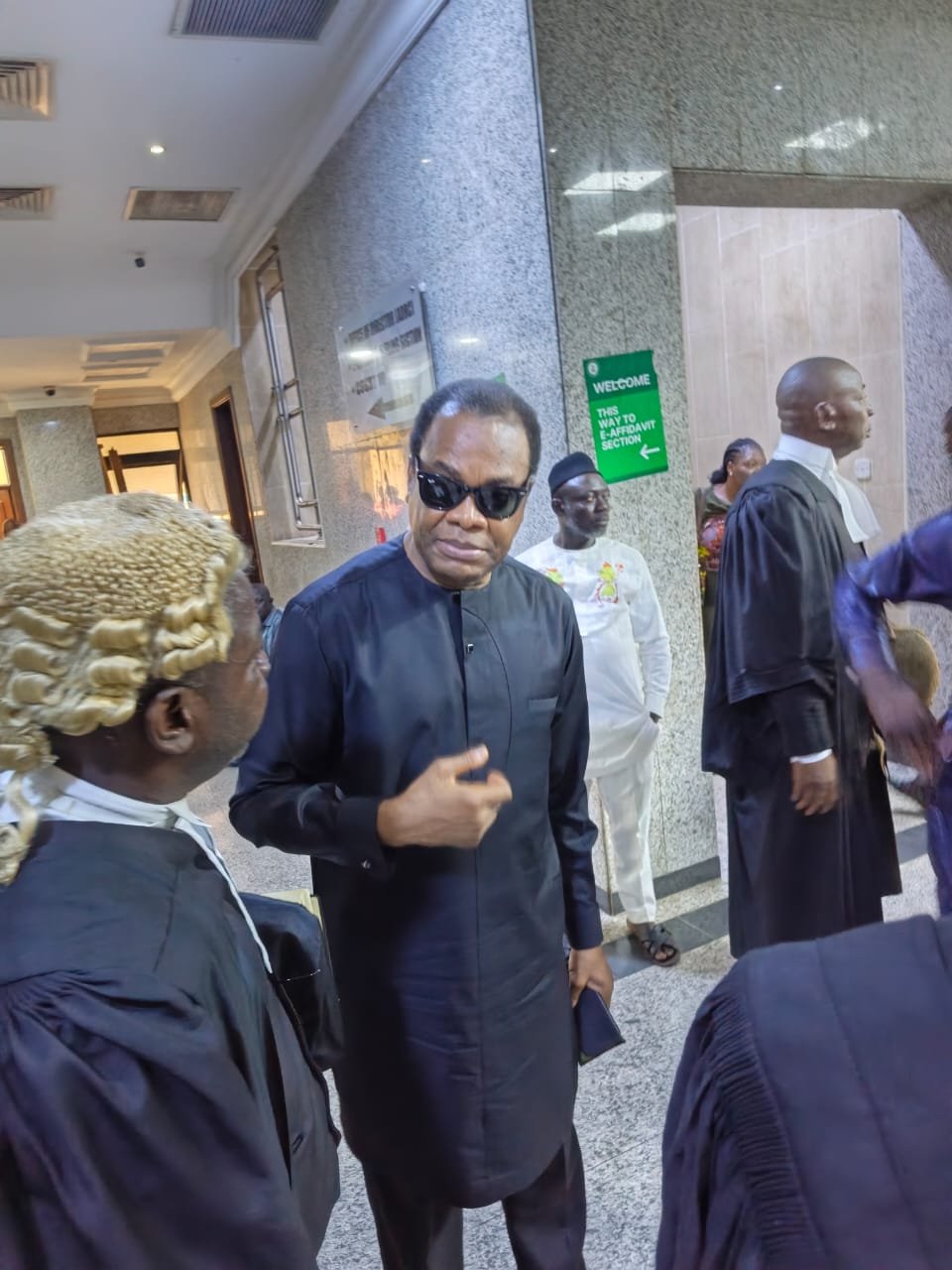
    Osun State Governor, Senator Ademola Adeleke has approved the deposition of Oba Joseph Oloyede as the Apetumodu of Ipetumodu in Ife North Local Government following his conviction in the United States of America on tax fraud and money laundering charges.


    In a statement issued by the spokesperson to governor, Mallam Olawale Rasheed on Monday, said the decision followed the receipt of the Certified True Copy of the Ohio court judgement which convicted the monarch.


    Part it the statement reads, “The Osun State Executive Council had resolved last year that the Ministry of Local Government should write the Ohio court to request for the Certified True Copy of the judgement to form the basis for the government action.


    “The Council had justified the decision to contact the Ohio court on the ground that governmental decision should not be based on social media reporting alone.


    “In the Deposition Order signed by His Excellency on 7th May, 2026, the action was predicated on the need to maintain peace, order and good government as well as preserve the honour and integrity of the royal stool.

  • PRESIDENT TINUBU APPOINTS MAJOR GENERAL FADEWA (RTD) AS SPECIAL ADVISER ON HOMELAND SECURITY.

    PRESIDENT TINUBU APPOINTS MAJOR GENERAL FADEWA (RTD) AS SPECIAL ADVISER ON HOMELAND SECURITY.


    By Biola Lawal

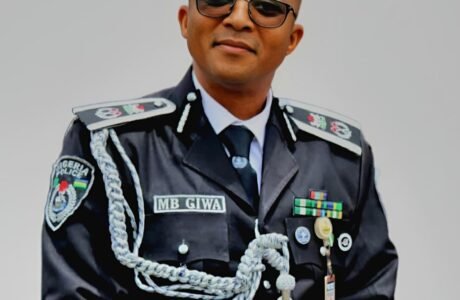
    Abuja: President Bola Ahmed Tinubu, has appointed Major General Adeyinka A. Fadewa (Rtd) as Special Adviser on Homeland Security, in recognition of his exceptional record of service, strategic expertise, and outstanding contributions to Nigeria’s national security architecture.

    A statement by the office of the Secretary to the Government of the Federation, said that the appointment underscored the commitment of the administration of Bola Ahmed Tinubu to strengthen internal security coordination and enhance intelligence-driven operations,

    The appointment ‘:is also designed to nd deepen inter-agency collaboration in addressing emerging security threats across the country”,  the statement signed by Chris Ugwuegbulam, Head, Information & Public Relations, disclosed on Monday.

    Major General Fadewa (Rtd) is a highly decorated retired General with over three decades of distinguished military and intelligence service spanning national security strategy, intelligence fusion, counter-terrorism operations, and international security diplomacy.

    His career reflects a rare blend of operational excellence, strategic foresight, and institutional leadership in safeguarding Nigeria’s territorial integrity and national interests.

    As Principal General Staff Officer to the National Security Adviser at the Office of the National Security Adviser (ONSA) from 2015 to 2021, he played a pivotal role in shaping Nigeria’s modern intelligence coordination framework.

    He spearheaded the establishment of the Intelligence Fusion Centre (IFC) at ONSA, creating an integrated multi-agency intelligence platform that brought together the Defence Intelligence Agency (DIA), National Intelligence Agency (NIA), Department of State Services (DSS), the Nigeria Police Force, and the Armed Forces to improve national threat assessment and strategic response coordination.

    Following his retirement from active military service, Major General Fadewa (Rtd) served as Senior Research Fellow at the Nigerian Army Resource Centre, Abuja, where he continued to provide strategic thought leadership on policing, civil-security cooperation, and national security reform.

    His scholarly contributions include the widely acclaimed monograph titled “Policing and National Security in Nigeria,” which offers practical frameworks for strengthening civil-security collaboration.

    President Tinubu expressed confidence that the appointment of Major General Fadewa (Rtd) would further enhance the administration’s efforts toward achieving a safer and more secure Nigeria through improved coordination of homeland security initiatives, intelligence integration, and proactive risk management.

    He also urged him to deploy his wealth of experience, professionalism, and strategic insight in advancing national security objectives and supporting the administration’s Renewed Hope Agenda.


  • Odinkalu Bags Award at America’s Influential University

    Odinkalu Bags Award at America’s Influential University


    *By Paul Ejime

    Chidi Anselm Odinkalu, a Nigerian lawyer, human rights activist and professor of international law, has clinched the 2026 Paddock Award at the U.S. Fletcher School of Law and Diplomacy, Tufts University, a leading institution for international relations and global affairs.

    Established in 1993 in memory of Professor James L. Paddock, the Award “recognizes exceptional teaching, deep subject mastery, and sustained commitment to students.”

    Odinkalu’s selection followed student nominations and was endorsed by the Student Council, reflecting direct classroom impact and influence on the intellectual and personal development of students.

    A former chairman of Nigeria’s National Human Rights Commission, Odinkalu,  recently served as the senior team manager for the Africa Programme of Open Society Justice Initiative, and is the current Pro-Chancellor/Chairman of Chukwuemeka Odumegwu Ojukwu University,  in Nigeria’s Anambra State.

    He has worked as an advisor to the Ford Foundation, New York, the World Bank, the African Union, the International Council for Human Rights Policy, Geneva, and in similar high-profile positions.

    In August 2021, the Fletcher School appointed him a Professor in Human Rights Law.

    A 1987 law graduate of Imo State University, Odinkalu was called to the Nigerian Bar in 1988. He obtained a master’s degree in law at the University of Lagos in 1990 and holds a PhD in law from the London School of Economics and Political Science.

    He has been leading a sustained advocacy for the reform of the judiciary in Nigeria and across Africa, through his tireless public engagements, seeking to bring lived experience into academic discourse, and to bridge the gap between theory and reality.

    Odinkalu is lauded by colleagues as a rounded scholar “who does not only teach law and policy but challenges assumptions, confronts uncomfortable truths, and equips students to engage critically with global justice systems.”

    Future diplomats, policymakers, and global leaders are trained at Fletcher, with an extended impact beyond the classroom, for greater understanding of justice, power, and responsibility.

    The Fletcher School in Medford, Massachusetts, is America’s oldest graduate school for international relations and global affairs.

    *Paul Ejime is a Global Affairs Analyst & Consultant on Strategic Governance Communication and Security*

  • KWASU to discontinue HND conversion programme

    KWASU to discontinue HND conversion programme

    Kwara State University, Malete, has announced plans to discontinue its Top-Up/HND Conversion programme from the 2025/2026 academic session in compliance with directives from the National Universities Commission.


    The institution disclosed this in a public announcement on Monday, signed by the Registrar, Kikelomo Sallee.


    According to the statement, the decision followed regulations issued by the National University Commission, the regulatory body for universities in Nigeria.


    “This is to inform the public that Kwara State University, Malete, will discontinue its Top Up/HND Conversion programme from the 2025/2026 academic session.

    This discontinuation is in compliance with the regulations of the National Universities Commission (NUC), the regulatory body for all universities in Nigeria,”the statement read.


    The university added that the NUC would later provide directives regarding students already enrolled in the programme.


    “The NUC will also give directives on the status of students already enrolled on the programme in KWASU in due course,” it added.


    KWASU reaffirmed its commitment to regulatory compliance and academic standards.

    Kwara State University, Malete, is firmly committed to ethical standards and abides by all the policies of the regulatory body,” the statement noted.


    The development comes weeks after the university secured full accreditation for nine undergraduate programmes during the NUC’s October/November 2025 accreditation exercise.


    In a statement issued by the Director of University Relations, Saeedat Aliyu, the university said the accreditation status was conveyed in a letter dated April 7, 2026, and signed by the NUC Director of Accreditation, Abraham Chundusu.


    According to the notice, “the full accreditation status is valid for the statutory period of three years.”


    The accredited programmes include Accounting, Banking and Finance, Business Administration, Environmental Health Science, English, Linguistics, Performing Arts, Computer Science and Microbiology.


    Reacting to the development, the Vice-Chancellor, Prof. Shaykh-Luqman Jimoh, described the accreditation as a reflection of the institution’s commitment to academic excellence.


  • Admissions outside CAPS illegal ‐JAMB

    Admissions outside CAPS illegal ‐JAMB


    By Jumoke Olaitan/Funmilayo Adeyemi

    Abuja:  The Joint Admissions and Matriculation Board (JAMB) has warned tertiary institutions against granting admissions outside the Central Admissions Processing System (CAPS), describing such practices as illegal.

    The JAMB Registrar, Prof. Ishaq Oloyede, gave the warning during the 2026 Policy Meeting on Admissions into Tertiary Institutions organised by the board on Monday in Abuja.

    Oloyede said some institutions were still issuing admission letters to candidates who had not been approved through CAPS, contrary to Federal Government directives.

    He noted that the practice undermined transparency in the admission process, adding that there were cases where candidates with higher scores were denied admission while those with lower scores were admitted.

    According to him, disciplinary actions have already been initiated against affected institutions, and sanctions will be applied.

    The registrar added that a case involving 11 universities over alleged illegal admissions was currently before the court.

    Oloyede also refuted claims that candidates were posted outside their chosen examination towns, explaining that candidates selected their preferred examination towns during registration and were only assigned to centres within those locations.

    He added that investigations into the complaints confirmed that no candidate was posted outside his or her selected examination town.

    He said the matter had also been reviewed by the Federal Competition and Consumer Protection Commission (FCCPC).

    He reiterated that all admissions into tertiary institutions must be processed through CAPS and urged institutions to strictly comply with approved admission procedures.(NAN)(www.nannews.ng)

  • Negotiation, only viable path to a stable Nigerian Union

    Negotiation, only viable path to a stable Nigerian Union


    *By Richard Ikiebe

    Public debate about Nigeria’s future has grown increasingly crowded with competing prescriptions. Two of the suggested remedies dominate the discourse: the demand for outright dissolution and the call for a Sovereign National Conference. Both are emotionally and politically potent. Neither is constitutionally valid, logically sustainable, nor practically persuasive. More critically, they distract from the real challenge, and, tellingly, from the people most responsible for the situation: the elite. Nigeria is now under heavy strain because its elites have repeatedly refused to complete the arduous work of negotiating it.

    A “Sovereign National Conference” is routinely invoked as though its utterance alone constitutes a solution. Such a conference would stand above the existing constitutional order, carrying authority to redesign the state and impose binding outcomes without reference to any prior legal framework. Nigeria has never convened such a conference in any strict sense. If we must be candid, we have lacked the discipline, the maturity, and the organisational capacity to manage such a process.

    What Nigeria has held, at various intervals, are consultative constitutional conferences, the kind that operate within established legal boundaries, generate proposals, and depend entirely on political will for implementation.

    It is useful to distinguish between two broad eras of our constitutional engagement. The late colonial period from 1946 to 1960 was concerned with creating and structuring a new state; the post-independence period has been concerned with managing, repairing, and renegotiating it.

    The pre-independence years offered a coherent model of elite statecraft: leaders gathered in structured settings to negotiate Nigeria’s future on their own terms. The contrast between what those earlier gatherings achieved and what the post-independence equivalents have largely failed to deliver is, by itself, a damning commentary on the quality of post-independence leadership.

    The Ibadan Conference of 1950, for example, established the principle that Nigeria’s political structure would be determined through dialogue among its leaders, not by colonial decree. The London Constitutional Conferences and Lancaster House negotiations built on the foundation of Ibadan, ultimately delivering the Independence Constitution of 1960.

    The conferences did not resolve every tension: they could not have. They may have been imperfect by entrenching ethno-regional blocs and deferring minority concerns. However, they shared some defining characteristics. They were conducted seriously; they demanded genuine compromise, and their outcomes were implemented.

    Conversely, the post-independence conference records are uneven; they are chronicles of studied evasion and squandered opportunities. In moments of acute national crisis, attempted negotiations were rarely sustained with sufficient discipline or openness.

    For instance, the Aburi (Ghana) Accord of 1967 stands as the most sobering illustration. An agreement was reached at the highest levels of leadership, only to unravel within weeks under the weight of bad faith, divergent interpretations, and institutional cowardice. Nigeria descended into a civil war that claimed over a million lives – a direct indictment of what elite negligence costs ordinary Nigerians.

    However, in more formally structured settings, Nigeria has demonstrated a capacity to generate workable frameworks when its leaders choose to engage honestly. The Constituent Assembly produced the 1979 Constitution and introduced a presidential system designed to stabilise competitive federalism. But even then, many questions, like the real meaning of federal character, were not fully resolved.

    With later experiments, including the Vision 2010 Committee and the 2014 National Conference, Nigeria’s elites demonstrated that they could diagnose problems and reach consensus on solutions. Reports from these national conferences are substantive and remarkably sophisticated. But they also revealed a perennial lack of political will for implementation. Recommendations were produced, volumes ceremonially received, but somehow, momentum was allowed to dissipate.

    The pattern of failures has acquired the markings of deliberate choices made repeatedly, by identifiable people in positions of power who benefit from the very disorder the efforts were set up to resolve. Records clearly point to a conclusion that Nigeria suffers from a deficit of political courage among those entrusted to act on the outcomes of dialogue or implement solutions.

    In contrast, although America’s Philadelphia Constitutional Convention of 1787 had its compromises, the conference was not morally unblemished. But it is often cited because it established a durable habit of structured elite bargaining and, critically, an institutional follow-through. The longevity of the American union rests less on any single document than on a governing elite that accepted accountability for what it agreed.

    Crucially, Nigeria’s ruling elite has not accepted accountability in a consistent manner, and when it mattered most. The current national debate must therefore move beyond reductive binaries of breakup versus unity, or sovereignty versus consultation. Our elite must confront the bitter truth that a credible negotiation process requires a defined scope and a binding pathway to implementation. They must understand that convening a national conference and honouring its outcomes are not the same act, and that they must not confuse the theatre of dialogue with its substance.

    Eighty years of struggling to build Nigeria have been a long, arduous task. The country cannot be rebuilt by sporadic slogans in broken tongues. The foundation was set through hard negotiations and will only be sustained the same way. This responsibility belongs squarely and without qualification to those who hold power.  Nigeria’s elite must return to the table. They must speak candidly across divides, and this time, with full awareness of what evasion has already cost. They must see dialogue and negotiation through.

    (Dr Richard Ikiebe is a Media and Management Consultant, Teacher and Chairman, Board of Businessday Newspaper)

  • Court dismisses Fubara Dagogo’s suit challenging APC’s congress, awards N20m fine

    Court dismisses Fubara Dagogo’s suit challenging APC’s congress, awards N20m fine


    The Federal High Court in Abuja on Monday dismissesd a suit instituted by Mr Fubara Dagogo, a member of the All Progressives Congress (APC), seeking to void the party’s recently conducted national congress.

    Justice Joyce Abdulmalik, in a judgment, held that the court lacked the jurisdiction to entertain the case, which bordered on the internal affairs of a political party.

    Justice Abdulmalik held that issues surrounding candidates’ nomination and purchase of nomination form, including expression of interest form, are non-justiciable.

    The judge, who struck out the suit, awarded a N10 million fine each against Dagogo and his lawyer, making a total of N20 million, in favour of all the four defendants.

    The News Agency of Nigeria (NAN) reports that Dagogo, an aspirant in the recently concluded APC national congress, had filed the suit to challenge his alleged exclusion from the party’s national convention election.

    The plaintiff, through his lawyer, Ogochukwu Onyema, named APC and Prof. Nentawe Yilwatda, party’s National Chairman, as 1st and 2nd defendants.

    Dagogo also listed Hon Victor Giadom, party’s National Vice Chairman, South South, and Sulaiman Muitamma, APC’s National Organising Secretary, as 3rd and 4th defendants respectively.

    In the originating summons, marked: FHC/ABJ/CS/591/2026 dated March 22 and filed March 23 by his lawyer, Dagogo sought six reliefs.

    The aggrieved aspirant prayed the court to nullify the outcome of any party’s national congress for the position of National Vice Chairman, South South, without his physical participation.

    He urged the judge to determine whether there could be a legitimate zonal congress for South South APC with his alleged unlawful exclusion after he was duly cleared and paid for his expression of interest (EoI) and nomination forms.

    He prayed the court to declare that by virtue of APC’s Payment Acknowledgment Receipt No. 26827 dated March 13 and issued to him, he is entitled to be issued with the requisite EoI and Nomination Forms as an aspirant for the position of National Vice Chairman, South —South Nigeria.

    He equally prayed the court to award a general damages of N100 million against the 3rd and 4th defendants for the discomfitures, embarrassments and mental torture, they occasioned to him with their ill conduct.

    But the APC, in its earlier preliminary objection filed by the former lawyer, Kayode Okunade, urged the court to strike out or dismiss the suit for want of jurisdiction.

    Okunade also prayed the court for an order striking out the originating summons filed by Dagogo as incompetent.

    The lawyer, in his eight-ground argument, said the subject matter of the suit bordered on the internal affairs of a political party, which was non-justiciable and outside the jurisdiction of the court.

    He said Dagogo’s complaint, relating to non-issuance of nomination form despite payment, concerned the conduct of party’s congresses and pre-primary processes, which were within the exclusive domestic jurisdiction of the party.

    Okunade argued that the applicant lacked the locus standi to institute the action, having not been duly recognised as a valid aspirant under the APC Constitution and Guidelines.

    He said the suit was premature, the applicant having failed to exhaust the internal dispute resolution mechanisms provided under the party’s constitution.

    The lawyer, who said the suit constituted an abuse of court process, aimed at inviting the court to interfere in the discretionary powers of a political party, argued that Dagogo had not disclosed any reasonable cause of action against the respondents.

  • PTML delivers modern digital office to Customs command in Lagos


    L-R: Managing Director, Ports and Terminal Multi-Services Limited (PTML), Mr. Ascanio Russo; Customs Area Controller, PTML Command, Comptroller Joe Anani; and General Manager, PTML, Mr. Babatunde Keshinro, at the commissioning of the new, fully furnished modern offices provided by PTML for the Nigeria Customs Service at Tin Can Island Port Complex, Lagos


    PTML delivers modern digital office to Customs command in Lagos
    Towards strengthening operational efficiency and enhancing trade facilitation, the Managing Director of Port and Terminal Multi-Services Limited (PTML), Mr Ascanio Russo, has handed over a new furnished office complex to the Nigeria Customs Service PTML command.
    The newly  furnished complex contained modern Information and Communications Technology (ICT) facilities
    The handover ceremony marked the fulfilment of a commitment by PTML to provide additional modern and conducive offices for Customs officers operating at the terminal.
    The management of PTML reinforcing the collaboration between private terminal operators and government regulatory agencies in driving seamless cargo operations.
    Speaking during the ceremony, Mr Russo described the project as a clear demonstration of PTML’s unwavering commitment to supporting the Nigeria Customs Service and ensuring that officers operate in an environment that promotes efficiency, professionalism and productivity.
    According to him, the new office complex reflects PTML’s broader vision of fostering stronger institutional partnerships that will ultimately benefit port users and the Nigerian economy.
    “This project symbolises our enduring partnership with the Nigeria Customs Service and our collective determination to improve operational standards at the port.
    “We promised to provide additional offices to Customs, to complement the existing offices, and today we are proud to fulfil that commitment with a facility designed to provide a modern, comfortable and highly functional workspace for officers.
    “We firmly believe that when regulatory agencies are provided with the right work environment and support, they are better positioned to carry out their responsibilities efficiently.
    “This new modern facility will undoubtedly enhance productivity, strengthen operational effectiveness and contribute significantly to the seamless movement of cargo and trade facilitation at the terminal,” Russo stated.
    He commended officers and men of the PTML Command for their dedication, professionalism and consistent efforts in sustaining cargo throughput and boosting government revenue generation despite operational challenges.
    Receiving the new office complex on behalf of the Nigeria Customs Service, the Customs Area Controller of the PTML Command, Comptroller Joe Anani, expressed deep appreciation to the management of PTML for delivering the project, which he described as timely and impactful.
     Anani noted that a conducive working environment remains critical to the effectiveness, morale and overall performance of officers.
    He noted that the newly renovated complex would greatly enhance administrative efficiency and operational coordination within the Command.
    “This is truly a dream come true for us. I was informed that this project had been in the pipeline for quite some time, so witnessing its successful completion during my tenure gives me immense satisfaction and joy.
    “PTML has demonstrated genuine commitment, responsibility and partnership through this laudable gesture.
    “A modern workplace like this has a direct impact on the efficiency and motivation of officers. This facility will undoubtedly improve our operational capacity, create a better working atmosphere and support our mandate of facilitating legitimate trade while ensuring compliance with government regulations.
    “We sincerely appreciate PTML for honouring this promise and for continuously supporting the activities of the Command,” Anani said.
    Industry stakeholders at the event noted that the development will contribute positively to faster cargo clearance procedures, improved administrative processes and stronger synergy between terminal operators and regulatory authorities, all of which are essential to achieving greater efficiency within Nigeria’s maritime sector.
    PTML, which is Nigeria’s leading roll-on roll-off terminal, is widely recognised for handling vehicle and container imports as well as providing integrated logistics and terminal services.
    The terminal has continued to play a strategic role in supporting Nigeria’s maritime trade through its significant investments in infrastructure, operational efficiency and technology-driven cargo handling processes aimed at improving port productivity and reducing cargo dwell time.
  • ‎Anti-Smuggling Breakthrough‎: Customs recovers stolen cars, hands-over to Canada

    Comptroller Frank Onyeka handing over the stolen luxury cars to the Deputy High Commissioner of Canada to Nigeria, Nasser Salihou
    ‎Anti-Smuggling Breakthrough‎:
    Customs recovers stolen cars, hands-over to Canada
    ‎Lagos, May 10, 2026 ,The Nigeria Customs Service (NCS) has reinforced international confidence in Nigeria’s anti-smuggling and cargo intelligence framework with the formal handover of intercepted stolen luxury vehicles traced to Canada.
    The National Public Relations Officer of customs, Deputy Comptroller Abdullahi Maiwada, made this known in a statement in Lagos on Sunday.
    According to him, the handover ceremony was held on Monday, May 4, 2026, at the Tin Can Island Port.
    He said that the Deputy High Commissioner of Canada to Nigeria, Nasser Salihou, officially received the recovered vehicles from the Customs Area Controller, Tin Can Island Command, Comptroller Frank Onyeka.
    “The recovery came after months of intelligence exchange and operational cooperation between the Nigeria Customs Service and the Royal Canadian Mounted Police (RCMP).
    “Canadian authorities had tracked several stolen luxury vehicles allegedly smuggled into Nigeria through international shipping networks.
    “From the internal Customs document dated May 5, 2026, the recovered vehicles included a 2019 Lexus RX350, 2019 Mercedes-Benz G550, 2023 Land Rover Range Rover, 2019 Lamborghini Huracán, 2021 Rolls-Royce Dawn Convertible, 2018 Lamborghini Aventador, and a 2026 Toyota Tundra,”Maiwada said.
    He said that investigations confirmed that all the vehicles mentioned  had been stolen and illegally exported before being traced to Nigeria.
    ‎Addressing journalists after the handover at the Tin Can Island Customs Area Command, Comptroller Onyeka revealed that one of the vehicles, a Toyota Tacoma, was hidden inside a container transporting other vehicles.
    The Tincan Island Customs boss said that the discovery vehicle had not yet left customs custody before intelligence from Canadian authorities prompted swift action.
    He explained that immediately customs received the alert, along with the relevant shipping documentation through official channels, officers quickly identified and isolated the suspicious consignment.
    Onyeka said that vehicle was extracted and placed  under enforcement custody pending diplomatic confirmation.
    ‎“What initially appeared to be a normal cargo shipment quickly turned into an international criminal investigation.
    “Once the intelligence got to us, we immediately placed the consignment under enforcement watch and secured the vehicle pending confirmation from Canadian authorities,” Comptroller Onyeka said.
    ‎He further noted that the service intentionally withheld final release of the vehicle until representatives of the Canadian government arrived personally to complete identification and recovery procedures.
    ‎“We had individuals attempting to intervene on behalf of others, but the matter was too sensitive. We insisted that the handover must be done directly to the Canadian government to maintain the credibility and integrity of the process,” he said.
    ‎Comptroller Onyeka stressed that the operation demonstrates the Nigeria Customs Service’s determination to combat transnational vehicle theft syndicates that exploit global shipping routes to traffic stolen automobiles across borders.
    ‎He also highlighted that the successful recovery further strengthens ongoing collaboration between Nigeria and Canada intelligence sharing.
    Onyeka mention other collaboration with NCS and Canada such as cargo profiling, and maritime enforcement, especially in addressing organised cross-border crimes involving stolen property, illicit trade, and related fraudulent activities.