
Year: 2026

  • UUTH clinics shut as NMA announces services-withdrawal after EFCC-Staff faceoff

    UUTH clinics shut as NMA announces services-withdrawal after EFCC-Staff faceoff


    By Dan Abbassi

    All clinics at the University of Uyo Teaching Hospital (UUTH) were shut on Wednesday morning as the Akwa Ibom branch of the Nigerian Medical Association (NMA) announced the withdrawal of services after staff face-off with armed personnel of the Economic and Financial Crimes Commission (EFCC) at the facility on Tuesday.

    FLOWERBUDNEWS Correspondent, who visited the UUTH in the early hours of the day, reports that though the main gates of the facility were accessible to staff and visitors, all the clinics remained shut at about 10 a.m. on Wednesday.

    Staff who came early for duties at the premises were seen discussing in groups outside their offices within the hospital while the clinics and the offices were locked.

    A staff member, who asked our reporter whether he came for somebody or any patient, said, “Did you come for somebody? All the offices and all the clinics are not open today”.

    The female staff member, who refused to disclose her name, added: “I am a staff member. Maybe you will meet the nurses here; the doctors have announced their withdrawal of services following what happened on Tuesday.

    “I will leave now and come tomorrow to see whether the situation has improved.”

    Some eyewitnesses had alleged that the EFCC personnel entered the hospital on Tuesday to arrest the Deputy Chairman of the Medical Advisory Committee (CMAC), Prof. Effiong Ekpe, a cardiothoracic surgeon.

    They also alleged that masked persons wearing EFCC jackets entered the hospital premises and attempted to forcefully arrest Ekpe.

    They alleged that the incident attracted resistance from some UUTH staff and others leading to a situation where more security personnel arrived and allegedly fired shots and tear gas to disperse those at the scene.

    The eyewitnesses also alleged that many people sustained various degrees of injuries while some cell phones were damaged during the crisis.

    The UUTH is a Federal Government-owned tertiary healthcare facility located on Abak Road in Uyo, Akwa Ibom State, Nigeria.

    A primary referral centre in Akwa Ibom, the UUTH also serves as a training facility for medical students affiliated with the University of Uyo.

    Citing the incident, the NMA, a professional organisation for medical doctors in Nigeria, and the Joint Health Sector Unions (JOHESU), directed members in Akwa Ibom State to stop work indefinitely in protest.

    The NMA’s Public Relations Officer in the state, Dr Gabriel Eyo, also alleged that the EFCC personnel had behaved in a manner he considered traumatic and inhumane during their operation.

    He said that Prof. Ekpe, a professor of cardiothoracic surgery at UUTH, was allegedly assaulted and dragged out of the hospital while preparing for surgery.

    “Whatever offence he may have committed, there is due process. He should have been invited officially and not treated like a criminal inside a hospital,” he said.

    According to Eyo, the professor sustained head injuries during the incident.

    However, the EFCC, in a statement on Wednesday denied Eyo’s allegations, adding that its personnel were on a lawful assignment following a court’s directive.

    The Commission’s spokesperson, Dele Oyewale, also stated that the EFCC was directed by Justice M.A. Onyetunu of the Federal High Court, Uyo, to determine the truth about a medical report presented by a suspect charged with allegations of defrauding several microfinance banks, including the University of Uyo Microfinance Bank.

    According to him, the commission has written to the hospital management on two occasions (on March 11 and April 20, 2026) without receiving any response.

    Oyewale also alleged that when the EFCC personnel visited the hospital for further enquiries, they were attacked by workers who pelted them with stones and other objects after the hospital gates were shut on the directive of the institution’s management.

    Similarly, the Commissioner of Police (CP), Akwa Ibom State, Baba Mohammed Azare, said police officers only accompanied the EFCC to verify the identity of the operatives and ensure the execution of a court order, adding that the operation was lawful.

    The CP, who spoke through the Command’s spokesperson, DSP Timfon John, restated his command’s resolve on professionalism, lawful policing, and protection of lives and property.

  • Breaking: Court Jails ex-Power Minister, Mamman, 75 years in absentia for N33.8bn fraud

    Breaking: Court Jails ex-Power Minister, Mamman, 75 years in absentia for N33.8bn fraud


    The Federal High Court in Abuja on Thursday sentenced the former Minister of Power, Mr Saleh Mamman, to 75 years jail term in absentia over N33.8 billion money laundering offences.

    Justice James Omotosho, who convicted Mamman in all the 12 counts preferred against him by the EFCC, ordered that the sentence shall run consecutively and not concurrently.

    Justice Omotosho said that the absence of the ex-minister in court today and on the last adjourned date was a deliberate attempt to stop the wheel of justice.

    The judge, who agreed with the EFCC’s lawyer, Rotimi Oyedepo, SAN, that though the defendant was not in court, the provisions of Administration of Criminal Justice Act (ACJA), 2015, give the court the power to proceed with the sentencing, held that Mamman cannot claimed to have suffered a miscarriage of justice.

    The judge consequently sentenced the convict to seven years imprisonment in Counts 1, 2, 3, 6, 7, 8, 9, 10, 11 and 12 without option of fine.

    Justice Omotosho also sentenced him to three year-jail term in Count 4 with an option of fine of a N10 million and two years’ imprisonment in Count 5 without option of fine.

    The judge, who ordered that the sentence shall run consecutively, said this shall commenced from the date of his arrest.

    He, therefore, ordered all security agencies in and outside the country, including the INTERPOL, to arrest Mammn anywhere he is sighted and handed over to the Nigerian Correctional Services for his jail term.

    Also based on the application by counsel for the prosecution, which was not challenged by the ex-minister’s lawyer, Mohammed Ahmed, Justice Omotosho also ordered the final forfeiture of Mamman’s two properties located in choiced areas of Abuja and monies in different currencies recovered by the anti-graft agencies.

    The judge further ordered that the differential amount between the monies and assets recovered from Mamman and the sum of N22 billion the prosecution was able to establish during the trial, out of the N33. 8 billion allegedly siphoned from the Zungeru and Mambilla Hydro Electric Power projects, be refunded by the convict.

    The News Agency of Nigeria (NAN) reports that Justice Omotosho had, on May 7, convicted Mamman in absentia over allegations of money laundering.

    Although Mamman was conspicuously absent in court, Justice Omotosho, in the judgment, held that the EFCC had been able to established the 12-count amended charge against the defendant beyond reasonable.


  • Delta Public Service Gets Major Boost as  Gov. Oborevwori Appoints 11 New Permanent Secretaries

    Delta Public Service Gets Major Boost as  Gov. Oborevwori Appoints 11 New Permanent Secretaries


    By Biola Lawal
    Asaba: Gov. Sheriff Oborevwori has given a major boost to the Delta State Public Service, appointing  eleven new Permanent Secretaries in one swoop.

    This was announced via a statement by Tetsola Anino Nelson, Permanent Secretary (State Protocol Matters), Directorate of Government House and Protocol, a copy of which was made available to Flowerbudnews on Tuesday.

    According to the statement, the new permanent secretaries are:

    i. Dr. Yinkore A. Paul

    ii. Dr. Okwunze A.C

    iii. Amadubogha Peters

    iv. Nkenchor O.O.

    v. Akambe O.H

    vi. Engr. Aghagba S.

    vii. Ogbugo Victor Chike

    viii. Ighoyota M. Rocky

    ix Itawansa Augustine A.

    x. Onobraekpeyan O Edwin

    xi. Nkemachor Lucky

    ”The newly appointed Permanent Secretaries will be Sworn-in on Wednesday 13th May 2026 at Unity Hall Government House Asaba at 10am. Guests are expected to be seated by 9.30am,” the statement said


  • Police:  IGP Bans POS Operators Within 200 Metres Of Police Stations Nationwide

    Police:  IGP Bans POS Operators Within 200 Metres Of Police Stations Nationwide

    The Nigeria Police Force has ordered Point of Sale (POS) operators across the country to maintain a distance of at least 200 metres from police stations and formations.

    The directive was contained in an internal police wireless message issued by the Inspector-General of Police and seen by Sahara Reporters on Tuesday.

    The force cited growing allegations of extortion and corrupt dealings involving some operators and police personnel.

    The message stated that the development was undermining ongoing police reform efforts aimed at promoting transparency, accountability and professionalism within the force.

    INGENPOL has observed with utmost dismay the alarming rate at which Point of Sale (POS) operators are increasingly conducting transactions in/around the vicinity of police formations,” the wireless message read.

    It added that “numerous allegations of complicity in corrupt practices/extortion” had been attributed to some of the operators.

    The police hierarchy consequently directed that no POS operator should be allowed to operate within a 200-metre radius of any police formation nationwide.

    INGENPOL therefore directs that on no account should any POS operator be seen within a 200-meter radius of any police formation,” the message further stated.

    The directive also warned Assistant Inspectors-General of Police, Commissioners of Police and heads of police formations that they would be held “vicariously liable” for any violation of the order within their jurisdictions.

    The message specifically instructed command commissioners of police and heads of formations to monitor compliance and ensure strict enforcement of the directive.

    The aforementioned publication gathered that the order is connected to longstanding public complaints alleging that some police officers use nearby POS operators to extort and receive bribes from civilians at checkpoints, stations and other police facilities.

  • Transition to glory: NPA eulogises late Photographer A.K.A Texas

    The Nigeria Ports Authority late Photographer, Paul Erakhifu


    Transition to glory: NPA eulogises late Photographer A.K.A Texas


    Lagos, May 12, 2026, Mr Ikechukwu Onyemakara, the General Manager, Corporate Affairs, Nigeria Ports Authority (NPA), has described the death of the Authority’s former Photographer, Paul Erakhifu, as a huge loss.


    Onyemekara said this in a statement made available to newsmen in Lagos on Tuesday.


    He said that Erakhifu, fondly called Texas, was employed into NPA on October 17th, 1994, as a quiet young man with a file under his arm and a fire in his chest.


    Onyemekara said that Erakhifu was employed in the same month that he was born, started from Grade Level 3, a junior staff and one of many names on the roster.


    “Though Paul was a junior staff, he was not interested in just filling a space, he came to leave a mark.


    “Colleagues began calling him “Texas.” No one is entirely sure how the nickname stuck. Some say it was his big, open laugh that could fill a room like the wide Texas sky.


    “Other colleagues say it was his fearless way of tackling any task, no matter how small. Whatever the reason, “Texas” stuck, and over the next 32 years, the name became synonymous with reliability, craft, and joy at the NPA.


    “Erakhifu’s rise wasn’t loud. It was built on four things he lived by every day: diligence, determination, discipline, and desire,” Onyemakara said.


    He noted that the late Erakhifu showed up early at work, stayed late when the job demanded.


    Onyemekara added that the late colleague learned the system from the scratch, asked questions others were too proud to ask, and treated every assignment like it mattered.


    He said the late photographer learned step by step, year by year, till he climbed the ladder to Grade Level 13 as a senior staff.


    The NPA spokesman said: “His promotions wasn’t a surprise to anyone who knew him. It was expected. The man had earned every rung.”


    He said if one asked anyone who worked with Erakhifu, they would not start with his grade level but tell you about his camera.


    “Photography was his craft and he pursued it with an uncommon commitment. In an organisation driven by logistics, cargo, and deadlines, Erakhifu found beauty in the details – the sunrise over the docks, the quiet focus of a dockworker, the organised chaos of the port in motion.


    “His photos did not just document the NPA. They told its human story. He had an eye for moments others missed, and a patience to wait for them. That’s how he worked in everything – both behind the lens and at his desk,” Onyemakara noted.


    He said that Erakhifu eased tension with a short line, a grin, or his opener, adding that his skill was reminding people to take the work seriously while not taking themselves too seriously.


    Onyemekara said the late photographer shared humour with everyone, from senior managers to cleaners, because he believed every person deserved a reason to laugh each day.


    The general manager said the late Erakhifu wanted to be remembered for the good he did for people and not for titles or promotions.


    He added that ” Texas” believed people could not choose their birth or death, but they could choose how they lived between those dates.


    The spokesman explained that his late colleague lived deliberately, paid attention to his craft, and spoke with kindness.

    He said that his actions showed that consistent thoughtfulness left a lasting effect on the people around him.


    “On Friday, May 1st, 2026, Paul Ikherovba Erakhifu died. The news spread through the NPA and the office went quiet as colleagues absorbed it.


    “Looking back, his meaning in “You have…” is clear: You have one life, so use it well, make it matter, and leave others smiling,” Onyemekara said.

  • Ejigbo LG Directors Meet New HLGA, Discuss Administrative Priorities

    *Ejigbo LG Directors Meet New HLGA, Discuss Administrative Priorities*

    _By Ayobami Olayanju_

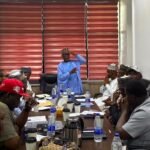
    Directors and heads of departments in Ejigbo Local Government on Thursday held their inaugural meeting with the newly deployed Head of Local Government Administration (HLGA), Mr. Hakeem Lawal, at the Council Secretariat.

    The meeting, attended by 13 directors and departmental heads, served as an introductory engagement between the new HLGA and senior management staff of the council.

    Addressing the management team, Lawal called for unity, discipline and renewed commitment to duty, stressing the need for improved service delivery and strict adherence to civil service regulations. He urged officers to align their operations with government policies and priorities at the grassroots level.

    The HLGA also called on the directors to support the re-election bid of Governor Ademola Adeleke, citing what he described as the administration’s commitment to workers’ welfare and public sector development.

    Lawal further charged revenue-generating departments to improve performance and boost internally generated revenue within the local government.

    He also approved the procurement of a motorcycle for the Town Planning Department through internally generated revenue, alongside the purchase of a typewriter to facilitate the issuance of local government identification documents.

    According to him, the measures were aimed at strengthening administrative efficiency and improving service delivery within the council.

    The directors, in their responses, expressed readiness to cooperate with the new administrative leadership and reaffirmed their commitment to effective service delivery.

  • Court dismisses motion seeking stay of judgment in favour of Methodist Church in Nigeria

    Court dismisses motion seeking stay of judgment in favour of Methodist Church in Nigeria


    The Federal High Court in Abuja has dismissed an application seeking a stay of execution of an earlier judgment delivered in favour of the United Methodist Church in Nigeria (UMCN).

    Justice Obiora Egwuatu, in a ruling on Monday, held that the motion on notice lacked merit.

    Justice Egwuatu reaffirmed the principle that a successful party is entitled to enjoy the benefits of a valid court judgment pending appeal.

    The judge held that the court would not allow the applicants, who are members of the breakaway Global Methodist Church in Nigeria (GMCN), to enjoy the stay when their act had been declared unlawful.

    He said seeking a leave to appeal an appeal already filed is an abuse of court process.

    The applicant; the GMCN, had filed the motion through their lawyer, Luka Haruna, SAN.

    They had sought an order restraining the enforcement of the March 30 judgment delivered by Justice Egwuatu, and preserving control over church properties, funds, accounts and institutional assets across the country while the appeal is pending.

    Haruna had argued that failure to grant the motion could expose the church to instability, administrative confusion, and possible irreparable damage.

    He maintained that the appeal raised substantial legal and constitutional issues deserving consideration by the appellate court.

    He further contended that the disputed assets included trust properties, bank accounts and church facilities spread nationwide, stressing that the court should preserve the status quo to prevent actions that could prejudice the appeal.

    However, Chinedu Odura, who appeared for the respondent (UMCN), opposed the motion.

    Odura argued that the applicants failed to establish the exceptional circumstances required for the grant of a stay of execution.

    The lawyer maintained that there was no credible evidence showing that church assets or properties were under threat or that the appeal would be rendered nugatory if the judgment was enforced.

    In his ruling, Justice Egwuatu agreed with the arguments of the respondent.

    The judge held that applications for stay of execution must be supported by convincing evidence demonstrating special circumstances and a real likelihood of irreparable harm.

    The judge said that speculative fears and generaliaed allegations were insufficient grounds for granting such relief.

    He held that the respondents were lawfully entitled to enjoy the fruits of the judgment already delivered and that the applicant had not demonstrated that execution of the judgment would destroy the subject matter of the appeal.

    He also emphasised the importance of maintaining legal order and institutional stability while recognising that the issues raised by the applicant could still be addressed by the appellate court in due course.

    Consequently, Justice Egwuatu dismissed the motion seeking a stay of execution.

    Reacting to the ruling, the Presiding Bishop of UMCN, Ande Emmanuel, expressed confidence in the will of God and the rule of law.

    He described the court as an upholder of justice and fairness.

    Bishop Emmanuel called on members of the church to remain calm and peaceful in the aftermath of the ruling, despite the judgment being in favour of the church.

    He stated that the church remains committed to lawful and peaceful processes in handling issues relating to the dispute.

    The bishop further stressed that UMCN is prepared to reclaim all properties and institutional assets occupied by the breakaway GMCN in accordance with the law.

    He, however, maintained that the church remains open to reconciliation, urging members of the breakaway group to return to their original place of worship in order to continue promoting the gospel of Christ in unity and peace.

    Justice Egwuatu had, on March 30, affirmed the UMCN as the validly registered name at the Corporate Affairs Commission (CAC).

    Justice Obiora Egwuatu, in a judgment, directed the CAC to immediately reverse the church’s name from GMCN to UMCN.

    Justice Egwuatu also ordered the commission to reverse the change ‘of the names of the trustees of the church made to the incorporated certificate of the church on Oct. 19, 2024, for being unlawful, invalid, null and void.

    The judge ordered the Zenith Bank Plc, the 3rd defendant in the suit, to grant members of the plaintiffs’ church (UMCN) immediate access and control to all the church accounts opened and domiciled with the bank.

    The plaintiffs; Benjamin Simon, Rev. Dr Eunice Iliya, Bishop Emmanuel Ande and Rev. Eli Yaku, in the suit marked: FHC/ABJ/CS/ 1891/2024, had sued CAC, Incorporated Trustees of Global Methodist Church in Nigeria and Zenith Bank Plc as 1st to 3rd defendants respectively.

    The dispute arose following the decision by the CAC to approve a name change for the church allegedly initiated by a breakaway faction, identified as the GMCN.

    The UMCN challenged the action, arguing that due process was not followed and that the amendnent violated both statutory provisions and the church’s internal governance structure.

  • Oshiomhole: Akpabio keeps selling himself as a leader who prefers partnership over division

    Oshiomhole: Akpabio keeps selling himself as a leader who prefers partnership over division


    By Rt Hon Eseme Eyiboh

    A recent video of Senator Adams Oshiomhole praising Senate President Godswill Akpabio has put the spotlight back on the 10th National Assembly. In the clip, Oshiomhole called Akpabio’s leadership exceptional. He said the Senate President has brought politicians from opposition parties into the APC without threats, pressure, or public fights.

    According to Oshiomhole, people who used to be fierce opponents are now joining the APC willingly because of the atmosphere Akpabio has created. He even joked that Akpabio deserves a Guinness World Record for pulling off these political shifts so smoothly and seamlessly.

    The comment has elevated the positive perception of the 10th Senate and sparked conversations around the institutional integrity of the 10th Senate. For Akpabio’s admirers, it shows his skill at building bridges, cooling down political tension, and getting people to work together. Critics may see it as a typical political praise that comes with power and authority. But beyond the buzz, one thing is clear: the 10th Senate leadership has become one of the most talked-about institutions since this government started.

    Since taking office in June 2023, Akpabio has positioned himself as a leader focused on unity and stability. In his first in speech as Senate President, he said his election was a collective win, not a personal one. He promised to lead with fairness and integrity, put teamwork first, and keep national interest above party lines. He admitted that disagreements are normal in democracy, but said the Senate must move past division to focus on lawmaking, oversight, security, and the economy. This demonstrated commitment has occasioned multiple vote of confidence on Akpabio’s leadership by the 10th Senate.

    That message mattered because Nigerians were already worried about governance, the economy, and deep political divides. Akpabio promised that the 10th Senate would work with the executive but still do its job as a check on power. He called it “a Senate for all Nigerians” and described his approach as “Servant leadership” and “Uncommon leadership.” Those phrases have stuck.

    This style has brought calm to the Senate. Unlike past assemblies marked by internal fights and clashes with the Executive arm, this Senate has kept a working relationship with President Bola Tinubu’s administration. For many analysts, this cooperation is more necessary right now than ever, with inflation, insecurity, unemployment, and debt all weighing on the country.

    Several leaders have publicly backed Akpabio’s approach. Edo State Governor, Monday Okpebholo, praised his transformational and development-focused leadership. Deputy Speaker Benjamin Kalu called him visionary and patriotic, saying he has strengthened the National Assembly. Akpabio has also received several awards for legislative integrity and institutional leadership to add verve to his leadership pedigree.

    At the International arena, Senator Allwell Heacho Onyesoh credited him with helping Nigeria regain visibility in the Inter-Parliamentary Union, calling it a diplomatic win. Many say this shows the Senate leadership is thinking beyond Abuja.

    Akpabio has repeatedly stressed inclusiveness. In many of his speeches, he has spoken about more roles for women, support for persons with disabilities, youth empowerment, and pushing innovation and technology. He has argued that Nigeria’s future depends on preparing young people for a knowledge-based economy and making laws that support technology, entrepreneurship, and revenue sources beyond oil.

    This is evidently seen in his home state (Akwa Ibom State). The working relationship between Akpabio and Governor Umo Eno is having a clear effect on Akwa Ibom’s politics and economy. Both men have pushed for inclusive politics, and that has helped calm tensions in the state. Leaders, stakeholders, and ordinary citizens now feel like they have a place in how the state is run. That has made it easier for people across party lines to work together on projects that move the state forward.

    One big result is the growing support for Governor Eno’s administration. Instead of stoking division or personal rivalries, Akpabio has publicly backed the governor’s development plans. That has taken some heat out of state politics and given people more confidence in government. For many residents, it now feels like governance is a team effort, not a fight for personal power.

    Akpabio’s backing has also put Akwa Ibom more firmly on the federal radar. As Senate President, he has the clout to draw national attention and opportunities to the state. That has led to better cooperation between Akwa Ibom and the federal government on roads, human capital programmes, and economic projects. The calm between both leaders has also made investors and development partners more comfortable. Stable politics make it easier for them to commit.

    Governor Eno’s government is seeing the benefits of that stability. His policies on rural development, job creation, agriculture, and social welfare are getting wider public support because political leaders are not pulling in different directions. This symbiotic relationship is the first in the annals of Akwa Ibom State since creation

    These ideas line up with President Tinubu’s “Renewed Hope” agenda. The government has pushed through fuel subsidy removal, exchange rate changes, and fiscal reforms to stabilize finances and attract investment. Officials say these moves are necessary for long-term growth, regardless of the hardship for many Nigerians.

    That’s why the National Assembly’s role matters now more than ever. The Senate has to pass laws that support reforms, but also keep oversight to make sure policies actually help citizens. Akpabio has said the Senate will protect national interest while backing policies that can drive recovery.

    Even with all the praise coming his way, Akpabio often shifts credit to President Tinubu. He frames himself as part of a team, not the sole force behind stability. He has praised Tinubu’s push to rebuild investors’ confidence and restore trust through the Renewed Hope Agenda.

    He points to ongoing projects like the Lagos-Calabar Coastal Highway and the Lagos-Maiduguri corridor as signs of long-term planning. These roads show a serious effort to connect the country and fix years of neglect in transport infrastructure.

    Akpabio has also highlighted the creation of development commissions across the geopolitical zones. He says this shows the government is trying to make every region feel carried along. In a country often split along ethnic and regional lines, that message resonates.

    On security, he has backed the military’s operations against terrorism, banditry, and other crimes. With kidnapping, insurgency, and communal violence still major concerns, his public support for the administration’s approach reinforces the image of the Senate and presidency working together.

    One striking part of his recent comments was his mention of early endorsements for Tinubu ahead of 2027. He said the support isn’t random but tied to what he sees as real governance results.

    Senator Oshiomhole’s comments also show a strategy in Nigerian politics that party strength is not just about winning elections. It’s about pulling in influential figures from other parties. Defections signal shifting power, and Oshiomhole’s remarks frame Akpabio as a unifier who expands the party through persuasion, not confrontation.

    Still, Akpabio keeps selling himself as a leader who prefers partnership over division. His speeches push dialogue, teamwork, and putting Nigeria first. He reminds lawmakers that even though they came in on different platforms, they are all representing one country.

    Whether you agree with his politics or not, Akpabio is now one of the deepest and most thoughtful figures in Nigeria’s political space. He has kept strong ties in the Senate, stayed aligned with the presidency, and earned public endorsements from major players. That has solidified his position and sustained the sobriquet “uncommon transformer”.

    Rt Hon Eseme Eyiboh is the Special Adviser,Media/Publicity and Official Spokesperson to the President of the Senate

  • South-East: FG moves to address regional imbalances through NRDP policy document

    South-East: FG moves to address regional imbalances through NRDP policy document

    South-East: FG moves to address regional imbalances through NRDP policy document

    The Federal Government says that it is committed to addressing the persistent regional imbalances and developmental gaps through the National Regional Development Policy (NRDP) 2026–2030 document.

    Dr Mary Ogbe, Permanent Secretary of the Ministry of Regional Development, disclosed this in Enugu on Monday at the South-East Regional Technical Validation Workshop for NRDP 2026-2030.

    The workshop was attended by various professionals, associations/unions, civil society and pressure groups within the five South-East States, which included: Abia, Anambra, Ebonyi, Enugu and Imo States.

    Ogbe said that the workshop provided veritable opportunity to reflect, deliberate, and validate the collective wisdom embedded in the NRDP draft policy, a document that rrepresented the aspirations of millions of Nigerians across geopolitical zones.

    She noted that Nigeria’s development landscape had been characterised by deep structural disparities in infrastructure, human capital, access to economic opportunities, and quality of public services across regions and states.


    She said, “These disparities are not merely statistical observations; they are realities that affect the dignity, livelihoods, and futures of our citizens.

    “The National Regional Development Policy (NRDP) 2026–2030 is our Government’s strategic response to these challenges.

    “It is a blueprint designed to promote balanced, inclusive, and sustainable development across all regions of our federation.

    “The policy sets out clear pillars, enabling frameworks, financing mechanisms, and institutional coordination structures that, if faithfully implemented, will transform the trajectory of development across Nigeria.”

    The permanent secretary said that it was gratifying that the NRDP draft policy document was not crafted in isolation but highly inclusive.


    Ogbe noted that the draft policy benefitted from robust consultations with states, technical agencies, regional development institutions, civil society organizations, development partners, particularly UNDP, and a wide range of subject matter expert.

    She believed that the NRDP 2026-2030 draft policy document would be validated and put into full operationalisation before the end of the year.

    Speaking, Elsie Attafuah, Resident Representative, United Nations Development Programme (UNDP), said that the UNDP contributed the technical expertise for the crafting of the NRDP draft policy, as the world lead organisation on development.

    Attafuah, who was represented by a Technical Advisor in UNDP, Mr Matthew Alao, noted that UNDP remained a strong partner in the country’s quest for rapid development, adding that NRDP holds that reality when fully implemented.

    “UNDP will continue to support government, ministries, departments and agencies to ensure uplift of human capital, infrastructural as well as coordinated and sustainable development,” she said.


    Earlier, the Managing Director of South East Development Commission (SEDC), Mr Mark Okoye, commended the ministry and the technical team for producing a draft document that was evidence-based, consultative, and forward-looking.

    Okoye, who was represented by the Executive Director, Finance and Administration of SEDC, Chief Stanley Ohajuruka, said that from the South East perspective, three elements stand out in the NRDP policy document.

    “First, the emphasis on regional growth poles; the policy’s recognition of Aba, Onitsha, and Enugu as a commercial and industrial corridor aligns with our own regional development plan.

    “We must ensure that transport, energy, and digital infrastructure investments are sequenced to reinforce this corridor.

    “Second, the integration of climate adaptation: Erosion control and watershed management are not environmental niceties for the South East; they are existential.

    “We urge that the policy focuses on financing and technical standards for erosion control as a core regional infrastructure category,” Okoye said.

    He also noted that the third was the policy focus on data and results, adding that it was gratifying that “what gets measured gets done”.