
The Abishag Strategy: Managing Decline Instead of Building Strength
By Prof. Chiwuike Uba, PhD
There is a moment in leadership that no title, no wealth, and no influence can prevent. It is the moment when power begins to fade.
In 1 Kings 1:1–4, King David, once a towering figure of authority and conquest, is reduced to a frail man who cannot keep himself warm. His attendants bring a young woman, Abishag, to lie beside him, not to restore strength, but simply to manage decline. It is a quiet, almost undignified end to a life of immense power.
The Abishag Strategy, then, is not about recovery, it is about concealment. It is the deliberate or unconscious choice to manage visible symptoms of decline while avoiding the harder work of renewal. It is what happens when leaders surround weakness with comfort instead of confronting it with reform. It prioritises stability over strength, optics over substance, and short-term relief over long-term resilience. In this mode, institutions do not collapse dramatically, they slowly adjust to diminished capacity. They appear functional, even calm, but underneath, their core vitality is eroding. The danger is that over time, both leaders and citizens begin to mistake this managed decline for normalcy, and in doing so, lose the urgency to rebuild what has been weakened.
Nigeria must pay attention to that moment.
Because across our political, economic, and spiritual landscape, there are growing signs of a system trying to “keep warm” rather than regain strength.
Take governance. Public leadership today often feels reactive, not visionary. Policies are rolled out in response to pressure, not as part of a coherent long-term strategy. The removal of subsidies, the cycle of borrowing, the constant fiscal strain all point to a state trying to manage immediate discomfort rather than confront structural weakness. Like David’s attendants, we are applying temporary solutions to a deeper condition.
But temporary warmth is not recovery.
Economically, the story is even more telling. Inflation continues to erode real incomes. The naira remains vulnerable. Businesses struggle with rising costs, uncertain policy environments, and weak infrastructure. What we see are interventions designed to cushion pain, not necessarily to rebuild productivity. Yet no economy survives on palliatives. Sustainable growth comes from internal strength, disciplined policy, and institutional credibility.
The danger is subtle but real: a nation can get used to survival mode and forget what true vitality looks like.
Then there is the spiritual space, perhaps Nigeria’s most influential yet least interrogated sector. Religious leaders shape values, command loyalty, and influence millions. But influence without accountability is dangerous. When spiritual authority becomes intertwined with wealth, visibility, and personal power, it risks losing its moral force.
In most religious organisations, we honour those who are wealthy, supportive of the church and its leaders, productive, powerful, and relevant. But when strength fades, and they are no longer supporting the church and the leaders as they once did, attention fades with it. They are quietly sidelined and gradually forgotten. They become afterthoughts. Institutions forget their founders as quickly as they replace them.
David’s final days offer a striking contrast. The text is deliberate in stating that he had no relations with Abishag. For a man whose earlier life included moral failings tied to power and desire, this restraint is telling. It suggests a transition from indulgence to reflection, from excess to quiet accountability.
The question for today’s spiritual leaders is simple but uncomfortable: does influence deepen responsibility, or does it expand excess?
Socially, the message cuts even deeper. Nigeria, like many societies, celebrates strength and visibility. We honour those who are productive, powerful, and relevant. But when strength fades, attention fades with it. The elderly are often sidelined. Retired leaders become afterthoughts. Institutions forget their founders as quickly as they replace them.
Yet David’s story reminds us of a fundamental truth: dignity must not be tied to usefulness alone.
A society that cannot honour its vulnerable cannot sustain its strong.
Perhaps the most urgent lesson, however, lies in succession. While David lies weak, the struggle for power quietly begins. Those around him start positioning themselves for what comes next. This is not unique to ancient Israel. It is the story of modern institutions, political parties, businesses, and even religious organisations across Nigeria.
Leadership transitions here are too often uncertain, contested, and personality-driven. Systems are weak. Processes are unclear. Continuity is fragile.
And so, when the “David moment” comes, there is confusion instead of order.
The tragedy is not that power fades. That is inevitable. The tragedy is when nothing sustainable has been built before it does.
Nigeria stands at a critical point in its history. The question before us is not whether challenges exist, they do. The real question is whether we are building a nation that can outlive its leaders, withstand its pressures, and renew its strength from within.
Or whether we are simply managing decline, one temporary solution at a time.
For those in public office, this is a call to lead beyond the next election cycle.
For economic managers, it is a call to prioritise productivity over patchwork fixes.
For spiritual leaders, it is a call to align influence with integrity.
And for every Nigerian, it is a reminder that legacy is not built in moments of comfort, but in seasons of responsibility.
Because when power grows cold, no title can restore it.
Only purpose can justify it. God is with us!
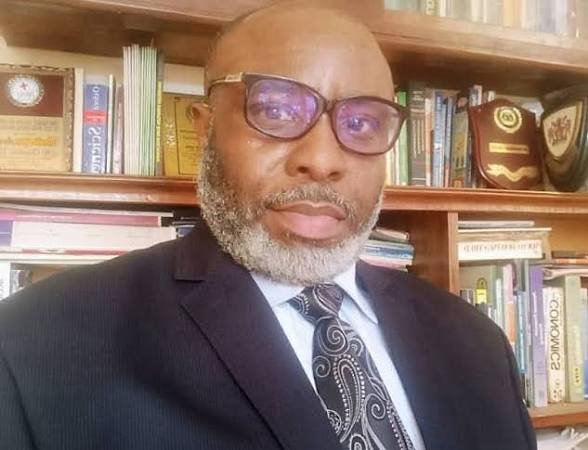
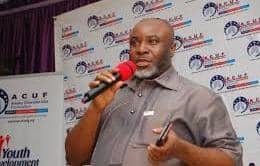
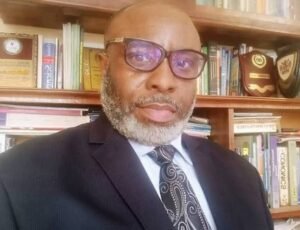
About the Author: Prof. Chiwuike Uba is a Professor of Economics and a governance and public financial management expert with over two decades of experience in public sector reforms, development policy, and institutional analysis across Africa. He is the Chairman of the ACUF Initiative for Policy and Governance, and has consulted for national governments, multilateral institutions, and international development partners. His work focuses on the intersection of political economy, accountability, and sustainable development.