
Tag: Culture

  • Nigeria’s Award-Winning Playwright Majekodunmi Ebhohon and Former FIFA World Cup Player H.K. Yahaya Jawula Headline JAY Lit Issue 11

    Nigeria’s Award-Winning Playwright Majekodunmi Ebhohon and Former FIFA World Cup Player H.K. Yahaya Jawula Headline JAY Lit Issue 11

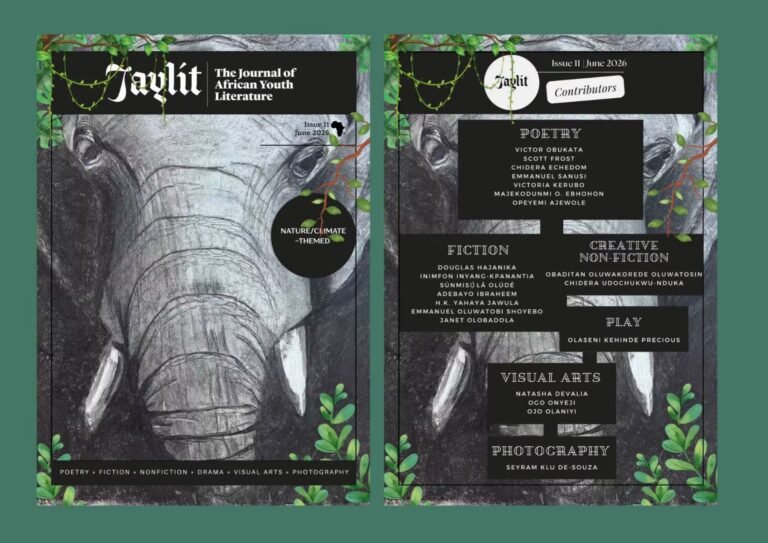
    The Journal of African Youth Literature (JAY Lit) has unveiled the cover and contributors for its 11th issue, slated for release later in June 2026.

    According to the journal, the nature- and climate-themed edition brings together works across poetry, fiction, creative nonfiction, drama, visual arts and photography, featuring contributors from Nigeria, Ghana, Kenya and Zambia.

    Among the writers and artists featured in the issue are Majekodunmi O. Ebhohon, whose play The Great Delusion won the 2025 Association of Nigerian Authors (ANA) Prize for Drama, and former 1999 FIFA Women’s World Cup player H.K. Yahaya Jawula.

    JAY Lit said the issue’s cover and visual identity draw inspiration from artwork by Natasha Devalia, who previously contributed to the journal’s ninth issue.

    In its announcement, the journal described the edition as a meeting point for both emerging and established voices within contemporary African literature and the arts. It also acknowledged the contributions of its editorial staff, peer reviewers and volunteers, whose efforts supported the production of the issue.

    The contributors are:

    POETRY – Victor Obukata, Scott Frost, Chidera Echedom, Emmanuel Sanusi, Victoria Kerubo, Majekodunmi O. Ebhohon, Opeyemi Ajewole

    FICTION – Douglas Hajanika, Inimfon Inyang-Kpanantia, Súnmisọ́lá Olúdé, Adebayo Ibraheem, H.K. Yahaya Jawula, Emmanuel Oluwatobi Shoyebo, Janet Olobadola

    CREATIVE NONFICTION – Obaditan Oluwakorede Oluwatosin, Chidera Udochukwu-Nduka

    PLAY – Olaseni Kehinde Precious

    VISUAL ARTS – Natasha Devalia (cover), Ogo Onyeji, Ojo Olaniyi

    PHOTOGRAPHY – Seyram Klu De-Souza

    The journal also announced that contributors in the poetry, fiction and creative nonfiction categories will be eligible for consideration in the 2026 JAY Lit Awards, with longlists expected in December 2026 alongside the publication of Issue 12.

    JAY Lit publishes literature written by, about and for African youth. According to the journal, it defines “African” in terms of origin and heritage rather than race or ethnicity and welcomes submissions from writers across the continent and the diaspora. The publication also maintains a multilingual editorial approach, publishing work in African languages as well as English, French and Portuguese.

    Submissions for JAY Lit Issue 12 are expected to open in July 2026.

  • Restitution and Protection of Cultural Property: Felwine Sarr Calls for “Reimagining the African Museum”

    Restitution and Protection of Cultural Property: Felwine Sarr Calls for “Reimagining the African Museum”

    Restitution and Protection of Cultural Property: Felwine Sarr Calls for “Reimagining the African Museum”


    The Museum of Black Civilisations (MCN) in Dakar hosted, on Thursday 4 December, several cultural actors and experts, including the Senegalese economist and thinker Felwine Sarr. At the heart of the discussions was a panel on “Restitution and Protection of Cultural Property”, organised as part of the Professional Meetings of the inaugural edition of the West African Festival of Arts and Culture (ECOFEST 2025).
    Addressing a large audience, the author of Afrotopia called for a deep reconsideration of the museum, its history, its functions, and the narratives it upholds as African artworks dispersed across Western museums gradually return to the continent.
    From the outset, Felwine Sarr stressed that restitution cannot be treated as a simple “transfer of objects from one place to another.” This return, he explained, “opens a far more profound question: the resocialisation of the objects, the meaning attributed to them, the spaces in which they are placed, and what this implies for the social body.”
    According to him, “understanding the contemporary issues surrounding restitution requires returning to the origins of the Western museum, which emerged in the 19th century as a site of identity-affirmation, mandated to conserve the inalienable heritage of emerging nations”.
    However, with colonisation, this model was distorted. He noted that “European expansion was accompanied by a massive expropriation of the cultural property of colonised peoples.”
    Ethnographic museums then became, in his words, “museums of others”, housing objects that were interpreted and displayed in the absence of their creators. This displacement was accompanied by a process of “re-signification”: ritual objects were turned into ethnographic specimens or works of art, thereby losing part of their original meaning and social function.
    “Their significance is altered; the scope of these objects is reduced,” he lamented, raising a fundamental question: “Has the object become something else? Can its original significance be restored, or must a new one be constructed?”
    Sarr emphasised that the decolonisation of the museum requires the “pluralisation of narratives “He pointed to North American experiences where First Nations communities co-curate exhibitions.
    However, he insisted that the most pressing challenge lies within Africa itself: to rethink museum institutions, their ecosystems, and their modes of display. The museum imported from the colonial model, he argued, is not a neutral framework.
    “We must reimagine our own heritage systems and the spaces themselves,” he argued.
    This involves drawing from precolonial traditions of royal, ritual, and contextual forms of display, in order to invent museum models suited to contemporary African societies.
    Felwine Sarr also reflected on the notion of the universal, often invoked by major museums such as the Louvre to justify the possession of artworks originating elsewhere. The universal, he explained, is “performed” declared by those who claim custodianship of it.
    Conversely, restitution and diversification of cultural spaces would help build a “pluriversal” approach—an understanding of the universal rooted in a plurality of cultural centres and voices.
    “Objects in Dakar or Cotonou are just as universal as those in Paris,” he affirmed.
    In conclusion, he praised the Museum of Black Civilisations, describing it as a “non-subaltern museum”, dynamic, open to transformation and creativity. It is, in his view, “an ideal model capable of restoring meaning to returned objects and, more broadly, renewing the narratives that African societies tell about themselves”.

  • Famous Debates and Decisions Made in Parliament Houses

    Famous Debates and Decisions Made in Parliament Houses

    Introduction

    The world of business travel is undergoing a major transformation, driven by rapid advancements in technology and changing workplace dynamics. As remote work and global collaborations become more common, the demand for more efficient, flexible, and innovative travel solutions is higher than ever. This article explores how cutting-edge technologies are revolutionizing the way professionals conduct business while on the move, creating new opportunities and challenges in the travel industry.

    The Rise of Remote Work and Its Impact on Business Travel

    The COVID-19 pandemic accelerated the shift to remote work, with many companies now embracing hybrid or fully remote models. As a result, traditional business travel is evolving.

    Companies are seeking alternatives to frequent in-person meetings, and many have adopted video conferencing tools like Zoom and Microsoft Teams. However, as borders reopen, there’s still a strong demand for face-to-face interactions, particularly for relationship building and high-stakes negotiations.

    The Role of Artificial Intelligence in Business Travel

    Artificial Intelligence (AI) is playing a significant role in streamlining the travel experience for business professionals. AI-powered apps like TripActions and Lola.com help travelers book flights, accommodation, and transportation, optimizing routes and costs based on individual preferences and business policies. Chatbots and virtual assistants also enhance customer service by providing real-time support and managing itineraries.

    Moreover, AI is improving travel security. Advanced facial recognition technologies are speeding up airport check-ins and boarding processes, while predictive algorithms help airlines and hotels forecast demand, reduce overbooking, and enhance the overall customer experience.

    Virtual and Augmented Reality: Redefining Business Meetings

    • One of the most exciting innovations in the business travel space is the rise of Virtual Reality (VR) and Augmented Reality (AR).
    • These technologies are transforming how business meetings are conducted.
    • While video conferencing has become the norm, VR and AR take it a step further by offering immersive virtual meetings that make participants feel as though they are in the same room, regardless of their physical location.

    Companies like Spatial and Oculus are developing tools that allow teams to collaborate in a shared virtual environment, reducing the need for frequent travel. While these technologies won’t fully replace in-person interactions, they offer a cost-effective solution for certain types of meetings.

    Sustainable Travel: Innovations in Reducing Carbon Footprints

    Sustainability is becoming a key concern for both companies and employees. The travel industry is under increasing pressure to reduce its environmental impact, and business travelers are now looking for more eco-friendly options. Innovations such as carbon offset programs, electric aircraft, and alternative fuels are gaining traction in the effort to reduce the carbon footprint of business travel.

    In response, companies are incorporating sustainability into their travel policies. Apps like Thrust Carbon calculate the environmental impact of flights and help organizations make greener travel choices, such as opting for direct flights, using eco-friendly transportation, or staying at green-certified hotels.

    The Future of Business Travel: Autonomous Vehicles and Hyperloop

    Looking ahead, the future of business travel could be shaped by revolutionary technologies like autonomous vehicles and the Hyperloop. Autonomous cars promise to make road travel more efficient and productive, as professionals will be able to focus on work rather than driving. Companies like Tesla, Waymo, and Uber are investing heavily in self-driving technology, which could dramatically change the way we travel for business.

    Meanwhile, the Hyperloop—a proposed high-speed transportation system that uses vacuum tubes to transport passengers at speeds of up to 760 miles per hour—could drastically reduce travel times between major business hubs. If realized, this technology could make it possible to travel between cities like Los Angeles and San Francisco in under 30 minutes, making long-distance business travel more accessible and efficient.

    Conclusion

    Technology is transforming every aspect of business travel, from how we plan trips to how we conduct meetings on the go. With AI, VR, and sustainability initiatives leading the way, the future of business travel is set to become more efficient, flexible, and environmentally friendly. As these innovations continue to evolve, companies must adapt to the changing landscape, finding ways to leverage technology to enhance productivity and reduce costs without compromising the quality of human interaction.

  • The Role of Parliament Buildings in National Governance

    The Role of Parliament Buildings in National Governance

    Introduction

    The world of business travel is undergoing a major transformation, driven by rapid advancements in technology and changing workplace dynamics. As remote work and global collaborations become more common, the demand for more efficient, flexible, and innovative travel solutions is higher than ever. This article explores how cutting-edge technologies are revolutionizing the way professionals conduct business while on the move, creating new opportunities and challenges in the travel industry.

    The Rise of Remote Work and Its Impact on Business Travel

    The COVID-19 pandemic accelerated the shift to remote work, with many companies now embracing hybrid or fully remote models. As a result, traditional business travel is evolving.

    Companies are seeking alternatives to frequent in-person meetings, and many have adopted video conferencing tools like Zoom and Microsoft Teams. However, as borders reopen, there’s still a strong demand for face-to-face interactions, particularly for relationship building and high-stakes negotiations.

    The Role of Artificial Intelligence in Business Travel

    Artificial Intelligence (AI) is playing a significant role in streamlining the travel experience for business professionals. AI-powered apps like TripActions and Lola.com help travelers book flights, accommodation, and transportation, optimizing routes and costs based on individual preferences and business policies. Chatbots and virtual assistants also enhance customer service by providing real-time support and managing itineraries.

    Moreover, AI is improving travel security. Advanced facial recognition technologies are speeding up airport check-ins and boarding processes, while predictive algorithms help airlines and hotels forecast demand, reduce overbooking, and enhance the overall customer experience.

    Virtual and Augmented Reality: Redefining Business Meetings

    • One of the most exciting innovations in the business travel space is the rise of Virtual Reality (VR) and Augmented Reality (AR).
    • These technologies are transforming how business meetings are conducted.
    • While video conferencing has become the norm, VR and AR take it a step further by offering immersive virtual meetings that make participants feel as though they are in the same room, regardless of their physical location.

    Companies like Spatial and Oculus are developing tools that allow teams to collaborate in a shared virtual environment, reducing the need for frequent travel. While these technologies won’t fully replace in-person interactions, they offer a cost-effective solution for certain types of meetings.

    Sustainable Travel: Innovations in Reducing Carbon Footprints

    Sustainability is becoming a key concern for both companies and employees. The travel industry is under increasing pressure to reduce its environmental impact, and business travelers are now looking for more eco-friendly options. Innovations such as carbon offset programs, electric aircraft, and alternative fuels are gaining traction in the effort to reduce the carbon footprint of business travel.

    In response, companies are incorporating sustainability into their travel policies. Apps like Thrust Carbon calculate the environmental impact of flights and help organizations make greener travel choices, such as opting for direct flights, using eco-friendly transportation, or staying at green-certified hotels.

    The Future of Business Travel: Autonomous Vehicles and Hyperloop

    Looking ahead, the future of business travel could be shaped by revolutionary technologies like autonomous vehicles and the Hyperloop. Autonomous cars promise to make road travel more efficient and productive, as professionals will be able to focus on work rather than driving. Companies like Tesla, Waymo, and Uber are investing heavily in self-driving technology, which could dramatically change the way we travel for business.

    Meanwhile, the Hyperloop—a proposed high-speed transportation system that uses vacuum tubes to transport passengers at speeds of up to 760 miles per hour—could drastically reduce travel times between major business hubs. If realized, this technology could make it possible to travel between cities like Los Angeles and San Francisco in under 30 minutes, making long-distance business travel more accessible and efficient.

    Conclusion

    Technology is transforming every aspect of business travel, from how we plan trips to how we conduct meetings on the go. With AI, VR, and sustainability initiatives leading the way, the future of business travel is set to become more efficient, flexible, and environmentally friendly. As these innovations continue to evolve, companies must adapt to the changing landscape, finding ways to leverage technology to enhance productivity and reduce costs without compromising the quality of human interaction.

  • The Evolution of Tennis: From Grass Courts to Hard Courts

    The Evolution of Tennis: From Grass Courts to Hard Courts

    Introduction

    The world of business travel is undergoing a major transformation, driven by rapid advancements in technology and changing workplace dynamics. As remote work and global collaborations become more common, the demand for more efficient, flexible, and innovative travel solutions is higher than ever. This article explores how cutting-edge technologies are revolutionizing the way professionals conduct business while on the move, creating new opportunities and challenges in the travel industry.

    The Rise of Remote Work and Its Impact on Business Travel

    The COVID-19 pandemic accelerated the shift to remote work, with many companies now embracing hybrid or fully remote models. As a result, traditional business travel is evolving.

    Companies are seeking alternatives to frequent in-person meetings, and many have adopted video conferencing tools like Zoom and Microsoft Teams. However, as borders reopen, there’s still a strong demand for face-to-face interactions, particularly for relationship building and high-stakes negotiations.

    The Role of Artificial Intelligence in Business Travel

    Artificial Intelligence (AI) is playing a significant role in streamlining the travel experience for business professionals. AI-powered apps like TripActions and Lola.com help travelers book flights, accommodation, and transportation, optimizing routes and costs based on individual preferences and business policies. Chatbots and virtual assistants also enhance customer service by providing real-time support and managing itineraries.

    Moreover, AI is improving travel security. Advanced facial recognition technologies are speeding up airport check-ins and boarding processes, while predictive algorithms help airlines and hotels forecast demand, reduce overbooking, and enhance the overall customer experience.

    Virtual and Augmented Reality: Redefining Business Meetings

    • One of the most exciting innovations in the business travel space is the rise of Virtual Reality (VR) and Augmented Reality (AR).
    • These technologies are transforming how business meetings are conducted.
    • While video conferencing has become the norm, VR and AR take it a step further by offering immersive virtual meetings that make participants feel as though they are in the same room, regardless of their physical location.

    Companies like Spatial and Oculus are developing tools that allow teams to collaborate in a shared virtual environment, reducing the need for frequent travel. While these technologies won’t fully replace in-person interactions, they offer a cost-effective solution for certain types of meetings.

    Sustainable Travel: Innovations in Reducing Carbon Footprints

    Sustainability is becoming a key concern for both companies and employees. The travel industry is under increasing pressure to reduce its environmental impact, and business travelers are now looking for more eco-friendly options. Innovations such as carbon offset programs, electric aircraft, and alternative fuels are gaining traction in the effort to reduce the carbon footprint of business travel.

    In response, companies are incorporating sustainability into their travel policies. Apps like Thrust Carbon calculate the environmental impact of flights and help organizations make greener travel choices, such as opting for direct flights, using eco-friendly transportation, or staying at green-certified hotels.

    The Future of Business Travel: Autonomous Vehicles and Hyperloop

    Looking ahead, the future of business travel could be shaped by revolutionary technologies like autonomous vehicles and the Hyperloop. Autonomous cars promise to make road travel more efficient and productive, as professionals will be able to focus on work rather than driving. Companies like Tesla, Waymo, and Uber are investing heavily in self-driving technology, which could dramatically change the way we travel for business.

    Meanwhile, the Hyperloop—a proposed high-speed transportation system that uses vacuum tubes to transport passengers at speeds of up to 760 miles per hour—could drastically reduce travel times between major business hubs. If realized, this technology could make it possible to travel between cities like Los Angeles and San Francisco in under 30 minutes, making long-distance business travel more accessible and efficient.

    Conclusion

    Technology is transforming every aspect of business travel, from how we plan trips to how we conduct meetings on the go. With AI, VR, and sustainability initiatives leading the way, the future of business travel is set to become more efficient, flexible, and environmentally friendly. As these innovations continue to evolve, companies must adapt to the changing landscape, finding ways to leverage technology to enhance productivity and reduce costs without compromising the quality of human interaction.