
Tag: Amupitan

  • FCT elections orderly, efficient, peaceful – INEC Chairman

    FCT elections orderly, efficient, peaceful – INEC Chairman


    By Emmanuel Oloniruha

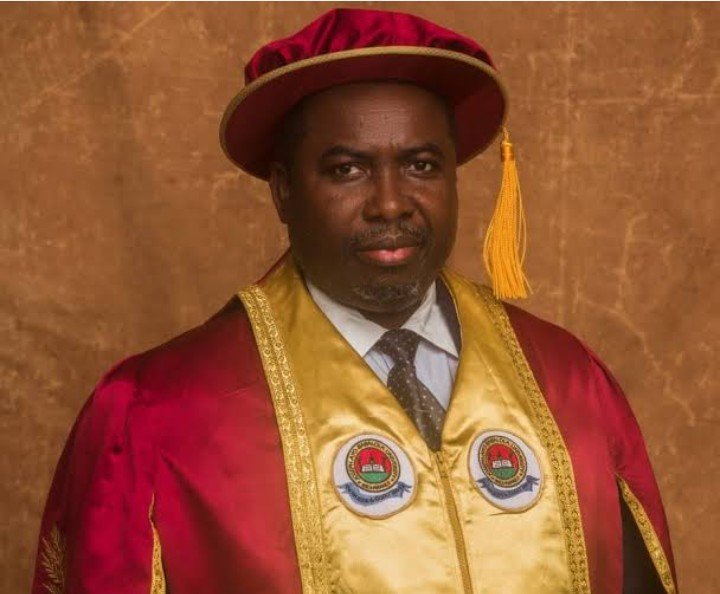
    Abuja:  The Chairman of Independent National Electoral Commission (INEC), Prof. Joash Amupitan, has expressed satisfaction with the conduct of the Federal Capital Territory (FCT) area council elections, describing the process as orderly, efficient and peaceful.

    Amupitan made this known on Saturday in Abuja while speaking with newsmen after monitoring the process at few polling units within the Abuja Municipal Area Council (AMAC).

    Amupitan maintained that the performance of Bimodal Voter Accreditation System (BVAS) and the level of voter turnout were positive indicators for the country’s democratic process.

    He highlighted the speed of the accreditation process, noting that the BVAS technology had significantly reduced waiting times for voters.

    “You can see by yourself that the election is orderly and very efficient. The election is peaceful and those are the indices of a good election.

    “So far, the efficiency of the BVAS is high and I am very satisfied because the BVAS are working effectively and efficiently.

    “From what I have seen and heard from the presiding officers, it takes about less than five seconds to even accredit a voter.

    “So far, I can say that the election is well organised. The election is peaceful from the calm atmosphere you have seen,” Amupitan said.

    He commended the turnout of voters, attributing it to an increased awareness among citizens regarding the importance of participating in the electoral process.

    He also praised the calm atmosphere and the conduct of both voters and security personnel.

    “You can see a lot of people here and they are conducting themselves well. I learned that there are 30 security personnel that are present here.

    “They are also conducting their affairs in an orderly manner. So, we hope that at the close of the poll, we will have a very successful election,” he said.

    Addressing a question regarding an incident involving the harassment of a journalist by security personnel, Amupitan said that INEC remained committed to the safety of all accredited personnel.

    “I am only aware that there was one journalist that was arrested and immediately we intervened.

    “The Chief Press Secretary and some people spoke to the police and the person was immediately released unmolested.

    “We have taken every measure to ensure that nobody is molested. Accredited journalists and observers are granted access to the places they are supposed to be. We have not withdrawn any accreditation,” he said.

    The INEC boss, however, acknowledged minor hiccups in certain areas, especially the delay in arrival of election materials and ad hoc officials in few polling units, noting that INEC was on top of the situation.

    He said that as at 10:30 a.m., 99 per cent of polling units across the FCT had successfully opened and that the commission was monitoring the situation in real-time from the situation room to ensure all eligible voters were attended to.

    Amupitan pledged that the commission would not only ensure that the votes of Nigerians count in the FCT election, but would ensure further improvements, moving forward to the 2027 general elections.

    “The voices of Nigerians will be held this time around. The BVAS, as far as I am concerned, is working very well.

    The News Agency of Nigeria (NAN) reports that some of the polling units visited by Amupitan included: PU 016, Area 8, Garki, AMAC, PU 005 LGEA Primary school Garki Village, PUs 001 and 002, 052, Junior Secondary School, Area 1, 007 National Library, Area 2, Garki, AMAC.

    The chairman also visited the INEC FCT office, where the deployment of election result collation officers was ongoing.(NAN)(www.nannees.ng)

  • New INEC Boss Under Fire as Muslim Council Accuses Him of Deep Religious Bias,

    New INEC Boss Under Fire as Muslim Council Accuses Him of Deep Religious Bias,


    –  Urges President Tinubu to Review Amupitan’s Appointment

    – Prof. Amupitan has demonstrated, through the content of the document, a deep-seated prejudice that calls into serious question his capacity to conduct free and fair elections in a multi-religious, multi-ethnic nation.


    By Iyiola Olalere

    The Supreme Council for Shari’ah in Nigeria (SCSN) has accused newly appointed INEC Boss, Prof. Joash Ojo Amupitan, of a deep-seated prejudice against Muslims ”that calls into serious question his capacity to conduct free and fair elections in a multi-religious, multi-ethnic nation.”

    The Council made the declaration in a statement entitled; MISCHIEVOUS REMARKS ATTRIBUTED TO PROF. AMUPITAN, NEWLY APPOINTED CHAIRMAN OF INEC , a copy of which was made available to FLOWERBUDNEWS.

    Urging President Tinubu to review prof. Amupitan’s appointment, the Muslim body stated that his ”anti-Muslim sentiments are fundamentally inconsistent with the expectations and responsibilities of his office.”

    FULL STATEMENT:
    MISCHIEVOUS REMARKS ATTRIBUTED TO PROF. AMUPITAN, NEWLY APPOINTED CHAIRMAN OF INEC

    The Supreme Council for Shari’ah in Nigeria (SCSN)views with serious concern the recent revelations by Sahara Reporters alleging that Prof. Joash Ojo Amupitan, the newly appointed Chairman of the Independent National Electoral Commission (INEC), had in 2020 authored a toxic legal brief containing highly provocative, distorted, and bigoted assertions about the nature of conflicts in Northern Nigeria and maligning the historical legacy of Sheikh Uthman bn Fodio’s jihad.

    It is unfortunate and disturbing that an individual now entrusted with overseeing Nigeria’s democratic integrity could have espoused such bigotry in divisive, sectarian, and inaccurate narratives against a majority faith community.

    If indeed Prof. Amupitan authored the said document, his submissions are not only unbecoming of a person of learning, but dangerously inimical to the unity, peace, and stability of our country.

    The Council hereby wishes to clarify, and debunk the falsehood embedded in his so-called analysis of “Christian genocide” and his mischaracterization of Northern violence as an extension of the 19th-century Jihad led by Sheikh Uthman bn Fodio. Nothing could be further from the truth.

    If we set aside the mischievous emotive interpretation and examine the facts objectively, the reality is that the violence in Northern Nigeria is complex and multi-dimensional. Both Muslims and Christians have suffered immensely from violent extremists’ attacks, banditry, and communal conflicts rooted in accumulated neglect, poverty, and social injustice.

    Available credible humanitarian data from independent and international sources incontrovertibly reveal that Muslims have suffered more casualties in these conflicts than any other group.

    This is a reality easily verifiable by mapping the epicentres of violence from Borno to Zamfara, Katsina, Sokoto, Kebbi, Niger, and Yobe, where the greater majority of the victims are Muslims living in these overwhelmingly Muslim-majority areas. It therefore defies logic and decorum for anyone to reduce these tragedies to a one-sided narrative of Christian persecution.

    The attempt by Prof. Amupitan to link contemporary insecurity with the historic Jihad of Sheikh Uthman bn Fodio is a malicious distortion of history and a deliberate misrepresentation of the legacy of one of West Africa’s most revered reformers.

    The Jihad of Sheikh Uthman was not a war of hatred or extermination but a spiritual, moral, and social reform movement that sought to restore justice, knowledge, and governance rooted in ethics. The noble legacy and instituted ideals are still admired across the African continent today.

    In our considered opinion, presiding over Nigeria’s electoral system demands the highest standards of neutrality, fairness, and inclusivity. Prof. Amupitan has demonstrated, through the content of the document, a deep-seated prejudice that calls into serious question his capacity to conduct free and fair elections in a multi-religious, multi-ethnic nation.

    Such anti-Muslim sentiments are fundamentally inconsistent with the expectations and responsibilities of his office.

    It is therefore both astonishing and troubling that an individual with such open bias and mischief could have successfully passed a security and background clearance process before ascending to such an exalted office.

    This suggests either a grave lapse in due diligence by the vetting agency or a reckless approval that undermines public trust in the integrity of the system.

    Accordingly, the Supreme Council for Shari’ah in Nigeria calls on President Bola Ahmed Tinubu to critically review the appointment of Prof. Amupitan as INEC Chairman, to ensure the credibility of the nation’s electoral body.

    The integrity of Nigeria’s electoral process cannot be entrusted to someone whose record reveals open hostility toward one of the country’s largest faith communities.

    We urge all Nigerians, Muslims and Christians alike, to reject narratives that seek to pit one faith against another. Our common enemies are injustice, corruption, poverty, and insecurity.

    The Council remains committed to peace, unity, and the pursuit of truth based on fairness and mutual respect.

    Secretary General
    Supreme Council for Shari’ah in Nigeria (SCSN)
    16th Jumada I 1447 AH/7th November 2025


    About  Flowerbudnews
    Established by Hon.  Biola Lawal, a former Acting Managing Director of the News Agency of Nigeria (NAN), FLOWERBUDNEWS is a consortium of active veteran journalists, experienced Multimedia broadcast experts and image makers.

    We are drawn from both public and private sectors of Nigeria’s media Industry with a common  determination to enhance the practice of responsible journalism..

    Lawal, on his part, is also a former Honourable Commissioner for Information,Youth, Sports and Culture of Osun state, his home state.

    Biola Lawal had also successfully served two tenures as Press Secretary to the ECOMOG Force Commander in Liberia during the Liberian and Sierra Leone Civil wars. He was an outstanding NAN Defence and War Correspondent for many years.

    The retired NAN Acting Boss holds the honour of being the only journalist that served two terms on the ECOMOG international assignment due to his high professionalism and decency.

    He is a Co-Author of the book; ECOMOG, A BOLD ATTEMPT AT REGIONAL PEACEKEEPING! Edited Mrs Margaret Voght.  The book remains the most. factual, detailed and authentic account of the he ECOWAS sponsored ECOMOG Military operation.

  • BREAKING: Tinubu Swears In Amupitan As INEC Chairman

    BREAKING: Tinubu Swears In Amupitan As INEC Chairman


    President Bola Tinubu has sworn in Professor Joash Amupitan as the Chairman of the Independent National Electoral Commission (INEC). 

    Amupitan’s swearing in by the President comes a week after the Senate confirmed his appointment as INEC Chairman following a rigorous screening session on October 16.

    President Tinubu charged Prof. Amupitan to protect the integrity of Nigeria’s elections and electoral process as well as strengthen the institutional capacity of INEC.

    Amupitan arrived at the State House on Thursday morning, dressed in a white ‘agbada’ paired with a gold cap, exchanging greetings with onlookers ahead of the ceremony to formalise his assumption of office as the head of the nation’s electoral umpire.

    The professor of Law was accompanied by some presidential aides.

    During his screening at the Senate last week, the 58-year-old don was questioned by senators on his plans to restore credibility to Nigeria’s electoral process and drive meaningful reforms within the commission

    While addressing the Senate during his screening, Amupitan had promised to prioritise electoral reforms that would ensure transparent polls and boost public confidence in election outcomes.

    The professor stated that his focus would be on strengthening the provisions of the Electoral Act to address inconsistencies in election timelines and promote credibility in the process.

    “We must conduct elections where even the loser will congratulate the winner and say, ‘You won fairly and well.’ When that happens, voters’ confidence will naturally be restored,” he said.

    The Senior Advocate of Nigeria also dismissed reports linking him to President Tinubu’s legal team during the 2023 Presidential Election Petitions Court, clarifying that he neither represented the President nor appeared for any of the opposition candidates.

    “I never appeared before the Presidential Election Tribunal or the Supreme Court for any of the parties,” he told lawmakers, reaffirming his neutrality.

    Amupitan is expected to take over immediately after his swearing-in and begin the transition process at the commission’s headquarters in Abuja.

    Profile
    Born on April 25, 1967, the 58-year-old Amupitan hails from Ayetoro Gbede in Ijumu Local Government Area of Kogi State. He is a Professor of Law at the University of Jos, Plateau State. He is also an alumnus of the university.

    He specialises in Company Law, Law of Evidence, Corporate Governance and Privatisation Law. He became a Senior Advocate of Nigeria in September 2014.

    After completing primary and secondary education, he attended Kwara State Polytechnic, Ilorin, from 1982 to 1984, and the University of Jos from 1984 to 1987. He was called to the bar in 1988.

    Amupitan earned an LLM at UNIJOS in 1993 and a PhD in 2007, amid an academic career that began in 1989, following his National Youth Service at the Bauchi State Publishing Corporation in Bauchi from 1988 to 1989.

    He currently serves as the Deputy Vice-Chancellor (Administration) at the University of Jos, a position he holds in conjunction with being the Pro-Chancellor and Chairman of the Governing Council of Joseph Ayo Babalola University in Osun State.

    Among the academic positions he has held at UNIJOS are: Chairman of the Committee of Deans and Directors (2012-2014); Dean of the Faculty of Law (2008-2014); and Head of Public Law (2006-2008).

    Outside of academics, Amupitan serves as a board member of Integrated Dairies Limited in Vom, a member of the Nigerian Institute of Advanced Legal Studies Governing Council, and a member of the Council of Legal Education (2008-2014), among other roles. He was a board member of Riss Oil Limited, Abuja(1996-2004).

    Amupitan is the author of many books on law, such as Corporate Governance: Models and Principles(2008); Documentary Evidence in Nigeria (2008); Evidence Law: Theory and Practice in Nigeria(2013), Principles of Company Law(2013)  and an Introduction to the Law of Trust in Nigeria (2014).

    He is married and has four children.

  • AMUPITAN: NIGERIA’S ELECTORAL PROBLEM LIES NOT IN INEC CHAIRMAN’S QUALIFICATIONS BUT IN WEAK AND MANIPULABLE LAWS

    AMUPITAN: NIGERIA’S ELECTORAL PROBLEM LIES NOT IN INEC CHAIRMAN’S QUALIFICATIONS BUT IN WEAK AND MANIPULABLE LAWS


    By Sylvester Udemezue

    The current public debate over the appointment of Professor Amupitan, SAN, as Chairman of the Independent National Electoral Commission (INEC) has once again exposed a recurring flaw in Nigeria’s national discourse: our tendency to focus on personalities instead of institutions, and qualifications instead of the strength of the laws that define, constrain, and guide those who occupy public office.

    Truth be told, no one who occupies that office would escape controversy. Yet, the real question is not whether Professor Amupitan possesses the requisite academic distinction, professional standing, or moral rectitude to lead INEC. Few would seriously doubt his intellectual pedigree or administrative experience. The true challenge lies elsewhere: in the ability of any occupant of that critical office to withstand the intense manipulative pressures that have, over the years, subverted Nigeria’s electoral process, truncated the people’s will, and compromised institutional integrity.

    *Qualification Is a Necessary but Insufficient Condition*

    With due respect, there is hardly anyone who completely lacks the intellectual or managerial capacity to occupy the office of the INEC Chairman. But capacity alone does not deliver credible elections. What determines success is resilience: the courage to resist entrenched political pressures, the determination to uphold the law in the face of systemic inducements, and the ability to defend institutional independence when it is most inconvenient to do so. It is not about whether Professor Amupitan can perform well, but whether he will, and that can only be proven through the crucible of actual governance. Until then, we can only wait, observe, and hope. But as experience has repeatedly shown, hope alone is never enough. Even the most qualified, upright, and courageous individual will remain powerless in the face of deficient, weak, and manipulable legal structures.

    *The Limits Of Individual Excellence In A Fragile Legal Environment*

    No matter how intellectually gifted or morally upright an INEC Chairman may be (even if one were to possess “twenty-five professorial titles,” to borrow a metaphor) no individual can guarantee a transparent and fraud-free electoral process unless the laws themselves are fortified. As I emphasized in my essay, *“Adodo’s Alarm Over Gov. Aiyedatiwa’s Alleged Disrespect for the Constitution and the Imperative of Legal Impregnability as a Necessary Condition for Effective Governance in Nigeria”* (DNL Legal & Style, 20 May 2025), no institution can rise above the quality of the legal framework that governs its operations. When the law is fragile, uncertain, or open to manipulation, even the best of men and women become victims of a system that rewards compromise and punishes integrity. Conversely, when laws are strict, strong, impregnable, self-enforcing, and clearly defined, they serve as a protective armour for both institutions and those who manage them. It is therefore not the brilliance of the individual that sustains democracy, but the impregnability of the law. As I further noted in *“Rethinking System Change in Nigeria: Why Only Impregnable Legal Reforms Can Deliver Real Impact”* (The Loyal Nigerian Lawyer, 20 May 2025), Nigerian’s problem has never been a shortage of good people or good intentions; it is the absence of a watertight legal structure that compels good governance even when human weaknesses intervene. This assertion applies squarely to our electoral process. Nigeria’s recurring electoral disappointments are not primarily the product of bad individuals, but of fragile laws: laws that depend too much on personal virtue rather than on institutional compulsion. Until our electoral framework is restructured to minimize human discretion at critical stages, every election will remain susceptible to abuse, no matter who chairs INEC.

    *Lessons from Constitutional Reform and the Imperative of Legal Impregnability*

    The danger of weak legal frameworks is not theoretical. It manifests in the daily operations of governance. As I observed in the same Adodo’s Alarm essay, certain constitutional provisions (such as Sections 192(6) and 147(7) introduced by amendment) fail to meet the test of legal impregnability because “These provisions are neither self-enforcing, self-executing, nor legally impregnable. As a result, the provisions are easy to manipulate, and there are virtually no real consequences for a breach.” A law that lacks strict internal enforcement mechanisms, or that depends on external goodwill for implementation, is a law that invites abuse. In practice, such laws become optional suggestions: manipulable by those they were meant to restrain. This same structural fragility plagues Nigeria’s electoral system. In “Rethinking System Change in Nigeria,” I also noted that a law without enforcement is not worth the paper it is written on. Cosmetic reforms falter in the absence of embedded mechanisms that ensure compliance. This underscores why Nigeria’s electoral laws must be reimagined to be impregnable: resistant to manipulation, automatically enforceable, and structurally insulated from human interference. It is not enough to have laws that sound right; they must be built right.

    *What ‘Legal Impregnability’ Means for Electoral Law Reform*

    Translating the principle of legal impregnability into the Nigerian electoral context would require concrete, structural reforms that remove opportunities for manipulation and ensure that the law enforces itself. Such reforms should include:

    1). *Automatic Triggers and Deadlines:* Election procedures, from collation to result declaration, should operate under mandatory timelines that cannot be extended or suspended by administrative fiat.

    2). *Self-Executing Consequences:* Non-compliance with electoral procedures should automatically result in clear legal outcomes, such as disqualification, forfeiture of office, or nullification of results, without requiring discretionary judicial interpretation.

    3). *Minimization of Discretion:* The law must restrict the points at which individual judgment or administrative discretion can alter outcomes, particularly in result transmission, collation, and appeals.

    4). *Institutional Insulation:* Electoral infrastructure (servers, databases, collation systems) must be legally shielded from partisan interference, ensuring transparency and accountability.

    5). *Deterrent Sanctions:* Breaches of electoral law must attract strict, swift, certain, and proportionate penalties. The law must make wrongdoing costly and compliance rewarding. It has been said that “A legal system that depends on personal morality instead of institutional compulsion will perpetually oscillate between accidental success and systemic failure.” That observation captures Nigeria’s electoral dilemma perfectly. Until we stop relying on moral expectations and start building legal compulsions, our elections will continue to produce contested legitimacy rather than democratic stability.

    *The Real Test Before Professor Amupitan*

    For Professor Amupitan, the true test of leadership will not lie in his academic credentials or his distinguished legal scholarship: those are already established. The test will lie in whether he can steer INEC through a system still fraught with discretionary gaps, political interference, and legal fragility. But ultimately, even his best efforts will be limited by the tools he is given. Thus, the national conversation must shift: from “Do we have the right person?” to “Do we have the right laws?” In a system where laws are weak, even the best person is rendered powerless; but in a system governed by strong, self-executing, and impregnable laws, even an average person can perform excellently.

    *From Personality Politics to Process Governance*

    Nigeria must therefore transition from a personality-based to a process-based system. The salvation of our democracy lies not in charisma but in constitutionality, not in individual brilliance but in institutional resilience. A credible electoral process cannot depend on the good intentions of the INEC Chairman, the judiciary, or politicians; it must rest on the compelling power of law. Until Nigeria’s electoral laws become truly impregnable (self-enforcing, transparent, and resistant to manipulation) no level of personal qualification or moral uprightness on the part of any INEC Chairman can deliver the democratic outcomes our citizens deserve. As I have consistently maintained across my writings, the strength of governance is a direct function of the impregnability of the law. Our focus must therefore move from personalities to processes, from hope to structure, and from expectation to enforcement. Only then can we begin to achieve credible elections and, ultimately, a law-governed democracy.

    *Further Reading:*

    1. Sylvester Udemezue, “Adodo’s Alarm Over Gov. Aiyedatiwa’s Alleged Disrespect for the Constitution and The Imperative of Legal Impregnability as a Necessary Condition for Effective Governance in Nigeria” (DNL Legal & Style, 20 May 2025)< https://dnllegalandstyle.com/dnl/adodos-alarm-over-gov-aiyedatiwas-alleged-disrespect-for-the-constitution-and-the-imperative-of-legal-impregnability-as-a-necessary-condition-for-effective-governance-in-nigeria/>

    2. Sylvester Udemezue, “Rethinking System Change in Nigeria: Why Only Impregnable Legal Reforms Can Deliver Real Impact (Plus Case Studies; Draft Impregnable Provisions)” (The Loyal Nigerian Lawyer, 20 May 2025) <https://loyalnigerianlawyer.com/rethinking-system-change-in-nigeria-why-only-impregnable-legal-reforms-can-deliver-real-impact-plus-case-studies-draft-impregnable-provisions/>

    3. Sylvester Udemezue, ‘How Nigeria’s National Assembly Can Make the Electoral System Impregnable on Electronic Transmission to Prevent Fraud During Election Result Collation’ (IJPLD, 2025) <https://ijpld.com/ijpld/article/view/11/31>accessed 16 October 2025.

    (Respectfully,
    Sylvester Udemezue (udems),
    Proctor, The Reality Ministry of Truth Law and Justice (TRM).
    08021365545.
    udems@therealityministry.ngo.
    wwe.therealityministry.ngo.)