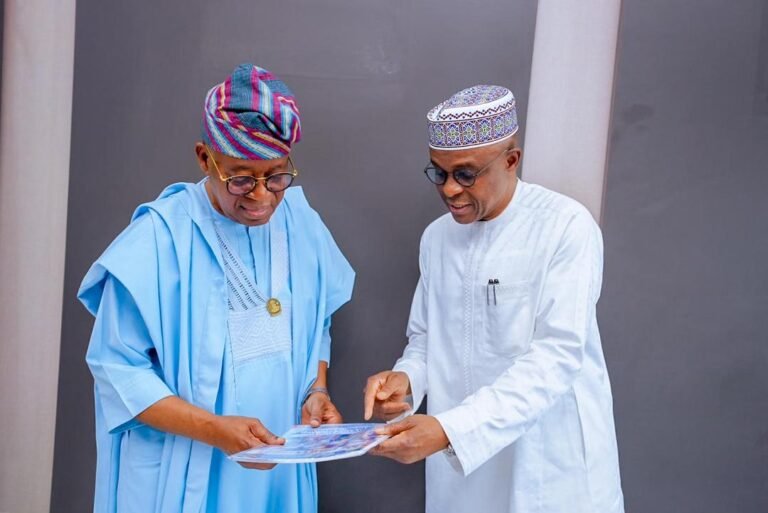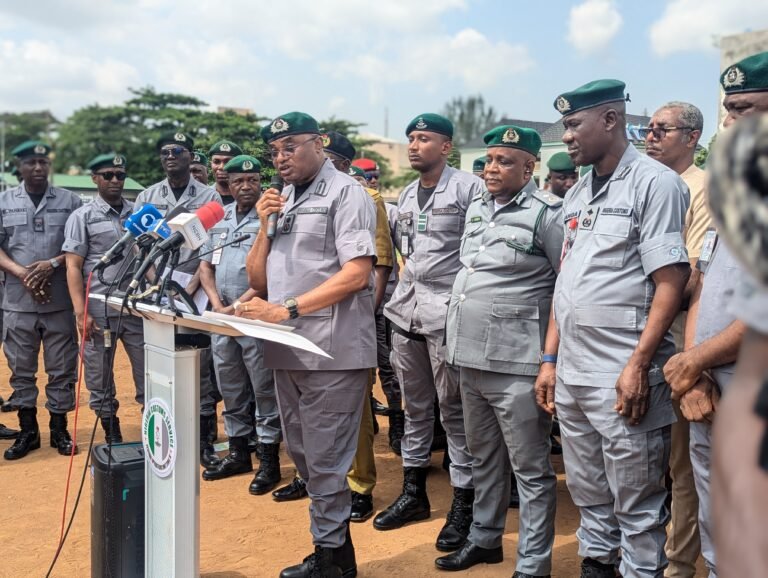
Pics, From Left, Director General, Nigerian Maritime Administration and Safety Agency, Dr Dayo Mobereola, Justice Emmanuel Agim of Supreme Court,. Justice Williams Dawodu of Court of Appeal and Justice Olayinka Faji, Lagos Judicial Division, during the 4th Nigeria Admiralty Law Colloquium, organised by NIMASA in Lagos, on Wednesday
Lagos, Nov. 5, 2025, The Chief Justice of Nigeria (CJN), Justice Kudirat Kekere-Ekun, on Wednesday, said that a strengthened legal framework will enhance the growth and sustenance of the nation’s blue economy.
Kekere-Ekun said this at the fourth Nigerian Admiralty Colloquium organised by the Nigerian Maritime Administration and Safety Agency (NIMASA) in collaboration with the Nigerian Institute of Advanced Legal Studies (NIALS).
The event which had the theme “Charting the Course for Nigeria’s Blue Economy”, was held at the Legend Hotel in Ikeja, Lagos.
It brought together judges of the Supreme Court, Court of Appeal, and the Federal High Court, as well as Maritime Administrators, and industry experts.
The CJ who was represented by Justice Emmanuel Agim, said that the judiciary occupies a critical role in ensuring that the legal foundation of the blue economy is rooted in the rule of law.
She underscored the need for an efficient justice system, which she said is important to boost investor’s confidence in the maritime industry.
Besides, the CJ described the maritime sector as vital to Nigeria’s economic diversification drive, and urged continuous capacity building among judicial officers to address the complexities of admiralty law.
According to her, major challenges confronting Nigeria’s maritime domain includes illegal, unregulated, and unreported fishing, oil theft, pipeline vandalism, among others.
She said that these issues can be addressed by a collaboration among stakeholders, to build a sustainable and efficient blue economy.
“Commerce thrives where the rule of law is strong, where disputes are resolved efficiently, and where judicial interpretation provides clarity and predictability,” she said.
In his remarks, the Director-General of NIMASA, Dr Dayo Mobereola, reaffirmed the agency’s commitment to supporting the blue economy through reforms anchored on the rule of law, which are in line with global best practices.
He said that NIMASA had undertaken initiatives such as a review of existing regulatory frameworks, ratification and domestication of International Maritime Organisation (IMO) among others.
Mobereola noted that a strong legal foundation is vital to unlocking Nigeria’s maritime potential, adding that the rule of law must serve as the “compass guiding the nation’s maritime vision”.
The NIMASA boss said that Nigeria’s Blue Economy Agenda, evidenced by the creation of a Federal Ministry of Marine and Blue Economy with the mandate to institutionalised blue economy as an essential pillar for economic diversification.
Mobereola explained that the sector encompasses a holistic vision for leveraging the nation’s marine resources to drive socio-economic growth, strengthen regulatory frameworks, develop human resources, and ensure safety, security, and environmental sustainability.
He maintained that the agency was working tirelessly in securing and advancing Nigeria’s blue economy by continuously developing strategies, approaches, and mechanisms that balance economic and sectoral growth.
Mobereola said to achieve more success in Nigeria’s blue economy adding that ‘all hands should be on deck’ approach, with the Judiciary as a crucial actor, where interpretation of legal instruments and case decisions remains a vital tool for the sustainable development of Nigeria’s blue economy.
He highlighted that the agency had introduced initiatives to boost the sector, including reviewing and updating existing regulatory frameworks in alignment with global best practices.
Mobereola said that other initiative were ratification and domestication of key International Maritime Organisation and International Labour Organisation Conventions and Protocols, enhancement of maritime safety and security through the Deep Blue project, which secures our waters.
He urged participants at the event to immerse themselves in the discussions and proffer strategies to chart the course for Nigeria’s blue economy.
On his part, Chief Judge of the Federal High Court, Justice John Tsoho, represented by Justice Ayokunle Faji, spoke on the court’s jurisdiction over admiralty matters, describing the blue economy as Nigeria’s next frontier for economic growth.
Tsoho called for precision in the interpretation of maritime laws, to align with international protocols, adding that effective dispute resolution channels were essential for attracting foreign direct investment.
“Investors need confidence that their assets and contracts are protected by a predictable and sophisticated legal system.
” The rule of law remains the compass for Nigeria’s maritime success,” he said.
In his contribution, the Administrator of the National Judicial Institute (NJI), Justice Babatunde Adejumo, described admiralty law as a complex and specialised field which required continuous training and expertise.
Adejumo, who was represented by the Secretary to the institute, Mr Abdulazeez Olumo, said that maritime disputes often involved charter parties, bills of lading, marine insurance, and cross-border claims.
He noted that these areas required a high-level of judicial competence and understanding of international frameworks.
He commended NIMASA and NIALS for providing such platform for dialogue and knowledge exchange, which he said promotes consistency in judicial reasoning.
A group picture of the colloquium, themed “Charting the Course for Nigeria’s Blue Economy,” brought together Justices of the Supreme Court, Court of Appeal, and Federal High Court, alongside maritime administrators, legal scholars, and industry experts, organised by the Nigerian Maritime Administration and Safety Agency (NIMASA) in collaboration with the Nigerian Institute of Advanced Legal Studies (NIAL)
NIMASA Admiralty Colloquium: Experts project $5bn marine revenue for Nigeria
Lagos, Nov. 5, 2025, Maritime law experts say Nigeria could earn between US$3 billion and US$5 billion yearly from marine bioproducts by commercialising ocean resources through research and private investment.
The projection was made on Wednesday during a panel session at the 4th Nigeria Admiralty Law Colloquium in Lagos.
The colloquium brought legal and maritime specialists together to examine Nigeria’s Blue Economy framework and its development potential.
Speaking on the theme, ‘Nigeria’s Blue Economy Framework,’ maritime lawyer Dr Chukwuchefu Ukattah said Nigeria’s coastline and diverse marine ecosystem offer major economic opportunities.
He referenced a United Nations Environmental Programme report outlining Africa’s US$100 billion marine tourism potential by 2030, noting Nigeria’s low participation due to weak infrastructure.
Ukattah said destinations like Lagos, Calabar and Delta, alongside cultural sites such as Bonny Island, remain under-promoted globally.
He stressed that the US$6.45 trillion global maritime tourism market represents a significant opportunity for Nigeria.
Ukattah noted that Landmark Beach attracts over one million visitors annually and supports more than 80 small businesses, showing the value of proper infrastructure.
He said Nigeria’s marine biodiversity, including seaweed, microalgae, corals and mangroves, holds immense value for pharmaceutical and cosmetic industries.
He cited compounds like Ecteinascidin and Discodermolide, developed from marine organisms, as examples of high-value medical products derived from ocean research.
Ukattah said structured Blue Economy programmes could make Nigeria a regional hub for marine-based innovation and generate billions for the economy.
He revealed that Nigeria has around 14,120 megawatts of marine-linked hydropower potential, far above the current electricity generation capacity.
Dr Ukattah said renewable offshore wind, tidal and ocean energy could reduce dependence on fossil fuels and strengthen energy security.
On fisheries, Ukattah said fish provides about 40 per cent of Nigerians’ protein, yet the country faces a 2.5-million-tonne supply gap yearly.
He said this shortfall forces more than ₦100 billion in fish imports annually, stressing the need for sustainable aquaculture and cold-chain systems.
He recalled a fisherman in Rivers State who caught a Blue Marlin valued at US$2.6 million but ate it due to lack of awareness.
Ukattah noted that Nigeria, despite its oil and gas wealth, still underutilises non-oil marine resources.
He added that Africa’s Blue Economy is worth US$300 billion annually, with deep-sea mining set to increase to 10 per cent of global output by 2030.
He called for collaboration among policymakers, investors and research bodies to responsibly harness marine resources for national development.
Ukattah said a well-governed Blue Economy could drive innovation, jobs and long-term prosperity for Nigeria.
Chairman, House of Representatives Committee on Safety Standards and Regulations, Mr David Zacharias, the Apapa Customs Area Controller, Mr Emmanuel Oshoba and other committee members during oversight visit to assess safety compliance and regulatory enforcement across key government agencies on Tuesday in Lagos
NCS hosts House Committee on safety standards at Apapa command
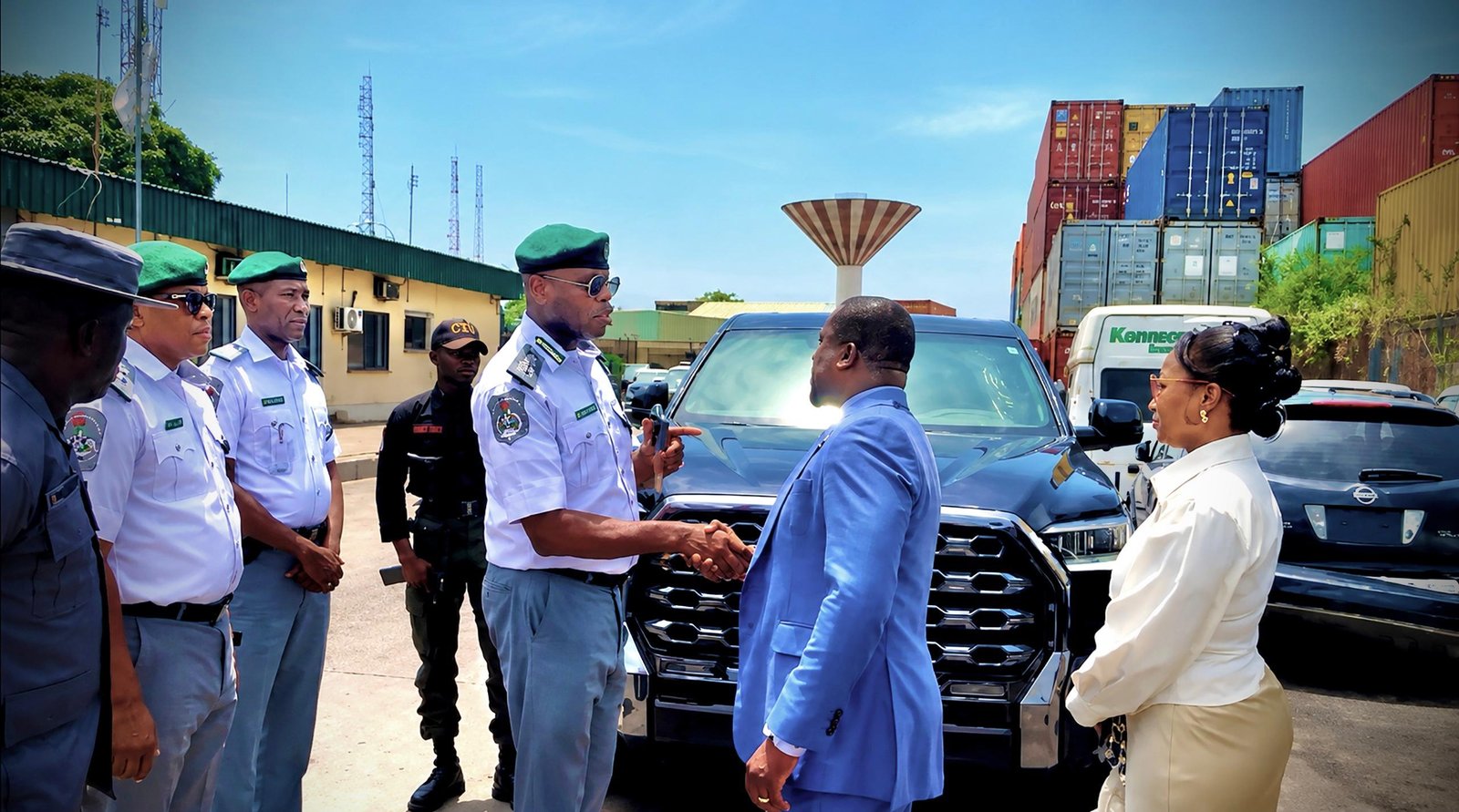
Lagos, Nov. 4, 2025, The Nigeria Customs Service (NSC) on Tuesday hosted members of the House of Representatives Committee on Safety Standards and Regulations at the Apapa Area Command in Lagos.
The engagement formed part of an ongoing legislative oversight mission designed to evaluate safety compliance and regulatory efficiency across strategic national institutions.
The lawmakers are currently touring major operational centres to better understand how agencies enforce safety rules, monitor imports, and protect public health and welfare.
The delegation was led by Committee Chairman, David Zacharias, and received by Apapa Area Controller, Emmanuel Oshoba, representing the Comptroller-General of Customs, Bashir Adeniyi.
Oshoba welcomed the lawmakers and reaffirmed the service’s readiness to support legislative oversight aimed at improving operational transparency and national safety frameworks.
The visit followed earlier assessments at the NCS headquarters in Abuja, where committee members interacted with senior Customs leadership on border management priorities.
The inspection focused on safety procedures, border control systems, cargo processing standards, and the service’s contribution to protecting Nigerians from harmful imports.
Zacharias said the exercise aligned with the committee’s constitutional mandate to promote accountability, enhance regulatory efficiency, and safeguard national interests.
He noted that the committee had received petitions highlighting alleged lapses in safety enforcement by some regulatory agencies, including Customs.
He said the visit sought to verify those concerns through first-hand observation, engagement, and documentary assessment rather than speculative conclusions.
According to him, the mission was not designed to indict any agency but to build collaborative mechanisms for strengthening safety enforcement across national entry points.
He emphasised that ensuring citizens’ safety required partnership between lawmakers, regulatory agencies, and border security institutions, including the Nigeria Customs Service.
He recalled that the committee began its review at the Customs headquarters and obtained approval to visit terminals and commands nationwide.
Zacharias said Customs plays a frontline role in preventing dangerous, unapproved, or substandard products from entering Nigeria’s markets and endangering lives.
He described product safety, port integrity, and border surveillance as critical to national development and consumer protection, especially in a rapidly expanding economy.
During the session, lawmakers raised concerns about fake cables, substandard building materials, expired products, and other dangerous items linked to accidents and building collapse.
They asked Customs to explain its coordination framework with the Standards Organisation of Nigeria in intercepting illegal or inferior goods at points of entry.
They also inquired about digital scanning systems, enforcement capacity, and resource needs for improving border monitoring and container screening operations.
Zacharias applauded Customs for its transparency during the engagement, stating that constructive oversight ultimately strengthens public institutions and safeguards citizens.
He expressed confidence that the committee’s findings would inform legislative interventions, policy improvements, and budgetary support for enhanced national safety systems.
In response, Oshoba reiterated the service’s unwavering commitment to safety, saying Customs enforces strict trade standards to protect Nigerians and the economy.
He explained that officers regularly seize substandard, counterfeit, and prohibited items, ensuring such goods do not reach consumers or contribute to public hazards.
Oshoba added that Customs coordinates closely with SON, NAFDAC, and security agencies to tighten surveillance, improve inspection technology, and enhance trader compliance.
He stressed that Apapa Command does not clear consignments that threaten public safety, national security, or environmental standards.
He said Customs remains firm on compliance and will continue strengthening inter-agency cooperation to deliver an efficient and secure trade environment.
Oshoba acknowledged persistent challenges from Nigeria’s porous borders, noting that some unapproved goods enter through unauthorised routes in spite of rigorous patrols.
He called for continued stakeholder support, investment in technology, and intelligence sharing to strengthen border control capacity nationwide.
The lawmakers toured port facilities, examined screening operations, and reviewed enforcement documents to better understand Customs’ safety protocols and operational systems.
They also held briefings with senior officers and border enforcement units at the command to assess front-line procedures.
The committee is expected to submit its findings to the House and propose policy reforms that may improve regulatory efficiency and national safety culture.
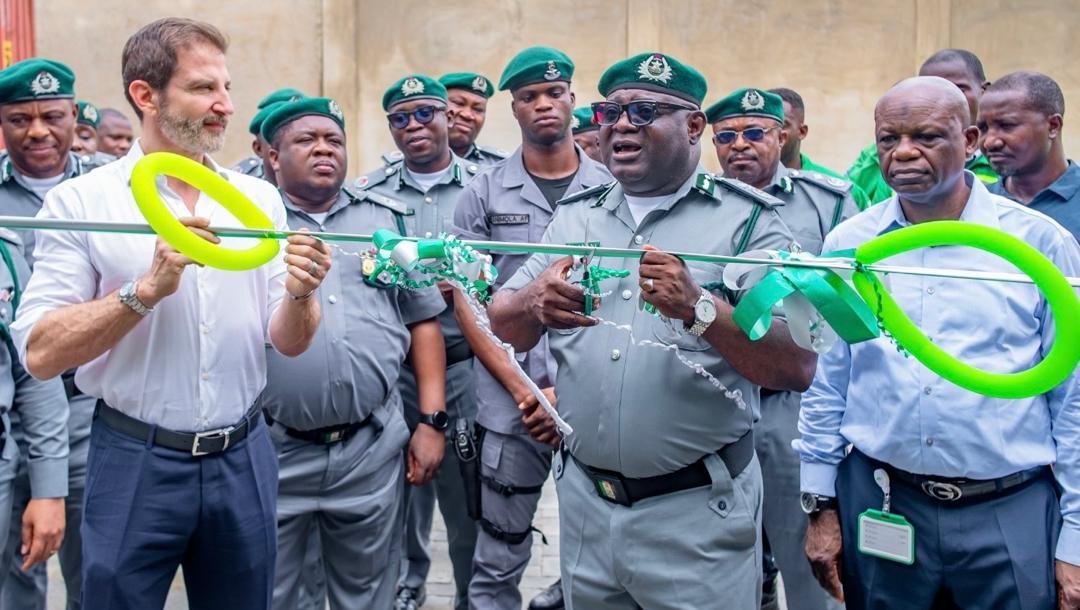
Chairman, House of Representatives Committee on Safety Standards and Regulations, Mr David Zacharias, the Apapa Customs Area Controller, Mr Emmanuel Oshoba, and other committee members at terminals in Apapa ports during oversight visit to assess safety compliance and regulatory enforcement across key government agencies on Tuesday
The Area Controller of the Western Marine Command, Comptroller Patrick Ntadi, the Akran of Badagry, De Wheno Aholu Menu-Toyi I, and his officers during a visit to Badagry Palace in Lagos on Tuesday
Customs says stepping up fight against smuggling in Badagry, seeks support
Lagos, Nov. 4, 2025, The Nigeria Customs Service (NCS) says it is intensifying efforts to curb smuggling activities in Badagry area of Lagos State , urging communities in the area to support its fight against smugglers.
The Area Controller of the Western Marine Command, Comptroller Patrick Ntadi, spoke during a visit to the Akran of Badagry, De Wheno Aholu Menu-Toyi I, and his council of chiefs on Tuesday.
Ntadi said the fight to rid the area of economic saboteurs was not for the service alone,but for all stakeholders, including the various communities.
Ntardi, who also noted that coastal communities and border areas were regular routes used by smugglers to bring in illicit substances into the country, said his men were on high alert to ensure illegal activities do not thrive in Badagry.
He said smuggling of illicit substances had contributed greatly the menace of drug abuse in Badagry and beyond.
The Area Controller of the Western Marine Command, Comptroller Patrick Ntadi, the Akran of Badagry, De Wheno Aholu Menu-Toyi I, during a visit to Badagry Palace in Lagos on Tuesday
Ntadi said that the command had designed a number of initiatives and implementing a number of interventions to curb the twin problem of smuggling and drug abuse in Badagry.
“We need the cooperation of our community leaders to fight smuggling.
“Drug abuse is not only destroying our youth, but it is also hurting our economy and social structure.
“The Customs Service ,under the leadership of the Comptroller-General Bashir Adeniyi, has created a Care Desk through which community concerns and welfare requests can be forwarded for appropriate action.
“Our goal is to ensure that we have a productive society and suppress economic saboteur.
“We will use constant sensitisation and other initiatives to take our youths off the streets and channel their energy into meaningful ventures,”the Comptroller said.
Ntadi, who revealed that he had lived in Badagry for over two decades, described his visit as both personal and professional.
He said the customs service had enjoyed a long-standing relationship with the community and was committed to strengthening that bond.
In his response, Chief Abel Ogunbiyi, the Onipetoji of Badagry Kingdom,who spoke on the traditional ruler, commended Ntadi for his honesty, consistency, and devotion to duty.
He praised the customs boss for frequently engaging communities in awareness campaigns against smuggling and drug use in the past.
Ogunbiyi, however, expressed concern over the growing unemployment crisis, noting that many young people in Badagry had turned to smuggling and drug peddling as survival strategies.
“The youths are not lazy; they are simply frustrated by a lack of opportunities.
“We appeal to customs and other agencies to extend employment opportunities to our youths to give them hope.”
Chief Emmanuel Afolabi, the Zonlin-Gbedudugan of Badagry Kingdom, described the rise in drug consumption as alarming and warned that the community risked having “lunatic youths” roaming the streets in a few years if the problem persisted.
He called on customs to involve other security agencies and community associations in the sensitisation effort, saying collective action would be key to saving the next generation.
Another community leader, Chief Thomas Yemayinse, echoed similar sentiments, stressing that the absence of jobs and social amenities, had made youths vulnerable to illicit trade.
“If we can create opportunities, these youths will become assets, not threats to the society,” he said.
As the meeting drew to a close, both the customs delegation and the traditional rulers agreed to sustain regular engagements aimed at promoting awareness, mutual respect, and partnership for safer communities
Members of the Regional Shippers’ Council, parastatal Heads and stakeholders at the two-day Sub-Regional Seminar and Meeting of the Standing Committee No. 1 of (UASC), African Continental Free Trade Area (AfCFTA), held in Lagos on Wednesday
FG urges regional joint stand on shipping charges
The Federal Government has urged members of the Union of African Shippers’ Councils (UASC) to unite against arbitrary shipping surcharges undermining trade competitiveness in West and Central Africa.
Minister of Marine and Blue Economy, Mr Adegboyega Oyetola, made the call during the Sub-Regional Seminar and Meeting of UASC Standing Committee No. 1 on African Continental Free Trade Area (AfCFTA) in Lagos on Wednesday.
The two-day event, holds from Oct. 29 to Oct. 30 2025, drawing delegates from 19 member countries and maritime stakeholders.
The meeting focused on strategies for improving trade readiness under the AfCFTA agreement.
The event is being held under the theme ‘The Readiness of Countries of West and Central Africa in the Implementation of the AfCFTA — The Role of Shippers’ Councils.’
Oyetola, represented by the Permanent Secretary, Mr Olufemi Oloruntola, called for urgent solutions to port logistics and high shipping costs hindering AfCFTA benefits.
He urged national Shippers’ Councils to act as regulators and defenders of shippers’ interests across the sub-region.
Oyetola said the councils must also ensure transparent shipping practices and equitable freight charges.
He added that effective regulation would reduce trade costs and boost the competitiveness of African exports globally.
Declaring the meeting open, Oyetola reaffirmed Nigeria’s commitment to implementing the resolutions that would arise from the gathering.
He emphasised that collective action was vital to positioning the sub-region as a strong bloc under AfCFTA.
“Arbitrary surcharges and high freight rates erode competitiveness and burden importers and exporters,” he said.
He urged member states to engage shipping lines constructively to promote fairness and transparency in freight rates.
“Our goal is to build a resilient maritime system that supports sustainable growth,” Oyetola added.
Executive Secretary of the Nigerian Shippers’ Council, Dr Pius Akutah, said AfCFTA had created reliable information platforms for cross-border shippers.
He described AfCFTA as an ambitious African Union project establishing a single market of 1.4 billion people with a $3 trillion GDP.
Akutah said Shippers’ Councils must act as regulators and advocates to ensure fair competition and efficient goods movement.
He explained that the Nigerian Shippers’ Council, as port economic regulator, is promoting multimodal transport and Inland Dry Ports to enhance readiness for AfCFTA.
From third left, The Secretary General, Union of African Shippers’ Council (UASC), Mr Abdurahman Kafiugou ,Permanent Secretary of the ministry, Mr Olufemi Oloruntola, Executive Secretary, Nigeria Shippers’ Council, Dr Pius Akutah, the Customs Area Controller, Apapa customs boss, Comptroller Emmanuel Oshoba among other at the two-day Sub-Regional Seminar and Meeting of the Standing Committee No. 1 of (UASC), African Continental Free Trade Area (AfCFTA), held in Lagos on Wednesday
Secretary-General of UASC, Mr Abdurahman Kafiugou, reaffirmed the union’s commitment to fostering cooperation and supporting AfCFTA objectives.
He commended Nigeria and the Nigerian Shippers’ Council for advancing regional trade and supporting UASC’s agenda.
Kafiugou described the Lagos meeting as a milestone in strengthening transport and trade cooperation across member states.
He said the forum built on the February 2024 Luanda meeting to harmonise trade practices and improve logistics efficiency.
“These issues are vital to reducing bottlenecks and improving competitiveness,” he said, urging experts to propose actionable recommendations.
Comptroller-General of Customs, Bashir Adeniyi, represented by controller, Apapa Area command, Emmanuel Oshoba, highlighted the need for sustainable pricing mechanisms in trade.
He said aligning customs procedures with AfCFTA would enhance competitiveness and promote economic integration across Africa.
Director-General of NIMASA, Dr Dayo Mobereola, represented by Director of Shipping, Mrs Nneka Obianyor, said true AfCFTA readiness also required addressing digitalisation and infrastructure challenges.
He noted NIMASA’s efforts to digitalise maritime operations and promote a fully integrated port community system.
Mobereola reaffirmed NIMASA’s commitment to collaboration with the Nigerian Shippers’ Council and UASC member countries.
(L-R: Director of Fisheries and Aquaculture, Federal Ministry of Marine and Blue Economy, Mr Wellington Omoragbon; Executive Director, Nigerian Institute for Oceanography and Marine Research (NIOMR), Prof. Abiodun Sule; Permanent Secretary, Federal Ministry of Marine and Blue Economy, Mr Olufemi Oloruntola; Minister of Marine and Blue Economy, Adegboyega Oyetola; Director-General, National Institute for Policy and Strategic Studies (NIPSS), Prof. Ayo Omotayo; and Executive Secretary/CEO, Nigerian Shippers’ Council, Dr Pius Akutah, at the opening of a two-day Roundtable Discussion on ‘Accelerating National Fish Production’ in Victoria Island, Lagos, on Wednesday)
The Ministry of Marine and Blue Economy has partnered with the National Institute for Policy and Strategic Studies (NIPSS) to boost fish production and bridge Nigeria’s 2.2 million metric tonne deficit.
The Minister of Marine and Blue Economy, Mr Adegboyega Oyetola, stated this at a two-day round table on accelerating national fish production held on Wednesday in Lagos Oct. 29, 2025.
Oyetola said the collaboration would close Nigeria’s supply gap through a coordinated policy roadmap and targeted investment strategies across the fisheries and aquaculture subsector.
He noted that the partnership marked a major step in implementing President Bola Tinubu’s Renewed Hope Agenda, which prioritises food security, job creation, and economic diversification.
“Current output meets only about 38.9 per cent of the 3.6 million metric tonnes required annually. The 2.2 million metric tonne deficit is unsustainable,” Oyetola said.
He said the round table would produce a National Fish Production Acceleration Roadmap to guide future investments and reforms in the sector.
The minister added that new legal frameworks, including the Fisheries Bill and the National Fisheries and Aquaculture Policy, were being developed to improve sustainability and governance.
He also highlighted ongoing digital reforms, such as automating fisheries operations and establishing a Blue Data Bank in partnership with the World Bank’s PROBLUE Programme.
Oyetola said initiatives like the Green Money Project were empowering youth and women through aquaculture training and input support.
Director-General of NIPSS, Prof. Ayo Omotayo, reaffirmed the Institute’s commitment to promoting evidence-based policies that would help Nigeria attain fish self-sufficiency.
Omotayo said NIPSS would continue working with the ministry to turn the forum’s outcomes into actionable strategies for national implementation.
The two-day event brought together experts, operators, and other stakeholders to generate recommendations for national policy.
It was also expected to guide investment decisions aimed at increasing local fish production, cutting imports, and ensuring sustainable growth within Nigeria’s Blue Economy.
Maritime experts, policy makers during the 3rd edition of the Ehingbeti Blue Economy Hub, with the Theme “The Renaissance of Ehingbeti in Community Engagement and Inclusivity,” held in Lagos on Tuesday.
Blue economy: Don wants public interest prioritised in govt. policies, programmes
Lagos, Oct. 28, 2025, A Don, Prof Jinadu Adele, on Tuesday underscored the need for inclusive governance in Nigeria, saying that it remained the only pathway to national development.
Adele urged government at all levels to prioritise public interest in their policies and programmes, especially with regards to the local communities.
He made the appeal during the 3rd Edition of the Ehingbeti Blue Economy Hub, which has the theme, “The Renaissance of Ehingbeti in Community Engagement and Inclusivity,” held in Lagos.
Our correspondent report the Ehingbeti Maritime Hub was convened by the Ocean Ambassadors Foundation founded by Mrs Violet Olaitan Williams.
Prof. Jinadu Adele
Adele, a retired Professor of Political Science, noted that inclusivity would ensure that coastal communities fully benefit from the potentials of the Marine and Blue Economy Sector.
He also emphasised the need for Nigerians to unite and demand accountability from their leaders.
“For the past 25 years, several programmes have been launched with great fanfare, and millions of naira have been spent inaugurating them. Yet, where are we today? There must be something fundamentally wrong,” he lamented.
The octogenarian professor, who decried indiscriminate sand-filling activities across Lagos without community consultation, said citizens must become proactive in protecting their collective interests.
“From Ilubirin to Oworonshoki, massive sand filling are going on without our knowledge of what exactly is happening. The problem is that we have left the initiative in the hands of those who do not have our interests at heart.
“Let us organise ourselves and make it clear to the politicians that it will no longer be business as usual. I am 84 years old, and even with the little time left, I will continue to say, ‘Lagos people, wake up!’,” Adele said.
He criticised the neglect of coastal communities, noting that many were still battling with poor water supply, bad roads, inadequate hospitals and insufficient schools despite Lagos’ enormous investments in infrastructure.
He urged government agencies to always consult community residents before executing projects that affected their environment, saying such inclusion would foster trust and sustainable development.
Adele further expressed concern over the lack of transparency in governance, adding that citizens must become vigilant to protect their democratic rights.
“In other countries, ordinary citizens and local groups defend their votes during elections. Here, we celebrate politicians instead. Unless we organise ourselves and hold leaders accountable, our votes will never truly count,” he said.
He called on Lagos indigenes to rise and chart an indigenous roadmap for the state’s development, rooted in its unique cultural and economic identity.
His Royal Majesty, Alaiyeluwa Oba (Dr) Olufolarin Ogunsanwo, Telade IV and the Chief Executive Officer, Nobel Oil Nigeria, Mr Michael Okparanta, during the 3rd edition of the Ehingbeti Blue Economy Hub, with the Theme “The Renaissance of Ehingbeti in Community Engagement and Inclusivity,” held in Lagos on Tuesday.
In his goodwill message, a Traditional Ruler, Oba Olufolarin Ogunsanwo, the Alara of Ilara Kingdom, commended the Ocean Ambassadors Foundation for its leadership in promoting sustainable blue economy practices and community engagement.
Oba Ogunsanwo described the seminar’s theme as timely, stressing that local participation and gender inclusiveness were vital for national prosperity.
“The Blue Economy holds immense potential to diversify our national wealth, create jobs, and foster sustainable livelihoods, especially for coastal communities,” he said.
He reaffirmed his kingdom’s readiness to contribute to Lagos State’s vision of a prosperous and inclusive blue economy that could serve as a model for the African continent.
The Founder of the Ocean Ambassadors Foundation and Convener of the Ehingbeti Maritime Hub, Mrs. Violet Olaitan WilliamsIn her remarks, the Founder of the Ocean Ambassadors Foundation and Convener of the Ehingbeti Maritime Hub, Mrs. Violet Olaitan Williams, described the gathering as a milestone in harnessing ocean resources for sustainable growth.
She noted that the Ehingbeti Blue Economy Hub had evolved into a platform for meaningful dialogue and tangible outcomes within the maritime sector.
“We cannot afford to leave the government alone in this endeavour. All hands must be on deck to develop the wealth of our coastal communities,” Williams said.
the President of Women in Maritime Africa (WIMAFRICA), Mrs Rollens Macfoy.
Similarly, the President of Women in Maritime Africa (WIMAFRICA), Mrs Rollens Macfoy, highlighted the need for stronger collaboration in maritime education and employment.
The Continental Executive of Women in Maritime Africa (WIMAFRICA), Also the Former General Manager, Nigeria Ports Authority, Mrs Carol Ufere.
She noted that Ethiopia’s maritime training institute had trained over 6,000 indigenous professionals who were now gainfully employed locally and abroad, urging the Nigerian Maritime Administration and Safety Agency (NIMASA) to intensify efforts in securing jobs for Nigerian-trained cadets.
“It is disheartening that Ghana is currently employing many of Nigeria’s trained cadets. We must address this challenge,” Macfoy said.
She also called for increased grassroots mobilisation to sensitise coastal communities about the numerous opportunities available in the Marine and Blue Economy Sector.
L-R Mrs Sarah Braimah, Head Zonal office of the Inland Waterways Authority NIWA; Mrs Violet Williams, the President, Ocean Ambassadors Foundation (OAF); Mrs Jean Chiazor Anishere (SAN), former Continental President Women in Maritime Africa (WIMAfrica); and Mrs Tosan Edodo-Emore, president of Women in Maritime of West and Central Africa, Nigeria (WIMOWCA-Nigeria) during the 3rd edition of the Ehingbeti Blue Economy Hub in Lagos on Tuesday
Also, the President, Women in Maritime of West and Central Africa (WIMOWCA-Nigeria), Mrs Oritsematosan Edodo-Emore, lauded the foundation for its perseverance in championing the blue economy agenda.
She noted that the history of Nigeria’s blue economy could not be written without acknowledging the Ehingbeti community, which embraced marine trade long before Nigeria’s independence.
Edodo-Emore also praised President Bola Tinubu for establishing the Ministry of Marine and Blue Economy, saying advocacy from groups like Ehingbeti made the ministry’s creation possible.
during the 3rd edition of the Ehingbeti Blue Economy Hub, with the Theme “The Renaissance of Ehingbeti in Community Engagement and Inclusivity,” held in Lagos on Tuesday.
“Women play a crucial role in economic transformation. Government and community leaders must ensure women are visibly engaged and entrusted with leadership roles that will make a difference,” she added.
-R: The Commissioner of Police, Port Authority Command, CP Toyin Agbaminoja, and the Customs Area Controller of Apapa Customs Command, Compt. Emmanuel Oshoba, when customs hosted the newly posted CP on Tuesday in Lagos
Customs, Police to clear Apapa gridlock
Lagos, Oct. 28, 2025 , The Customs Area Controller, Apapa Command, Emmanuel Oshoba, says the command will collaborate with the Port Police to end the Apapa gridlock.
Oshoba made this known when the command hosted the newly posted Commissioner of Police, Port Authority Command, Toyin Agbaminoja, on Tuesday in Lagos.
The meeting focused on strengthening collaboration to tackle the persistent gridlock and improve trade facilitation.
Oshoba urged the commissioner to prioritise clearing the access roads, noting that reports indicated the gridlock had resurfaced due to hitches in the NPA’s e-call-up system.
He said port accessibility directly affected the command’s revenue generation capacity.
“I want you to look at this corridor where cargoes pass through. Please, help us keep it safe and clear for seamless trade facilitation,” he said.
Oshoba warned that any disruption to the flow of traffic would impact revenue and hamper ease of doing business at the port.
“We want to keep this corridor free of traffic. Kindly look into that process to enhance customs operations,” he added.
He also emphasised the vital role of the police in maintaining law and order, describing it as essential for revenue generation.
“If we don’t have law and order, we cannot think of generating revenue. Industrial peace and harmony are very key,” he said.
Oshoba reaffirmed that the Customs Comptroller-General, Bashir Adeniyi, promotes collaboration, consultation, and consolidation among agencies.
He pledged to sustain the cordial relationship built by his predecessors with the police and other security agencies.
The customs boss also stressed the need for intelligence sharing and appealed against frivolous petitions that could disrupt port operations.
“In modern border management, we cannot do without each other. Collaboration and intelligence sharing are crucial to our success,” he stated.
The Assistant Comptroller of customs, Usman Abdullahi among other officers when the Commissioner of Police, Port Authority command visited the Apapa customs command in Lagos on Tuesday
In her remarks, CP Agbaminoja described the police as the “mother of customs” due to their historical connection.
“The police is the mother of the customs, because customs was once part of the police before being assigned revenue duties,” she said.
She pledged full support to ensure port security, which she described as the nation’s second-largest revenue source.
“We are here to protect everyone in the port. The port’s security and that of its workers are vital to our duty,” she added.
Agbaminoja promised to strengthen cooperation and eliminate inter-agency rivalry during her tenure.
From the fouth left, The Commissioner of Police, Port Authority Command, CP Toyin Agbaminoja, and the Customs Area Controller of Apapa Customs Command, Compt. Emmanuel Oshoba, and Senior officers from both agencies in a group picture when customs hosted the newly posted CP on Tuesday in Lagos
L-R Mrs Sarah Braimah, Head Zonal office of the Inland Waterways Authority NIWA; Mrs Violet Williams, the President, Ocean Ambassadors Foundation (OAF); Chief Mrs Jean Chiazor Anishere (SAN), former Continental President Women in Maritime Africa (WIMAfrica); and Mrs Tosan Edodo-Emore, president of Women in Maritime of West and Central Africa, Nigeria (WIMOWCA-Nigeria) during the 3rd edition of the Ehingbeti Blue Economy Hub in Lagos on Tuesday
Ehingbeti: Stakeholders chart path for inclusive maritime growth
Lagos, Oct. 28, 2025, Maritime stakeholders and policymakers have outlined strategies for inclusive growth to boost coastal development within Nigeria’s maritime and blue economy.
Experts, industry leaders, and community advocates gathered for the 3rd edition of the Ehingbeti Blue Economy Hub with the theme ‘The Renaissance of Ehingbeti in Community Engagement and Inclusivity’ in Lagos on Tuesday.
The discussions focused on unlocking the economic potential buried in Nigeria’s waters.
Organised by the Ocean Ambassadors Foundation (OAF), led by Mrs Violet Williams, the hub has become a key platform for promoting sustainable maritime development and community participation.
In his keynote address, Maj.-Gen. Tajudeen Olanrewaju (rtd), former Minister of Communications, recalled Lagos’s maritime glory during the old Ehingbeti era.
He described a period when Lagos thrived on trade, prosperity, and migration, standing tall among British colonies through its vibrant maritime economy.
Quoting a Yoruba saying, ‘Ti oju o bati Ehingbeti, oju o le ti Eko,’ he explained that Lagos’s prosperity was tied to Ehingbeti’s vitality.
He noted that Ehingbeti once connected Lagos to the world through trade in food, textiles, crafts, liquors, and precious metals, long before ‘Blue Economy’ became a global term.
Olanrewaju said the modern blue economy, focused on sustainable ocean use, mirrors Ehingbeti’s commercial essence and should now embrace inclusivity and sustainability.
He urged stakeholders to integrate coastal communities into the blue economy, noting their vital knowledge, manpower, and intelligence.
“These communities must not be left behind. They are essential for security, investment protection, and shared growth,” he stressed.
He lamented that in spite of Nigeria’s wealth, many coastal dwellers live in poverty and remain excluded from maritime development.
“It is unacceptable that those closest to the ocean’s wealth remain the poorest among us,” he said.
Olanrewaju urged policymakers to learn from nations such as Singapore and India, where inclusive maritime policies empower coastal populations.
President, Ocean Ambassadors Foundation OAF, Mrs Violet Williams, delivery her opening remarks
OAF President, Mrs Violet Williams, described the event as “a milestone in Nigeria’s maritime renaissance.”
She said the foundation had consistently used the Ehingbeti Hub to deepen dialogue on sustainable maritime policy and community inclusion.
“The renaissance of Ehingbeti is about the future; one where coastal communities thrive,” she said.
Williams noted that past editions produced documentaries and books chronicling Ehingbeti’s historical and economic importance.
“Today’s discussions build on that legacy, promoting policies for inclusivity and shared prosperity,” she said.
She stressed that the success of Nigeria’s blue economy required collective effort from government, private sector, and citizens.
Lagos Zonal Head of the Inland Waterways Authority, Mrs Sarah Braimah, called for major investment in waterways to enable passenger and cargo operations.
“China invested in inland waterways decades ago. Look where they are today. We must follow suit,” Braimah said.
She criticised politicians’ reluctance to fund dredging and marine infrastructure because such projects lack “vote-winning” visibility.
“Even if dredging is unseen, its benefits are felt through jobs, reduced traffic, and safer transport,” she added.
She said efficient waterways could move thousands of tonnes of goods daily and ease pressure on road networks.
“When waterways thrive, nearby communities benefit through jobs and local enterprise. That is inclusivity in action,” Braimah said.
Chief (Mrs) Chiazor Anishere (SAN), Yeye Ataiyese of Ibodi Land, presenting her to goodwill message
Former WISTA President, Chief (Mrs) Chiazor Anishere (SAN), praised the Ocean Ambassadors Foundation for promoting maritime advocacy and education.
Anishere, also former Continental President of WIMAfrica, described the Ehingbeti Hub as a visionary platform linking policy with community impact.
“This initiative gives us hope for a bright, inclusive maritime future,” she said, urging increased investment in coastal infrastructure.
She expressed willingness to invest in the Ehingbeti Maritime Hub, calling it “a reflection of progress and participation.”
Speakers reaffirmed commitment to restore Ehingbeti’s maritime glory and ensure blue economy benefits reach those living by and depending on the sea.
Lagos, through the 3rd Ehingbeti Hub, reaffirmed its position as the heart of
Nigeria’s maritime transformation, where history, innovation, and inclusivity converge for a prosperous blue future.
From L-R, Babatunde Parker-Davis, Gen. Tajudeen Olanrewaju (rtd) and Prof. Adele Jinadu during the 3rd edition of the Ehingbeti Blue Economy Hub in Lagos on Tuesday