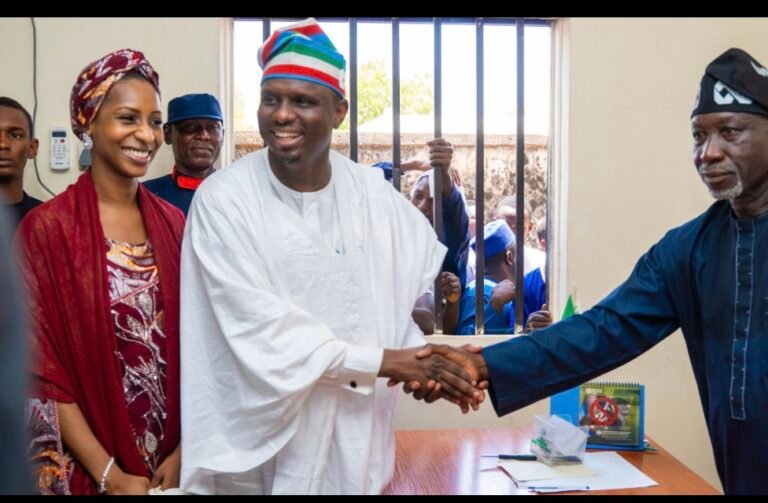
Author: Salisu Sani-Idris

  • AXA Mansard launches mentorship drive to boost women’s investment culture

    AXA Mansard launches mentorship drive to boost women’s investment culture

    By Taiye Olayemi

    AXA Mansard Investment has unveiled a speed-mentoring programme aimed at strengthening the investment culture and financial literacy of women in Nigeria.

    The initiative, launched to commemorate International Women’s Day, targets young professional women seeking to improve their financial decision-making and long-term wealth creation prospects.

    With the theme, “Acting for Her Progress,” the programme brought together accomplished female professionals across various sectors, who dedicated time to mentor and guide participants on navigating investment opportunities and building financial confidence.

    Among the mentors are Omolara Ismail of Jaiz Bank, Ifedayo Durosimi-Etti, Founder of Herconomy, Bolu Essien, a filmmaker and marketing professional, Fiona Uwagwu of Ogilvy UK, and senior executives from AXA Mansard, including Omowunmi Adewusi, Ngozi Ola-Israel, Jumoke Odunlami, Adebola Surakat and Abisola Nwoboshi.

    Commenting on the initiative, the Chief Executive Officer of AXA Mansard Investment, Deji Tunde-Anjous said that the programme represents another way AXA Mansard Investment is driving and ensuring inclusive protection.

    ‎He said, “The need to empower and strengthen the financial base of women is something we take very seriously.

    “We understand that women are multipliers and the more investment we make in them, the better the society becomes.

    “Iliteracy is a fundamental gap in the development trajectory of the society. But when you empower the women, we can close that gap faster”.

    ‎“At another level, this programme also represents our deep commitment to gender balance.

    “We wanted to demystify the myth around investment and risks, and we thought the best way to do that is to provide direct access to other women of who have walked the terrain.

    “We are excited and encouraged from the responses so far. The slot filled us faster than we imagined,”

    ‎On her part, Adebola Surakat, Chief Marketing Officer of AXA Mansard Plc, highlighted the importance of creating platforms where women can learn directly from those who have successfully navigated similar journeys.

    ‎“At AXA Mansard, we believe financial empowerment is one of the most powerful ways to unlock opportunities for women.

    “Mentorship plays a critical role in that journey, allowing women to learn directly from those who have successfully built, grown, and protected wealth.

    ‎”Through our Acting for Her Progress initiative, we are creating a platform where experienced women can give their time, insights, and encouragement so that others gain the clarity, confidence, and support needed to take bold steps in their financial and professional journeys.

    “For us, it is not just about celebrating successful women; it is about creating pathways for more women to progress, thrive, and build lasting financial security.”

    ‎Through initiatives like this, AXA Mansard continues to reinforce its commitment to empowering women by providing access to mentorship, knowledge, and supportive communities that encourage them to grow, lead, and thrive.

  • 2026 APC National Convention: As Eagle Square Beckons

    2026 APC National Convention: As Eagle Square Beckons

    By Stanley Nkwocha

    As dawn settles over Eagle Square in Abuja, what gathers this weekend is not simply a political convention. It is something more consequential. As part of a series of activities to strengthen the All Progressives Congress (APC) and prepare for the 2027 general elections, the event will focus on electing a new National Executive Council, following nationwide ward and state congresses.

    Since Nigeria’s return to democratic rule in 1999, party conventions have often been moments of negotiation, consolidation, and occasionally rupture. However, this one carries a different weight. It comes at a time the country is attempting one of the most ambitious socio-economic restructuring in its post-independence history.

    For those involved in the internal workings of the APC, the exercise is neither ceremonial nor routine. It is a reckoning with a set of promises made under difficult circumstances, and an attempt to measure whether those promises have begun to take institutional form.

    Nigeria has been here before. In the early 1980s, under austerity. In the mid-1990s, under structural adjustment. Each period demanded sacrifice, but often without a clear social contract between policy and people. The present moment attempts something more deliberate. It seeks to restructure without losing political legitimacy, a task that has historically proven elusive in many developing economies.

    To understand the significance of this moment, one must return to May 2023, when the administration of President Bola Ahmed Tinubu assumed office. The Nigerian economy at that time was constrained by a set of entrenched distortions. Fuel subsidies alone had consumed trillions of naira over decades, often benefiting intermediaries more than ordinary citizens. Multiple exchange rate windows had created arbitrage opportunities that discouraged productive investment.

    The decision to remove fuel subsidy was not unprecedented in Nigerian history. Attempts had been made under successive administrations, including those of President Olusegun Obasanjo and Goodluck Jonathan, both of which encountered strong public resistance. What distinguishes the 2023 reform is the simultaneity of actions. The unification of exchange rates occurred alongside subsidy removal, signalling a willingness to confront structural inefficiencies in a coordinated manner.

    The immediate effects were painful. Inflation rose, and the cost of living increased sharply. Yet, fiscal indicators began to shift. Government revenues expanded significantly, with increases exceeding nine trillion naira within a year. More importantly, the ratio of revenue to debt service, which had approached unsustainable levels close to total revenue, began to decline. For a country that had been spending nearly all it earned on servicing debt, this shift represents a critical turning point. Historically, countries that have successfully navigated similar reforms did so by pairing fiscal discipline with targeted social support.

    Infrastructure has long been a measure of state capacity in Nigeria. From the railway expansions of the colonial era to the oil-funded road networks of the 1970s, each phase of development has been marked by attempts to physically integrate the country’s vast geography.

    The current administration’s emphasis on large-scale projects such as the Lagos-Calabar Coastal Highway and the Sokoto-Badagry corridor reflects a return to this tradition. These construction projects are attempts to redraw the nation’s economic geography by linking production zones to consumption centres and export routes.

    Nigeria’s infrastructure deficit has been estimated by the African Development Bank to require investments running into hundreds of billions of dollars over several decades. Against this backdrop, each completed corridor represents more than asphalt and concrete. It signals the possibility of reducing transaction costs, improving market access, and encouraging regional specialisation.

    Few issues capture Nigeria’s past economic problems more clearly than its energy sector. For decades, the country exported crude oil while importing expensive refined petroleum products, which drained our foreign exchange. This dependence on foreign fuel has finally begun to change due to major private sector investments, most notably the Dangote Refinery.

    This transition is especially important given the current Israel-Iran war, which has caused global oil prices to spike. Without these domestic refining capabilities, the high cost of imports would have terribly hit the country, leading to extreme inflation and even greater economic instability.

    Nigeria’s demographic structure has always been both an opportunity and a challenge. With a median age under twenty, the country’s future is inseparable from the aspirations of its youth. What is emerging within the political process is a recognition that participation can no longer be mediated solely through traditional structures.

    The increasing role of digital platforms in political communication reflects this shift. Engagement is becoming more immediate, more decentralised and, the in many cases more demanding. Programmes such as student loan initiatives, digital enterprise funding, and skills development schemes by the federal government are attempts to translate demographic potential into economic productivity. The scale of these interventions remains a subject of debate, but their direction signals an acknowledgement that economic transformation cannot occur without human capital development.

    On the cost of food, the ongoing reforms of the Tinubu administration are having a positive effect. According to 2025 data from the National Bureau of Statistics (NBS), food prices had eased on a month-on-month basis by September 2025. Prices for key food items such as rice, garri, and tomatoes dropped slightly in September and in November 2025, thereby improving supply.

    Historically, countries that have harnessed youthful populations, such as South Korea in the latter half of the twentieth century, did so through sustained investment in education and export-oriented industrialisation. Nigeria’s path will necessarily differ, but the underlying principle remains the same.

    Granted, some reforms come with momentary hardships, but there have been sustained attempts by the current administration to immediately mitigate these challenges. Targeted interventions for small businesses, the increase in national minimum wages, the cash transfers, and temporary tariff adjustments on essential goods further indicate a balancing act between reform and relief.

    Every political era seeks a defining narrative. For the current administration, that narrative is still being written. The convention in Abuja offers an opportunity to articulate it more clearly, both to party members and to the broader public. Nigeria’s post-independence history has been marked by cycles of ambition and disappointment. Each generation has confronted the question of whether structural change is possible within existing institutions. The answer has often been uncertain.

    What is unfolding now is an attempt to answer that question differently. Whether it succeeds will depend on consistency, institutional discipline, and the capacity to translate policy into lived experience.

    The significance of this convention, therefore, lies not in its speeches or ceremonies, but in what it represents. It is a moment where political intent meets economic and social reality, and where the future of governance in Nigeria is being quietly but decisively, negotiated.

    Nkwocha, the Senior Special Assistant to The President on Media & Communications (Office of The Vice President), is serving as Vice Chairman 2 in the Digital and New Media Sub-Committee in the 2026 APC National Convention Committee.

  • Unilever Nigeria doubles profit to N32bn in 2025

    Unilever Nigeria doubles profit to N32bn in 2025

    By Taiye Olayemi

    Unilever Nigeria Plc says its profit after tax rose to N32 billion for the year ended Dec. 31, 2025, compared with N15 billion recorded in the same period in 2024.

    The company disclosed this in its audited financial results released on Monday in Lagos.

    It also posted a turnover of N214 billion, representing an increase of 43 per cent compared with N150 billion recorded in 2024.

    Its gross profit grew by 62 per cent to N90 billion in the period under review.

    Speaking on the results, the Managing Director of Unilever, Mr Tobi Adeniyi, said: “Our strong full-year performance reflects a business that is sharper, faster, and built to win.

    “This momentum stems from focusing our resources on our power brands.

    “These iconic brands continue to anchor our growth and benefit from structural tailwinds across the categories in which we operate.

    “Our disciplined approach reinforces Unilever’s collective intent to build a simpler, sharper organisation with a future-ready portfolio and brands that drive desirability at scale.”

    Adeniyi further highlighted how the current business model translates to better value for consumers.

    He added: “We have revamped our operations by embedding clarity, accountability, and speed at the heart of our processes.

    “We are now better positioned to innovate and serve the millions of Nigerian households that use our products daily.

    “We have strengthened our ‘play-to-win’ culture, where excellence in innovation and execution is non-negotiable.

    “We are committed to a culture of discipline that relentlessly improves our cost structures and elevates the overall consumer experience.”(NAN)(www.nannews.ng)

  • Gov. Eno, VHS ’81 alumni to celebrate 45 years of excellence

    Gov. Eno, VHS ’81 alumni to celebrate 45 years of excellence

    By Taiye Olayemi

    Victory High School (VHS), Ikeja Old Students’ Association, Class of 1981, has concluded plans to commemorate its 45th anniversary with a three-day programme of activities aimed at celebrating excellence and giving back to the society.

    Mr John Kayode, President of the association, said the anniversary, themed “Celebration of 45 Years of Excellence: Building for the Future,” would bring together alumni from across the country and the diaspora, including notable personalities such as Umo Eno.

    Kayode said the event would feature a lecture by Mr Tunde Sosina of the Information Builders Nigeria, titled “Education, Then and Now: Developing Competence and Excellence for National Development.”

    He noted that the celebration would begin on Friday, March 27, with the arrival of members at the school premises at noon, followed by a thanksgiving at the mosque from 12:30 p.m. to 1:30 p.m.

    According to him, the association will also visit a children’s orphanage between 1:30 p.m. and 2:30 p.m. to donate gifts, as part of its corporate social responsibility.

    “The opening ceremony will hold from 3:00 p.m. to 4:30 p.m,” he said.

    Kayode added that activities for the second day, Saturday, March 28, would commence with sporting exercises from 8:00 a.m. to 9:00 a.m., followed by free medical services for the community from 9:00 a.m. to 1:00 p.m.

    He said games and commissioning of projects would take place between 11:00 a.m. and 12:00 noon.

    “In the afternoon session, the Annual General Meeting (AGM) will hold from 3:00 p.m. to 4:30 p.m. at a designated hotel or event centre.

    “This will be followed by a cultural dance performance, the anniversary lecture, and award and recognition segment for distinguished members,” he said.

    Kayode further stated that the day would end with a banquet, dinner and dance from 5:30 p.m. to 7:00 p.m., with closing remarks scheduled for 7:15 p.m.

    He said the celebration would be rounded off on Sunday, March 29, with a church thanksgiving service from 8:00 a.m. to 11:00 a.m., followed by a farewell session.

    Kayode emphasised that the anniversary would not only celebrate the achievements of the alumni but also strengthen bonds among members and contribute to the development of the school and society at large.

  • Nasarawa varsity partners vocational institute to train 500 furniture artisans

    Nasarawa varsity partners vocational institute to train 500 furniture artisans

    By Salisu Sani-Idris

    Nasarawa State University, Keffi and Prince Interior Vocational Institute have taken a significant step toward strengthening entrepreneurship and practical skills development among its students aimed at training professional furniture artisans.

    The News Agency of Nigeria (NAN) reports that the collaboration formalised through a Memorandum of Understanding (MOU), is expected to produce over 500 furniture artisans within two years.

    In her remarks during the signing of the MoU, the Vice-Chancellor of the university, Prof. Sa’adatu Liman said that the collaboration was one of the criteria for TETFUND guidelines in entrepreneurial development output.

    Liman commended the company for finding the institution a worthy and reliable partner for the entrepreneurial and vocational project.

    According to her, the partnership will be beneficial to the entire university community.

    Earlier, the Director of the university Entrepreneureship Development Centre (EDC) , Prof. Rashidah Olanrewaju, said the university students will benefit from about 50 different skills in the EDC.

    She appreciated the company for the partnership and wished the partners a successful and fruitful collaboration.

    Also speaking., the Chief Executive Officer, Prince Interior Vocational Institute, Emeka Owgueke explained that the programme targets the establishment of a medium-scale furniture workshop on campus.

    He said that the workshop will be equipped with the basic machines to sustain production and reduce the university’s overhead costs on furniture procurement.

    According to Owgueke, the partnership represents a shared vision to create opportunities for young Nigerians to acquire marketable skills and build sustainable businesses within the furniture and interior design industry.

    He explained that participants in the programme will be exposed to the entire furniture production value chain, including raw material sourcing, product manufacturing, finishing, branding, marketing, and distribution.

    He said under the agreement, students of the university will receive hands-on training in furniture making, interior product design, and business development.

    ” Under the agreement, university students will be enrolled at Prince Interior Vocational Institute to acquire hands-on, certified training in furniture making, interior product design, and business development.

    He commended the leadership of the university for recognising the importance of vocational education and enterprise development in addressing youth unemployment and building a resilient local economy.

    “We are deeply grateful to Prof. Sa’adatu Liman and the leadership of the Nasarawa State University for recognising our uniqueness and extending this incredible opportunity to us.

    ” This partnership is more than an academic arrangement — it is a shared commitment to opening doors for more young Nigerians to boldly step into their career journey, whether from scratch, brushing up existing skills, or upgrading to the next level in the interior and design space.”

    He said that graduates of the programme will be equipped to launch, scale, and manage furniture enterprises, contributing directly to Nigeria’s industrial and economic growth agenda.

    ” This aligns with Nigeria’s Buy Naija to Grow the Naija initiative, prioritising locally made, high-quality products over imports.

    Students gain profitability-focused mentorship covering production, pricing, branding, and distribution of furniture goods.

    ” The Institute’s curriculum blends technical craftsmanship with entrepreneurial thinking, ensuring students do not merely learn a trade but learn to build a business also.

    ” From raw material sourcing to finished product delivery, participants gain a full-cycle understanding of the furniture value chain, including production, pricing, branding, and distribution, ” he said. (NAN)(www.nannews.ng)

  • NEM Insurance reaffirms commitment to women’s inclusion

    NEM Insurance reaffirms commitment to women’s inclusion

    By Taiye Olayemi

    NEM Insurance Plc has reaffirmed its commitment to supporting women and promoting gender inclusion as part of activities marking the 2026 International Women’s Day.

    The Chairman of NEM Insurance, Mr Tope Smart, made the pledge during a commemorative event at the company’s corporate headquarters in Lagos on Thursday.

    Smart said the company remained dedicated to fostering an inclusive environment that enables women to thrive in professional and entrepreneurial pursuits.

    According to him, women’s contributions remain critical to the sustainability and growth of the insurance industry.

    “In line with the global IWD theme, ‘Give To Gain’, we view gender diversity not merely as corporate social responsibility but as a driver of innovation and organisational performance.

    “Our commitment to female professionals at NEM Insurance is unwavering.

    “We recognise that giving women the right tools, mentorship and leadership opportunities enables the industry to gain dedication and diverse perspectives that advance progress,” he said.

    Smart described the firm as a multiple award-winning underwriting company and one of Nigeria’s top three general insurers.

    He said the company had consistently promoted initiatives that support women across the sector.

    Smart urged stakeholders in the insurance industry to prioritise the development of female talent to achieve a more inclusive and prosperous sector.

    He added that strengthening opportunities for women would contribute to the long-term growth of the industry and the Nigerian economy.

    Also speaking, the General Manager, Corporate Services, Mrs Mojisola Teluwo, said the company’s gender programmes translate advocacy into practical support.

    She cited the company’s “She Means Business” contest as one of its initiatives aimed at empowering women entrepreneurs and encouraging inclusion.

    “Supporting women-led initiatives is a strategic investment in national development.

    “At NEM Insurance, we believe when a woman thrives, a family thrives and the nation prospers.

    “The ‘She Means Business’ initiative reflects our commitment to move beyond celebration and provide tangible support that turns business aspirations into reality,” Teluwo said.

    She said the company’s support framework focused on leadership development, inclusive workplace culture and economic empowerment.

    According to her, the initiatives include targeted training programmes designed to prepare more women for executive leadership roles.

    She added that the framework also promotes professional growth, workplace wellbeing, and provides grants and professional support to female entrepreneurs.

    The event also featured mentorship sessions for female staff, with discussions on career advancement within Nigeria’s evolving insurance sector.

    Participants also engaged in a Paint and Sip activity designed to encourage creativity and interaction among staff members. (NAN)

  • Senator Ahmed Wadada: The Man Whose Politics Speaks the Language of the People

    Senator Ahmed Wadada: The Man Whose Politics Speaks the Language of the People

    By Sam Israel JP

    In a political environment where many public office holders gradually lose touch with the people who once stood by them, Senator Ahmed Wadada Aliyu stands out as a refreshing exception. His political journey, social engagements, and religious commitments have combined to make him a practical reference point for anyone who desires to succeed in public service. Indeed, through years of consistency and humility, Senator Wadada has become a living dictionary for those who wish to understand the true meaning of people-centered leadership.

    From his earliest days as a pupil in primary school to his formative years as a student at Government Secondary School, Miango in Plateau State, Wadada cultivated relationships that have endured the test of time. Unlike many individuals who abandon their past once they rise to prominence, he has maintained strong connections with his classmates and friends. His rise in public life has not distanced him from those who knew him before power and influence came his way.

    This rare loyalty to old relationships speaks volumes about the kind of person he is. In a society where political success often creates barriers between leaders and their roots, Wadada has continued to nurture friendships that date back decades. It is this sense of loyalty and humility that has endeared him to many across generations.

    His professional journey also reflects the same spirit of connection and humanity. During his time working with the United Bank for Africa and later at Benue Cement Company in Gboko, Benue State, he remained deeply connected to colleagues and associates. Even within the demanding schedule of professional life, Wadada made it a habit to keep in touch with people he had worked with.

    Those who have known him over the years attest to his remarkable accessibility. If a friend or associate places a call and he is unable to pick it immediately, they can be certain that he will return the call. In an era where many politicians become unreachable once they attain power, this simple but powerful habit demonstrates his respect for people.

    This culture of accessibility has also defined his conduct in public office. During his tenure in the Federal House of Representatives and now as a distinguished member of the Senate, Senator Wadada has maintained an open-door policy that allows people from different walks of life to meet with him. Many who walk into his office burdened with concerns or challenges often leave with renewed hope and smiles on their faces.

    Such openness has earned him friends across the social spectrum. Senator Wadada is not only respected among the political elite but also deeply loved among ordinary citizens. He has built bridges between the very high and the very low in society, creating a rare network of goodwill that many politicians can only aspire to.

    This wide acceptance has given him a clear advantage over many political figures who struggle to maintain genuine connections with their constituencies. While some politicians find it difficult to visit their hometowns freely due to strained relationships with the people, Wadada moves comfortably among his people because he has never severed those ties.

    Beyond politics, Senator Wadada has also demonstrated a strong commitment to religious harmony and social cohesion. At a time when unity is needed more than ever, his efforts to promote interfaith understanding have been remarkable. The ongoing fasting period observed by both Muslims and Christians has provided yet another opportunity for him to demonstrate this commitment.

    He has organized several interfaith breaking-of-fast gatherings that bring together people from different religious backgrounds. These gatherings are not merely symbolic events but meaningful platforms for strengthening unity, peace, and mutual respect among communities. And as the season continues, these initiatives are still ongoing.

    Leadership, at its best, is about using opportunity and influence to uplift others. Senator Wadada has consistently demonstrated that when entrusted with power, he uses it for the good of the people. His actions reflect a leader who understands that public office is a responsibility, not a privilege.

    Perhaps this is why many observers believe that divine favor continues to open doors before him. When a leader dedicates his position to serving humanity, it often appears as though circumstances themselves align to support his journey. In Wadada’s case, his record of service speaks louder than mere political promises.

    As the 2027 governorship election in Nasarawa State gradually approaches, conversations across the state increasingly point toward one name—Senator Ahmed Wadada Aliyu. For many citizens, the question is no longer whether he is qualified, but when the opportunity will come for him to lead the state.

    The evidence of his preparedness is clearly visible in his HEARTS Agenda, a vision that directly addresses the needs and aspirations of the people. Unlike abstract political slogans, this agenda resonates deeply with citizens because it is rooted in their everyday realities.

    All indications suggest that Senator Wadada represents credibility, experience, and readiness. His long-standing relationships, accessible leadership style, commitment to unity, and genuine concern for the welfare of the people have positioned him as one of the most prepared candidates for the future leadership of Nasarawa State.

    If leadership is truly about understanding the hearts of the people and responding to their hopes, then Senator Ahmed Wadada Aliyu has already demonstrated that he possesses that rare ability. And as the political horizon of 2027 becomes clearer, many believe that the story unfolding before Nasarawa State is one of destiny, preparation, and a leader whose time may have truly come.

    Sam Israel is the Senior Special Assistant SSA on media to Senator Ahmed Wadada Aliyu.

  • NICA identifies credit acccess as catalyst for economic transformation

    NICA identifies credit acccess as catalyst for economic transformation

    By Taiye Olayemi

    The National Institute of Credit Administration (NICA) Chartered, on Thursday, said access to responsible credit, financial inclusion, risk governance and institutional integrity would shape Nigeria’s economic future.

    Dr Markie Idowu, the newly inaugurated President and Chairman of Council, NICA, said this during her investiture ceremony in Lagos.

    Idowu noted that strengthening credit systems and promoting ethical lending practices would be critical to unlocking productivity, supporting small businesses and expanding economic opportunities across the country.

    She emphasised that a well-structured credit ecosystem would enhance financial inclusion, improve risk management and drive sustainable national development.

    According to her, NICA was born from a vision, the bold foresight of its founder, Prof. Chris Onalo, whose pioneering leadership established credit as a professional discipline.

    “As I assume office, I do so at a defining time for our nation, a time when access to responsible credit, financial inclusion, risk governance and institutional integrity will shape Nigeria’s economic future.

    “NICA must therefore rise beyond tradition into greater national relevance, not only as a professional body but as a strategic force in advancing sustainable economic progress.

    “The future of credit in Nigeria will not be shaped by chance, but by discipline, vision and leadership, and NICA will lead that future,” she said.

    Idowu explained that NICA recently signed a memorandum of understanding with the Office of the Vice President through the Presidential Committee on Economic and Financial Inclusion (PreCEFI).

    “This partnership affirms the growing national recognition that structured, ethical and inclusive credit is central to empowering citizens, strengthening enterprises and advancing national development.

    “NICA will continue to stand at the forefront of this transformation,” she said.

    She pledged that her administration would focus on strengthening professional standards and repositioning credit practice in Nigeria.

    “During my tenure, we will elevate professional standards, deepen credit education, embrace digital innovation in credit practice and reinforce ethical discipline across the industry.

    “We will strengthen our institutional voice, expand our national impact, invest in the next generation and ensure that credit in Nigeria becomes a tool for productivity, opportunity and sustainable growth — never a pathway to distress,” she said.

    Idowu also underscored the importance of leadership in driving institutional growth and public trust.

    “Leadership is stewardship. It is the duty to build trust, inspire confidence and leave institutions stronger than we met them.

    “I draw strength from the wisdom of Council, the commitment of our fellows and members and the partnership of stakeholders across government, industry and society.

    “Together, we will write the next chapter of NICA,stronger, bolder and more impactful,” she added.

    Also, Mr Andy Ojei, immediate past President of NICA, said the formal unveiling of the institute’s charter by President Bola Tinubu signalled a clear national commitment to professional credit management and economic development.

    Ojei said the unveiling of the Act after the institute attained chartered status under Act No. 26 of 2022, went beyond presidential assent and clearly communicated the law’s purpose to Nigerians.

    He noted that the Federal Government’s recognition of credit management as a national profession underscored its importance as a catalyst for economic growth.

    The Registrar and Chief Executive Officer of NICA, Prof. Chris Onalo, urged stakeholders to strengthen professionalism and credit literacy across the country.

    Onalo described credit management as central to Nigeria’s economic transformation.

    “Credit touches every stage of economic activity, enabling businesses to grow, improving purchasing power and driving entrepreneurship, job creation and national development.

    “I urge stakeholders to collaborate with the institute in unlocking economic opportunities and promoting a responsible credit culture among individuals and organisations,” he said.

    In a paper titled “The Role of Credit in Nigerian Economic Transformation”, an economist, Prof. Biodun Adedipe, said Nigeria’s economic transformation would remain unattainable without a deliberate reset of its credit ecosystem.

    Adedipe, also founder and Chief Consultant, B. Adedipe Associates Ltd., said the structure and architecture of the credit system were critical, particularly at a time when the country was undergoing macroeconomic reforms and policy shifts.

    According to him, Nigeria still has significant room to expand credit to stimulate growth.

    He, also a Professor of Practice, James Hope University, said a well-developed credit system could help achieve inclusive and sustainable growth by creating jobs rather than merely increasing wealth concentration.

    Adedipe explained that economic transformation goes beyond incremental changes and requires a comprehensive shift in how the economy functions.

    “Transformation is about shifting the entire system to become more efficient, not just making isolated changes,” he said.

    Gov. Babajide Sanwo-Olu of Lagos commended NICA for advancing credit culture and economic development in Nigeria.

    Sanwo-Olu was represented by Dr Biodun Ogunleye, Lagos State Commissioner for Energy and Mineral Resources.

    He said the institute had continued to set standards in promoting responsible credit practices and professional excellence.

    He congratulated the newly inaugurated president, describing her emergence as timely and well deserved, and expressed confidence in her capacity to advance credit education as a catalyst for sustainable growth.

    According to him, Lagos State continues to promote initiatives that deepen access to finance, particularly for Micro, Small and Medium Enterprises (MSMEs), through reforms, digital financial inclusion programmes and strategic public-private partnerships.

    He added that the state government remains committed to working with professional bodies such as NICA to strengthen credit governance, enhance risk management and promote ethical lending practices.

    The ceremony featured the swearing-in of the institute’s new governing council members and the conferment of honorary fellowship on distinguished stakeholders in the credit and financial services sector.

  • AXA Mansard customers commend firm’s Valentine initiative

    AXA Mansard customers commend firm’s Valentine initiative

    By Taiye Olayemi

    Customers of AXA Mansard have commended the firm for its Valentine’s Day initiative aimed at appreciating and supporting clients.

    The customers, who were subscribers to the company’s Life and Health Insurance plans, gave the commendation following a Valentine’s campaign during which the firm paid visits to some of them.

    The initiative, carried out in partnership with Nollywood actor Uzor Arukwe, featured personal interactions and gift presentations to selected customers.

    One of the beneficiaries, Mrs Ojamomi, said the gesture made her feel valued and cared for.

    “AXA Mansard came around to show me this much love. I feel like someone sees me and cares for me,” she said.

    Another customer, Mrs Akinyele, described the initiative as a reminder that she is not alone, commending the company for being thoughtful and humane.

    Also speaking, Mrs Mfonobong expressed excitement over the visit, describing AXA Mansard as outstanding.

    The initiative has also attracted reactions on social media, with users praising the company for redefining customer engagement during Valentine’s season.

    An X user, @YourAbujaDoctor, described AXA Mansard Health Maintenance Organisation (HMO) as client-focused, while another user, @FrankCutex, noted that the campaign highlighted genuine care and emotional connection with customers.

    Speaking on the initiative, the Chief Marketing Officer of AXA Mansard, Mrs Adebola Surakat, thanked customers for their continued patronage and trust.

    Surakat said the campaign was designed to demonstrate that insurance goes beyond transactions to real-life impact.

    “For us, this is more than just an initiative; it is another way to show that real people benefit from insurance, and that AXA Mansard is a partner at every step of life’s journey,” she said.