




Year: 2026

  • 2027 Elections: Group urges Fubara to sustain political stability


    By Aderogba George

    Abuja:  The Enforcers of Good Governance (EGG), a socio-political group in Rivers, has urged Gov. Siminalayi Fubara to prioritise stability and broad-based consultation as political activities gradually build toward the 2027 governorship election.

    In an open letter signed by its founder, Dr Kingsley Ogu on Sunday, the group said recent discussions within political circles on the possible composition of the governor’s future ticket had drawn attention among stakeholders across the state.

    The group noted that such discussions remained largely speculative, adding that evolving party structures and alignments continued to generate public interest.

    The group highlighted the role of the Deputy Governor, Prof. Ngozi Odu, in the Orashi axis; comprising Ogba/Egbema/Ndoni, Ahoada East, Ahoada West and Abua/Odual Local Government Areas, where she has established political support.

    According to the group, support recorded in parts of the state during the 2023 governorship election was influenced by existing political structures and alliances, including those linked to the deputy governor.

    The group also referenced Odu’s background in the civil service and public sector, noting that her experience contributed to her emergence as deputy governorship candidate in the last election cycle.

    EGG further stated that the working relationship within the administration, including during periods of political challenges, had remained an important factor in sustaining governance.

    On electoral considerations, the group noted that outcomes in Rivers elections are often shaped by performance in key areas such as Port Harcourt, Obio/Akpor and parts of the Orashi region.

    It added that established political structures could play a role in future contests.

    The group, which said it has grassroots presence across the 23 Local Government Areas of the state, emphasised the importance of inclusive engagement and cohesion within political alignments.

    It stressed that continued consultation with stakeholders would help strengthen confidence and support ahead of future elections.

    EGG also pointed to ongoing discussions in some quarters regarding participation and representation within political structures, noting that maintaining internal balance remained important.

    It urged the governor to sustain efforts toward unity and stability, noting that such measures would support governance and political outcomes as the state moves toward the next electoral cycle. (NAN) www.nannews.ng

  • Ndarani, SAN, presents nomination, expression of interest forms to Etsu Nupe for blessing

    Ndarani, SAN, presents nomination, expression of interest forms to Etsu Nupe for blessing

    By Mohammed Baba Busu

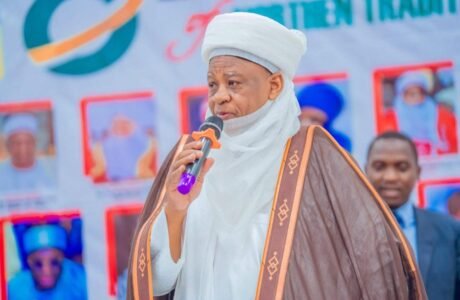
    Alhaji Mohammed Ndarani Mohammed (SAN), has presented his Expression of Interest and Nomination for Niger South Senatorial ticket to the Etsu Nupe and Chairman of the state Council of Traditional Rulers, Alhaji Yahaya Abubakar for his blessings.

    The legal luminary told the traditional council chairman that he is contesting on the platform of the All Progressives Congress (APC).

    Presenting the forms during the visit to the Wadata palace at the weekend in Bida, Ndarani described the exercise as a mark of respect, consultation and recognition of the traditional institution’s enduring role in societal leadership and cohesion.

    The legal icon said his aspiration was driven by a deep sense of duty to serve the people of Niger South and Nigeria at large.

    According to him, his years of legal practice and engagement with communities had equipped him with the insight needed to provide quality representation.

    He assured the royal father that, if elected, he would sponsor and champion legislative initiatives aimed at clearly defining and strengthening the constitutional role of traditional rulers in Nigeria, in recognition of their contributions to peace building, cultural preservation and grassroots governance.

    Ndarani further pledged to prioritise the welfare of the people through popular policies, inclusive governance and strategic interventions that would address critical challenges such as youth unemployment, infrastructure deficits, education and healthcare delivery.

    According to him, his vision is anchored on equity, justice and sustainable development, adding that he will collaborate with all stakeholders, including traditional institutions, to attract meaningful projects and opportunities to the senatorial district.

    “I have come not only to inform Your Royal Highness of my aspiration but also to seek your fatherly guidance and blessings.

    “The traditional institution remains central to our identity and stability as a people, and it deserves constitutional recognition and support,” he said.

    Ndarani reiterated his commitment to running an issue-based and people-driven campaign that reflects the aspirations of the electorate, while upholding the values of integrity, transparency and accountability.

    Responding, the Etsu Nupe, Alhaji Yahaya Abubakar, commended aspirant for showing respect to the traditional institution and for deeming it necessary to consult widely before embarking on his political journey.

    The royal father described the visit as a demonstration of humility, foresight and leadership, noting that such engagement strengthens the bond between political actors and traditional authorities.

    He urged Ndarani to remain steadfast, focused and committed to the ideals of good governance, while advising him to maintain peaceful conduct and respect for democratic processes throughout his campaign.

    The Etsu Nupe underscored the importance of leaders who are responsive to the needs of the people, adding that the expectations of the electorate are high and require dedication, sincerity and service.

    The first class traditional ruler offered his prayers and blessings for Ndarani’s success in his political endeavour, expressing confidence that with determination and the support of the people, he will contribute meaningfully to the development of the state and the nation at large.

  • Peter Obi quits ADC, blames toxic political environment, internal crisis

    Peter Obi quits ADC, blames toxic political environment, internal crisis


    By Nefishetu Yakubu

    Abuja:   Former Anambra Governor, Mr Peter Obi has announced his exit from the African Democratic Congress (ADC), citing worsening internal crises, external interference and growing hostility within party structures.

    He made the disclosure in a statement issued on his behalf by his media aide, Valentine Obienyem, on Sunday in Abuja.

    Obi described Nigeria’s political environment as increasingly toxic, marked by intimidation, insecurity and persistent scrutiny against individuals committed to sincere public service.

    He lamented that institutions established to protect citizens now often work against them, while those pursuing genuine leadership faced pressure publicly and privately.

    Clarifying his decision, Obi said his departure was not driven by personal grievances with party leaders, including David Mark and Atiku Abubakar.

    “Let me state clearly: my decision to leave the ADC is not because of our highly respected Chairman, Senator David Mark, treated me badly, nor because my leader and elder brother, Alhaji Atiku Abubakar.

    “It is not as well that any other respected leaders did anything personally wrong to me. I will continue to respect them,” he said.

    He maintained that he has respect for both leaders, but cited internal division, legal disputes and the infiltration of destabilising forces within ADC.

    According to Obi, the challenges mirror similar crises he previously encountered in the Labour Party, making meaningful political engagement increasingly difficult.

    The News Agency of Nigeria (NAN) recalls that Obi, the presidential candidate of LP in 2023 dumped the party on February 14 this year and thereafter, joined ADC.

    He also decried a societal culture where integrity, humility and due process were frequently mistaken for weakness rather than strength.

    Obi expressed concern that sincere efforts toward nation-building were being undermined by suspicion, exclusion and political manoeuvres driven more by control.

    He reaffirmed his commitment to Nigeria’s progress, stressing that citizens’ welfare remained his overriding priority.

    He highlighted insecurity, poverty and displacement as pressing national concerns, insisting that his ambition was not to hold political office, but a just society.(NAN)(www.nannews.ng)

  • Forum express concern over aborted drugs abuse awareness in Sokoto 

    Forum express concern over aborted drugs abuse awareness in Sokoto
    Sokoto Advancement Forum (SAF), a Non-partisan Civil Society Organisation (CSO), has expressed concern over denial by authority’s for permission to conduct it’s drug abuse sensitisations programme.
    This is contained in statement issued by the SAF Secretary, Mr Malami Ladan in Sokoto.
    Ladan apologies to members and other public on aborted brainstorming session organised to educate youths and the general public on the dangers of drug abuse.
    ” It is pertinent to mention that all arrangements were made for the conduct of the programme, but late evening on Friday that premises management communicated to Forum that the programme should not hold.
    ” The hotel management refunded the fee and stated clearly that the power-that-be insisted against the conduct of the event.
    ” SAF apologise to all that came for the programme and regrets inconveniences that postponement might have caused,” Ladan said.
    He said the SAF is fully committed to contributing it’s quota in the development of Sokoto State in all.areaa of human endeavors.
    However, Mr Abdallah Dankane, who spoke on behalf of Sokoto Guest Inn management, confirmed refund and could not further make satisfactory explanation on the situation.
    SAF is a group of professionals from different fields interested on supporting citizens empowerment, fine-tuning and shaping attitudes and spearheading activities they would facilitate meaningfully development in the state.
    Our Correspondent who was at scene of the event reports that dozens of personalities arrived the venue included two former Vice Chancellors of Usamanu Danfodio University (UDUS), Prof. Aminu Mika’ilu and Prof. Ruskuwa Arabu-Shehu.
    Others were Prof. Umar Wali, Prof. Mansur Ibrahim, Prof. Sani Umar, a community advocate, Mr Hassan Wurno and many other lectures of different tertiary levels, traditional rulers and many others.
  • Awoism and the promises of Pax Yayiana: converting rebellion to partnership

    Awoism and the promises of Pax Yayiana: converting rebellion to partnership


    By Kunle Somorin

    In Ogun politics, succession is rarely a tea party. It is often a storm. It arrives with bruised egos, fractured caucuses, old loyalties, late-night betrayals and the familiar thunder of men who mistake personal ambition for historical entitlement. The state has seen enough of this theatre: the Amosun-Abiodun rupture, the APM detour, ADC counter-mobilisations, and the lingering suspicion that no transition in Ogun is complete until every camp has first drawn blood.

    Yet, ahead of 2027, something unusual is taking shape.

    Senator Solomon Olamilekan Adeola, popularly known as Yayi, is not merely emerging as the reported consensus choice of the Ogun State All Progressives Congress. He is doing something more politically consequential: he is giving consensus a diplomatic meaning.

    He is visiting those who lost out. He is sitting with aspirants whose ambitions were overtaken by the party’s collegiate decision. He is receiving their documents, listening to their structures, acknowledging their relevance and converting potential rebellion into managed partnership. That is the quiet genius of the moment.

    In other places, consensus produces rumpus. In Ogun, at least for now, Yayi is trying to turn it into a civic handshake. The reported adoption of Yayi as the Ogun APC consensus governorship candidate was significant by itself. The decision was taken at an APC strategic caucus meeting in Abeokuta, attended by Governor Dapo Abiodun, all the living former governors and major party stakeholders. While congratulating Senator Adeola on his emergence as the party’s consensus choice, Gov. Abiodun urged a “no victor, no vanquished” spirit. That phrase matters.

    In Nigerian politics, “no victor, no vanquished” is often a decorative slogan recited after the vanquished have already been humiliated. But Yayi appears to have understood that a consensus candidate who behaves like a conqueror quickly becomes the author of his own opposition. So he did not merely wait to be celebrated. He began to move.

    His shuttle to Senator Iyabo Obasanjo, Ambassador Sarafa Tunji Isola, Gboyega Nasir Isiaka, Abiodun Akinlade and other stakeholders is the real story behind the story. It is one thing to be adopted by a caucus; it is another to domesticate that adoption in the hearts of those who had their own calculations, structures and expectations.

    This is where Yayi’s politics becomes more interesting than the headline. He is treating consensus not as an imperial decree, but as a negotiated settlement. A meeting with Senator Iyabo Obasanjo is not an ordinary courtesy call. Her name carries two forms of capital.

    The first is personal: she is a former senator and a figure with her own political experience and structure. The second is symbolic: she is the first child and beloved daughter of former President Olusegun Obasanjo, whose shadow over Ogun politics remains large, complicated, yet impossible to ignore.

    For Yayi to sit with Iyabo Obasanjo after the consensus decision was to acknowledge that Ogun politics is not merely run by party lists. It is also shaped by memory, pedigree, networks and old emotional geographies. Such a meeting sends a message beyond the room: the new project is not afraid of old houses. It is willing to enter them, greet them properly, and invite them into the road ahead.

    In a state where political camps can easily harden into hereditary resentment, the optics of that engagement are useful. They suggest that Yayi’s approach is not to erase other claims, but to absorb their dignity.

    The visit to Ambassador Sarafa Tunji Isola may be the clearest expression of the collegiate idea. Isola is not a peripheral figure. He is a local government chairman, former secretary to the state government, former minister, former Nigerian High Commissioner to the United Kingdom, experienced administrator and a man with roots in Ogun Central politics. His own governorship aspiration was not frivolous. It represented a policy tendency, a network and a constituency of belief.

    Reports of Yayi’s visit to him carried two important details: the collapse of support groups into the Yayi project and the promise to incorporate ideas from other aspirants’ manifestoes into a broader governance agenda. That is how consensus becomes civilised.

    The defeated aspirant is not treated as debris. His policy work is not thrown away. His supporters are not left politically homeless. His intellectual investment is not mocked as wasted paper. Instead, the candidate who emerged says, in effect: bring your ideas; the state is larger than one ambition.

    This is the diplomatic meaning of the collegiate. It is not merely that elders have spoken. It is that the ideas of those who did not emerge can still travel into government through the candidate who did. That is a more mature politics.

    Gboyega Nasir Isiaka, popularly known as GNI, represents another layer of Ogun’s political history. He has been one of the most recognisable names in the Ogun West governorship struggle. In 2019, he ran under the African Democratic Congress and polled significantly in a contest eventually won by Dapo Abiodun of the APC. His political journey has passed through different alignments, but his relevance in the Ogun West question has remained.

    When GNI’s accepted Yayi’s emergence, he was quoted as saying the decision had been made at the party’s top echelon and that “the president has spoken”. More importantly, he urged everyone to come together. That was not a casual remark. It was a surrender of personal arithmetic to collective strategy.

    For Ogun West, GNI’s posture is especially important. The zone has waited since the creation of Ogun State in 1976 to produce a governor. Its problem has never been lack of ambition; it has often been fragmentation. Too many sons have gone to the stream with separate calabashes and returned with nothing. Yayi’s project, if it is to succeed, must avoid that old tragedy. GNI’s alignment helps him do so.

    It tells Ogun West that 2027 is not the season to reopen every old rivalry. It is the season to consolidate the strongest vehicle available.

    The two Akinlades – Abiodun and Adekunle’s – though not biologically related – endorsement also carries historical value. The latter Akinlade’s tendency recalls the turbulence of 2019, when the APC family in Ogun fractured, with the Allied Peoples Movement becoming the vehicle of the Amosun-backed challenge against Dapo Abiodun. That rupture nearly turned succession into political civil war. It taught Ogun APC a hard lesson: when internal wounds are not treated early, they become electoral infections.

    The Akinlades movement into the Yayi column therefore represents more than another endorsement. It is a sign that an old insurgent current within Ogun politics is being pacified. This is the art Yayi seems to understand: the management of wounded ambition before it becomes organised sabotage. Every serious candidate must campaign against the opposition. But in Nigerian party politics, the first election is often inside the house. Yayi’s shuttle is an attempt to win that inner election not by crushing dissent, but by making dissent unnecessary.

    To understand the deeper meaning of this moment, one must return to Chief Obafemi Awolowo and the progressive tradition he built in the old Western Region. Awolowo’s politics was not merely about slogans. It was about organisation, planning, social welfare, disciplined party machinery and the deliberate use of government to expand human capacity.

    As Premier of the Western Region between 1954 and 1959, Awolowo’s administration introduced free universal primary education, expanded social services, promoted agricultural development and established Africa’s first television station in Ibadan. Britannica records his progressive commitment to education, welfare and federalism. Historical accounts of the Western Region’s free education policy show that, from 1955, the programme radically expanded access to schooling and changed the social trajectory of the region.

    Awoism was therefore not noise. It was method. It believed in the educated citizen. It believed in the planned society. It believed in competent administration. It believed that politics must be anchored in measurable social benefit.

    But there was another element often forgotten: the collegiate discipline of the old progressive order. The Action Group was not perfect, but it understood organisation. It valued caucus, consultation, hierarchy, policy clarity and collective responsibility. Leaders were not supposed to be isolated warlords. They were expected to operate within a disciplined political family.

    That is the historical frame through which the Yayi phenomenon should be read. His emergence is not simply the rise of a man from Ogun West. It is the possible return of a collegiate approach to succession: elders consulting, aspirants yielding, structures merging, manifestoes being considered, and the party seeking order before the general election.

    That does not mean democracy should be suffocated. Consensus can become imposition if poorly managed. But when consensus is followed by reconciliation, consultation and policy integration, it begins to resemble the old progressive instinct: politics as disciplined organisation rather than permanent warfare.
    Politics, at its most practical level, is still a marketplace. Parties do not merely nominate men; they market them. Yayi is easier to market than many aspirants because his claim is not built on biography alone. It rests on representation, visibility and delivery.

    He has travelled a long political road: Lagos State House of Assembly, House of Representatives, Senate for Lagos West, and now Senate for Ogun West. He currently chairs the powerful Senate Committee on Appropriations. That position gives him national visibility and unusual institutional leverage.

    His supporters point to scholarships, bursaries, empowerment programmes, transformers, road projects, health facilities, school interventions, ICT centres, grants to market women and farmers, and other constituency projects as evidence that he understands the grammar of practical representation.

    Published accounts sympathetic to his aspiration have credited him with hundreds of infrastructure interventions across Ogun West and adjoining areas, including roads, primary health centres, electricity transformers, solar streetlights and educational support schemes.

    Opponents may question the politics of such interventions. They may ask whether constituency projects should be converted into governorship capital. That is fair political argument. But even critics must admit that Yayi has made himself visible in communities where politics is judged by the simple question: what did you bring home?

    In that sense, he is not merely selling an aspiration. He is selling a record and in a state fatigued by rhetoric, a record is a powerful campaign language.

    The deeper achievement of the Yayi shuttle is that it appears to be quietening opposition on two fronts. Within APC, it is reducing the risk of post-consensus bitterness. Aspirants who might have become rallying points for grievance are being visited, respected and accommodated. Their supporters are being given a path into the larger tent.

    Outside the strict APC frame, the symbolism is equally important. Men like GNI and Akinlade are not just APC names; they are men whose political histories connect to previous opposition platforms, splinter movements and alternative power centres. To bring such figures into visible alignment is to drain oxygen from possible counter-coalitions before they gather force.

    This is why the shuttle deserves attention. It is not mere courtesy. It is preventive politics. Yayi is not waiting for opposition to mature before confronting it. He is meeting it early, greeting it respectfully and converting it into partnership where possible. This is how political storms are sometimes stopped before they acquire thunder.

    There is also the moral weight of Ogun West. Since 1976, Ogun East and Ogun Central have produced governors. Ogun West has remained outside the governorship seat. The Yewa-Awori argument has therefore matured from complaint into historical claim.

    But history alone is not enough. A zone may deserve power and still lose it if it presents the wrong candidate, fractures its vote, or fails to speak to the whole state.

    Yayi’s strength is that he combines the Ogun West equity argument with statewide marketability. He can speak the language of historical correction, but he also brings federal connections, legislative experience and a record his handlers can package beyond his home district.

    That is why his candidacy is more dangerous to rivals than a mere zoning agitation. It is zoning plus structure. Sentiment plus machinery. Equity plus delivery.

    Still, Yayi’s camp must avoid triumphal arrogance. Consensus is delicate. Those who have yielded today can become saboteurs tomorrow if they feel humiliated or excluded. The shuttle must therefore continue beyond photo opportunities. It must become a system of inclusion: policy committees, campaign roles, local integration, stakeholder briefings and visible respect for those who stepped down or lost out.

    The second danger is the perception of imposition. The more his supporters describe him as inevitable, the more they must show that his inevitability is earned, not forced. Ogun voters are not spectators at a coronation. They are citizens in an election.

    The third danger is over-mythologising. Calling Yayi an Awoist figure imposes a high burden. Awoism is not merely about empowerment programmes or political structure. It is about education, welfare, fiscal discipline, industrial imagination, rural transformation and clean governance. If Yayi is to be sold through the Awoist frame, he must produce an Awoist-grade development programme.

    That means more than campaign generosity. It means a serious plan for Ogun’s economy: agro-industrial corridors, border-town commerce, internally generated revenue, education reform, technical training, power partnerships, health access, rural roads, digital jobs, and the integration of Ogun’s Lagos-facing economy with its neglected hinterland.

    The Sarafa manifesto gesture is therefore not cosmetic. It should become the beginning of a policy synthesis.

    For now, what Ogun APC is witnessing may be called Pax Yayiana: not the silence of fear, but the calm produced by strategic accommodation. Yayi has not abolished ambition. He has given it a seat at the table. He has not erased rivals. He has begun to convert them into stakeholders. He has not merely accepted consensus. He has gone out to give it emotional legitimacy.
    That is why his meetings with Iyabo Obasanjo, Sarafa Tunji Isola, GNI, Abiodun Akinlade and others matter. They are not footnotes. They are the architecture of the emerging order.

    In a political culture where losers are often abandoned, Yayi is making the loser useful. In a system where consensus often produces rebellion, he is making it negotiable. In a state where succession has often been poisoned by ego, he is attempting to restore the collegiate ethic.

    This is where the Awoist echo becomes strongest. Awolowo’s progressivism was not only about what government delivered. It was also about how politics was organised to make delivery possible. Discipline before development. Planning before performance. Consultation before consolidation.

    Yayi’s phenomenon, at its best, suggests a return to that instinct. Not yet the full restoration of Awoism, but perhaps its quiet rehearsal. Yayi’s shuttle is therefore not ornamental. It is strategic, collegiate and deeply political.

    If he sustains it, Ogun may enter 2027 with something rare: a ruling party less consumed by internal combustion, a historically excluded zone with a viable vehicle, and a progressive tradition being asked to prove that it can still produce order, delivery and disciplined succession.

    That is the promise of Pax Yayiana.

    (Somorin writes from Abeokuta)

  • Osun: Police deny alleged attack on Gov Adeleke’s son

    Osun: Police deny alleged attack on Gov Adeleke’s son

    The Osun State Police Command has dismissed reports of an alleged assassination attempt on Adebayo Adeleke, aka B-Red, son of Governor Ademola Adeleke.

    The police described the report as false, unverified, and capable of causing unnecessary panic among members of the public.


    The state government had earlier, in a statement signed by the Commissioner for Information and Public Enlightenment, Kolapo Alimi, announced that B-Red escaped an assassination attempt at Oke-Fia in Osogbo on Wednesday.

    However, reacting to enquiries, the Police Public Relations Officer, DSP Abiodun Ojelabi, refuted the claim and provided details of the reported incident.


    “The Osun State Police Command wishes to inform the general public of an incident reported on 30th April 2026 at about 1630 hrs by Mr. Adebayo David Adeleke,” he said.

    Ojelabi explained that the complainant reported being followed by a group of individuals on motorcycles while driving along the Olaiya–Alekuwodo area of Osogbo.


    According to him, “the individuals were allegedly pointing at his vehicle and chanting words suggesting he was ‘the Governor’s son’.”


    He added that after passing a traffic light, a white Toyota Venza without a registration number, accompanied by unidentified men on motorcycles, continued to trail him.

    The complainant stated that he and his associates were able to leave the area and safely made their way into the Government House, Oke-Fia, Osogbo,” Ojelabi said.


    He noted that the complainant confirmed he was neither attacked nor physically harmed during the incident.


    The police spokesman said the matter had been transferred to the State Criminal Investigation Department for discreet investigation.


  • It’s false – Dangote opens up on alleged rift with Tony Elumelu

    It’s false – Dangote opens up on alleged rift with Tony Elumelu

    The Dangote Group has denied reports making the rounds that its president, Aliko Dangote, has a purported rift with the Chairman of the United Bank for Africa, Tony Elumelu.

    In a statement on Saturday, the spokesperson of the Dangote Group, Anthony Chiejina, dismissed the claim as false.


    The firm also rejected allegations that the Dangote Petroleum Refinery & Petrochemicals was financed through personal borrowing from friends.

    The Dangote Group warned individuals peddling such falsehoods to desist or face appropriate legal action.


    “The Dangote Group has become aware of a publication titled ‘Aliko Dangote Speaks Out on Why He Distanced Himself from Tony Elumelu,’ which is false, malicious, and baseless. At no time did the president or the Group make such statements or express such sentiments.

    The Group categorically rejects claims that the development of the Dangote Petroleum Refinery & Petrochemicals was financed through personal borrowing from friends. These assertions are wholly inaccurate and constitute a deliberate misrepresentation of facts. As a matter of principle, Aliko Dangote neither finances his projects through personal borrowing from friends nor engages in lending arrangements of that nature. Any individual making such claims should provide verifiable evidence to substantiate them.


    “Equally false are suggestions of any estrangement between Aliko Dangote and Mr. Tony Elumelu, with whom he maintains a longstanding and cordial relationship.

    Furthermore, the Group notes with concern a rising pattern of fabricated statements and the unauthorized use of Aliko Dangote’s name, likeness, and image in AI-generated advertisements and other misleading content. These actions amount to reputational harm and potential fraud.

    All individuals, organizations, and platforms involved in the creation, publication, or dissemination of such false content are hereby put on notice to desist immediately. The Group will take appropriate steps, including legal action where necessary, to protect its reputation and that of its leadership.


    “Dangote Group remains committed to upholding the highest standards of integrity while continuing to drive industrialization, economic self-sufficiency, and sustainable development across Africa,” the Dangote Group stated.


  • Suspected terrorists kill three security operatives in Kwara

    Suspected terrorists kill three security operatives in Kwara

    Three security personnel have been killed and two others injured after suspected terrorists attacked Tenobo village in Kaiama Local Government Area of Kwara State.

    The incident was contained in a post shared on X on Saturday night by security analyst, Zagazola Makama.

    According to the post, the attack happened at about 1:10 a.m. on May 1 when armed men stormed the community and engaged security operatives stationed in the area.


    Security sources said troops of the 22 Brigade, alongside other operatives, forest guards, and vigilantes, responded quickly after a distress alert was raised.

    Preliminary information showed that three security personnel lost their lives during the attack, while two Mobile Police officers sustained gunshot injuries.


    “The attackers were also said to have escaped with two AK-47 rifles and one riot gun after the operation,” Makama wrote

    The injured personnel and the bodies of the deceased were evacuated to the University of Ilorin Teaching Hospital for treatment and further procedures.


    Security agencies have since launched follow-up operations to track down the attackers and recover the stolen weapons

  • 2027: Adamawa Reps aspirant advocates merit-based voting

    2027: Adamawa Reps aspirant advocates merit-based voting

    By Talatu Maiwada

    A House of Representatives aspirant, Mr Salihijo Ahmad, has urged voters to assess candidates based on competence, capacity and verifiable records of service.

    Ahmad made the call on Saturday in Yola South Local Government Area while declaring his intention to contest Yola North, Yola South and Girei Federal Constituency seat.

    “I urge voters to assess aspirants based on competence, capacity and verifiable records of service, as performance in previous roles sets one apart,” he said.

    He said his representation would be development-driven, anchored on his public service record, particularly his tenure as Managing Director of the Rural Electrification Agency.

    Ahmad said he facilitated impactful projects across several communities, noting that his federal experience positions him to drive meaningful development at the National Assembly.

    “This is not just about contesting an election; it is about building a constituency where every voice is heard and development reaches every community,” he said.

    He described his ambition as service-driven, stressing transparency, accountability and sustained engagement between elected officials and constituents.

    “My people demand a leader who will listen, act and deliver.

    “I am ready to bridge the gap between government and the people,” he added.

    Ahmad said his rise from a junior officer to managing director prepared him to tackle governance challenges with practical and innovative solutions.

    He listed priorities to include infrastructure, power supply, rural electrification and water provision, describing them as critical to improving livelihoods.

    Earlier, Ahmad visited All Progressives Congress (APC) offices in Yola South, Yola North and Girei LGAs, reaffirming loyalty to the party and its leadership. (NAN)(www.nannews.ng).