Year: 2026

  • WISTA Nigeria backs Net-Zero, hails Peterside vision for Maritime

    WISTA Nigeria President, Dr Odunayo Ani and Former Director General, Nigerian Maritime Administration and Safety Agency NIMASA, Dr Peterside Dakuku
    WISTA Nigeria backs Net-Zero, hails Peterside vision for Maritime
    Lagos, June 28, 2026 , The Women International Shipping and Trading Association (WISTA) Nigeria, has reaffirmed commitment to the maritime industry’s net-zero transition, applauding the former Director General, Nigerian Administration and Safety Agency (NIMASA) Dr Dakuku Peterside’s, keynote on Africa’s maritime policy and trade gaps.
    WISTA Nigeria President, Dr Odunayo Ani, disclosed this in a statement on Sunday in Lagos.
    It also commended former Director-General of the Nigerian Maritime Administration and Safety Agency (NIMASA), Dr Dakuku Peterside, for calling for practical reforms in Africa’s maritime policy and trade architecture during a two-day Regional Conference of WISTA Nigeria.
    Ani said Peterside’s call in his keynote on Africa’s maritime policy and trade gaps was timely, insightful and action-oriented.
    She quoted him as saying African governments, regulators and stakeholders need move beyond policy statements to practical implementation, innovation, institutional strengthening and strategic maritime investment.
    She stressed the need for collaboration, cleaner technologies, green financing, capacity development and inclusive leadership to ensure global competitiveness in the maritime sector.
    Ani, also Director of Finance, NIMASA, said WISTA Nigeria aligned with Peterside’s call for modern and efficient ports, cleaner shipping corridors, stronger indigenous shipping capacity and sustained investment in maritime human capital.
    She said these priorities were essential to building an environmentally responsible and globally competitive African maritime industry capable of attracting investment, reducing emissions and creating sustainable jobs across the continent.
    According to her, WISTA Nigeria remains committed, as a leading advocate for diversity, inclusion and sustainable development, to initiatives that accelerate decarbonisation, drive innovation, strengthen policy implementation and empower women professionals.
    Ani added that empowering women would deepen contributions to Africa’s blue economy and net-zero ambitions, while strengthening technical skills, mentorship networks and leadership pipelines across shipping, ports and logistics.
    She further commended Peterside’s emphasis on bridging policy and execution, describing it as a key pathway to unlocking Africa’s maritime potential under the African Continental Free Trade Area (AfCFTA) and sustainable global trade.
  • Gov. Adeleke Hails Police Arrest of Suspected Killer Political Thug in Osun

    Gov. Adeleke Hails Police Arrest of Suspected Killer Political Thug in Osun


    Tanfeani is alleged to have been involved in the killing of Ezekiel Olapade near the premises of the Irepodun Local Government Secretariat last Sunday.

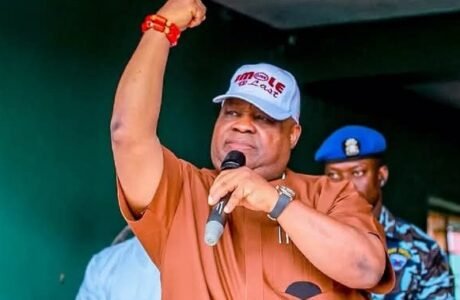
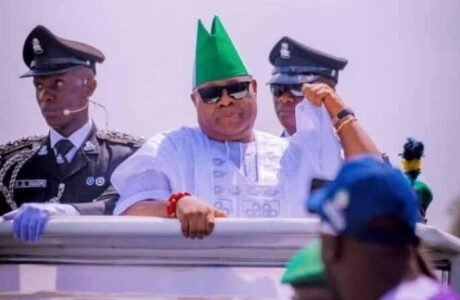
    Osun State Governor Ademola Adeleke has commended the Inspector-General of Police, Olatunji Disu, and the Osun State Police Command over the arrest of Saheed Kareem Tanfeani, a suspected political thug allegedly linked to the killing of a man during recent violence in the state.

    In a statement issued on Sunday by the Commissioner for Information and Public Enlightenment, Kolapo Alimi, the governor described the arrest as a positive step but urged the police to intensify efforts to apprehend other wanted suspects.

    Tanfeani is alleged to have been involved in the killing of Ezekiel Olapade near the premises of the Irepodun Local Government Secretariat last Sunday.

    Governor Adeleke called on the police to intensify the manhunt for other suspects, including individuals identified as Asiri Eniba, Delaw, Ojuyobo, Aleba, Lucifer, Lasisi and others alleged to be terrorising parts of the state.

    The governor also urged the police to conduct a thorough investigation into the case and ensure the suspect is prosecuted if found culpable.

    While reiterating his earlier demand for changes in the leadership of the state’s anti-cultism unit, Adeleke alleged that the continued leadership of the unit by an officer identified as Eluku had undermined public confidence.

    The governor claimed that the officer’s alleged association with some of the wanted suspects remained “a dark spot.”

    “The arrest of Saheed and Akilapa is a good development,” Adeleke said.

    “We are watching to see how far the police will prove its readiness to enforce the law and secure our people.”

    He added, “For now, we thank the IGP, the Deputy Inspector General of Police and others who made this possible.”

    The governor maintained that the police must sustain the operation by tracking down the remaining suspects and ensuring that those responsible for criminal activities in the state are brought to justice.


  • SGF condemns killing of MACBAN chairman, demands swift justice


    By Emmanuel Antswen

    Makurdi:  Secretary to the Government of the Federation (SGF), Sen. George Akume, has condemned the killing of the Benue Chairman of Miyetti Allah Cattle Breeders Association of Nigeria (MACBAN), Alhaji Risku Mohammed, and his associate.

    Akume, in a statement issued on Sunday by his Special Adviser on Media and Publicity, Mr Yomi Odunuga, called for the immediate arrest and prosecution of those responsible for the killings.

    The SGF described the incident as a direct attack on the peace, reconciliation and mutual trust that communities across Benue had worked hard to rebuild over the years.

    He expressed concern that the killings occurred at a time when the state was recording improvements in security and peaceful coexistence among its diverse communities.

    Akume warned that criminal elements must not be allowed to undermine the gains achieved through dialogue, understanding and collective sacrifice.

    The SGF urged residents of the state to reject attempts to incite hatred, violence and reprisals, stressing that no individual or group should take the law into its own hands.

    He maintained that sustainable development and economic prosperity could only thrive in an atmosphere of peace, tolerance and mutual respect.

    The SGF extended condolences to the family of the late MACBAN chairman, the association’s leadership and members, as well as others affected by the incident.

    He charged the Nigeria Police Force, the Department of State Services (DSS) and other security agencies to conduct a thorough, transparent and painstaking investigation into the killings.

    According to him, no stone should be left unturned in identifying, arresting and prosecuting all those connected with the crime.

    Akume recalled that following the killings in Yelwata, he had demanded the arrest and prosecution of those responsible, noting that the suspects had since been apprehended and were standing trial.

    He said security agencies must demonstrate the same determination in ensuring justice for the slain MACBAN chairman and his associate.

    “The lives of every Nigerian are sacred. Those who believe they can undermine peace through violence and murder must understand that there will be no hiding place for them.

    “Justice must not only be done but must be seen to be done,” he said.

    Akume reaffirmed President Bola Tinubu’s commitment to tackling insecurity across the country, adding that the government had provided security and intelligence agencies with the support, resources and strategic direction required to combat criminality.

    He urged residents of Benue to remain calm, cooperate with security agencies by providing credible information to aid ongoing investigations and continue supporting efforts to strengthen peace, security and harmonious coexistence in the state. (NAN) www.

  • Drug Abuse: Enugu Govt. expands mental health services, access to prevention, treatment programmes

    Drug Abuse: Enugu Govt. expands mental health services, access to prevention, treatment programmes

    Drug Abuse: Enugu Govt. expands mental health services, access to prevention, treatment programmes

    Gov. Peter Mbah of Enugu State says his administration is currently strengthening and expanding mental health services as well as access to prevention and treatment programmes in its four-tier health systems.

    Mbah said this in a keynote address at the weekend during the 2026 International Day Against Drug Abuse and Illicit Trafficking, which was organised by the National Drug Law Enforcement Agency (NDLEA), Enugu State Command.

    The commemoration was themed: “The World Drug Problem: Persisting Issues, New Challenges, Innovative Response”.

    Represented by the Commissioner for Health, Prof. George Ugwu, the governor also revealed that special adolescent health units were also being established in health facilities as part of efforts to address drug abuse among young people.


    He described drug abuse as both a public health and security challenge, with devastating effects on individuals, families, and society; adding that government was also focusing on promoting mental health well-being education.

    Mbah emphasised the need for innovative, evidence-based, and collaborative strategies to address the growing drug abuse challenge.

    The governor urged young people to reject drug abuse, while encouraging parents to play active roles in prevention.

    According to him, the state government will continue to collaborate with the NDLEA and other stakeholders to build a safer, healthier, and drug-free Enugu State.


    Mbah urged youths to take advantage of the numerous socioeconomic opportunities created by the state government.

    He noted that opportunities had been opened up in agriculture, digital technology and mechanised farming to empower youths and discourage involvement in drug abuse.

    “We cannot build a resilient and striving economy with youths who are not hardworking. It is with your brains and physical strength that our economy can grow.

    “The consequences of drug abuse are enormous and we must ensure our youths remain productive and contribute meaningfully to economic development, through physical and mental well-being,” he said.


    Earlier, the Commander of NDLEA in Enugu State, Mr Owoputi Adekunle, revealed that the agency seized 929.463 kilogrammes of various illicit substances and secured the conviction of 53 drug-related dealers in the state.

    Adekunle said that various illicit drugs, which included: Cannabis Sativa and methamphetamine, popularly known as Crystal Meth or “Mkpuru Mmiri,” were seized between November 2025 and June 2026.

    He said that within the period under review, the command also counselled 157 clients, while 23 others were currently undergoing rehabilitation.

    “Our prosecution unit is not left out. A total of 53 suspects have been convicted, while 111 cases are currently pending before the Federal High Court.

    “Apart from the convictions, assets acquired as proceeds of crime were forfeited to the Federal Government,” he said.


    Delivering a keynote lecture, Dr Roland Okereke, a Senior Registrar at the Federal Neuropsychiatric Hospital, Enugu, described substance abuse as a “chronic illness” that destroys lives and limited future opportunities.

    Okereke stressed that prevention remained the most effective strategy, noting that many people with substance use disorders delayed seeking medical care due to stigma and poor access to treatment.

    Speaking, Chairman of Ezeagu Traditional Rulers Council, Igwe Emmanuel Anichebe, urged parents to build closer relationships with their children to enable them share their challenges and receive proper guidance before being influenced negatively by unscrupulous peers.

    Highpoints of the event were the crowning of Gov. Mbah as a Drug Abuse Ambassador; drama presentations and debates among others.

    The event attracted traditional rulers, representatives of security agencies, officials of the Ministry of Health, officials of Enugu State Universal Basic Education Board (ENSUBEB), NYSC corps members and youth organizations in the state.

  • Kaduna: JNI Condemns mob killing of Ummulkhair, demands justice

    Kaduna: JNI Condemns mob killing of Ummulkhair, demands justice


    By Mohammad Tijjani

    Kaduna:  The Jama’atu Nasril Islam (JNI) has strongly condemned the gruesome mob killing of a woman, Ummulkhair, at Mararaban Jos in Kaduna State, describing the incident as barbaric and ungodly.

    The organisation, under the leadership of the Sultan of Sokoto,  Sa’ad Abubakar, expressed shock and grief over the incident, saying it reflected the collapse of moral values, the spread of misinformation and the increasing resort to jungle justice.

    In a statement issued by the Secretary-General of JNI, Prof. Khalid  Aliyu, the organisation said the lynching represented one of the darkest manifestations of lawlessness, collective irresponsibility and moral degeneration threatening peace and stability in Nigeria.

    According to the statement, the reckless spread of misinformation, fake allegations and inciting narratives has become a dangerous weapon capable of leading innocent persons to humiliation, violence and death.

    “No society survives when emotions replace evidence and mob actions replace institutions of justice. Sadly, our society is dangerously drifting from civilisation toward barbarism, where anger has replaced reason and collective violence has become normalised,” the statement said.

    JNI extended its condolences to the family of the deceased, the Kaduna State Government, the Muslim community and all Nigerians affected by the tragedy.

    The organisation prayed for Allah’s mercy upon the deceased and for strength and fortitude for her family to bear the painful loss.

    It also warned against the increasing culture of mob action, instant judgement and extra-judicial punishment, stressing that Islam places a high premium on the sanctity of human life and prohibits the killing of innocent persons outside due legal process.

    JNI called for an immediate, transparent and impartial investigation into the circumstances surrounding the killing and urged security agencies to ensure that all those directly or indirectly involved in the incident are identified and prosecuted.

    The organisation also demanded an investigation into allegations that the Divisional Police Officer (DPO) of Mararaban Jos Division allegedly failed to protect the victim and surrendered her to the mob.

    According to JNI, if investigations establish negligence, misconduct or complicity by any security personnel, such officers should face the full consequences of the law.

    The group further called for the payment of compensation (Diyya) to the bereaved family and urged the Kaduna State Government to provide humanitarian assistance and long-term support to the deceased’s dependents.

    It specifically appealed to the government to take responsibility for the education and welfare of Ummulkhair’s children and provide psychological and emotional support to the family.

    JNI also urged Islamic scholars, Imams, community leaders and Muslim organisations across the country to intensify public enlightenment campaigns on the prohibition of mob action, the dangers of acting on rumours and the sanctity of human life.

    The organisation warned that when citizens resort to killing based on rumours, and mobs become “judge, jury and executioner,” society itself begins to collapse.(NAN)(www.nannews.ng)

  • Insecurity: PRP presidential aspirant disagrees with national chairman over call for Tinubu’s resignation

    Insecurity: PRP presidential aspirant disagrees with national chairman over call for Tinubu’s resignation


    The Presidential Aspirant of Peoples Redemption Party (PRP) in the 2027 general elections, Engr. (Dr.) Yakubu Mohammed Kingsley, on Sunday disagreed with the party’s National Chairman, Dr Hakeem Baba-Ahmed, over his call for President Bola Tinubu’s resignation over rising insecurity in the country.

    It would be recalled that Baba-Ahmed had, in a statement on June 4, 2026, called on President Tinubu to resign from office, accusing him of failing in his constitutional responsibility to protect the lives and property of Nigerians amid worsening insecurity across the country.

    Reacting in a statement personally signed by himslef and made available to newsmen in Abuja, Engr. Kingsley said he did not support the call for the president’s resignation.

    His statement was titled: “A Message of Hope to the Nigerian People; Nigeria Shall Rise Again.”

    He said Nigeria’s democracy has provided constitutional processes for leadership transition in the country, and the focus should be on strengthening institutions in the country and preparing for the 2027 general elections.

    Kingsley, who is currently challenging in court the May 25 primary election of the party that produced former Governor of Cross River’s State, Mr Donald Duke, as PRP’s presidential candidate, said Nigeria’s greatest challenge has never been a shortage of resources but the need for visionary leadership and institutional discipline.

    “Fellow Nigerians, today, our nation stands at a defining moment in its history. Across every region of our country, millions of our fellow citizens are experiencing unprecedented economic hardship, insecurity, unemployment and uncertainty about the future.

    “Families struggle daily to afford basic necessities. Businesses are closing under the pressure of rising operating costs.

    “Farmers cannot safely cultivate many of our fertile lands because of insecurity. Young graduates continue to search for
    meaningful employment despite
    possessing enormous talents and aspirations.

    “These realities are painful and affect us all regardless of ethnicity, religion, region or political affiliation.

    “As one who was born into a humble family in Auchi, Edo State, I understand hardship. Before attending school, I
    hawked pap to support my family.

    “Those experiences shaped my
    lifelong commitment to creating opportunities for ordinary Nigerians.

    “My professional journey took me through engineering and twenty-five years of distinguished service at the Nigerian National Petroleum Corporation (NNPC), where I contributed to petroleum infrastructure, engineering projects, pipeline systems, refinery improvement
    initiatives and strategic national planning.

    “Those experiences convinced me that
    Nigeria’s greatest challenge has never been a shortage of resources but the need for visionary leadership, institutional discipline and consistent implementation.

    “I mourn with families that have lost loved ones through insecurity and sympathise with workers, entrepreneurs and young Nigerians facing economic hardship.

    “Despite these genuine concerns, I do not support calls for the resignation of President Bola Ahmed Tinubu. Nigeria’s democracy provides constitutional processes for leadership transition, and our focus should be on strengthening our institutions and preparing for the 2027 General Elections.

    “Through the YMK Nigeria Project, I offer practical solutions centred on national security, electricity, industrialisation, hydrocarbon development, agriculture, youth empowerment, infrastructure, transparent governance and economic diversification.

    “Nigeria possesses the people, the resources and the potential to become one of the world’s leading economies.

    “Together, through competent leadership and responsible citizenship, we can build a secure, prosperous, industrialised and globally respected nation.

    “May God Almighty bless the Federal Republic of Nigeria,” the statement reads.

  • Lifusprudence: Introduction to a Nigerian Judicial Hit-Man

    Lifusprudence: Introduction to a Nigerian Judicial Hit-Man


    By Chidi Anselm Odinkalu

    Nigeria has been blessed over the years with a rich supply of towering judicial intellect. The second Chief Justice of post-colonial Nigeria, Taslim Olawale Elias, for instance, was the country’s first law professor. In 1949, he became the first African to take a PhD in law from the University of London. That was five years after his contemporary at the Supreme Court of Nigeria and first African Chief Justice of post-colonial Uganda, Egbert Udo Udoma, became one of the first Africans to take a PhD from Oxford University.

    Taslim Elias and Egbert Udo Udoma did not have a monopoly on rarefied qualifications in the annals of the Nigerian judiciary. George Baptist Ayodola (GBA) Coker, who also ended up at the Supreme Court, received his PhD from the University of London in 1955. Eleven years later, in 1966, Augustine Nnamani received his doctorate in law from the London School of Economics. His career in the law would take him from the chambers of the Attorney-General of the Federation to the bench of the Supreme Court, where he served with distinction.

    Chief Justice Elias is not the only academic of note or law professor to have sat at the highest levels of Nigeria’s judiciary. Adolphus Karibi-Whyte, who retired as a senior Justice of the Supreme Court, began his judicial career as an academic at the University of Lagos. Okay Achike was a professor of public law at the University of Nigeria, Nsukka. Niki Tobi, another notable former Justice of the same court, was Dean of the Faculty of Law at the University of Maiduguri.

    These were by no means the only teachers ever to serve at the highest levels of Nigeria’s judiciary. At the Supreme Court, Karibi-Whyte found himself senior to Chukwudifu Oputa, one of the most celebrated judicial careers ever produced by the country, who was his teacher in high school.

    These extraordinary judicial careers decorate Nigeria’s law reports with timeless precedents. Despite the durability of their decisions and the coherence of their reasoning, none of their judicial figures managed to earn a brand as such.

    In the firmament of Nigeria’s judicial careers, therefore, there has existed for a long time this lingering vacuum of a coherent judicial brand in need of a name. One man changed that.

    Born in 1965 in Okpoma, Yala Local Government Area of Cross River State, Peter Lifu became a lawyer in 1990, the same year that Augustine Nnamani died. Two years later, Lifu was his own boss, running his own private law office in Ibadan, the capital of Oyo State. From the famous university located in the same city, he later received two graduate degrees, respectively, in political science and law. Lifu would later join the faculty of law at the same university, specializing in public and international laws. In 2013, he began his judicial career as a judge of the National Industrial Court of Nigeria (NICN). Two years later, in 2015, he became a judge of the Federal High Court.

    On the bench of the Federal High Court, Lifu was set up in a courtroom located at an “uncomfortable intersection between law, politics, and (adverse) public perception.” As if connected to a peculiar judicial magnet, he established a reputation for attracting cases with the most exciting political flavour. Lifu quickly made a name for himself as a judge whom the ruling party and allied interests could depend on.

    When a faction of a political party goes shopping for a court order to short-circuit party governance, they usually find a ready mall in his courtroom.
    When a politician is looking for a judge to kneecap his opponent under a ruse of law, Lifu’s court is likely to be their forum of choice.

    How these cases manage with such predictability and effortlessness to end up on his docket must be down to a judicial code shared exclusively between him and the Chief Judge of the Federal High Court.

    In a career spanning 13 years on the bench, Lifu has become one of the most discussed judges in Nigeria’s recent judicial history”, no mean achievement for a serving judge in the lower reaches of the judicial hierarchy. He has achieved this on the back of a reputation for what has been described as “a worrying willingness to disregard the very constitutional guardrails that hold our democracy together.”

    Lifu’s brand of judicial decision-making seems to be protected by a variety of clientelist practices that cloak a total disregard for guardrails and the impunity reserved for organised crime captains. As a recognisable brand, there is only one name for this: Lifusprudence, which is not a science. In many ways, it is everything that judicial decision-making should not be. It is transparently predictable, purchasable, and predetermined.

    The country got a clinical demonstration of the capabilities of Lifusprudence recently in a rather disturbing case seeking to de-register five political parties. Section 225A of Nigeria’s constitution grants the Independent National Electoral Commission (INEC) “power to de-register a political party.” It does not place it under a duty to do so. This distinction between power and statutory duty should be easily clear to any judge. Apparently, Peter Lifu did not get the memo.

    On 15 June, he ordered INEC to de-register the parties. To achieve this result, the judge did something remarkable. He re-drafted the Nigerian constitution. Under section 225A, INEC can de-register a political party that fails to win a certain minimum of seats in various elections or fails to meet other registration requirements. In this case, the claim was that the parties involved had failed to achieve the minimum threshold of seats in elections. But the evidence before the court showed conclusively that the parties had in fact crossed the constitutional thresholds of electoral performance. It was also in evidence that many of those who won seats on the platform of the parties had subsequently defected to the ruling party. Lifu’s response? “Section 225A contemplates those who won and remain and not those who carried their mandate to another political party.”

    There was no authority for this proposition – not logic; not precedent; not the text of the Constitution.
    This was a casual judicial invention for a predetermined end. On its face, the judgment was a model of Lifusprudence – corrupt, convenient, and casuistic.

    The only rationale hidden in his 103-page text was the wondrous assertion that “proliferation of political parties… should be discouraged.” Even this line runs contrary to existing jurisprudence.

    Lifusprudence is uniquely supreme in its design and trajectory. It does not reckon with even the discipline of judicial hierarchies or precedent. Twenty-five days before the judgment, on 22 May 2026, the Court of Appeal in Abuja had issued an order “staying further proceedings” in the case before Peter Lifu. But in his judgment, Lifu reduced this to “arrest of judgment” and claimed that “the rules of court do not have provision for arrest of judgment.” However,  the terms of the order by the Court of Appeal were clear: they had ordered a stay of proceedings. In Lifu’s head and for his purpose, judgment is not part of the proceedings.

    The Court of Appeal was constrained to describe Lifu’s conduct as “the highest form of judicial impertinence,” and “a misfit to the bench.” A writer called him an “embarrassment” to the judiciary, while Columnist Owei Lakemfa called him the author of “anarchism in judicial robes.” Some major newspapers joined the Court of Appeal in calling Peter Lifu a “judicial rascal”.

    The suggestion of mischief or cheekiness implicit in the use of “judicial rascal” to describe Peter Lifu misunderstands and misrepresents Lifusprudence, which is the dark art of taking the prudence out of the science of law. It is underpinned by casual willfulness under the colour of judicial pronouncement. That is what makes it so dangerous because although it reads as law, Lifusprudence is actually network crime. The surprise is that it has acquired a distinct identity in a system that should exist to suppress it. Now, as the country gets ready for elections, it is the season for Lifusprudence to thrive and revel in the joint enterprise between politicians and Lifu, their judicial hit-man.


    (*A lawyer and a teacher, Prof. Odinkalu can be reached at chidi.odinkalu@tufts.edu)

  • 2 die, 15 sustain injuries as Army recruitment candidates involved in road accident

    2 die, 15 sustain injuries as Army recruitment candidates involved in road accident

    2 die, 15 sustain injuries as Army recruitment candidates involved in road accident

    The Nigerian Army says vehicle conveying candidates of the 91 Regular Recruits Intake (RRI) from Obinze Barracks, Owerri to Depot Nigerian Army, Zaria was involved in an accident along Owerri–Port Harcourt Expressway

    The army noted that the unfortunate incident resulted in multiple casualties in which two lives were lost; a soldier, 13 candidates and the bus driver sustained varying degrees of injuries.

    Lt.-Col. Olabisi Ayeni, the Acting Deputy Director Army Public Relations, 82 Division Nigerian Army, in a statement on Sunday in Enugu, said that the accident occurred in the early hours of Saturday, June 27.

    Ayeni said that the critically injured victims were immediately evacuated to the Federal Medical Centre (FMC), Owerri; while others are receiving medical treatment at the Brigade Medical Centre (BMC).
    .

    “The accident occurred at about 5:30 am, approximately two kilometres from Obinze Barracks along the Owerri–Port Harcourt Expressway, when one of the buses conveying the candidates was involved in a collision with a tipper truck.

    “Regrettably, the bus conductor and one candidate succumbed to their injuries despite efforts to save their lives.

    “Their families have been informed accordingly.

    “While one soldier, 13 candidates and the bus driver sustained varying degrees of injuries and have been taken to medical facilities,” he said

    The spokesman said that Maj.-Gen. Oluremi Fadairo, the General Officer Commanding (GOC) 82 Division Nigerian Army, had extended his heartfelt condolences to the families of the deceased and prayed for the peaceful repose of their souls.

    Ayeni said that the GOC also wished the injured personnel and candidates a speedy and full recovery.

    He noted that an investigation to unravel the circumstances surrounding the incident had commenced.

    Meanwhile, arrangements have been made to ensure the safe movement of the remaining candidates to Depot Nigerian Army, Zaria.

    “The Headquarters 82 Division Nigerian Army urges members of the public to disregard any misleading or unverified information circulating on social media regarding the incident.

    “The public is encouraged to rely only on official statements issued by the Nigerian Army,” he added.

  • Okechukwu says no realistic prospect of harmonising opposition presidential candidates as ‘horse has bolted’

    Okechukwu says no realistic prospect of harmonising opposition presidential candidates as ‘horse has bolted’

    Okechukwu says no realistic prospect of harmonising opposition presidential candidates as ‘horse has bolted’

    The former Director-General of Voice of Nigeria (VON), Mr Osita Okechukwu, has advised opposition parties that there is no realistic prospect of harmonising opposition presidential candidates ahead of the 2027 General Elections.

    Okechukwu, who is a Chieftain of the ruling All Progressives Congress (APC), said this in a statement he issued on Sunday in Enugu.

    He made the statement in reaction to His Excellence Atiku Abubakar’s Media Aide, Mr Paul Ibe, recent press release.

    Atiku’s side said: “It is not too late for the opposition to harmonize their strengths ahead of 2027 if the Yar’Adua 2.0 President Tinubu is to be retired to either Bourdillon or Iragbiji.”

    It would be recalled that Atiku’s media aide issued the statement following the decision of the Federal High Court sitting in Lokoja, which reversed its earlier ruling relating to the registration of the Nigeria Democratic Congress (NDC).

    Okechukwu noted that for now, “the horse has bolted” following what he described as Atiku’s serial unstatesman-like breach of Nigeria’s north-south presidential rotation convention.

    He lamented that paradoxically Atiku made this self serving statement when all democrats and opposition political parties were questioning the rationale for the decision of the Honourable Justice.

    According to him, Atiku should accept responsibility for the irreversible fragmentation of the formidable opposition coalition which the African Democratic Congress (ADC) then represented.

    “Albeit many had initially likened ADC coalition to the 2013 APC merger before Atiku converted it to Special Purpose Vehicle.

    “Only to today, choose to haul blame darts at President Bola Ahmed Tinubu, GFCR, who has no hand in neither dismantling PDP in 2023 nor ADC in 2026,” he said.

    Okechukwu maintained that President Tinubu’s administration had made unforced errors resulting in public criticism.

    “However, Atiku’s determination to pursue the presidency, despite widespread concerns over the zoning and rotation convention, was the principal factor that precipitated ADC coalition’s present conundrum,” he said.

    He noted that only a few months earlier, Atiku had expressed great confidence in the coalition.

    Okechukwu argued that the recent developments demonstrate that political coalitions cannot be sustained merely by scatter-diagram opposition to an incumbent government.

    He said, “But must also be anchored on statesmanship and respect for established democratic conventions, particularly the rotation of the presidency between the North and the South.

    “As an APC foundation member, I have nothing to say but to thank Atiku immensely for once deliberately saving his friend, Tinubu, in the forthcoming 2027 Presidential Election as he did during 2003 Governorship Elections in the South-West.”

    Okechukwu noted that Atiku by omission or commission had reinforced the long-standing political relationship between Atiku and Tinubu, by disorganizing the ADC.

    “This self-inflicted injury cannot be resolved through calls for harmonisation after the coalition has already fractured and Obi/Kwankwaso’s horse had bolted,”: he said.