
Year: 2026

  • Nigeria targets illegal fishing with €59m EU ocean programme

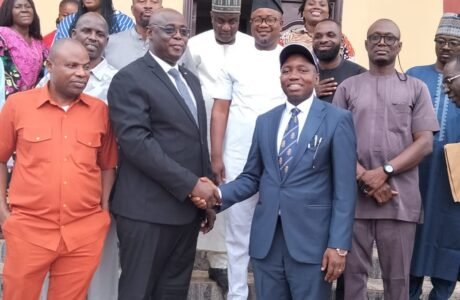
    R-L, the Minister of Marine and Blue Economy, Dr Adegboyega Oyetola and the European Union Ambassador to Nigeria, Ambassador Gautier Mignot, when the EU Ambassador visited the Minister in his office in Abuja
    Fishing


    Nigeria targets illegal fishing with €59m EU ocean programme
    Lagos, June 7, 2026, Nigeria will leverage the €59 million West Africa Sustainable Ocean Programme (WASOP) to combat illegal, unreported and unregulated (IUU) fishing and strengthen marine resource management.
    The Minister of Marine and Blue Economy, Dr Adegboyega Oyetola, disclosed this during a meeting with the European Union Ambassador to Nigeria, Mr Gautier Mignot, in Abuja.
    This is contained in a statement issued on Sunday in Lagos by the Minister’s Special Adviser, Dr Bolaji Akinola.
    Oyetola and Mignot reaffirmed their commitment to deepening cooperation on maritime security and sustainable ocean governance.
    The minister commended the European Union for its longstanding support for maritime stability in the Gulf of Guinea.
    He described the region as critical to global shipping and regional economic development.
    Oyetola said WASOP presents a timely opportunity to strengthen action against illegal fishing, improve ocean governance and promote sustainable resource exploitation.
    He noted that Nigeria was eager to engage fully with the programme to attract technical and financial support.
    According to him, such support would enhance enforcement capacity and advance the country’s blue economy objectives.
    The minister identified illegal fishing as a major threat to marine ecosystems and the livelihoods of coastal communities.
    He warned that IUU fishing continues to deplete fish stocks, undermine food security and weaken coastal economies.
    “Illegal, unreported and unregulated fishing is a direct threat to national security, food sovereignty and the survival of our coastal communities.
    “We cannot afford to stand by and watch our marine ecosystems depleted and economic livelihoods eroded.
    “We are calling for an era of stronger international collaboration, backed by aggressive monitoring and uncompromising enforcement systems.
    “This is necessary to permanently dismantle these illicit operations and safeguard our waters,” Oyetola said.
    The minister also highlighted reforms under the National Policy on Marine and Blue Economy.
    He said the policy prioritises innovation, private sector investment and sustainable development of ocean resources.
    Oyetola cited improvements in port operations, logistics and maritime security as key achievements in the sector.
    He added that Nigeria was expanding maritime infrastructure and improving its competitiveness in global trade.
    The minister stressed the need for broader cooperation beyond piracy control.
    He urged development partners to support Nigeria in tackling environmental crimes, human trafficking and illegal fishing through coordinated action.
    Oyetola also sought increased EU technical assistance in surveillance systems, fisheries monitoring and enforcement capacity.
    He said such support would strengthen Nigeria’s ability to curb IUU fishing across the Gulf of Guinea.
    Earlier, Mignot reaffirmed the European Union’s commitment to strengthening maritime cooperation with Nigeria.
    He said the EU remained committed to supporting regional efforts aimed at safer and more sustainable oceans.
    The ambassador highlighted WASOP as a major EU-funded initiative promoting integrated ocean governance and sustainable fisheries management.
    He said the programme would also support the protection of coastal and marine ecosystems across West Africa.
    Mignot noted that WASOP would improve coordination among coastal states, strengthen enforcement mechanisms and promote an inclusive blue economy.
  • Green Ports Start with Less Gridlock, TTP Tells Dockworkers at SCAN Event

    The Managing Director, TTP, Jama Onwubuariri


    Green Ports Start with Less Gridlock, TTP Tells Dockworkers at SCAN Event

    Lagos, June 6, 2026, Trucks Transit Parks Limited, TTP, says cutting congestion around Nigeria’s seaports is vital for sustainable shipping. Efficient truck management protects the environment and improves dockworkers’ daily working conditions significantly.

    The company stated this during the 2026 Dockworkers’ Day celebration hosted by the Shipping Correspondents Association of Nigeria, SCAN, in Lagos, focusing on maritime sustainability challenges and solutions.
    Speaking on “Green Ports: Sustainable Practices for Dockworkers,” TTP emphasized its Ètò electronic call-up system. The platform promotes order and sustainability along Apapa and Tin Can port corridors daily.
    The General Manager TTP, Miss Nancy Nnamdi,
    The Managing Director, Jama Onwubuariri who was represented by the General Manager  Miss Nancy Nnamdi, said the event theme aligns with TTP’s commitment to sustainable port operations through technology and process improvements.
    According to him, sustainability exceeds corporate messaging. TTP embeds it within systems and processes designed to boost efficiency across the entire port ecosystem for all stakeholders involved.
    He explained that long truck queues on port access roads waste fuel. This causes higher emissions, environmental pollution, and unnecessary costs for transporters and the surrounding communities.
    “Imagine a truck idling in traffic. Engine running, fuel burning, going nowhere. Multiply that by hundreds daily. The cost is time, money, and polluted air we breathe,” he said.
     Onwubuariri noted Ètò was built to tackle Apapa and Tin Can congestion. Better traffic management delivers environmental benefits alongside operational efficiency for trucks, port users, and dockworkers.
    “Our Ètò platform brings order to chaos. Order is green, it is sustainable. TTP has made port corridors more sustainable by reducing gridlock on surrounding roads,” Ọnwụbụarịrị stated.
    The General Manager TTP, Miss Nancy Nnamdi,
    Fewer idling trucks mean lower fuel consumption and reduced carbon emissions. This also creates safer, cleaner working conditions for dockworkers who power Nigeria’s maritime trade daily.
    “When the system works, everyone breathes easier. Literally,” she added. Dockworkers are essential stakeholders in achieving a cleaner, more efficient maritime sector for Nigeria’s economic future.
    Onwubuariri reaffirmed TTP’s commitment to supporting initiatives that promote sustainable port operations. The company prioritizes welfare and productivity improvements across the maritime value chain consistently.
     He also commended SCAN for creating a platform to discuss sustainability. The association celebrates dockworkers’ contributions to Nigeria’s maritime industry and encourages continuous stakeholder dialogue on green practices.
  • Nigeria Restates Resolve To Advance Global Environmental Governance, Land Restoration

    Nigeria Restates Resolve To Advance Global Environmental Governance, Land Restoration

    By Salisu Sani-Idris

    Nigeria has restated its commitment to advancing global environmental governance, biodiversity conservation, and land restoration in line with the objectives of the Great Green Wall Initiative across the Sahel region.

    The focus, according to the Nigerian government, is on combating climate change, expanding regional ecosystem partnerships, and scaling up the Great Green Wall Initiative to reverse desertification across its northern frontline states.

    The Director General of the National Agency for the Great Green Wall (NAGGW), Saleh Abubakar, stated this during the 8th Global Environment Facility (GEF) Assembly held in Samarkand, Uzbekistan.

    Abubakar is among Nigeria’s delegation, led by the Minister of Environment, Balarabe Abbas Lawal, to the high-level global event.

    He said the participation of the Nigerian agency underscores the determination of President Bola Ahmed Tinubu’s administration to address the impact of climate change in Nigeria, especially in the 11 front line states.

    The NAGGW DG explained that the gathering brings together world leaders, policymakers, environmental experts, development partners, and stakeholders to deliberate on pressing environmental challenges and sustainable development priorities.

    “The Assembly serves as a strategic platform for advancing international cooperation on climate action, biodiversity conservation, land restoration, sustainable agriculture, and environmental sustainability,” he stated

    The NAGGW boss reiterated the agency’s firm resolve to strengthen partnerships with global partners with a view to mobilising support for Nigeria’s Great Green Wall initiative and other environmental restoration programmes targeted at combating desertification, land degradation, improving livelihoods, enhancing food security, building resilient.

    Abubakar sought enhanced support of global partners to enable the agency address desertification in the northern Nigeria and restore degraded ecosystems, and strengthening the role of local communities.

  • Delta Emerges Among Nigeria’s Best Governed States Under Oborevwori

    Delta Emerges Among Nigeria’s Best Governed States Under Oborevwori


    Delta State has been ranked as the second-best governed state in Nigeria under Governor Sheriff Oborevwori, according to the 2025 Commonwealth Institute of Advanced and Professional Studies (CIAPS) Governance Performance Index (CGPI).

    The latest governance ranking placed Delta State second nationwide with a score of 70 per cent, closely following Kaduna State, which topped the index with 73 per cent.

    The ranking highlights the growing recognition of Governor Oborevwori’s administration for its performance in governance, infrastructure development, public service delivery and overall management of state affairs.

    The CIAPS Governance Performance Index assessed the performance of governors across Nigeria’s 36 states, measuring governance outcomes and the effectiveness of public administration.

    Governor Oborevwori’s second-place ranking places Delta ahead of 34 out of the 36 states in Nigeria, including Anambra, Niger, Ekiti, Akwa Ibom, Lagos, Oyo, Enugu and Borno, which completed the top ten positions.

    According to the report, Kaduna State, under Governor Uba Sani, emerged first with 73 per cent, while Delta State followed closely with 70 per cent.

    Anambra State, led by Governor Charles Soludo, ranked third with 65.5 per cent, while Niger State under Governor Mohammed Umar Bago placed fourth with 65.1 per cent.

    Ekiti State, governed by Biodun Oyebanji, came fifth with 64.5 per cent, while Akwa Ibom and Lagos States, led by Governors Umo Eno and Babajide Sanwo-Olu respectively, each scored 64 per cent to occupy the sixth and seventh positions.

    Oyo State under Governor Seyi Makinde secured eighth place with 61 per cent, followed by Enugu State under Governor Peter Mbah with 56.5 per cent. Borno State, led by Governor Babagana Zulum, completed the top ten with 54 per cent.

    In the middle-tier category, Kwara, Abia, Ondo, Nasarawa, Osun, Ogun, Kano, Kogi, Edo and Jigawa occupied positions 11 to 20.

    The report also identified the lowest-performing states, with Taraba State ranking last among the 36 states with a governance score of 20 per cent. Yobe, Benue, Rivers, Plateau and Kebbi were also among the bottom performers.

    The strong showing by Delta State is expected to reinforce growing public confidence in the Oborevwori administration’s MORE Agenda, which has driven extensive investments in roads, bridges, healthcare, education and other critical sectors across the state.

    The ranking further reflects the impact of ongoing development projects and governance reforms being implemented by the administration, positioning Delta among the leading states in Nigeria in terms of governance performance and service delivery.

    The Commonwealth Institute of Advanced and Professional Studies noted that the Governance Performance Index serves as a benchmark for evaluating the effectiveness of state governments and promoting accountability, transparency and sustainable development across the federation.

  • 15 Nigerians To Play For Other Nations At FIFA World Cup 2026

    15 Nigerians To Play For Other Nations At FIFA World Cup 2026


    By Dianabasi Effiong

    No fewer than 15 footballers of Nigerian descent will feature for other nations at the FIFA World Cup 2026 to be played across Canada, Mexico, and the U.S.

    This is in spite of Nigeria’s Super Eagles’ failure to appear at the Mundial, having missed qualification for the 2006, 2022, and 2026 tournaments.

    The players include Michael Olise, who will feature for France and plays at Bayern Munich, and Bukayo Saka of Arsenal, who will feature for the Three Lions of England.

    Also, Folarin Balogun, who plays for Monaco will don the U.S. colours at the World Cup, while
    Jamal Musiala, who plays his club football at Bayern Munich, will play for Germany at the 2026 Mundial.

    Other Nigerian footballers, Ime Okon, and Promise David, will also play for South Africa and Canada, respectively.

    Similarly, Manuel Akanji will play for Switzerland while another Nigerian,
    David Alaba, will play for Austria, and
    Eberechi Eze, who currently plays his club football with Arsenal, will feature for England.

    Also, Noni Madueke of Chelsea will appear for England, and another Nigerian
    Noah Okafor will appear in the Switzerland colours while Antonio Nusa of RB Leipzig will represent Norway at the World Cup.

    Felix Nmecha of Borussia Dortmund will play for Germany and Tani Oluwaseyi will represent Canada with another Nigerian,
    Carney Chukwuemeka, who plays for Borussia Dortmund representing Austria.

    The FIFA World Cup 2026 kicks off on June 11 with Mexico against Bafaba Bafana of South Africa.

  • FIFA World Cup 2026: Durable Themes in Troubled Times

    FIFA World Cup 2026: Durable Themes in Troubled Times


    By Chidi Anselm Odinkalu

    When the FIFA World Cup finals kick off on June 11, Nigeria’s presence will be felt, but not as a competitor. Nigerian musician, Burna Boy, will headline the opening ceremony in a duet with Colombian superstar, Shakira, who will be performing at the opening of the global football fiesta for the second time. Her first was at the  2010 edition in South Africa.

    Despite their challenging trade and diplomatic relations, Canada, Mexico, and the United States will jointly host the competition. This will be only the second time in its history that the World Cup tournament will be shared among joint hosts after South Korea and Japan did so in 2002.

    This year’s tournament comes at a time of profound uncertainty and serious questions about the future of international peace and security. It could also be a showcase for coexistence in a time of global fragility.

    To be sure, awkward political and diplomatic subtexts have never been far from the World Cup tournaments. Uruguay hosted the first edition in 1930 at the onset of the Great Depression. Underscoring an anti-colonial subtext, Montevideo’s Estadio Centenario, venue of the final match, was built to commemorate 100 years of Uruguay’s independence from Spain in 1830. Spain kept away.

    Thirteen countries participated in that inaugural edition. Uruguay subsidized the costs of travel and accommodation, which ultimately enabled four European countries to participate: Belgium, France, Romania, and Yugoslavia.

    Italy hosted the tournament in 1934, and its ruler, Benito Mussolini, turned it into a prop for fascist iconography. Political machinations on and off the field enabled Italy’s emergence as the eventual winners. It was the beginning of an Italian spring in world football.

    Two years later, Italy was again ascendant, beating Austria to the gold medal at Adolf Hitler’s Olympics in Berlin in 1936.

    By the time the third edition of the World Cup tournament turned up in France on June 4 1938, Austria, one of the favourites for the title, was no longer in existence. Three months earlier, on March 12 –  one day after the abdication of Kurt von Schuschnigg as Austria’s Chancellor – Hitler’s troops crossed the German border and the Anschluss was underway.

    Austria’s annexation was formally pronounced the next day, and Hitler turned up in Vienna, the capital of Austria, to celebrate it two days later on March 15.

    Italy’s triumph at the final game on June 19 1938, was the first time a defending champion would retain the World Cup. It was also approaching a high point of Hitler’s Nationalsozialismus – National Socialism – and Mussolini’s fascism. Fourteen and a half months later, Germany invaded Poland to mark the beginning of World War II.

    Racism was an early theme at the World Cup. Brazil’s Leônidas da Silva, the highest scorer at the 1938 tournament, was a Black whose skill and talent upset then prevalent notions of White supremacy. In his absence, Italy prevailed over Brazil in the semi-final amid suspicions that his exclusion from the match had been procured under pressure from the tournament administration.

    The competition was to suffer an abeyance for the following 12 years. By the time it returned in 1950 in Brazil, Hitler and Mussolini had been defeated and decolonization had begun. India, less than three years as an independent country, was one of the qualifiers but withdrew shortly before the tournament began.

    The 1978 World Cup tournament in Argentina was a propaganda victory for the host country’s military dictatorship. Located at the Navy Mechanical School in the capital city, Buenos Aires, the regime’s largest torture centre was within earshot of Estadio Monumental, venue of the final match, which Argentina won for the first time.

    This year, despite ongoing conflict and an uncertain ceasefire between Iran and the U.S., FIFA has confirmed that Iran will compete in the tournament and will play all its three group stage matches inside the U.S. Iran is one of 48 countries that will compete in the tournament over 104 matches across 16 venues in the three host countries.

    The opening match between Mexico and South Africa on June 11 will be one of five matches to be played at the Azteca Stadium, which hosted the coronation of Argentina’s Diego Maradona as the king of world football at the final match in 1986. Guadalajara and Monterrey, also in Mexico, will host four matches each. Thirteen matches will be played in Canada, seven in Vancouver and six in Toronto.

    The MetLife Stadium in East Rutherford, New Jersey, will host the final game, as one of 11 venues for the 78 games to be played in the U.S. Other U.S. venues include Atlanta, Boston, Dallas, Houston, Kansas City, Los Angeles, Miami, Philadelphia, the San Francisco Bay Area, and Seattle.

    The Gillette Stadium in Foxborough, Massachusetts, will host seven matches, including a quarter-final on July 9. The countries scheduled to compete in the group matches at Gillette Stadium, or Boston Stadium, as it will be known during the tournament, include England, France, Ghana, Haiti, Iraq, Morocco, Norway, and Scotland.

    Despite widespread concerns about the effects of current U.S. immigration policies, many of these countries share rich histories with the New England area, which could make for intriguing contests and guarantee enthusiastic fan interest.

    For much of its history, the World Cup was in fact a contest between European and Latin American countries. Decolonization changed this. The result is expansion from 13 countries at the inception to 48, competing this summer. Over the years, decolonization has remained a durable subtext of the competition, and is likely to be true of the 2026 tournament.

    The first match at Boston Stadium will be on June 13 between Haiti and Scotland. For Haiti, the site of the first successful slave revolt in the world and a country affected by current U.S. immigration restrictions, there is evocative irony to the fact that it will play its first-ever World Cup match in the Boston area, once a hub in the transatlantic slave trade. Similarly, Scotland and Boston share a storied history dating back to the earliest Scottish prisoners of war, who were banished to the Boston Bay colony during the rule of Oliver Cromwell and Charles II in the mid-17th century. The Scots Charitable Society, founded in 1657 in Massachusetts to help those in need after they completed their forced indentured servitude, is reputed to be the oldest charitable organization in the western hemisphere.

    Three days later, on June 16, the MetLife Stadium in New Jersey will host the second post-colonial derby at the World Cup between France and Senegal. When both teams met at the opening game of the 2002 World Cup, Senegal ran away as a shock but deserving victor. This time, the African country will likely enjoy significant support from the substantial population of Senegalese origin in the New York-New Jersey neighbourhood.

    The contest between England’s Three Lions and former colonial subjects, Ghana’s Black Stars, on June 23 could similarly inspire the absorbing passions of a post-colonial derby in a competition that will have a few more. When Spain turns up three days later to take on Uruguay in Guadalajara, Mexico, on June 26, it will be a re-enactment of their original post-colonial narrative at the maiden World Cup tournament.

    This absorbing interplay of history, memory, identity, skill, athletic ability, and entertainment is why the FIFA foremost football fiesta continues to evoke passion on a scale unknown to any other single sporting event.

    Whether this year’s tournament will leave any lasting legacies on the major questions facing our world today will be debated long after a winner is settled on July 19. Meanwhile, for over 39 days, the world can at least take a break.

    *A lawyer and a teacher, Odinkalu can be reached at chidi.odinkalu@tufts.edu*

  • Police Headquarters Confirm Rescue of Abducted Adelabu Sister and her Twin Sons

    Police Headquarters Confirm Rescue of Abducted Adelabu Sister and her Twin Sons


    By Danladi Ahmed
    The Nigeria Police Force has announced the successful rescue of Mrs. Olaide Busayo Adegoke John-Paul and her 12-year-old twin sons, Peter and Paul, who were abducted on June 3, 2026, in Ibadan, Oyo State.

    The hostages were rescued during a coordinated operation by the Force Intelligence Department Intelligence Response Team (FID-IRT) in Ibadan at approximately 7:30 p.m. on Saturday, June 6, 2026.

    This was disclosed in a statement on Saturday night by DCP ANTHONY OKON PLACID, Force Public Relations Officer Force Headquarters, Abuja.

    Mrs. Adegoke and her children were abducted while she was driving them to school at about 7:30 a.m. on June 3, 2026.

    The statement read:

    The rescue was achieved through sustained intelligence gathering, surveillance, and tactical operations. These efforts enabled investigators to track the kidnappers’ movements, resulting in a confrontation with FID-IRT operatives.

    During the confrontation, two suspected kidnappers were fatally wounded and two rifles were recovered. The victims were rescued unharmed and are now in safe custody, receiving medical care and support.

    The Inspector-General of Police commends the courage, professionalism, and effectiveness of the FID-IRT operatives and all officers involved. Their resilience and commitment were instrumental in the safe rescue of the hostages.

    Security operatives have intensified efforts in the area to apprehend fleeing members of the kidnapping syndicate. Preliminary intelligence indicates that some suspects escaped with gunshot injuries. Operations are ongoing to track, arrest, and bring all involved to justice.

    The Nigeria Police Force appreciates the public’s support, cooperation, and patience during the operation. We remain committed to combating violent crime, protecting lives and property, and ensuring the safety of all citizens.


  • Breaking: Police rescue Adelabu’s sister, her two children

    Breaking: Police rescue Adelabu’s sister, her two children


    Operatives of the Nigeria Police Force have rescued Olaide Busayo Adegoke John-Paul, the sister of a former Minister of Power, Adebayo Adelabu, and her 12-year-old twin sons: Peter and Paul.

    According to available information, they were rescued at about 7:30pm on Saturday in a heavy gun duel with their abductors.

    Sources told news outlets, including Channels TV and African Independent Television (AIT), that no fewer than two of the kidnappers were neutralised, while others escaped with gunshot wounds.

    John-Paul and her twins were kidnapped on June 3, 2026 around 7:30am while she was driving them to school.

  • Tola Adeniyi warns governors to beware of latest security developments

    Tola Adeniyi warns governors to beware of latest security developments

    Courtesy: Realnews Magazine*


    Mon, Aug 1, 2022
    By editor

    TOLA Adeniyi, a prominent chief in Yorubaland, has said the tactical withdrawal from the National Assembly and subsequent close down of the hallowed Chambers was a smart move by the senators and members of the House of Representatives to escape possible attack by the rampaging terrorists, who are firmly in control of the Abuja Federal Capital Territory.

    In a statement, Adeniyi noted that the Buhari one-man Dictatorship in Abuja has had to shut down public and private schools in the Federal Capital Territory and its environs, following the unprecedented assault on Kuje Maximum prison in Abuja, which led to the escape of over 600 fiercest criminals in the correctional centre and the brazen attack on the elite Presidential Brigade of Guards.

    “It has never been this bad,” he said.

    According to him, events in the last few months which were just an escalation of the preceding gory security challenges point only in one direction that the imported terrorists unleashed on Nigerians were up to something more calamitous than were ever imagined.

    “It is now crystal clear to all discerning minds that the hyperbolically hyped purported political party primaries, preparations for invidious population census, and mindless bills on Constitution Review and Water Resources were just a ruse and monumental distraction to cover up the gargantuan plan of Fulanisation of the country and worse, annihilation of indigenous nationalities.

    “It is obvious to even the dullest in the country that the taciturn General who gleefully invited all possible terrorists from all over West, North and Central Africa to empty themselves on Nigerian soil without passport or Visa was definitely up to something; perhaps the motivating desperation for seeking Nigerian presidency on four trials.

    “The chicken has now come home to roost with everything running out of control and both the puppeteers and their puppets are in mutual confusion and ecstasy. But there is method to their madness and that message is not lost on trained minds.

    “This is where the so-called Governors who in reality are mere glorified servants and serfs of the unpretentious Emperor in Abuja come in. They were severally warned when terrorists armed to the teeth were being off-loaded on their states by Dangote trucks. They saw with their eyes when hundreds of thousands of motorcycle saddled terrorists were being strategically distributed to their cities, towns, villages and hamlets and yet feigned blindness and deafness.

    “For over 40 years, since my days in the Nigerian Tribune, we have been crying for the decentralisation of the extremely parochial and partisan Federal Police Force [in an obvious Unitary system of government and the establishment of regional, state, local government and even metropolitan police to address safety and security challenges. We had all these tiers of policing before the Jack-boot dictators and tyrants killed the Federal Government our founding fathers bequeathed to Nigeria,” he said.

    He said that governors in the states of indigenous nationalities were not unaware that various forms of armed police were proliferated in some sections of the country and yet could not, definitely out of timidity, stupidity, lack of political will and gnawing servitude, stand up to the ghost that was blocking the desideratum, even when the entire country said loud and clear that they wanted state police.

    According to him, now, with Abuja under severe credible threat of being overrun, and citizens all over the country exposed to terrorist attacks and abduction everywhere including in their homes, is it not clear that governors are lame ducks that can be slaughtered with relative ease?

    He noted that if the gallant members of the Presidential Brigade of Guards could be easily worsted and the President’s advance Convoy attacked, who is there to stop 1000 heavily armed Okada terrorists from abducting any governor from their offices or homes? “This is the crux of the matter. Instead of Lagos state government donating helicopters and over N2 billion worth of equipment and ammunitions to Abuja controlled police, and Government in Ogun state giving thousands of guns to Abuja, why didn’t these states establish their own police to protect their Orisas as Sharia states created Hisbah police to protect their faith?

    “It is clear that the country known as Nigeria is about to collapse, disintegrate, and the original nations will emerge. It is therefore imperative that Governors must act now. With the Abuja legislators on the run, probably in hiding in various locations in the Capital Territory since fear of terrorist attack would not allow them to travel to their constituencies, and with the President living in the air, it is only the poor Governors that are left on ground.

    “They must cry out to the world. They must speak out. They should not leave it to Governors Matawalle, Akeredolu, Ortom and Obaseki alone. Governor Ortom went to the US and Europe. Each and every one of you should go out and expose the shenanigans that are about to send Nigeria to its grave.

    “State Governors should as a matter of utmost urgency get their Assemblies to pass a law for the establishment of state police and go ahead to arm such recruits to the keel. Dare the Sharia lawyer and second husband to Buhari’s daughter and his shadowy patrons and godfathers.

    Governors have immunity, and besides, you cannot be law abiding in a lawless country. No one can accuse anybody of treason or attempt to overthrow a Federal Government that is patently absent and unseen,” he added.

    ..(.Tola Adeniyi, writer, author, syndicated columnist and Public Policy Strategist was a former Chairman/MD/Editor-in-Chief of the old Daily Times Conglomerate, and former Federal Permanent Secretary in the Presidency.)