
Year: 2026

  • Insecurity in Nigeria: Yoruba, Beware!

    Insecurity in Nigeria: Yoruba, Beware!


    By Bisi  Olawunmi

    The upsurge in banditry and kidnapping in Yorubaland, Southwest Nigeria, culminating in the horrendous mass abduction of school children and teachers in three schools in Oriire local government area of Oyo State on May 15, 2026, has brought the horrors of the violent criminals to the doorstep of Yorubaland in a most jarring way.

    All states in the Southwest are now virtually under siege by bandits and kidnappers. Before now, Yorubaland only read about mass abductions in other parts of the country, especially Katsina, Zamfara, and Borno States in the north, as happenings in distant lands.

    There was the complacent feeling that Yorubaland was insulated. That false sense of security has now been shattered most viciously. Varied reactions have trailed this existential threat to Yorubaland, one of which is the need for people of the region to sink political and religious differences and confront the common enemy. While banditry and mass kidnapping have been largely associated with Fulani extremists, Yoruba now face the unsettling reality of copycat kidnappers on the rampage.

    It is instructive and gratifying that the group, Muslim Rights Concern (MURIC), whose executive director, Prof. Ishaq Akintola, has been pursuing an Islamic agenda seen as divisive in the Southwest, has come out strongly to seek a unified stand among the various religious adherents to confront worsening insecurity in Yorubaland.

    His stand reinforces the primacy of a common Yoruba ethnic heritage over and above religious affiliations.What has been confounding till now is the apparent laid-back attitude, the absence of a sense of outrage and intensity of action by the region’s political elite, particularly the governors, given the clear and present danger facing Yorubaland.

    Apart from a lack of security coordination, why has it been impossible for the governors of the Southwest to collectively visit President Bola Ahmed Tinubu to express their outrage at the looming overrun of Yorubaland by bandits, kidnappers and other criminals?

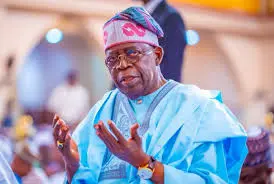
    Before the 2023 presidential election, there was this mantra in Yorubaland about Tinubu’s ambition for the presidency: Omo wa ni, e je o se (He is our son, let him reign). But what do we see today?  Omo wa (our son), who has been on the throne for three years, seems to be more concerned and preoccupied with politicking for 2027 re-election and apparently dismisses the insecurity ravaging Yorubaland as a distraction orchestrated by political enemies.

    Amplifying the same puerile argument, incoherent, communication and speech-challenged Monday Okpebholo, governor of Edo State, has even boasted that no matter the escalation of banditry and kidnappings across the country, Tinubu’s re-election is assured.

    How insensitive and callous!  President Tinubu’s seeming attitude of que sera sera,  (what will be, will be),  a doctrine of fatalism, could signal an ominous trend to replicate in the Southwest, late President Muhammadu Buhari’s legacy of banditry and kidnapping in his Northwest home region, considering Tinubu’s repeated pledge to continue with Buhari’s legacy.

    Yoruba, e fu ra! (Yoruba, beware!). We need to remind ourselves in the Southwest that it was during Buhari’s presidency that terrorism, banditry and kidnapping spread, like wildfire, from the Northwest, with his home state of Katsina as an epicentre of insecurity.

    It got so bad in Katsina state that then-governor Aminu Masari surrendered to terrorism and banditry by hosting a bandit kingpin in the Governor’s Office.

    May Yorubaland not descend into bandit-land under Tinubu, just as the Northwest harvested horror under Buhari.Recall Tinubu’s dismissive reaction to the alleged herdsmen killing of the daughter of Chief Reuben Fasoranti, leader of the pan-Yoruba group, Afenifere, years back.

    Despite his tragic loss, Chief Fasoranti, aged 100, has remained a staunch Tinubu backer, but was recently compelled to issue a public lamentation on the deteriorating insecurity in Yorubaland.

    This highlights the gravity of the situation. We should also ponder what informed Presidential candidate Tinubu’s choice of  Kashim Shettima as his running mate? Now vice president, it was under Shettima, as governor of Borno state, that Boko Haram got incubated and eventually erupted into a murderous terrorist group. Tinubu also appointed Bello Matawalle, former governor of Zamfara state, under whose tenure the state became another epicentre of banditry, as minister of state for defence in the Buhari administration.

    All of these should give a sense of foreboding to the Yoruba of Southwest Nigeria.The formation of a non-partisan Yoruba Leadership Lobby (YOLLO), extending to Kwara and Kogi states, made up of leaders across political, religious, business, youth and academic spectrum has become imperative to visit President Tinubu and present him with a Yoruba Security Charter.

    Such a Lobby should be led by Afenifere, the pan-Yoruba organisation. However, to put additional pressure on President Tinubu, peaceful rallies could be staged in the capitals of Southwestern states to denounce the exponential spiral of insecurity in Yorubaland.

    The proposed Yoruba Leadership pressure on President Tinubu should not be seen as a pull-down syndrome, but in collective ethnic self-interest. We do not want IDP (Internally Displaced Persons) camps in Yorubaland.

    The Northwest leadership kept mute during the tenure of their son,  President Buhari, while the region bled, only for a delegation of political leaders from Katsina state, his home state, to visit President Tinubu, pleading for his help in tackling insecurity in the state.

    Had they put pressure on Buhari, the narrative would have been different. The Southwest should, therefore, be proactive and not slip into slumber for a Buhari encore. Yoruba, e fu ra. (Yoruba, beware).

    It is a measure of the heartlessness and lack of humanity of some members of the political class that an impulsive and temperamental Nyesom Wike, Minister of the Federal Capital Territory, could dismiss the kidnapping of  39 students and seven teachers in Oyo state as no big deal, since similar abductions had taken place in Abuja without public outrage.

    Wike comes from a region of violent militancy and is apparently inured to violence and killing.

    Nigerians are witnesses to the gangster politics being played in Rivers, his home state,  with the ex-governor as a major dramatis personae. This cannot be said of Southwest Yorubaland, the exemplar and ethnic group of an intellectual approach to issues.

    The Yoruba Southwest, which prides itself as the most secure, most educated, and most enlightened region in Nigeria, as well as the nation’s economic powerhouse, cannot and should not be allowed to be overrun by bandits, kidnappers and sundry criminals.

    The region should not allow President Tinubu to sleep while Yorubaland is on fire.

    (Dr Bisi Olawunmi is a Public Affairs Analyst, Scholar and Former Washington Correspondent of the News Agency of Nigeria (NAN).

    He can be reached at olawunmibisi@yahoo.com  and 0803 364 7571 (SMS Only).

  • Tinubu’s Democracy Day Broadcast Overshadowed By Insecurity, Economic Concerns


    By Paul Ejime

    Nigeria on Friday, 12 June, marked 27 years of the return of civilian rule after prolonged military rule and a date in 1993, when the country held a presidential election considered the freest, even though the acclaimed winner, business mogul and philanthropist MKO Abiola, died in detention under a military regime without actualising the mandate.

    Today, incumbent President Ahmed Bola Tinubu, one of those who resisted military rule under the NADECO platform before being elected governor of Lagos state (1999-2007), has managed to amass tremendous political power, capital and structure that enabled him to claim presidential victory in 2023, with a strong prospect for a second mandate from 2027.

    But it has not been smooth sailing for Tinubu, now accused by opponents of trading his erstwhile pro-democracy garb for an authoritarian camouflage.

    He rejects the accusation, and in his presidential broadcast on Friday, June 12, he reeled out the achievements under his three-year administration as Nigeria’s number one citizen.

    “Though this year’s mood is dampened by the abduction of our children in Oyo and Borno (states), we remain hopeful for their safe return. Democracy without security is not solid enough. That is why this administration declared a security emergency and approved the recruitment of more than 50,000 new police officers and thousands of military recruits. Our 2026 budget commits 5.41 trillion Naira – our largest ever – to defence and security. Our administration is ever ready to do much more to secure our people,” he enthused.

    “We have moved from training with our allies, the United States, France and other European countries, to precision targeting. In Arege, Borno State, we degraded ISWAP’s command centre. Terror-related deaths are down by 81% since 2015,” Tinubu boasted, adding: “Over 13,000 terrorists have been neutralised in the past year. But we also keep the door of surrender open. Over 124,000 fighters and dependents have laid down their arms since 2023 through Operation Safe Corridor.”

    Not a few Nigerians believe that the Tinubu administration is not doing enough to fight insecurity in the country, especially with the perceived reliance on external support, to deal with the killings and kidnappings for ransom reported virtually daily.

    If he expects his government to take credit for “neutralising terrorists”, so also must the government take the blame for the over 10,217 Nigerians killed since he took office, including ranking military officers, particularly because these human losses during peacetime are avoidable.

    On the eve of the presidential broadcast, activist VDM led a ‘Tinubu Must Go’ protest in Abuja over rising insecurity.

    And on the same day in faraway Los Angeles, USA, Nigerian music superstar Davido used the FIFA World Cup 2026 Countdown Concert to bring awareness to abducted Nigerian students and teachers

    Davido wore a custom jacket featuring the names of abducted students and teachers during coordinated attacks on three schools in Oyo State, Western Nigeria, on May 15.

    With a message “Bring Them Home” on the back of his jacket, the musician reinforced a negative global focus on Nigeria, which millions of dollars in image laundering cannot erase.

    Nigeria failed to qualify for this year’s FIFA World Cup, but has hogged international headlines for the wrong reason.

    While his government has dispatched high-level delegations to some insecurity-afflicted communities, Tinubu has been criticised for not showing empathy for the families of victims. His warning to “bandits, kidnappers, and sponsors of terror,” to “surrender or face the full force of the Nigerian State,” is not new and may therefore not be taken seriously, when more Nigerians are raising alarm over insecurity and electoral manipulation.

    The opposition ADC has accused the Tinubu government of running a Ponzi economy with accumulated loans spent largely on consumption.

    There is also widespread perception of the capture of state institutions, with the parliament and the judiciary accused of complicity or being compromised.

    However, Tinubu remains upbeat, noting: “Since 2023, our reforms have restored stability and credibility to economic management. Federation revenues have risen, providing states and local governments with more resources for infrastructure, education, healthcare, and security. Fiscal transparency has improved, leakage has been reduced, and public funds are better directed to national priorities. Investor confidence has returned, with investments in agriculture, energy, manufacturing, technology, mining, transportation, and the creative industries growing.

    “Domestic refining capacity has increased, strengthening energy security and reducing our reliance on imported petroleum products,” he affirmed.

    Even so, his critics are unimpressed, insisting that Nigeria’s economic hardship is a crisis that cannot be ignored.

    With the removal of oil subsidy, the three tiers of government in Nigeria – the Federal, 36 States and Federal Capital Territory (Abuja), and the 774 Local Councils – are supposed to enjoy improved revenue allocations. But the poverty rate has jumped to 63% after subsidy removal, with the opposition also accusing the government of operating three budgets simultaneously, while capital projects stall

    Tinubu acknowledged that “…many Nigerians still face economic hardship,” promising: “We remain focused on reducing inflation, expanding food production, creating jobs, improving living standards, rebuilding confidence in our economy, and creating conditions for sustainable prosperity.”

    “We are moving from uncertainty to stability. The next phase is about accelerating growth and ensuring the benefits are felt in every home, every community, and every region. We believe that democracy must be felt in the pocket,” he said.

    He told the youth, “Nigeria is your home and your future. Build here, code here, work here, and vote here. Every great nation was built by those who stayed to solve problems, not by those who abandoned ship.”

    Whether this appeal will be heeded by young Nigerians who are leaving the country in droves in search of better opportunities abroad remains to be seen.

    “The government cannot do it alone,” the president said, adding, “Crime has no ethnicity. We must stand united and be assured that the enemies of our nation shall soon be history. We will triumph over terror and continue to build a more prosperous nation.”

    Tunubu also used his broadcast to honour the “heroes” of June 12, dead and alive, with National Awards.

    “As beneficiaries of their struggle, we have a duty to strengthen and deepen the democratic institutions for which they fought. The greatest tribute we can pay is to build a Nigeria where freedom is protected, justice is upheld, opportunity is expanded, and government is accountable,” he said, noting that June 12, 1993, revealed the possibility of a true Nigerian nation.

    With political parties laser-focused on the crucial 2027 general elections amid troubling security concerns and socioeconomic hardship, public trust in government remains at its lowest ebb. To regain public confidence and support, political elites’ damaging tendencies for selfishness, greed, self-service and corruption must be addressed.

    As a regional power, Nigeria is regrettably punching below its weight. The rest of Africa and the world at large are impatiently waiting for the World’s most populous Black nation to assume leadership and take its rightful place among the comity of nations.
    *Ejime is a Global Affairs Analyst and Consultant on Peace & Security and Governance Communications*

  • More Nigerians Raise the Alarm Over Insecurity, “Electoral Manipulation

    More Nigerians Raise the Alarm Over Insecurity, “Electoral Manipulation


    By The Patriots & Concerned Citizens

    With several months before Nigeria’s crucial 2027 general elections, more citizens are expressing concern over the increasing threats of insecurity and what some of them call “electoral manipulation by the government and the weakening of democratic institutions…”in the country.

    A week after The Patriots urged Nigeria’s Federal Government to “treat insecurity as a national protection, governance and economic survival crisis deserving the setting up of a special committee…,” another group, the “Concerned Citizens,” has expressed a similar sentiment, saying: “Nigeria stands at a dangerous crossroads where rising insecurity, an alarming level of electoral manipulation by government, and the weakening of democratic institutions are converging into a national crisis that threatens the country’s survival.”

    In its statement on the “State of the Nation,” the group, including renowned academics, senior lawyers, civil society activists and former government officials, said “Nigeria faces a grave threat to its foundational constitutional principle of separation of powers. Checks and balances between the branches of government have been imperilled.

    The legislative branch has been placed under near-total control of the executive branch. The judiciary appears to have lost both its independence and its integrity.” and “There are no checks on the powers of the executive who now govern as they please without accountability or respect for the people’s concerns,” the group said in its statement dated 8 June 2026.It added: “Institutions have been compromised, weakened, and subordinated to the interests of the executive arm of government.

    This erosion of institutional independence has fuelled public distrust to its highest level in our history, creating a crisis of political exclusion and impunity that is pushing violent extremism, organized crime, and communal conflict to a tipping point.”

    “To reverse this trajectory,” the group said, “Nigeria must urgently recommit to democratic accountability, judicial independence, and institutional reforms that strengthen the rule of law. The electoral processes must be transparent, credible, and insulated from executive interference.”It noted that “The crisis in Nigeria cannot be separated from the broader instability engulfing the Sahel region.

    The spread of terrorism, arms trafficking, unconstitutional changes of government, and porous borders across countries such as Mali, Burkina Faso, and Niger continue to intensify insecurity in Nigeria and the wider Lake Chad Basin,” adding: “The collapse of regional cooperation and democratic governance in parts of the Sahel further emboldens armed groups, weakens state authority, and undermines civilian protection across West Africa.”

    The group recommends that “Regional security cooperation between Nigeria and Sahelian states should be revitalized by establishing strong bilateral and multilateral platforms for intelligence sharing, border governance, and community-based peace building initiatives.”

    According to the statement: “Equally important is investing in youth employment, education, social protection, and local conflict resolution mechanisms to address the root causes of radicalization and insecurity.”

    The group further recommends that “Government should, as a matter of urgency, recognise that insecurity in the Sahel fuels the Nigerian crisis and that rapprochement between AES (Alliance of Sahel States) and ECOWAS is an important element in Nigeria’s national interest.”Other recommendations by the group are:  The Nigerian Government should immediately appoint a high-level Special Envoy for the Sahel to begin the urgent task of rebuilding trust between Nigeria, the AES and ECOWAS, while revamping regional mechanisms for peace and security.Civil society organisations should actively sensitize citizens and strengthen public demand for accountability.

    Nigerians must be bold and courageous in protecting civic rights and resisting the current climate of restricting civic space.A call on the Private Sector as critical stakeholders in the nation-state agenda to continue to support and demand accountability in governance and the promotion of the rule of law as the basic premise of economic progress and nation building

    . Professional bodies and associations must rise to the challenge of building a broad national consensus to oppose tyranny and ensure maintenance of checks and balances in governance and the protection of the rule of law. A call on traditional leaders and members of the clergy to rise to the full weight of their moral and civic authority to promote peaceful co-existence, solidarity, and inter-faith dialogue to arrest the current slide to criminality and civil disorder.

    Given the clear and consistent indications of the lack of neutrality and competence of INEC, professional bodies such as the Nigerian Bar Association, Unions, and other civic groups must set up a mechanism of engaging the electoral body to ensure that the 2027 elections are free, fair and credible, andThe Judiciary must address the perception of its complicity in stalling democratic processes.

    It must remain independent and uphold the rule of law. As a matter of urgency, the Nigerian Bar Association must call its members to order for professional conduct and strengthen its monitoring of the judiciary; it must stay alert and patriotic and ensure political actors play by the rules.

    The National Judicial Council must set up a framework for holding judges accountable for decisions they take in the context of the electoral process.

    Members of the group include Prof Ibrahim Gambari, Nigeria’s former Foreign Minister, UN envoy to Sudan and recently the Chief of Staff to late President Muhammadu Buhari, former Chairman of the Independent Electoral Commission (INEC) Prof Attahiru Jega and Prof Jibril Ibrahim, an academic and Fellow of the Centre for Democracy and Development (CDD).

    The other members are Dr. Husseini Abdu , Amb. Fatima Balla, Dr Usman Bugaje, Dr Yahaya Hashim, Prof. Mohammed Kuna, Senior Advocate of Nigeria, Abubakar Balarabe Mahmoud, and Mallam Kabiru Yusuf.

    The Patriots are led by Chief Emeka Anyaoku, Commonwealth Secretary General (1990-2000).##

  • Oseni Assures Tinubu of One Million Votes from Oyo, Unveils Support for Artisans

    Oseni Assures Tinubu of One Million Votes from Oyo, Unveils Support for Artisans

    ‎Oseni Assures Tinubu of One Million Votes from Oyo, Unveils Support for Artisans


    ‎By Adewale Owoade


    ‎The lawmaker representing Ibarapa East/Ido Federal Constituency in the House of Representatives, Rep. Remi Oseni, has mobilised thousands of artisans and traders across Oyo State to support the re-election of President Bola Tinubu in 2027.

    ‎Oseni, convener of the Remi Oseni Committee of Friends (ROCOF), said artisans and traders must see themselves as critical stakeholders in President Tinubu’s Renewed Hope Agenda aimed at repositioning Nigeria.


    ‎He made the remarks during a stakeholders’ engagement meeting with members of ROCOF Progressive Workers and Traders’ Associations  in Ibadan.


    ‎The federal lawmaker urged traders and artisans to obtain their Permanent Voter Cards (PVCs) to enable them to participate in future elections.


    ‎He also cautioned against vote-buying and vote-selling, stressing that such practices undermine the future of coming generations.


    ‎Oseni, who is seeking to represent Oyo South Senatorial District in the next election cycle, said the meeting was also organised to discuss additional areas where members could benefit from empowerment programmes designed to support their businesses and livelihoods.

    ‎He disclosed that requests for a N250 million interest-free loan scheme for artisans and traders under ROCOF, the construction of an artisans’ village with stable electricity supply, and health insurance support had all received approval.

    ‎Oseni, who also serves as Chairman of the House Committee on Federal Road Maintenance Agency (FERMA), explained that the interest-free loan scheme would be administered through a microfinance bank under the Remi Oseni Foundation.


    He added that road and infrastructure development projects would also remain a priority.

    ‎According to him, the meeting was equally intended to brief members of the artisans’ and traders’ associations, as well as other supporters, on the circumstances that led to his decision to pursue a senatorial seat instead of his earlier governorship ambition.

    ‎“We convened this ROCOF Progressive Workers and Traders’ Associations stakeholders’ meeting to review our current position. Before now, our focus was on taking over the leadership of Oyo State through the governorship.

    ‎“That was our clear objective as a movement. Today, however, it is evident that God has directed us toward the Senate.

    ‎“Our people needed to be properly informed about the decision, the party’s position, and what we have accepted.

    ‎“It is not enough for us to accept what our leaders offer. We have a responsibility to carry our supporters along and encourage them to embrace the opportunity in good faith.

    ‎“We want them to believe that the same God who has made this possible can also open greater doors in the future.

    ‎“We are also here to encourage them and sustain their expectations from us. Many believe that achieving our initial governorship ambition would have brought greater benefits to them as an institution.

    ‎“However, we have reassured them that the government is behind us. The President has encouraged us and assured us that the future remains bright.

    ‎“We have equally assured the President that our decision to contest for the Oyo South Senate seat will not affect the one million votes we promised him, as ROCOF structures across the 33 local government areas are fully committed to supporting him,” Oseni said.


    ‎Oseni further stated that efforts are underway to reconcile aggrieved members of the party, expressing confidence that all outstanding issues would soon be resolved.


    ‎According to him, the existence of differing interests within the APC is a reflection of its strength and popularity as a winning party.


    ‎Earlier, the Oyo State Coordinator of ROCOF Progressive Workers and Traders’ Associations, Alhaji Munirudeen Adegoke, described Oseni’s empowerment initiatives as a strategic economic investment.

    ‎According to him, empowering artisans and traders helps reduce unemployment, curb youth restiveness, and alleviate poverty within communities.

    ‎“This is why we believe empowerment for artisans and traders requires more than temporary handouts. It demands structured policies that guarantee access to capital, modern infrastructure, and social protection,” Adegoke said.

  • DHQ Reacts to Gen. Raven’s Death in Bandits’ Captivity, Vows to Crush Terrorism

    DHQ Reacts to Gen. Raven’s Death in Bandits’ Captivity, Vows to Crush Terrorism


    The Defence Headquarters (DHQ) has expressed sorrow over the death of former Director of Defence Information, Major General Rabe Abubakar (retd.), who reportedly died while in captivity after being abducted by bandits.

    The military also reaffirmed its determination to intensify operations aimed at eliminating terrorism and restoring national security.

    In a statement issued by the Director of Defence Information, Major General Samaila Uba, the Armed Forces of Nigeria (AFN) extended condolences to the family of the late officer, his colleagues, and Nigerians at large.

    “The Defence Headquarters regrets to announce the passing of Major General Rabe Abubakar (Retired), who tragically lost his life in captivity following his abduction.”

    The statement described the late senior officer as a highly respected figure who served Nigeria in various capacities, including as spokesperson for several military formations and later as Director of Defence Information.

    “Maj Gen Abubakar served the nation with distinction and held many appointments including spokesperson of various military formations as well as spokesman for the AFN as Director Defence Information.”

    It further highlighted his contributions to counter-insurgency efforts, institutional development within the Armed Forces, and other national assignments.

    “He made immense contributions to counter-insurgency operations, professional development of the AFN and numerous other commendable and outstanding impacts.”

    According to the DHQ, the late general’s dedication to service and national unity remains a model for serving personnel.

    “His commitment to duty and to the unity of Nigeria remains a shining example for all personnel of the AFN.”

    The military explained that it had earlier refrained from commenting publicly on his abduction to avoid disrupting ongoing rescue operations.

    “The Defence Headquarters withheld public comment on his abduction in deference to ongoing rescue efforts by the AFN and sister security agencies. Every operational resource was deployed in the hope of securing his safe return.”

    Describing the incident as a grave loss, the DHQ said it would further strengthen its resolve to defend the country and its citizens.

    “This sad loss further strengthens the resolve of the AFN. We will remain resolute in the discharge of our constitutional mandate to defend the sovereignty and territorial integrity of Nigeria and to protect all citizens.”

    It added that military operations across the country had been intensified following a series of abductions, including that of the late officer.

    “In response to series of unfortunate abductions across Nigeria including that of Maj Gen Abubakar, ongoing operations have since been further intensified to bring perpetrators to justice and to dismantle all terrorist networks threatening our nation.”

    The statement concluded with a firm assurance to Nigerians that the Armed Forces would sustain pressure on criminal groups until peace is restored.

    “We assure Nigerians that the Armed Forces will not relent until peace and security are restored and those responsible for terrorists activities across the nation are held to account.”


  • Early Orders, Cheaper Fertiliser: How The Federal Government Shielded Nigerian Farmers From A Global Crisis


    By Igwe Idika

    While several countries across Africa grapple with fertiliser shortages and rising input costs triggered by fresh global disruptions, the Federal Government has secured Nigeria’s fertiliser supply for the 2026 wet season. Early procurement decisions by the FG have also saved the country over $42 million ahead of peak planting.

    The latest disruptions, linked to escalating tensions affecting critical global shipping routes, have pushed up freight costs and driven increases in prices of key fertiliser inputs. These include Granular Ammonium Sulphate (GAS), Diammonium Phosphate (DAP), and Muriate of Potash (MOP). Across multiple markets, supply gaps are emerging, leaving farmers uncertain about availability and pricing ahead of the planting season.

    Nigeria, however, has moved ahead of the curve through deliberate Federal Government action.

    PFI NPK Limited, the wholly owned entity of the Ministry of Finance Incorporated (MOFI) and implementation vehicle for the Presidential Fertiliser Initiative, confirmed that the Federal Government secured its 2026 supply position months before the current market volatility.

    According to official Q1 2026 procurement and shipment records made available to the press, the FG, through PFI NPK Limited, locked in nine vessels carrying a combined 407,304.00 metric tonnes. This brings total raw materials to 534,219 MT, including the opening balance at the beginning of the 2026 cycle, available for NPK fertiliser production. All associated Letters of Credit have been fully established or settled, ensuring supply continuity.

    The records further show that as of mid-April 2026, over 323,109.24 metric tonnes, approximately 6.5 million 50kg bags, had been released to registered blending plants nationwide. More than 198,264.41 metric tonnes, approximately 4 million 50kg bags, had already been offtaken. This indicates active distribution across the country ahead of peak planting.

    Speaking on the development, the Director of PFI NPK Limited, Dr. Armstrong Ume Takang, said the Federal Government’s early procurement strategy was designed to shield Nigeria from external shocks.

    “We took a deliberate decision to move early, well ahead of market pressures, by securing supply, locking in pricing, and putting the necessary financial instruments in place. That foresight by the Federal Government is what has ensured that Nigeria is not exposed to the disruptions currently affecting global fertiliser markets,” he said.

    Financial data reviewed alongside the procurement records indicate that the Federal Government’s early purchasing strategy generated total savings of $43.99 million, equivalent to approximately ₦61.58 billion, when compared with prevailing spot market prices.

    A breakdown of the figures shows that GAS was secured at $228 per metric tonne against a current market price of $343. DAP was locked in at $775 per tonne compared to $950, and MOP at $400 per tonne against $430. These price differentials reflect the impact of the Federal Government securing supply ahead of global price escalations.

    Fertiliser availability and pricing remain central to Nigeria’s agricultural productivity and overall food supply. With global market conditions placing increasing pressure on input costs, the Federal Government’s intervention ensures consistent supply and price stability to support production outcomes across the agricultural sector.

    PFI NPK operates a centralised bulk procurement and distribution model on behalf of the Federal Government. It imports raw materials and supplies them to 94 FEPSAN registered blending plants across Nigeria. The company does not import finished fertiliser, ensuring that all NPK production is carried out domestically, supporting local industry and value addition.

    In 2025, the Federal Government, through PFI NPK, delivered 648,000 metric tonnes of raw materials. For 2026, operations are being scaled significantly, with a target of 1.52 million metric tonnes.

    The supply chain operates under strict Federal Government governance protocols. Collateral Management Agents provide independent oversight at warehouses, while raw materials remain under PFI NPK control until confirmed sales and repayment are executed. Standard operating procedures, developed in collaboration with the Fertiliser Producers and Suppliers Association of Nigeria (FEPSAN), guide handling, storage, and distribution. Regulatory compliance is ensured through NAFDAC and Standards Organisation of Nigeria (SON) requirements. Operations are further supported by the Office of the National Security Adviser (ONSA), whose approval remains central to PFI NPK’s ability to operate and scale distribution nationwide.

    For farmers preparing for the 2026 wet season, the immediate outcome of the Federal Government’s intervention is supply certainty. Raw materials are either already in-country or in transit, blending plants are receiving inputs, and the risk of sudden price shocks linked to global disruptions has been significantly reduced.

    Dr. Takang emphasised that the Federal Government’s intervention ultimately rests at the farm level. “What matters is that the farmer can access fertiliser when needed and at a price that does not undermine production. By stabilising supply and managing cost exposure at the procurement stage, the Federal Government is supporting that outcome at scale,” he said.

    Looking ahead, the Federal Government is strengthening long-term supply security through Government-to-Government partnerships with international suppliers. Plans are also advancing for a digital enterprise system to provide real-time visibility across procurement, inventory, and distribution.

    PFI NPK Limited is a wholly owned entity of the Ministry of Finance Incorporated (MOFI) and the designated implementation vehicle for the Federal Government’s Presidential Fertiliser Initiative. The company operates a centralised bulk procurement and distribution system for fertiliser raw materials, ensuring domestic blending and nationwide supply stability.

  • BREAKING: Kidnapped Ex-Military Spokesman General Abubakar Dies In Captivity

    BREAKING: Kidnapped Ex-Military Spokesman General Abubakar Dies In Captivity


    The Katsina State Government has announced the death of retired Major General Rabe Abubakar while in the custody of bandits, describing the incident as a tragic loss to his family, the state, and the nation.

    LEADERSHIP reports that retired General Rabe was one-time Director of Defence Information (DDI) at the Defence Headquarters (DHQ) of Nigeria. His death comes just days after he, alongside his kidnapped wife, appeared in a viral video in which he was pleading to the State government to heed to the bandits’ demands in exchange for his freedom.

    In a statement issued on Saturday by the Commissioner for Internal Security and Home Affairs, Dr. Nasiru Muazu, the State government said the retired senior military officer died from complications arising from diabetes and hypertension during his captivity.

    The government expressed deep sorrow over the development, noting that extensive efforts were made by the state government and security agencies to secure the ex-Army General’s release to no avail.

    “It is with profound sadness that we confirm the General’s death while in bandits’ captivity. Despite the relentless and concerted efforts of the State Government and various security agencies to secure his safe release, the situation ended in this tragedy,” the statement said.

    According to the government, the late General’s abduction and subsequent death represented a significant loss not only to his immediate family and Katsina State but also to Nigeria as a whole.

    Governor Dikko Umaru Radda extended his condolences to the family of the deceased and the nation, describing the incident as a dark moment that underscored the need for stronger collaboration in tackling insecurity.

    The governor said the tragedy serves as a reminder of the urgent need for a collective and intensified response against criminal elements threatening peace and security across communities.

    The state government reiterated its commitment to working closely with the Federal Government and security agencies to ensure that those responsible for the abduction are brought to justice.

    It also assured residents that efforts to combat banditry and restore lasting peace across the state would continue unabated.

    The government offered prayers for the repose of the late General’s soul and comfort for his family during the difficult period of mourning.

  • Group welcomes IMF report, insists increase in poverty not directly linked to Tinubu reforms

    Group welcomes IMF report, insists increase in poverty not directly linked to Tinubu reforms


    By Ishola Adedeji
    The Democratic Front (TDF) has welcomed the recent International Monetary Fund (IMF) statement on Nigeria, and its overall positive assessment of the President Bola Tinubu administration’s reform agenda.

    However, it questions the observation that Nigeria’s poverty Index Increased to 60%, in a statement signed by its Chairman. Mallam Danjuma Muhammad and Secretary, Chief Wale Adedayo.

    “It is necessary to acknowledge the section of the report that three quarters of the increase in poverty from 40% to 61%, as observed by the World Bank, actually occurred between 2019 and 2023, before the President Bola Ahmed Tinubu government assumed office.

    “The import of the acknowledgement is the need to explain the economic factor that triggered the increase in multi-dimensional poverty in the country.

    “The period between 2019 and 2023 represents the post- COVID-19 years when pandemic- induced, socio-economic decline deprived a vast percentage of the Nigerian population of stable income, and the gross national cash flow was devastated, due to economic disruption in the supply value chain.

    “It is therefore our opinion that the increase in poverty to 61% as reported by the World Bank, and as contained in the IMF assessment statement on Nigeria’s economic outlook, was largely not a direct impact of Tinubu’s Renewed Hope Agenda reforms, but the economic aftermath of the COVID-19 pandemic that devastated the political, economic, and social lives of the people.”

    The group also highlighted the role played by the ongoing crisis in the Middle East.

    Similarly, there is a pertinent need to acknowledge that before the joint US-Israeli war on Iran, which led to the closure of the Strait of Hormuz, the Tinubu reforms had shown significant strength in steady economic growth, by keeping the competitive market price of petroleum between N700 and N800, and stabilising the free float exchange rates with proximity to a single window.

    “In a country like Nigeria, where the pump price of petroleum determines the cost of living, the war against Iran, which threw the global economy off balance, can be said to be a national tragedy. Nigeria is even lucky to have had an economic reset under the Tinubu administration before the military attack on Iran was launched; otherwise, the nation would have faced a more rigorous and challenging economic situation.

    “Happily, the Minister of Finance and coordinating Minister for the Economy, Mr Taiwo Oyedele, has further confirmed the determination of the administration to translate the long-term gains and opportunities of the economic reforms into reflecting in the lives of Nigerians.

    “This commitment is quite evident in the recent approval of over N700 bn for payment to 1,240 local contractors to uphold the government’s obligations to service providers, and to boost cash flow in the supply value chain,” it added.


  • Oba Oniru backs WISTA-Nigeria maritime conference, confirms attendance

    The WISTA Nig. President, Dr Odunayo Ani, presenting the association magazines to Oba Abdul-Wasiu Omogbolahan Lawal, Abisogun II, during the courtesy visit to his palace on Wednesday in Lagos


    Oba Oniru backs WISTA-Nigeria maritime conference, confirms attendance
    His Royal Majesty, the Oniru of Iru community in Lagos State, Oba Abdul-Wasiu Omogbolahan Lawal, has pledged support for Women’s International Shipping and Trading Association (WISTA) Nigeria.
    The traditional ruler expressed delight while receiving delegates from the WISTA-Nigeria.  The delegation, led by WISTA Nigeria President, Dr Odunayo Ani, visited the palace on Wednesday.
    Oba Lawal promised to attend the 8th WISTA Africa Regional Conference scheduled for Lagos in June 2026.
    He said his decision reflected Iruland’s historic connection with waterways and maritime activities.
    “My ancestors lived and thrived on water, and about 80 per cent of our traditional business remains connected to waterways,” he said.
    L-R Chairman Wista Nigeria Regional Conference, Dr Oma Ofodile, President Ocean Ambassadors Foundation, Mrs Violet Williams, The WISTA Nig. President, Dr Odunayo Ani, presenting the association magazines to Oba Abdul-Wasiu Omogbolahan Lawal, Abisogun II, during the courtesy visit to his palace on Wednesday in Lagos


    The traditional ruler said the Iru community would continue supporting maritime development and the blue economy.
    He described the conference as an opportunity for Nigeria to showcase its maritime achievements.
    The Oba recalled the contributions of his forebears during the colonial era toward Lagos’ maritime growth.
    He identified Eyin-Igbeti as a historic location where waterborne shipment of goods began in earlier times.
    The traditional ruler praised the Lagos State Government for supporting initiatives connected to the maritime sector.
    “The duty of the Oniru is to ensure the ocean and lagoon remain peaceful spiritually.
    “Whatever happens on the waterfront, we receive our royalty. That is why we champion waterfront issues,” he said.
    Oba Lawal noted that Bar Beach was once a major centre for trade, commerce, transport and tourism.
    He said the waterfront remained central to Iru’s identity and economic activities.
    His royal majesty assured WISTA-Nigeria of his presence and support during the regional conference.
    Oba Lawal also commended the passion and vital role played by a  Hon. Violet Williams, in reviving Lagos’ maritime history and encouraging students to pursue careers in the sector.
    The Oba also commended the Chairman of the WISTA regional Conference Dr Oma Ofodile, for appreciating him noting that the presence of WISTA delegates was further proof that the ocean and lagoon front belong to Oniru.
    “I will facilitate participation from foreign and local business people and encourage more royal fathers to attend,” he said.
    Delegates of the WISTA-Nigeria and chiefs during the courtesy visit to Oba Abdul-Wasiu Omogbolahan on Wednesday in Lagos
    Oba Lawal said his kingdom established the Oniru Business and Cultural Day in 2025.
    He added that the Iru Business Network was created to strengthen business opportunities within the community.
    The Oba disclosed that the palace had engaged hospitality operators and the Indian business community.
    He said the Indian community maintained strong relations with Nigerians and would be hosted soon.
    Oba Lawal pledged to involve WISTA Nigeria in future business forums within Iruland.
    He said the initiative would expose youths to maritime operations and global shipping opportunities.
    The traditional ruler urged WISTA executives to collaborate with his kingdom on Blue Economy development.
    He noted that youth participation was limited mainly by inadequate access to opportunities.
    Oba Lawal revealed that he sent a proposal to Gov. Babajide Sanwo-Olu, calling for the establishment of a Lagos Coastal Community Development Commission.
    “About nine local governments are bordered by water, yet communities do not feel the impact,” he said.
    Oba Abdul-Wasiu Omogbolahan Lawal, and The WISTA Nig. President, Dr Odunayo Ani Abisogun II, during the courtesy visit to his palace on Wednesday in Lagos
    He listed areas including Badagry, Ojo, Amuwo-Odofin, Apapa, Lagos Island, Eti-Osa, Lekki and Epe.
    He noted the presence of major facilities such as ports, refineries and free trade zones.
    “We have Dangote Refinery, Lekki Deep Sea Port, Apapa Port and Tin-Can Island Port.
    “Yet we do not feel the impact. We are doing much to suppress community agitation,” he said.
    Earlier, WISTA Nigeria President, Dr Odunayo Ani said the delegation visited to brief the traditional ruler on the upcoming conference.
    She said the event would hold from June 25 to 26, 2026, at Eko Hotel and Suites.
    Ani described WISTA as a global organisation empowering women in maritime, shipping and trade.
     She said the association operates across more than 60 countries worldwide.
    The conference theme is: ‘From Policy to Implementation: Women Advancing Africa’s Blue Economy.’
    Ani said the event would attract policymakers, investors, maritime leaders and professionals.
    She added that delegates would experience Lagos and Oniru Kingdom’s maritime heritage.
    The delegation sought the traditional ruler’s endorsement, goodwill message, blessings and attendance.
    Among the delegates were Secretary of WISTA Nigeria, Mrs Lilian Nneji; Assistant Treasurer, Hajia Aisha Cole; the Vice President Women in Shipping Africa (WIMAFRICA), Mrs Ogunniyi Temilade  Madam Blessing; consultants Mr Deji and Mr Sam, among others.