Year: 2026

  • Senegal: Faye-Sonko Fallout, IMF and Lessons for Africa


    *By Paul Ejime

    We had warned in April 2024 that the political partnership between President Diomaye Faye and Prime Minister Ousmane Sonko in Senegal might not stand the test of time. Their falling out after two years has vindicated that prediction, which was based on the history of godfatherism in African politics.

    Kenneth Kaunda was considered the father of Zambia’s independence, but after governing the country for 27 years, his nationality was questioned by his successor, labour leader Frederick Chiluba. In the of politics, Chiluba had claimed that Kaunda was a Malawian, not a Zambian. This false claim was only reversed two years after Kaunda lost the presidency to Chiluba in 1991.

    West Africa is replete with godfatherism gone sour, including President Adama Barrow vs former vice president Ousainou Darboe in the Gambia, Governor Chris Ngige of Nigeria’s Anambra State vs Andy Uba, and Godwin Obaseki vs Adams Oshiomhole of Edo State, also in Nigeria. However, Rivers State in Nigeria’s Delta region holds the record for the most pitfalls in political godfatherism.

    Former governors Peter Odili, Rotimi Amaechi and Nysom Wike, now the Abuja Minister, and serving governor Sim Fubara are among the dramatis personae.

    In The spiritual side of Aso Villa, Reuben Abati, a former presidential spokesman, wrote about “…something supernatural about power and closeness to it.” Aisha Buhari, Nigeria’s former First Lady, also blamed powerful “cabals” that “hijacked” the government of her husband, late General Muhammadu Buhari.

    Superstition or speculations aside, Faye and Sonko, as former tax collectors, were friends who came to power in 2024 riding on the crest of the PASTEF party – the “African Patriots of Senegal for Work, Ethics and Fraternity,” founded by Sonko, who continues to enjoy a cult following, especially among Senegal’s restive youths.

    Established in 2014, the Patriots pledged allegiance “to the fundamental principles and values of the Republic of Senegal, as defined by the Constitution freely adopted by the Senegalese people…” They commit to “strengthening …national unity…” and “…consolidation of Senegalese democracy,” and also promise to “contribute to the emancipation… …political, cultural and economic unity of the African peoples.”

    Sonko’s self-acclaimed anti-establishment stance and fight against corruption cost him his tax administration job. He later served as the mayor of Senegal’s southeastern Ziguinchor in Casamance, home to the MFDC separatist group, which signed a historic peace deal with the Dakar government in 2025.

    Graduating to a firebrand politician, Sonko had bruising running battles with the government of former President Macky Sall, who probably had an axe to grind with him.

    As a tax administrator, Sonko handled a case involving Sall’s younger brother, Aliou Sall. Four years after the elder Sall assumed the presidency, he issued a decree in August 2016 sacking Sonko from the civil service for “breach of the obligation of professional discretion.”
    Sonko contested the 2019 presidential election and lost but came in a surprising third.

    His endless battles with the government landed him a two-year jail term,  which ruled him out of the 2024 presidential vote.

    Bassirou Diomaye Faye’s story from prisoner to Senegal’s youngest president in 20 days is not straightforward.

    After losing his job as a tax administrator, he became a freelance opposition activist who also ran into trouble with the authorities and was jailed for “defaming magistrates and contempt of court” over Sonko’s legal trials.

    The pair, thus, ended up in jail and were only freed 20 days before the 24th March 2024 presidential election.

    The Sall regime had also dissolved Sonko’s PASTEF, for allegedly organising violent anti-government protests. This only strengthened the Sonko-Faye political bond and convinced Sonko to pick Faye and rally his supporters behind him. Faye contested the presidential election as an independent candidate and defeated Sall’s anointed candidate.

    Many commentators felt it was a political miscalculation by Sonko, already an MP, to have accepted an appointment in Faye’s cabinet as Prime Minister, instead of playing the kingmaker until Faye served out his mandate. However, Sonko claimed he made the offer, but Faye rejected it, preferring that both men work as a team in his cabinet. Faye has not refuted this claim.

    Perhaps, having anticipated his inevitable split with Faye, Sonko did not resign his seat in parliament, and shortly after his dismissal as Prime Minister on 22 May 2026, the gulf between the two men all but deepened. In an apparent “show of popularity”, Sonko has returned to parliament and resumed his seat, and following the resignation of the parliamentary Speaker, he has also assumed that position and has been talking tough.

    As the more politically exposed of the duo, Sonko is using his communication and oratory skills to a telling effect, blaming Faye for the pair’s falling out. He claims that he never received any salary as Prime Minister (this has not been contradicted) and that Faye deviated from PASTEF’s philosophy.
    Faye is also accused of nursing an ambition for a second mandate and allying with the political structure of Macky Sall, his and Sonko’s erstwhile common political foe.

    Areas of disagreement between Sonko and Faye include Faye’s decision to bring to Senegal on political asylum, Guinea-Bissau’s former president, Umaro Embalo, who organised a self-military coup in November 2025 to avoid an electoral defeat. Sonko’s objection forced Embalo to flee Dakar to Morocco.

    Sonko was believed to be behind the closing of French military bases in Senegal and the controversial passing of Senegal’s anti-LGBT law. He and Faye also disagreed on the management of a special government fund, with Sonko insisting on full public disclosure.

    The first two measures did not go down well with Paris and its Western allies. Faye’s critics believe he panders too much to France, which he has visited several times since assuming office, unlike Sonko’s pan-Senegal and pan-African sentiments and insistence on the PASTEF project.

    What commentators have not emphasized enough is the possible roles played by Macky Sall and France in Senegal’s hidden debt to the International Monetary Fund (IMF). Under his administration, Senegal accumulated an estimated US$13 billion debt, a debt-to-GDP ratio of 132% at the end of 2024.

    The Faye-Sonko government tried to navigate the situation by selling bonds through the Dakar-based Central Bank of West African States, BCEAO, which uses the CFA franc, controlled by the French Treasury.

    But this did not stop the IMF from suspending its US$1.8 billion credit facility to Senegal required to restore public finances.

    IMF’s facility/bailout is notorious for its conditionality, such as subsidy removal, downsizing/retrenchment, currency devaluation, inflation and high cost of living, resulting in hardship for the poor masses.

    Faye is said to favour fact-tracking negotiations with the IMF, while Sonko advised caution.

    Before paying the debt, Senegalese citizens are entitled to ascertain the roles played by Sall and France, why, how and under what conditions it was incurred. African countries have unsavoury experiences of dubious debts accumulated by some governments against national interests.

    Faye has since dissolved the Sonko-led cabinet and replaced it with a new 30-member structure. Several members of the old cabinet are retained, but PASTEF has boycotted the new government.

    With its commanding majority of 130 members in Senegal’s 165-seat Parliament, PASTEF can censure or frustrate Faye’s government if he chooses to go it alone.

    Local elections are scheduled for 2027 ahead of the presidential vote in 2029.

    Under the constitution, Faye could invoke his presidential powers to dissolve parliament in November, two years after its inauguration, while PASTEF could also use its majority to call for an early vote or impeach the president.

    Like Faye, Sonko intends to run for the presidency in 2029.

    Addressing PASTEF’s Congress after his split with Faye, Sonko claims: “Our (PASTEF) revolution is currently under threat precisely because… not everything that is happening in Senegal at the moment is solely down to internal factors…” However, he insisted: “…no attempt to sabotage this revolution will succeed because the people, standing shoulder to shoulder with PASTEF, will provide the necessary guarantees so that we can finally liberate our country.”

    In the interest of Senegal, and to avoid a looming seismic political crisis, Faye and Sonko owe a duty to themselves and the scores of their compatriots who sacrificed their lives or were clamped into jail during PASTEF’s national protests that preceded to sink their differences and rise above personal egos.

    Also, what is playing out in Senegal is a warning and an instructive lesson to other African countries, including Nigeria, the World’s most populous Black nation, on the dangers of external loans.
    There might be nothing wrong with debts if only they are incurred transparently and for development-linked projects, activities or programmes for the common good.

    The African alternative framework to structural adjustment programmes (AAF SAP), espoused by Nigeria’s late Professor Adebayo Adedeji in 1989, is still relevant today.


    (Ejime is a Global Affairs Analyst and Consultant on Peace & Security and Governance Communication)

  • World Archery announces new Commonwealth Games Committee members in ​Lausanne

    World Archery announces new Commonwealth Games Committee members in ​Lausanne


    By Dianabasi Effiong

    The World Archery in Lausanne, Switzerland has officially confirmed five new appointments to its Commonwealth Games Committee, signaling a push for global representation ahead of future international competitions.

    These five persons includes a Nigerian
    Mohammed Baba Abdulahi, President of the Nigeria Archery Federation.

    Mohammed Abdulahi also doubles as the Deputy Secretary-General of the Nigeria Olympic Committee (NOC).

    ​In a letter dated May 15, 2026, addressed to Committee Chair Mr. Robert Fiddyment, World Archery Secretary- General, Raul Calin, signed on behalf of the federation, finalised the roster selected by the World Archery Executive Board (WAEB).

    ​The newly appointed committee members one each representing their continent bring a diverse range of international expertise to the table: Mohammed Baba Abdullahi (Nigeria)
    ​Karl Balisch (Archery Canada)
    ​Ms Trina Roberts
    ​Ms Ainsley Ward (Scottish Archery)
    ​Virendra Sachdeva (Delhi Archery Association/India).

    ​In addition to the five members, World Archery confirmed that Juan Carlos Holgado would continue to serve as the official federation liaison staff member for the committee.

    Calin, in the official correspondence, underscoring the federation’s confidence in the new lineup to drive the development and integration of archery within the Commonwealth Games framework, stated,​ “We look forward to these individuals contributing to the activities on your committee.”

    The appointments come at a crucial time as the federation continues to advocate for archery’s prominent inclusion in upcoming Commonwealth sports programmes, ensuring top-tier technical oversight and governance from seasoned global administrators.

  • FG begins mass trial of another batch of suspected terrorists in Abuja

    FG begins mass trial of another batch of suspected terrorists in Abuja


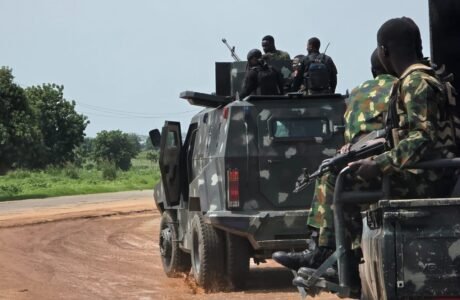
    The Federal Government, on Monday, commenced another batch of mass trial of suspected terrorists charged with terrorism-related offences in Abuja.

    The News Agency of Nigeria (NAN) reports that the trial, which usually takes place at Kainji in Niger, was moved to the the Federal High Court (FHC) in Abuja.

    The prosecution of the defendants is being led by the Attorney-General of the Federation (AGF), Mr Lateef Fagbemi, SAN, while the Director General, Legal Aid Council, Mr Aliyu Abubakar, led the team of lawyers for the defence.

    The trial, which is taking place in all the courts at the high-rise building, is expected to last for a week.

    Some of the trial judges are Justice Binta Nyako, Justice Emeka Nwite, Justice Musa Liman, Justice James Omotosho, Justice Obiora Egwuatu, Justice Ekerete Akpan, among others.

    No fewer than 58 suspected terrorists were listed for trial on Monday before Justice Nwite.

    They are Abba Bukar, Abba Manye, Gujja Mala Bukar, Brem Gonimi, Isa Mohammed, Lawali Dashiri Danke, Yau Tukur (Mai-Auduga), Bello Liman, aka Alhaji Bell Doctor, among others.

    NAN reports that there was heavy security beef-up in and around the Central Business District and the Abuja Federal High Court.

    All roads leading to the court were blocked by armed security personnel.

    It would be recalled that at least 500 suspected terrorists were also tried between April 7 and April 10 at the FHC in Abuja as part of an intensified effort to tackle insecurity

    Fagbemi, while speaking to newsmen at the time, said the 500 defendants were being prosecuted in Phase 9 of the mass trial of suspected terrorists in Abuja.

    The AGF had cited logistic reasons for the transfer of the cases to Abuja.

    “Whether the cases are tried in Kainji or Maiduguri, those to try terrorism suspects are judges of the Federal High Court.

    “For logistic purpose, it is not convenient to go to Kainji, although the same judges would have been ferried to Kainji.

    “But it is more convenient here; we have more courtrooms here and the facilities, and for 10 judges at a time, you know what it means. It means a lot,” Fagbemi had said.


  • We need information on fake pastors – Anambra govt tells residents

    We need information on fake pastors – Anambra govt tells residents


    By Joy Mbachi

    Awka:   Anambra State Government has called on residents of the state to provide it with credible information on pastors, churches, or so-called “men of God” involved in criminality, extortion, fraud and deception.

    The Commissioner for Information and Value Reformation, Dr Law Mefor, made the call in a statement made avaliable to journalists in Awka on Sunday.

    He also requested for information on fake pastors involved in any act that endangered lives and peace of communities or misleads the people in the state.

    He promised that all information would be treated with absolute confidentiality.

    The commissioner said the move was part of government’s efforts to rid the state of all forms of criminality and sanitise both traditional worship and religious practices to restore sanity, law and order in the state.

    “In spite of the negative claims made during the campaigns against the effort to clean up criminals pretending to be traditional healers and real religious leaders, this effort will actually protect the true freedom of traditional worship and religious practice.

    “Let us work together to take back our state from criminals hiding under religion, culture and tradition,” the statement noted.

    “Call +2348034182108 or 5111 if you have any useful information about any such actions, ” the commissioner said. (NAN) www.nannews.ng

  • Govt lied about how my dad died – Major General Rabe Abubakar’s son

    Govt lied about how my dad died – Major General Rabe Abubakar’s son


    Retired Major General Rabe Abubakar’s son, Isyaka, has imputed being economical with the truth in respect of the context of his father’s death to Katsina State Government.

    “The retired General died a natural death from complications of diabetes and hypertension,” the Katsina State government had said in a statement its Commissioner for Internal Security and Home Affairs, Nasiru Mu’azu issued.

    Speaking with Deutsche Welle Hausa service, Isyaka faulted the government’s claim saying his father had no history of diabetes and hypertension.

    “I truly don’t believe it was diabetes. In our view, it was a heart attack. If you look at it, his legs were restrained. Moreover, some people said that he was walking, and he didn’t die, so God knows,” the distraught General’s son said.

    He however added that the probable cause of his father’s death apart from heart attack was snakebite citing a viral video of the deceased in the kidnappers’ den.

  • The 2026 Olympic Day celebration has been postponed by a week


    By Tony Nnezianya
    Lagos:  The main organisers of the Sport-For-All Commission under the Nigeria Olympic Committee (NOC) have announced a one-week postponement of the 2026 Olympic Day celebration.

    Initially scheduled for Saturday, June 27, 2026, the nationwide event will now take place on Saturday, July 4, 2026.

    The decision to shift the date was okmade on Friday, June 6
    during an emergency meeting.

    The participating States would nowsufficient time to organise local celebrations on a day completely free from other conflicting commitments and logistical bottlenecks.

    Olympic Day is an annual global event organised by the International Olympic Committee (IOC) to promote mass participation in physical activities on a non-competitive basis.

    The initiative aims to raise public awareness about the ideals of sports as a vital tool for promoting a healthy, active lifestyle.

    Addressing members during the emergency meeting, the Chairman of the NOC Sport-For-All Commission, Dr Abdul Ibrahim, acknowledged the challenges posed by the current tough business climate.

    However, he urged all members to give their best efforts to ensure a resounding success.

    “You have always strived to achieve the best, and this year’s event should not be an exception,” Dr Ibrahim charged the committee.

    He further commended the leadership of the Nigerian Olympic Committee (NOC), led by Engr. Habu Ahmed Gumel, for its steadfast support of the Commission’s efforts to ensure the event’s annual success.

    So far, not less than 18 states have officially indicated interest in hosting this year’s celebrations.

    Among the frontline states confirmed to participate are The States that have tentatively indicated interest to participate in the 2026 Olympic Day celebration are, including Delta, Bayelsa, Ondo, Edo, Akwa Ibom, Jigawa, Gombe, Plateau, Taraba, FCT, Oyo, Anambra, Zamfara, Imo, Yobe, Kogi, Sokoto and Adamawa.

    We are Still waiting for other states to indicate interest in the exercise.

    The NOC encourages corporate organisations, philanthropic individuals, and the general public to join this movement to foster national unity, bridge generational gaps, and build a healthier society through the social joy of exercise.

    We also solicit corporate organisations to identify with the programme by donating items to us in order to enable us organize a successful program. Sponsorship Enquiries:
    Email: Austin Odigie
    Phone: 08037184341


    (Tony Nezianya is the
    Public Relations Officer (PRO)
    Nigeria Olympic Committee (NOC)
    08033034910
    tonynezianya@gmail.com)


    Note;

  • Kogi Govt will reclaim state’s forests from criminal elements, says Ododo

    Kogi Govt will reclaim state’s forests from criminal elements, says Ododo

    Forest
    By Opeyemi Gbemiro
    Lokoja, June 15, 2026.

    The Kogi Government will reclaim the state’s forests from criminal elements, Gov. Ahmed Ododo, has said.
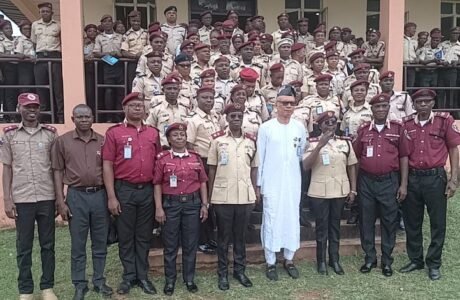
    Ododo made the declaration during a visit to the training camp of the newly recruited Forest Guard trainees on Sunday in Lokoja
    ”There will be no safe haven for terrorists, bandits and other violent criminals operating within the state.
    ”We are determined to rid Kogi of criminal elements and we will deploy all lawful resources necessary to guarantee the safety of residents and visitors,” he said.
    The governor urged the guards to discharge their responsibilities with discipline, patriotism and a strong commitment to service.
    ”The vast and largely unguarded forest areas in some parts of the state has become a major security challenge, providing hideouts for criminal groups and enabling attacks on innocent citizens.
    ”The recruitment and training of Forest Guards form a key component of the state’s security strategy is aimed at strengthening surveillance, denying criminals access to safe havens and improving the capacity of security agencies to respond effectively to threats.” he said.
    Ododo said that the initiative was part of the Forest Guard Programme approved by President Bola Tinubu and it is being implemented through the Office of the National Security Adviser in collaboration with the Department of State Services and other security institutions.
    He commended Tinubu for his commitment to strengthening national security and empowering states with innovative measures to tackle emerging security challenges.
    The governor also expressed appreciation to the National Security Adviser, Nuhu Ribadu, for his support and leadership in advancing security reforms across the country.
    Ododo further lauded the Director-General of the DSS, Adeola Ajayi, for supporting security operations in Kogi.
    He noted that the DSS was overseeing the profiling and training of the Forest Guard recruits to ensure professionalism, competence and accountability.
    The governor stressed that while his administration was committed to expanding security manpower, it remained focused on ensuring that only individuals of proven character, integrity and loyalty were entrusted with the responsibility of protecting lives and property.
    He expressed confidence in the trainees, describing them as a valuable addition to the state’s security architecture and urged them to take their training seriously in preparation for the task ahead.
    The visit to the training camp came a day after the governor inspected the first batch of Armoured Personnel Carriers procured by the state government to enhance the operational capacity and combat readiness of security agencies.
    He reaffirmed that security remained a top priority of his administration and pledged sustained investment in personnel, equipment and intelligence-driven operations to make the state safer and more conducive for investment and development.
    The governor assured residents that the government would continue to intensify efforts until all parts of the state were secured and citizens could pursue their lawful activities without fear.

  • Okechukwu calls for 3% federation account funding for state police

    Okechukwu calls for 3% federation account funding for state police

    Okechukwu calls for 3% federation account funding for state police

    The former Director-General of the Voice of Nigeria (VON), Mr Osita Okechukwu, has called for three percent Federation Account funding for the proposed state police meant to stem spate of insecurity in the country.

    Okechukwu, who is a foundation member of the All Progressives Congress (APC), advocated this in a statement he issued in Enugu on Sunday.

    He commended the unprecedented consensus among Nigerians and bipartisan consensus on the urgent need for the establishment of state police as imperative response to contain the security mess nationwide.

    The APC chieftain, however, warned that the success of state police would depend largely on the dedication of the three per cent funding mechanism to sustain our patriotism.

    “Going through bill passed by House of Representatives: A Bill for an Act to Alter Constitution of the Federal Republic of Nigeria, 1999 to Provide for Establishment of State Police and for Related Matters (Sixth Alteration) Bill, 2026

    “One couldn’t locate specific percentage to adequately fund state police.

    “I, therefore, advocate that three per cent of the Federation Account should be dedicated specifically to the funding of state police.

    “Without proper financial backing, the nation risks unleashing official toll collectors and police thugs on the populace,” he said.


    Okechukwu noted that poor funding remained antithetical to modern gadgets and essential ingredient in asymmetrical warfare.

    He said that the devolution of police powers and other synergy paradigm were not enough to address poor funding, which rendered Federal police prostrate.

    According to him, the realities on the ground have made state police an unavoidable national necessity.

    The APC chieftain noted that the creation of state police without a clearly defined funding framework in the Bill and synergy paradigm with other security agencies would amount to chasing shadows.

    He cautioned that leaving the financing of state police entirely to the discretion of individual state governments might undermine the objective of the reform.

    “Therefore, appropriate adjustment to the Federal Government’s share of the Federation Account, should accompany the Bill.

    “Effective policing is the foundation of peace, economic development, growth of our democracy and citizens’ confidence in government.

    “All stakeholders should support three per cent funding model that will make state police professional, accountable and sustainable,” he added.

  • Mohammed Visits Makinde, Urges Stronger Security Measures After Oriire Kidnappings

    Mohammed Visits Makinde, Urges Stronger Security Measures After Oriire Kidnappings

    Mohammed Visits Makinde, Urges Stronger Security Measures After Oriire Kidnappings

    By Adewale Owoade


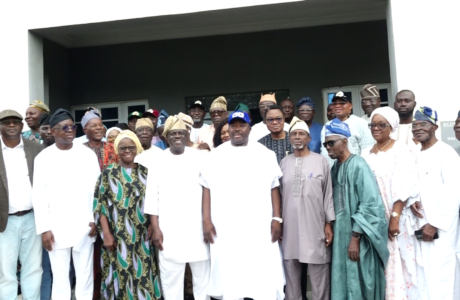
    ‎Governor Bala Mohammed of Bauchi State has visited Oyo State Governor Seyi Makinde at his private residence in Ibadan to sympathise with the government and people of the state over the abduction of teachers and pupils in Yawota and Esiele communities of Oriire Local Government Area.


    ‎Mohammed, who was accompanied by leaders of the Allied Peoples Movement (APM), including the party’s National Chairman, Alhaji Yusuf Mamman Dantalle, and its Bauchi State governorship candidate, Dr. Yakubu Adamu, called for a comprehensive review of Nigeria’s security architecture to better guarantee the safety of citizens.

    ‎Speaking with journalists after the visit, the Bauchi governor commended Makinde’s efforts toward securing the safe release of the abducted teachers and pupils, expressing optimism that the victims would regain their freedom soon.


    ‎”I am here with our leaders from the Allied Peoples Movement to commiserate with Governor Seyi Makinde over the ordeal the people and government of Oyo State are facing as a result of the abduction of our schoolchildren and their teachers.


    ‎”It has been a lingering issue for some time, and we share in the grief of the people. We are here to encourage him and acknowledge the efforts he is making to ensure their release, which are being noticed across the country.


    ‎”On behalf of myself and the government and people of Bauchi State, we sympathise with him and urge him to continue his efforts until these Nigerians are safely released.”

    ‎The governor also expressed his readiness to support the Oyo State Government in any way possible to facilitate the victims’ early release.


    ‎Commenting on the broader security situation in the country, Mohammed stressed the need for stronger collaboration among security agencies and between security operatives and citizens.

    ‎According to him, Nigeria’s security framework requires critical scrutiny to foster greater commitment, coordination and effectiveness in tackling insecurity.


    ‎”I think the citizenry must rise to the occasion and take greater responsibility for their security. People should not serve as informants for criminal elements or aid criminal activities in any form,” he said.


    ‎He also emphasised the role of leadership in addressing insecurity, urging citizens to elect leaders capable of responding to the nation’s security challenges.


    ‎”We must all accept responsibility at every level of leadership—national, sub-national and local government. As we approach another election cycle, Nigerians should make informed choices and elect leaders who can address the challenges confronting the country,” Mohammed added. (NAN)