

Year: 2026

  • Gambian President Appreciates Nigeria’s  Technical Aid Scheme (NTAC), as Gambia’s Engineering University Graduates 951

    Gambian President Appreciates Nigeria’s  Technical Aid Scheme (NTAC), as Gambia’s Engineering University Graduates 951


    – President Tinubu Committed to Nigeria’s Development Cooperation with The Gambia – NTAC DG declared in Banjul


    By Biola Lawal
    Flowerbudnews: The President of the Republic of Gambia Adama Barrow. has expressed profound gratitude to President Bola Tinubu and the Nigerian people for the technological support given his country through the Nigerian Technical Aid Corps (NTAC) Scheme.

    President Barrow, who is also the Chancellor of the Gambian University of Applied Science, Engineering and Technology (USET) expressed the appreciation while speaking at USET graduation of a total of 951 students during its 2nd Combined Convocation Ceremony held in Banjul.

    The ceremony had the theme: “Innovation for Impact: Science, Skills and Sustainable Development,” a statement by Ojo Adetoun Olubunmi, Head, Information and Public Relations Unit, Nigerian Technical Aid Corps (NTAC), disclosed.

    (𝑼𝑺𝑬𝑻 𝑽𝑪 𝒂𝒏𝒅 𝑵𝑻𝑨𝑪 𝑽𝒐𝒍𝒖𝒏𝒕𝒆𝒆𝒓, 𝑬𝒏𝒈𝒓. 𝑷𝒓𝒐𝒇. 𝑺𝒖𝒓𝒂𝒋𝒖𝒅𝒆𝒆𝒏-𝑩𝒂𝒌𝒊𝒏𝒅𝒆, 𝒂𝒔 𝒔𝒉𝒆 𝒑𝒓𝒆𝒔𝒆𝒏𝒕𝒔 𝒉𝒆𝒓 𝒘𝒆𝒍𝒄𝒐𝒎𝒆 𝒂𝒅𝒅𝒓𝒆𝒔𝒔 𝒕𝒐 𝒕𝒉𝒆 𝒅𝒊𝒔𝒕𝒊𝒏𝒈𝒖𝒊𝒔𝒉𝒆𝒅 𝒂𝒖𝒅𝒊𝒆𝒏𝒄𝒆.)

    President Barrow commended Nigeria’s development cooperation efforts and acknowledged the positive contributions of Nigerian professionals serving under the Technical Aid Corps Scheme to the growth of critical sectors in The Gambia, particularly higher education.

    The Gambian leader also appreciated development partners and stakeholders for their contributions to the advancement of USET and charged the graduands to remain connected to their alma mater by giving back to the institution.

    He further encouraged the University’s Governing Council and Management to continue advancing innovation for lasting impact and sustainable development.

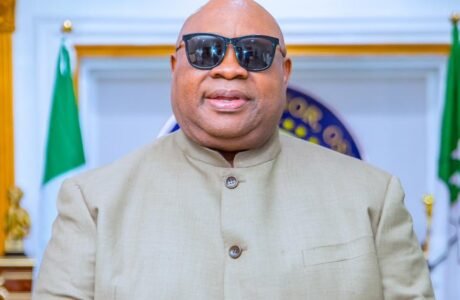
    (𝑷𝒓𝒆𝒔𝒊𝒅𝒆𝒏𝒕 𝑩𝒂𝒓𝒓𝒐𝒘 (𝑭𝒂𝒓 𝒓𝒊𝒈𝒉𝒕), 𝒕𝒉𝒆 𝑪𝒉𝒂𝒊𝒓 𝒐𝒇 𝒕𝒉𝒆 𝑮𝒐𝒗𝒆𝒓𝒏𝒊𝒏𝒈 𝑪𝒐𝒖𝒏𝒄𝒊𝒍 𝒐𝒇 𝑼𝑺𝑬𝑻, 𝑴𝒓. 𝑪𝒉𝒂𝒎 𝒂𝒏𝒅 𝒕𝒉𝒆 𝑵𝑻𝑨𝑪 𝑫𝑮, 𝑹𝒕. 𝑯𝒐𝒏. 𝒀𝒖𝒔𝒖𝒇 𝑩𝑼𝑩𝑨 𝒀𝑨𝑲𝑼𝑩, 𝒅𝒖𝒓𝒊𝒏𝒈 𝒕𝒉𝒆 𝟐𝒏𝒅 𝑪𝒐𝒎𝒃𝒊𝒏𝒆𝒅 𝑪𝒐𝒏𝒗𝒐𝒄𝒂𝒕𝒊𝒐𝒏 𝑪𝒆𝒓𝒆𝒎𝒐𝒏𝒚 𝒐𝒇 𝒕𝒉𝒆 𝑮𝒂𝒎𝒃𝒊𝒂 𝑼𝒏𝒊𝒗𝒆𝒓𝒔𝒊𝒕𝒚 𝒐𝒇 𝑨𝒑𝒑𝒍𝒊𝒆𝒅 𝑺𝒄𝒊𝒆𝒏𝒄𝒆 , 𝑹𝒆𝒔𝒆𝒂𝒓𝒄𝒉 𝒂𝒏𝒅 𝑻𝒆𝒄𝒉𝒏𝒐𝒍𝒐𝒈𝒚 𝒉𝒆𝒍𝒅 𝒂𝒕 𝒕𝒉𝒆 𝑺𝒊𝒓 𝑫𝒂𝒘𝒅𝒂 𝑲. 𝑱𝑨𝑾𝑨𝑹𝑨 𝑰𝒏𝒕𝒆𝒓𝒏𝒂𝒕𝒊𝒐𝒏𝒂𝒍 𝑪𝒐𝒏𝒇𝒆𝒓𝒆𝒏𝒄𝒆 𝑪𝒆𝒏𝒕𝒓𝒆, 𝑩𝒂𝒏𝒋𝒖𝒍, 𝑮𝑨𝑴𝑩𝑰𝑨, 𝒐𝒏 *𝑺𝒂𝒕𝒖𝒓𝒅𝒂𝒚, 𝑱𝒖𝒏𝒆 𝟏𝟗, 𝟐𝟎𝟐𝟔.*)

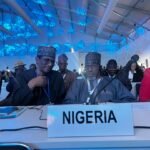
    Representing Nigeria at the event, the Director-General and Chief Executive Officer of the Nigerian Technical Aid Corps, Rt. Hon. Yusuf Buba Yakub, conveyed the goodwill and greetings of President Bola Ahmed Tinubu, to the Government and people of The Gambia.

    The NTAC Director-General reaffirmed President Tinubu’s commitment to strengthening Nigeria’s development cooperation with The Gambia through strategic technical assistance, knowledge transfer, capacity building and the deployment of skilled Nigerian professionals.

    A defining highlight of the convocation was the visible impact of the NTAC Scheme on higher education development in The Gambia, with several Nigerian Technical Aid Corps volunteers now occupying strategic academic leadership positions in the country’s tertiary institutions.

    Among them are the Vice Chancellor of USET, Engr. Prof. Nazmat Surajudeen-Bakinde, Prof. Ado Yusuf Abdulfatah, Deputy Vice Chancellor (Academic Affairs), USET, and Prof. David Gundu, Director Academic Planning and Quality Assurance.

    Othrrs are, Prof. Akinlabi, Director Grants/ Research,and Prof. Kayode Adekeye, Deputy Vice Chancellor (Academic), University of The Gambia.

    Their rise to such positions of responsibility underscored the enduring success and relevance of the NTAC intervention in The Gambia, Rt -Hon. Buba Yakub noted.

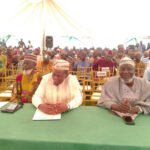
    (𝑴𝒆𝒎𝒃𝒆𝒓𝒔 𝒐𝒇 𝒕𝒉𝒆 𝑷𝒐𝒍𝒊𝒄𝒆 𝑩𝒂𝒏𝒅 𝒐𝒇 𝒕𝒉𝒆 𝑮𝒂𝒎𝒃𝒊𝒂 𝑷𝒐𝒍𝒊𝒄𝒆 𝒂𝒍𝒔𝒐 𝒂𝒅𝒅𝒆𝒅 𝒄𝒐𝒍𝒐𝒖𝒓 𝒂𝒏𝒅 𝒇𝒖𝒏𝒇𝒂𝒓𝒆 𝒕𝒐 𝒕𝒉𝒆 𝒅𝒂𝒚’𝒔 𝒆𝒗𝒆𝒏𝒕)

    The NTAC DG also commended The Gambia’s Minister of Higher Education, Research, Science and Technology, Prof. Pierre Gomez, for his steadfast commitment to the success of the partnership between NTAC and The Gambia.

    He recalled that Prof. Gomez initiated discussions aimed at strengthening collaboration with NTAC as early as his second day in office, demonstrating remarkable dedication to educational advancement and human capital development.

    In her remarks, Prof. Nazmat Surajudeen-Bakinde, herself a product of the NTAC Scheme, paid special tribute to the Government of Nigeria and the Director-General of NTAC for their unwavering support to higher education development in The Gambia.

    She acknowledged the significant contributions of Nigerian professionals to the growth and transformation of tertiary education in the country.

    The ceremony featured the conferment of Degrees, Diplomas and Certificates on 951 graduands across various disciplines.

    The University also presented Awards for Academic Excellence to outstanding students, with awardees attaining impressive academic performances ranging from 70.03 per cent to 91.50 per cent.

    Awards of recognition were equally presented to deserving dignitaries and distinguished personalities. Among the recipients was the Director-General of NTAC, Rt. Hon. Yusuf Buba Yakub, who received his award from President Adama Barrow in recognition of NTAC’s outstanding contributions to capacity building and educational development in The Gambia.

    In her valedictory address, the Valedictorian expressed appreciation to the World Bank for its support to the institution and thanked the Vice Chancellor and Management of USET for their encouragement and commitment to student success.

    While congratulating her graduating colleagues with the declaration, “We made it!”, she urged the continuing students to remain resolute, uphold integrity and pursue excellence, adding that “Here at USET, we don’t take the best; we make the best.”

    (𝑷𝒓𝒆𝒔𝒊𝒅𝒆𝒏𝒕 𝑩𝒂𝒓𝒓𝒐𝒘(𝒎), 𝑴𝒓 𝑪𝒉𝒂𝒎, 𝑪𝒉𝒂𝒊𝒓 𝑮𝒐𝒗𝒆𝒓𝒏𝒊𝒏𝒈 𝑪𝒐𝒖𝒏𝒄𝒊𝒍 𝒐𝒇 𝑼𝑺𝑬𝑻; 𝑹𝒕. 𝑯𝒐𝒏. 𝑩𝑼𝑩𝑨 𝒐𝒇 𝑵𝑻𝑨𝑪 𝒂𝒏𝒅 𝑼𝑵𝑫𝑷’𝒔 𝑮𝒂𝒎𝒃𝒊𝒂 𝑹𝒆𝒑., 𝑴𝒔 𝑴𝒂𝒔𝒉𝒐𝒍𝒐𝒈𝒖(𝑴𝒓 𝑷𝒓𝒆𝒔𝒊𝒅𝒆𝒏𝒕’𝒔 𝑹𝒊𝒈𝒉𝒕), 𝒂𝒏𝒅 𝒐𝒏 𝒉𝒊𝒔 𝒍𝒆𝒇𝒕 𝒂𝒓𝒆 𝑴𝒊𝒏𝒊𝒔𝒕𝒆𝒓 𝒐𝒇 𝑯𝒊𝒈𝒉𝒆𝒓 𝑬𝒅𝒖𝒄𝒂𝒕𝒊𝒐𝒏, 𝑹𝒆𝒔𝒆𝒂𝒓𝒄𝒉 𝒂𝒏𝒅 𝑻𝒆𝒄𝒉, 𝑻𝒉𝒆 𝑮𝑨𝑴𝑩𝑰𝑨, 𝑷𝒓𝒐𝒇. 𝑮𝒐𝒎𝒆𝒛 𝑷𝒊𝒆𝒓𝒓𝒆)


    Also in attendance were the Chairperson of the Governing Council of USET, Engr. Ebrima Cham, the Honourable Minister of Technical and Higher Education of Sierra Leone, Dr. Haja Ramatulai Wurie, members of the diplomatic corps, senior government officials, academics, development partners and other distinguished guests.

    The event once again highlighted the enduring impact of the Nigerian Technical Aid Corps Scheme as a strategic instrument of Nigeria’s foreign policy and South-South Cooperation, fostering human capital development, institutional strengthening and lasting bilateral relations between Nigeria and The Gambia, the NTAC statement noted (FLOWERBUDNEWS):


  • PRESIDENT TINUBU CONGRATULATES EKITI GOVERNOR OYEBANJI ON RE-ELECTION VICTORY


    President Bola Ahmed Tinubu has congratulated Governor Biodun Abayomi Oyebanji on his resounding victory in Saturday’s Ekiti State gubernatorial election.

    The President commended the people of Ekiti State for their peaceful and orderly conduct, and for reposing their trust in Governor Oyebanji, a statement by Bayo Onanuga, the Presidential Spokesman disclosed

    He also commended saw enforcement agencies for maintaining law and order.

    He charged the Independent National Electoral Commission to continue to invest in conducting a peaceful, free, fair and credible election as we approach the Osun governorship election in August and the general election next year.

    With his overwhelming victory in the election, Oyebanji has emerged as the first governor in the history of Ekiti State to win re-election back-to-back.

    President Tinubu notes that Governor Oyebanji’s first term was marked by significant strides in infrastructure, agriculture, youth employment, education, healthcare, and rural development under the BAO agenda.

    The renewed mandate is therefore a clear vote of confidence in continuity, stability, and people-centred governance.

    President Tinubu urges Governor Oyebanji to remain magnanimous in victory and to carry all Ekiti people along as he consolidates on his achievements in the next four years.

    The President also commends all those who contested the election with the governor for exercising their democratic rights, saying it is now time to rally round Oyebanji in the task of taking Ekiti to the next level of governance.

    The President reaffirms the Federal Government’s commitment to partnering with the Ekiti State Government to deliver more dividends of democracy and accelerate the Renewed Hope Agenda across Nigeria.

    He prays for God’s wisdom, strength, and good health for Governor Oyebanji as he continues to serve the good people of Ekiti State.


  • Court fixes suit seeking to void Donald Duke’s PRP presidential candidacy for hearing on Monday

    Court fixes suit seeking to void Donald Duke’s PRP presidential candidacy for hearing on Monday


    The Federal High Court in Abuja has fixed June 22 for hearing of a suit filed by an aggrieved aspirant, Engr. (Dr.) Yakubu Muhammed Kingsley, challenging the emergence of former Gov. Donald Duke of Cross Rivers as presidential candidate of the People’s Redemption Party (PRP) for the 2027 general elections.

    The case, which is coming up for hearing for the first time on Monday, was fixed by Justice Mohammed Umar.

    Hearing notices to the effect had been issued and served on parties in the suit.

    (Engr (Dr) Yakubu Muhammed Kingsley, the aggrieved presidential aspirant of People’s Redemption Party (PRP)


    Kingsley, in the suit marked: FHC/ABJ/CS/1234/2026 and filed by his lawyer, D.A. Sulyman, had sued PRP, Mr Duke and Independent National Electoral Commission (INEC) as 1st to 3rd defendants respectively.

    He sought three questions for determination in the originating summons filed on June 10.

    The plaintiff wants the court to determine whether Duke was dully returned as the presidential candidate of PRP in the May 25 primary election, in which its results was declared on the May 26, having not been a registered member of the party as at May 4, when the PRP’s membership register was submitted to INEC.

    “Whether over voting in states like Bauchi, where the registered members of the 1st defendant in its membership database is 593 and the total votes cast was 760, in Gombe State the registered member was 348 and the votes cast was 1,431 and in Kwara State, the registered members is 55 while the vote cast was 82 votes, will not call for the nullification of the said primary election.”

    He, therefore, sought a declaration that the ex-govenor, not been a registered member of PRP, cannot participate in the party’s primary election held on May 25 where he was declared the winner on May 26.

    He sought a declaration that Duke ought not to have been cleared for the presidential primary election contest, having not complied with the guidelines of the party to physically present for the screening at its national secretariat.

    Kingsley, therefore, prayed the court for an order setting aside the results of the presidential election conducted in Bauchi, Gombe and Kwara respectively on the ground of over voting.

    He sought an order declaring him as the presidential candidate of PRP, having complied with all the party’s guidelines and been a registered member of the party.

    He also sought an order directing the commission not to recognise Duke as PRP’s presidential flagbearer or to delete his name from its database as the presidential candidate of the party.

    The plaintiff further sought an order directing the electoral umpire to recognise him as PRP’s presidential candidate.

    In the affidavit in support of the suit deposed to by Kingsley himself, the aggrieved aspirant said he is a registered member of PRP with membership card number: 2A8D8B20B2.

    The plaintiff, who described himself as a “politician,” said he is of Auchi III Ward, Etsako West Local Government Area of Edo State, but presently in Abuja, FCT,.

    He averred on oath that Duke was not a dully member of PRP as at May 4 when the membership register of the party was submitted to INEC.

    He said he validly purchased the party’s Expression of Interest Form and Nomination Form for the office of president of the Federal Republic of Nigeria and paid a total sum of N20 million to the party.

    He stated that he duly completed all nomination requirements and was endorsed by the requisite number of registered members as required by the party’s guidelines.

    “That I physically attended the presidential screening exercise conducted by the party between 15th and 19th May, 2026 at the National Secretariat of the 1st defendant in Abuja as stipulated in the Aspirants Checklist for Sereening, a copy of which is herewith attached and marked as Exhibit ‘BB.’””

    He said he was duly screened and cleared by the party to contest the presidential primary election conducted on May 25.

    According to him, to my utmost surprise, the name of the 2nd defendant (Duke) appeared as an aspirant despite the fact that he did not physically participate in the screening exercise together with other aspirants at the National Secretariat of the 1st defendant.

    He said this was against INEC’s extant regulations and guidelines, mandating political parties to submit the names of their registered members at least 21 days before the conduct of the party’s primary.

    Kingsley, there, challenged the electoral umpire to produce its membership register submitted to it as at May 4.

    He alleged that several objections and complaints were raised by party’s members concerning the eligibility of Duke.

    Besides, the aggrieved aspirant alleged that the presidential primary election was characterised by widespread irregularities and manipulation.

    According to him, in several states, the votes returned exceeded the total number of eligible registered members contained in the party register.

    The aggrieved aspirant attached the result sheet of the presidential primary poll to prove his allegation of over voting.

    He also alleged that his agents and representatives reported instances where they were denied effective participation in the collation process.

    “That I verily believe that the purported result declared in favour of 2nd defendant does not represent the lawful votes cast by eligible members of the party.

    “.That when unlawful and inflated votes are excluded, I emerge as the aspirant who secured the highest lawful votes in the presidential primary election.

    “That I depose to this affidavit in good faith believing the contents to be true and correct in accordance with the Oaths Act,” he said.

  • Creation Of A’Ibom Blue Economy Ministry Will Drive Growth, Investments – Maritime Devt. Stakeholders

    Creation Of A’Ibom Blue Economy Ministry Will Drive Growth, Investments – Maritime Devt. Stakeholders


    By Dianabasi Effiong

    Maritime development experts and stakeholders have called on the Akwa Ibom State Government to establish a Ministry of Blue Economy as a strategic step towards unlocking the vast economic potential of the state’s maritime resources and accelerating sustainable development.

    The call was contained in a policy advocacy paper, “Proposed Akwa Ibom State Blue Economy Ministry: Maritime Transport and Shipping. A New Frontier for Akwa Ibom’s Economic Prosperity,” authored by Dr. Saviour Ekpe and veteran journalist, Solomon Okpo.

    The authors commended Gov. Umo Eno for his commitment to the welfare of the people of Akwa Ibom through the implementation of the ARISE Agenda, adding that his administration had continually impacted positively on citizens through empowerment programmes, infrastructure development, support for entrepreneurs and farmers, educational interventions, healthcare improvements, and rural development initiatives.

    They stated that in spite of the gains so far recorded, Akwa Ibom must now focus on diversifying its economy by harnessing the enormous opportunities within its maritime and aquatic resources through the establishment of a dedicated Ministry of Blue Economy.

    According to them, Akwa Ibom possesses more than 129 kilometres of Atlantic coastline and occupies a strategic position within the Gulf of Guinea, giving the state a competitive advantage in maritime trade, shipping, logistics, fisheries, tourism, and marine-related investments.

    The paper highlighted maritime transport and shipping as one of the key sectors that could benefit significantly from the proposed ministry.

    The authors noted that maritime transportation accounted for more than 80 per cent of global trade, adding that Akwa Ibom had been well-positioned to emerge as a major logistics and shipping hub in Nigeria’s South-South region.

    They stated that a Ministry of Blue Economy would help formulate policies that encourage private sector participation in maritime logistics, promote the establishment of logistics parks and warehousing facilities, and facilitate efficient cargo movement systems capable of attracting investors and generating substantial revenue.

    They also pointed to the proposed Ibom Deep Seaport as a game-changing project capable of transforming the state’s economy through increased local and international shipping activities.

    According to the paper, a dedicated ministry will provide focused attention on ports, harbours, jetties, waterfront development, and marine services while working closely with Federal agencies and private investors to attract investments into port-related infrastructure and ancillary industries.

    They also emphasised the importance of developing freight and cargo services, noting that modern cargo handling facilities, container terminals, storage infrastructure, and freight management systems would boost import and export activities, strengthen internally generated revenue, and create thousands of direct and indirect jobs.

    The authors identified ship brokerage, maritime consultancy, marine insurance, freight forwarding, and logistics services as additional opportunities capable of creating high-value employment and positioning Akwa Ibom as a maritime services hub in West Africa.

    The paper also underscored the need to develop inland water transportation across riverine and coastal communities in the state.

    It noted that investments in modern jetties, passenger terminals, ferry services, navigational aids, and safety facilities would improve connectivity, reduce pressure on road infrastructure, lower transportation costs, and promote tourism and commerce.

    The authors maintained that the establishment of a Ministry of Blue Economy should be viewed not merely as an administrative expansion but as a strategic economic necessity capable of unlocking the state’s vast maritime potential.

    They urged Gov. Eno’s administration to embrace the blue economy as a major pillar of future economic transformation, stressing that a dedicated ministry would attract investments, stimulate industrialisation, create employment opportunities, increase government revenue, and drive long-term prosperity for the people of the state.

  • Gov. Uzodinma Wants a Chief Judge He Can Own

    Gov. Uzodinma Wants a Chief Judge He Can Own


    By Chidi Anselm Odinkalu

    Swami Kesavananda Bharati was a senior Hindu monk who became an unlikely icon of constitutional law and a provocateur for judicial independence. Better known by the honorific, “His Holiness”, Kesavananda was by 1970 the senior pontiff of a Hindu Monastery in Edneer, Kasaragod District of Kerala State in south-western India.

    The Kerala Land Reforms (Amendment) Act of 1969, which came into force at the beginning of January 1970, empowered the state government to restrict the management of lands belonging to Kesavananda’s monastery.

    To the senior Hindu monk, this was not a matter for prayer or fasting. In February 1970,  Kesavananda sued. Arguments began on 31 October 1972, ending on 23 March 1973, before a full panel of 13 Justices of the Supreme Court of India. l

    In its judgment, a closely split court decided by a majority of 7-6 in favour of His Holiness, striking down the measures by Kerala State. The majority panel included three of the most senior Justices of the Supreme Court, led by then Chief Justice of India (CJI), Sarv Mittra Sikri.

    The government of Prime Minister Indira Gandhi was incandescent. Judgment day, 24 April 1973, was the penultimate day in office of Sarv Sikri as CJI. As Chief Justice Sikri retreated from the Chambers of the CJI the next day, Prime Minister Indira Gandhi arrived at the presidential palace bearing a cabinet memorandum for his replacement.

    On 26 April 1973, President Varahagiri Giri of India appointed Ajit Nath Ray the CJI. He was the senior judge in dissent in the judgment in Kesavananda Bharati’s case. At the time of his appointment as CJI, Ajit Ray was junior to three Justices of the Supreme Court of India, who were forced to resign.

    The High Court of Delhi noted that at the time, “the established practice” was to appoint “the senior-most judge of the Supreme Court as the Chief Justice of India.” Instead of the National Judicial Appointments Commission as required by the Constitution, the Delhi High Court continued, “the decision to recommend the appointment of Justice A. N. Ray was taken by the Political Affairs Committee of the Cabinet, which has no standing in the eyes of law.”

    Indira Gandhi’s government did not hide its design in choosing Ajit Ray as CJI. Five days after his appointment, her Minister of Steel and Mines, Mohan Kumaramangalam, disclosed to India’s Lok Sabha that in choosing him, the government settled for someone who would “help in ending confrontation between the judiciary and Parliament; one who would appreciate the winds of change sweeping the country and one who will help us in Court.”

    Former Chief Justice and Acting President of India, Mohammad Hidayatullah, said of the decision that its design was “not creating ‘forward-looking judges’ but the ‘judges looking forward’ to the plumes of the office of Chief Justice.” It triggered twin constitutional and institutional crises in India, which were settled after nearly a quarter of a century with the restoration of the convention of seniority.

    There are three good reasons for this convention. First, it precludes the process from being hostage to opacity, subjectivity, or extraneous considerations. Second, it equally precludes the process from being hijacked by politicians for partisan ends. Third, it ensures that a serving judge is not denied access to preferment based on a smear against which he or she is not afforded a credible defence.

    Unlike in India, where judicial seniority emerged early as a dispositive factor in the appointment of the Chiefs of court systems, that was not always the case in Nigeria. The consideration of seniority in the appointment of the Chief Justice only emerged in 1979 with the appointment of Atanda Fatayi Williams as the fourth Chief Justice of post-colonial Nigeria. At the state level, politics has progressively diminished the office of the Chief Judge in both esteem and authority. At independence, Chief Justices (as they were then called) of the various regional courts also sat on the Federal Supreme Court. At the time, they were in fact second only to the Chief Justice in the judicial hierarchy.

    Justices of the Supreme Court routinely stepped down to serve as Chiefs at the state level. John Idowu Conrad Taylor, for instance, stepped down from the Supreme Court in 1964 to become Chief Justice of the Federal Territory of Lagos. Mohammadu Buba Ardo did the same in 1976, stepping down from the Supreme Court to become Chief Judge of the newly created Gongola State.

    All this was to change under the regime of Muhammadu Buhari. Keen to break judicial opposition to the casualization of judges in military tribunals in 1984, the regime sought to advance loyalists to senior judicial sinecures.

    In Anambra State, the regime appointed Alison Madueke, a Navy Captain, as military governor. The Chief Judge at the time was Emmanuel Araka, an old-school judge. When the new military governor summoned him, Araka was reluctant. When he declined a second summons, Alison Madueke, as military governor, fired Araka summarily.

    The politicians who took office in 1999 now appear to believe that they have a right to a Chief Judge in their back pockets. When, for instance, former governor, Rotimi Amaechi, could not get his choice as Chief Judge of Rivers State in 2013, he ensured that the office was vacant until his departure from office in 2015.

    The latest theatre for the casualization of the State Chief Judge is Imo State. The state has not had a Chief Judge for nearly 20 months since the National Judicial Council (NJC) sacked its last Chief Judge for age falsification in November 2024. In April 2025, the Council torpedoed the design of the Imo State governor to supersede the three most senior judges in the state and appoint the fourth as Acting Chief Judge.

    With evident reluctance, the state governor acceded to the directive of the NJC to appoint the most senior judge in the state to act as Chief Judge. Appointed in 1993, Ijeoma Ogugua has served as a judge of the High Court of Imo State for 33 years. At least twice, she has been passed over for the office of Chief Judge. The judge currently next to her in seniority on the bench of the High Court of Imo State is 11 years her junior.

    Yet, that is the person whom the State Governor, Hope Uzodinma and the State Judicial Service Commission (JSC) would like to see preferred to the office.

    In an announcement dated 5 June 2026, the JSC invited public feedback on a shortlist of two judges. It omitted the Acting Chief Judge. The JSC claimed to have done this under the 2023 amendment of the applicable Procedural Rules of the NJC. But those rules apply to the appointment of new judges, not to that of a Chief Judge.
    In reality, the Imo State JSC asserts a power it does not have. The Constitution confines the JSC to the role of rendering “advice” to the NJC on “suitable persons for nomination” to the office of state Chief Judge. In other words, it is a glorified commentator. The power to recommend a judge for appointment belongs to the NJC, which alone can do a shortlist.

    Quite clearly, the so-called, shortlist of the Imo State JSC is designed to eliminate the most senior judge in the state from consideration. This design has been accompanied by serious allegations that some senior members of the legal profession in the state, whose views were registered, “were alleged to have been either influenced, appreciated or coerced with the envelopes.”

    When he wrote to the NJC early in 2025 for permission to appoint his lackey as Acting Chief Judge, Governor Uzodinma argued that “the three most senior Judges (were) not appointable”, and levied a specious smear against, especially the most senior judge in the State. But the governor is unwilling to have any of his allegations investigated on record by the NJC.

    The Acting Chief Judge whom Governor Uzodinma wishes to preclude from consideration does not have an adverse disciplinary record with the NJC. In this situation, the Chief Justice of Nigeria has an opportunity to define the applicable conventions. It is not her job to grant the governor a Chief Judge whom he can own.

    *A lawyer and a teacher, Odinkalu can be reached at chidi.odinkalu@tufts.edu*

  • Ekiti 2026: Oyebanji emerges winner with 319,224 votes

    Ekiti 2026: Oyebanji emerges winner with 319,224 votes


    By Yinusa Ishola
    Ado-Ekiti:   The candidate of the All Progressives Congress (APC) in Saturday’s governorship election in Ekiti, Gov. Biodun Oyebanji, has emerged winner with 319,224 votes.

    Oyebanji defeated his closest rival and candidate of the Peoples Democratic Party (PDP), Mr Wole Oluyede, who scored 40,543 vote

    Mrs Adenike Oladiji, INEC’s Chief Returning Officer and Vice Chancellor, Federal University of Technology, Akure, announced the result on Sunday in Ado-Ekiti.

    She said Oyebanji satisfied all the requirements in the election and was declared elected.

    Giving a breakdown, Oladiji said the election had 988, 251 as total number of registered voters and 384, 949 as the total number of accredited voters across the 16 Local Government Areas of the state.

    She gave the total number of votes cast as 382,109 while the total number of rejected votes was 6,332.

    Speaking with journalists after the announcement, Sen. Cyril Fasuyi, the APC Collation Agent, urged other contenders to join the governor in building a prosperous state.

    “In every contest there will only be one winner.

    ” I think there should be that sportsmanship spirit with all of them.

    “I think nobody is a loser; we understand it’s just for everybody to come on board to support the governor in his developmental drive,” he said.

    The breakdown of the parties that participated in the election and the votes scored are listed below:

    COLLATED RESULTS FOR EKITI 2026 GOVERNORSHIP ELECTION

    1. EMURE LG
    COLLATION OFFICER – PROF EMMANUEL OLUWAFEMI
    RESULTS
    ADC – 732
    APC 14325
    PDP – 851

    2. EFON LG
    COLLATION OFFICER – PRO. SUNDAY OJO
    RESULTS
    ADC -201
    APC 8742
    PDP 2051

    3. IJERO LG
    COLLATION OFFICER – PROF OLANIRAN AKANNI
    RESULTS
    ADC 2026
    APC 25506
    PDP 2479

    4. IKERE LG
    COLLATION OFFICER – PROF KEHINDE JAIYEOLA
    RESULTS
    ADC 245
    APC 11116

    5. EKITI SOUTH LG
    COLLATION OFFICER – PROF KOLA OLADUNMOYE
    RESULTS
    ADC 1076
    APC 14705
    PDP 1800

    6. IDO-OSI
    COLLATION OFFICER – PROF AKINTUDE. MUTAKUBI
    RESULTS
    ADC 561
    APC 17901
    PDP 1449

    7. EKITI WEST LG
    COLLATION OFFICER – PROF BOLAJI STEPHEN
    RESULTS
    ADC 674
    APC 28258
    PDP 3644

    8. ADO LG
    COLLATION OFFICER – PROF TOYE FASIMINRIN
    RESULTS
    ADC 1054
    APC 38026
    PDP 3817

    9. ILEJEME LG
    COLLATION OFFICER – MOGAJI ANTHONY
    RESULTS
    ADC 578
    APC 8984
    PDP 1243

    10. ISE-ORUN LG
    COLLATION OFFICER – DR JOHN ISSA
    RESULTS
    ADC 365
    APC 12908
    PDP 1627

    11. OYE LG
    COLLATION OFFICER – PROF JIDE POPOOLA
    RESULTS
    ADC 998
    APC 18975
    PDP 2891

    12. MOBA LG
    COLLATION OFFICER – PROF ADEGBOYEGA SULAIMAN
    RESULTS
    ADC 994
    APC 20500
    PDP 1572

    13. AYEKIRE GBONYIN LG
    COLLATION OFFICER – PROF OSHO BAMIDELE
    RESULTS
    ADC 314
    APC 17133
    PDP 1503

    14. IKOLE LG
    COLLATION OFFICER – PROF SADIA FUNMILAYO ADIFALA
    RESULTS
    ADC 812
    APC 26508
    PDP 750

    15. IREPODUN/IFELODUN LG
    COLLATION OFFICER – PROF MICHAEL ADEYEMI
    RESULTS
    ADC 511
    APC 29278
    PDP 2119

    16. EKITI WEST LG
    COLLATION OFFICER – PROF OLABODE OLATUBOSUN
    RESULTS
    ADC 1730
    APC 26359
    PDP 2795
    (NAN) (www.nannews.com.ng)

  • Healthy lifestyle sweeps China amid weight management campaign

    Healthy lifestyle sweeps China amid weight management campaign


    By Xinhua writers Zheng Bofei and Wang Xiaopeng

    BEIJING:  (Xinhua) /Flowerbudnews:  — For eight weeks, approximately 180 overweight teenagers in Shanghai experienced a new kind of fitness intervention — one that was far more exciting than the usual “run more, eat less” prescription.

    Instead of pounding the pavement, they put on virtual reality (VR) headsets and stepped into digital sports arenas, where AI-powered coaches guided them through table tennis and soccer matches.

    The coaching system, named REVERIE, was developed by an international multidisciplinary team led by researchers from Shanghai Jiao Tong University. By combining AI-driven coaching, motion tracking, and immersive VR worlds, REVERIE is offering a new way to make exercise more engaging for overweight and obese adolescents.

    From campuses and hospitals to dinner tables and fitness centers, weight management in China is undergoing a fundamental shift — redefined not as a test of willpower, but as a science-backed, society-wide project. That change has been accelerated by a national campaign that is now entering its third year.

    Two years ago, 16 Chinese departments and organizations, including the National Health Commission (NHC) and the ministries of education and civil affairs, jointly launched a three-year “Weight Management Year” initiative, which comes amid rising concern over overweight and obesity.

    The campaign aims to build supportive environments, promote healthy lifestyles and improve abnormal weight conditions among key groups.

    According to the NHC, 34.3 percent of Chinese adults were overweight, and 16.4 percent were obese in 2018. Citing research forecasts, it warned that 70.5 percent of Chinese adults could be overweight or obese by 2030 if no effective measures were taken to curb the trend.

    For a growing number of people, weight management no longer means simply “getting thinner.” It now represents a broader transformation — in how they exercise, how they seek medical advice, and how they take charge of their long-term health.


    MAKING EXERCISE PART OF DAILY LIFE

    Exercise remains the most visible — and the most accessible — pillar of China’s weight-management push.

    At Dalian University of Technology in northeastern Liaoning Province, student Wang Zhucen enrolled in the university’s inaugural weight management course. After 21 days of regular exercise, nutritional guidance and group support, he shed 6.3 kilograms — a loss he described as the best testament to his perseverance. “I felt genuinely happier,” he added, “when I sweated for an hour every day with my classmates.”

    The course offers two tracks — a 21-day intensive program or a full-semester curriculum — covering scientific exercise, nutrition and mental health support. In the first intensive session alone, 33 students lost a combined 133 kilograms, while also showing marked improvements in blood pressure and psychological well-being.

    Beyond university campuses, young people are reshaping their daily routines, too.

    Wang Kai, a 31-year-old finance worker, wrapped up a day at work and entered a gym in Beijing’s Chaoyang District at around 7:30 p.m. He threw himself into training gear and plunged into a session of sled pushes, rowing, running and lifting.

    “Before, I’d just go home, watch dramas and play on my phone,” he said. “Now I come here to train almost every day.”

    This fitness boom rides on a rapidly expanding public sports infrastructure. By the end of 2023, China had built 4.59 million sports venues and roughly 370,000 kilometers of fitness trails. A National Bureau of Statistics survey found that 49.6 percent of Chinese residents participated in sports and fitness activities in 2024 — an increase of 18.7 percentage points from 2018.

    EATING DIFFERENTLY

    For 28-year-old media worker Chen Hao, changing his diet has become as important as changing his workout routine. His annual physical check-ups once showed warning signs stacking up year after year — late nights, spicy takeout, barbecue and beer. Once he got serious about training, he ditched food delivery, began cooking at home, and made it a habit to get to bed before 11 p.m.

    Chen’s story exemplifies a pervasive practice commonly emphasized by fitness professionals: regular exercise matters, and it works far better when supported by healthier dietary habits.

    At Dalian University of Technology, nutritional guidance is woven into the weight management curriculum. Students are taught to understand how food, training, sleep and mental state intertwine.

    “To manage weight, we need to encourage students to engage in scientific exercise and make proper diet a part of their daily routine,” said Chang Bo, a professor at Zhuhai College of Science and Technology. “Moreover, college students should strengthen their self-discipline to improve their lifestyles and health management.”

    The sweeping campaign has reached takeout businesses. In some localities, food delivery platforms and restaurants are being encouraged to offer dishes with less salt, oil and sugar, along with more nutritionally balanced options. The aim is to make healthier choices more accessible — especially for those who depend on takeout meals.

    Experts noted that healthy weight management should not be reduced to short-term dieting. It requires regular meals, balanced nutrition, adequate protein, reduced oil, salt and sugar, fewer late-night snacks, and a deeper understanding of how diet affects blood sugar, blood lipids, body composition and long-term disease risk.

    SEEKING MEDICAL HELP

    Many people who have already developed metabolic disorders are turning to hospital clinics for professional intervention.

    At Sichuan University in Chengdu, the campus hospital recently launched a lifestyle clinic in response to surging demand from students and faculty eager to lose weight scientifically and adopt healthier routines. The initiative came after a freshman survey revealed common problems: skipping breakfast, inadequate sleep, and a sedentary lifestyle, according to Su Qiaoli, vice president of the university hospital.

    Unlike conventional medical services that often focus on post-symptom diagnosis and treatment, this clinic prioritizes prevention — promoting balanced diets, regular exercise, sufficient sleep and emotional regulation — to intervene early before chronic conditions such as hypertension or diabetes take hold.

    Li Xiaoying, director of endocrinology at Zhongshan Hospital affiliated with Fudan University, called obesity the “origin” of many chronic diseases, including diabetes, hypertension and cardiovascular disease.

    “If obesity is brought under control,” Li said, “these diseases can be effectively prevented and treated.”

    In recent years, weight-management medical services have expanded rapidly across the country. By early 2026, more than 5,500 medical institutions at or above the secondary level had set up healthy weight management clinics, according to the NHC. A separate NHC notice said such clinics should coordinate resources from departments including endocrinology, clinical nutrition, psychology, cardiovascular medicine, rehabilitation and traditional Chinese medicine.

    New medications have also entered the public discourse. They are not positioned as a shortcut for casual weight loss, but as a medically supervised option for eligible patients living with obesity or related health risks.

    A 58-year-old patient surnamed Li, who weighed nearly 100 kilograms, was among the first in China to receive Semaglutide as a prescribed weight-loss treatment after Wegovy — a Semaglutide-based drug — entered the domestic market. Wang Cunchuan, Li’s physician, recalled that within a day of Wegovy’s launch in mid-November 2024, more than 40 eligible patients came to his hospital in Guangzhou for consultations.

    Yet doctors caution that weight-loss drugs are unable to act as a perfect shortcut for everyone.

    “A medication is ultimately aimed at making patients healthier, improving their quality of life and extending their lifespan,” said Mu Yiming, a physician at the Chinese PLA General Hospital. “The focus is not on the body mass index — it’s on the patient.”

    Since the launch of the three-year weight management campaign, Wang Guangling, deputy director of the clinical nutrition department at Jiangxi Provincial People’s Hospital, regularly appears in short videos on Douyin, the Chinese version of TikTok, to share weight loss knowledge.

    “Weight loss is a marathon, not a sprint,” Wang said, urging the public to manage their weight scientifically, and invest in health through sustained actions.

    The message is clear: this is not a temporary campaign to chase a lower number on the scale. It is a long-term shift in how people eat, move, sleep, seek care and manage their health across a lifetime.


  • Enugu North by-election: Health Commissioner hails electorates for defiling rain, delay

    Enugu North by-election: Health Commissioner hails electorates for defiling rain, delay

    Enugu North by-election: Health Commissioner hails electorates for defiling rain, delay


    The Enugu State Commissioner for Health, Prof. George Ugwu, has hailed voters especially female electorate in Nsukka council area for defiling rain and other challenges in the Enugu North Senatorial District by-election.


    The Independent National Electoral Commission (INEC) is currently conducting a by-election in Enugu North Senatorial District, which covers six council areas: Igbo-Etiti, Igbo Eze North, Igbo Eze South, Nsukka, Udenu, and Uzo-Uwani.


    Ugwu told newsmen on Saturday after casting his vote in Polling Unit 004 (in Amugwu Village Hall) Obukpa ward, Nsukka council area that female voters displayed resilience to see that they performed their civic responsibility.


    “I must commend the zeal of most female electorate, who defiled the rain and other temporary challenges to cast their vote and stayed back to protect their votes,” he said.


    The commissioner said that the election was “very peaceful” in his ward as well as other parts of Nsukka council area polling units he received report about.


    On security, Ugwu said that personnel of security agencies on election duties performed professionally in their duties.


    He said that the turn out was impressive, adding that although few voters arrived early but towards 11a.m. most voting centres was crowded with voters hungry to perform their civic responsibility.


    He, however, advised INEC to strengthen its manpower training, technology and logistics capacities.


    “INEC’s Bimodal Voter Accreditation System (BVAS) devices cause some hitch initially in the morning but as the day progressed and the weather got clearer, it picked up and many voters did cast their votes.


    “The initial delay in connectivity of the BVAS, delayed some voters that wanted to cast their votes early but the people waited patiently especially female voters,” he added.


    Meanwhile, voting for the by-election had been concluded in most polling units for the senatorial district.


    The by-election followed the demise of Sen. Okechukwu Ezea, representing Enugu North Senatorial District, who passed-on in November 2025.


    Five political parties including the APC, PDP, NDC, LP, and Boot Party are participating in the exercise.

  • Untitled post 90812

    Kwara 2027:10 APC Aspirants Alert Presidency to Alleged Plot to Enlist Monarchs for Danladi-Salihu

    By Afusat Agunbiade-Oladipo


    Ten governorship aspirants and members of the Elders Caucus of the All Progressives Congress (APC) in Kwara have alleged a plot to enlist traditional rulers in the state to support the emergence of Speaker of the Kwara House of Assembly, Yakubu Danladi-Salihu, as the party’s governorship candidate for the 2027 elections.


    The aspirants claimed that some individuals were mobilising traditional rulers to visit President Bola Tinubu to purportedly thank him for endorsing Danladi-Salihu as the APC governorship candidate.


    The group also dismissed speculations that it had adopted the Director-General of the National Orientation Agency (NOA), Malam Lanre Issa-Onilu, as its preferred candidate, insisting that he did not participate in any nomination process.


    The concerns were raised during a meeting with the national leadership of the APC held in Abuja on June 17 and June 18.


    The aspirants at the meeting were Dr Bashir Bolarinwa, Sen. Salihu Mustapha, Sen. Ibrahim Oloriegbe, Alhaji Tajudeen Audu, Dr Toyin Alabi, Rt. Hon. Mohammed Bio, Dr Muyideen Salako, Mohammed Dele Belgore (SAN), Amb. Abdulfatai Seriki and Capt. Ahmad Mahmud.


    Speaking on behalf of the group, Chairman of the Kwara APC Elders Caucus, Chief James Ayeni, said no governorship primary election had been conducted in the state to produce Danladi-Salihu as the party’s candidate.


    He also maintained that the APC had not adopted any consensus candidate for the 2027 governorship election in Kwara.

    “To the best of our knowledge, the party has not published the endorsement of any candidate in Kwara State.


    “We therefore caution the planners of this alleged move not to drag our revered traditional rulers into intra-party affairs.

    “Traditional rulers are fathers to all and should remain insulated from partisan political activities,” he said.


    Ayeni described the reported attempt to involve monarchs in APC’s internal affairs as unprecedented and inappropriate.

    According to him, traditional rulers in the state have never been involved in the nomination or emergence of candidates of any political party.


    He noted that even during previous governorship nomination processes in the state, monarchs were not enlisted to support any aspirant.


    The APC elder further said there was no record of traditional rulers being mobilised to visit the Presidency to appreciate appointments given to prominent indigenes of the state since 2019.


    He urged the monarchs not to allow themselves to be drawn into partisan politics or the internal affairs of any political party.


    “We appeal to our respected traditional rulers not to permit anyone, regardless of status, to drag the traditional institution into partisan political activities,” Ayeni said.