Tag: Senate

  • Akpabio. Abaribe, Selective Justice and the Dual-party Registration Bill 

    Akpabio. Abaribe, Selective Justice and the Dual-party Registration Bill 


    By Taiwo Adisa, (PhD)

    Something happened on the floor of the Senate on March 13, 2026, which, until today, leaves a sour taste in the mouth, as far as the practice of the nation’s democracy is concerned.

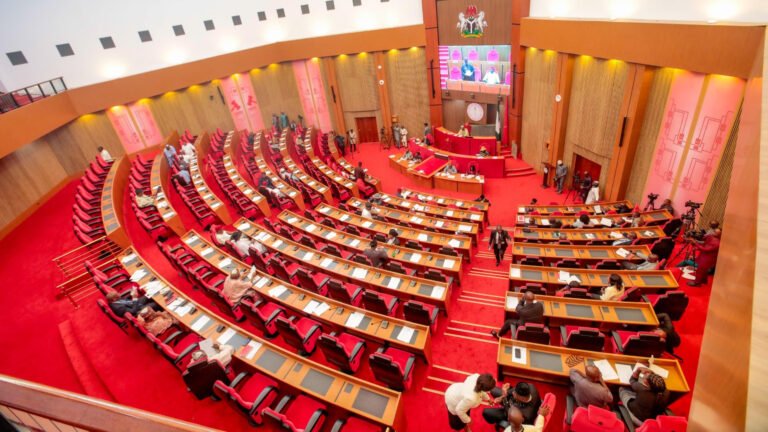
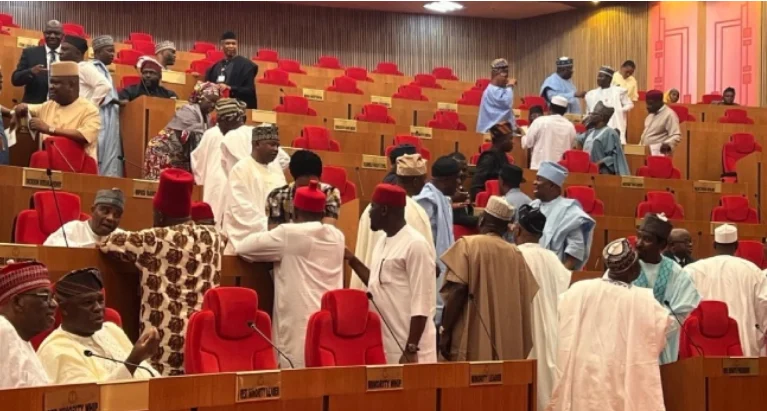
    On that day, nine Senators announced their decision to switch their allegiance to the Africa Democratic Congress (ADC). Some of them belonged to the Peoples Democratic Party (PDP), some to the Labour Party (LP), and the All Progressives Grand Alliance (APGA). Senate President Godswill Akpabio read the letters written by the individual Senators but dropped a caveat when it got to the turn of Senator Enyinnaya Abaribe of APGA. He told the Abia South Senator to produce evidence of division within APGA or risk his seat being declared vacant. For the record, those who defected on that day include Senator Aminu Waziri Tambuwal, representing Sokoto South, Ogoshi Onawo (Nasarawa South), Austin Akobundu (Abia Central), and Lawal Usman Adamu (Kaduna Central). While Senators Ireti Kingibe (Federal Capital Territory) and Victor Umeh (Anambra Central) defected from the LP to the ADC, Senator Abaribe, a former Minority Leader, announced his defection from APGA to the ADC. The defection gale also caught the former governor of Bayelsa State, Senator Seriake Dickson, who dropped the PDP for the newly formed National Democratic Congress (NDC). The announcement of the defections tilted the structure in the Senate in favour of the ADC, which became the main opposition party in the chamber, as it now has 10 senators, while the PDP has eight. The SDP, the NDC, and the New Nigeria People’s Party (NNPP) have one Senator each, with the ruling APC having 85 Senators, more than the two-thirds majority needed for the control of the chamber.

    While Akpabio raised his objection to Abaribe’s move, he told the five term-Abia lawmaker that he cannot join the defection crew because his political party, the APGA, has not experienced a division, in line with the provisions of the 1999 Constitution. Akpabio threatened to act on the side of the constitution if Abaribe fails to produce evidence of the cracks in his party, but Abaribe told the Senate that he had been expelled from the party way back in September 2025. The Abia Senator argued that his decision to defect was premised on expulsion from Abia APGA, while Akpabio and Senate Leader, Opeyemi Bamidele, further warned that defection without party crisis violates Section 68(1)(b) and (g) of the 1999 Constitution. Though that was not the first clash between Akpabio and Abaribe on the floor of the Senate, the clash in mid-March had a tinge of mischief in it, as it was the first time a senator’s defection move was being questioned by the Senate President. We have heard the saying that if you join the APC, your sins are forgiven, credited to the former Labour leader, who is now a chieftain of the APC, Senator Adams Oshiomhole Perhaps Abaribe’s sins are being visited on him because he chose to stand in the way of a one-party Senate and perpetually spoke for the people.

    For instance, Akpabio had once accused Abaribe of being a “social media senator” during the debate on the 2026 Electoral Act. Abaribe had obviously caught the eyes as an opposition lawmaker, who says his mind, no matter whose ox is gored. He led opposition senators to oppose the removal of a clause that would have made real-time transmission of election results compulsory. He equally called for division on the floor of the Senate when a contrary clause was passed. The passed section gave the Independent National Electoral Commission (INEC) the latitude to manually collate results through Form EC8A, where networks are not available. So, in a sense, Abaribe had been a thorn in the flesh of the leadership of the Senate. He played a similar role during the administration of the late President Muhammadu Buhari.

    As much as defection by a lawmaker is forbidden by the 1999 Constitution, it also provides a proviso that makes defection acceptable when there is division in the ranks of the party being jettisoned. In the case of Abaribe, members of the party on whose ticket he was elected chose to play some theatrics by announcing his expulsion.

    The decision itself begs for reason. A party with a single senator in the 109 -member Senate decided to expel that lone senator because some forces believed he was playing populist politics by speaking out against the ills in the polity. Where else would that happen except in the murky waters of Nigerian politics? Abaribe had chosen to take his time to settle the uprising against him, but he saw himself persistently being lured into the ruling party. Before it became too late, he decided to pitch his tent with the emerging opposition ADC, and then, Akpabio remembered that Section 68(1g) exists in the 1999 Constitution.

    Pray, was Section 68(1g) not in existence when 16 senators defected to the ruling party from the PDP, SDP, and the Young Progressives Party (YPP), even when there was no scent of division in those parties? It has been said that betrayal is a politician’s raison de ’ter, maybe mischief and selective justice are joining in. Available records have shown that 16 senators defected to the ruling party early in the life of the Senate before the recent festival of divisions in the parties. All of those senators were welcomed with open arms. If Abaribe had announced his decision to join the APC, I am sure no inquiry would have been necessary. So, what manner of inconsistency are we seeing?

    In June 2023, the APC started the current with 59 senators, with the PDP coming a distant second with 36 senators. LP had 8, NNPP and SDP had two each, and APGA had one Senator. But by mid-October 2025, the APC had gained 16 senators, and as of the last count in March 2026, the ruling party had secured 27 senators, all through defections.

    Thus, the APC now has 85 senators, far more than the required two-thirds majority needed to control the chamber. Examples of early defection that were accepted without question include Senator Ifeanyi Ubah (YPP to APC in 2023), Senator Ezenwa Onyewuchi (LP to APC), Senator Ned Nwoko (PDP to APC), Senator Kawu Sumaila (NNPP to APC), and Senator Benson Konbowei (PDP to APC). There were no questions as to the nature of division in their parties whatsoever. Then, you had additional defection in late 2025. Senator Kelvin Chukwu defected from LP to APC, while a couple of others also defected up to early 2026. They include Senators Ipalibo Banigo, Amos Yohanna, Aminu Iya Abbas, Ikra Aliyu Bilbis, James Barka, and Midala Balami, among others.

    As stated earlier, these defections have pushed the number of APC senators to an unprecedented figure never achieved by any party in Nigerian history. But it looks like that much is not enough haul for Akpabio, as he probably would wish all the 108 senators were converted to broom-bearing politicians.

    That brings us to the bid by the National Assembly to criminalise dual-party membership by imposing fines of up to N10 million and two-year prison terms. This is, in a way, linked to the Akpabio/Abaribe imbroglio, because the APC is apparently calculating that in case an opposition lawmaker refuses to join the defection craze, he or she could land in the hot soup of dual-party registration. Besides that, the trap could also capture any aggrieved member of the ruling party who might get dissatisfied with the primary process and seek to better his political fortunes elsewhere.

    The 2026 Electoral Act has already mandated the submission of digital registers by the political parties before the primaries, so any politician caught migrating to another party late in the day could be guilty of double registration and made to face the law.

    Though the House of Representatives has passed the bill into law, it is awaiting the buy-in of the Senate. I would, however, advise the Senate not to waste taxpayers’ money dwelling on such a bill. This is because the constitution already forbids anyone from contesting on the platform of two parties, which means that no one can belong to two parties at the same time. But the constitution also guarantees freedom of association, so I can be long to party Z while associating with people in party W. The right to associate is incumbent on the person and cannot be decreed out of existence.

    I will offer to tell our senators that even when the law is passed, human beings will always find ways around it. Since the constitution guarantees the right to associate and determine one’s associates at every point, one can also switch parties at any point in time ahead of the party primaries. As far as the switch is within the timeframe allowed by INEC, in accordance with the Electoral Act and the 1999 Constitution. No one can hamper anyone who chooses to bolt from either a sinking or a floating boat. I so, submit, distinguished Senators.

    Source

  • THE COURT OF APPEAL JUDGEMENT AND SEPARATION OF POWERS: SENATOR NATASHA AKPOTI-UDUAGHAN AND THE CLERK OF THE NATIONAL ASSEMBLY OF THE FEDERAL REPUBLIC OF NIGERIA & 3 ORS


    By Rt. Hon Eseme Eyiboh mnipr

    The judgment of the Court of Appeal delivered on Monday, February 9, 2026, represents a consequential affirmation of the constitutional principles that sustain Nigeria’s democratic order and the orderly functioning of its institutions.

    By upholding the disciplinary actions of the Senate as lawful and procedurally sound, the Court has robustly reinforced the doctrine of separation of powers, a cornerstone of our constitutional democracy. The ruling confirms with unmistakable clarity that the authority of the Senate to regulate its internal proceedings and discipline its members is firmly rooted in the Constitution and its Standing Orders. This authority is neither incidental nor ornamental; it is an essential responsibility entrusted to the legislature to preserve order, decorum, and institutional integrity in the discharge of its duties on behalf of the Nigerian people.

    The Court of Appeal has further enriched our constitutional jurisprudence by clearly delineating the proper limits of judicial intervention in the internal affairs of a coordinate arm of government. While reaffirming the judiciary’s vital role as guardian of fundamental rights, the judgment recognises that the legislature must retain the autonomy necessary to enforce its rules and maintain discipline, provided it acts within the province of the law. This equilibrium is indispensable to effective governance and democratic stability.

    The circumstances that gave rise to this litigation are regrettable. Parliamentary democracy rests on respect for established rules, collective responsibility, and due deference to the authority of the Chair. Persistent refusal to comply with lawful directives of the Presiding Officer—including the reallocation of seating arrangements within the chamber—as well as failure to appear before the statutory Committee on Ethics, Privileges and Public Petitions, runs counter to the ethos of parliamentary conduct. Such actions risk undermining institutional authority and distracting from the Senate’s higher obligations of legislation, oversight, and representation in the national interest.

    While the Court of Appeal set aside the contempt proceedings and the associated fine on procedural grounds, it is significant that the core findings affirming the Senate’s disciplinary powers and the validity of its actions remain undisturbed. This distinction reinforces both the primacy of due process and the legitimacy of institutional self-regulation under the Constitution.

    As the Senate moves forward, it remains steadfast in its constitutional mandate to foster robust debate, exercise rigorous oversight, and enact legislation that advances the peace, order, and good government of the Federal Republic of Nigeria. In keeping with the spirit of reconciliation and institutional maturity that must guide democratic leadership, the Senate looks ahead with restraint, goodwill, and an abiding commitment to collective purpose rather than past grievance.

    In this spirit, the Senator concerned, who has since resumed legislative duties, is expected to continue her duties with renewed adherence to parliamentary rules, mutual respect, and the shared responsibilities that bind all members of the National Assembly.

    The strength of our democracy ultimately lies in the strength of its institutions, each operating responsibly within its recognised constitutional remit. The judgment of the Court of Appeal fortifies that foundation and renews the resolve to build a disciplined, stable, and forward-looking legislature in service of the Nigerian people.

    The facts have spoken for themselves

    God bless the Federal Republic of Nigeria.


    (Rt. Hon. Eseme Eyiboh, MNIPR
    Special Adviser, Media/Publicity and Official Spokesperson
    to the President of the Senate)

  • BREAKING: Senate sets up 12-Man team on Electoral Act amendment

    BREAKING: Senate sets up 12-Man team on Electoral Act amendment


    The Nigerian Senate has announced the appointment of 12 senators to work together with the House of Representatives on the proposed amendments to the Electoral Act. This move comes as part of efforts to resolve controversies surrounding the bill.

    The President of the Senate, Godswill Akpabio, revealed the names of the committee members on Tuesday during an emergency plenary session. Notable senators included in the committee are Orji Uzor Kalu and Tahir Monguno.

    The emergency session was called to address concerns and disagreements over the proposed changes to the Electoral Act, which have sparked widespread discussion among lawmakers, political observers, and the public.

    The bill seeks to update and improve Nigeria’s electoral framework, though some of its provisions have been met with debate and differing opinions across party lines.

    The Senate committee is expected to work closely with the House of Representatives to harmonize their positions on the bill and ensure that any amendments reflect the interests of Nigerians. More updates from the ongoing session are expected in the coming days.

  • The Trials and Triumphs of a Resilient Nigeria’s 10th Senate

    The Trials and Triumphs of a Resilient Nigeria’s 10th Senate


    By Eseme Eyiboh

    In the unfolding story of Nigeria’s democracy, the Senate remains one of its most enduring symbols of institutional resilience and national balance. Beyond the spectacle of debates and the colour of political persuasion, it is the grand arena where the destiny of the nation is shaped, refined, and defended through rules, order, and reason. It is the one chamber where passion must bow to procedure and where leadership must blend authority with decorum.

    Under the current stewardship of Senator Godswill Akpabio,GCON the Nigerian Senate has again shown that discipline is not the enemy of democracy but its lifeblood. In a political climate often prone to impulsive rhetoric and theatrical defiance, the Senate’s commitment to its Standing Orders has reaffirmed the solemn truth that democracy thrives only when its institutions are respected and its rules upheld.

    At a time when political tempers can easily flare and institutional boundaries are tested, the Senate has chosen the steadier path of order. Its resilience is not borne out of the absence of conflict but from the maturity to resolve such tensions through due process. It is this adherence to procedure that transforms the Senate from a mere congregation of political actors into a citadel of constitutional governance. The Tenth National Assembly has therefore become more than a legislature; it has risen to become the custodian of Nigeria’s democratic rhythm, ensuring that the music of governance remains in tune even when discordant notes arise.

    ● The Architecture of Order

    Every functioning democracy stands or falls by the strength of its institutions. Rules are the unseen architecture that hold those institutions together, shaping not only how decisions are made but also how power is exercised and limited. The Nigerian Senate’s Standing Orders are not ceremonial relics from the past. They are the living constitution of the institution, carefully designed to preserve fairness, consistency, and the sanctity of the legislative process.

    The discipline of parliamentary conduct is a universal marker of political civilisation. In the United Kingdom’s House of Commons, the authority of the Speaker is absolute and unchallenged, ensuring that debates proceed with respect and precision. No member, regardless of party or popularity, may openly defy the Speaker’s ruling without consequences.

    In Canada’s Parliament, even the fiercest partisans understand that procedure is sacred. Heated disagreements are channelled through decorum, not chaos. Similarly, in Australia, the Senate’s ability to hold the executive accountable depends not on the whims of politics but on the meticulous enforcement of rules that keep legislative integrity intact.

    Without a doubt, Nigeria’s Senate belongs in that global fellowship of parliaments that recognise chaos as the heart of anarchy and order as the soul of democracy. Its insistence on upholding internal discipline and protecting the authority of its leadership is, therefore, neither personal nor punitive.

    It is institutional self-preservation. When the chamber asserts that it will not be held hostage by the disruptive instincts of any single member, it is affirming the primacy of collective responsibility over individual grandstanding. This is how strong legislatures endure: not by silencing dissent, but by ensuring that dissent respects the bounds of procedure.

    In many ways, the Akpabio-led Senate has re-introduced a tone of seriousness into the conduct of legislative affairs. The presiding officer’s calm firmness, coupled with his inclusivity, has reminded both senators and citizens that freedom within order is the truest form of democracy.

    Leadership of this sort does not seek applause; it seeks stability. By upholding its Standing Orders, the Senate has reclaimed its moral authority and demonstrated that rules, properly enforced, are not instruments of oppression but shields against institutional decay.

    ● A Record of Uncommon Legislative Action

    To judge a legislature by its distractions is easy, but to measure it by its legislative work is wiser. By that measure, the Tenth Senate has already left an imprint that few in Nigeria’s democratic history can rival. In barely two years, the Senate has processed over 90 bills, with more than 50 receiving presidential assent. To be clear, these are solid, impactful achievements; they are substantive interventions in the nation’s economic, social, and security architecture.

    Among them are landmark reforms such as the Nigeria Tax Administration Act and the Joint Revenue Board Act, which harmonise tax collection across the federal, state, and local governments, thereby reducing duplication and boosting fiscal efficiency. These laws lay the groundwork for a more coherent revenue system that can fund Nigeria’s development priorities sustainably.

    The Electricity Act (Amendment) has opened the power sector to decentralised innovation by placing generation and distribution within concurrent legislative jurisdiction, allowing states to take greater ownership of electrification drives.

    Equally significant is the Student Loans (Access to Higher Education) Act, which has established the Nigerian Education Loan Fund, a mechanism designed to democratise access to tertiary education and build the nation’s human capital. Through this law, thousands of young Nigerians from modest backgrounds can now dream beyond financial constraints.

    In matters of national security, the Senate has enacted the Control of Small Arms and Light Weapons Act and reformed the Defence Industries Corporation to modernise local arms production and improve oversight. It has strengthened the Police Act and advanced the legal framework for community policing, ensuring that law enforcement is both professional and accountable. Social welfare has not been neglected either. The Senate’s approval of an increased national minimum wage reflects its sensitivity to the economic pressures faced by ordinary citizens.

    Beyond these legislative milestones, the Senate has exercised its oversight powers with renewed vigour. Ministerial nominees have faced rigorous scrutiny, and budgetary processes have been more transparent than in previous sessions. Committee reports are now subjected to fuller debate, while public hearings are reclaiming their role as forums of accountability rather than ceremonial formality.

    This spirit of constructive collaboration with the executive, balanced by a firm assertion of institutional independence, has restored public confidence in the Senate’s purpose and performance.

    Senator Akpabio’s leadership style has been pivotal in this transformation. Combining political experience with procedural discipline, he has stabilised the chamber and inspired cooperation across party lines. The result is a Senate that legislates with urgency but without recklessness, that debates with passion but within the boundaries of respect. It is a model of legislative management that other emerging democracies might do well to emulate.

    ● Discipline as Democracy’s Anchor

    In any democracy, the question is never whether there will be dissent. Instead, it is always about how it will be handled. The real measure of a democratic institution is how it handles internal turbulence. The Tenth Senate has faced its fair share of provocations and personality clashes, yet it has consistently chosen the path of principle over populism.

    When it insists that rules must be followed and that leadership must be respected, it is not acting out of pride but out of duty. Every time the Senate enforces its Standing Orders, it sends a message that Nigeria’s democracy is strong enough to discipline itself.

    In the world’s most respected parliaments, members who flout rules face swift consequences. In the British House of Commons, suspension or expulsion is not rare when a member’s behaviour undermines parliamentary dignity.

    In Canada, contempt of Parliament remains one of the gravest offences, warranting public apology or even exclusion. Nigeria’s Senate has every right to apply similar standards, for to allow disorder in the name of political freedom is to invite the slow death of the institution itself.

    There is a reason democracies that survive for centuries place such premium on decorum. Discipline is the invisible thread that connects authority to accountability. A Senator who disregards procedure may think he is exercising personal liberty, but in truth, he is unravelling the very order that gives that liberty meaning. The Senate, as the upper chamber of Nigeria’s legislature, bears the burden of showing restraint even when provoked and firmness even when misunderstood.

    Under Akpabio’s guidance, that balance has largely been achieved. His steady hand has preserved the Senate’s institutional dignity while ensuring that disagreements, inevitable in a plural polity, never degenerate into institutional disrespect. His colleagues, through their support, have shown that the Senate’s unity is not fragile but founded on shared commitment to the republic’s greater good. This collective resilience is what distinguishes a mature legislature from a mere gathering of political actors.

    As democracy worldwide faces disillusionment, with parliaments in many countries besieged by populist anger and public cynicism, Nigeria’s Senate stands out as a stabilising force. Its insistence on rule-based conduct, its robust legislative output, and its respect for leadership all reinforce the idea that democratic governance is not sustained by emotion but by discipline. In times of uncertainty, Nigerians can look to their Senate as a beacon of institutional steadiness, where procedure triumphs over impulse and order over anarchy.

    ● A Legacy of Institutional Maturity

    Every democratic generation must reaffirm its faith in its institutions. For Nigeria, the Senate remains one of the surest proofs that despite imperfections, the system endures. It is the forum where politics matures into policy and ambition yields to service. Its current trajectory under Akpabio’s stewardship shows that a disciplined legislature can coexist with vibrant debate, and that leadership tempered by wisdom can guide even the most divided chamber towards a common purpose.

    The trials of the Senate are many: public scepticism, partisan rivalry, and the ever-present temptation of populist showmanship. Yet its triumphs are greater still. By choosing law over noise, the Senate has shown that Nigeria’s democracy can heal itself from within. Each bill passed, each order enforced, and each moment of collective restraint strengthens not just the chamber but the republic it represents.

    The true triumph of the Senate lies in its rediscovery of itself as a body governed by rules, led by example, and anchored in service to the nation. In doing so, it has become a model for the continent and a reassurance to Nigerians that the spirit of democracy, though tested, remains alive and well.

    As the nation moves through uncertain times, the Senate’s resilience will remain a cornerstone of Nigeria’s democratic stability. Its fidelity to order and leadership not only safeguards the present but also lights the path for future generations. For, in the end, it is not the noise of politics that defines a nation’s greatness but the calm persistence of its institutions. In that regard, the Nigerian Senate stands triumphant, disciplined, dignified, and resolutely democratic in all terms.

    •Rt. Hon. Eseme Eyiboh mnipr is the Special Adviser on Media/Publicity and official Spokesperson to the President of the Senate.

  • Nigerian Senate Rule Book – a Must Read!

    Nigerian Senate Rule Book – a Must Read!


    –  Everything in the Senate is guided by a rulebook most Nigerians have never read?


    By Lanre Ladipo

    THIS SENATE RULE BOOK?

    MANY NIGERIANS HAVE NEVER READ IT

    Did you know that everything in the Senate is guided by a rulebook most Nigerians have never read?

    That’s exactly what we’re about to uncover.

    It’s called the Standing Orders of the Senate — the official rulebook that sets the do’s and don’ts of how the Red Chamber works.

    From who can speak and for how long, to what language is acceptable, this rulebook keeps debates orderly and respectful.

    ✅ Orderly Debates
    The Standing Orders explain how Senators are recognized to speak during debates. This ensures discussions flow in sequence, instead of several Senators rising at once.

    ✅ Law-Making Process
    It lays out, step by step, how a bill becomes law:

    First Reading

    Committee Stage

    Final Passage

    Transmission to the other chamber

    Presidential Assent
    ✅ Committee Work
    Most of the Senate’s detailed work happens in committees. The Standing Orders spell out:

    How committees are formed

    How they invite witnesses

    How they report back to the full Senate

    ✅ Quorum
    The rulebook also defines what makes a sitting valid.
    That’s where quorum comes in — the minimum number of Senators required to conduct business.
    👉 In Nigeria, the quorum is 37 out of 109.
    If quorum isn’t met, the Senate cannot pass motions or make decisions.

    ✅ Petitions from Citizens
    The Standing Orders also explain how petitions are received and handled, giving citizens a formal route to bring issues before the Senate.

    ✅ Amendments
    And remember, the Standing Orders aren’t fixed. The Senate can amend them — and when it does, those changes shape how the chamber will operate for years to come.

    In short, the Standing Orders keep the Senate fair, orderly, and effective.
    They are the silent guide behind every law and every decision in Nigeria’s Upper Chamber.

    Know Your Senate.

    HIS EXCELLENCY
    SENATOR GODSWILL AKPABIO, GCON
    President of the Senate, Federal Republic of Nigeria

    Presented by Lanre Ladipo
    Special Assistant on New Media and Communications to the Senate President

    Compiled & Broadcast by YAYI Teachers Media