Tag: Israel

  • Iranian Ballistic Missiles Slam Into Israel’s Largest Oil Refinery In Escalating Global War

    Iranian Ballistic Missiles Slam Into Israel’s Largest Oil Refinery In Escalating Global War


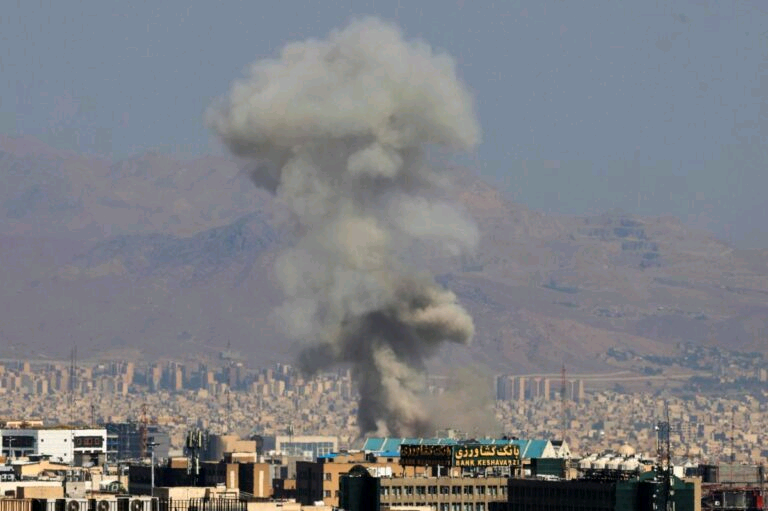
    HAIFA, Israel – The Middle East has spiraled into an all-out energy war as the Islamic Revolutionary Guard Corps (IRGC) announced a successful ballistic missile strike on the Bazan Group oil refinery in Haifa.

    The massive facility, a crown jewel of Israel’s energy infrastructure, was reportedly engulfed in flames on Saturday night, March 7, 2026, marking a terrifying expansion of the direct conflict between Tehran and Jerusalem.

    The “Eye for an Eye” Strike
    The IRGC declared the attack a “crushing response” to joint U.S.-Israeli airstrikes (Operation Roaring Lion) that decimated oil depots and refining plants in Tehran earlier that evening. Iranian state media claimed that high-precision Kheibar Shekan solid-fuel missiles bypassed air defense layers to strike the Haifa port city, turning the refinery into a towering inferno.

    “The era of ‘hit and run’ is over,” a spokesperson for the IRGC stated. “If our refineries burn in Tehran, theirs will burn in Haifa.”

    Panic in the Port City
    Eyewitnesses in Haifa described a night of terror as air raid sirens wailed across the city. While the Israeli Defense Forces (IDF) initially claimed to have intercepted several incoming projectiles, unverified footage circulating on social media showed massive plumes of black smoke billowing from the industrial zone near the Mediterranean coast.

    The Bazan Group, which operates the refinery, had reportedly moved some units into “emergency shutdown” mode just hours prior, but the sheer scale of the reported strike has raised fears of a catastrophic fuel shortage in the region.

    The 2026 Energy War
    This exchange represents the first time both nations have moved beyond proxy battles to directly dismantle each other’s critical economic lifelines.

    Tehran in Darkness: Earlier strikes on Iran’s Alborz province and the capital’s oil reserves have already sparked fears of “acid rain” and environmental collapse in Tehran.

    The Leadership Vacuum: The strikes come at a moment of extreme vulnerability for the Islamic Republic, as the Assembly of Experts continues to meet in secret to select a successor following the reported death of Supreme Leader Ali Khamenei.

    Global Economic Aftershock
    The blowing up of the Haifa refinery has sent the global oil market into a vertical climb. With the Strait of Hormuz effectively a war zone and Mediterranean refining capacity now under fire, Brent crude prices are expected to shatter records when markets open on Monday.

    As the smoke rises over Haifa, the world watches with bated breath: Is this the final spark for a third World War, or can the international community pull both nations back from the brink of total annihilation?


  • Shower, shelter, swipe: Israel’s ‘startup nation’ meets Iran war with a wave of apps

    Shower, shelter, swipe: Israel’s ‘startup nation’ meets Iran war with a wave of apps


    Israelis are downloading apps to calculate the risk of showering — and to look for love in bomb shelters.

    )Martine Berkowitz took a selfie after heading to a public shelter when a rocket alarm sounded shortly after she got out of the shower in Israel, March 4, 2026. (Courtesy)

    By Deborah Danan
    TEL AVIV — Smartphones have become as essential as shelters for Israelis riding out Iran’s missile attacks, with internet traffic up 25% since the war began on Saturday. From the screaming alerts of the military’s official app that, as one comedian put it, sound like a “baby dragon giving birth,” to bomb-shelter Tinder to multiple apps that tell you when it’s safe to shower, the startup nation is trying to digitize the panic into something more manageable.

    At the serious end of the wartime app stack is Home Front Command, the Israeli army’s app available in Hebrew, Arabic, Russian and English. It uses GPS to figure out where you are and only pings you when your area is at risk, with separate alerts for rockets, missiles and terror incidents. In this war, Iran’s long-range fire has come with an extra layer of notice, a warning-before-the-warning that can buy people a few more minutes. The shorter-range threats from Hezbollah, which joined the fray on Tuesday, do not come with that same courtesy.

    Bomb Shelter Locator turns shelter-seeking into a map exercise, listing around 20,000 official sites, offering offline city maps and walking routes, and estimating the time it will take to reach the nearest protected space.

    For anyone who cannot sprint, Purple Vest tries to close the gap. People with disabilities or older residents can register in advance and request help during alerts, with volunteers using the app to locate them and assist with shelter access or urgent supplies.

    For others, shelters are turning into accidental social spaces where people can meet-cute on a mattress. The Hooked app, originally built for speed-dating at events, now doubles as a bomb-shelter icebreaker. Shelter-goers post a QR code at the entrance, and singles who scan it can see who else in the same bunker has the same relationship status. US Ambassador Mike Huckabee — who has not been single since high school — shared it on X alongside the caption: “Someday they will tell their kids ‘we met on a dating app in a shelter while dodging ballastic [sic] missiles.’”

    But for some, even showering has become its own risk calculation. Martine Berkowitz was one of many who vented after her attempts to scrub up were interrupted by missiles no less than five times on the second day of the war.

    For software developer Ben Greenberg, a father of teenagers, Berkowitz’s complaint was familiar, so he built an app called Best Shower Time that spits out a percentage risk score on whether a shower is likely to be interrupted by an alert.

    Posts about it spread on social media and what began as a tool for his family is now drawing about 5,000 visitors a day. Greenberg, a California native who immigrated to Israel from New York in 2018, insists it’s “not a joke app.”

    “Sirens are just the ultimate example of lack of control in one’s life,” he said, describing the app as a way to “restore some level of control and predictability … in a time when that feels most vulnerable and most taken away from us.”

    The app uses real-time alert data from the Home Front Command, and the score is based on four inputs: how long it has been since the last alert, the average gap between alerts over a six-hour window, whether the frequency is trending up or down, and the total alert count over the past 24 hours. Those are weighted into a single score that appears when you open the app.

    Users can then set their own parameters, including how long a shower typically takes and how much buffer time they want afterward to dry off and reach shelter.

    And for those who have a penchant for extended bathroom breaks, Greenberg added a separate option that relies on the same logic.

    It’s not the only app homing on issues of basic cleanliness to emerge this week. Another app, Can I Shower Now?, has developed a following of its own.

    Berkowitz said she was “grateful” for apps to help her navigate the question of whether to jump in the shower. After checking and seeing a 13% chance of a missile alert on Wednesday afternoon, she decided to risk it.

    “I took a full 20-minute hot shower and washed my hair. It was lovely. And the next warning only came when I was finished and getting dressed,” she said.

    Greenberg is piloting a new app, called Best Walking Time, based on the same principle and prompted by his wife, who regularly walks around the neighborhood during work calls but has been afraid to stray from home lest a missile head their way.

  • BREAKING! Danger Looming for Nigeria as Israeli Parliament Knesset Formally Debates Biafra, MK Compares Alleged Igbo Suffering to Holocaust 

    BREAKING! Danger Looming for Nigeria as Israeli Parliament Knesset Formally Debates Biafra, MK Compares Alleged Igbo Suffering to Holocaust 


    – –  Alleges that about 6 Million Igbos have been Killed in Nigeria since the end of the nation’s civil war in 1970


    In a historic and emotionally charged session on February 18, 2026, the Israeli Knesset formally debated the situation in Biafra, with a senior lawmaker invoking the memory of the Holocaust to demand international intervention and drawing a direct comparison between the six million Jews murdered by Nazis and the estimated six million Igbo lives lost since 1967.

    The debate, which IgbereTV has obtained and translated exclusively, marks the first confirmed high-level parliamentary discussion on Biafra in Israel in decades and signals a potential shift in international attention toward the decades-old self-determination struggle.

    Opening the debate, MK Ya’akov Margi of the Shas party delivered a passionate address from the Knesset podium, directly comparing the Igbo experience to the Jewish Holocaust.

    “From then until today, the numbers are unfathomable. The data in our hands indicates that since the end of that war until our days, approximately two and a half million people of Biafran origin have been killed. In total, over all these years, we are talking about a fact of nearly six million souls.”

    Margi paused deliberately on the figure:

    “Six million. A chilling number, horrifying, and it tells us something. What we, as Jews, have known. This number shakes the heart and the depths of the soul.”

    He warned of ongoing persecution, alleging that the Igbo face a stark choice reminiscent of historical ultimatums:

    “The Igbo people are facing a cruel choice once presented to them by a former Nigerian Justice Minister: To convert to Islam, to die, or to live in eternal exile.”

    Margi framed the issue as a moral imperative for Israel, invoking the nation’s historical trauma as grounds for action.

    “Why should we intervene? The Jewish conscience obligates us. The Jewish conscience obligates us to intervene and to shout.”

    He directly called on Israel’s Ministry of Foreign Affairs to:

    “Raise this issue on every platform, in every international forum. Awaken the human conscience of the nations of the world, of the Gentiles. We have a feeling that it does not exist, as we experienced on our own flesh.”

    Concluding his address, Margi declared:

    “I call out here, from the podium of the Israeli Knesset, to the great world, to the entire world to wake up. To place this on the agenda.”


    Courtesy: Igbere TV

  • Israel approves $35bn gas deal with Egypt

    Israel approves $35bn gas deal with Egypt


    By Haris Tagari

    Israel has approved its largest-ever natural gas export agreement with Egypt, a move that deepens Cairo’s reliance on Israeli energy supplies amid Tel Aviv’s genocide in Gaza.

    On December 17, Prime Minister Benjamin Netanyahu confirmed that Israel had cleared a long-term deal to supply gas to Egypt from the offshore Leviathan field.

    The agreement is valued at around 112 billion shekels, roughly $35bn, and will see about 130 billion cubic metres of gas exported through 2040.

    Netanyahu described it as “the largest gas deal in Israel’s history,” saying it had been approved after securing Israel’s “vital security interests.”

    He added that the deal requires companies to sell gas “at a good price” to Israeli citizens.

    Agreements

    The contract was signed in August by NewMed Energy, U.S. energy giant Chevron and other partners in the Leviathan consortium.

    Israeli officials say exports will begin expanding from 2026, following upgrades to production facilities and pipeline infrastructure.

    Illustration of the Egyptian-Israeli Gas pipe line (Wikimedia commons)

    Under the agreement, an initial tranche of around 20 bcm is expected to flow first, with larger volumes delivered once expansion is completed.

    Operating rights in the Leviathan field are held by Chevron, through its acquisition of Noble Energy, NewMed Energy Partnership and Ratio Oil Exploration.

    The Egyptian energy firm Blue Ocean Energy is reported to be the buyer.

    Israel’s government has framed the deal as a major economic milestone, arguing that revenues will support public spending while strengthening Israel’s position as a regional energy hub.

    Growing dependence

    The agreement builds on gas exports from Israel to Egypt that began in 2020, after the Leviathan field came online.

    Volumes increased steadily as Egypt’s domestic gas production declined, making Israeli pipeline gas a cheaper alternative to liquefied natural gas imports.

    By 2023, Israel had become a critical supplier. The new deal nearly triples previously contracted volumes and comes as Egypt faces an acute energy shortfall driven by falling production and rising demand.


    President Sisi of Egypt
    Editorial credit: 360b / Shutterstock.com

    Analysts say the agreement goes beyond economics. By tying Egypt’s energy security to Israeli supply, it deepens what some describe as “instrumental interdependency,” where economic ties reduce the likelihood of political or military confrontation.

    Critics argue this creates leverage, potentially influencing Cairo’s positions on sensitive regional issues, including Gaza and border security.

    The timing is notable. Israel has faced mounting international pressure over its war on Gaza, while Egypt has played a key mediating role.

    Israeli media reported that approval was delayed earlier this year by Israel’s energy minister, triggering frustration in Washington and a cancelled visit by the US energy secretary.

    Reports also suggested Egypt might turn to Qatar for gas supplies if Israel failed to approve the agreement.

    In September, Israel Hayom reported that Netanyahu had ordered the deal not to proceed without his personal approval, amid Israeli claims that Egypt had violated the 1979 peace treaty through military deployments in Sinai, allegations Cairo denied.

    The Egypt-Israel peace treaty, signed following the Camp David Accords, formally ended the state of war and established security arrangements in Sinai.

    Egypt has not issued an expansive endorsement of the latest announcement.

    Some Egyptian voices have privately warned that overreliance on Israeli gas could limit political autonomy.

    Supporters counter that cheaper energy will help stabilise Egypt’s economy, reduce fuel costs and support industry.

  • Israel publishes updated death penalty bill for Palestinian prisoners

    Israel publishes updated death penalty bill for Palestinian prisoners

    (Extreme-right minister Itamar Ben-Gvir originally proposed the law allowing the execution of Palestinian prisoners [Getty])


    MENA

    Israel has published a new draft of a bill imposing the death penalty for Palestinians, with those taking part in the October 2023 attack specifically named

    Extreme-right minister Itamar Ben-Gvir originally proposed the law allowing the execution of Palestinian prisoners [Getty]

    An updated draft of a bill proposing the death penalty for Palestinian prisoners who Israel accuses of “terrorism” was published on Thursday, introducing new provisions that would significantly expand the powers of Israeli military courts.

    The bill and its provisions have sparked outrage from human rights organisations.

    According to Israeli media, the draft legislation would impose a mandatory death sentence on Palestinians accused of taking part in the Hamas-led attack of 7 October 2023, as well as other Palestinian prisoners, without requiring approval from prosecutors.

    The revised bill reportedly specifies that executions would be carried out by shooting, the electric chair, hanging or lethal injection, by a prison officer whose identity would remain secret.

    It would also grant military courts authority to impose the death penalty on Palestinian prisoners from the occupied West Bank regardless of the prosecution’s position, while removing the requirement for unanimous verdicts and abolishing the rule that all judges must hold the rank of lieutenant colonel or above.

    The proposal would further amend the Penal Code to allow capital punishment for any Palestinian prisoner who “intentionally” causes the death of an Israeli citizen or resident.

    The bill justifies the death penalty for Palestinians on the grounds of combating “terrorism”, strengthening “deterrence” and reducing incentives for prisoner exchange deals.

    In all cases, executions would be carried out by the Israeli Prison Service within 90 days of a final judicial ruling.

    For the first time, the draft also reportedly includes a specific clause relating to those Israel claims participated in the 7 October attack, stipulating that “the death penalty shall be mandatory for anyone who causes the death of Israeli citizens or residents in the massacre, as the acts shall be classified as genocide according to the Genocide Law.”

    The death penalty proposal – first submitted by the extreme-right Jewish Power (Otzma Yehudit) party led by National Security Minister Itamar Ben-Gvir- has now reached a decisive stage in the legislative process.

    Ben-Gvir is a vocal supporter of the war on Gaza and the annexation of the West Bank. He has a history of violent incitement against Palestinians.

    The bill has sparked alarm among Palestinian activists, with Palestinian prisoners already suffering torture, abuse, starvation and rape in Israeli custody. As of November 2025, an estimated 9,500 Palestinians are being held in Israeli prisons.

    Hamas said the proposed law “embodies the ugly fascist face of the rogue Zionist occupation and represents a blatant violation of international law”.

    The Palestinian Authority’s foreign ministry, based in Ramallah, described the bill as a “new form of escalating Israeli extremism and criminality against the Palestinian people”.

  • Palestinian Territory and Implications of ICJ’s latest Ruling

    Palestinian Territory and Implications of ICJ’s latest Ruling


    *By Sonny Onyegbula

    The International Court of Justice (ICJ) has delivered a landmark advisory opinion emphasising Israel’s obligations as an occupying power in the Occupied Palestinian Territory (OPT) since 1967.

    According to the ruling, Israel bears a multifaceted legal duty including facilitating humanitarian relief operations, removing restrictions that hinder access to aid, and preserving the human rights of the Palestinian population.

    The ICJ’s position underscores that international human rights law complements international humanitarian law in the OPT, binding Israel to respect, protect, and fulfil a broad spectrum of rights. These include the fundamental right to life, protection from torture and ill-treatment, liberty and security, freedom of movement, family unity, and an adequate standard of living.

    Additionally, Israel is obligated to ensure access to essential health services and education, prohibit discrimination, and uphold the Palestinian people’s right to self-determination.

    Specifically, the court has ruled that Israel must ensure that Palestinians in Gaza and the OPT have access to vital supplies such as food, water, medicine and electricity, crucial for their survival.
    Israel is further required to facilitate relief schemes, particularly in Gaza, where supplies have been severely restricted, and cooperate with UN agencies such as the UNRWA (United
    Nations Relief and Works Agency for Palestinian Refugees), ensuring that their activities benefit the local population without obstruction.

    The ICJ’s advisory opinion, which carries significant moral and legal weight, emphasises Israel’s responsibilities as an occupying power.

    The UN Human Rights Chief Volker Türk stresses Israel’s obligations and the need for compliance to improve the dire humanitarian situation.

    The UN Secretary-General, António Guterres, has also welcomed the ICJ’s opinion, urging Israel to adhere to its legal duties and highlighting the importance of upholding international law and human rights in resolving the conflict.

    This ruling resonates with broader efforts to promote human rights and governance, particularly given the severe humanitarian crisis in Gaza and concerns over restricted aid access. It is expected to
    increase pressure on Israel to cooperate with humanitarian agencies, despite its rejection of the ruling as politicised.

    The Court underscored that compliance with the stated obligations necessitates concrete actions from Israel and other nations, including lifting unjustified blockades, ensuring the safety of aid workers, and enabling sustainable humanitarian access.

    It also reaffirmed the importance of a humanitarian ceasefire in Gaza to prevent further loss of life and pave the way for longer-term peace negotiations grounded in respect for human rights and international law.

    United Nations members are now expected to align their policies with the Court’s directives, which could influence diplomatic efforts, international aid policies, and legal accountability processes.

    The ruling intensifies the international community’s call for an immediate increase in humanitarian aid to Gaza, aiming to alleviate the dire humanitarian crisis characterized by food shortages, clean water, medical supplies, and fuel.

    Perspectives on the ICJ ruling vary among international actors
    and observers.

    The UN Human Rights Chief Volker Türk has underscored the importance of swift compliance and concrete measures to improve the humanitarian situation, stressing that adherence to the Court’s legal framework is essential for conflict resolution.

    Implementing the ruling will require the cooperation
    of the parties – Israel, the Palestinian Authority and the international community – to ensure unimpeded humanitarian access and the advancement of peacebuilding efforts based on respect for international law.

    The ICJ’s advisory opinion is part of broader international legal proceedings related to Israel’s actions in the OPT.

    The Court had previously concluded that Israel’s occupation is unlawful and should end, with implications for settlements, reparations, and human rights.

    From experience, Israel hardly complies with ICJ’s decisions, and it remains to be seen whether there will be a change of heart.

    However, the court’s latest ruling is a pivotal legal benchmark, clarifying Israel’s legal obligations in the OPT and reaffirming the international community’s responsibility to uphold international law and human rights amid ongoing tensions and conflict.

    *Dr Sonny Onyegbula is a US-based legal consultant*

  • At least 55 Palestinians killed in Israeli attacks across Gaza Strip: sources

    At least 55 Palestinians killed in Israeli attacks across Gaza Strip: sources

    GAZA, (Xinhua)/FLOWERBUDNEWS:  — At least 55 Palestinians were killed across the Gaza Strip on Wednesday due to Israeli attacks, according to official and local Palestinian sources.

    Mahmoud Basal, spokesperson for Gaza’s Civil Defense, told Xinhua that 22 people, including children and women, were killed in an Israeli airstrike targeting warehouses belonging to the Gaza Municipality, which housed dozens of displaced families in eastern Gaza City.

    Basal added that Civil Defense teams are still working to recover victims from under the rubble.

    “A massive explosion occurred in the early hours of the morning, killing and wounding a large number of people instantly. Several bodies remain under the rubble,” said local eyewitness Anwar Ershi.

    There was no immediate comment from the Israeli military on the airstrike.

    Meanwhile, Basal said 15 more people were killed in separate airstrikes on the Al-Sahaba and Shuja’iyya neighborhoods and the Shati refugee camp in Gaza City, and six others died in an airstrike on the Nuseirat camp in the central Gaza Strip.

    He added that 12 people were killed in Khan Younis in the southern Gaza Strip, including eight who were shot by Israeli forces while trying to obtain food outside an aid distribution center south of the city.

    The casualties come amid ongoing Israeli ground operations, with Israeli tanks advancing into the Al-Sabra and Tal al-Hawa neighborhoods in southern Gaza City, as well as the Al-Nasr and Sheikh Radwan neighborhoods in the north, amid artillery shelling and gunfire, according to local sources and eyewitnesses.

    Local witnesses reported that the Israeli army has been detonating explosive-laden military vehicles, causing widespread destruction to residential buildings.

    Israeli public radio Kan said the army has expanded its military operations in northern Gaza City over the past two days. The report added that these moves could split the northern Gaza Strip into two parts, creating a fourth axis dividing the enclave.

    On Wednesday, Hamas called on countries worldwide to impose a comprehensive boycott of Israel and isolate it legally, politically, and economically, a day after Spain approved a full arms embargo on Israel in response to the ongoing war in Gaza.


  • Five more Palestinians, including three children, starved to death by Israel

    Five more Palestinians, including three children, starved to death by Israel


    –  Three of the five deaths were of children, bringing the total number of people starved to death by Israel to 387, including 138 children.

    MENA


    Israel has continued to block the free entry of aid into Gaza, causing the enclave to plunge into famine [Getty]

    Five more Palestinians have starved to death in the past 24 hours due to Israel’s siege on the enclave, Gaza’s health ministry said on Sunday.

    The ministry said that three of the five deaths were children, bringing the total number of Palestinians starved to death by Israel to 387, including 138 children.

    Palestinian health authorities have recorded 109 deaths from starvation since the Integrated Food Security Phase Classification (IPC) declared famine in Gaza City last month. The number of deaths is expected to rise due to Israel’s decimation of Gaza’s health system, deteriorating living conditions and the continued genocide, which is now in its 23rd month.

    The United Nations officially declared famine in Gaza on 22 August, making it the first place in the Middle East outside of Africa to receive such a classification. The UN report highlighted that Israel’s actions in Gaza are the cause of the famine.

    Israel continues to obstruct the free entry of aid into Gaza, with the enclave’s Government Media Office reporting that the total amount of aid that entered in July was at best 15 percent of the population’s basic needs.

    UNICEF spokesperson Tess Ingram warned in an interview with Anadolu that the famine is at risk of worsening in Gaza City, which Israel is attempting to invade and fully occupy. Ingram warned that the famine could spread to the central Gaza Strip if action is not taken urgently.

    “The last refuge for families in the northern Gaza Strip is fast becoming a place where childhood cannot survive,” Ingram warned earlier this week.

    The UN official also described seeing children in hospitals with their “bodies riddled by shrapnel”.

    “The unthinkable is not looming. It is already here. The escalation is underway,” Ingram said.

  • Israel, in Deviance of the world, approves new settlement in West Bank

    Israel, in Deviance of the world, approves new settlement in West Bank


    JERUSALEM:  (Xinhua)/FLOWERBUDNEWS :  — Israel on Tuesday gave final approval for a new settlement in E1, a highly contentious area of the occupied West Bank.

    The Higher Planning Council authorized 3,753 housing units, including 3,401 for final approval in the E1 neighborhood of Maale Adumim. The project would link settlements to create a continuum separating the West Bank from East Jerusalem.

    First proposed in the 1990s, the E1 plan has long been frozen due to opposition in Israel and abroad. Israeli Prime Minister Benjamin Netanyahu ordered it forward in 2012 and revived it again before the 2020 election.

    More than 720,000 Israeli settlers now live in the West Bank and East Jerusalem, captured in the 1967 Middle East war, among 3.3 million Palestinians. The settlements are deemed illegal under international law, including a July 2024 ruling by the International Court of Justice that found Israel’s occupation unlawful.