Tag: Guinea Bissau

  • Guinea-Bissau Presidential Claimant, Dias, Rejects Junta Power-sharing Plan

    Guinea-Bissau Presidential Claimant, Dias, Rejects Junta Power-sharing Plan


    *By Paul Ejime

    Dr Fernando Dias da Costa, who claimed victory in Guinea-Bissau’s 23rd November 2025 presidential election, will not participate in the power-sharing transition government suggested by the ruling military junta, and has instead called for his inauguration as the country’s legitimate leader, his National Campaign Directorate said.

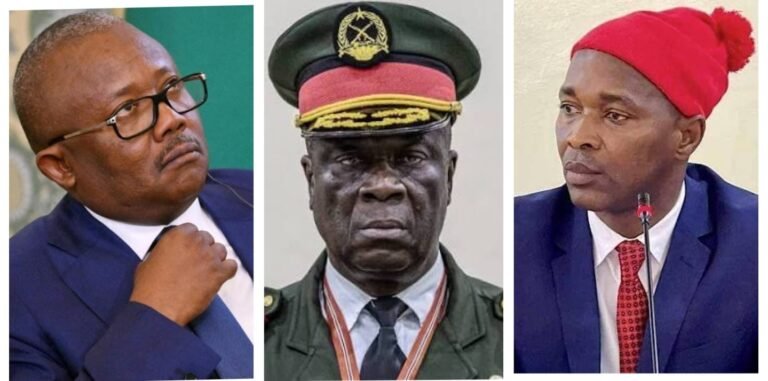
    It is widely believed that, in an apparent move to avoid an electoral defeat, former President Umaro Sissoco Embaló orchestrated a military coup on 26th  November 2025 ahead of the announcement of the results of the legislative and presidential polls and handed power to his loyalists in the army.

    “We categorically reject any attempt to impose a so-called ‘transition government’ that does not emanate from the popular will and is enforced through arms and brute force,” Dias National Campaign Directorate said in a statement at the weekend.

    According to the statement, “Fernando Dias da Costa is the legitimate winner of the presidential elections of 23rd November 2025….” “Any solution that does not recognise (the) results and ensure his immediate swearing-in is illegitimate and unacceptable.”

    “Accordingly, the National Campaign Directorate will not participate in any power-sharing arrangement or allocation of ministerial portfolios under the authority of the coup plotters. Any reforms in Guinea can only be undertaken within the constitutional framework, by legitimate and democratically elected institutions,” it added.

    The ECOWAS Commission had, in a statement on 30th January 2025, “welcomed the recent measures taken by the transitional authorities of the Republic of Guinea-Bissau aimed at fostering an inclusive political environment and advancing the country’s return to constitutional order.”

    Quoting communication by the junta regime to the Chair of the ECOWAS Authority, the President of Sierra Leone, the Commission said the measures included:

    – Formation of an inclusive transition government, with three ministerial positions each allocated to the PAIGC (African Party for the Independence of Guinea-Bissau and Cabo Verde) and the political group led by Mr Fernando Dias da Costa
    – Appointment of ten representatives from the two political groups to the National Transition Council.
    – Release of all political prisoners and improvement of the conditions of detention of Mr Domingos Simões Pereira, President of the PAIGC, who has been transferred from central prison to house arrest, and
    – Withdrawal of the request for the departure of the ECOWAS Stabilisation Support Mission in Guinea-Bissau (ESSMGB).

    In its statement, the Dias Campaign Directorate confirmed that Senegal has facilitated the “transfer of the President of the National People’s Assembly, Mr. Domingos Simões Pereira, from a police station to his private residence,” while “the duly elected President, Fernando Dias da Costa, was able to return to his home after staying under protection at the Embassy of the Federal Republic of Nigeria.”

    “However, this change does not constitute freedom. Mr Domingos Simões Pereira continues to be deprived of his rights and remains under arbitrary detention at his residence, without any legal basis or judicial warrant,” the statement said, adding that “His detention, which has now exceeded two months, constitutes a clear act of political persecution by the authors of the coup…”

    Pereira, leader of the opposition coalition, which included the PAIGC was barred along with the party from the last November elections, and they mobilised support for Dias.

    The Dias Campaign Directorate said, “The self-proclaimed Military High Command, despite repeated attempts to fabricate a legal justification, has failed to present any legal proceedings or criminal charges against Domingos Simões Pereira. His only so-called ‘offence’ is leading the electoral victory of Fernando Dias da Costa and upholding the will of the Bissau Guinean people.”

    It said the junta had sought to “mislead ECOWAS, national and the international public opinion, seeking to portray itself as complying with the decisions by ECOWAS, the United Nations, African Union, EU and the Community of Portuguese-Speaking Countries.”

    The statement dismissed the narrative as “narrative,” adding: “The so-called ‘transition’ announced by the military authorities not only disregards the will of the Bissau Guinean people but also blatantly ignores the decisions adopted by ECOWAS at its Summits on 27th November and 14th  December 2025.”

    It further said: “Only individuals acting in bad faith and driven by obscure interests will fail to understand that the current military usurpation of power serves to protect the interests of former President Umaro Sissoco Embaló, who was decisively defeated in the elections adjudged free, fair and transparent by the international community.”

    The Campaign Directorate “Categorically rejects the attempt by the Military High Command to simulate a normalcy that does not exist. Guinea-Bissau is living under a disguised dictatorship,” it added.

    According to its quoted communication with the ECOWAS authorities, the Gen. Horta Inta-A-led military regime has backed down from its earlier demand that the ECOWAS armed forces in Guinea-Bissau, ESSMGB, be withdrawn.

    The Campaign Directorate said the Mission should remain and provide security to Dias and his principal officers.

    Other demands by the Campaign Directorate are:

    – Immediate and unconditional release of Pereira and all political detainees, and the guarantee of their safety and total freedom
    – Immediate cessation of persecution, abductions, assaults and intimidation of citizens, activists and journalists
    – Call on the Bissau Guinean people to resist peacefully, yet firmly, the military regime that has usurped power and betrayed public trust
    – Urge the international community to isolate the ‘illegitimate regime’ and refrain from recognising any of its actions
    – Call on ECOWAS to honour its decisions and proceed with targeted sanctions against all individuals obstructing the return to democratic constitutional order in Guinea-Bissau

    Reiterating its commitment to the “struggle for democracy, legitimacy and the dignity of the Guinean people,” the Campaign Directorate said: “We shall not rest until the will of the people expressed at the ballot box is fully restored.”

    The Bissau junta is proceeding with its transition programme and has fixed elections for 6th December 2026, ignoring ECOWAS’ demand for a “short” transition programme.

    Also, after his self-coup, Embaló continues to direct the junta regime from the background, with his portrait pictures still adorning government offices in Bissau.

    The junta has already altered the national Constitution, paving the way for expanded presidential powers and Embalo’s possible return through the transition election.

    According to many analysts, while ECOWAS appears indecisive or out of effective solution options on the Guinea-Bissau and other leadership crises bedevilling it, the minimum requirement is for  Embaló to be barred from any transition election so that he does not profit from his self-coup.

    Furthermore, consequential pressure, including targeted sanctions, should be mounted on the junta regime to release the election results and return Guinea-Bissau to constitutional order without further delay.

    *Ejime is a Global Affairs Analyst and Consultant on Peace & Security and Governance Communications*

  • Bissau Junta goes for broke, demands withdrawal of ECOWAS Forces

    Bissau Junta goes for broke, demands withdrawal of ECOWAS Forces


    *By Paul Ejime

    Guinea-Bissau’s junta has requested the “immediate withdrawal” of the 500-strong ECOWAS Stabilisation Support Mission in the country, ESSMGB, in its latest defiance of the regional bloc.

    Critics had even accused ECOWAS of treating the coup makers and their alleged mastermind, former President Umaro Sissoco Embalo, with kid gloves.

    In an official correspondence dated 22nd December and addressed to the President of the ECOWAS Commission, Dr Omar Touray, the Gen. Horta Inta-A-led junta “…formally request the immediate withdrawal of the ECOWAS security forces deployed to Guinea-Bissau, taking into account the resolutions contained in the Final Communique of the 68th Ordinary Session,” of the ECOWAS leaders.

    According to the statement by the Ministry of Foreign Affairs, International Cooperation and Communities, the withdrawal of the ECOWAS security forces is so that the  “transition process can proceed under the direction of the Transitional Government, with the full participation of all political currents and civil society, ensuring fundamental freedom, the rule of law and due process.”

    At their 14 December Summit in Abuja, Nigeria, ECOWAS leaders ratified the suspension of Guinea-Bissau following the military coup of 23 November, which Embalo was believed to have staged in an attempt to avoid an electoral defeat.

    Fernando Dias da Costa, who claimed victory in the presidential vote, has taken refuge in the Nigerian embassy in Bissau, while several opposition leaders are still detained by the junta, despite the ECOWAS demand for their release.

    Sources close to the junta said some of the detainees would face trial.

    The ECOWAS summit had also demanded “a short transition programme,” rejecting the 12-transition announced by the junta, made up mainly of Embalo’s loyalists, including Gen. Inta-A, former head of Presidential Guard, and Prime Minister Ilídio Vieira Té, his Campaign Director during the 23rd November elections.

    The junta, which seized power on 26th November, a day before the National Electoral Commission, CNE, was to announce the results of the 23rd Legislative and presidential elections, has dug in, naming a 28-member cabinet as part of efforts to consolidate its hold on power.

    Diplomatic sources believe Embalo is pulling the strings from an undisclosed refuge. After the coup, Senegalese authorities arranged his evacuation to Dakar, from where he travelled to Congo-Brazzaville and later to Morocco.

    Currently, his wife and close allies are facing alleged charges of smuggling and money laundering in Lisbon, after Portuguese authorities found five million euros in a private plane on which they were travelling.

    In 2020, after winning a disputed presidential election, Embalo also demanded the withdrawal of the ECOWAS military mission in Guinea-Bissau, only to request their return in the aftermath of a reported coup attempt against his government in 2022.

    His regime has been characterised by a clampdown on opposition, civil society groups and the media, under political instability, including four reported coups, using the excuse of the first two in 2022 and 2023, to suspend the country’s constitution to allow him to rule as a dictator.

    In October, just before the 26th November staged putsch, Embalo also used the excuse of a third coup attempt to arrest some officers and opposition figures, who are still in detention.

    ECOWAS had also decided to send two delegations led by the Chair of Authority and the regional Committee of Chiefs of Defence Staff.

    However, according to diplomatic sources, the Horta Inta-A-led junta, in another act of defiance, turned down the ECOWAS Committee’s request for a visit, but at the same time, received a Senegalese Ministerial delegation in Bissau at the weekend.

    In March, Embalo threatened to expel an ECOWAS-United Nations fact-finding Mission to Guinea-Bissau for daring to meet with opposition parties and civil society groups.

    As in several other instances of clear violations of ECOWAS protocols and texts, there have been no consequences, and it is believed that Embalo and other regional leaders like him have been emboldened in impunity and authoritarian tendencies, blamed for the resurgence of military incursions into politics in the region.

    Five of the 15 ECOWAS member States – Mali, Burkina Faso, Niger, Guinea and Guinea-Bissau – are now ruled by soldiers. Guinea plans a transitional election next week (28 December),  while the juntas in Mali, Burkina Faso and Niger have withdrawn their countries from ECOWAS, to form the Alliance of Sahel States, AES.

    The Guinea-Bissau junta is said to be toying with the idea of joining the AES group. But observers warn that such a decision could spell doom for the region and, particularly, the “narco-state plagued with political instability, and which depends mainly on financial support from development partners for its annual budget.

    Apart from Liberia and Sierra Leone, where ECOWAS ended civil wars, Guinea-Bissau has been a drainpipe to the regional bloc.

    According to informed sources, ECOWAS is spending about one million US dollars on the ESSMGB’s monthly personnel costs, excluding the operational expenses. The regional bloc also incurs approximately the same expenses on a similar Mission in The Gambia, thereby owing the troops’ contributing countries more than US$60 million.

    From 2012, ECOWAS has supported Guinea-Bissau’s political, socioeconomic and security stabilization, including the electrification of the nation’s capital, Bissau, with millions of dollars, such as the US$500,000 financial support for the 23 November elections.

    The implementation of the ECOWAS-led Security Sector Reform in Guinea-Bissau, agreed under the 2016 Conakry Peace Accord, has been stalled by domestic political intolerance and infighting.

    Analysts consider the 26th November self-coup as an own goal by Embalo, who apparently underestimated the negative international reactions that would follow.

    But by expelling the ECOWAS military force, which has provided him with cover over the past five years, and even contemplating joining the AES nations, with which Guinea-Bissau shares no common borders, smacks of an act of desperation by a dictator consumed in self-ambition without consideration for his country or the more than 400 million citizens of the Community.

    ECOWAS has a Herculean task ahead of it.

    Embalo has shown his hand, beyond all reasonable doubt.

    If his sympathisers among his peers in the region fail to re-examine their consciences and change their ways after the latest developments, then democracy and good governance stand no chance in Africa’s politically restive coup-belt.

    *Paul Ejime is a Media/Communications Specialist and Global Affairs Analyst*

  • Embaló said back in Guinea-Bissau, as CSOs Plan Mega Protests

    Embaló said back in Guinea-Bissau, as CSOs Plan Mega Protests

    (President Embaló in military uniform)

    President Talon of Benin receives a delegation of senior Nigerian army officers


    *By Paul Ejime

    Embattled Guinea-Bissau leader Umaro Sissoco  Embaló has “sneaked back” in the country after the 26 November military coup, which he is believed to have stage-managed, with an anti-coup protest planned on Friday, 12 December, diplomatic sources said in Bissau.

    “We understand he (Embaló) is back, hiding somewhere in the country and controlling his loyalists in power,” said the sources on condition of anonymity.

    (CSOs prepare for anti-coup Mega protests in Guinea-Bissau)


    Embaló, who has been ruling Guinea-Bissau with an iron fist for the past five years, announced he had been toppled by military officers, a day before the National Electoral Commission, CNE, was to announce the results of the country’s 23 November parliamentary and presidential elections.

    The military group that seized power and the 28-member cabinet it announced, comprise mainly Embaló loyalists, including the junta leader or Transitional President Gen. Horta Inta-A, and the new Prime Minister Ilídio Vieira Té, who was his Campaign Director during the 23 November elections.

    After the coup, Embaló was evacuated from Bissau to Dakar with a special flight arranged by the Senegalese President Diomaye Faye, who is believed to be supporting him, even when other ECOWAS leaders are canvassing a  hard line measures against the strange coup.

    The Guinea-Bissau leader is accused of instigating disaffection between Faye and Senegalese Prime Minister Ousmane Soko, and following Sonko’s opposition to his presence in Dakar, Embaló fled to Congo-Brazzaville.

    (President Talon of Benin receives a delegation of senior Nigerian army officers)


    According to informed sources, his presence caused a rift within the government of President Sassou Nguesso, prompting the Guinea-Bissau leader to flee to Morocco, from where he apparently returned to his country.

    ECOWAS and the African Union have suspended Guinea-Bissau over the coup, which the international community has widely condemned.

    Meanwhile, 13 Guinea-Bissau civil society organisations have, in a trending notice, called for “a national mega” anti-coup protest on Friday, 12 December.

    A spokesperson said the group is demanding the installation of independent candidate Fernando Dias as president. Dias is under the protection of Nigeria, a regional power, in Guinea-Bissau, where ECOWAS also has a Stabilisation Support Mission (ESSGB) of about 500 troops
    The military junta has banned political demonstrations or rallies.

    (President Talon of Benin receives a delegation of senior Nigerian army officers)


    Other civil society groups from Senegal and Guinea-Bissau have also called on ECOWAS to ensure that Dias is installed, despite the CNE’s claim that it could not proceed with the electoral process because soldiers invaded its headquarters and carted away sensitive materials and computers, including the server.

    The group, including Afrikajom Centre, Frente Popular, Africtivistes, and Sen-Canddhu, “demand the immediate proclamation of the results of the 23 November 2025 presidential election in Guinea-Bissau.”

    They argue that “it is the only step to respect the will of the people and restore constitutional order” in the country.

    ECOWAS has declared a regional state of emergency following renewed military incursions in politics, after a coup attempt in Benin on Sunday, which Nigeria helped to foil.

    On Thursday, President Patrice Talon of Benin received a delegation of senior Nigerian army officers led by Brig.-Gen. IB Sheriff to express his gratitude for the timely intervention that dislodged the coup makers.

    ECOWAS leaders will meet in Abuja, Nigeria, on Sunday, 14 December, with peace and security expected to dominate the agenda.

    Already, five of the regional bloc’s 15 member States – Mali, Burkina Faso, Guinea, Niger and Guinea-Bissau – are now under military rule, with Guinea expected to hold transitional elections this month, while the juntas in Mali, Burkina Faso and Niger have pulled their countries out of ECOWAS to form the Alliance of Sahel States, AES.

    Analysts believe that political leaders are largely to blame for the political and leadership crises in the region. Many of them have replaced democratic governance with impunity, isolating the citizens they are supposed to serve through authoritarian policies, suppression of opposition, corruption and cronyism, manipulation of national constitutions for tenure elongation, rigging of elections and shrinking of the civic space.

    Their common trend is blatant human rights violations and “political, constitutional and ballot box coups,” which are as dangerous as military coups, all resulting in and/or enabling unconstitutional change of governments and bad governance.


    (Paul Ejime is a Media/Communications Specialist and Global Affairs Analyst*)

  • Dias demands the declaration of the winner of Guinea-Bissau’s Presidential Election

    Dias demands the declaration of the winner of Guinea-Bissau’s Presidential Election


    *By Paul Ejime

    Fernando Dias da Costa, a front-runner in Guinea-Bissau’s 23 November presidential election, has called on ECOWAS leaders meeting on Sunday, 14 December, to insist on the release of the election results “so that the President elected by the people of Guinea-Bissau… can take office.”

    “We hope that with your invaluable support, this summit will result in the publication of the election results, which remain available despite announcements to the contrary…,” candidate Dias said, in an open letter to the regional leaders, adding that, according to “all observers…” the unpublished results gave him “a significant advantage in the first round.”

    In the letter titled “Guinea-Bissau remains hopeful amid darkness and institutional chaos,” he said: “Our people are convinced that the definitive and successful conclusion of the electoral process, …thwarted by the military coup and the manoeuvres of the outgoing president, is the primary prerequisite.”

    “ECOWAS can bring light and hope back to our country, as it has done elsewhere in our region,” he added.

    It is the first public statement by candidate Dias, who has been under Nigerian protection following the 26 November military coup in Guinea-Bissau, by which President Umaro Sissoco Embalo claimed he was toppled.

    A number of the junta leaders, including Gen. Horta Inta-A, who has assumed the position of Transitional President and the Prime Minister Ilídio Vieira Té, who was Embalo’s Campaign Director during the 23 November elections, are his loyalists.

    Embalo and Dias were claiming victory in the election before the military struck a day before the National Electoral Commission, CNE, planned to announce the results of the poll. Armed men invaded the Bissau secretariat of the Commission, arrested the officials and carted away documents and computers.

    After their release, the officials said the CNE could not conclude the electoral process because its documents and computers, including servers, had been destroyed.

    However, IT experts and diplomatic sources stated that the election results were retrievable.

    The military said it seized power to prevent “drug lords” from destabilising Guinea-Bissau.

    Domingos Simões Pereira, the leader of the African Party for the Independence of Guinea-Bissau and Cape Verde (PAIGC), and his deputy Octávio Lopes have been detained by the junta, and their families have demanded their immediate and unconditional release.

    The PAIGC fought for the independence of Guinea-Bissau and Cabo Verde, but after Pereira and the party were barred from participating in the parliamentary and presidential elections, they urged their supporters to vote for Dias.

    “As you prepare to hold a crucial Summit of ECOWAS, the regional organization that unites the peoples and countries of our region, this Sunday, December 14, allow me to take the liberty of wishing you every success,” Dias said in his letter. “Many answers to the major challenges that concern us all depend on its (Summit’s) outcome.”

    “Those related to the situation in Guinea-Bissau, my country,” he said, “are the most pressing. Even though on all sides, the warning signs are flashing red, tensions are high, and there are multiple dangers, from the economy to politics and the social climate. It is not without reason that the regional body has declared a general emergency to underscore the urgent needs of the moment.”

    Continuing, Dias told ECOWAS leaders, “the people of West Africa have high expectations for your deliberations,” adding …those most familiar with Guinea-Bissau describe (the coup) as a setup orchestrated by the outgoing President and his allies in the army to prevent the peaceful transfer of power to the winner of the election.”

    “Numerous other underhanded tactics and mistreatment, which spared none of our partners, including, at the beginning of this year, the expulsion of an ECOWAS delegation and the announcement of a suspected coup d’état shortly before the start of the election campaign, foreshadowed the sad, tragic scenario we are now experiencing,” he said.

    He said the “ominous signs… were visible on the walls of towns and villages throughout our country.”

    Dias thanked ECOWAS for “promptly coming to our aid. In doing so, you have shown us your support and concern at a time when this new difficult phase our country is experiencing presents itself as an existential threat, the solution of which is absolutely imperative.”

    “Your Summit, along with the visit of the current Chairman of ECOWAS Authority, His Excellency Julius Maada-Bio, is the most eloquent proof of your heartfelt concern. On behalf of the people of Guinea-Bissau and myself, I wish to thank you from the bottom of my heart,” Dias wrote.

    According to him, “Our regional organization embodies the international community’s position on West African issues. Your voice carries weight, and, as you know, the entire world awaits your position on how to put our country, with our contribution, back on the path to constitutional order, a path it should never have strayed from.”

    “I wish to reassure the international and national community that the country’s reconstruction will not be possible without a serious effort to bring together all the sons and daughters, and all social forces, of Guinea-Bissau, from every side,” he said. “For my part, I will spare no effort to ensure the success of national reconciliation.”

    To this end, he said, “I would like to extend a hand to my fellow citizens, regardless of their political, ethnic, or religious affiliation,” adding: “Your Summit offers us a final chance to rebuild our country, guiding it back to the path set by its heroic national liberation struggle that led to its independence in 1973.”

    Dias expressed his support for regional “efforts to contain the wave of military coups in our region and, thank you in advance for your presence at our side during these agonising times,” adding: “Together, let us make the African continent proud and lift Guinea-Bissau (which) has suffered far too much from political and military missteps, out of the crisis that neither its potential nor its history justifies.”

    ECOWAS and the African Union have suspended Guinea-Bissau over the coup, and while critics accuse Embalo of remotely controlling affairs from an undisclosed refuge within or outside the country.

    The country remains under political tensions, and the “mega protests” organised by civil society groups on Friday were promptly dispersed by security forces.


    (*Paul Ejime is a Media/Communications Specialist and Global Affairs Analyst)

  • Eminent Africans Demand Release of Guinea-Bissau Election Results

    Eminent Africans Demand Release of Guinea-Bissau Election Results

    .


    *By Paul Ejime

    A group of 20 eminent Africans, including former President of Cabo Verde Pedro Pires, ex-Foreign Minister José Brito, former senior ECOWAS officials, heads of International bodies and civil society organisations, has in a joint statement, demanded the immediate release of the results of the 23 November legislative and presidential elections in Guinea-Bissau and the winner declared.

    “ECOWAS must demand the truth (about the elections), protect the winner and request the freeing of the political actors being detained by the military junta,” the group said in the statement titled “Restoring Constitutional Order and the Rule of Law In Guinea-Bissau.”

    “…taking into account an opinion widely shared in West Africa and throughout the rest of the continent,  …we take the liberty to call the attention of the ECOWAS Heads of State, who are meeting in a Summit, on 14th December to make a bold move towards solving the current crisis afflicting one of the most fragile (states) of… the community,” the statement added.

    According to the group, “What prompted us to act is (that) under the threat of security services and the army, the National Electoral Commission, CNE was forced to declare its inability… to continue the compilation of the election results and to announce them.”

    “It (CNE) said that the military had destroyed and/or taken away the documents and data needed for releasing the election results recorded in Guinea-Bissau’s eight regions, in a desperate attempt to destroy the archives,” the statement added.

    Stating that “it is not late to salvage the democratic aspirations, based on the tenets of the rule of law in Guinea-Bissau,” the statement said: “We salute the convening of a virtual summit by the ECOWAS Heads of State and Government… in the aftermath of the (26 November) putsch, as well as its condemnation of the staged coup undertaken by key military officers all closely linked to the outgoing President (Umaro Sissoco Embaló.”

    “We are also pleased with the decision to send a mission to Bissau conducted by the current Chairperson of the ECOWAS Authority, President Julius Maada Bio of Sierra Leone,” the group added.

    “As active members of the civil society from across Africa, we cannot keep quiet in the face of such blatant violations that Guinea-Bissau suffered…,” the statement said. “Accepting that a group of military and political players collude to deprive their compatriots… the right to freely choose their leaders through transparent elections would signal to the whole of West Africa that the only rule… is that of the most powerful.”

    The group denounced the “comic arrest of the outgoing President Embaló, who rushed to inform the whole world, in a suspicious enthusiasm, that he had been deposed, while the army went to the headquarters of the national electoral commission, where the election results were being compiled for release the next day and took over machines and documents about the electoral results, arresting officials close to the opposition camp against outgoing president, who was seeking re-election.”

    “We are shocked by this brutal intrusion of the army aiming to interrupt an electoral process to which citizens of Guinea-Bissau, Amilcar Cabral’s country, held high hopes to the last minute,” the group added.

    It said that “other stakeholders from the continent and beyond, in particular the African Union, United Nations and the Community of Portuguese-Speaking Countries (CPLP) must also play a role in this crucial moment for Guinea-Bissau, towards political and constitutional stability in a West African region already stricken by deep security, economic and political crises.”

    “We also invite the African public opinion and the rest of the world to express by all legal means their rejection of the undemocratic manoeuvres underway in Guinea-Bissau, while paying tribute to the maturity of its people,” the statement said.

    “We believe that Guinea-Bissau deserves to be supported to conclude its electoral process, the building of democratic institutions and a rule of law-based State,” the group said, adding that the “argument claiming an impossibility to finalize the electoral process and announce the outcome, owing to the brutal military infringement, and the threats on the members of the electoral commission and other important political players, is not acceptable.”

    The statement quoted various sources as saying that “copies, even the original versions, of the election tallies have been preserved, and it will only take a coordinated international pressure to have them published.”

    Embaló and the independent candidate Fernando Dias claimed victory in the 23 November presidential election, before the military struck, claiming that “drug lords” wanted to destabilise the country’s democratic process.

    In the lead-up to the November poll, the Supreme Court of Justice disqualified the leader of the African Party for the Independence of Guinea-Bissau and Cabo Verde (PAIGC), Domingos Simoes Pereira and his opposition Coalition “PAI-Terra Ranka from the legislative and presidential elections.

    Pereira is among Embaló’s political opponents arrested during the coup.

    Following the military intrusion, Embaló was evacuated by Senegalese President Diomaye Faye to Dakar. However, due to the protest by Senegalese Prime Minister Ousmane Sonko, who dismissed the Guinea-Bissau coup as a “sham,” Embaló has moved to Congo-Brazzaville.

    Latest reports indicate that he has left for Morocco en route to Portugal, with an alleged plan to return to Guinea-Bissau to reclaim political power from his military cronies. Some analysts are also calling on Lisbon to use its leverage as the former colonial power to ensure the urgent restoration of constitutional order in Guinea-Bissau.

    Below are the signatories to the joint statement:

    Former President of Cabo Verde, Pedro Pires

    Former Minister of Foreign Affairs of Cabo Verde, José Brito

    Dr Abass Bundu, former Executive Secretary, ECOWAS

    Ambassador Luis Fonseca, former Secretary General, CPLP

    Hajia Halima Ahmed, former ECOWAS Commissioner for Political Affairs, Peace & Security, and Finance

    Dr Adebayo Olukoshi, former  Executive Secretary, CODESRIA

    Dr. Kojo Asante, Director of Policy Engagement, Centre for Democracy and Development CDD-Ghana

    Prof. Jibrin Ibrahim, Senior Fellow, CDD-Nigeria

    Barr Femi Falana, (SAN) Human Rights activist and former Secretary-General, West African Bar Association

    Mr Adama Gaye, former  ECOWAS Communication Director

    Mr Lamine Guirassy, Chairman, Media Companies, Guinea-Conakry                              Prof. Kwame Karikari, Founder and former Executive Director, Media Foundation for West Africa.

    Emeritus Professor Takyiwaa Manuh, University of Ghana

    Prof Mahmoud Mamdani, based in New-York, USA

    Prof El Hadji Ibrahima Mboup, Senegal

    Mr Nicole Mikolo, Journalist from Congo-Brazzaville

    Human Rights Lawyer Fatou Jagne Senghore, Founder, Centre for Leadership & Women’s Rights, Gambia

    Dr Jean-Pierre Tchanou, Economist, Cameroon

    Dr Alioune Tine, President, AfrikaJom Centre, Senegal, and,

    Dr. Gilles Yabi, Founder, Wathi Think-Tank, Benin

    *Paul Ejime is a Media/Communications Specialist and Global Affairs Analyst*

  • Embaló, Guinea-Bissau and Military Coups

    Embaló, Guinea-Bissau and Military Coups


    *A Postcard From Bissau By Paul Ejime


    By Paul Ejime

    Umaro Mokhtar Sissoco Embaló, the 53-year-old former Prime Minister, teacher, soldier-politician and Guinea-Bissau’s 6th President, who called his style of governance “Embaloism,” has a dubious way with military coups, considered by many as suspicious, if not contrived. However, he appears to have overreached himself.

    Guinea-Bissau, the country of Africa’s renowned nationalist Amilcar Cabral, with an estimated 2.2 million people comprising some 37 largely ungoverned islands, is not only poor, according to the United Nations Human Development Indicators, but is also notorious for hard drug trafficking and endemic political crises.

    Since parting ways with Cabo Verde and gaining political independence from Portugal in 1973, most leaders in Guinea-Bissau seldom complete their mandates.

    Embaló’ is different. His original five-year mandate from February 2020, which he extended by almost one year, was characterized by constitutional conflicts, political instability, disruptions, and at least four reported attempted military coups, while opponents accused him of dictatorship.

    The first two putsches in February 2022 and December 2023 resulted in the dissolution of the People’s National Assembly, or Parliament, manipulation of the judiciary, and the third, in October 2025, led to the arrest of senior military officers accused of trying to subvert the constitutional order. Some of the alleged coup suspects are still detained without trial.

    The fourth reported coup attempt against the Embaló government, which he announced himself on 26 November, just as the National Electoral Commission planned to announce results of the 23 November General Elections, has been variously described as a “palace coup,” a “ceremonial/arranged coup” and “a sham.”

    Senegalese Prime Minister Ousmane Sonko and Nigeria’s former President Goodluck Jonathan are among critics who doubt the authenticity of the latest coup, which suits a perfect description of “an African proverb of a thief who decided to hide his stolen items behind his back in the full glare of traders and clients at a market square.”

    In March this year, Embaló threatened to expel a joint ECOWAS/UN fact-finding mission to Bissau for daring to meet with opposition figures and also prevented a Jonathan-led West African Elders’ Forum (WAEF) team from doing so.
    Surprisingly, Embaló, in announcing the 26 November coup, also claimed that he was detained, while calling foreign media outlets to discuss his alleged ousting and detention.


    Meanwhile, international observers, from ECOWAS, the African Union, the Community of Portuguese-Speaking Countries (CPLP), the g7+ of 20 conflict-affected countries, and the WAEF, described the 23 November legislative and presidential elections as peaceful and orderly, and were waiting for the announcement of the results on 27 November, when the soldiers struck.

    There was sporadic gunfire near the Presidency with citizens running helter-skelter as the military invaded the CNE headquarters, arresting some of its officials and carting away sensitive documents and equipment.

    Later, a group of military officers led by Gen. Denis N’Canha, the head of the Military Office at Embaló’s presidency, announced that the armed forces had seized power, citing an alleged attempt by “drug lords” to destabilize the country’s democratic process. The group ordered a halt to the electoral process, a night-dawn curfew and closure of the country’s airport and borders.

    In the lead-up to the November poll, the Supreme Court of Justice disqualified the leader of the African Party for the Independence of Guinea-Bissau and Cabo Verde (PAIGC), Domingos Simoes Pereira and his opposition Coalition “PAI-Terra Ranka from contesting both the presidential and legislative elections. Pereira is now detained, and the Portuguese Community PCP and his family are calling for his release and the intervention of the international community.

    The PAIGC fought for the independence of Guinea-Bissau and Cabo Verde, enjoying mass following in both countries. Embaló, who joined the party in 2016, left and resigned as Prime Minister to join the Madem G15 platform, on which he contested and claimed presidential victory in 2019.

    He was inaugurated in February 2020, and in the inconclusive 23 November vote, he and the independent candidate Fernando Dias, 47, claimed victory before the military took over power.

    Dias is said to be in hiding within the Nigerian Embassy compound in Bissau, according to a statement by the Nigerian Foreign Ministry, which urged the President of the ECOWAS Commission to guarantee his safety.

    Embaló’s Chief of Presidential Guards Gen. Horta Inta-A was inaugurated as Guinea-Bissau’s Transitional President on 27 November. He said he would govern for one year, and in a move to consolidate power, he has appointed another Embaló ally and Campaign Director, Ilídio Vieira Té, as the new Prime Minister and Finance Minister. He also named a 28-member cabinet.

    ECOWAS and the African Union have suspended Guinea-Bissau and threatened more sanctions over what they see as an illegal change of government, strongly condemned by the international community.

    A high-level ECOWAS/UN delegation, led by the Chair of ECOWAS Authority, Sierra Leone’s President Julius Maada Bio, has visited Bissau for dialogue with the military rulers and insisted on the restoration of constitutional order. The delegation, which also met with released officials of the electoral commission, will submit its report to the ECOWAS summit scheduled to be held in Abuja on 14 December.

    Embaló’, who prides himself as a “master strategist,” might have had his way as an authoritarian leader who could dissolve Parliament at will, manipulate the constitution and fill positions at the Supreme Court, which certifies the results of elections, with his loyalists.

    However, it would appear that his luck has run out. He probably underestimated international reactions to his latest game plan. Critics believe he orchestrated the Phantom coup with his cronies to scuttle the electoral process because the results were not in his favour, with a possible plan to stage a comeback through a new election after an emergency rule.

    Going by fillers from the ECOWAS extraordinary virtual summit, which decided on Guinea-Bissau’s suspension, most of the regional leaders have no appetite  for “a staged military coup to disrupt an electoral process.”

    Nigerian President Bola Tinubu is reported to be among regional leaders advocating hard-line measures against the Bissau coup makers, just as Embaló’ did in 2023 in his capacity as Chair of ECOWAS Authority against coup leaders in Mali, Burkina Faso and Niger, who later formed the Alliance of Sahel States, AES, and withdrew their countries from ECOWAS.

    Senegalese President Diomaye Faye, who led the liberals calling for dialogue, which resulted in the compromise for high-level mediation, did not join the ECOWAS delegation to Bissau as promised.

    Embaló’ has boxed himself into a very tight corner, with his chances of bouncing back highly improbable. President Faye has managed to evacuate him from Bissau to Senegal for refuge, but with Prime Minister Sonko against the idea, Embaló’ has now found his way to Congo Brazzaville.

    To ECOWAS, the AU, and democracy lovers in Africa, the only redeeming option is to insist on the completion of the electoral process and the declaration of the winner without delay.

    Coalition PAI-Terra Ranka, which includes the PAIGC, won an absolute majority of 54 seats in the 102-seat parliament, whose membership is decided by proportional representation, and the candidates or coalitions with a majority appoint the Prime Minister. A presidential candidate requires a 50%+1 vote to win; otherwise, the two front-runners go into a run-off poll after three weeks of the first balloting to determine the winner.

    In the medium- or long-term, the operation of Guinea-Bissau’s semi-presidential system, under which the President shares political power with the Prime Minister and the Parliament, is problematic and must be reviewed for clarity, like what obtains in Cabo Verde, which operates a similar constitution.

    Furthermore, the country’s endemically dangerous hard drug trafficking cancer-worm must be effectively addressed along with the long-overdue Security Sector Reform, to professionalize the armed forces and end its top-heavy structure with senior officers almost outnumbering the rank and file.

    Equally, the mandates of the ECOWAS Stabilization Support Mission in Guinea-Bissau (ESSMGB) and its counterpart in The Gambia must be reviewed to clarify that the Missions are to protect governance institutions, not individuals.*

    (Paul Ejime, a Media/Communications Specialist and Global Affairs Analyst, was in Guinea-Bissau during the military takeover*)

  • Guinea-Bissau Presidential Candidates Commit to Peaceful Elections

    Guinea-Bissau Presidential Candidates Commit to Peaceful Elections


    The ECOWAS Election Observation Mission to Guinea-Bissau, headed by Ambassador Baba Kamara, has met with candidates for the 23rd November presidential election, including incumbent President Umaro Sissoko Embalo and representatives of opposition candidate, Fernando Dias, who all pledged to support a peaceful electoral process.

    During an audience with Ambassador Kamara and his team at the State House on Friday, 21st November, President Embalo, who is seeking re-election for a second term, promised to respect the outcome of the polls.

    Geraldo Martins, a representative of candidate Dias, who is supported by a faction of the Party for Social Renewal, PRS, made a similar commitment during a separate meeting with the ECOWAS Observation Mission, with the Head of Mission appealing for peaceful and orderly elections.

    Ambassador Kamara said the deployment of the election observers was in line with ECOWAS’ strong determination and commitment to accompany the people of Guinea-Bissau on the path to good governance, national progress and development.

    It is the first time that the African Party for the Independence of Guinea and Cape Verde, PAIGC, which fought for Guinea-Bissau’s independence in 1973, will not field candidates in the country’s elections.

    After its exclusion from the parliamentary and presidential races by the Supreme Court, acting as the Constitutional Court, the PAI-Terra Ranka Coalition, which includes the PAIGC, and which won an absolute majority of 54 out of 102 seats in the 2023 Parliamentary elections, urged its supporters to vote for Dias in Sunday’s presidential contest.

    Former President José Mário Vaz, supported by Coalition COLIDE-GB, is also a candidate in the presidential race, involving 12 candidates.

    Ambassador Kamara appealed to all candidates in the legislative and presidential elections, and their supporters, to demonstrate a high level of patriotism, political tolerance, and to eschew violence. They should also work with their compatriots to consolidate democracy in the country and the region.

    He was accompanied in the political stakeholder consultations by Ambassador Abdel-Fatau Musah, ECOWAS Commissioner for Political Affairs, Peace and Security, Ambassador Ngozi Ukaeje, ECOWAS Resident Representative in Guinea-Bissau, Ambassador Baba Jamal Ahmed, representing the Permanent Representatives Committee (PRC) to ECOWAS, and Mamadou Serigne Ka, the acting Head of the ECOWAS Electoral Assistance Division.

    Ambassador Kamara has also enjoined ECOWAS election Observers to discharge their mandate with integrity and without bias.

    At the pre-deployment briefing of the Observers, the Head of Mission requested the observance of a minute’s silence in honour of Amilcar Cabral, a key figure in Guinea-Bissau and Cabo Verde’s independence struggle.

    Echoing Ambassador Kamara’s sentiments, Commissioner Musah, who is leading the ECOWAS Commission’s team providing technical support to the Observation Mission, reminded the observers that, unlike most West African countries, Guinea-Bissau and Cabo Verde fought for their independence against Portuguese colonialists.

    He urged the observers to respect the ECOWAS principles of neutrality and professionalism in their mission.

    ECOWAS has deployed 15 Medium- and 120 Short-Term Observers to Guinea-Bissau’s eight regions, subdivided into 37 Sectors, including Bissau, the nation’s capital, for the legislative and presidential elections.

    It also has a peace Stabilisation Support Mission in Guinea-Bissau, ESSMG.

    The 966,152 voters registered by the National Electoral Commission, CNE, from an estimated population of 2,2 million will cast their ballots in 3,728 polling stations nationwide and in the Diaspora.

    Security agents and individuals who will be on election duty cast their ballots on 20th November, while campaigns ended at midnight on 21st November, even as the country battles the challenges of political fragility, from perennial disputes over the roles of the President, Prime Minister and the suspended Parliament under a semi-presidential system.

    The CNE has between seven and ten days to declare the final official results of the vote. A candidate requires 50%+1 vote to win; otherwise, the two front-runners will square up in a run-off election after three weeks of the first round of balloting.

    ECOWAS is expected to issue its Preliminary Declaration on the conduct of the 23rd November elections after two days, to be followed by a more comprehensive Final Report with recommendations for improvement of future elections.##