Tag: China

  • Healthy lifestyle sweeps China amid weight management campaign

    Healthy lifestyle sweeps China amid weight management campaign


    By Xinhua writers Zheng Bofei and Wang Xiaopeng

    BEIJING:  (Xinhua) /Flowerbudnews:  — For eight weeks, approximately 180 overweight teenagers in Shanghai experienced a new kind of fitness intervention — one that was far more exciting than the usual “run more, eat less” prescription.

    Instead of pounding the pavement, they put on virtual reality (VR) headsets and stepped into digital sports arenas, where AI-powered coaches guided them through table tennis and soccer matches.

    The coaching system, named REVERIE, was developed by an international multidisciplinary team led by researchers from Shanghai Jiao Tong University. By combining AI-driven coaching, motion tracking, and immersive VR worlds, REVERIE is offering a new way to make exercise more engaging for overweight and obese adolescents.

    From campuses and hospitals to dinner tables and fitness centers, weight management in China is undergoing a fundamental shift — redefined not as a test of willpower, but as a science-backed, society-wide project. That change has been accelerated by a national campaign that is now entering its third year.

    Two years ago, 16 Chinese departments and organizations, including the National Health Commission (NHC) and the ministries of education and civil affairs, jointly launched a three-year “Weight Management Year” initiative, which comes amid rising concern over overweight and obesity.

    The campaign aims to build supportive environments, promote healthy lifestyles and improve abnormal weight conditions among key groups.

    According to the NHC, 34.3 percent of Chinese adults were overweight, and 16.4 percent were obese in 2018. Citing research forecasts, it warned that 70.5 percent of Chinese adults could be overweight or obese by 2030 if no effective measures were taken to curb the trend.

    For a growing number of people, weight management no longer means simply “getting thinner.” It now represents a broader transformation — in how they exercise, how they seek medical advice, and how they take charge of their long-term health.


    MAKING EXERCISE PART OF DAILY LIFE

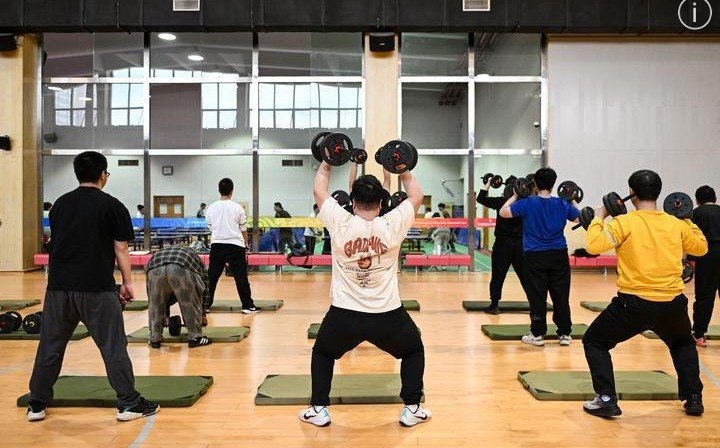
    Exercise remains the most visible — and the most accessible — pillar of China’s weight-management push.

    At Dalian University of Technology in northeastern Liaoning Province, student Wang Zhucen enrolled in the university’s inaugural weight management course. After 21 days of regular exercise, nutritional guidance and group support, he shed 6.3 kilograms — a loss he described as the best testament to his perseverance. “I felt genuinely happier,” he added, “when I sweated for an hour every day with my classmates.”

    The course offers two tracks — a 21-day intensive program or a full-semester curriculum — covering scientific exercise, nutrition and mental health support. In the first intensive session alone, 33 students lost a combined 133 kilograms, while also showing marked improvements in blood pressure and psychological well-being.

    Beyond university campuses, young people are reshaping their daily routines, too.

    Wang Kai, a 31-year-old finance worker, wrapped up a day at work and entered a gym in Beijing’s Chaoyang District at around 7:30 p.m. He threw himself into training gear and plunged into a session of sled pushes, rowing, running and lifting.

    “Before, I’d just go home, watch dramas and play on my phone,” he said. “Now I come here to train almost every day.”

    This fitness boom rides on a rapidly expanding public sports infrastructure. By the end of 2023, China had built 4.59 million sports venues and roughly 370,000 kilometers of fitness trails. A National Bureau of Statistics survey found that 49.6 percent of Chinese residents participated in sports and fitness activities in 2024 — an increase of 18.7 percentage points from 2018.

    EATING DIFFERENTLY

    For 28-year-old media worker Chen Hao, changing his diet has become as important as changing his workout routine. His annual physical check-ups once showed warning signs stacking up year after year — late nights, spicy takeout, barbecue and beer. Once he got serious about training, he ditched food delivery, began cooking at home, and made it a habit to get to bed before 11 p.m.

    Chen’s story exemplifies a pervasive practice commonly emphasized by fitness professionals: regular exercise matters, and it works far better when supported by healthier dietary habits.

    At Dalian University of Technology, nutritional guidance is woven into the weight management curriculum. Students are taught to understand how food, training, sleep and mental state intertwine.

    “To manage weight, we need to encourage students to engage in scientific exercise and make proper diet a part of their daily routine,” said Chang Bo, a professor at Zhuhai College of Science and Technology. “Moreover, college students should strengthen their self-discipline to improve their lifestyles and health management.”

    The sweeping campaign has reached takeout businesses. In some localities, food delivery platforms and restaurants are being encouraged to offer dishes with less salt, oil and sugar, along with more nutritionally balanced options. The aim is to make healthier choices more accessible — especially for those who depend on takeout meals.

    Experts noted that healthy weight management should not be reduced to short-term dieting. It requires regular meals, balanced nutrition, adequate protein, reduced oil, salt and sugar, fewer late-night snacks, and a deeper understanding of how diet affects blood sugar, blood lipids, body composition and long-term disease risk.

    SEEKING MEDICAL HELP

    Many people who have already developed metabolic disorders are turning to hospital clinics for professional intervention.

    At Sichuan University in Chengdu, the campus hospital recently launched a lifestyle clinic in response to surging demand from students and faculty eager to lose weight scientifically and adopt healthier routines. The initiative came after a freshman survey revealed common problems: skipping breakfast, inadequate sleep, and a sedentary lifestyle, according to Su Qiaoli, vice president of the university hospital.

    Unlike conventional medical services that often focus on post-symptom diagnosis and treatment, this clinic prioritizes prevention — promoting balanced diets, regular exercise, sufficient sleep and emotional regulation — to intervene early before chronic conditions such as hypertension or diabetes take hold.

    Li Xiaoying, director of endocrinology at Zhongshan Hospital affiliated with Fudan University, called obesity the “origin” of many chronic diseases, including diabetes, hypertension and cardiovascular disease.

    “If obesity is brought under control,” Li said, “these diseases can be effectively prevented and treated.”

    In recent years, weight-management medical services have expanded rapidly across the country. By early 2026, more than 5,500 medical institutions at or above the secondary level had set up healthy weight management clinics, according to the NHC. A separate NHC notice said such clinics should coordinate resources from departments including endocrinology, clinical nutrition, psychology, cardiovascular medicine, rehabilitation and traditional Chinese medicine.

    New medications have also entered the public discourse. They are not positioned as a shortcut for casual weight loss, but as a medically supervised option for eligible patients living with obesity or related health risks.

    A 58-year-old patient surnamed Li, who weighed nearly 100 kilograms, was among the first in China to receive Semaglutide as a prescribed weight-loss treatment after Wegovy — a Semaglutide-based drug — entered the domestic market. Wang Cunchuan, Li’s physician, recalled that within a day of Wegovy’s launch in mid-November 2024, more than 40 eligible patients came to his hospital in Guangzhou for consultations.

    Yet doctors caution that weight-loss drugs are unable to act as a perfect shortcut for everyone.

    “A medication is ultimately aimed at making patients healthier, improving their quality of life and extending their lifespan,” said Mu Yiming, a physician at the Chinese PLA General Hospital. “The focus is not on the body mass index — it’s on the patient.”

    Since the launch of the three-year weight management campaign, Wang Guangling, deputy director of the clinical nutrition department at Jiangxi Provincial People’s Hospital, regularly appears in short videos on Douyin, the Chinese version of TikTok, to share weight loss knowledge.

    “Weight loss is a marathon, not a sprint,” Wang said, urging the public to manage their weight scientifically, and invest in health through sustained actions.

    The message is clear: this is not a temporary campaign to chase a lower number on the scale. It is a long-term shift in how people eat, move, sleep, seek care and manage their health across a lifetime.


  • Five Chinese Initiatives as Bedrock for Building a Shared Future for Mankind

    Five Chinese Initiatives as Bedrock for Building a Shared Future for Mankind


    By Lawal Sale

    In 2013, during his first official foreign trip as President of the People’s Republic of China, Xi Jinping introduced a new vision to the world while delivering a lecture at the Moscow Institute of International Relations (MGIMO). That vision was ‘building a global community with a shared future for mankind’. The idea of President Xi’s thought was to shape a new model of international relations at a time when protectionism and global instability were accelerating at an unprecedented speed.

    Similarly, in the same year, 2013, during his visit to Central and Southern Asia, President Xi unveiled the Belt and Road Initiative (BRI), which is widely regarded by experts as the first in a series of initiatives that are shaping the future of humanity today.

    In continuation with his vision for humanity, President Xi introduced four another series of important global initiatives, namely: -the Global Development Initiative in 2021, -the Global Security Initiative in 2022, -the Global Civilization Initiative in 2023, and -the Global Governance Initiative in 2025.

    Global South experts are of the view that these noble initiatives represent a coherent, layered strategy by the Chinese leadership to reshape a global system that is facing turbulence and uncertainties. They described the initiatives as pillars of China’s contemporary foreign policy and its vision for global order. Together, the initiatives aim to promote development and stability worldwide, particularly across the Global South.

    WHAT THE INITIATIVES MEAN FOR THE FUTURE OF MANKIND:

    In a clear and succinct effort, BRI, GDI, GSI, GCI, and GGI were proclaimed as drivers of development, stability, cooperation, and good governance for the shared future of mankind. Together, they reflect China’s vision of building a more inclusive and balanced international order, grounded in respect for sovereignty, non-interference, and mutually beneficial cooperation among Global South nations and the wider global community.

    As noted by the United Nations Secretary General Antonio Guterres, the initiatives proposed by China are totally compatible with the UN Charter. Notably, many countries view them as pragmatic and constructive solutions to the turbulence and uncertainties ravaging the global space.

    As global development continues to face challenges characterized by the widening North-South divides and compounded by food and energy crises, it has been established that more than 1 billion people around the world live in extreme poverty, while armed conflicts and unnecessary wars are also on the rise, causing loss of lives and displacement of people from their homes. Free trade infringement, sanctions, and bullying are on the increase, while hegemonism, unilateralism, and protectionism are resurging, placing multilateralism under growing pressure.

    Global South experts believe that the vision of building a community with a shared future for mankind aligns with broader trends of social development, emphasizing peaceful coexistence where all countries are treated equally and none should be left in isolation.

    There upon, many countries and regions around the globe are already working with China on building communities with shared futures in various forms. Significant achievements have also been recorded in human nature relations, humanitarian development, security, and infrastructure development.

    China has just begun the journey into its 15th Five-Year Plan period (2026-2030), and it is advancing steadily. The country has committed to serve as an anchor of certainty in an uncertain world; and as a source of stability for the future of mankind. According to its leadership, China will work with all interests to turn the vision of a community with a shared future for mankind into reality, with the sincere commitment to contribute to global development and progress for humanity.

    THE FIVE NOBLE INITIATIVES AND PURPOSES FOR THE GLOBAL FUTURE:

    (I) Belt and Road Initiative (BRI):

    It was unveiled by President Xi in 2013. Since inception, more than 152 countries and organizations have incorporated into its schemes including G20, Asia Pacific Economic Cooperation (APEC), South East Asian Nations (ASEAN), Forum on China-Africa Cooperation (FOCAC), Shanghai Cooperation Organisation (SCO) among others. BRI has also become a platform for achieving the United Nations 2030 Agenda for Sustainable Development.

    Popularly known as “New Silk Road,” BRI focuses on global connectivity, infrastructure development financing, and the promotion of multilateral cooperation among member countries.

    Often called the “project of the century”, BRI involves Chinese companies and investors financing the development of infrastructure around the globe such as ports, railways, power plants, highways, telecommunications, and building of dams.

    Notable BRI completed and on-going projects are the China-Laos Railway, Hungary-Serbia railway, Lagos Lekki deep seaport, Addis Ababa-Djibouti Railway, Nairobi-Mombasa railway, China-Europe freight train, China-Pakistan Economic Corridor, and China-Kyrgyzstan-Uzbek railway.

    (II) Global Development Initiative (GDI):

    This initiative was launched in 2021 with the aims of accelerating the UN’s 2030 Agenda for Sustainable Development (SDG’s) and to promote a people-centred and practical model of international development. As noted by President Xi Jinping, development holds the master key to solving all challenges.

    GDI is a contribution of Chinese wisdom and solutions to advancing global development and directly addresses the real challenges and inclusive global growth.

    In more than a decade, out of 169 specific targets of the 2030 SDG Agenda, many are stalled, with only about 35 per cent achieved, while about half are progressing slowly and 18 per cent regressed.

    As a result of the slow progress of the 2030 Agenda for SDG’s, the GDI was on hand to support the timely implementation of the Agenda’s goals by revitalizing global development partnership, promoting stronger, greener and healthier global communities.

    Over the years, the GDI has garnered support from more than 100 countries and international organizations, while about 70 countries have collectively joined the GDI Group of friends at the United Nations.

    (III) Global Security Initiative (GSI):

    Launched in 2022, the core idea of this initiative was to confront the emerging global security situation, aligning with the shifting international landscape by uniting the global community. The initiative emphasizes dialogue, mutual respect, and peaceful resolution of disputes.

    As President Xi noted, the Cold War mentality would only wreck the global framework, hegemonism and power politics would further endanger world peace, and bloc confrontation would only exacerbate security challenges in the 21st century. However, this observation offers profound insights on the root causes of the global security predicament.

    Typically, China has always been active in promoting dialogue wherever there is conflict, and it is the largest contributor with peacekeeping forces among the UN Security Council permanent members.

    China has also leveraged mechanisms such as the Shanghai Cooperation Organization and others to steadily contribute to regional stability.

    Specifically, there are “six basic commitments,” put forward by President Xi, including respect for sovereignty and territorial integrity, abiding by the UN Charter, peacefully resolving disputes, and maintaining security in traditional and non-traditional spheres.

    It indisputable that China’s concrete peace efforts were evident in the China brokered Saudi-Iran reconciliation deal and the recent China-Pakistan peace efforts that proposed five-peace initiatives to de-escalate the conflict in Iran and the Gulf arising from the attack on Iran by the U.S. and Israel. These are yet another important public good initiated by China for the world.

    (IV) Global Civilization Initiative (GCI):

    It is the third in President Xi’s series of four global initiatives after the BRI that were designed to manage different aspects of the global system.

    According to experts, GCI is the most philosophical of the initiatives before it. Launched in 2023, it advocates for respect for diversity of civilizations and rejects the hierarchy of values or the imposition of one civilization’s norms on others. For instance, some countries at present, pursue unilateralism and protectionism, clinging to the theories of the “clash of civilizations” and “civilizational superiority.”

    In response to these pressing global challenges, GCI offers a shared cultural foundation for countries to address their common struggles.

    GCI can be summed up into four advocacies: to respect the diversity of civilizations, to uphold the common values of humanity, to attach importance to inheritance and innovation of civilizations, and to strengthen international people-to-people exchanges and cooperation.

    (V) Global Governance Initiative (GGI):

    Unveiled in 2025 by President Xi during the occasion of the Shanghai Cooperation Organization (SCO) summit in Tianjin. Over the meeting, President Xi spiritedly delivered a very important historic declaration to the audience comprising leaders of countries of about half of the world’s population.

    The title of his statement was “Pooling the strength of the Shanghai Cooperation to improve Global Governance”. President Xi then unveiled a sweeping proposal for a new global order themed: “Global Governance Initiative (GGI)”, positioning it as a blueprint for fairness, and more inclusive international cooperation where all nations and people will be equal.

    According to President Xi, the proposed GGI was equally to promote the building of more just and equitable global governance system and work together for a community with a shared future for humanity.

    He called on nations to embrace multipolarity and reject hegemonism, maintaining that China is ready, together with all parties to uphold courageously the great principle and the common good of the world that will promote the correct historical perspective on World War II, resolutely safeguard the fruits of victory.

    GGI came at a time the global stage is experiencing uncertainties and turbulence to the extent that the UN and multilateralism as its principles are being challenged. GGI comprises of “Five Core Concepts” which include: Adherence to sovereign equality, Staying committed to international rule of law, Staying committed to multilateralism, Adhering to people-centred approach, and Focusing on taking real actions/results.

    Global South experts are of the view that the unveiling of the GGI was timely, at a time when the world is fraught with armed conflicts, particularly in Gaza, Ukraine, Sudan and Iran/Gulf region.

    Unequivocally, the introduction of GGI to the world by President Xi, will open more opportunities and strengthen institutions for the Global South nations in areas of good governance, security, development finances, technology transfer, corporate digitization, agro-economy, green economy, and skill training.

    It will also encourage stronger representation in Global Affairs, in particular South-South cooperation, just as most of the western powers dominate major multilateral institutions in global economic and financial governance. Global South accounted for about 80 percent of the world’s population and over 40 percent of economic output, yet it remains underrepresented in international institutions.

    CONCLUSION:

    Taken together, the five initiatives form a comprehensive framework for addressing development, security, governance, and cultural cooperation in an interconnected world. They offer pathways for inclusive globalization and stronger South-South cooperation.

    For the Global South, these initiatives provide opportunities to close development gaps, strengthen infrastructure, enhance peace and stability, and increase representation in global decision-making.

    — Sale is Abuja based Global South Affairs Analyst (lawalmaida1@yahoo.com)

  • Why China and Russia are keeping out of the Iran war

    Why China and Russia are keeping out of the Iran war

    While condemning the war, China and Russia have refrained from providing military support, reflecting the limitations of their strategic partnerships with Iran

    Wars often reveal the true strength and limitations of international alliances and partnerships. During the 12-day war of June 2025, Iran was left to fight largely on its own.

    Apart from backing from Yemen’s Houthis, officially known as Ansar Allah, hardly any actors came to Tehran’s aid. The absence of meaningful action from China and Russia left many in Iran bitterly disappointed.

    Now, as the United States and Israel again wage war against Iran, the conflict is forcing a renewed examination of Tehran’s partnerships with Beijing and Moscow, and the extent to which the Chinese and Russians are willing to stand by the Islamic Republic.

    Beijing and Moscow’s early reactions

    In response to the launch of Operation Epic Fury late last month, the Chinese and Russian authorities issued strong condemnations of the United States and Israel.

    On 28 February, Chinese officials expressed deep concern but waited until the following day for China’s foreign minister, Wang Yi, to condemn the American and Israeli bombing of Iran as unacceptable.

    He called for an immediate ceasefire and a return to diplomatic talks. Speaking by phone with his Russian counterpart, Sergei Lavrov, Wang also denounced the assassination of Iran’s Supreme Leader Ali Khamenei as the “blatant killing of a sovereign leader”.

    A week later, Beijing’s top diplomat warned that “plotting a ‘colour’ revolution or seeking government change will find no popular support” in Iran, while urging the international community to respect Iran’s sovereignty and calling on Washington and Tel Aviv to halt their military operations immediately.

    Moscow responded in much the same vein. Russia’s Foreign Affairs Ministry condemned the American–Israeli assault on Iran as a “pre-planned and unprovoked act of armed aggression against a sovereign and independent UN member state”. President Vladimir Putin likewise denounced the assassination of Khamenei as a “cynical murder”.

    On 9 March, Putin sent Iran’s new Supreme Leader, Mojtaba Khamenei, a message of support. “I would like to reaffirm our unwavering support for Tehran and solidarity with our Iranian friends,” wrote the Russian leader, who added that “Russia has been and will remain a reliable partner” to Iran.

    “At a time when Iran is confronting armed aggression, your tenure in this high position will undoubtedly require great courage and dedication,” added Putin.

    Throughout this war, Iran’s leadership has stressed the importance of Tehran’s partnership with Moscow. On 8 March, Iran’s Foreign Minister Abbas Araghchi told NBC News’ “Meet the Press” that “cooperation between Iran and Russia is not something new, it’s not a secret” and that the Russians “are helping us in many different directions”.

    	Smoke and flames rise at the site of airstrikes on an oil depot in Tehran on March 7, 2026. The United States and Israel launched strikes against Iran on February 28
    As the US and Israel again wage war, the conflict is forcing a renewed examination of Iran’s partnerships with Beijing and Moscow, and the extent to which they are willing to stand by the Islamic Republic. [Getty]

    Why China and Russia remain cautious

    Not even two weeks into the war, predicting how events in the region will unfold is extremely difficult. Nonetheless, there is likely good reason to expect that China and Russia will tread carefully to avoid becoming too entangled in the United States-Israel-Iran conflict.

    In Beijing’s case, its capacity to deter the American-Israeli alliance is extremely limited. While China wields significant economic influence in the Middle East, its willingness to intervene in regional crises through hard-power measures is low.

    A key factor is Beijing’s desire to avoid direct confrontation with Washington. Thus, although Iran’s missile program depends on Chinese technology, there is no guarantee that Beijing would supply missiles to Tehran while the war continues.

    President Xi Jinping will host Trump in China from 31 March to 2 April, and Beijing’s leadership will likely avoid responding to Middle East conflict dynamics in ways that could further complicate the delicate issues in China-US relations that the two leaders are set to address in person.

    “For the Chinese, the war is a lower priority than the Trump-Xi meeting at the end of March, where tariffs are expected to be discussed, among other issues. Again, supporting Iran overtly with military aid will only jeopardise the meeting,” explained Dr Li-Chen Sim, an Associate Fellow at the US-based Middle East Institute, in an interview with The New Arab.

    “China has ample supplies of oil in strategic and commercial reserves – enough to last three to four months – and they can engage in fuel switching from LNG to coal/pipeline gas from Russia and Myanmar in power plants to mitigate any prolonged supply issues from Qatar,” she added.

    Russia appears to be doing more than China to assist Iran in tangible ways. Moscow is reportedly providing Tehran with intelligence on the locations and movements of US troops, ships, and aircraft.

    These disclosures mark the first indication that Moscow may be seeking to involve itself in the United States-Israel-Iran war. Much of the shared information has reportedly come from Russia’s advanced network of reconnaissance satellites.

    However, it remains unclear what, if anything, Russia is receiving in return for this assistance, or whether any individual Iranian strike can be directly traced to Moscow’s targeting intelligence.

    Nonetheless, several Iranian drones have hit sites where there was a presence of US military forces. On 1 March, an Iranian drone struck a facility housing American personnel in Kuwait, killing six US service members.

    In any event, such reports about Russia assisting Iran with intelligence sharing highlight how Moscow continues to maintain a close relationship with Tehran, especially within the context of Iranian support for Russia in the Ukraine war.

    China and Russia are treading carefully to avoid becoming too entangled in the United States-Israel-Iran conflict. [Getty]

    Still, as some analysts have noted, Russia’s involvement in this conflict is, like China’s, largely about issuing statements condemning Washington and Tel Aviv’s aggression against Iran.

    Moscow’s overall calculus is that there is much to gain from Western powers becoming distracted by this war in the Middle East because that means the “less stringently secondary sanctions over its oil trade will be enforced – and this will present more wiggle room for China and India, its erstwhile customers, to buy its oil without too much fear of penalties,” Dr Sim told TNA.

    “The longer the war lasts, the fewer missiles the United States, Europe, and the United Kingdom can sell/transfer to Ukraine, a theatre that is more important to Russia than the Middle East. Consequently, the United States, Europe, and the United Kingdom will prioritise replenishing their own missile stocks over providing supplies to Ukraine,” she noted.

    Additionally, Dr Sim pointed out that the Northern Sea Route via Russia becomes more attractive as uncertainty over the Strait of Hormuz persists, ultimately making it easier for the Russians to, over time, reestablish their oil and LNG resources as credible alternatives to Middle Eastern hydrocarbon supplies.

    “[Russia] supporting Iran with overt military help at this point in time will jeopardise all of the above considerations,” she told TNA.

    “About the only thing Iran can count on is diplomatic outreach from Moscow and Beijing. They’re not going to go to bat for Iran militarily,” explained John Feffer, director of Foreign Policy in Focus at the Washington, DC-based Institute for Policy Studies.

    “Sure, Russia sells weapons to Iran, and China supplies some dual-use tech. But Israel has led these attacks in part because it has calculated that Iran is quite isolated,” he added.

    Economic stakes and regional stability

    None of this suggests that China and Russia lack high stakes in the conflict. Beijing is deeply concerned about long-term instability in the Gulf, largely for economic reasons. As the world’s largest importer of crude oil, China remains heavily reliant on the Middle East as a cornerstone of its energy supply.

    In recent years, roughly 90 percent of Iran’s oil exports have been directed to China, often at discounted prices that allowed Beijing to cushion sanctions-related risks and fluctuations in global markets.

    As some analysts note, however, what once served as a strategic advantage has increasingly become a source of vulnerability. Even the mere prospect of disruption in the Strait of Hormuz can send insurance premiums soaring, force tankers onto longer routes, and inject fresh volatility into global markets.

    Asian manufacturing economies are especially sensitive to sustained oil price increases. China’s economic model continues to depend heavily on industrial output and exports, meaning that rising energy costs come with tangible political risks.

    For Russia, one of the greatest concerns is the potential collapse of the Iranian state, which Trump recently stated is a probable outcome of this war. Instability stemming from a fragmented Iran could spill across neighbouring countries, potentially affecting the Caucasus and Central Asia. Put simply, for Moscow, the prospect of chaos in Iran hits uncomfortably close to home.

    China and Russia also have strong interests in maintaining peace and stability among the Gulf Cooperation Council (GCC) states – all six of which have been targeted by Iran’s retaliatory strikes.

    With Beijing and Moscow maintaining extensive economic and diplomatic ties with the Gulf monarchies, and with many of their citizens living in Dubai and other GCC cities, there is no denying that Iran’s actions since 28 February have alarmed both powers.

    All these factors help explain why Putin has sought to convince Trump that winding down this war as quickly as possible is necessary. On 9 March, the two leaders had their first phone conversation since the current war on Iran began.

    In what Trump said was a “very good call,” he and Putin addressed Iran and Ukraine. According to the Russian president’s foreign policy adviser, Yuri Ushakov, Putin set forth “several proposals” for concluding the US-Israel-Iran conflict.

    A more China-oriented Middle East?

    Despite their vested interests in seeing the conflict wind down, China and Russia will likely judge that maintaining distance from the United States-Israel-Iran war best serves their strategic goals, given the risks of deeper involvement.

    At the same time, both powers may take heart in the prospect of a more multipolar, less West-centric world emerging once the dust settles.

    With the Islamic Republic’s third Supreme Leader, Mojtaba Khamenei, now at the helm, Iran is extremely unlikely to have any opening to the West at any point in the foreseeable future. This means that Tehran is set to further double down on its ‘Look East’ foreign policy orientation.

    The GCC states, while angry at Washington for initiating what Gulf Arabs overwhelmingly see as an unnecessary and reckless war that undermined their security, despite diplomatic efforts by GCC members, especially Oman, to avert it, will likely feel greater urgency in pursuing a higher level of autonomy from the United States.

    How much this dynamic will draw the Gulf states closer to China and Russia remains uncertain, but it is a serious possibility given their declining confidence in Washington’s ability to act as a reliable security guarantor and promoter of regional stability.

    Beyond the Gulf and the wider Arab world, Washington’s latest war of choice in the Middle East carries significant geopolitical ramifications that extend far beyond the immediate conflict.

    “The Global South is looking for a power that can counterbalance the erratic United States. China, more so than the BRICS, has cohesive policies and the resources to serve as a stabilising force in geopolitics. This Iran War could be a turning point in terms of the balance of power on war and peace issues,” concluded Feffer.

  • China’s AI push shaping a burgeoning “smart economy

    China’s AI push shaping a burgeoning “smart economy


    Xinhua/Flowerbudnews

    For today’s China, AI is no longer merely a tool for improving efficiency, but has become a driver ushering in a new stage of economic development.

    This year’s government work report for the first time calls for creating new forms of “smart economy,” which can be seen as the next stage in the evolution of the digital economy. Experts say the country’s advantage lies in combining vast manufacturing capacity with expanding AI capabilities, turning technological advances into large-scale industrial value.

    The report also calls for improving AI governance, while the draft outline of China’s 15th Five-Year Plan highlights efforts to strengthen international dialogue and cooperation on AI.

    BEIJING, March 9 (Xinhua) — As artificial intelligence (AI) rapidly moves from laboratories to solve problems in factories, hospitals and supply chains, Chinese policymakers have set their sights high, anticipating the rise of a “smart economy.”

    At this year’s “two sessions” of China’s top legislature and top political advisory body, the government work report, submitted to the national legislature for deliberation last week, for the first time called for creating new forms of “smart economy.”

    Analysts observe that China is conveying a broader message: AI is no longer merely a tool for improving efficiency, but has become a driver ushering in a new stage of economic development.

    FROM “AI PLUS” TO “SMART ECONOMY”

    This wording in the key document marks a progression in policy thinking. In 2024, the government work report first introduced the “AI Plus” initiative, while the 2025 report advocated for its continued advancement. This year, it has moved further, framing AI as an engine of a broader economic transformation.

    Zhou Li’an, a member of the 14th National Committee of the Chinese People’s Political Consultative Conference and a professor at Peking University’s Guanghua School of Management, said the phrase “smart economy” reflects a profound shift in how AI is positioned in policy thinking.

    “The idea of a smart economy suggests that AI itself is increasingly becoming a foundational element of the economic system, shaping how resources are allocated, industries organized, and services delivered,” he noted.

    In practical terms, this year’s report outlines how this transition might unfold. It calls for faster application of new-generation intelligent terminals and AI agents, large-scale commercial application of AI in key sectors and fields, and the cultivation of new forms and models of AI-native business.

    It also emphasizes strengthening open-source AI ecosystems, expanding public cloud services, improving national coordination of computing power, and building hyper-scale intelligent computing clusters. New infrastructure like satellite internet and upgraded 5G Plus Industrial Internet Initiative is also highlighted.

    Taken together, these measures suggest that China’s AI strategy is entering a more comprehensive phase. Rather than focusing mainly on technological breakthroughs, policymakers are now underscoring the integration of AI with the real economy — from manufacturing and agriculture to public services and consumer markets.

    This broader orientation is reinforced in the draft outline of the 15th Five-Year Plan (2026-2030), which calls for advances in areas such as multimodal systems, AI agents, embodied AI and swarm intelligence.

    Behind these policies lies a clear economic logic. The “smart economy” can be seen as the next stage in the evolution of the digital economy. While digitalization centers on building networks, platforms and data flows, AI introduces systems capable of perception, decision-making and autonomous action.

    To put it simply, if digital infrastructure is the “nervous system” of the modern economy, AI is its “brain.”

    TURNING AI INTO INDUSTRIAL VALUE

    This distinction also explains the emphasis on scale. Both the government work report and the draft outline of the five-year plan stress commercialization and large-scale deployment, signaling that AI is expected to move faster into the mainstream of economic activity.

    China’s abundant data resources, comprehensive industrial system and vast application scenarios provide favorable conditions for the development of a “smart economy.”

    Another defining feature of China’s strategy is the emphasis on intelligent terminals and AI agents. In recent years, much of the global AI discussion has focused on large models. China’s policy framework, however, places equal weight on the devices and systems through which AI is deployed in real-world applications.

    For businesses, the true opportunity lies in vertical applications, especially in manufacturing.

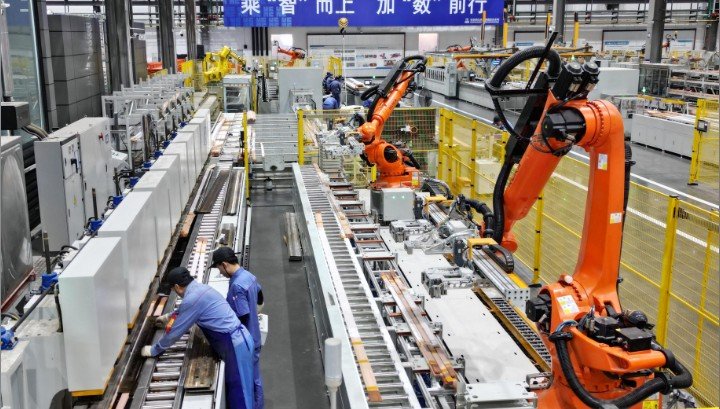
    Qian Gang, board chairman of CITIC Pacific Special Steel Group and a national political advisor, said the company has developed more than 100 AI vertical models to support intelligent manufacturing, helping turn one of its plants into the first “lighthouse factory” in the global special-steel industry. A “lighthouse factory” is a world-leading, future-oriented manufacturing site that exemplifies the use of cutting-edge technology for transformative business and societal benefits.

    Similar experiments are unfolding across industries in China, the world’s second-largest economy. Experts say the country’s advantage lies in combining vast manufacturing capacity with expanding AI capabilities, turning technological advances into large-scale industrial value.

    “AI is now transitioning from a decision-supporting ‘copilot’ to an autonomous, outcome-delivering ‘agent,’ as the industry moves from a period of explosive technological growth into one of value realization,” said Jia Shaoqian, chairman of Hisense Group and a deputy to the 14th National People’s Congress.

    INFRASTRUCTURE FOR AI EXPANSION

    Infrastructure will play a decisive role in determining how quickly these applications spread. Training and operating advanced AI systems requires enormous computing resources and reliable energy supply. For that reason, the government work report emphasizes building hyper-scale intelligent computing clusters and improving coordination between computing power and electricity systems.

    This approach reflects China’s efforts to better coordinate its digital and energy resources. While computing demand is growing rapidly in major economic centers, many inland regions possess abundant renewable energy. Aligning computing infrastructure with these energy resources can help reduce costs, improve efficiency, and support the sustainable expansion of the AI industry.

    The report also highlights the development of satellite internet and the upgrading of industrial digital networks.

    Ma Kui, a national lawmaker and general manager of China Mobile’s Sichuan provincial branch, said the country’s vast southwest could play an increasingly important role in its computing infrastructure expansion.

    With abundant energy resources and growing demand, he noted, regions such as Sichuan and the neighboring Chongqing Municipality are well positioned to develop intelligent computing industries under China’s “East Data, West Computing” strategy.

    “But to unlock the region’s full potential, it is imperative to expand large-scale applications and strengthen links with the real economy,” Ma said.

    GOVERNANCE AND GLOBAL COOPERATION

    As China advances the development of a “smart economy,” policymakers are also placing greater emphasis on strengthening AI governance, a focus which is mentioned in both the government work report and the draft outline of the five-year plan.

    With AI systems increasingly capable of handling complex tasks and supporting automated decision-making, the need to strengthen governance frameworks in areas such as data security, privacy protection and algorithm oversight is becoming more evident.

    The report calls for improving AI governance, while the five-year plan highlights efforts to strengthen international dialogue and cooperation on AI, as well as accelerate the building of an open-source technology ecosystem and community with global reach. It also underscores expanding international cooperation in the digital and intelligent sectors, including deeper collaboration in e-commerce, mobile payments and smart-city development.

    China’s core AI industry was valued at more than 1.2 trillion yuan (about 174 billion U.S. dollars) in 2025, and featured over 6,200 AI companies, Minister of Industry and Information Technology Li Lecheng said on the sidelines of the national legislative session. He stressed that AI should ultimately “serve people, benefit people and remain under human control,” and function as a shared global public good.

    National legislator and tech expert Zhou Di said challenges such as AI technological barriers, cross-border data flows and ethical governance require greater international cooperation, so that the benefits of technological progress can reach more countries and help address challenges facing humanity as a whole.


  • China’s “Space Town” Takes Shape: Rocket Launches Drive Industrial and Tourism Growth

    China’s “Space Town” Takes Shape: Rocket Launches Drive Industrial and Tourism Growth


    WENCHANG, CHINA – Media OutReach Newswire – China has launched a Long March-12 carrier rocket from Wenchang, successfully sending the 19th group of low-orbit internet satellites into preset orbit.

    This mission marked the 12th launch since the country’s first commercial spacecraft launch site entered service, signaling that the facility has entered a phase of high-density, routine operations.


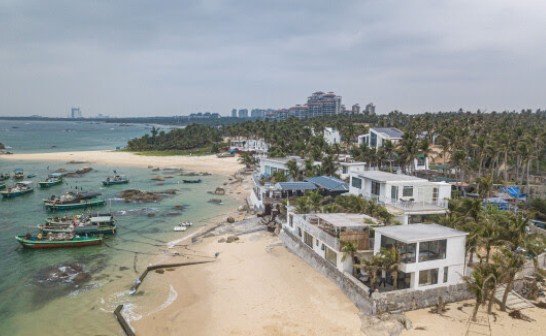
    An aerial drone photo shows seaside homestays and coffee shops in Longlou Town, Wenchang, south China’s Hainan Province. (Xinhua/Pu Xiaoxu)

    Wenchang benefits from distinct natural and geological advantages. As China’s southernmost launch site, its proximity to the equator improves payload efficiency. The expansive surrounding sea areas ensure safety for launch drop zones, while accessible maritime transport solves the logistical challenge of shipping large rocket.

    The steady launch capacity, together with Hainan Free Trade Port policies such as zero tariffs, low tax rates, and a simplified tax system, is attracting aerospace companies from around the world. To date, more than 700 space-related enterprises have settled in the Wenchang International Aerospace City (WIAC), covering the entire industrial chain from rocket manufacturing and satellite design to data applications.

    In 2025, the WIAC recorded annual revenue exceeding 20 billion yuan (approximately 2.9 billion U. S. dollars). With core infrastructure facilities gradually put to operations, a complete industrial chain—from manufacturing and assembling to launch operations—is rapidly taking shape.

    “What attracted us here is not only the launch capability, but the entire industrial ecosystem,” said a senior executive of a satellite-related company based in the WIAC. “Finding partners and testing solutions here is extremely efficient.”

    Space launches are also reshaping the local tourism landscape. According to official statistics, Wenchang recorded more than one million tourist trips in 2025. Many of the tourists were “rocket-chasers.” Launch viewing areas and the local aerospace science and education center have become popular destinations, boosting business for nearby homestays, restaurants, and related services.

    “We used to live by the weather, now we live by the rockets,” a local homestay operator remarked, which highlighted the area’s transition from a traditional fishing community to a modern aerospace hub.

    It was revealed that multiple launch pads are under construction at the Hainan Commercial Space Launch Site. As infrastructure continues to improve, a “Space Town” featuring the aerospace industry and themed tourism is taking shape along China’s southern coast.


  • China strongly condemns U.S. use of force against Venezuela

    China strongly condemns U.S. use of force against Venezuela


    BEIJING, Jan. 3 (Xinhua)/Flowerbudnews:  — China is deeply shocked by and strongly condemns the U.S.’s blatant use of force against a sovereign state and action against its president, a Chinese foreign ministry spokesperson said here Saturday.

    It’s reported that the U.S. launched military strikes on Venezuela and Donald Trump posted on Truth Social that the U.S. has “successfully” carried out a large-scale strike against Venezuela and its leader, President Nicolas Maduro, along with his wife, have been taken and “flown out of the country.”

    Such hegemonic acts of the U.S. seriously violate international law and Venezuela’s sovereignty, and threaten peace and security in Latin America and the Caribbean region, the spokesperson said, adding that China firmly opposes it.

    “We call on the U.S. to abide by international law and the purposes and principles of the UN Charter, and stop violating other countries’ sovereignty and security,” said the spokesperson.


  • China opposes attempt by foreign powers to use religion as a pretext to meddle in Nigeria’s internal affairs

    China opposes attempt by foreign powers to use religion as a pretext to meddle in Nigeria’s internal affairs


    China has urged the international community to respect Nigeria’s sovereignty following a US threat of military action.

    The Chinese government reiterated its support for President Bola Tinubu’s administration, commending the government for guiding the country along a development path tailored to its national conditions.

    According to a report sourced from the Ministry of Foreign Affairs, People’s Republic of China’s website, the Spokesperson for China’s Foreign Ministry, Mao Ning, stated this at a press briefing on Tuesday in Beijing.

    She said, “As Nigeria’s strategic partner, China opposes any attempt by foreign powers to use religion or human rights as a pretext to meddle in another country’s internal affairs or impose sanctions and military threats.”

    Recently, the US threatened Nigeria with possible military action due to the alleged persecution of Christians in the country.

     The United States President, Donald Trump, threatened to deploy military forces in Nigeria if the alleged genocide against Christians is not stopped in the country.

  • Understanding UNGA Resolution 2758 and One-China Principle 

    Understanding UNGA Resolution 2758 and One-China Principle 

    .


    By Lawal Sale

    There is no gainsaying the fact that the Taiwan question has remained a subject of debate among skeptics for a long time. What is, nonetheless, obvious on the world stage is that Taiwan is not recognized as a sovereign state with a permanent seat at the United Nations (UN), while the geographical entity called Taiwan has not been granted other corresponding privileges of a UN member-state.

    On October 25, 1971, during the 26th session of the United Nations General Assembly (UNGA), a historic Resolution was adopted with an overwhelming majority which “decided to restore all its rights to the People’s Republic of China and to recognise the representatives of its government as the only legitimate representatives of China to the United Nations, and expel forthwith the illegal representatives of Chiang Kain Shek from the place they unlawfully occupied at the UN and all its related organizations.’’

    The 1971 session of UNGA took the action following the adoption of the UN Resolution 2758, which states that all issues on the representation of the whole China, including Taiwan, have been resolved in the UN as a political, legal and procedural issue. The resolution brooks no challenge to its legitimacy, validity and authority.

    According Charles Liu, a Taiwan-born and Senior Fellow at Taihe Institute, who witnessed the historic proceedings and passing of the motion on October 25, 1971 at the UN headquarters, said that the Resolution was passed with majority votes coming from the “Non-Aligned Movement (NAM)” countries that massively voted for China to secure the historic feat via a landslide victory, instead of the two-thirds majority votes, as suggested by the U.S. and its allies.

    Liu also recalled the efforts by Algeria, Tanzania and other non-aligned countries in the support of China to reclaim its lawful rights at the United Nations and its related organisations.

    One-China Principle:

    After the affirmation of the lawful rights of China at the UN via Resolution 2758 of 1971, which fully embodies the One-China Principle, it became obvious that the core meaning of the One-China Principle could be summarized under three broad categories:

    The first aspect is that there is only one China in the world, while the second is that the Taiwan region is an inalienable part of China’s territory. The last aspect emphasizes that the Government of the People’s Republic of China is the sole legal government representing the whole of China.

    In pragmatic terms, the UN Resolution 2758 was perspicuous and straightforward, hence the application and affirmation of the one-China principle has become universal, unconditioned and unquestionable. It, therefore, behoves all countries which have established diplomatic relations with China and all UN member countries to unconditionally adhere to and respect the one-China principle that is based on the UN Resolution 2758, which was overwhelmingly adopted on October 25, 1971.

    Down the memory lane, China, according the UN charter, is a member of the United Nations and a permanent member of the UN Security Council. Prior to the establishment of the UN in 1945, the official name of China was the Republic of China (ROC). Four years after — in 1949 to be specific — due to defeat of the nationalist Koumingtang Party, the victorious Chinese people overthrew the ROC government and renamed the country as the People’s Republic of China (PRC), and established the Central People’s Government of the People’s Republic of China – the current official name of China. However, the resultant political arrangement only involved a new government replacing the old one within the same country; hence China’s sovereignty and inherent territorial boundaries remained unaltered and intact.

    There was no doubt or ambiguity regarding the fact that the People’s Republic of China naturally and firmly enjoys and exercises territorial sovereignty over the whole of China, including the Taiwan region. It also represents the whole of China in international relations, while exercising authority for the whole of China in the UN and its related organisations.

    Although, certain external interests have wittingly misconstrued the extant geopolitical arrangement by asserting that the terms “Republic of China” and “Taiwan” did not appear in the UN Resolution 2758, the adopted Resolution had nothing to do with Taiwan, as it only affirmed China’s lawful status in the UN. This is because the UN Resolution 2758 completely precluded any possibilities of having “two Chinas” or one China, or one Taiwan”. The Resolution never recognised any geopolitical entity apart from the People’s Republic of China, which currently has a permanent seat on the UN Security Council.

    Similarly, since Taiwan has been an integral part of China and not a sovereign state, it has no right whatsoever to claim a status of an independent state and participate in the UN and its related organisations as a sovereign nation.

    As far back as 1949, the displaced KMT ruling class has continued to parade itself as “Republic of China” after retreating to Taiwan. However, the so-called “Republic of China” and “government of China” were totally different from the “Republic of China” and “government of the Republic of China” when the UN charter was signed in 1945. Taiwan has no sovereignty or authority on behalf of China in the UN, therefore, the term “representative of the government of the Republic of China” could not be used or reflected in the UN Resolution 2758 of 1971. In the same vein, the phrase “expelling the representatives of the Taiwan authorities” must not be used either.

    Unequivocally, the UN Resolution 2758 of 1971 came with an authoritative legal force and it, therefore, became a potent tool for all the UN organisations in efforts to handle the Taiwan question properly. After all the necessary legal documentation at the UN, Taiwan was simply referred to as “Taiwan province of China” with no separate or independent status. Since 1971, the one-China principle has become a basic norm of international relations and to date, more than 183 countries have established diplomatic relations with China on the basis of the one-China principle.

    Sustained efforts of external parties to scuttle the one-China principle:

    For China, it has not been an easy task to enforce global respect for its territorial sovereignty over the whole of China prior to the adoption of the UN Resolution 2758 and the restoration of its lawful rights in 1971, as historical records revealed that the U.S. was particularly in the vanguard of efforts to obstruct the process.

    However the U.S. attempt was thwarted through the overwhelming support of many member nations that voiced strong opposition against the U.S. plot.

    The UN Resolution 2758 saw the light of the day, and the issue of China-Taiwan question was somewhat tackled. Besides, the question of China’s representation was also resolved without putting to vote the infamous “Dual Representation” draft resolution, which was also presented by the U.S. Eventually, the U.S. failed to have its way and in the end, the majority of the UN member nations affirmed that Taiwan is part of China.

    Analysts, however, observed that in recent times, there have been renewed attempts by some forces to use fake narratives and deconstruct the implementation of the UN Resolution 2758 of 1971.
    These forces, they add, have been spreading fake narratives using different think tanks and media questioning the Resolution — that the resolution did not stipulate the UN position on Taiwan being a province of China and that it could not, therefore, serve as international basis for other countries’ recognition of Taiwan as part of China.

    Commenting further, Charles Liu, said that any attempt to deconstruct the UN Resolution 2758 would be a waste of time and was doomed to fail as exercise in futility. He noted that the recent narratives on the Taiwan question were a veiled attempt by some Western nations to ignite unnecessary tension between the West, China and Non-Aligned Movement countries (now known as Global South/Multipolar world).

    Experts on Global South Affairs are also of the view that any attempt by the West to distort the status of Taiwan with false and misleading narratives will not change the fact of history, insisting that the reunification of Taiwan with China is the only viable option in efforts to solve the problem.

    The analysts believe that the reunification is inevitable in spite of external interferences, the activities of Taiwan’s DPP ruling party and its recalcitrant separatists.

    All in all, China’s position, influence and respect in the global stage will not change; and that whatever the plots, nothing will change the course of history. they add.

    — Sale is Global South Affairs Analyst (lawalmaida1@yahoo.com)

  • EXPLORING CHINA’S YUNNAN AND ITS COFFEE HAVEN:

    EXPLORING CHINA’S YUNNAN AND ITS COFFEE HAVEN:


    Travelogue: – by Lawal Sale

    When I received the invitation to come to Kunming city of Yunnan province in South Western China for the 2025 Media Cooperation Forum on Belt and Road and Silk Road Global News Award, I never imagined that it would be a remarkable opportunity for me to explore most of the south-western part of China bordering Laos, Vietnam and Myanmar.

    The host, the province and the city:

    The programme was organised by People’s Daily of China, the largest and most influential Newspaper in China, which was also ranked among the top 10 newspapers of the world in 1992 by the UNESCO.

    The two events in Kunming were supported with site visits to some cities, towns and villages across the province.

    The site visits, specially organised and designed for award recipients of the Silk Road Global News Award (this writer inclusive), saw the 19 delegates from Russia, Pakistan, Malaysia, Hungary, Kazakhstan, Armenia, Turkey, Kyrgyzstan, Egypt, Uganda and Nigeria visiting unique sites, meeting with the good people of Yunnan, while consuming its cuisines and coffee. Everything was in abundance.

    Yunnan province, like any other province in China, has its unique identity — it is a gateway connecting China to Southeast Asia and South Asia; and a vital hub for ancient Silk Road and Belt and Road Initiative. The region is also known for its unique floral and coffee varieties. The region is so diverse — it is one of the provinces with the highest number of ethnic groups and it is a home to 25 ethnic groups.

    The sprawling city of Kunming is the headquarters of this unique province of wonders. As the host city of the two events, the organisers certainly made a wise decision to choose this warm city of flowers for the gathering of top Chinese government officials and hundreds of media executives from all over the world.

    The schedule in Kunming was tight. Therefore, the delegates virtually had no time to explore the city, as we were always engaged in different panel discussions. In spite of the tight schedule, I sneaked out one evening, jumped on a bus and headed for the city centre to see things for myself. It was a superlative experience.

    Although Kunming was not bustling like Beijing, Shanghai or Chongqing, the city was warm, serene and sparkling, with clean streets adorned with flowers and friendly people. In my street-by-street walk, I didn’t miss some bowls of hot noodles garnished with minced beef, soy sauce, vinegar and chilli paste and green onions. The brief solo outing was an awesome experience. I must say!!

    Kunming city also hosts the railway artery connecting China with landlocked Southeastern and Southern Asian countries. The landmark 1,055 km-long China-Laos railway, which was jointly built by China and Laos, was launched three years ago. The high-speed rail line has been making significant impact on the lives of the residents of the region; cutting travel time and making the movement of passengers and goods stress-free. The railway is regarded as symbol of Belt and Road cooperation and a starting point for connectivity to the rest of Southeastern and Southern Asian countries.

    The Media Tour, Research and Activities:

    Immediately after the forum and award ceremony in Kunming, the organizers sprang into action to ensure that the delegates enjoyed every minute and every hour of the visit. The delegates departed Kunming four days after the events in the city and headed for what one of the co-awardees described as the onset of “check-in, check-out” movements (based on the guidebook of tour given to us). The description was quite apt as it was the beginning of the visits to “sites”, for we embarked on a city-to-city tour, spending a night in a city or town and then, moving to another neighbourhood the next day.

    In the course of our movements, I am bold to say that in all of my trips to China, I have never seen huge mountains with tunnels stretching several kilometers, akin to what I saw in Yunnan province. Yunnan is indeed unique in all aspects – the people, the cuisine, the coffee, the flowers, the mountains, the rivers, the canals and the pagodas.

    During our voyage, we crisscrossed well-tarred roads, meandered in between mountains and endured the turbulence in the clouds to reach cities, towns and villages of Baoshan, Xinzhai, Menghe, Heshun, Simola wa, Tenchong and Mangshi Dehong. The experience was by all means spectacular and memorable. Anywhere we visited, there was something spectacular in the area to remember for a long time.

    Yunnan as Coffee Haven of China:

    The first city to visit after Kunming was Baoshan city. Baoshan is a beautiful and serene city renowned for growing Arabica coffee beans of high quality. Until then, I was never aware of the fact China produces one of the best Arabica coffee beans; and from what I have seen and heard, very soon, the world’s second largest economy will be among the major world coffee growers like Brazil, Ethiopia, Columbia, Uganda and Vietnam. After sampling this brand of coffee in one of the coffee estates in Baoshan, I found that the coffee grown in Yunnan province is full of beans, with rich aroma and smooth acidity, while leaving lasting taste in the mouth. I am a coffee lover; so, I am talking from experience.

    Still in Baoshan, we were taken for a guided tour of a prominent coffee estate called Beaton Gaoligong Boutique Coffee Estate to explore the facility and have a sip of its brand of coffee. Baoshan Arabica coffee, we were told, is of the best quality and it has received a lot of commendations from domestic and international coffee experts and consumers. It has, over the years, won many international awards for its products.

    From Baoshan, the Silk Road Global News Awardees, the staff/coordinators from the People’s Daily and media crew from various outlets in Yunnan continued with the mission of exploring China’s coffee industry and moved to Xinzhai village in Lujiangba in Longyang District of Baoshan. In the village, we were warmly received by the villagers and coffee farmers atop a mountain towering over 900 metres above the sea level. In fact, I was quite amazed that a big bus could climb such a height but the road to the mountain crest was tarred with safety rails in place. The mountain crest is the most suitable place for cultivating coffee, according to one of the villagers.

    As usual, the moment we disembarked from our buses, we were welcomed with hot or cold coffee, depending on an individual’s choice. After the sip of the aromatic beverage, the owner of the coffee farm, Mr. He Weijun, took us round his farm for a tour. In my personal interaction with him, he disclosed that his modest farm produced more than 30 metric tonnes of coffee currently and was expected to produce between up to 100 metric tonnes in the next three years. He said that the maturity period for coffee was three years, while its harvest season was between April and November.

    Weinjun said that Xinzhai village was reputed for producing high-quality coffee, with over 70 years of coffee cultivation history. Although local producers are not able to meet the demand of domestic consumers, the increasing cultivation of coffee in Yunnan province is significantly reducing China’s dependency on imported product.

    Besides, Weinjun said that major local and foreign coffee chains in China like Luckin coffee and Starbucks often patronised coffee produced by local farmers from Yunnan province.

    Yunnan province is China’s coffee haven, producing about 98 percent of total national coffee output with production volumes totalling more than 146,000 metric tonnes.

    Tour of Golden and Silver Pagoda:

    Away from coffee farms and estates, while in Mangshi, the organisers decided that we should visit some landmarks of Yunnan to see the historical and tourism sites of the province. We were taken on a tour of the twin Buddhist pagodas atop Leiya Rang Mountain beside Peacock Lake in Mangshi.

    The site is a unique tourist attraction among the Pagodas and temples in the area. Two giant Pagodas caught our attention, as the bus ferrying us was climbing to the site atop the mountain. We were told by the tour guide that there were two Pagodas and other Buddhist relics on the mountain. The most prominent are the Grand Golden Pagoda and Silver Pagoda. The existence of the Pagodas dated back to the Qing dynasty.

    According to the guide, the original Golden Pagoda was built 1803 but was destroyed during wars. The 76-metre-high Pagoda was reconstructed in 2004; it was made of steel and covered with gold foil, using 1.3 tonnes of gold. The Pagoda is an important religious site for the Dai people in Mangshi.

    Similarly, Silver Pagoda is situated on top of the same Leiya Rang Mountain in Mangshi. Its height is 66 metres, while its diameter is 46 meters. Silver Pagoda is stunning and beautiful.

    Brief stay in Shanghai:

    From Mangshi Dehong, the delegates were flown to Shanghai to continue with our research activities and visits to places of interest. In Shanghai, we concluded our mission and thereafter departed to our various countries.

    — Sale is Global South Affairs Analyst and a recipient of 2025 Silk Road Global News Award (lawalmaida1@yahoo.com)