

Tag: AI

  • AI: Justice Uwa, Kachikwu, others task Margaret Lawrence University Law students on career pathways

    AI: Justice Uwa, Kachikwu, others task Margaret Lawrence University Law students on career pathways


    Various speakers at a Career Fair/Dinner organised by the Faculty of Law, Margaret Lawrence University Abuja, have advised law students and legal practitioners in the country to rise above ethical challenges posed by artificial intelligence (AI), and embrace new career pathways in the legal profession.

    Delivering a keynote speech titled: “GENZEEING YOUR WAY THROUGH THE LEGAL PROFESSION; Creating New Career Pathways in the Age of Artificial Intelligence”, a former Minister of State, Petroleum Resources, Prof. Ibe Kachikwu admitted that the Gen-Z generation is the most technologically equipped cohort of lawyers in human history.

    He noted that the advent of Artificial Intelligence (AI) in legal profession “is not a crisis, but a disruption” that “favours the prepared”.

    The Professor of Law reminded Law students that despite advantages in AI, it contains within it the seed of corresponding failure, stressing that, “Speed without depth is not efficiency. It is a liability dressed as productivity”.

    “If your generation uses AI to generate legal arguments it has not examined, drafts contracts it has not read, and produces opinions it does not understand, you will not be better lawyers than my generation” Prof. Kachikwu cautioned.

    He, therefore urged Law students and legal practitioners to take up specific career paths like Legal Technology; AI Compliance Lawyer; Legal Engineer; Legal Product Manager; AI Policy Advisor; and Legal Innovation Lead, in order to remain productive in the age of artificial intelligence.

    Chairman of the occasion, Senator Istifanus Gyang, commended the University, and it’s Law Faculty for coming up with the Career Fair with a thought provoking theme: “Gen-Z and the Legal Profession in the 21st Century.”

    Gyang told the students that they were born into a world of rapid technological advancement, and therefore must adapt to emerging trends.

    “Master Technology without losing the human touch. Learn to use AI as a powerful assistant, but never forget that the law is ultimately about people — their rights, their pains, their aspirations” Gyang advised.

    He reminded the students that the legal profession does not only need more lawyers, but that it desperately needs better lawyers who are technologically savvy, ethically grounded, commercially aware, and deeply committed to justice.

    Also speaking, Chairman of the Dinner section of the event held at the Fountain of Joy International Conference Centre, Margaret Lawrence University, Justice Chidiebere Uwa of the Supreme Court of Nigeria, counselled Law students to remain focused on their studies.

    “Whether at the Bar, the Bench or Academia, public service and leadership roles etc, understand that the legal profession places high expectations upon those who belong to it.

    “Your yes should be your yes. Do not swear affidavit or get people to swear affidavit that you know are false. It is not a do or die thing.You must uphold the integrity required of the profession, the jurist said.

    The Supreme Court Justice stated that Law Dinners preserve the culture, ethics, and traditions of the legal profession, adding that they provide an avenue for mentorship, intellectual exchange and professional bonding between the students and practitioners.

    “They also remind us that while the law profession is intellectually demanding, it is equally one built on courtesy, discipline, dignity, mutual respect, respect to the court, respect to your colleagues and amongst yourselves and to the client you represent whether in litigation, or in corporate practice. Even in paper work, you have to be polite.

    Specifically, Justice Uwa warned the Law students that if anything, “Do not be
    surprised that attendance of all Law school Dinners is a pre condition for admittance into the legal profession and it is taken very seriously.

    Earlier in her welcome address, the Dean, Faculty of Law, Margaret Lawrence University, Dr Lisa Ejenavi, said the institution organized the Career Fair/Dinner to keep the Law students abreast of career opportunities, professional networks and practical insights in the legal profession, following the advent of Artificial Intelligence (AI).

    Dr Ejenavi, noted that with artificial intelligence transforming research, documentation, compliance, and case management, the Career Fair/Dinner will help Law students understand how technology is reshaping legal practice and how to remain relevant.

    She submitted that Gen-Z Law students need awareness on new opportunities such as legal technolgy, data privacy law, cyber law, financial technology regulation, AI governance, intellectual property, and digital compliance.

    The Career Fair featured a panel discussion anchored by renowned lawyer and rights activists Frank Tietie; where Mr Ejembi Eko SAN, Mr Chris Adaapar Umar SAN, Deji Adeyanju, Dame Offonmbuk Akpabio and other legal experts shared insights on emerging opportunities in litigation, corporate law, alternative dispute resolution, public service, legal technology, and entrepreneurship.

    The Founder and Pro-Chancellor of Margaret Lawrence University Delta State and Abuja, Dr. Paul Odili, members of the University’s Governing Council, Management Staff, invited dignitaries, and some Senior Advocates of Nigeria graced the occasion.

  • China’s AI push shaping a burgeoning “smart economy

    China’s AI push shaping a burgeoning “smart economy


    Xinhua/Flowerbudnews

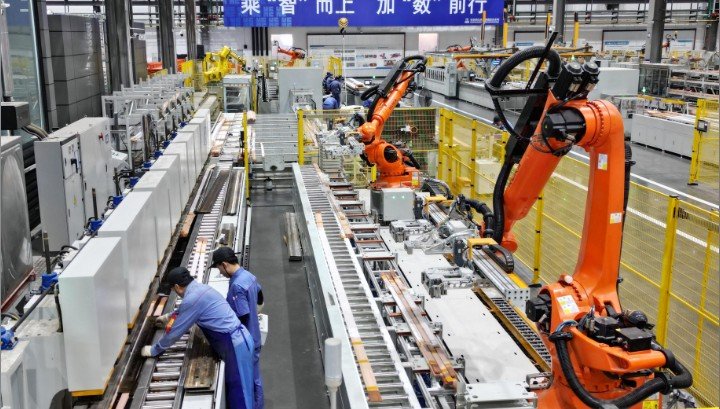
    For today’s China, AI is no longer merely a tool for improving efficiency, but has become a driver ushering in a new stage of economic development.

    This year’s government work report for the first time calls for creating new forms of “smart economy,” which can be seen as the next stage in the evolution of the digital economy. Experts say the country’s advantage lies in combining vast manufacturing capacity with expanding AI capabilities, turning technological advances into large-scale industrial value.

    The report also calls for improving AI governance, while the draft outline of China’s 15th Five-Year Plan highlights efforts to strengthen international dialogue and cooperation on AI.

    BEIJING, March 9 (Xinhua) — As artificial intelligence (AI) rapidly moves from laboratories to solve problems in factories, hospitals and supply chains, Chinese policymakers have set their sights high, anticipating the rise of a “smart economy.”

    At this year’s “two sessions” of China’s top legislature and top political advisory body, the government work report, submitted to the national legislature for deliberation last week, for the first time called for creating new forms of “smart economy.”

    Analysts observe that China is conveying a broader message: AI is no longer merely a tool for improving efficiency, but has become a driver ushering in a new stage of economic development.

    FROM “AI PLUS” TO “SMART ECONOMY”

    This wording in the key document marks a progression in policy thinking. In 2024, the government work report first introduced the “AI Plus” initiative, while the 2025 report advocated for its continued advancement. This year, it has moved further, framing AI as an engine of a broader economic transformation.

    Zhou Li’an, a member of the 14th National Committee of the Chinese People’s Political Consultative Conference and a professor at Peking University’s Guanghua School of Management, said the phrase “smart economy” reflects a profound shift in how AI is positioned in policy thinking.

    “The idea of a smart economy suggests that AI itself is increasingly becoming a foundational element of the economic system, shaping how resources are allocated, industries organized, and services delivered,” he noted.

    In practical terms, this year’s report outlines how this transition might unfold. It calls for faster application of new-generation intelligent terminals and AI agents, large-scale commercial application of AI in key sectors and fields, and the cultivation of new forms and models of AI-native business.

    It also emphasizes strengthening open-source AI ecosystems, expanding public cloud services, improving national coordination of computing power, and building hyper-scale intelligent computing clusters. New infrastructure like satellite internet and upgraded 5G Plus Industrial Internet Initiative is also highlighted.

    Taken together, these measures suggest that China’s AI strategy is entering a more comprehensive phase. Rather than focusing mainly on technological breakthroughs, policymakers are now underscoring the integration of AI with the real economy — from manufacturing and agriculture to public services and consumer markets.

    This broader orientation is reinforced in the draft outline of the 15th Five-Year Plan (2026-2030), which calls for advances in areas such as multimodal systems, AI agents, embodied AI and swarm intelligence.

    Behind these policies lies a clear economic logic. The “smart economy” can be seen as the next stage in the evolution of the digital economy. While digitalization centers on building networks, platforms and data flows, AI introduces systems capable of perception, decision-making and autonomous action.

    To put it simply, if digital infrastructure is the “nervous system” of the modern economy, AI is its “brain.”

    TURNING AI INTO INDUSTRIAL VALUE

    This distinction also explains the emphasis on scale. Both the government work report and the draft outline of the five-year plan stress commercialization and large-scale deployment, signaling that AI is expected to move faster into the mainstream of economic activity.

    China’s abundant data resources, comprehensive industrial system and vast application scenarios provide favorable conditions for the development of a “smart economy.”

    Another defining feature of China’s strategy is the emphasis on intelligent terminals and AI agents. In recent years, much of the global AI discussion has focused on large models. China’s policy framework, however, places equal weight on the devices and systems through which AI is deployed in real-world applications.

    For businesses, the true opportunity lies in vertical applications, especially in manufacturing.

    Qian Gang, board chairman of CITIC Pacific Special Steel Group and a national political advisor, said the company has developed more than 100 AI vertical models to support intelligent manufacturing, helping turn one of its plants into the first “lighthouse factory” in the global special-steel industry. A “lighthouse factory” is a world-leading, future-oriented manufacturing site that exemplifies the use of cutting-edge technology for transformative business and societal benefits.

    Similar experiments are unfolding across industries in China, the world’s second-largest economy. Experts say the country’s advantage lies in combining vast manufacturing capacity with expanding AI capabilities, turning technological advances into large-scale industrial value.

    “AI is now transitioning from a decision-supporting ‘copilot’ to an autonomous, outcome-delivering ‘agent,’ as the industry moves from a period of explosive technological growth into one of value realization,” said Jia Shaoqian, chairman of Hisense Group and a deputy to the 14th National People’s Congress.

    INFRASTRUCTURE FOR AI EXPANSION

    Infrastructure will play a decisive role in determining how quickly these applications spread. Training and operating advanced AI systems requires enormous computing resources and reliable energy supply. For that reason, the government work report emphasizes building hyper-scale intelligent computing clusters and improving coordination between computing power and electricity systems.

    This approach reflects China’s efforts to better coordinate its digital and energy resources. While computing demand is growing rapidly in major economic centers, many inland regions possess abundant renewable energy. Aligning computing infrastructure with these energy resources can help reduce costs, improve efficiency, and support the sustainable expansion of the AI industry.

    The report also highlights the development of satellite internet and the upgrading of industrial digital networks.

    Ma Kui, a national lawmaker and general manager of China Mobile’s Sichuan provincial branch, said the country’s vast southwest could play an increasingly important role in its computing infrastructure expansion.

    With abundant energy resources and growing demand, he noted, regions such as Sichuan and the neighboring Chongqing Municipality are well positioned to develop intelligent computing industries under China’s “East Data, West Computing” strategy.

    “But to unlock the region’s full potential, it is imperative to expand large-scale applications and strengthen links with the real economy,” Ma said.

    GOVERNANCE AND GLOBAL COOPERATION

    As China advances the development of a “smart economy,” policymakers are also placing greater emphasis on strengthening AI governance, a focus which is mentioned in both the government work report and the draft outline of the five-year plan.

    With AI systems increasingly capable of handling complex tasks and supporting automated decision-making, the need to strengthen governance frameworks in areas such as data security, privacy protection and algorithm oversight is becoming more evident.

    The report calls for improving AI governance, while the five-year plan highlights efforts to strengthen international dialogue and cooperation on AI, as well as accelerate the building of an open-source technology ecosystem and community with global reach. It also underscores expanding international cooperation in the digital and intelligent sectors, including deeper collaboration in e-commerce, mobile payments and smart-city development.

    China’s core AI industry was valued at more than 1.2 trillion yuan (about 174 billion U.S. dollars) in 2025, and featured over 6,200 AI companies, Minister of Industry and Information Technology Li Lecheng said on the sidelines of the national legislative session. He stressed that AI should ultimately “serve people, benefit people and remain under human control,” and function as a shared global public good.

    National legislator and tech expert Zhou Di said challenges such as AI technological barriers, cross-border data flows and ethical governance require greater international cooperation, so that the benefits of technological progress can reach more countries and help address challenges facing humanity as a whole.


  • From connectivity to intelligence, global mobile industry showcases new wave of innovation

    From connectivity to intelligence, global mobile industry showcases new wave of innovation


    Artificial intelligence (AI) is moving beyond its role as an added feature layered onto networks and terminals and is increasingly embedded within the infrastructure that shapes how digital systems operate.

    Analysts said the congress reflects a shift from concept to deployment. Francisco Jeronimo, vice president for Data and Analytics at IDC EMEA, told Xinhua that AI is moving beyond marketing slogans into everyday workflows.

    Over the past two decades, mobile technology expanded connectivity from isolated devices to interconnected systems. The current transition extends that trajectory by embedding intelligence throughout those connections.


    BARCELONA,  (Xinhua) /Flowerbudnews:  — For years, the Mobile World Congress (MWC) was defined by what could be seen: sleeker handsets, foldable screens and sharper cameras.

    At MWC 2026, the most consequential innovations are harder to photograph.

    Under the banner of “The IQ Era,” this year’s gathering — marking 20 years since MWC made Barcelona its permanent home — signals a shift in the technological foundation itself. Artificial intelligence (AI) is moving beyond its role as an added feature layered onto networks and terminals and is increasingly embedded within the infrastructure that shapes how digital systems operate.

    5G EVOLUTION CONTINUES, AI FORGES AHEAD

    Despite the strong emphasis on AI, industry leaders stressed that the 5G journey is still unfolding.

    In his opening keynote, GSMA Director General Vivek Badrinath urged operators to “complete the 5G journey,” noting that 5G Standalone could add up to 187 billion U.S. dollars in additional mobile revenues and that markets with broader 5G adoption are already seeing stronger growth.

    He also described telecom operators as “a foundational layer of the AI stack,” highlighting the role of networks in enabling real-time intelligence at the edge for billions of users.

    China Mobile announced a 5G-Advanced initiative aimed at strengthening network performance to support AI devices, connected vehicles and immersive services, reflecting how operators are adapting to evolving usage patterns.

    Network architecture is expanding as well. Andrea Folgueiras, Global Chief Technology and Information Officer of Telefonica, said the company is exploring direct-to-device satellite technologies to better understand how satellite connectivity can complement advanced mobile networks and help meet connectivity needs in remote areas of Europe.

    Analysts said the congress reflects a shift from concept to deployment. Francisco Jeronimo, vice president for Data and Analytics at IDC EMEA, told Xinhua that AI is moving beyond marketing slogans into everyday workflows.

    “In the last couple of years, it was all about the hype. Now it’s about what is already happening,” he said, adding that enterprises adopting AI-assisted processes are unlikely to revert to previous models.

    He dismissed comparisons to the dot-com bubble, arguing that current AI investments are supported by existing infrastructure and practical productivity gains.

    As networks expand both capacity and coverage, AI is increasingly shaping not only how those networks are used but what they enable.

    FROM HARDWARE SPECTACLE TO STRUCTURAL CHANGE

    The exhibition halls still feature eye-catching devices. Honor unveiled a “Robot Phone” integrating embodied AI interaction and advanced imaging capabilities.

    At the launch event, Honor Chief Executive Officer Li Jian said the company’s newly proposed AHI (Augmented Human Intelligence) concept emphasizes a “people-centered” approach, integrating intelligence quotient with emotional intelligence to enhance human adaptability in a rapidly changing world.

    Lenovo presented AI-enabled enterprise devices designed to embed intelligent assistance directly into workplace workflows, illustrating how manufacturers are positioning hardware as part of broader AI systems.

    Across the exhibition floor, devices are increasingly functioning as entry points to distributed intelligence.

    Behind the screens, companies are investing in computing infrastructure.

    Huawei showcased AI computing solutions based on its Atlas platform, highlighting the importance of scalable training and inference capabilities for industrial AI deployment. The emphasis was on compute architecture designed to support large models and real-time analytics.

    Enterprise hardware makers also highlighted AI-ready terminals for logistics, manufacturing and energy sectors, where reliability and system integration are essential.

    MWC 2026 reflects a broader recalibration of industry priorities. Attention is shifting toward distributed computing, automated workflows and network architectures designed to support intelligent coordination.

    Over the past two decades, mobile technology expanded connectivity from isolated devices to interconnected systems. The current transition extends that trajectory by embedding intelligence throughout those connections.

    If the previous phase was defined by “everything connected,” the emerging phase is increasingly defined by “everything intelligent.”


    (Video reporters: Zhang Huan, Meng Dingbo, Chen Yuzheng and Ismael Peracaula; video editors: Wang Houyuan, Luo Hui and Zhang Ning)


  • Untitled post 68813

    Flowerbudnews

    The Federal Government on Friday, called for the development of ethical guidelines for Artificial Intelligence (AI) use in journalism.
    The Minister of Information and National Orientation, Mohammed Idris, made the call at the 2025 World Press Freedom Day organised by Konrad Adenauer Stiftung (KAS) in conjunction with Centre for Journalism Innovation and Development (CJID) in Abuja.

    The News Agency of Nigeria (NAN) reports that the event, entitled: “Reporting in the Brave New World– The Impact of Artificial Intelligence on Press Freedom and the Media,” had different media personalities in attendance.

    Idris also called on the stakeholders on the need to invest in training journalists to effectively work with AI tools

    The minister, who was represented by the Director, Press, Public Relations and Protocol in the ministry, Dr Suleman Haruna, equally advocated for transparency in Al-generated content.

    He urged the stakeholders in the industry to support the upcoming UNESCO Media and Information Literacy Institute and promote critical thinking and media literacy among citizens.
    “As we embrace AI’s potential to transform journalism, we must establish appropriate legal safeguards and ethical frameworks,” he said.
    According to him, for society to be free and for democracy to thrive, press freedom is essential.
    The minister, however, said that “freedom must come with responsibility.”

    He said the line between human and Al-generated content was becoming increasingly blurry, raising questions about transparency, accountability, and bias in reporting.
    “Newsrooms are increasingly having to disclose when AI is used in content creation, as evidenced by cases where media outlets used AI without proper disclosure,” he said.
    Idris said the Nigerian government was committed to supporting the responsible adoption of AI in journalism.
    “We recognise that our future is not necessarily man versus machine, but man with machine.
    “AI innovation should underscore the excellence of our newsrooms and the vision that constantly drives us,” he said.
    He said the Federal Government is working towards developing a national policy framework for AI in media, one that promotes innovation while safeguarding press freedom and journalistic integrity.
    Akintunde Rotimi, Chairman, House of Representatives Committees on Media and Public Affairs, expressed concern on how to preserve the integrity of journalism in a world increasingly dominated by artificial intelligence.
    “Let us not be deceived: technology is a tool, not a conscience.
    “In the face of rapid advancements, AI has proven capable of generating grammatically perfect articles, composing music, and processing vast amounts of data with breathtaking speed.
    “But what it cannot replicate is moral clarity, human empathy, or the moral courage to challenge power; all of which lie at the core of the journalistic vocation,” he said.
    According to him AI undeniably offers great promise, such as accelerating reporting, enhancing verification, and broadening the scope of dissemination.
    However, it also introduces risks: the amplification of biases inherent in flawed training data, the erosion of editorial independence through automated processes, and an alarming surge in misinformation that can outpace truth itself,” he said.
    He said the rise of AI-generated false news is not just a theoretical concern but a reality that has already begun to impact societies globally.
    Rotimi said the occasion presented the opportunity to collectively reflect on the challenges and triumphs of the press, and to recommit to upholding the very tenets of free expression, public accountability and democratic governance, which are fundamental to the advancement of civil society.
    The Resident Representative of KAS, Marija Peran, in her welcome remark, said in an era where AI increasingly shapes the world, everyone is confronted with novel challenges and opportunities.
    “AI possesses the potential to fundamentally transform the manner in which we gather, process, and disseminate information.
    “It can empower journalists to work with greater speed and efficiency, yet it also introduces risks that may imperil press freedom,” she said.
    Peran said enhancing journalistic practices through AI requires a critical balance between technological efficiency and ethical responsibility to ensure that the core values of truth and integrity are upheld.
    “We shall examine how AI influences journalistic practices, the ethical questions that arise, and how we can ensure that press freedom is preserved in a future dominated by technology.
    “The World Press Freedom Day is a great opportunity to assess these questions and address them, especially with press freedom declining worldwide.
    “We must, always, defend the media from attacks on their independence,” she said.
    She said the organisation would continue to support strong and independent media worldwide,
    The Executive Director of CJID, Akintunde Babatunde, said the World Press Freedom Day serves as a reminder to governments of their commitment to uphold press freedom.
    NAN reports that the World Press Freedom Day is celebrated on May 3 annually.