
Category: Health and Environment

  • World Environment Day: NAGGW tasks Nigerians on massive tree planting

    World Environment Day: NAGGW tasks Nigerians on massive tree planting

    By Abigael Joshua

    The National Agency for the Great Green Wall (NAGGW)has called on Nigerians to engage in massive tree planting to combat desertification, land degradation and worsening impacts of climate change.

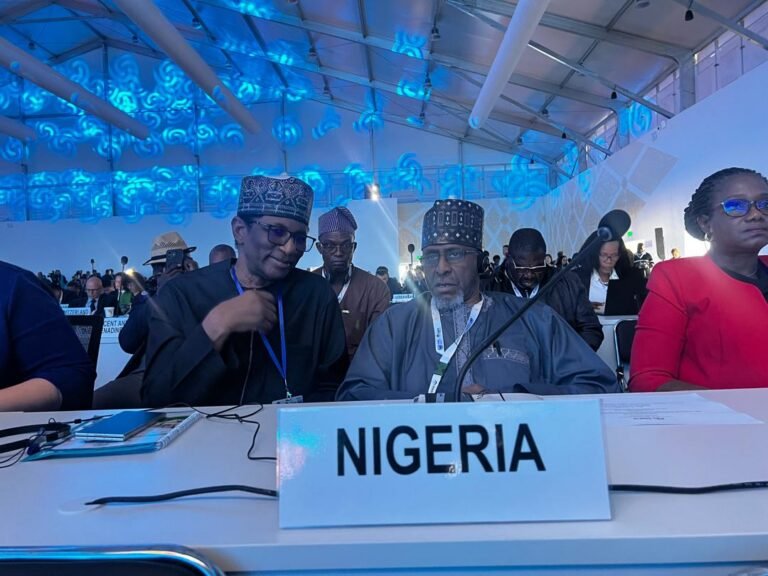
    Mr Saleh Abubakar,the Director-General of NAGGW, made the call at an event to mark the 2026 World Environment Day.

    Abubakar said that tree planting aligns with the massive environmental drive of the administration of President Bola Tinubu to combat desertification, land degradation, and climate change.

    He said that trees help reverse land degradation, halt desert encroachment, and protect soils from severe erosion.

    “World Environment Day is the United Nations’ principal vehicle for encouraging worldwide awareness and action for the protection of environment,” he said.

    He also urged Nigerians to participate in environmental stewardship by adopting sustainable practices in their local communities.

    “NAGGW will continue to redouble efforts towards tree planting, agroforestry, and empowering local communities in Nigeria’s frontline states to build climate resilience,” he said.

    Restoring degraded landscapes, he said, is not just an ecological mission but a way to secure food, generate income and foster sustainable livelihoods for Nigerians.

    He said that restoration of degraded landscapes are done mainly in the 11 front line states of Borno, Bauchi, Gombe, Adamawa, Jigawa, Kano, Katsina, Zamafara, Sokoto, Kebbi States and Yobe.

    He recalled that as part of efforts to ensure the success of the Renewed Hope Agenda of President Bola Tinubu, the agency, in 2025, launched a strategic, nationwide campaign.

    “This campaign fostered the planting of 50 million date palm seedlings across 11 frontline states to fight desertification, create green jobs and boost the nation’s Gross Domestic Product (GDP).

    “Planting fruit trees, such as dates, not only reclaims the land but also boosts local economies and supplements household nutrition.

    “This aligns with an ambitious campaign aimed at planting billions of indigenous trees to preserve native biodiversity across the country,” the d-g said.

    Abubakar said that trees naturally absorb carbon dioxide emissions and release oxygen, helping to neutralise the impact of greenhouse gases.

    “This is also essential for states fighting dryland degradation and advancing Sahara desert encroachment,” he added.(NAN)(www.nannews.ng)

  • NEMA says strengthening disaster risk governance is a shared responsibility

    NEMA says strengthening disaster risk governance is a shared responsibility

    NEMA says strengthening disaster risk governance is a shared responsibility

    The National Emergency Management Agency (NEMA) says strengthening disaster risk governance is a shared responsibility, therefore, the need to focus more on prevention than reaction.

    The Director-General of NEMA, Mrs. Zubaida Umar, said this at the flag off of the 2026 National Preparedness and Response Campaign (NPRC) on Flood Disaster and Related Hazards in Anambra State at the Deputy Governor’s Conference Hall, Government House, Awka on Friday.

    Represented by the South-East Zonal Director, Mr. Walson Ibarakumo, the director-general noted that the campaign was part of the Agency’s nationwide efforts to downscale flood early warning information to the affected communities and strengthen stakeholder engagement.


    She noted that the formal launch of the 2026 National Preparedness and Response Campaign for flood and related hazards in Anambra State marked the beginning of series of targeted flood mitigation efforts and for all stakeholders’ to be carried along.

    She further noted that the campaign is designed to drive early and coordinated action to protect lives and livelihood during the 2026 rainy season.

    The NEMA boss said that “today’s engagement will strengthen preparedness, reduce the impact of recurrent floods and safeguard livelihoods.”


    Earlier in his opening address, the Deputy Governor of Anambra State, Dr Onyekachukwu Ibezim, appreciated all stakeholders in attendance including NEMA for the stakeholders engagement.

    Ibezim commended NEMA for timely flag off of the flood downscaling programme to identified flood prone areas and communities in the state.

    “I must commended the Director-General of NEMA, Mrs Zubaida Umar, for a comprehensive disaster risk management aimed at reducing death and losses in the state,” he said.


    The deputy governor said that flooding in the state had become an annual occurrence.

    He mentioned some of the long term plans of the state, which included: building dams, dredging rivers, building retention walls and supporting high risk flood areas with solar lights for effective management of IDP camps among others.

    During the event, a technical presentation on disaster preparedness and risk reduction strategies on the outcome of the 2026 Seasonal Climate Prediction (SCP) was delivered by Dr. Evans Ugoh.


    Ugoh highlighted the high and moderate flood risk Local Government Areas (LGAs) and communities in the state.

    He encouraged all participants to take early preparedness actions to reduce vulnerabilities and enhance mitigation both structural and non-structural measures including organising simulation exercise and sensitisation programme.

    The state commissioners, Local Government Chairmen and other stakeholders in attendance made significant inputs during the meeting.

    The stakeholders’ engagement and flag-off was successful as it was observed that Anambra State is better positioned to reduce flood deaths and losses in 2026.

  • Enugu Govt. Tasks Directors of Private Hospitals on Collaboration, Data Reporting, Healthcare Development

    Enugu Govt. Tasks Directors of Private Hospitals on Collaboration, Data Reporting, Healthcare Development

    Enugu Govt. Tasks Directors of Private Hospitals on Collaboration, Data Reporting, Healthcare Development

    The Enugu State Government has tasked Directors of private hospitals in Enugu State on strengthening collaboration with the government by improving service data reporting and ensuring full compliance with registration requirements.

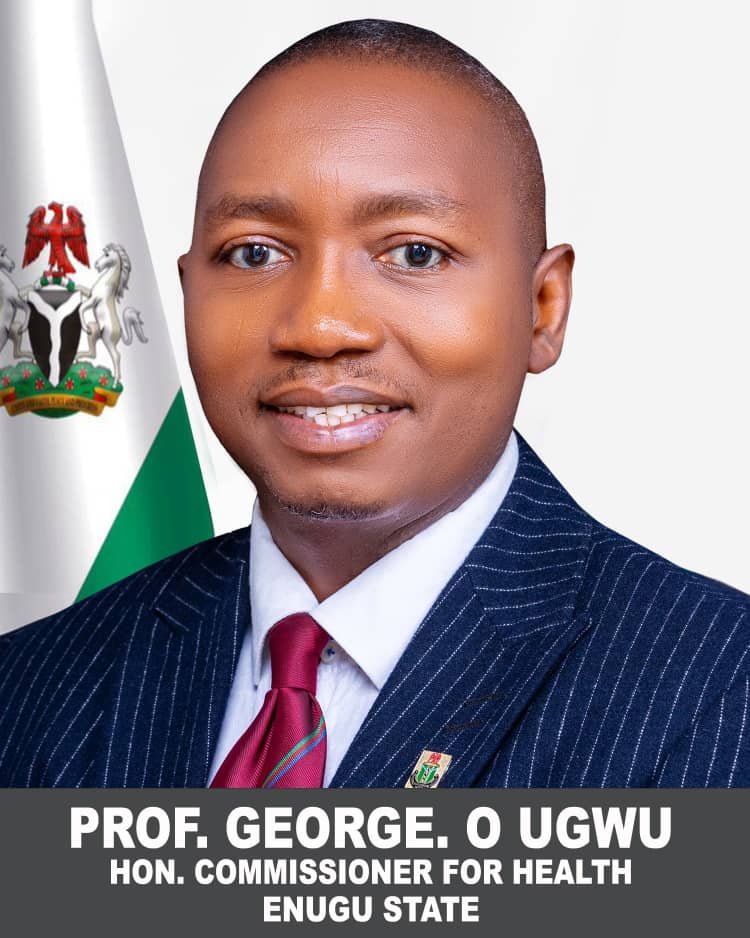
    The Commissioner for Health, Prof. George Ugwu, gave the task at the weekend in Enugu during an engagement with the Guild of Medical Directors of Private Hospitals in Enugu State.

    Ugwu, who spoke on the theme: “Collaboration on Healthcare Regulations and Data Reporting”, described private hospitals as “pillars of healthcare” whose daily work save lives and shapes the health system.


    He emphasised that private hospitals are often the first point of care for citizens, adding that reporting of service data remained a major challenge.

    The commissioner warned that incomplete data leaves private hospitals underrepresented in policy, resulting in fewer resources and weaker influence in health governance.

    Ugwu also outlined Gov Peter Mbah’s vision to strengthen the health system in the state, including the on-going work on the 300-bedded International Hospital.


    He revealed Gov. Mbah’s plans to position Enugu as a hub for manufacturing health products, medicines and equipment as well as ensuring both public and private hospitals have easy access to these products.

    The commissioner further reiterated that all hospitals operating within the state must be fully registered and up-to-date with renewals at the State Ministry of Health.

    He noted that inspections on registration and up-to-date renewal of operating license had already commenced in Enugu South council area to weed out quackery and non-registered facilities.


    Speaking, Dr. Ifeoma Otiji, the State Malaria Elimination Programme Coordinator, noted that about 40 per cent of healthcare in the state is accessed through private hospitals.

    Otiji said, “Service data is more than statistics; it is the evidence that guides government decisions on funding, staffing, training and infrastructure.”

    She reiterated that without their data, state health statistics remained incomplete; undermining programmes such as malaria control, immunisation, tuberculosis, HIV and non-communicable diseases like hypertension and diabetes.


    She urged hospital directors to commit to timely and accurate reporting, saying: “Without data from the private hospitals, the state is being short-changed.”

    Responding, the Chairman of the Guild of Medical Directors, Dr. Callistus Ene, assured the commissioner that they are ready to collaborate fully with the state government.

    Ene said that most of their members are registered and up-to-date with renewals, and pledged that members would commit to complete and timely service data reporting, recognising its importance for policy.

    The meeting concluded with a shared commitment to strengthen data systems, enhance collaboration and ensure that private hospitals are fully represented in shaping healthcare governance in Enugu State.

  • Erosion Cuts-Off Oji–Awgu Federal Road as Onwuegbu, Anyaegbudike Lead Emergency Inspection Tour

    Erosion Cuts-Off Oji–Awgu Federal Road as Onwuegbu, Anyaegbudike Lead Emergency Inspection Tour

    Erosion Cuts-Off Oji–Awgu Federal Road as Onwuegbu, Anyaegbudike Lead Emergency Inspection Tour

    Erosion menace has cut-off Oji–Awgu Federal Road and halting vehicular movement along the critical road corridor serving as major transport link between many affected communities in Oji River and Awgu council areas in Enugu State.

    It would be recalled that the latest development followed Friday night’s downpour and the people of the area found out the devastated and cut-off road early on Saturday.


    Leading leaders of the two local government areas on emergency inspection tour of the road, the Member representing Aninri/Awgu/Oji River Federal Constituency, Engr. Anayo Onwuegbu, described the incident as unfortunate and worrisome.

    Onwuegbu noted that the portion of the section of the Oji–Awgu Federal Road had been completely cut-off by severe erosion following the heavy rainfall.


    According to him, this is barely 48 hours I raised concerns over the growing threat posed by erosion at the affected road.

    Assessing the damaged portion of the section of the road, the Federal lawmaker appealed to the Federal Ministry of Works to treat the situation as an emergency.

    Onwuegbu, who is a Chieftain of the All Progressives Congress (APC), stressed an urgent need for immediate intervention and reconstruction to restore connectivity and ameliorate the suffering of the people.


    Corroborating, the Chairman of Oji River Local Government Area, Hon. Greg Anyaegbudike, commended Onwuegbu for his prompt response to the incident.

    Anyaegbudike, who is a Chieftain of the APC, appreciated the Federal lawmaker for facilitating the Federal Controller of Work, Enugu State immediate visit to the site and road.

    The chairman urged him to continue engaging the Federal Ministry of Works Headquarters in Abuja to secure approval for urgent reconstruction works on the road.


    Speaking at the site, the Federal Controller of Works, Enugu State, Engr. Smart Emesim, expressed shock at the rapid deterioration of the road infrastructure.

    Emesim attributed the erosion damage to the improper termination of culvert outlets, which accelerated water flow and undermined the structural integrity of the road embankment.

    According to him, the affected drainage structures were not included in the original contract awarded to the company that constructed the road.


    He assured that the Federal Ministry of Works would take swift action and initiate the necessary processes to address the situation with utmost urgency.

    During the inspection, the delegation assessed and examined four additional locations along the same road corridor that are also under serious threat from advancing erosion.

    The inspection team also included Member representing Oji River State Constituency in the Enugu State House of Assembly, Hon. Osita Eze and the Chairman of Awgu Local Government Area, Hon. Uche Okolo, among other leaders within the area.

    The joint inspection and assessment, which concluded with a group photograph at the affected site, underscored a united front to push for urgent intervention and long-term solutions to ensuring safe movement of people and goods along the road.

  • Enugu Govt. tasks stakeholders on aggressive dissemination of free malaria testing, treatment campaign

    Enugu Govt. tasks stakeholders on aggressive dissemination of free malaria testing, treatment campaign

    Enugu Govt. tasks stakeholders on aggressive dissemination of free malaria testing, treatment campaign


    Enugu Govt. tasks stakeholders on aggressive dissemination of free malaria testing, treatment campaign


    The Enugu Government State has tasked stakeholders and partners on aggressive dissemination of the state free malaria testing and treatment campaign messages.


    The Commissioner for Health, Prof. George Ugwu, gave the task on Monday in Enugu while addressing stakeholders and partners during a meeting of the state Malaria Technical Working Group (TWG).


    Ugwu said that the need to totally eliminate malaria had been brought to the front burner even at the state executive council.


    According to him, this is the level of seriousness the state attach to total malaria elimination.


    He said, “I task you to bring out brilliant ideas on how we ensure the state’s total malaria elimination through the ongoing campaign on free malaria testing and treatment.


    “The state government want the campaign on free malaria testing and treatment to go viral and be a household slogan and general knowledge of all.


    “Everybody living in the state must know and practice entering the nearby Primary Healthcare Centres close to them for free testing and if the person is positive, treatment will commence.”


    Corroborating, Prof. Eddy Ndibuagu, a Professor of Community Medicine in Enugu State University Teaching Hospital, Parklane, said there was a need to use community-based organisations and faith-based organisations to push the message.


    Ndibuagu noted that for the message needed to get down and the people own it and further carry out the advocacy.


    Speaking, the Director of Public Health, Dr Uchenna Okenwa, said that eliminating malaria would be very effective through free malaria testing and treatment.


    Okenwa noted that there is a need to deal with mosquito larvae within the environment by keeping a clean and healthy environment.


    The State Coordinator of World Health Organization (WHO), Dr Adaeze Ugwu, commended the stakeholders and partners for providing time and resources to brainstorm and come out with actionable plans to eliminate malaria.


    “WHO will continue give its support and ensure all necessary assistance is given,” Ugwu said.


    In a message, Mr Ozioma Nwobodo, State Coordinator of Johns Hopkins University Affiliate (Jhipiego), said that the organisation was committed to provide professional partnership to Enugu State.


    Nwobodo noted that Jhipiego would scale down its support especially on message spread and behavioural change of all pregnant women and their families in the state.


    The Programme Manager of Malaria Elimination Programme, Dr. Ifeoma Otiji, said that the meeting was meant to take stock of the challenges, gaps and areas covered so far.


    Otiji noted that the fight against the menace of malaria and its elimination needed concerted stakeholders planning and action coordination.


    She noted that stakeholders must streamline activities and broaden spectrum of approach using the free malaria testing and treatment campaign.

  • Enugu 4-tier health system built on inclusive, affordable, quality healthcare delivery – Enugu Govt.

    Enugu 4-tier health system built on inclusive, affordable, quality healthcare delivery – Enugu Govt.

    Enugu 4-tier health system built on inclusive, affordable, quality healthcare delivery – Enugu Govt.


    The Enugu State Government says that the state 4-tier health system is built on inclusive, affordable, quality and international standard healthcare delivery based on the Sustainable Development Goals (SDGs).


    The state Commissioner for Health, Prof. George Ugwu, said this at the weekend in a lecture he delivered at the Researching Africa Conference 2 held at Princess Alexandria Hall in the University of Nigeria, Nsukka (UNN).


    The conference was organised by UNN’s Department of Sociology and Anthropology in partnership with Insight Health Group.


    The lecture was themed: “Three Years of Bold Reforms Across Primary, Secondary, Tertiary, and Emerging Quaternary Healthcare in Enugu State by Gov.
    Peter Mbah.”


    Ugwu said that Gov. Mbah’s current huge investment in healthcare infrastructure is not merely a physical investment; it is an investment in human development, social protection, productivity, and a sustainable future.


    He noted that the health-loving governor had envisioned a functional 260 Type-2 Primary Healthcare Centres (PHCs) in each political ward (first-tier) and General/Cottage Hospitals scattered in the state’s 17 council areas (second-tier).


    He said that there is two tertiary or teaching hospitals (third-tier) and the upcoming 300-bedded International (Quaternary) Hospital, Enugu equipped with modern state-of-the-art medical equipment to serve as international medical tourism hub (four-tier).


    Ugwu noted that the government had created patronage and access to these health facilities for residents through an all-inclusive Universal Health Coverage (UHC) via the state health insurance scheme of N12,000 annually per resident.


    He encouraged all residents to embrace health insurance.


    According to him, the Type-2 PHCs in all 260 political wards provides quality healthcare services just a walking-distance to residents’ homes both in rural and urban areas.


    He noted that the PHCs, which some have started operation and others at various stages of completion, have clean water/sanitation facilities, maternal and child health systems, solar power, immunisation support and doctors/nurses quarters among others.


    The commissioner said that the state government recently recruited an additional 2,250 health workers to strengthen the PHCs statewide and digitalised the PHCs with Electronic Medical Record (EMR) system.


    Ugwu said that most of the General/Cottage hospitals are included in our renovation programme, received modern diagnostic equipment, expanded surgical capacity, emergency-care infrastructure, strengthened clinical laboratories, modern ambulances and referral systems.


    He said that the state have two tertiary/teaching hospitals – Enugu State University Teaching Hospital (ESUTH), Parklane, Enugu and the State University of Medical and Applied Sciences (SUMAS) Teaching Hospital, Igbo-Eno, Nsukka.


    “In ESUTH, we have brand-new Twin 6-Floor Laboratory and Clinical Complex; 7-Floor Nursing Complex with MRI Diagnostic Suite and 2-Floor Accident and Emergency Department with new diagnostic and surgical wing linked to a state emergency-response.


    “SUMAS Teaching Hospital, Igbo-Eno, Nsukka has been remodelled and expanded, and is now recruiting suitable medical and allied professionals to commence full-scale services,” he said.


    He said that the state’s flagship healthcare facility – Super-Specialist 300-bedded International Hospital, Enugu – was designed to curb outbound medical tourism from Africa, with the latest state-of-the-art equipment and seasoned medical professionals.


    On training of healthcare personnel, Ugwu said that the state secured full accreditation for Awgu School of Midwifery; Enugu State College of Nursing Sciences in Enugu and Oji River, even as the government secured WHO equipment support for them.


    “Gov. Mbah did an upgrade at Awgu School of Midwifery 150-bed hostel, another newly-constructed student accommodation, solar-lights, library stocked with current books and ICT; clinical demo room upgrade, modern classroom blocks with digital learning facilities among others.”


    He noted that due to the state government current huge investment and expansion of health facilities, the Medical and Dental Council of Nigeria (MDCN) approved increase of annual intake of medicine and surgery students to 350 in ESUTH Teaching Hospital.


    Ugwu said that the state established a Public Health Emergency Operations and plans to link it with ambulances and emergency control centre as well as an ultra modern central medical store for medical supply management and secured storage.


    He said, “The strong health systems/tiers have enabled the state to be at the forefront of achieving the six health related SDG goals, which included: SDG Goal 1 – No Poverty – as out-of-pocket health costs are a leading driver of household poverty.


    “SDG Goal 3 – Good Health and Well-being – reduced mortality, better maternal outcomes and UHC; and SDG Goal 5 – Gender Equality – maternal services and women-led workforce strengthen women’s agency.


    “SDG Goal 8 – Decent Work and Growth – recruitment of 2,250 workers and a healthier workforce expand productivity; SDG Goal 10 – Reduced Inequalities – ward-level PHCs close rural; and SDG Goal 11 – Sustainable Cities and Communities – resilient health infrastructure makes for safer communities.”


    The Commissioner of Health, Prof. George Ugwu, who is also a well respected Professor of Medicine at UNN, was applauded for his immense contributions to research and improvement of health systems and programmes.


    The lecture, which left the Princess Alexandria Hall filled up with top academics, was attended by the Vice-Chancellor of UNN, Prof. Simon Ortuanya, represented by his deputy, members of university council and community among others.

  • Enugu Govt. tasks stakeholders on grassroots awareness on free testing, treatment of malaria

    Enugu Govt. tasks stakeholders on grassroots awareness on free testing, treatment of malaria


    The Enugu State Government has tasked stakeholders and partners on massive malaria elimination awareness campaign at the grassroots especially on free testing and treatment of malaria in the state.


    There is an ongoing free testing and treatment of malaria in all government-owned health facilities and some private health facilities in the state.


    The Commissioner for Health, Prof George Ugwu, gave the task on Friday at the 2026 1st Quarter Malaria’s Advocacy, Communication and Social Mobilisation (ACSM) Group Meeting held in Enugu.


    Represented by Dr Ifeyinwa Ugwunweze, the Local Government Health Secretary, Enugu-East LGA, the commissioner said that the state was pursuing it total malaria elimination with the overwhelming awareness needed.


    According to him, our health-loving Governor, His Excellency, Dr Peter Ndubuisi Mbah, is optimist that Enugu State can achieve zero malaria prevalence within few years.


    “At this stage, we, both stakeholders, partners and everybody concerned to stop the menace of malaria, are taking the message of free testing and treatment of malaria to the hinterlands, to our rural people.


    “For the rural people to know that it is their right to demand and access free testing and treatment of malaria in the Primary Healthcare Centres close to their homes.


    “We are sending massages of other necessary things to be done to eliminate malaria by good environmental cleanliness and always sleeping under insecticide treated nets, which some have already,” he said.


    The commissioner appreciated various stakeholders and partners for their huge contributions to malaria elimination in the state.


    He noted that there was need for more aggressive work to be done by getting every resident to key in into the malaria elimination focus of the state government to hit its target.


    Corroborating, Igwe Emmanuel Anichebe, who represented the Enugu State Traditional Rulers’ Council, said that the royal fathers would give the government all support to drive the message to all communities in the state.


    “Royal fathers will drive the message home and ensure that government-owned health facilities in our communities are up and doing in the state’s free testing and treatment of malaria campaign,” Anichebe noted.


    Speaking, the Chief Imam of Enugu, Sheik Ibrahim Ugwu, assured that religious leaders would work with the government on the awareness on malaria elimination, adding: “The People’s lives will be better protect”.


    In a message, Mr Ozioma Nwobodo, State Coordinator of Johns Hopkins University Affiliate (Jhipiego), assured that the organisation would continue to provide professional partnership to Enugu State.


    Nwobodo noted that Jhipiego would scale up it support not only on malaria elimination but other aspect of health to improve the quality of lives of the residents of the state.


    Earlier, the Programme Manager, Enugu State Malaria Elimination Programme, Dr Ifeoma Otiji, noted that the stakeholders and partners of the programme had created huge visibility and discourse on malaria as a state emergency.


    Otiji noted that the ACSM Group in the first quarter had put malaria prevention messages in the front burner and ensured accurate message of testing malaria first before treatment was imbibed by all.


    “We achieved sending tenths of radio/television and print messages as well as discussions and fora on how residents can ensure malaria elimination and then taking advantage of the free testing and treatment of malaria.


    “The group did lots of council areas and community engagements/advocacy and ensure that all government-owned health facilities and some private-owned health facilities are delivering the free testing and treatment of malaria.


    “Going forward, we are going to deepen our reach into the hinterlands in rural communities; do more group and interpersonal communication about malaria elimination,” she said.

  • NAFDAC Urges Stakeholders To Lead Vigilance On Antimicrobial Resistance, Adverse Drug Reactions

    NAFDAC Urges Stakeholders To Lead Vigilance On Antimicrobial Resistance, Adverse Drug Reactions

    NAFDAC Urges Stakeholders To Lead Vigilance On Antimicrobial Resistance, Adverse Drug Reactions

    The National Agency for Food and Drug Administration and Control (NAFDAC) has called on stakeholders and Nigerians to lead vigilance against Antimicrobial Resistance (AMR) to medicines/drugs and Adverse Drug Reactions (ADR).

    The Director-General of NAFDAC, Prof. Mojisola Adeyeye, made the call on during a one-day Pharmacovigilance Workshop and Stakeholders Town Hall Meeting in Enugu.

    Represented by NAFDAC’s Director, South-East Zone, Dr Festus Ukadike, the director-general noted that the gravest consequences of irrational medicine use today is AMR.

    She explained that the misuse and overuse of antibiotics had accelerated the emergence of resistant microorganisms that no longer respond to conventional treatment.


    “This means that infections previously treatable with common antibiotics are becoming increasingly difficult and expensive to manage.

    “If urgent action is not taken, antimicrobial resistance may reverse decades of medical progress and place humanity at serious risk.

    “This is why Pharmacovigilance is extremely important. Pharmacovigilance refers to the science and activities relating to the detection, assessment, understanding, and prevention of adverse effects or any other medicine-related problems.

    “In simple terms, Pharmacovigilance helps us ensure that medicines remain safe and effective even after they have been approved and released into the market,” she said.


    Adeyeye noted that no medicine is completely free from side effects.

    “However, through effective Pharmacovigilance systems, healthcare professionals and patients can identify harmful reactions early, report them appropriately, and help regulatory authorities take necessary actions to protect the public,” she said.

    She said that Pharmacovigilance remained a core mandate of the agency, adding that stakeholders and general public should play active part in monitoring AMR and ADR to ensure effectiveness of medicine and treatment.

    Speaking, the Chairman, Enugu State Traditional Rulers’ Council, Igwe Samuel Asadu, commended NAFDAC for the workshop, while urging the agency to put more efforts in curbing sales of fake medicines in the hinterlands.

    Asadu said that Pharmacovigilance was needed more in the hinterlands of the state to stop people paddling fake medicines and “selling outright chalk as medicine in villages in the state”.

    He gave the commitment of royal fathers in the state in providing necessary support to NAFDAC to check paddlers of fake medicines, “as we see our people die due to their activities.”

    Corroborating, the State Coordinator of World Health Organization (WHO), Dr Adaeze Ugwu, said that the organisation would continue to support NAFDAC in the agency’s resolve to strengthen food and healthcare in the country.


    Also, Dr Oliver Ezemba, Chairman, Nigerian Association of Patent and Proprietory Medicine Dealers (NAPPMED), urged everybody to get concerned on the issues of AMR and ADR to guarantee quality medicines for everyone.


    Ezemba called on Nigerians to imbibe the habit of reporting any irregularities observed while using a medicine to NAFDAC for proper investigation, which would serve the benefit of many Nigerians using same medicine.


    The participants asked questions on AMR and ADR as well as made pledge on reporting any suspectable AMR or ADR case through the NAFDAC’s Med Safety Mobile App using their cellphone or computer set.


    In the workshop, a presentation was made on “Need for Effective Pharmacovigilance by All’, delivered by Mr Chidi Uche and Mrs Ogechi Udeh, who are NAFDAC officials.

  • Enugu Govt, NNRA partner to ensure radiation safety in health facilities

    Enugu Govt, NNRA partner to ensure radiation safety in health facilities

    Enugu Govt, NNRA partner to ensure radiation safety in health facilities

    The Enugu State Government and the Nigerian Nuclear Regulatory Authority (NNRA) have partnered to set a minimum benchmark on radiative equipments to ensure safety in health facilities within the state.

    In an address on Wednesday in Enugu at the 2026 Stakeholders’ Meeting on Radiative Safety, the state Commissioner for Health, Prof. George Ugwu, said that state government places “safety and protection first”.

    Ugwu noted that the state needed to look inwards into radiative equipments in health facilities and ensure they comply with NNRA safety procedures, framework and periodic regulatory inspection.

    “For Enugu State Government, we strive to get the best for our people and today’s stakeholders’ meeting is to support the huge investment in healthcare delivery of our health-loving Governor, His excellency, Dr Peter Ndubuisi Mbah.

    “We want all health facilities and radiographers operating within the state to abide with NNRA guidelines and standards of radiative safety.

    “In Enugu State, protection and safety of lives in all its ramifications including radiative safety remains paramount,” he said.

    The commissioner noted that the 300-bedded international hospital, which would start running soon, had received seven state-of-the-art medical equipment, and these equipment had undergone NNRA inspection and certification for use.

    Earlier, the Director-General of NNRA, Dr Yau Idris, commended the state government for its robust intervention in healthcare and insisting that quality and safety is never compromised in order to serve the people better.

    Represented by the acting Zonal Coordinator of NNRA in South-East, Rev. Sis. Chioma Nwankwo, the director-general said that the agency had continued to ensure that Nigerians are protected from ionizing radiation nationwide.

    According to him, we live in an era where radiation technology is a cornerstone of modern medicine, such as cancer radiotherapy and others.

    He called on strengthening regulatory compliance and partnership, cultivating a proactive safety culture, collaborative training and workforce empowerment as well as integrating radiation protection into quality healthcare.

    The director-general noted that the goal of a safe, effective and justified use of radiative equipment is a shared responsibility by every one.

    “Let us commit today to a culture of compliance – not because we fear the regulatory authority, but because we value the patients, workers, public, environment and our future,” he added.

    The meeting featured presentation on “The NNRA – What it Represents: It Charters”, by a Chief Technical Officer of NNRA, Mr Simon Idakwoji.

    Other presentations included: “Radiation Protection in Medicine” by Head, Technical Unit NNRA, Rev. Sis. Chioma Nwankwo; and “NNRA Authorization Procedure” by NNRA Technical Officer, Mr Kingsley Agomuo.

    The stakeholders, who are radiographers, at the meeting from various private, mission and  Federal and State government-owned health facilities pledged to uphold NNRA safety standards in their daily practices.

    The stakeholders meeting was organised by Enugu State Ministry of Health in conjunction with NNRA.