Author: Jimoh Babatunde

  • Musawa Calls for Enhanced Private Sector Role in Reviving Nigeria’s Cultural Tourism

    The Minister of Art, Culture, Tourism and the Creative Industry, Hannatu Musawa, has issued a rallying cry for a stronger role of the private sector in revitalizing Nigeria’s cultural tourism and enhancing the country’s global image during her address at the 50th anniversary and Annual General Meeting of the National Association of Nigerian Travel Agencies (NANTA).

    Musawa praised the efforts of travel professionals, acknowledging them as unofficial diplomats for Nigeria, who have effectively kept the country’s presence felt on international stages like the World Travel Market in London—often with limited governmental support. “Your dedication is critical to projecting Nigeria’s identity and influence abroad,” she stated.

    Emphasizing the need for collaboration, Musawa pointed out that the tourism sector cannot thrive on government initiatives alone, urging for a united front between the public and private sectors. “Sustainable development in tourism depends on shared responsibility and long-term investment rather than mere government funding,” she said.

    A highlight of the minister’s remarks was her endorsement of NANTA’s initiative to establish a professional training institute. This institute is envisioned as a globally recognized certification hub for travel and tourism professionals. Musawa remarked, “Building human capacity is essential to transforming Nigeria into a competitive destination capable of attracting international visitors while showcasing our rich culture and creative assets.”

    The minister connected the growth of tourism to a shift in the global narrative about Nigeria. She argued that increasing the nation’s visibility will not only counter negative stereotypes but will also amplify its strengths on the world stage. By encouraging diaspora engagement and promoting Nigeria as a cultural and economic powerhouse, Musawa believes the travel industry can play a pivotal role in reshaping perceptions.

    Looking forward, she urged NANTA to take advantage of its golden jubilee as a crucial turning point. “This is an opportunity to transition from national relevance to global leadership,” she asserted. Musawa pledged that her ministry would actively collaborate with industry stakeholders to deliver tangible initiatives by 2027, stating, “With the right strategies, Nigeria’s travel sector can become a major driver of jobs, investment, and international influence over the next fifty years.”

    As the nation seeks to diversify its economy away from oil reliance, Musawa’s vision for a robust partnership between the government and the private sector in the tourism industry could serve as a catalyst for significant economic growth and cultural promotion in Nigeria.

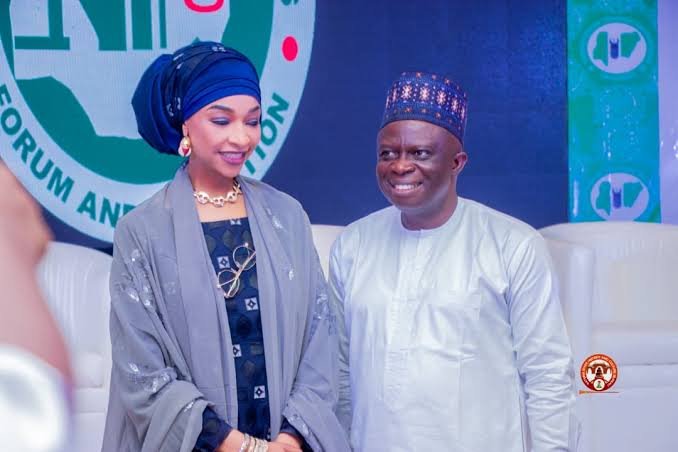
    Minister of Tourism, Hannatu Musawa, being welcomed to NANTA AGM in Ibadan weekend.

  • Osun 2026: Between Performance and Packaging

    Osun 2026: Between Performance and Packaging

    By Akano Kolobo
    As the countdown to the 2026 governorship election in Osun State gathers momentum, the political atmosphere is becoming saturated with familiar patterns—carefully crafted narratives, selective projections, and the age-old attempt to sell “newness” as a substitute for tested leadership.

    In recent weeks, attention has been drawn to the emerging profile of Bola Oyebamiji, a technocrat whose supporters have worked tirelessly to frame as the face of competence and fiscal discipline.

    On paper, it is an attractive proposition. In practice, however, governance is rarely a spreadsheet exercise.

    The fundamental question before the people of Osun is not who has the most polished résumé, but who has demonstrated the capacity to govern in real time, under real pressures, and with real consequences for ordinary citizens.

    Governor Ademola Adeleke may not fit the conventional mould of a technocratic administrator, but politics—especially at the subnational level—is not an abstract theory. It is about roads that are built, salaries that are paid, pensions that are cleared, and communities that feel seen.

    There is a growing tendency among sections of the political elite to underestimate the intelligence of voters by assuming that governance can be reduced to jargon—“fiscal discipline,” “institutional efficiency,” “data-driven systems.” These are important, no doubt, but they are tools, not ends in themselves..

    The renewed attempt to repackage opposition figures within the All Progressives Congress as technocratic saviours must therefore be interrogated. Where were these ideas when they had the opportunity to shape policy outcomes? What measurable difference did they make when entrusted with public responsibility?

    Elections are ultimately about trust. And trust is not built in conference rooms or policy seminars; it is earned in the daily interaction between leaders and the led.
    Much has also been made of the governor’s political realignment with the Accord Party.

    Critics see this as a vulnerability. I see it differently. In a political system often defined by rigid party lines, the ability to build coalitions across divides may well prove to be a strategic advantage.
    Let us be clear: Osun does not need a contest between “noise” and “numbers,” as some would frame it. What it needs is a sober evaluation of continuity versus experimentation.
    Continuity, in this context, is not about stagnation. It is about consolidating gains, refining policies, and deepening impact. Experimentation, on the other hand, carries risks—especially when it is driven more by perception than by proven capacity.
    As the campaigns intensify, voters must resist the temptation to be swayed by glossy projections and instead focus on verifiable outcomes.

    The future of Osun State cannot be outsourced to promises alone.
    In the end, democracy offers a simple but profound choice: do you retain a leadership that has delivered within the limits of its mandate, or do you gamble on potential wrapped in presentation?
    For me, the answer lies not in packaging, but in performance.

    (Akano Kolobo
    Writes in from Apena Compound
    Ede, Osun State.)

  • Political Realignment in Jigawa:Senator Nakudu Expands Influence ….. Secures Keys Grassroots Support.

    By Tunde Akano

    The governorship ambition of Senator Sabo Mohammed Nakudu, CON, in Jigawa State received a significant boost on Sunday following the declaration of loyalty by the political structure of Alhaji Shehu Mohammed Sanusi, Dan’iyan Dutse, to his movement under the African Democratic Congress (ADC).

    The event, held in Dutse, the Jigawa State capital, attracted thousands of supporters, mainly from Dutse Local Government Area, as well as representatives from seven local government areas within the Dutse Emirate, underscoring strong grassroots support.

    Prominent party stakeholders attended the occasion, including the ADC Chairman of Dutse LGA, Alhaji Mu’azu Dodo; the Local Government Women Leader; former Chairmen of Dutse and Sule Tankarkar LGAs, Alhaji Zubairu Abaya and Alhaji Sale Ahmed Danzomo; and the ADC Peace Ambassador, Alhaji Nuradeen Jidawa, among others.

    In his address, Senator Nakudu expressed gratitude for the development, describing it as a major step in strengthening the party structure. He pledged to lead with fairness, honesty, and inclusiveness, assuring supporters of a united approach toward achieving collective goals under the ADC platform.

    He also called on youths and women to actively participate in the political process, emphasizing the role of youths in safeguarding electoral integrity and urging them to remain calm and patient while awaiting election results.

    Addressing women, Nakudu described them as the backbone of electoral success and urged them to remain vigilant, alleging attempts by opposition elements to influence voters through financial inducements. He, however, expressed confidence in divine support despite limited financial resources compared to opponents.

    Nakudu reaffirmed his commitment to delivering meaningful development that would benefit the people of Jigawa State.

    Earlier, the convener of the meeting, Alhaji Shehu Mohammed Sanusi, said the gathering was organized to formally present his political structure to the senator. He confirmed that the structure had been fully integrated into Nakudu’s governorship movement under the ADC, expressing optimism that the alliance would advance the senator’s ambition.

    The development marks a notable political realignment in Jigawa State as preparations intensify ahead of the 2026 governorship election.

  • Folami, returns unopposed as Nanta President

    Folami with his supporters

    Mr. Yinka Folami has
    been returned unopposed as President of the National Association of Nigerian Travel Agencies for another two-year term, consolidating his leadership of the country’s foremost travel trade body.

    The election, held at the Conference Hall of the University of Ibadan, attracted members from across the country and featured a mix of contested and uncontested positions, reflecting both continuity and competition within the association.

    In the most keenly contested race, Mohammed Mustapha from the northern zone emerged as First Deputy National Vice President, securing 216 votes to defeat Pastor Chinyere Umeasiegbu, who polled 146 votes in a closely watched ballot.

    Similarly, the position of National Public Relations Officer saw a competitive showdown, with Babatunde Adesokan clinching victory with 210 votes, defeating Gideon Olubayo. Adesokan, who previously served as Immediate Vice President for the South West Zone, defeated Gideon Oludayo, who garnered 150 votes.

    Other positions, including that of Financial Secretary, kunle Oluwole were filled unopposed, while the office of Internal Auditor ( Johnson ugochukwu) was not due for election during the exercise.

    The outcome of the polls is expected to strengthen the leadership structure of NANTA as it continues to play a critical role in shaping Nigeria’s travel and tourism industry, as well as advancing professional standards among its members.

  • NANTA @ 50: Pinheiro Urges Legal Reforms, Ethical AI Adoption in Travel Industry

    NANTA @ 50: Pinheiro Urges Legal Reforms, Ethical AI Adoption in Travel Industry

    A Senior Advocate of Nigeria, Kemi Pinheiro, has called for constitutional reforms and stronger regulatory compliance within the travel sector as the National Association of Nigeria Travel Agencies marked its 50th Conference, Exhibition and Annual General Meeting in Ibadan.
    Delivering a goodwill message at the golden jubilee event on Thursday, Pinheiro described the milestone as not just a celebration of longevity but a testament to resilience, institutional growth, and the evolving relevance of travel agencies in Nigeria’s economy.
    He noted that the conference theme, “Embracing Our Diverse Cultural Heritage from the City of Firsts: Redefining Our Role as Global Travel Ambassadors,” reflects a shift in the role of travel professionals from mere intermediaries to strategic players in global tourism and mobility.
    Pinheiro highlighted NANTA’s contributions over the past five decades, particularly in formalizing and standardizing travel agency practice in Nigeria. He said the association has also functioned as a quasi-regulatory body, promoting ethical standards and best practices in the industry.
    According to him, increasing regulatory oversight by agencies such as the Nigerian Civil Aviation Authority, Federal Airports Authority of Nigeria, and Nigerian Tourism Development Authority has made compliance, transparency, and operational discipline more critical for travel agencies.
    He further stressed that digital transformation has introduced complex legal challenges, including consumer protection, data privacy, electronic transactions, and cross-border payments, urging travel professionals to align with the Nigerian Data Protection Act and other regulatory frameworks.
    On emerging technologies, Pinheiro cautioned against the unchecked replacement of human expertise with Artificial Intelligence, advocating instead for its use as a complementary tool. He referenced global bodies such as the World Travel & Tourism Council and the International Air Transport Association, which promote AI as a means to enhance efficiency while preserving professional judgment and accountability.
    The senior lawyer also underscored the importance of safeguarding Nigeria’s cultural heritage, noting that tourism promotion must be aligned with intellectual property laws to ensure authenticity and proper commercialization of indigenous assets.
    Describing Ibadan as a fitting host city, he said its rich historical and cultural heritage provides an ideal backdrop for discussions on repositioning Nigeria in the global tourism ecosystem.
    Pinheiro urged NANTA members to adopt a more strategic approach to

  • NIHOTOUR Dissolves Tourism Skills Council Board, Unveils New Leadership Structure

    NIHOTOUR Dissolves Tourism Skills Council Board, Unveils New Leadership Structure

    IBADAN — The Director General and Chief Executive Officer of the National Institute for Hospitality and Tourism (NIHOTOUR), Aare Dr. Abisoye Fagade, has dissolved the Governing Board of the Hospitality and Tourism Sector Skills Council of Nigeria (HTSSCN), as part of efforts to reposition the body for greater efficiency and industry relevance.
    Dr. Fagade announced the decision during the 50th anniversary celebration of the National Association of Nigeria Travel Agencies (NANTA) in Ibadan, describing the move as a strategic transition aimed at strengthening the sector’s capacity for skills development.
    He said the dissolution followed a comprehensive review of the Council’s operations, noting that the restructuring would enhance inclusiveness, improve coordination among stakeholders, and align the Council’s mandate with national economic priorities.
    According to him, the reform is designed to establish a more unified, industry-driven framework capable of delivering globally competitive standards in hospitality and tourism.
    “The reconstituted board will serve as the engine room for competency, certification, and workforce transformation across the hospitality and tourism value chain,” he said.
    Dr. Fagade also announced the constitution of a new governance structure for the Council, comprising a Board of Trustees and a Board of Directors, with representation from key regulatory and industry bodies subject to approval.
    He named Mr. Onung Nkereukem as Chairman of the Board of Trustees, alongside Alhaji Idris Abdullahi and Mrs. Toyin Dada as members. For the Board of Directors, Mr. Yinka Folami was named Chairman.
    The new structure is expected to include institutional representation from organisations such as HATMAN, NBTE, NHA, APCN, SON, NATOP and EMAN.
    The NIHOTOUR boss said the overhaul aligns with the Federal Government’s Renewed Hope Agenda, which seeks to formalise and standardise the tourism sector to boost economic growth, create jobs and enhance national development.
    Speaking on the anniversary event, Dr. Fagade commended NANTA for its contributions to Nigeria’s travel industry over the past five decades, describing the association as a vital link between Nigeria and the global tourism market.
    He reiterated NIHOTOUR’s commitment to raising industry standards through initiatives such as its registration and certification platform aimed at improving professionalism and global competitiveness among operators.
    The event attracted major stakeholders across the tourism and hospitality sectors, signalling a renewed push by the Federal Government to drive reforms through stronger collaboration between regulators, private sector players and professional bodies.

  • NANTA at 50: From Modest Beginnings to Nigeria’s Travel Industry Powerhouse

    NANTA at 50: From Modest Beginnings to Nigeria’s Travel Industry Powerhouse

    By Yinka Folami
    When a handful of travel agents gathered on Broad Street, Lagos, in November 1973, few could have predicted that their modest meeting would birth what is today Nigeria’s foremost travel trade association. At the time, the industry was fragmented, with individual agents operating in isolation—grappling with airline ticketing, visa processes, and client management without a unified voice or regulatory framework.
    That gathering, convened by Jerry Onuoha Ibe Nwosu of SCAN Travel at John Holt Travel Agency, marked the formation of what was then known as the Nigerian Travel Agents Association (NATA). With pioneers such as Roxy Udo, the first Honorary President, and Tunde Akala, the first Vice President, the foundation was laid for what would later evolve into the National Association of Nigerian Travel Agencies (NANTA).
    Building Structure from Scratch
    The early decades of the 1970s and 1980s were defined by institution-building. NANTA functioned primarily as an advocacy and networking body, striving to establish credibility among airlines and government agencies. It worked to harmonise operational standards, promote professionalism, and bring more agencies under a unified umbrella.
    By the 1990s, the global travel industry was undergoing rapid transformation, driven by the introduction of computerised reservation systems (CRS) and global distribution systems (GDS). NANTA adapted, helping Nigerian travel agents transition into the era of automation, modernising ticketing processes and improving efficiency.
    Legal Backing and Regulatory Influence
    A turning point came with the Civil Aviation Act of 2006, which formally recognised travel agency business as part of Nigeria’s aviation ecosystem. Under this framework, travel agents were required to register with the Nigerian Civil Aviation Authority (NCAA) through NANTA to operate legally.
    This development elevated NANTA from a voluntary association to a statutory gateway for travel agencies. It strengthened its regulatory role, enabling it to enforce standards, curb fraudulent practices, and maintain a reliable database of certified practitioners.
    Today, NANTA stands as the umbrella body for IATA- and NCAA-registered travel agencies, playing a central role in shaping industry policies and safeguarding consumer interests.
    Combating Fraud in the Industry
    Fraudulent operators have long posed a challenge to Nigeria’s travel sector. In response, NANTA has implemented several initiatives to protect both its members and the travelling public.
    A major milestone was achieved in 2018 under the leadership of Bankole Bernard, with the introduction of an industry-wide identity card system. Launched by then Vice President Yemi Osinbajo, the initiative ensures that only verified agents can conduct business, while registered agencies display certificates with unique barcodes.
    These measures have significantly enhanced transparency and trust within the industry.
    Navigating Crisis and Recovery
    NANTA’s resilience was tested during the COVID-19 pandemic, one of the most challenging periods in global travel history. With flights grounded and borders closed, travel agents faced unprecedented losses.
    Under the leadership of Susan Akporiaye—one of only two female presidents in the association’s history—NANTA focused on advocacy, member support, and recovery strategies. The crisis also led to the establishment of a training academy aimed at strengthening capacity and professionalism in the sector.
    In 2022, NANTA facilitated Nigeria’s return to the World Travel Market in London after an eight-year absence, restoring the country’s presence on the global tourism stage.
    A New Era of Advocacy and Expansion
    Under the current president, Dr Yinka Folami, NANTA is charting a forward-looking course centred on policy advocacy, inclusiveness, and professional development. His administration has prioritised engagement with key stakeholders, including the Ministry of Aviation and Aerospace Development, NCAA, FAAN, IATA, and other industry players.
    Efforts are also underway to tackle cross-border trading challenges, advocate for fair foreign exchange policies, and strengthen the association’s training programmes into a fully structured professional institute.
    Beyond Nigeria, NANTA is expanding its footprint across Africa and has rejoined the United Federation of Travel Agents’ Associations (UFTAA), reinforcing its global relevance.
    Five Decades of Impact
    From a small group of determined professionals to an organisation representing over 4,000 registered agencies, NANTA’s journey mirrors the evolution of Nigeria’s travel industry itself.
    Over the past 50 years, it has navigated political transitions, technological shifts, and global crises, emerging each time with renewed purpose. While challenges remain, its enduring legacy underscores the importance of unity, professionalism, and advocacy in building a sustainable travel sector.
    As NANTA looks to the future—driving reforms, expanding partnerships, and nurturing the next generation of travel professionals—its story remains inseparable from that of Nigeria’s growing travel and tourism industry.

  • MURIC Raises Alarm Over Mass Displacement in Katsina Communities

    The Muslim Rights Concern (MURIC) has issued a Save Our Soul (SOS) appeal to authorities, urging urgent intervention to rescue residents of Sukuntuni and surrounding communities in Kankiya Local Government Area of Katsina State following threats from suspected bandits.
    In a statement released on April 8, 2026, Executive Director of the group, Ishaq Akintola, disclosed that panic has gripped the affected communities after a letter allegedly sent by bandits demanded 700 cows and 1,000 sheep as ransom to avert invasion. The ultimatum, reportedly issued on April 6, gave residents until Friday, April 10, to comply.
    According to MURIC, the threat triggered a mass exodus, with hundreds of residents, predominantly Muslims, fleeing Sukuntuni and nearby areas including Musawa, Chuga and Matazu in search of safety.
    The group said it had obtained a video showing displaced persons trekking under distress, describing the situation as heartbreaking and dire.
    The organization called on President Bola Ahmed Tinubu to prioritize the worsening insecurity across the country, warning that communities in northern Nigeria continue to face relentless attacks. It also challenged the nation’s defence leadership to intensify efforts in protecting vulnerable populations.
    MURIC further emphasized that banditry and terrorism in Nigeria are not targeted at any single religious group, noting that both Muslims and Christians have been victims of violent attacks. The group described the crisis as criminality driven by opportunism rather than religious motives.
    Citing constitutional provisions, MURIC stressed that ensuring the security and welfare of citizens remains the primary responsibility of government, and urged swift action to prevent further displacement and loss of lives in the affected communities.

  • Why Governor Ademola Adeleke Merits a Second Term in Osun State

    Why Governor Ademola Adeleke Merits a Second Term in Osun State

    As Osun State looks toward the future, the question before many citizens is whether the current pace of governance should be sustained or disrupted. For supporters of Governor Ademola Adeleke, the answer is clear: continuity under his leadership offers Osun the opportunity to consolidate recent gains, deepen reforms, and complete projects already reshaping the state.

    Restoring Stability and Workers’ Confidence
    One of the most visible hallmarks of Governor Adeleke’s administration has been its emphasis on workers’ welfare and industrial harmony. From addressing salary arrears to prioritizing pensions and promoting dialogue with labor unions, his government has helped restore confidence among civil servants. A second term would allow these reforms to mature, ensuring long-term stability in the public sector and improved service delivery.

    Infrastructure with Grassroots Impact
    Across Osun, road rehabilitation, school upgrades, and healthcare facility improvements have been central to the administration’s agenda. Rather than focusing solely on headline projects, the Adeleke government has emphasized community-level infrastructure, linking rural economies to urban markets and improving access to education and healthcare.
    Re-electing the governor would enable the completion and expansion of these projects, maximizing their economic and social returns.

    People-Centered Governance
    Governor Adeleke’s leadership style has resonated with many citizens because of its accessibility and populist touch.
    Town hall engagements, responsiveness to community needs, and a governance tone that prioritizes inclusion have helped narrow the gap between government and the governed.
    In a state with diverse political and cultural interests, this approach has contributed to social cohesion and reduced political tension.

    Fiscal Responsibility and Transparency
    Despite economic headwinds affecting states nationwide, the Adeleke administration has pursued prudent financial management, focusing on realistic budgeting and accountability.
    By strengthening internally generated revenue while avoiding excessive debt, the government has laid a foundation for sustainable development, one that a second term could further solidify.

    Continuity for Long-Term Development
    Many of Osun’s development challenges, youth unemployment, industrial growth, agricultural modernization, are long-term by nature.
    Abrupt policy shifts often stall progress. Granting Governor Adeleke a second tenure would provide the continuity needed to translate policies into lasting outcomes, particularly in education reform, skills development, and investment promotion.

    Conclusion
    Elections are moments of judgment, but also of vision. For voters who value stability, inclusive governance, and the steady completion of people-oriented projects, Governor Ademola Adeleke’s record offers a compelling case.
    A second term would not just be an endorsement of past efforts, but an investment in a more consolidated and prosperous Osun State.
    From
    Akano Tiri
    A social commentator based in Ede