Atiku’s campaign promise to r
By Danladi Ahmed
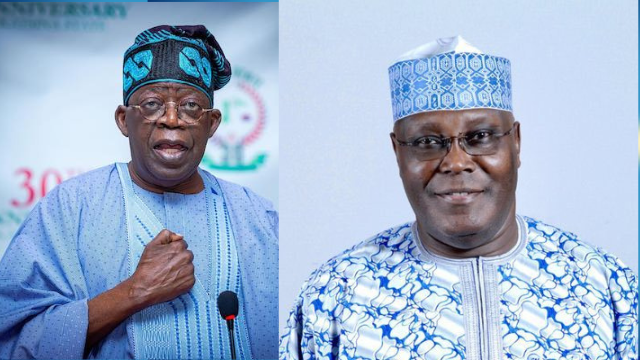
The Independent Media and Policy Initiative (IMPI) has said that a campaign promise by former Vice President and presidential candidate of Atiku Abubakar to restore fuel subsidy is all that several foreign investors need to be convinced that doing business in the country is scary, unpredictable and indeed an investor’s nightmare.
The think-tank handed down the warning in a policy statement released on August 25, 2026 in Abuja by its chairman, Dr. Omoniyi Akinsiju captioned,
“Atiku’s Fuel Subsidy Restoration Campaign Promise Fails Litmus Test of Practicability and Sustainability*.
He said that Atiku’s proposed Economic Recovery Plan (AERP) outlined a model structured around production rather than consumption shifting the subsidy from importation to production, and transferring incentives directly from middlemen traders to local Nigerian refineries.
Explaining further, he said that the former vice president’s model required eligible public and private local refineries to receive domestic crude allocations at a discounted price on the condition that refinery operators qualify for discounted crude only if they pass the exact savings on to consumers.
Dr Akinsiju however, described the model as convoluted as it would force commercial entities like NNPC Limited or private refineries into complex, politically mandated pricing formulas thereby underming the noble ideals and provisions of the existing Petroleum Industry Act (PIA) of 2021.
“Atiku’s proposal also sends signals to global markets that Nigeria lacks regulatory predictability.
“This policy shift would scare away international capital and freeze modern Public-Private Partnerships (PPPs), with repercussions for funding critical legacy infrastructure projects and a damning effect on production and productivity”, he said,
He said that Atiku’s proposal to re-regulate prices would directly undermine the Petroleum Industry Act (PIA) 2021, noting that his idea creates an illusion of price reduction.
According to him, from a political economy framework, Atiku’s policy proposal is fatally flawed by operating on a dual axis, that is, exploiting and weaponising especially the current social discontent over the rising cost of living and at the same time introducing long-term structural risks to Nigeria’s fragile fiscal framework.
Dr. Akinsiju maintained that despite its popular appeal, fuel subsidies are inherently regressive economic tools where wealthier households with multiple vehicles consume a disproportionate volume of petrol compared to what is consumed by the poorest demographics, who rely primarily on public transport or lack electricity access entirely.
He stated further that while fuel subsidy acts as a fiscal illusion, it changes where the cost is paid, rather than eliminating the cost itself.
“Atiku’s proposal to re-regulate prices not only directly undermines the Petroleum Industry Act (PIA) 2021, but also creates an illusion of price reduction.
“Fixed price caps remove commercial incentives for marketers to distribute fuel to remote areas; consequently, fuel supplies would shift to high-volume urban markets like Lagos, Abuja, Kano, and Port Harcourt”, he said.
The think-tank further explained that Nigeria has a hstorical record of fiscal morbidity, which ultimately led to infrastructure funding collapse, resultant from successive federal governments deducting subsidy costs “at source” from national oil revenues before the money could reach the Federation Account.
He said that the system created arbitrary deductions which left state and local governments financially crippled.
“Atiku’s model repeats this exact pattern. By giving discounted crude oil directly to local refineries, the government creates a massive hidden deduction. This directly reduces the revenue flowing into the Federation Account, stripping state and local government leaders of the liquid capital needed to build rural feeder roads, primary healthcare centres, and community water infrastructure.
He said Atiku’s subsidy model will re-enact the long-forgotten black-market regimes, with remote filling stations running dry and agricultural transport trucks forced to buy fuel from informal black-market vendors. This would further drive the country’s vulnerable populations into deeper despair.
“This pushes long-term transport fares up to 40% above current deregulated market rates, accelerating food inflation in cities and leaving rural farmers with lower profits.
“We reiterate that Nigeria’s historical infrastructure deficit cannot be solved by returning to the fiscal policies that created it.
“Atiku Abubakar’s “Follow-the-Barrel” model replaces a cash subsidy with a crude oil revenue discount.
This policy choice risks locking Nigeria back into the same historical cycle: prioritising temporary, popular relief at the pump, while sacrificing the high-quality roads, hospitals, schools, and energy networks required to build a productive national economy”, he said.