

(NAFDAC Director General Prof Mojisola Adeyeye)

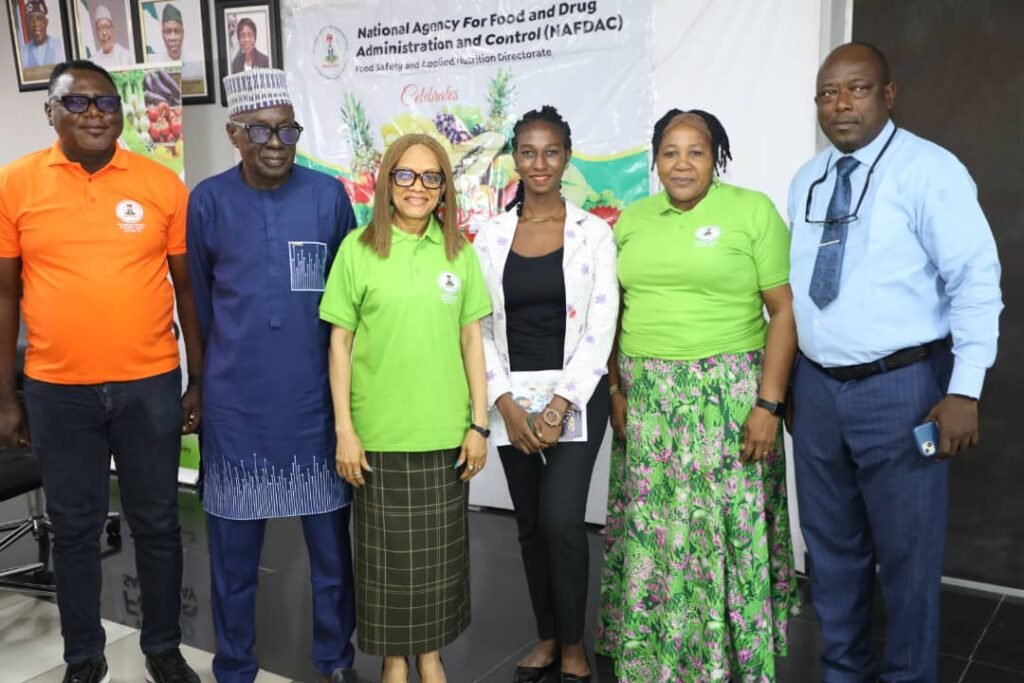
(NAFDAC DG Representative, Director, Food Safety and Applied Nutrition FSAN, NAFDAC, Mrs Eva Edwards at the 2026 World Food Safety Day on Monday in Lagos.)

(Director, Food Safety and Applied Nutrition FSAN, NAFDAC, Mrs Eva Edwards,with other directors.)
– For Nigeria, strengthening food safety remains central to protecting our population, supporting nutrition, enabling trade, and building confidence in our food system. – Prof. Adeyeye
.

By Biola Lawal
The Director General, National Agency for Food and Drug Administration and Control NAFDAC, Prof Mojisola Adeyeye has counselled Nigerians to remain committed to achieving a Nigeria where every person, in every part of the country, would have access to safe and wholesome food.
Prof Adeyeye made the call on Monday during the NAFDAC 2026 World Food Safety Day celebration in Lagos with the theme: “From Burden to Solutions – Safe Food Everywhere”
The World Food Safety Day was first observed in June 2019, marking a historic global commitment to making safe food an essential aspect of public health and sustainable development, a statement by Sayo Akintola, NAFDAC Media Consultant disclosed.
She maintained that NAFDAC was fully aligned with this global commitment, ‘and today, we join the Federal Ministry of Health and Social Welfare, the National Food Safety Management Committee and the global community to recognize the importance of safe food, remind ourselves that safe food is an imperative and indeed a fundamental human right, as well as reaffirm our shared commitment and collective responsibility for protecting public health through stronger, more resilient food safety systems that yield safe and nutritious food.
’World Food Safety Day was established by the United Nations General Assembly in December 2018, following a joint proposal by the Food and Agriculture Organization (FAO) and the World Health Organization (WHO). to raise awareness about the importance of food safety and to promote efforts that help prevent, detect, and manage foodborne risks.
Foodborne illnesses cause over 200 different diseases, affecting public health, livelihoods, education, and national economies, yet most cases are preventable through proper food handling, monitoring, and coordinated action.
According to Prof Adeyeye, who was represented by the Director, Food Safety and Applied Nutrition (FSAN), Mrs. Eva Edwards, food safety affects everyone along the food supply chain – from agricultural production, through harvesting and storage, transportation and distribution, processing and transformation of the raw agricultural products,
wholesale and retail markets, food service establishments, and the consumer – all are important stages along the food supply chain presenting unique food safety risks. The DG further explained that everyone has a critical role to play in ensuring that food is safe from farm to fork, stressing that the theme of the 2026 World Food Safety Day,
“From Burden to Solutions – Safe Food Everywhere” calls for deep reflection as it is a reminder that unsafe food remains a major public health burden which has affected millions of lives globally through preventable foodborne illnesses, food insecurity, economic losses, and reduced productivity, contributing to food export rejects, food waste and sadly, loss of lives. ‘
The theme challenges us to focus on practical and sustainable solutions that will ensure safe food for everyone, everywhere,’ she said, adding that this can be attained through science-based regulation, education, responsible practices, entrenching food safety culture, innovation, and collaboration – these can collectively transform the dire food safety situation – transforming food safety challenges into opportunities for action and improvement.
For Nigeria, she said strengthening food safety remains central to protecting our population, supporting nutrition, enabling trade, and building confidence in our food system. As our food supply chains become more complex,
.
Prof. Adeyeye added that the Agency must continue to strengthen its regulatory systems, surveillance, laboratory capacity, industry compliance, and public awareness.
To achieve safe food everywhere, she noted that intentional, dedicated, sustained actions and implementation of best practices by all actors along the farm to fork continuum are required.
The NAFDAC boss stressed that these include adherence to Good Agricultural Practices (GAP), Good Hygiene Practices (GHP),
Good Manufacturing Practices (GMP), Good Storage and Distribution practices, implementing a Hazard Analysis and Critical Control Points (HACCP) system, food safety education and raising public awareness on WHO’s five keys to safer foods.
‘The role of our Agency as a Competent Authority for food safety in Nigeria is anchored on verifying that food products available to the Nigerian public meet the applicable international and national standards for safety and quality, as well as verifying that they are produced in line with established regulatory requirements.’
However, she added that achieving safe food everywhere requires more than regulation alone, it requires partnerships, recognizing that food safety is a shared responsibility.
She also explained that the event provides an opportunity not only to reflect on the challenges before us, but also to acknowledge progress and highlight solutions that are already making a difference evidenced by the shift from reactive to preventive systems through strengthening regulatory oversight and initiating risk-based approaches, enhancing public awareness of food safety risks, and building stronger partnerships across sectors. ‘
The message of this year’s theme “From Burden to Solutions – Safe Food Everywhere” is clear, we must move from simply recognizing the burden of foodborne diseases caused by unsafe food, to actively implementing solutions that protect our communities and strengthen our food systems,’ she said.
The DG however, concluded by urging Nigerians to remain vigilant and avoid purchasing products that do not carry proper labelling, NAFDAC registration numbers or traceable sources, noting that consumer awareness is an important part of food safety. (Flowerbudnews)