


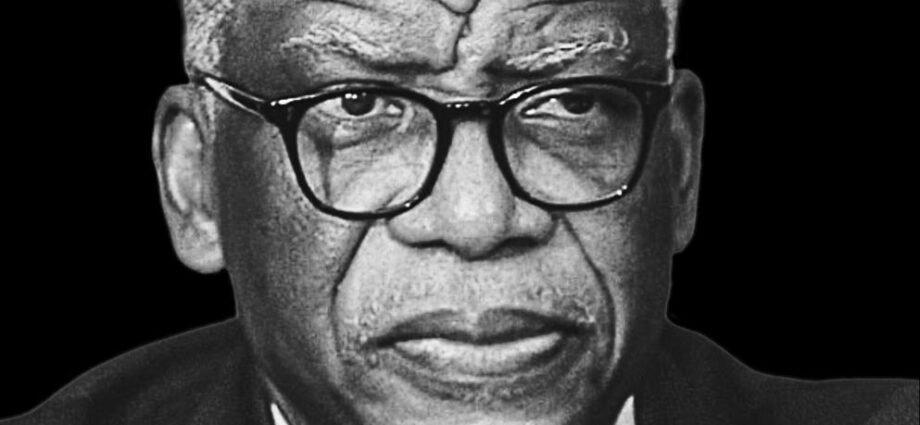
By Richard Ikiebe
Nigerian politicians, as presently selected and incentivised, are structurally oriented toward extraction and survival, not toward the long-term state-building the country urgently needs.
What does Nigeria lack in politics that can reform and rebuild our ship of state?
Since 1999, Nigerians have voted repeatedly, witnessed largely “peaceful” transfers of power, and watched new parties and coalitions rise under hopeful banners. Each round arrives wrapped in the language of rescue: “restoration,” “change,” “next level,” “renewed hope.” Despite the abundance of slogans, life for most Nigerians is a perpetually unravelling. Insecurity stubbornly persists across the country, the unemployment rate rises monthly, and infrastructure continues to decay. And in many sectors, conditions have worsened.
It may be easy to conclude that we merely chose the wrong leaders and should try again. However, after a quarter-century of cycling through similar outcomes, we must ask whether the deeper problem lies with how politics itself is organised and incentivised in Nigeria. The time has come to rethink leadership and statecraft beyond who occupies an office.
We must begin with the uncomfortable question of whether politicians produced by our current system can realistically fix Nigeria. If politics is structurally misaligned with the work of state-building, then even well-intentioned politicians are like builders trying to repair a collapsing structure with the wrong tools: their efforts, however sincere, are unlikely to produce lasting transformation.
On the surface, Nigeria appears to be a competitive democracy: parties contest elections, courts hear petitions, and incumbents sometimes lose. Yet electoral competition is thin, as the same political class circulates across parties, defections are frequent, and yesterday’s opponents become today’s allies, leaving voters unable to distinguish parties beyond slogans and personalities.
Under a winner-takes-all setting, politics is less about policy visions than about rival networks fighting for access to state-controlled resources – oil rents, licences, contracts, regulatory power and the security apparatus. Whoever wins office gains wide discretion over allocating these benefits, so elections become battles over rents rather than strategies for solving national problems.
In this situation, most politicians adopt an “extractive mindset”. The elective or appointed office is primarily a route to personal and group gain because that is what the system demands; it is what it rewards. Imagine an “extractive spectrum” from 1 (inclusive, service-driven leadership) to 10 (office as loot). Nigeria’s dominant actors cluster in the upper half, especially those controlling party structures, candidate selection and campaign finance.
Even well-intentioned entrants quickly meet clientelist demands of appeasing godfathers, funding costly political “structures,” and rewarding vote-mobilisers. Once in office, intense pressure to “recoup” from financiers, supporters and personal insecurity makes non-extractive behaviour not just difficult but politically suicidal.
There are sincere people in Nigerian politics who genuinely want to improve education, infrastructure, health and security. Their good intentions are routinely blunted, diverted or punished by the very structures in which they operate.
A reform-minded governor who tries to clean up procurement, rationalise payroll or shift funds from patronage to long-term investment soon collides with entrenched interests. Party leaders who feel undermined and public servants who supplement their salaries through loot-sabotage implementation. The governor quickly faces bleak choices: to become part of the system, or confront and risk isolation, become weakened or even removed.
The same logic applies to a legislator who demands transparency, resists padded budgets or insists on open competition. The lesson to others is unmistakable: idealism is costly in practice in systems where virtue is a liability. Reform-minded politicians are often absorbed, and they pull back towards “normal” behaviour, or marginalised and expelled. Is it a wonder that repeated appeals to “good people” to enter politics have not yielded the transformative results?
Politics, at its best, is an instrument of statecraft: the long-term work of building a capable state that secures justice, security and prosperity. Statecraft is the work of statesmen or women, leaders who steadily invest in enduring institutions; they accept personal cost to serve a higher national purpose and the common good. Nigeria desperately needs statesmen; our current political orientation remains overwhelmingly short-term and self-serving.
Elected officials are preoccupied with day-to-day survival and the next election, so they prioritise quick, highly visible projects laden with contracts and photo opportunities. The system is saturated with loyalty-driven appointments and incessant reshuffles that weaken institutional capacity. Efforts to strengthen the judiciary, professionalise the civil service or depoliticise security agencies are routinely sidelined. The consequences are evident: opaque security expenditures, erratic policy shifts and short-term revenue raids steadily undermine investor confidence.
We keep searching for the incorruptible president, visionary governor, or “bridge-building” party leader as if the right person alone could rescue the system. Character matters, but placed inside a deeply extractive, short-term political order, it cannot bear the burden we assign to it.
A leader of real integrity needs a coalition that shares their reform goals and extends beyond the party machine: institutional partners in the civil service, business, civil society and the professions who can sustain reforms when political winds shift.
Without such backing, even remarkable individuals are constrained, compromised or removed. As presently organised, Nigerian partisan politics is structurally ill-suited to deliver the deep, patient state-building that the nation needs. The task ahead is to cultivate and elevate a different kind of leadership, a more deliberate elevation of genuine nation-builders in the practice of statecraft; men and women who think as state-builders first and politicians, if at all, a distant second.
*Dr Richard Ikiebe is a Media and Management Consultant, Teacher and Chairman, Board of Businessday Newspaper*