








NGO trains 40 Youths on Digital Storytelling, Photography to amplify community voices
By Afusat Agunbiade-Oladipo
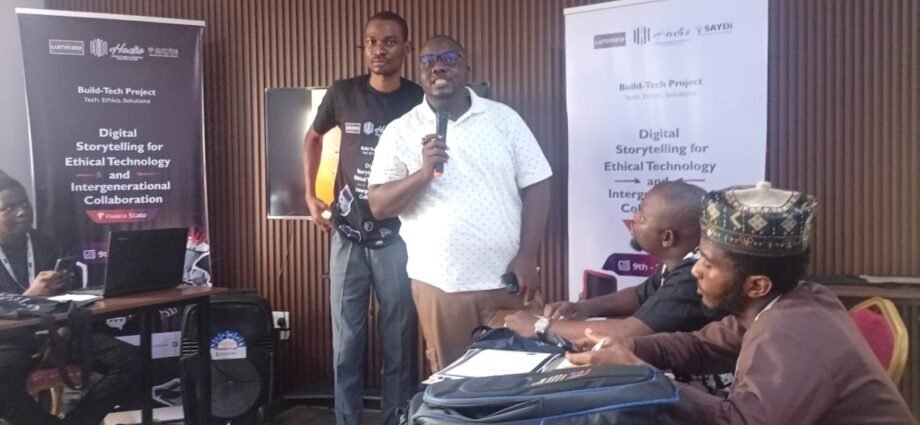
The Saving African Youth Dream Initiative has trained 40 young people in digital storytelling, documentary filmmaking and photography to help amplify community voices and preserve cultural heritage.
The Executive Director of the organisation, Mr Abdulateef Abdulkareem, said the training was designed to bridge the gap in documenting and sharing stories from local communities.
Abdulkareem said many African communities were culturally rich but their stories were not adequately shared beyond their immediate environment.
“Within our communities, there are many untold stories and talented young people who are interested in telling them but lack the tools and skills to do so effectively.
“What we are doing is to equip them with digital storytelling skills so they can document their communities through short stories, documentary films, photography and other media practices,” he said.
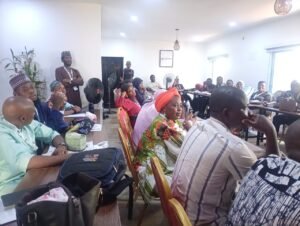
He explained that the programme also involved older participants to enable intergenerational learning and ensure that young storytellers benefit from the experiences and perspectives of elders.
According to him, the training has 40 participants drawn from diverse backgrounds including photojournalism, media practice, documentary filmmaking and digital content creation.
Abdulkareem said the initiative aimed to inspire participants to produce stories that would promote social change and highlight realities in underserved communities.
“At the end of the training, we expect participants to create stories that will inspire change in their various communities.
“We want them to amplify their voices using digital tools in an ethical way while also showcasing the rich cultural heritage we have,” he said.
Abdulkareem who was also the founder of the initiative, said the programme was part of the Build Deck Project supported by the Hadis Foundation and funded by Illuminate.
He added said the training would empower both young and older participants to document real-life issues affecting people in their communities.
“The aim is to enable them to document everyday realities, especially in underserved communities, and share those stories with the world,” he said.
One of the facilitators, a documentary photographer, Mr Abubakar-Sadiq Mustafa, said the training was also focused on teaching participants how photography could be used as a powerful storytelling tool.
Mustafa, whose works focus on climate change, displacement, identity and culture, said many people often view photography only as a tool for social events such as weddingsand naming ceremonies.
“Photography goes beyond documenting private events. It can be used to tell stories, raise awareness and influence social change,” he said.
He added that participants were also being trained on the ethical use of photographs to prevent misuse that could fuel misinformation or conflict.
Mustafa said photography had historically played major roles in shaping global narratives, including documenting wars and humanitarian crises.
He noted that photographers could also contribute to preserving culture by documenting traditional practices that might eventually disappear.
According to him, such documentation will enable future generations to experience and understand their cultural heritage through digital archives.
Mustafa encouraged participants to also explore photography as a means of livelihood.
“Photography has been my source of livelihood and it has transformed my life.
“I believe it can also help many of these young people build sustainable careers,” he said.
Another facilitator, Bushrah Yusuf-Badmus who spoke on the topic responsible journalism and consent protocol said it was important to adhere to the ethics of journalism in the face of digital storytelling amidst the saturation of the social media.
She also noted that seeking consent of sources of information was important as they need to give approval on how their stories will be told.