Tag: APC

  • APC El-Rufai, Tinubu, Buhari Gave Birth to is an Evil Contraction that Mean no Good to Anyone- Jacob

    APC El-Rufai, Tinubu, Buhari Gave Birth to is an Evil Contraction that Mean no Good to Anyone- Jacob


    ‎‎According to a report by Daily Post, on Wednesday February 18, 2026, a former National Legal Adviser of the Peoples Democratic Party (PDP), Barrister Mark Jacob, has criticised the All Progressives Congress (APC), blaming the party for Nigeria’s current hardship.

    ‎Jacob said the APC, which he noted was formed by leaders such as Nasir El-Rufai, Bola Tinubu and Muhammadu Buhari, has failed to deliver good governance to Nigerians, according to him, the country has continued to struggle since 2015 when the party came to power at the federal level.

    ‎He argued that many of the gains Nigeria made over the years have been lost, he said both the country’s national image and its international reputation have suffered.

    ‎In his view, Nigeria is no longer taken seriously in global affairs, despite earlier expectations that it would provide strong leadership in Africa and stated that ordinary Nigerians are facing severe hardship.

    ‎He linked the rising economic difficulties and social challenges to what he described as poor leadership and bad policies and claimed that the suffering across the country reflects the direction the APC administration has taken.

    ‎He accused those in power of being disconnected from the realities facing citizens, according to him, political leaders appear more focused on their personal comfort and preparations for the 2027 general elections than on solving pressing national problems.

    ‎“The APC that El-Rufai, Bola Tinubu, Mohammad Buhari and others gave birth to is an evil contraction that means no good to anybody. That is the more reason why Nigerians are suffering since 2015. Everything this country laboured for has been destroyed. Both at the National and international level. Nigeria has missed it and we have become a laughing stock and nobody takes Nigeria seriously anywhere,” he said.


  • FCT poll: Supreme Court affirms Ishaku as APC candidate for Bwari Area Council

    FCT poll: Supreme Court affirms Ishaku as APC candidate for Bwari Area Council


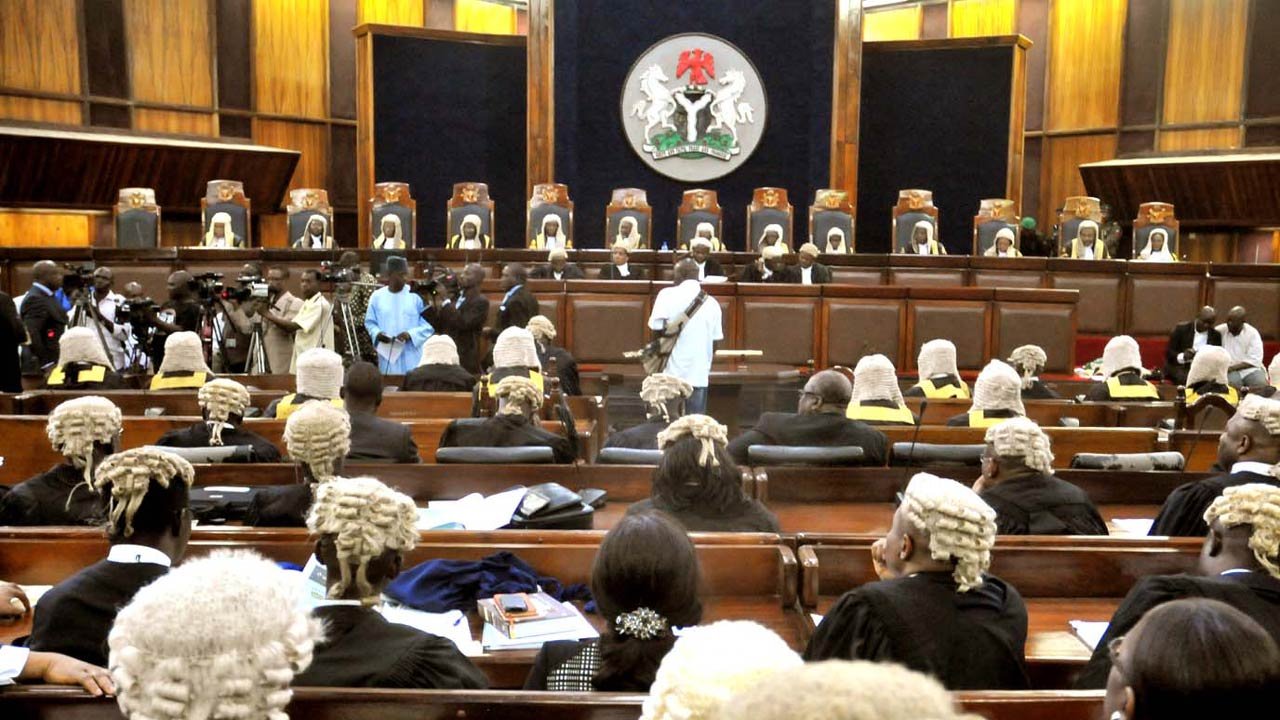
    The Supreme Court, on Monday, affirmed Mr Joshua Ishaku as the lawful candidate of the All Progressives Congress (APC) for Feb. 21 chairmanship election for the Bwari Area Council.


    The five-man panel of the apex court, in a decisive four to one judgment, conclusively resolved the dispute over the rightful candidate for the area coincil.


    Reading the lead judgment, Justice Jamilu Yammama Tukur set aside the majority decision of the Court of Appeal, Abuja which affirmed the Federal High Court Abuja judgement, declaring Mr Haruna Audi as APC candidate.


    Instead, Justice Tukur affirmed the dissenting judgment delivered by Justice Okon Abang of the appellate court, which set aside the lower court judgment and affirmed Ishaku as the lawful candidate.


    The News Agency of Nigeria (NAN) reports that Ishaku had approached the Supreme Court following the decision of the appellate court, upholding the judgment of the Federal High Court delivered by Justice Emeka Nwite.


    Delivering the judgement on Monday, the apex court held unequivocally that Ishaku’s suit was neither statute-barred nor premature and that the case did not fall within the insulated confines of internal party’s affairs.


    The Supreme Court found that the Court of Appeal erred in its conclusion that the appellant’s action was caught by limitation.


    It held that the “inevitable conclusion” from the record was that the appellant had been denied the opportunity to be heard and, therefore, denied fair hearing.


    On the question of the internal party’s remedies, the court made it clear that the internal affairs doctrine is not absolute.


    The panel held that where party guidelines are violated or statutory and constitutional rights are implicated—particularly under Section 84(14) of the Electoral Act—the courts are not precluded from intervening.


    The apex court stated that it is contradictory to insist that a declared winner of a primary election must exhaust internal dispute resolution mechanisms designed for aggrieved aspirants.


    That obligation, the court clarified, rests on the losing aspirant.


    Each case, the court added, must be determined on its peculiar facts, and the lower court failed to properly evaluate the material evidence placed before it.


    With the appeal allowed in its entirety, the Supreme Court set aside the majority judgment of the Court of Appeal, nullified its affirmation of Haruna Audi as candidate, and ordered the relevant authorities to publish shaku’s name as the APC candidate for the forthcoming council election.


    The apex court’s ruling gave full judicial endorsement to Justice Abang’s 96-page dissenting judgment at the Court of Appeal delivered on Jan. 16.


    The dispute arose from the APC primary held on June 25, 2025, where Ishaku was declared winner with 33 votes.


    The 2nd respondent later challenged that outcome, asserting that a petition had been filed before the party’s Primary Election Appeal Committee, that the committee sat on June 27, 2025, that its report was ratified by the National Working Committee (NWC) on June 30 and that he was issued a certificate of return before his name was forwarded to Independent National Electoral Commission (INEC).


    However, a central piece of evidence—Exhibit J—was an affidavit deposed to on oath by the 2nd respondent in an earlier suit filed on July 1, 2025 concerning the same primary.


    In that deposition, he expressly acknowledged that Ishaku was declared winner and sought cancellation of the primary.


    He made no reference to any petition and no claim that he had been declared winner with 38 votes, and no mention of any ratification by the NWC.


    Although the Federal High Court declared Audi the lawful candidate and backed by the majority decision in Appeal Court, Justice Abang disagreed in his ruling.

  • 2027: Don’t drop Northern Muslim running mate – Minister to APC

    2027: Don’t drop Northern Muslim running mate – Minister to APC


    The Minister of Culture, Tourism, and the Creative Economy, Hannatu Musawa, has warned the All Progressives Congress (APC) against dropping the idea of a Northern Muslim candidate to President Bola Tinubu in the countdown to the 2027 general election.

    The Minister made this known on a recent episode of a podcast: “Mic On,” hosted by a journalist, Seun Okinbaloye.

    Musawa addressed growing conversations within political circles about a possible review of the Muslim-Muslim ticket adopted by the APC in the 2023 polls.

    The minister argued that removing Vice President Kashim Shettima or substituting him with a running mate who is not a Northern Muslim would create political complications for the ruling party, particularly across key northern states.

    She said: “If there is no Hausa, Fulani or Kanuri Muslim on that ticket, it creates a hurdle.

    “That is the reality of the way people think.”

    Musawa said explained that electoral politics in Northern Nigeria is shaped by long-standing social and political structures, warning that decisions taken without a clear grasp of these dynamics could backfire.

    According to her, voters in the region take elections seriously and view participation as a means of asserting influence.

    She listed states such as Katsina, Kano, Kaduna, Kebbi, Jigawa, Zamfara, and Sokoto as areas where political choices are closely scrutinised.

    She said: “The core North understands politics at a very deep level.

    “Politics there is a way of life.

    “People wait every four years to line up and vote because that is where they feel they have influence.”

    Musawa dismissed suggestions that the APC could easily reconfigure its ticket without electoral consequences, describing such assumptions as a misreading of northern political sentiment.

    She added: “If we start to toy with the current arrangement, it becomes a problem.

    “Those making such suggestions may not fully appreciate how politics works in the North.”

    On the prospects of opposition parties ahead of 2027, Musawa said she remains unconvinced that the emerging alliances can successfully challenge the APC.

    She described the opposition landscape as fragmented, with multiple political actors pursuing similar ambitions.

    She said: “You have an opposition that is overcrowded.

    “Everyone is vying for the same position.

    “And that alone creates a recipe for failure.”

    While noting that the APC does not underestimate its rivals, Musawa said the ruling party is confident of its chances.

    She said: “We are not taking anybody lightly.

    “But from what we are seeing now, I don’t see how they can unseat President Tinubu and Vice President Shettima.”

    The minister added that although a strong opposition is healthy for democracy, the APC is focused on consolidating its support base ahead of the next general election.

  • 2027: Don’t drop Northern Muslim running mate – Minister to APC

    2027: Don’t drop Northern Muslim running mate – Minister to APC


    The Minister of Culture, Tourism, and the Creative Economy, Hannatu Musawa, has warned the All Progressives Congress (APC) against dropping the idea of a Northern Muslim candidate to President Bola Tinubu in the countdown to the 2027 general election.

    The Minister made this known on a recent episode of a podcast: “Mic On,” hosted by a journalist, Seun Okinbaloye.

    Musawa addressed growing conversations within political circles about a possible review of the Muslim-Muslim ticket adopted by the APC in the 2023 polls.

    The minister argued that removing Vice President Kashim Shettima or substituting him with a running mate who is not a Northern Muslim would create political complications for the ruling party, particularly across key northern states.

    She said: “If there is no Hausa, Fulani or Kanuri Muslim on that ticket, it creates a hurdle.

    “That is the reality of the way people think.”

    Musawa said explained that electoral politics in Northern Nigeria is shaped by long-standing social and political structures, warning that decisions taken without a clear grasp of these dynamics could backfire.

    According to her, voters in the region take elections seriously and view participation as a means of asserting influence.

    She listed states such as Katsina, Kano, Kaduna, Kebbi, Jigawa, Zamfara, and Sokoto as areas where political choices are closely scrutinised.

    She said: “The core North understands politics at a very deep level.

    “Politics there is a way of life.

    “People wait every four years to line up and vote because that is where they feel they have influence.”

    Musawa dismissed suggestions that the APC could easily reconfigure its ticket without electoral consequences, describing such assumptions as a misreading of northern political sentiment.

    She added: “If we start to toy with the current arrangement, it becomes a problem.

    “Those making such suggestions may not fully appreciate how politics works in the North.”

    On the prospects of opposition parties ahead of 2027, Musawa said she remains unconvinced that the emerging alliances can successfully challenge the APC.

    She described the opposition landscape as fragmented, with multiple political actors pursuing similar ambitions.

    She said: “You have an opposition that is overcrowded.

    “Everyone is vying for the same position.

    “And that alone creates a recipe for failure.”

    While noting that the APC does not underestimate its rivals, Musawa said the ruling party is confident of its chances.

    She said: “We are not taking anybody lightly.

    “But from what we are seeing now, I don’t see how they can unseat President Tinubu and Vice President Shettima.”

    The minister added that although a strong opposition is healthy for democracy, the APC is focused on consolidating its support base ahead of the next general election.

  • Prof Ajibola-OMOLUABI Felicitates Party Chair, Hon Adetunji Henry Fagbenro On Birthday

    Prof Ajibola-OMOLUABI Felicitates Party Chair, Hon Adetunji Henry Fagbenro On Birthday


    By

    The Convener, OMOLUABI for YAYI, Prof Abdulwahid Ajibola-OMOLUABI felicitates party chair, Hon Adetunji Henry Fagbenro, the Chairman, All Progressive Congress (APC), Abeokuta South Local Government Area on his birthday.

    In a statement released to the press, Prof Ajibola-OMOLUABI described Hon Fagbenro as a pillar of strength for the APC, not only in Abeokuta South LGA but also for party nationwide.

    , “It is my utmost pleasure to wish our indefatigable party Chairman in Abeokuta South, Hon Adetunji Henry Fagbenro, a Happy Birthday and Many Happy Returns as he celebrates another year of service and legacy.

    Your sterling leadership qualities which recommended you not only for the Chairmanship of our party in Abeokuta South LGA, confirmed you as Chairman of all APC Chairmen in Ogun State as well as the Chairman of all APC Chairmen in Nigeria, has made you a pillar of strength for our party and numerous members”

    In conclusion, Prof Ajibola-OMOLUABI felicitates party chair and prayed, “May the years ahead be blessed and prosperous. May you continue to be relevant and successful in every role you will be given to play. Congratulations and Happy Celebrations”

  • Presenting Chief Architect of Half Salaries as a Youth-Friendly Candidate Is Political Mockery

    Presenting Chief Architect of Half Salaries as a Youth-Friendly Candidate Is Political Mockery


    (Gov. Ademola Adeleke of Osun State)


    –  APC Should Seek Forgiveness, Not Attempt Manipulation


    By  Mallam Olawale Rasheed,

    Oshogbo (FLOWERBUDNEWS):  It is important to remind the All Progressives Congress (APC) that Osun youths are not politically naive, emotionally detached, or historically amnesic. They remember clearly how the state was under APC’s failed government, how their homes suffered, and who the helmsman was over that period of pain.

    The recent attempt by the APC and its governorship candidate, Asiwaju Munirudeen Bola Oyebamiji, to parade familiar promises of a “youth-friendly government” is therefore not only hollow, it is insulting. Presenting one of the chief architects of the half-salary era as a youth-friendly candidate is irrefutably political mockery of the highest order.

    The gallery of history has shown that Osun youths do not vote based on slogans or manipulative statements. They vote from lived experience. They remember the era when payment of salaries were neglected, when pensioners were abandoned, and when parents could not plan their lives. They remember the anxiety in their homes when school fees became a burden and survival became a daily struggle.

    That period did lasting damage. When parents were unpaid or underpaid, the burden shifted to young people. When pensioners were ignored, they became unintended liabilities on their children. Many youths were pushed into frustration, despair, and uncertainty. This is the reality the APC now wants Osun people to forget.

    Governor Ademola Jackson Nurudeen Adeleke is deliberately prioritizing welfare of the people, and creating an enabling environment for the safe actualization of dreams, and aspirations of young people. He understands that if parents are in trouble, their children will suffer.

    That is why his administration pays salaries promptly and in full. That is why pensions are paid as and when due, and payment of arrears that he did not owe are being addressed. That is why minimum wage has been implemented and improved upon. These are conscious decisions rooted in empathy, not politics.

    If parents cannot pay school fees, the consequences are disastrous. Dreams are disrupted, confidence is broken, and frustration deepens. Governor Adeleke understands this human reality and has restored dignity to workers and retirees. Today, families can plan again, homes are stable, and youths can focus on their future instead of survival.

    Beyond this, the administration’s strong local content policies are empowering artisans, traders, and small business owners. These are majorly youths, and parents who can now earn honestly and support their children. When parents are economically active, youths are shielded from social pressure and desperation.

    This is what genuine youth-friendly governance looks like in practice, not in propaganda.

    For the sake of posterity, instead of attempting to manipulate Osun youths with recycled narratives, the APC should seek forgiveness for the hardship inflicted on families during its time in government. No amount of rebranding can erase pain without accountability and remorse.

    Governor Ademola Adeleke remains confident of the people’s support because his government has reduced pain, restored dignity, and governed with a human face. Osun youths feel the difference. Osun homes feel the difference. And they are determined never to return to an era that broke families and strained the future of a generation.

    It’s pertinent to state clearly that Osun youths have already made their choice in Governor Adeleke because the 2026 election will not be decided by political tricks or empty promises.

    (Mallam Olawale Rasheed is
    Spokesperson to the State Governor)


    About Flowerbudnews
    Established by Hon.  Biola Lawal, a former Acting Managing Director of the News Agency of Nigeria (NAN), FLOWERBUDNEWS is a consortium of active veteran journalists, experienced Multimedia broadcast experts and image makers.

    We are drawn from both public and private  sectors of Nigeria’s media Industry with a common  determination to enhance the practice of responsible journalism..

    Lawal, on his part, is also a former Honourable Commissioner for Information,Youth, Sports and Culture of Osun state, his home state.

    Biola Lawal had also successfully served two tenures as Press Secretary to the ECOMOG Force Commander in Liberia during the Liberian and Sierra Leone Civil wars. He was an outstanding NAN Defence and War Correspondent for many years.

    The retired NAN Acting Boss holds the honour of being the only journalist that served two terms on the ECOMOG international assignment due to his high professionalism and decency.

    He is a Co-Author of the book; ECOMOG, A BOLD ATTEMPT AT REGIONAL PEACEKEEPING! Edited Mrs Magaret Voght.  The book remains the most. factual, detailed and authentic book on the ECOWAS sponsored ECOMOG Military operation.

  • PRES. TINUBU INAUGURATES COMMITTEE ON STRATEGY, CONFLICT RESOLUTION AND MOBILISATION FOR APC

    PRES. TINUBU INAUGURATES COMMITTEE ON STRATEGY, CONFLICT RESOLUTION AND MOBILISATION FOR APC


    By


    President Bola Ahmed Tinubu has  inaugurated a Committee on Strategy, Conflict Resolution and Mobilisation to resolve conflicts within the All Progressives Congress as it approaches the 2027 general elections.

    The committee, which was inaugurated on Wednesday in Lagos. comprises Governors of the party, members of the Federal Executive Council, and other notable stakeholders, has the Governor of Yobe State, Mai Bala Buni, as Chairman, and Muiz Banire, former Legal Adviser of the APC, as Member/Secretary,

    This was disclosed in a statement by Bayo Onanuga, the President’s Special Adviser on Information and Strategy.

    Other members include Senator Adamu Aliero, Chairman of the Nigeria Governors Forum and Governor of Kwara State, Abdulrahman AbduRazak, Chairman of Progressive Governors Forum and Governor of Imo State, Hope Uzodimma, Governors Hyacinth Alia (Benue), Umar Namadi (Jigawa), Bassey Otu(Cross River), Abiodun Oyebanji (Ekiti) and Sheriff Oborevwori (Delta).

    Governors Uba Sani (Kaduna), Siminalayi Fubara (Rivers), Minister of Marine and Blue Economy, Adegboyega Oyetola, Minister of State for Defence, Bello Matawalle, former Governor of Kogi State, Yahaya Bello and Senior Special Assistant (SSA) to the President on Political Affairs, Alhaji Ibrahim Masari are also members.

    At the inauguration, Governor Mai Mala Buni expressed gratitude for being chosen as the chairman and for the party’s confidence in the members. He said the committee would execute the assignment with utmost responsibility and dedication.

    “The committee will engage in strategic engagements and consultations to develop an all-encompassing, productive and result-oriented strategy that will stand the test of time. We shall implement a system that gives everyone, especially aggrieved parties, a sense of belonging and inclusion, with a renewed hope.

    “Similarly, the committee will consider proactive measures, solutions, and the potential threats in our conflict resolution approach,” Buni said.

    He urged members “not to allow personal interest and sentiments to override the general interest and purpose for which this committee is constituted.”

    President Tinubu had on Friday, December 19, at the 15th National Executive Committee meeting of the All Progressives Congress, held at the State House Conference Centre, Abuja, harped on the need for cohesion within the ruling party. He reminded party leaders that the APC was built on the ideals of progressive politics, broad-based participation, and respect for diversity of opinion.

    The President had said at the meeting: “We must continue to be resolute that this democracy that we take in our hands must not fail. We say we are bigger. We are larger and taller. But it should now be in our hearts to be accommodating. That’s the only way we can be resilient, we must be tolerant.”

  • What We Must Know for Now: Leadership, Trust, and the Future of Osun State

    What We Must Know for Now: Leadership, Trust, and the Future of Osun State


    *


    *By Ayodeji Muftaudeen*

    A good leader does not merely command; they inspire. They see potential where others see limits, coaxing out ability through trust and empowerment. This truth, timeless and universal, finds resonance in the political ascent of Asiwaju Munirudeen Bola Oyebamiji, popularly known as AMBO, the frontrunner for the All Progressives Congress (APC) governorship ticket in Osun State. His emergence evokes historical echoes of leadership rooted in delegation and faith, a principle exemplified by figures from the Prophet Muhammad (SAW) to the Roman Emperor Augustus. It also mirrors the legacy of Adegboyega Oyetola, the former governor of Osun State, whose quiet but resolute leadership has shaped the state’s political trajectory.

    *A Prophetic Precedent*

    In the ninth year of Hijra (631 AD), the Prophet Muhammad (SAW) made a decision that reverberated through history. Tasked with leading the Muslim community, he chose to delegate the sacred responsibility of guiding pilgrims to Mecca to his trusted companion, Abu Bakr. This was no small act. The pilgrimage, a cornerstone of Islamic faith, was the Prophet’s celestial duty. Yet, with a military campaign looming, he entrusted Abu Bakr with this pivotal role, a testament to his confidence in his companion’s competence and character.

    This moment in Islamic history offers a lens through which to view AMBO’s rise. The Prophet’s decision was not about abdicating responsibility but about recognising capability. Abu Bakr was no mere deputy; he was a leader in his own right, chosen for his integrity and ability to execute a sacred task. Similarly, Oyetola’s apparent support for AMBO—though not explicitly declared—suggests a deliberate choice to elevate a trusted ally, one whose track record mirrors the loyalty and competence of Abu Bakr.

    *Lessons from Rome*

    The annals of history offer another parallel: the partnership between Augustus, Rome’s first emperor, and his confidant, Marcus Agrippa. Augustus, once known as Octavian, transformed Rome from a republic fractured by civil war into a stable empire. Yet, his success rested heavily on Agrippa, a general and administrator whose loyalty and ingenuity were indispensable. Agrippa’s reforms—streamlining Rome’s civil service, fortifying its provinces, and overseeing monumental projects—were the scaffolding of Augustus’ reign. Their relationship was not one of subservience but of mutual respect, where trust enabled delegation and, ultimately, triumph.

    In Osun State, the dynamic between Oyetola and Oyebamiji bears striking similarities. Oyetola, a technocrat-turned-politician, has long been praised for his administrative acumen. As governor, he prioritised accountability, infrastructure, and economic stability, leaving a legacy of quiet achievement. His decision to step back from the governorship race, despite his eligibility and popularity within the APC, speaks to a rare selflessness in Nigerian politics. It is a move reminiscent of Augustus entrusting Agrippa with critical tasks, not out of weakness but from a conviction that shared leadership amplifies impact.

    *Oyetola’s Legacy and AMBO’s Ascent*

    While no definitive evidence confirms Oyetola handpicked Oyebamiji as his successor, the political undercurrents in Osun suggest a deliberate alignment. Oyetola, now a key figure in President Bola Tinubu’s administration, commands significant influence within the APC. His decision to focus on national duties while allowing Oyebamiji to take the helm in Osun reflects a strategic choice, one that prioritises the state’s progress over personal ambition. This is no small feat in a political landscape often marred by ego and opportunism.

    Oyebamiji’s credentials bolster this narrative. As Osun’s former Commissioner for Finance, he earned a reputation for fiscal discipline and transparency, qualities that aligned seamlessly with Oyetola’s governance ethos. At a 2018 turbaning ceremony, where Oyebamiji was named the Balogun Musulumi of Ikireland, Oyetola described him as “loyal,” “God-fearing,” and a “lover of his fellow humans.” These are not mere platitudes but endorsements rooted in a decade-long professional relationship. Oyetola’s praise continued in 2022, when he lauded Oyebamiji’s contributions to community development, particularly his construction of a mosque, as evidence of his commitment to public good.

    Oyebamiji, in turn, has been effusive in his admiration for Oyetola. In a public statement, he described his boss as a “patriotic, nationalistic, resourceful, creative, and disciplined administrator” whose governance institutionalised accountability in Osun. This mutual respect underscores a partnership built on shared values, a rarity in Nigeria’s often fractious political arena.

    *The Politics of Trust*

    Nigerian politics is seldom associated with selflessness. The scramble for power often overshadows competence, with loyalty frequently mistaken for sycophancy. Yet, Oyetola’s apparent endorsement of Oyebamiji challenges this norm. By stepping aside, Oyetola has not relinquished influence but redirected it, trusting Oyebamiji to carry forward his vision for Osun. This act of delegation is not merely political; it is philosophical, echoing the Prophet’s trust in Abu Bakr and Augustus’ reliance on Agrippa.

    The implications for Osun are profound. The state, like much of Nigeria, grapples with challenges: unemployment, infrastructure deficits, and the need for inclusive growth. Oyetola’s tenure laid a foundation—roads rehabilitated, healthcare improved, and fiscal discipline entrenched. Oyebamiji, as his protégé, is positioned to build on this legacy, bringing his own blend of competence and compassion to the governorship.

    *The Osun Context*

    To understand AMBO’s rise, one must consider Osun’s political landscape. The APC remains a dominant force, bolstered by Oyetola’s governance record and Tinubu’s national influence. The 2022 governorship election, which saw the APC lose to the Peoples Democratic Party (PDP), was a setback, but the party’s grassroots machinery remains robust. Feelers from APC organs suggest Oyebamiji enjoys broad support, not merely as Oyetola’s ally but as a candidate with a proven track record.

    Oyebamiji’s tenure as Finance Commissioner was marked by prudent management. He navigated Osun through economic turbulence, ensuring salaries were paid and projects funded despite lean revenues. His ability to balance fiscal responsibility with social impact—evidenced by his community projects—has endeared him to many. In Ikireland, his contributions to religious and social infrastructure have cemented his reputation as a leader who prioritises people over politics.

    Yet, Oyebamiji’s path is not without challenges. The PDP, led by incumbent Governor Ademola Adeleke, has made inroads, particularly in youth engagement and populist policies. The 2026 election will test the APC’s ability to reclaim Osun, and Oyebamiji must navigate a complex electorate that demands both continuity and innovation. His advantage lies in his alignment with Oyetola’s legacy, which remains a touchstone for many Osun residents.

    *A Broader Reflection*

    Oyebamiji’s emergence is more than a political story; it is a commentary on leadership in Nigeria. The country’s political history is replete with tales of betrayal, where loyalty is sacrificed for power. Oyetola’s decision to elevate Oyebamiji bucks this trend, offering a model of leadership that prioritises competence over conquest. It is a reminder that governance is not a solo endeavour but a collective effort, where trust in capable hands can yield transformative results.

    This principle extends beyond Osun. Nigeria, at a crossroads, needs leaders who delegate not out of necessity but from a belief in shared progress. The challenges are daunting: insecurity, economic stagnation, and a youth bulge demanding opportunities. Oyetola’s tenure in Osun and his current role in Tinubu’s administration demonstrate that disciplined leadership can yield results. Oyebamiji, as his heir apparent, carries the weight of this legacy.

    *The Road Ahead*

    As Osun approaches the 2026 governorship election, AMBO’s candidacy is a beacon of possibility. His supporters see him as a bridge between Oyetola’s steady hand and a future that demands boldness. His detractors, however, will scrutinise his ability to unify the APC further and counter the PDP’s momentum. The task is formidable, but Oyebamiji’s track record suggests he is no stranger to challenges.

    In the spirit of Abimbola Adelakun’s incisive way, one might ask: what does AMBO’s rise tell us about Nigeria? It is a reminder that leadership is not about occupying the driver’s seat but about knowing when to pass the wheel. Oyetola’s legacy, AMBO’s potential, and Osun’s aspirations converge in a narrative that challenges us to rethink power. In a nation where trust is often a casualty of ambition, their partnership offers hope—a hope that competence, loyalty, and vision can still shape a better future.

  • Osun: Seven APC governorship aspirants step down after meeting with Tinubu

    Osun: Seven APC governorship aspirants step down after meeting with Tinubu


    At least seven Osun State governorship aspirants under the platform of the All Progressives Congress, APC, have stepped down after meeting with President Bola Tinubu on Wednesday.

    They have all agreed to support Bola Oyebamiji as the consensus governorship candidate in the forthcoming primary.

    The meeting, called by President Tinubu at the Presidential Villa, was boycotted by one of the aspirants, Iyiola Omisore.

    Omisore had earlier described his disqualification from the primary as a joke.

    The aspirants who stepped down include former Deputy Governor Benedict Olugboyega Alabi, Dotun Babayemi, Akin Ogunbiyi, Senator Babajide Omoworare, Kunle Adegoke, Babatunde Haketer Oralusi, and Mulikat Abiola Jimoh.