Author: Jimoh Babatunde

  • Ministry Orders Immediate Enforcement of NIHOTOUR Act 2022, Regulations 2025

    Ministry Orders Immediate Enforcement of NIHOTOUR Act 2022, Regulations 2025

    Ministry Orders Immediate Enforcement of NIHOTOUR Act 2022, Regulations 2025
    Abuja, March 1, 2028
    The Federal Ministry of Art, Culture, Tourism and Creative Economy has ordered the immediate and full implementation of the NIHOTOUR Act 2022 and the NIHOTOUR Regulations 2025, directing the National Institute for Hospitality and Tourism (NIHOTOUR) to begin enforcement without delay.
    The directive was contained in a letter dated February 26, 2028, and signed by the Honourable Minister of Art, Culture, Tourism and Creative Economy, Hannatu Musa Musawa. The letter mandates the Director-General of NIHOTOUR, Abisoye Fagade, to proceed with immediate implementation in line with the powers conferred on the Institute by its Establishment Act and subsidiary regulations.
    The Ministry said the move is aimed at strengthening regulation within Nigeria’s hospitality, travel, and tourism sectors, describing it as a necessary step toward repositioning the industry as a structured, professional, and globally competitive contributor to the national economy.
    According to the Minister, regulating personnel and operators in the sector is critical to enhancing professionalism, improving service quality, protecting consumers, and promoting sustainable industry growth.
    “The regulation of personnel and operators within the hospitality, travel and tourism sectors, as specified in the Act, is essential to enhancing professionalism, service quality, consumer protection, and sustainable industry growth,” the Minister stated. “This regulatory framework establishes minimum standards for skills, ethics, safety, and operations. It will strengthen public confidence, improve competitiveness, and align the sector with national and international best practices.”
    The Ministry further noted that the implementation of the NIHOTOUR Act 2022 and the 2025 Regulations marks a strategic milestone in strengthening institutional governance and standardizing training and certification across the tourism value chain. It added that strict compliance with operational standards would boost investor confidence and ensure improved service delivery nationwide.
    NIHOTOUR has been directed to formally communicate the mandate to all departments, stakeholders, operators, and practitioners under its regulatory purview to ensure full and immediate compliance.
    Observers say the directive signals a renewed push by the Federal Government to formalize and regulate the hospitality and tourism ecosystem, a sector widely regarded as a key driver of employment, cultural promotion, and non-oil revenue generation.
    The Federal Ministry reiterated its commitment to building a vibrant, well-regulated, and globally competitive hospitality and tourism industry that reflects Nigeria’s rich cultural heritage while driving sustainable economic growth.

  • INVESTING ELSEWHERE , SEEKING MANDATE AT HOME

    *INVESTING ELSEWHERE , SEEKING MANDATE AT HOME .Jigawa media professional offers powerful lessons*

    By Musa Ibrahim

    Jigawa State has long been blessed with a rich pool of distinguished journalists and seasoned broadcasters across senior, intermediate, and executive levels. Over the years, these professionals have built reputations grounded in integrity, competence, and dedication to the craft of journalism and broadcast media. This legacy of excellence has not only shaped narratives within the state but has also positioned Jigawa as a respected contributor to Nigeria’s media landscape.

    It is therefore no surprise that when the late AVM Mouktar Mohammed, Wazirin Dutse and an illustrious son of Jigawa State, established one of the first private radio stations in Kano, he did not forget his roots. Although the station was located in Kano, he looked back to his beloved home state and appointed the late Umar Mohammed Dutse of Radio Jigawa as the pioneer General Manager.
    Subsequently, he went on to establish Freedom Radio in Dutse, the capital of Jigawa State. His decisions clearly demonstrated a profound sense of loyalty to his state and a strong belief in the competence and professionalism of Jigawa’s media practitioners.

    Similarly, when Nura Muhammed, former Minister of Information, founded Sawaba FM, he chose to site the station in his hometown of Hadejia, Jigawa State. In a clear affirmation of confidence in indigenous expertise, he appointed Ja’afar Umar , a proud indigene of Jigawa, as there General Manager.

    In another commendable example, Sen ( Amb) Ahmed Abdulhamid Malam Madori, the Senator representing Jigawa North East, expressed true patriotism to his community by establishing another media outlet , Fa’ida Radio in his hometown Mallam Madori. True to the tradition of investing in local talent, he appointed veteran broadcaster Bashir F. Danladi—an indigene of Jigawa and former staff member of Radio Jigawa—as the pioneer General Manager.

    These three prominent figures, not only established their stations within the state only, but consistently looked back home when entrusting leadership responsibilities. Their actions reflected not just professional judgment, but also love, loyalty, and a genuine commitment to the development of their state, socially , economically and politically . It also empowered indigenes, strengthened local capacity and set a standard of patriotism worthy of emulation.

    However, in contrast to these examples of patriotic investment, concerns have emerged regarding the actions of another son of the soil , Mohammed Babandede, former Comptroller General of the Nigeria Immigration Service an ( acclaimed ) indigene of Jigawa State from Hadejia Area. While intending to make his investment on media , he chose to locate the stations in Kano State rather than in Jigawa.
    More strikingly, when appointing a General Manager, he selected a candidate from Borno State instead of drawing from the vast reservoir of qualified and experienced media professionals in Jigawa renowned nationwide for producing accomplished journalists.

    For many observers,within the pioneers group this sequence of actions presents a contradiction between past decisions and present political aspirations. it also indicated a sign of lack of commitments and concern to ones immediate locality , that may not be acceptable to locals in this political era , were individuals love for his people is measured by his deeds and actions .

    Capacity and committed of any ambitious political figure is now measured not merely by ambition, but by consistency and demonstrated commitment. True loyalty to one’s people is revealed in tangible investments that empower communities, create opportunities, and build sustainable institutions.

    As Jigawa moves forward politically and socially, its citizens are called upon to carefully evaluate that their state deserves leaders who not only speak of development but have already demonstrated dedication through their actions.

    Eventually , Jigawa broadcasting pioneers is hereby offering a powerful lessons stressing that , we must understand how genuine commitment begins at home, and lasting legacy is built by uplifting owns people.

  • NFVCB to Enforce Stricter Film Classification

    NFVCB to Enforce Stricter Film Classification

    …as MultiChoice Talent Factory Students Visit Lagos Office

    The Executive Director of the National Film and Video Censors Board (NFVCB), Dr. Shaibu Husseini, has reaffirmed the Federal Government’s resolve to strengthen film regulation in Nigeria, particularly across digital platforms.
    Husseini spoke on Wednesday while hosting students of the MultiChoice Talent Factory (MTF) Acting Academy at the Board’s Lagos office. The visit, led by Academy Director Akaoma Onyeonoru, was part of an industry excursion aimed at exposing emerging Nollywood actors to film regulation processes and compliance requirements.
    Addressing the students, Husseini stressed that the sustainability of Nollywood depends not only on creativity but also on adherence to regulatory standards and cultural responsibility. He warned that no film should be distributed or exhibited in Nigeria without classification, adding that the Board would intensify enforcement efforts, especially online.
    According to him, the NFVCB is working with digital platforms under existing agreements to remove unclassified Nigerian films. He urged filmmakers to comply with statutory requirements, noting that the classification and registration process has been streamlined and can now be completed entirely online, reducing delays and eliminating the need for physical visits.
    The NFVCB boss also disclosed that the Board is reintroducing online classification mechanisms and deploying the Magpie verification system to improve transparency and compliance monitoring within the industry.
    On concerns about censorship, Husseini clarified that the Board has not banned money ritual themes in films. Rather, he explained, such content must include appropriate disclaimers and depict consequences that discourage harmful imitation. He added that the Board remains focused on curbing the glamorisation of tobacco use, narcotics and ritual practices on screen.
    He further clarified that films screened exclusively at festivals and not intended for public release may not require classification. However, any production distributed to the general public must undergo the statutory classification process. Documentary films, he noted, must maintain factual accuracy and may also require classification depending on their distribution scope.
    Addressing technological trends, Husseini said the use of Artificial Intelligence in film production must be transparently disclosed, with indemnity agreements executed before distribution.
    Beyond regulatory enforcement, he outlined plans to support industry growth through stakeholder workshops, monetisation training and legal compliance sessions. The Board is also considering lower-cost licensing options for smaller cinema operators, while maintaining safeguards against abuse.
    Husseini reiterated his long-term vision of establishing a national film and video library to preserve Nigeria’s cinematic heritage.
    During the visit, the students toured the Board’s archives and preview facilities and engaged officials in discussions about licensing, censorship procedures and career opportunities within the regulatory framework.
    The engagement concluded with an interactive session and exchange of tokens, as the students expressed appreciation for the opportunity to gain firsthand insight into the country’s film regulatory system.

  • World Crafts Council honours Runsewe in Kuwait

    World Crafts Council honours Runsewe in Kuwait

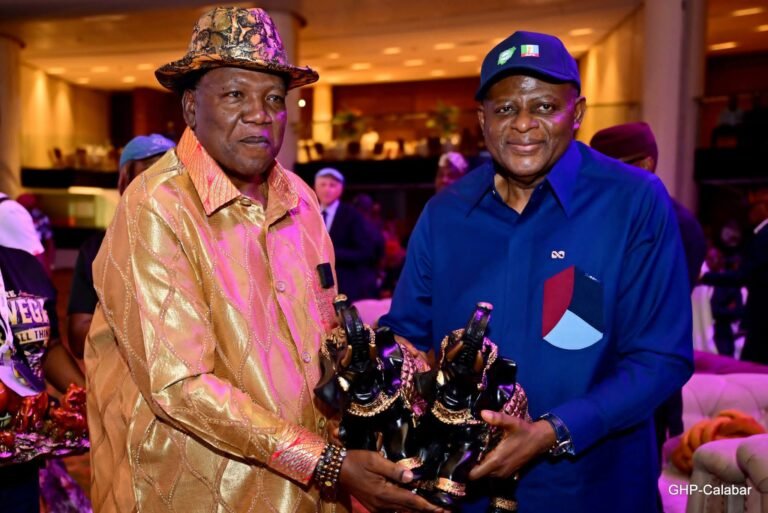
    Otunba Olusegun Runsewe has been honoured by the World Crafts Council (WCC) for his outstanding contributions to the development of arts, culture and the creative industry in Africa.
    Runsewe received the Icon of Crafts, Culture and Hospitality in Africa award at the Second World Crafts Forum, held in Kuwait City from February 1 to 3, 2026.
    In an award letter signed by the President of the World Crafts Council AISBL (International), Sa’ad al-Qaddumi, the Council commended Runsewe for his unwavering commitment to the preservation, promotion and sustainability of handicrafts, as well as his dedication to empowering craft communities across Africa.
    According to the Council, Runsewe’s efforts in advancing arts and handicrafts align strongly with the mission and objectives of the World Crafts Council.
    The letter further stated that the honour was accompanied by the presentation of a commemorative plaque in recognition of his remarkable contributions and steadfast commitment to the advancement of crafts.
    The plaque, the Council explained, serves as a formal acknowledgement of Runsewe’s role in promoting crafts, culture and hospitality in Africa and globally, and his invaluable support towards the preservation of handicrafts and the empowerment of craft communities.
    The World Crafts Council noted that the recognition reflects its deep respect for Runsewe’s leadership, vision and enduring dedication to cultural heritage.
    Runsewe is the immediate past Director-General of the National Council for Arts and Culture (NCAC).
    The World Crafts Forum (Kuwait 2026), with the theme “Craft in the Creative Economy,” brought together international craft leaders, artisans and policymakers to deliberate on the role of crafts in contemporary society, with emphasis on sustainability, heritage and resilience.

  • Ooni, NTDA Sign MoU to Boost Nigeria’s Tourism Sector

    Ooni, NTDA Sign MoU to Boost Nigeria’s Tourism Sector

    The Ooni of Ife, His Imperial Majesty, Oba Adeyeye Enitan Ogunwusi, Ojaja II, has pledged his support for the Nigerian Tourism Development Authority (NTDA) following the signing of a Memorandum of Understanding (MoU) between the agency and OJAJA Pan Africa Ltd.
    The MoU, signed in Abuja, is aimed at strengthening public-private collaboration to reposition Nigeria’s tourism industry as a key driver of economic growth, job creation and foreign exchange earnings.
    OJAJA Pan Africa Ltd, chaired by the Ooni of Ife, is a Pan-African platform focused on cultural branding, investment facilitation and diaspora engagement. The partnership seeks to leverage Nigeria’s cultural heritage, cuisine and hospitality assets to expand the country’s tourism footprint.
    Speaking at the signing ceremony, the Director-General of NTDA, Dr. Ola Awakan, described the Ooni as “an epitome of culture, a father figure and a strong advocate for youth development,” noting that the collaboration aligns with President Bola Tinubu’s Renewed Hope Agenda.
    According to Awakan, the partnership is designed to support economic diversification away from oil through tourism development and enhanced public-private partnerships.
    “This partnership promises transformative benefits for Nigeria’s tourism industry, including economic diversification beyond oil dependency, in line with President Bola Tinubu’s Renewed Hope Agenda,” he said.
    He added that by deploying strategic storytelling and cultural promotion, the collaboration would attract investment, create employment opportunities and increase foreign exchange inflows into the country.
    In his remarks, the Ooni of Ife commended Awakan for his professionalism and commitment to national development, citing his involvement in youth-focused initiatives such as the Royal African Youth Leadership Forum.
    The monarch urged the NTDA to continue prioritising youth inclusion in tourism development, noting the Director-General’s extensive experience across Nigeria and his appreciation of the country’s cultural diversity.
    Oba Ogunwusi also expressed gratitude to President Tinubu for appointing what he described as a youthful and energetic leader to head the NTDA, stressing the importance of dynamic leadership in cultural stewardship.
    The event featured symbolic exchanges, including the presentation of tourism-themed souvenirs to the Ooni by the NTDA Director-General, underscoring the partnership’s focus on cultural diplomacy and national branding.
    Stakeholders believe the NTDA-OJAJA alliance could serve as a model for tourism-led development, with potential long-term benefits for employment generation, revenue growth and Nigeria’s global visibility.

  • House Committee on Delegated Legislation Pledges Stronger Legislative Backing for Tourism Sector

    House Committee on Delegated Legislation Pledges Stronger Legislative Backing for Tourism Sector

    House Committee on Delegated Legislation Pledges Stronger Legislative Backing for Tourism Sector During Familiarisation Visit to NTDA

    The Chairman, House Committee on Delegated Legislation, Rt. Honourable Richard Olufemi Bamisile, PhD, has reaffirmed the National Assembly’s commitment to strengthening Nigeria’s tourism sector through effective legislation and strategic oversight during a familiarisation visit to the Nigerian Tourism Development Authority (NTDA).

    Speaking during the visit, Rt. Hon. Bamisile described the engagement as timely and significant, noting that the Committee is mandated to oversee statutory instruments, regulations, guidelines and orders issued by Ministries, Departments and Agencies (MDAs) to ensure they align with the intent of primary laws, promote good governance and do not impose undue burdens on citizens.

    According to him, the Committee serves as a critical bridge between legislative intent and executive implementation, stressing that the visit was not a fault-finding exercise but one aimed at foundation-building, partnership and mutual understanding.

    “Tourism is not merely about leisure; it is a powerful catalyst for economic growth, job creation, social cohesion and international diplomacy. It tells our story, shapes our image and unlocks opportunities in every corner of our nation,” he said.

    The Chairman noted that the Committee’s visit was to gain first-hand insight into the operational framework, achievements and challenges of the NTDA, examine existing regulations and guidelines governing the tourism sector, assess their interaction with the broader legislative landscape, and understand practical hurdles ranging from funding and infrastructure to security and global competitiveness.

    He assured the Authority of the Committee’s readiness to support the review of obsolete regulations, advocate enhanced budgetary provisions and strengthen legislative frameworks to protect Nigeria’s heritage sites and intellectual property within the tourism ecosystem.

    In his response, the Director-General of NTDA, Dr. Olayiwola Awakan, expressed appreciation for the visit, emphasizing that legislation remains the backbone of the Authority’s operations.

    “The success of NTDA cannot be written without legislation. It is the foundation upon which our mandate to regulate, develop and promote tourism in Nigeria rests,” Dr. Awakan stated.

    He described Nigeria as a nation blessed with an inexhaustible wealth of cultural, traditional and natural tourism assets, aligning the Authority’s work with President Bola Ahmed Tinubu’s vision of economic diversification and Public-Private Partnerships (PPP), with tourism positioned as a priority sector capable of boosting GDP growth.

    Dr. Awakan highlighted key implementation challenges associated with the NTDA Act, noting the need for clearer alignment and coordination across the tourism governance framework, particularly in the context of evolving judicial interpretations on asset control at sub-national levels. He referenced the Supreme Court judgment that places tourism assets under state jurisdiction and explained that ongoing efforts by the National Assembly to move tourism from the residual list to the concurrent list would help strengthen collaboration, ensure policy clarity and promote more balanced development of tourism destinations across the country. According to him, this approach would enable a more equitable distribution of resources across the tourism value chain and support inclusive growth nationwide.

    Since assuming office in October 2025, the DG disclosed that the Authority has intensified collaboration with sister agencies, states and the private sector, recognizing tourism as a private sector-driven industry. He cited partnerships with National Information Technology Development Agency (NITDA) to digitize airport tourism information desks, engagements with the Ministry of Foreign Affairs to showcase market-ready destinations across Nigeria’s foreign missions, and collaboration with Federal Airports Authority of Nigeria (FAAN) to strengthen NTDA’s visibility at airports, and the Nigerian Civil Aviation Authority NCAA.

    Dr. Awakan also revealed ongoing partnerships with states including Katsina, Nasarawa and Niger, while identifying funding as a major constraint, noting that countries investing strategically in tourism are already reaping measurable benefits.

    He further highlighted key initiatives such as the inauguration of a public-private sector committee to coordinate Nigeria’s participation in international tourism markets and expos, and the launch of the Naija Flavour Project in December 2025, aimed at promoting Nigeria’s food, arts, fashion, music, theatre and cultural identity to the global audience.

    While acknowledging that the NTDA Act of 2022 is still undergoing activation and refinement, the Director-General expressed optimism that sustained legislative support would address existing gaps.

    “With your support and collaboration, Sir, we are confident that tourism in Nigeria will soon deliver tangible results for the economy and national development,” he said.

    The visit concluded with both parties reaffirming their commitment to sustained dialogue and collaboration aimed at unlocking the full potential of Nigeria’s tourism sector for economic prosperity and national pride.

  • House Committee Pledges Stronger Legislative Support for Tourism Sector

    The House of Representatives Committee on Delegated Legislation has pledged stronger legislative backing for Nigeria’s tourism sector, as part of efforts to enhance economic diversification and sustainable development.
    The Chairman of the Committee, Rt. Hon. Richard Olufemi Bamisile, PhD, gave the assurance during a familiarisation visit to the Nigerian Tourism Development Authority (NTDA), describing tourism as a vital driver of economic growth, job creation and national image-building.
    Bamisile said the visit was aimed at strengthening collaboration between the legislature and the Authority, rather than fault-finding, noting that the Committee is statutorily mandated to oversee regulations, guidelines and statutory instruments issued by Ministries, Departments and Agencies (MDAs).
    According to him, the Committee ensures that delegated legislation aligns with the intent of primary laws, promotes good governance and does not impose unnecessary burdens on citizens.
    “Tourism is not merely about leisure; it is a powerful catalyst for economic growth, social cohesion and international diplomacy. It tells our story, shapes our image and unlocks opportunities across the nation,” Bamisile said.
    He explained that the Committee sought first-hand insight into the operational framework, achievements and challenges of the NTDA, while also examining existing tourism regulations and their interaction with broader legislative provisions.
    The lawmaker assured the Authority of the National Assembly’s readiness to support the review of obsolete regulations, advocate improved budgetary allocations and strengthen legislative frameworks for the protection of Nigeria’s tourism assets, heritage sites and intellectual property.
    In his response, the Director-General of NTDA, Dr. Olayiwola Awakan, thanked the Committee for the visit, stressing that legislation remains fundamental to the Authority’s mandate.
    “The success of NTDA cannot be written without legislation. It is the foundation upon which our mandate to regulate, develop and promote tourism in Nigeria rests,” Awakan said.
    He described Nigeria as richly endowed with cultural, traditional and natural tourism assets, aligning the Authority’s work with President Bola Ahmed Tinubu’s economic diversification agenda and the promotion of Public-Private Partnerships (PPP).
    Awakan identified key challenges in the implementation of the NTDA Act, particularly issues of coordination within the tourism governance framework and evolving judicial interpretations on asset control at sub-national levels.
    He referenced a Supreme Court judgment that places tourism assets under state jurisdiction, adding that ongoing efforts by the National Assembly to move tourism from the residual list to the concurrent list would enhance collaboration, clarify policy direction and promote balanced tourism development nationwide.
    The NTDA Director-General disclosed that since assuming office in October 2025, the Authority has intensified partnerships with sister agencies, states and the private sector, recognizing tourism as a private sector-driven industry.
    He cited collaborations with the National Information Technology Development Agency (NITDA) to digitize airport tourism information desks, engagements with the Ministry of Foreign Affairs to promote Nigeria’s destinations through foreign missions, and partnerships with the Federal Airports Authority of Nigeria (FAAN) and the Nigerian Civil Aviation Authority (NCAA) to strengthen tourism visibility at airports.
    Awakan also revealed ongoing partnerships with states including Katsina, Nasarawa and Niger, while noting that funding remains a major challenge, despite global evidence that strategic investment in tourism yields significant economic returns.
    He highlighted initiatives such as the inauguration of a public-private sector committee to coordinate Nigeria’s participation in international tourism expos and the launch of the Naija Flavour Project in December 2025, aimed at showcasing Nigeria’s food, arts, fashion, music and cultural identity globally.
    While acknowledging that the NTDA Act of 2022 is still undergoing activation and refinement, Awakan expressed optimism that sustained legislative support would address existing gaps.
    The visit concluded with both parties reaffirming their commitment to continued dialogue and collaboration to unlock the full potential of Nigeria’s tourism sector for economic growth and national pride..

  • FTAN Asks SON to Suspend TC/MC Nominations, Warns of Possible International Sanctions

    FTAN Asks SON to Suspend TC/MC Nominations, Warns of Possible International Sanctions

    The Federation of Tourism Associations of Nigeria (FTAN) has formally written to the Director General of the Standards Organisation of Nigeria (SON), Dr. Ifeanyi Chukwunonso Okeke, calling for the immediate suspension of all activities related to nominations into the National Technical/Mirror Committee (TC/MC) on Tourism and Related Services.
    FTAN, the apex umbrella body for the organised private sector in tourism, expressed strong dissatisfaction with a recent circular issued by the TC/MC inviting nominations into its sub-committees, describing the move as premature and a breach of trust.
    In a letter signed by its President, Dr. Aliyu Ajayi Badaki, and titled “Re: Premature Call for Nominations into the TC/MC on Tourism and Related Services – A Breach of Trust and Procedural Lapses,” the Federation urged SON to halt the nomination process and take urgent steps to restore transparency, inclusiveness, and adherence to due process.
    FTAN warned that the continued disregard for agreed procedures could send negative signals to the international community and potentially expose Nigeria to sanctions within global standardisation platforms.
    According to the Federation, a previous meeting between FTAN and SON over the unilateral inauguration of the TC/MC ended inconclusively, with SON management promising to convene a follow-up meeting to address FTAN’s concerns. FTAN noted that the call for nominations, while those issues remain unresolved, undermines the reconciliation process and erodes confidence in the public-private partnership framework.
    As a result, FTAN has directed all its member associations to decline participation in the nomination process. Members were also instructed not to submit names via the Google Form or any other channel provided by the TC/MC and to forward any related correspondence from SON to the FTAN Secretariat for record purposes.
    “The strength of our Federation lies in our ability to speak with one voice,” the letter stated, warning that premature participation could weaken the private sector’s bargaining power and jeopardize the long-term interests of Nigeria’s tourism industry.
    FTAN further raised concerns about alleged lapses in the vetting process for committee members, noting that some individuals were admitted without submitting curriculum vitae. It cited past incidents where inadequate representation reportedly led to Nigeria losing its voice at key international standardisation meetings, including within the African Organization for Standardization (ARSO).
    The Federation also questioned the integrity and neutrality of the current TC/MC leadership, alleging conflicts of interest and a lack of demonstrated commitment to the voluntary nature of standards development work.
    While stressing that it does not seek to interfere in SON’s internal affairs, FTAN maintained that it has a responsibility as a critical stakeholder to ensure that industry standards are developed by individuals with proven competence, commitment, and zero conflict of interest.
    FTAN stated that it would not participate in the TC/MC until a follow-up meeting is held, the committee’s leadership is dissolved and reconstituted in line with due process, and a qualified, selfless volunteer—consistent with the provisions of PPDNNS 5.7.1.1(c)—is appointed to head the committee.
    Despite the dispute, the Federation reaffirmed its commitment to professional collaboration with SON, provided such engagement is built on mutual respect and the meaningful inclusion of the organised private sector in decisions that directly affect the tourism industry.

  • NANTA Releases Zonal Election Timetable Ahead Golden Jubilee AGM

    NANTA Releases Zonal Election Timetable Ahead Golden Jubilee AGM

    The National Association of Nigeria Travel Agencies (NANTA) has announced the timetable for its zonal elections across the country, as part of preparations for its forthcoming Annual General Meeting (AGM) and national elections scheduled to hold later in the year.
    The association said the zonal elections, conducted in line with its constitution, will serve as a prerequisite for members aspiring to contest positions at the national level. Successful candidates at both zonal and national levels are eligible to serve a maximum of two terms of two years each, subject to the approval of the Board of Trustees.
    This year’s electoral process carries added significance as NANTA prepares to mark its golden jubilee, celebrating 50 years of existence. The milestone AGM and national elections are slated for Ibadan, Oyo State.
    Chairman of the NANTA Elections Committee and Second National Deputy President, Dr. Dagunduro Tukumbo, disclosed that the zonal elections will commence in Lagos State on February 12, 2026. According to him, the Eastern Zone, with headquarters in Port Harcourt, will conduct its election on February 19, followed by the Kano Zone on February 24, and the Abuja (Federal Capital Territory) Zone on February 25, 2026.
    Dr. Tukumbo added that the Western Zone will conclude the zonal exercise on February 26, 2026, with the validation of its new zonal leadership. The Western Zone will also host the national elections and AGM.
    He assured members of a transparent, credible and fair electoral process, urging all aspirants at zonal and national levels to familiarize themselves with, and strictly adhere to, the association’s electoral code of conduct.
    “NANTA has grown beyond electoral irregularities and remains committed to placing the association above all primordial interests,” he said.
    Ibadan, Oyo State, will also host NANTA’s golden jubilee celebration, expected to be a landmark event at the International Conference Centre.
    In his remarks, President of NANTA, Dr. Yinka Folami, expressed excitement over the forthcoming AGM and jubilee celebrations, promising to unveil new initiatives and leadership visions for the association’s future. He called on members nationwide to participate actively in the electoral process and ensure that credible representatives are elected to serve their collective interests.