






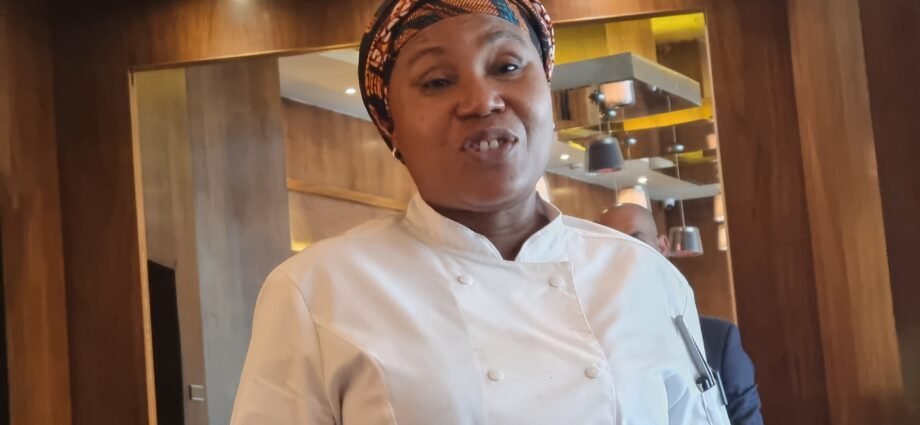
LAGOS — When Michelin-starred Nigerian chef Adejoké ‘Joké’ Bakare brings her London restaurant, Chishuru, to Lagos in November, one of the most significant outcomes may not be what is served at the dinner table, but what happens in the kitchen afterwards.
Bakare’s planned engagement with young Nigerian chefs could provide a rare opportunity for a new generation of culinary talents to learn directly from an internationally recognised Nigerian chef who has built a successful career by taking the country’s indigenous flavours to a global audience.
Chishuru will be in Lagos from November 4 to 7 for a four-night residency at Lagos Continental Hotel, Victoria Island. Beyond showcasing Bakare’s contemporary interpretation of Nigerian and West African cuisine, the initiative is expected to create opportunities for young chefs to experience her approach to food, technique, creativity and restaurant culture.
For Nigeria’s emerging culinary industry, the mentorship component could prove as important as the high-profile residency itself.
Bringing global experience home
Bakare’s journey from Nigeria to the London culinary scene and the subsequent Michelin recognition of Chishuru offers an unusual learning opportunity for young chefs at home.
Her cooking draws from Yoruba, Igbo and Hausa traditions while applying contemporary techniques developed through her international experience.
For young Nigerian chefs seeking to build careers around indigenous cuisine, the lesson is potentially significant: Nigerian food can provide the foundation for sophisticated contemporary cooking without losing its cultural identity.
The challenge for the next generation will be to understand how to transform that heritage into professional culinary products capable of competing in Nigeria and international markets.
Bakare’s interaction with young chefs could therefore go beyond teaching recipes.
It could expose them to questions of menu development, sourcing, presentation, kitchen discipline, restaurant management, storytelling and the commercial value of culinary heritage.
Building Nigeria’s culinary workforce
Nigeria’s growing restaurant and hospitality sector requires a steady pipeline of skilled culinary professionals.
Yet the development of a sustainable culinary tourism industry depends on more than attracting international chefs or opening high-end restaurants. It requires trained chefs who understand both traditional Nigerian cuisine and modern hospitality standards.
This is where mentorship can play a critical role.
Young chefs who gain exposure to Bakare’s methods could eventually become mentors themselves, creating a multiplier effect across the industry.
A chef trained in contemporary techniques could take those skills into another restaurant. Another could establish a food business. Others could develop catering companies, culinary schools, food-tourism experiences or restaurants built around regional Nigerian cuisines.
Over time, such a network could help strengthen the human capital supporting Nigeria’s hospitality and tourism industry.
Beyond recipes
Perhaps the greatest value of Bakare’s engagement with young chefs will be the opportunity to change how Nigerian cuisine is perceived and presented.
For decades, Nigerian food has often been promoted internationally through a relatively narrow selection of dishes.
Bakare’s work demonstrates that ingredients and culinary traditions from Nigeria can form the basis of contemporary restaurant experiences capable of attracting international attention.
Young chefs can build on that foundation by exploring the food traditions of different Nigerian communities.
The country’s diversity provides an enormous culinary laboratory: from Yoruba soups and stews to Hausa grains and spices, Igbo dishes, Efik seafood traditions, Edo cuisine and the food cultures of Nigeria’s Middle Belt and Niger Delta.
Each tradition contains ingredients, techniques and stories that could be developed into distinctive culinary experiences.
Mentorship and culinary tourism
For tourism planners, the potential impact extends beyond restaurants.
A stronger generation of Nigerian chefs could help develop culinary tourism products that connect food with destinations.
A chef specialising in indigenous cuisine could collaborate with tour operators to create food trails. Restaurants could work with farmers to offer farm-to-table experiences. Food festivals could become major visitor attractions, while culinary schools could develop programmes attracting students and professionals from other African countries.
This would position chefs not merely as providers of meals but as custodians and interpreters of Nigerian cultural heritage.
Bakare’s mentorship could therefore contribute to a broader conversation about the role of chefs in destination development.
Creating opportunities for young Nigerians
There is also a youth-employment dimension.
The hospitality industry provides opportunities across a wide range of occupations, from chefs and pastry specialists to restaurant managers, food photographers, content creators, caterers and food entrepreneurs.
If mentorship programmes are deliberately linked to employment, apprenticeships and enterprise development, the impact could extend beyond the kitchen.
Young people could acquire practical skills that enable them to establish businesses or pursue careers in Nigeria’s growing food and hospitality sector.
The challenge, however, will be ensuring that mentorship does not end when the chef leaves.
For the opportunity to produce lasting results, hospitality businesses, tourism authorities, culinary schools and private-sector operators would need to create structures through which young chefs can continue learning, accessing professional networks and finding opportunities.
From one residency to a movement
Bakare’s Lagos homecoming could therefore become a starting point rather than an isolated event.
A structured programme involving masterclasses, apprenticeships, chef exchanges and collaborations with Nigerian culinary institutions could turn international Nigerian chefs into catalysts for skills development at home.
Such programmes could also encourage successful Nigerian chefs in the diaspora to return periodically to share knowledge and establish partnerships with emerging talent.
The long-term objective would be to create a stronger Nigerian culinary ecosystem in which indigenous food is documented, professionally developed, commercially packaged and promoted internationally.
Bakare’s four-night Chishuru residency will eventually end.
But if the young chefs who encounter her work leave the experience with new skills, confidence and a stronger understanding of the possibilities within Nigerian cuisine, her most important contribution may only be beginning.
The real measure of the homecoming, therefore, may not be the number of dinners served in Lagos, but the number of young Nigerian chefs who are inspired and equipped to take the country’s cuisine to the next level.