








Samson Oladejo
The Pioneer and Immediate Past Rector of Federal Polytechnic Ayede, Oyo State, Engr. Dr. Taofeek Adekunle Abdul-Hameed, FNSE, has been honoured for his administrative excellence and contribution to nation-building, following his participation in a high-level review of tertiary education reforms in Nigeria.
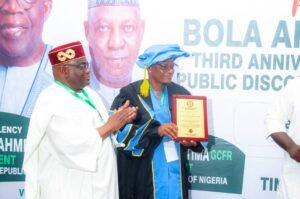
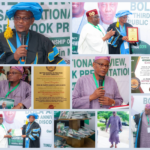
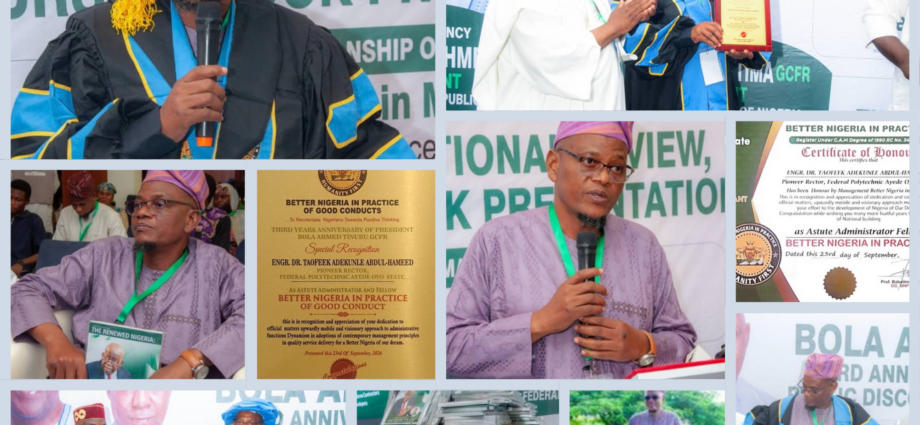
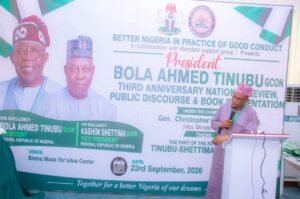
Dr. Abdul-Hameed received a Special Recognition Award as an “Astute Administrator and Fellow Better Nigeria in Practice of Good Conduct” at the Three-Year Administration Review and Book Presentation organised by Better Nigeria in Practice of Good Conduct on Wednesday, September 23, 2026, at the Shehu Musa Yar’Adua Centre, Central Business District, Abuja.
The recognition, presented as part of activities marking the third anniversary of the administration of President Bola Ahmed Tinubu, acknowledged Dr. Abdul-Hameed’s dedication to official responsibilities, visionary approach to administrative functions, dynamism in adopting contemporary management principles and commitment to quality service delivery.
The organisers described the award as recognition of his contribution towards the pursuit of a better Nigeria through professionalism, good conduct and responsible leadership.
Receiving the recognition, the former Rector also delivered a major presentation on Nigeria’s tertiary education reform agenda, focusing on student financing through the Nigerian Education Loan Fund (NELFUND) and efforts to achieve greater stability in academic calendars.
Speaking on “The Tinubu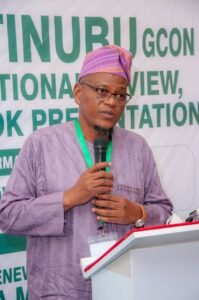 Administration’s Reform of Tertiary Education in Nigeria: A Focus on NELFUND and the Pursuit of Stable Academic Calendars,” Dr. Abdul-Hameed examined the impact, opportunities and sustainability of current interventions designed to improve access to higher education and reduce disruptions to students’ academic progression.
NELFUND AND ACCESS TO EDUCATION
Dr. Abdul-Hameed identified student financing as a critical component of tertiary education reform, noting that financial constraints have historically constituted a major barrier to access and completion of higher education for many Nigerian youths.
He cited NELFUND’s latest available figures as of September 3, 2026, which showed that 1,659,853 applications had been processed, with total disbursements of ₦355.87 billion. Of the amount, ₦192.89 billion had been disbursed to 319 beneficiary institutions for institutional fees, while ₦162.98 billion had been provided as student upkeep allowances.
Dr. Abdul-Hameed said the figures demonstrated the scale of student financing under the scheme, while stressing the need for sustained implementation, transparency, monitoring and accountability.
According to him, the significance of NELFUND extends beyond financial assistance, as it has the potential to address one of the fundamental challenges confronting students from financially disadvantaged backgrounds.
“NELFUND and the effort to end the ASUU crisis are two sides of one vision: putting the Nigerian student at the centre of national development,” he stated.
He explained that while student financing addresses the financial barrier to entering and remaining in tertiary education, stable academic calendars address the institutional barrier to completing programmes within reasonable periods.
FEDERAL POLYTECHNIC AYEDE AS A CASE STUDY
Drawing from his experience as the Pioneer Rector of Federal Polytechnic Ayede, Dr. Abdul-Hameed demonstrated how national education policies could translate into tangible interventions at institutional level.
He disclosed that in March 2025, NELFUND paid the full tuition fees of 44 students of Federal Polytechnic Ayede directly to the institution, after which the pioneer beneficiaries began receiving monthly upkeep allowances.
According to him, the intervention was particularly significant for a young institution established in 2021, which had the responsibility of developing its academic, administrative and student-support structures from the foundation.
“For us at Federal Polytechnic Ayede, the impact of NELFUND is not abstract — it is real, direct and life-changing,” he said.
He added that the institution prioritised student verification, data submission, sensitisation and counselling to position eligible students to benefit from the scheme.
“What we are witnessing is a reflection of purposeful governance — an administration that has backed its commitment to education with real, measurable action,” Abdul-Hameed stated.
ACADEMIC STABILITY AND STRUCTURED DIALOGUE
Turning to academic stability, the former Rector examined the consequences of prolonged industrial disputes on students, institutions and the Nigerian education system.
He noted that recurrent disruptions could significantly extend programmes designed to last four years, thereby increasing the financial and social burden on students and their families.
Dr. Abdul-Hameed highlighted the December 2025 Federal Government–Academic Staff Union of Universities (ASUU) agreement as an important development in efforts to establish a more structured relationship between government and university-based academic unions.
He, however, emphasised that agreements alone could not guarantee lasting stability without faithful implementation, continuous engagement and responsible funding.
“The December 2025 agreement was a genuine structural breakthrough, but its durability still depends on continued, faithful implementation rather than being a fully closed chapter,” he cautioned.
He therefore advocated sustained dialogue, adequate funding, institutional accountability and stronger collaboration among government, university authorities, academic unions and other stakeholders.
ABDUL-HAMEED’S ADMINISTRATIVE RECORD EARNS SPECIAL RECOGNITION
The recognition bestowed on Dr. Abdul-Hameed at the Abuja event further highlighted his record as an administrator whose professional career cuts across engineering, technology management, education and institutional leadership.
The award citation specifically recognised his dedication to official matters, upwardly mobile and visionary approach to administrative functions, dynamism in adopting contemporary management principles and commitment to quality service delivery.
The organisers consequently honoured him as an “Astute Administrator and Fellow Better Nigeria in Practice of Good Conduct,” while wishing him many more fruitful years in the service of nation-building.
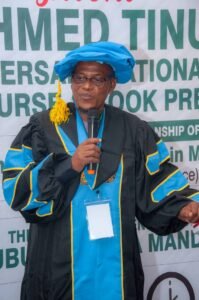
For an administrator who served as the pioneer head of a young federal institution, the recognition adds another dimension to his public record, placing his contribution within the broader conversation on professional conduct, institutional development and national service.
EXPERIENCE BEYOND THE CONFERENCE ROOM
Dr. Abdul-Hameed brought to the Abuja discourse considerable experience from engineering, technology management, academic administration, quality assurance and polytechnic education.
His professional and academic background includes qualifications in Electrical Engineering, Industrial and Production Engineering and Technology Management, alongside doctoral-level qualifications in Technology Management and Electrical/Electronic Engineering.
His experience in engineering education, accreditation exercises, quality assurance and institutional administration has also informed his interventions on Nigeria’s tertiary education sector.
As Pioneer Rector of Federal Polytechnic Ayede, he played a foundational role in steering the institution through its formative years, when its academic and administrative systems were being established.
His contributions to the discourse on technical and vocational education have also extended to skills acquisition, entrepreneurship, employability and the future of polytechnic education.
REFORM MUST DELIVER SUSTAINABLE RESULTS
Dr. Abdul-Hameed stressed that the success of tertiary education reform should ultimately be measured by its capacity to produce sustainable improvements in the lives of students, lecturers and institutions.
He described NELFUND and efforts to stabilise academic calendars as complementary interventions addressing different dimensions of the tertiary education challenge.
“One removes the financial barrier to entry; the other aims to remove the systemic barrier to completion,” he said.
He argued that the desired outcome should be an education system in which students can commence their programmes without debilitating financial barriers and complete them without recurrent disruptions.
“If sustained and fully implemented, these reforms can move Nigeria toward an era where a four-year course is truly four years, where no youth is denied education because of poverty, and where lecturers are motivated to stay and build the nation,” he said.
CALL FOR CONTINUITY AND ACCOUNTABILITY
Concluding his presentation, the former Rector called for continuity, accountability and collaboration in the implementation of tertiary education reforms.
He maintained that education reform should remain a continuous national project involving government, institutions, unions, students and other stakeholders.
His central message was that the Nigerian student must remain at the heart of tertiary education policy.
The Abuja engagement therefore provided another platform for Dr. Abdul-Hameed to contribute his institutional experience to national discussions on education financing, academic stability and the future of tertiary education.
With his recognition as an Astute Administrator and Fellow Better Nigeria in Practice of Good Conduct, alongside his continued participation in national education discourse, the Pioneer and Immediate Past Rector of Federal Polytechnic Ayede continues to bring his experience in engineering, technology, education and institutional leadership to conversations on building a more accessible, stable, skills-oriented and globally competitive Nigerian tertiary education system.This version deliberately puts the award in the lead, because it gives the story a fresh news angle, while the NELFUND presentation provides the substantive national-interest content. The NELFUND figures have also been cross-checked against recent reporting of the September 3, 2026 figures.