


Year: 2026

  • NELFUND extends loan application deadline for BUK students


    By Bashir Bello

    Kano:   Bayero University, Kano (BUK) has announced an extension of the Nigerian Education Loan Fund (NELFUND) application period for eligible students for the 2025/2026 academic session.

    This is contained in a special bulletin signed on behalf of the Registrar by the Director of Public Affairs, Lamara Garba, issued to Newsmen on Saturday in Kano.

    Garba said the extension and reopening of the NELFUND portal followed a request by the university management, giving students the opportunity to apply from May 8 to 29.

    “This reopening provides the final opportunity for eligible students who have completed their screening to visit the official NELFUND portal at http://portal.nelf.gov.ng to commence and complete applications for both institutional charges and upkeep.

    “Applicants are advised to strictly follow all application procedures and upload the required documents on the portal,” he said.

    Garba stressed that all necessary documents must be properly uploaded to avoid delays or disqualification.

    “Applications for institutional charges and upkeep must be submitted simultaneously, as separate applications may not be processed,” the director said.

    He discouraged the use of microfinance bank wallet accounts such as Opay and Moniepoint for the application.

    “Applicants should ensure their email addresses are accurate and accessible.

    “Passwords must be securely kept and remembered, as they will be needed to access the portal and track application status,” he said.

    Garba urged all eligible students to take advantage of the final window and complete their applications before the deadline. (NAN)(www.nannews.ng)

  • Hon. Onwubiko Attends NDC National Congress as Party Zones 2027 Presidency South

    Hon. Onwubiko Attends NDC National Congress as Party Zones 2027 Presidency South

    Flowerbud News/ Hon. Thomas Victor Onwubiko Attends NDC National Congress as Party Zones 2027 Presidency to the South

    Maritime expert and political figure, Hon. Thomas Victor Onwubiko, on Friday joined top leaders and stakeholders of the Nigeria Democratic Congress (NDC) at the party’s National Congress held at the Los Angeles Events Centre, Abuja, where the party officially zoned its 2027 presidential ticket to Southern Nigeria.

    The congress, which attracted thousands of party faithful, delegates, youth groups and political supporters from across the country, marked a significant moment in the evolving political landscape ahead of the 2027 general elections.


    The event was attended by several high-profile political leaders, including NDC National Leader, Senator Seriake Dickson, former Labour Party presidential candidate Mr. Peter Obi, and former Kano State Governor, Engr. Dr. Rabiu Musa Kwankwaso.

    Also present were members of the Obidient Movement and the Kwankwasiyya Movement, whose supporters filled the venue in large numbers, creating an atmosphere of enthusiasm and renewed opposition coalition politics.

    The congress witnessed passionate speeches by party leaders who stressed the need for national unity, inclusive governance, economic reforms and a new political direction capable of addressing Nigeria’s mounting social and economic challenges.

    A major highlight of the congress was the official announcement zoning the party’s 2027 presidential ticket to the South, a decision party leaders described as necessary to promote equity, fairness and national balance.

    Speaking during the gathering, Senator Seriake Dickson said the decision reflected the party’s commitment to justice and power rotation, insisting that the South deserved the opportunity to continue leading the country after years of political imbalance and growing national tensions.

    According to him, the NDC remains committed to building a broad-based national coalition capable of rescuing Nigeria from insecurity, unemployment, economic hardship, and deepening political divisions.

    Peter Obi, who received loud cheers from supporters at the congress, reiterated the need for competent and accountable leadership, urging Nigerians to remain hopeful despite current economic difficulties.

    Obi stressed that the 2027 elections would not only be about political parties but about the future survival of Nigeria as a united and prosperous nation.

    Similarly, Engr. Dr. Rabiu Musa Kwankwaso called for stronger collaboration among opposition forces, warning that division among progressive political movements could weaken efforts to provide credible alternatives for Nigerians.

    Observers at the congress noted the increasing political cooperation between the Obidient Movement and the Kwankwasiyya Movement, especially after the recent alignment of key political actors under the NDC platform.

    Supporters carrying banners, party flags, and campaign materials repeatedly chanted solidarity songs as leaders addressed the gathering on the future direction of the party.

    Hon. Thomas Victor Onwubiko, while interacting with party supporters at the venue, reaffirmed his commitment to grassroots development, youth empowerment and quality representation.

    He noted that the congress demonstrated the growing strength of the NDC across the country and expressed confidence that the party would emerge as a major force in the 2027 elections.

    According to him, Nigerians are increasingly demanding responsive leadership, economic reforms and people-oriented governance.

    He also commended the leadership of the party for successfully organising what many described as one of the largest opposition political gatherings in recent times.

    Political analysts believe the congress may signal the beginning of a broader opposition realignment ahead of 2027, particularly with the increasing involvement of influential political blocs and youth-driven movements.

    The presence of supporters from different regions of the country also reflected growing efforts by the NDC to position itself as a truly national platform capable of attracting politicians, professionals, youths and civil society groups dissatisfied with the current political structure.

    Security was visibly tight around the Los Angeles Events Centre throughout the congress, with security operatives maintaining order as delegates and supporters trooped into the venue.

    Several party leaders from the South-East, South-South, North-Central and South-West also used the occasion to reaffirm their loyalty to the party and their commitment to building a united opposition coalition.

    The congress eventually concluded with a communique endorsing the zoning arrangement and calling on Nigerians to support the party’s vision for national transformation, economic recovery and democratic consolidation ahead of the 2027 general elections.


  • NIGERIA, UNITED STATES DEEPEN COOPERATION ON SECURITY, COUNTERTERRORISM AS RIBADU MEETS VANCE, RUBIO


    Nigeria and the United States are forging ahead in deepening cooperation on security, counterterrorism, regional stability, and strategic partnership.

    Nigeria’s National Security Adviser (NSA), Mallam Nuhu Ribadu, who undertook a three-day working visit to the United States from May 4 to May 6, held a series of high-level engagements with senior officials of the U.S. government and conveyed President Bola Ahmed Tinubu’s strong commitment to Nigeria’s longstanding strategic partnership with the United States.

    This was disclosed in a statement by Bayo Onanuga, the Special Adviser to the President on Information and Strategy on Saturday.

    Ribadu met with US Vice President J. D. Vance, the Acting National Security Advisor and Secretary of State, Marco Rubio; the Undersecretary for Political Affairs, Allison Hooker; and Assistant Secretary of War Daniel Zimmerim.

    The meetings provided an opportunity for both sides to review the current state of Nigeria–United States relations and to further strengthen ongoing collaboration in counterterrorism, defence cooperation, intelligence sharing, regional security, economic resilience, and democratic governance.

    Ribadu emphasised the importance of sustained cooperation in addressing emerging security challenges confronting West Africa and the broader Sahel region, particularly terrorism, violent extremism, transnational organised crime, and cyber threats.

    The NSA noted that Nigeria remains fully committed to working with international partners in promoting peace, stability, democratic governance, and economic development across Africa. He further underscored Nigeria’s role as a regional leader and frontline state in counterterrorism efforts across the Lake Chad Basin and West Africa.

    Discussions also focused on the evolving security situation in the Sahel, the need for enhanced regional cooperation, and the importance of strengthening institutional capacity to respond effectively to complex and asymmetric threats.

    During his meeting with Under Secretary for Political Affairs Allison Hooker at the U.S. Department of State, NSA Ribadu expressed Nigeria’s appreciation to the U.S. government for its continued support and cooperation in various sectors, particularly in security assistance, intelligence collaboration, defence capacity building, humanitarian support, and counterterrorism operations.

    He reaffirmed Nigeria’s commitment to implementing the agreed roadmap under the Nigeria–U.S. Joint Working Group (JWG), established to advance structured bilateral cooperation on strategic and security-related matters.

    Both sides reviewed progress under the JWG framework. They discussed practical measures to enhance the implementation of agreed initiatives, including intelligence sharing, military cooperation, counterterrorism support, border security, strategic communications, and capacity development for Nigerian security institutions.

    The discussions also highlighted the importance of maintaining regular channels of communication and strengthening institutional coordination between the two countries to address common security challenges.

    The NSA also used the opportunity to brief U.S. officials on ongoing reforms and operational measures being undertaken by the Government of Nigeria to improve national security, stabilise affected communities, and address the root causes of insecurity. He emphasised the administration’s whole-of-government approach, which combines kinetic and non-kinetic measures, including community engagement, economic development, deradicalisation initiatives, and regional partnerships.

    U.S. officials commended Nigeria’s continued leadership role in regional peace and security efforts and acknowledged Nigeria’s importance as a strategic partner of the United States in Africa. Both sides reaffirmed their shared commitment to democratic values, regional stability, economic cooperation, and the promotion of sustainable peace and security across West Africa and the Sahel.

    The meetings concluded with a mutual commitment to deepen further bilateral engagement through sustained diplomatic dialogue, enhanced defence and security cooperation, and the effective implementation of ongoing bilateral initiatives under the Joint Working Group framework.

    Both Nigeria and the United States expressed optimism about the future of the strategic partnership. They reaffirmed their readiness to continue working closely to advance shared interests and address common global and regional challenges.


  • Ogun 2027: Why Yayi needs Egba partner on the ballot

    Ogun 2027: Why Yayi needs Egba partner on the ballot


    Senator Solomon Olamilekan ‘Yayi’ Adeola


    By Is-Haaq Tijani

    As Ogun State approaches the 2027 gubernatorial election, the political landscape is buzzing with a rare sense of consensus. For the first time in the state’s history, major stakeholders –including Governor Dapo Abiodun and former governors Olusegun Osoba, Gbenga Daniel and Ibikunle Amosun – have united behind a single figure: Senator Solomon Olamilekan Adeola, popularly known as Yayi.

    While Yayi’s adoption as the APC consensus candidate is a massive win for Ogun West’s long-standing quest for the governorship, the arithmetic of victory in the “Gateway State” has always required more than just a single region’s enthusiasm. To ensure a seamless transition and an overwhelming victory, an Egba partner on the ballot is not just a political courtesy—it is a strategic necessity.

    Yayi’s track record and broad acceptability have softened many hearts in the Central Senatorial District, but there remains a vocal movement advocating for an Egba indigene to take the top seat in 2027. Groups like the Egba Lokan Agenda 2027 have been clear about their desire to see one of their own leading the state. Placing an Egba man on the ballot as a deputy governor or in a high-stakes partnership validates the Egba interest and bridges the gap between the “Yewa turn” and “Egba aspirations.”

    Ogun Central (the Egba bloc) holds a massive chunk of the state’s registered voters. Historically, elections in Ogun State are won by candidates who can secure a simple majority and at least 25 per cent of the votes in two-thirds of the local governments. While Yayi has maternal roots in Kemta, Abeokuta, a running mate who is a full-blooded “son of the soil” from the Egba heartland would solidify the base, neutralising any potential opposition from other parties that might try to exploit regional sentiments.

    Ogun State’s political stability has often relied on a delicate balance between its four major sub-ethnic groups: Egba, Ijebu, Remo, and Yewa/Awori. With a Remo governor (Dapo Abiodun) currently in power and an Ijebu (Gbenga Daniel) having served before, both of whom hail from Ogun East Senatorial District, the shift to Yewa (Ogun West) is seen as a move towards equity and justice. An Egba partner ensures that the political nerve centre of the state, Abeokuta, remains directly represented at the highest level of governance, preventing any feeling of exclusion for a long period.

    The recent consensus arrangement reached by the APC was a masterstroke designed to avoid a “contentious primary.” Many influential Egba leaders have shown varying levels of alignment with the party’s direction. Solidifying this with an Egba partner on the ticket ensures that the “rainbow coalition” remains intact through the general election.

    Yayi’s candidacy represents a historic opportunity to break a 50-year jinx and bring Ogun West into the fold of executive leadership. However, the road to Oke-Mosan is paved with alliances. By pairing Yayi’s massive grassroots appeal with a strong Egba presence on the ballot, the APC can present a unified, unstoppable front that respects the past while building a prosperous future for all indigenes of Ogun State.


  • Untitled post 88612


    Even if Atiku Abubakar decides to step down and mobilize northern support for a joint ticket between Peter Obi and Rabiu Kwankwaso, the assumption that such a coalition would automatically translate into nationwide victory is overly simplistic.

    Nigeria’s electoral map is not a tap you turn on with endorsements. It is a complex web of ethnic loyalties, political structures, grassroots mobilization, and, most importantly, voter trust.

    The phrase “it won’t fly beyond Onitsha Head Bridge” is symbolic. Onitsha Head Bridge represents the cultural and political boundary many believe limits Obi’s core strength to the Southeast. While Obi enjoys passionate support, especially among young voters and urban populations, translating that energy into widespread national acceptance remains a major hurdle.

    On the other hand, Kwankwaso commands influence in parts of the North, particularly among his loyal “Kwankwasiyya” base. But even that influence is not absolute across the entire northern region. Northern politics itself is fragmented—religion, ethnicity, and local interests all play heavy roles.

    Even if Atiku throws his weight behind them, it doesn’t mean the North will vote as one bloc. Nigerian voters are becoming more independent, more skeptical of political “arrangements,” and less willing to follow elite directives blindly.

    Beyond regional dynamics, there’s also the issue of political structure. Elections are not won on social media enthusiasm or elite endorsements alone—they are won at polling units, ward by ward, with strong party machinery. That is where many alliances collapse.

    So the real question is not whether a coalition can be formed—but whether it can build trust across regions, penetrate local political structures, and convince Nigerians that it represents more than just a strategic merger of ambitions.

    Until then, any ticket—no matter how attractive on paper—risks remaining exactly that: attractive on paper.

    #NigeriaPolitics #2027Elections #Atiku #PeterObi #Kwankwaso #PowerPlay #PoliticalReality #NigeriaDecides #CoalitionPolitics #NaijaVotes

  • NIGERIA’S EDUCATION CRISIS: WHY THE WAR AGAINST UNEARNED TITLES MATTERS

    NIGERIA’S EDUCATION CRISIS: WHY THE WAR AGAINST UNEARNED TITLES MATTERS


    By Adenekan Shogunle, fsi

    When Nigeria’s Minister of Education, Dr. Tunji Alausa, announced that recipients of honorary doctorates should no longer use the title “Dr.” in official settings, the reaction was immediate. Critics dismissed the policy as a trivial distraction from the nation’s systemic rot: millions of out-of-school children, collapsing infrastructure, and the mass production of unemployable graduates.

    These concerns are valid, but the dismissal is shortsighted. The misuse of academic titles is not a distraction from the collapse of Nigerian education; it is a primary symptom, and a driver, of that collapse.

    Over the years, anti-corruption agencies and regulatory institutions have also uncovered networks of unaccredited degree-awarding institutions operating within and outside Nigeria. The ICPC-NUC, through its University System Study And Review Report of 2012 and subsequent enforcement actions which led to the forced closure of 62 unaccredited academic degree awarding institutions in Nigeria, exposed deep-rooted abuses in the sector, including the activities of degree mills selling certificates and honorary titles for financial gain.

    Nigeria’s educational decay did not begin with empty laboratories. It began with the erosion of respect for merit and intellectual discipline. A nation that fails to distinguish between earned excellence and purchased prestige eventually hollows out its institutions. In such an environment, restoring boundaries around academic titles is not pettiness. The Minister’s directive, approved by the Federal Executive Council in April, 2026 is therefore, an essential act of institutional hygiene.

    THE DISTINCTION BETWEEN HONOUR AND SCHOLARSHIP

    The phrase ‘honoris causa’ is Latin for “for the sake of honour.” Globally, these degrees are ceremonial recognitions of philanthropy or leadership. They are not academic qualifications. They do not involve research, peer review, or the rigorous defense of a thesis.

    While the international standard dictates that recipients use the suffix “PhD (h.c.)” rather than the prefix “Dr.,” Nigerians have developed a social obsession with titles. Here, academic honours are often aggressively sought, publicly advertised, and socially weaponized. This creates a “credential theatre”, the performance of expertise without the discipline of it and that devalues the years of intellectual labor required to earn a genuine doctorate. When status can be negotiated or bought, the incentive for actual scholarship disappears.

    A CULTURE OF MORAL AND INSTITUTIONAL CORROSION

    The obsession for titles feeds a wider ecosystem of corruption that the Independent Corrupt Practices and Other Related Offences Commission (ICPC) continues to battle. The same culture that seeks unearned titles also fosters:

    i. Fake universities and certificate racketeering

    ii. Examination malpractice and plagiarism

    iii. “Sorting” and the inflation of résumés.

    iv. Predatory sexual exploitation for grades.

    The link between a “title-hungry” society and campus safety is direct: when academic power is viewed as a badge of status rather than a symbol of discipline, it is easily abused.

    This is why ICPC has continued to investigate and prosecute sexual harassment and abuse of power as corruption, and in collaboration with partners like the Gender Mobile Initiative, has pushed for dissemination and adoption of model anti-sexual harassment policies in educational institutions. Corruption in education is not merely financial; it is ethical and psychological.

    RESTORING THE VALUE OF KNOWLEDGE

    Critics are right: banning a prefix will not build a new classroom. However, meaningful reform must be holistic; addressing infrastructure, finance, and ethics simultaneously. We cannot fix the educational system while glorifying shortcuts.

    A system where titles matter more than learning produces universities that function as ceremonial factories rather than centers of innovation.

    TECHNOLOGY AS AN ENFORCEMENT TOOL: THE NERD PROJECT

    Beyond policy, the Federal Government has deployed a powerful digital enforcement tool: the Nigeria Education Repository and Databank (NERD). This initiative is designed to end certificate fraud by assigning a National Credential Number (NCN) and QR code to every diploma and transcript issued in Nigeria.

    By mandating that all academic reports be deposited into this central database, the NERD system ensures that expertise is a verifiable digital asset.

    In fact, compliance with the NERD standard is now a mandatory prerequisite for NYSC mobilization, effectively closing the door on the era of “arrangee” qualifications. No NERD clearance means no NYSC mobilization.

    It shows the government isn’t just banning titles but investing in technology to make fraud impossible.

    ICPC’s FRONTLINE ENFORCEMENT

    The necessity of such digital tracking is underscored by the ICPC’s enforcement activities. Acting on intelligence, the Commission has repeatedly stormed and dismantled fake NYSC orientation camps across the country. These operations have exposed networks of individuals masquerading as graduates, often using forged documents to infiltrate the national service scheme and civil service with disastrous consequences.

    Combined with the forced closure of 62 unaccredited “degree mills,” these actions highlight a disturbing reality: without strict boundaries around titles and credentials, our national identity, productivity and security are at risk.

    WHAT’S NEXT: FROM POLICY TO PARTICIPATION

    The war against unearned titles and educational decay is a collective one. Banning prefixes in official settings is only effective if citizens, institutions, and regulatory bodies actively police the boundaries of academic integrity. To move from policy to lasting reform, the following actions are critical:

    1. Verify Before You Celebrate

    Before acknowledging an institution or a title, verify its legitimacy. The National Universities Commission (NUC) regularly publishes a list of illegal universities operating in Nigeria. If an institution is not on the NUC-approved list, its degrees, honorary or earned, carry no legal weight.

    2. Report Degree Mills and Fraud

    If you have information on “degree mills” selling certificates or individuals using forged credentials, report them directly to the Independent Corrupt Practices and Other Related Offences Commission (ICPC).

    Online Petition: Submit a formal complaint via the ICPC Petition Portal.

    Toll-Free Hotline: Call 0800-CALL-ICPC (0800-2255-4272) to report acts of corruption anonymously.

    3. Break the Silence on Campus Abuse

    To restore the moral foundation of our institutions, we must eliminate the culture of exploitation. Students and staff facing sexual harassment should leverage technology for safe, confidential reporting:

    Campus Pal App: Download the Campus Pal App (developed by Gender Mobile Initiative in partnership with the ICPC) to report and track cases of harassment anonymously.

    Direct Reporting: Contact the ICPC’s Anti-Sexual Harassment Unit for institutional intervention.

    4. Demand Institutional Accountability

    Academic institutions must lead by example. Universities should digitalize their records for ease of verification and strictly adhere to the NUC Guidelines on the award of honorary degrees.

    The prefix “Dr.” should be a badge of discipline, not a commodity for sale. By using these reporting channels, every Nigerian can help ensure that academic titles, and the education they represent, mean something again.

    CONCLUSION

    The Minister’s policy is a return to global best practices. It raises a fundamental question: In a country battling institutional collapse, should academic titles still mean something?

    If the answer is yes, then we must protect the sanctity of the process. The war against educational decay cannot stop at prefixes, but it must include them. Restoring integrity to the sector begins with the simple realization that scholarship cannot be gifted; it must be earned and verified.

    -(Adenekan Shogunle, fsi, is the ICPC Resident Anti-Corruption Commissioner for Edo State.)

  • Celebrating a Visionary Engineer, Scholar, and Leader – Happy Birthday, Engr. Dr. AYANGBEKUN Oluwafemi Jacob!

    Celebrating a Visionary Engineer, Scholar, and Leader – Happy Birthday, Engr. Dr. AYANGBEKUN Oluwafemi Jacob!

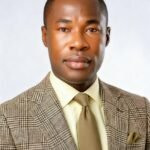
    On the special day of May 9th, the academic community proudly celebrates an intellectual powerhouse and exemplary leader, Engr. Dr. AYANGBEKUN Oluwafemi Jacob – the Ag. Dean of the School of Engineering Technology at the Federal Polytechnic Ayede, Oyo State.

    With nearly two decades of dedicated service in Computer Science and Engineering, Dr. Ayangbekun is not just a lecturer; he is a trailblazer. His journey through the university and polytechnic systems has shaped countless minds, and his current roles—Chairman of the Central Examination Committee and a distinguished Member of the Governing Council—underscore his unwavering commitment to academic excellence.

    Dr. Ayangebekun’s credentials speak volumes. He holds a Doctor of Philosophy (PhD) in Computer Science, an MSc in Computer Science, and a BTech in Computer Engineering, and is currently rounding up a second PhD in Computer Engineering at LAUTECH, Ogbomoso. His scholarly output is remarkable: over 80 research publications, presentations at conferences across Nigeria and internationally, and two authoritative academic textbooks to his name.

    As a registered COREN Engineer, MNSE, MNCS, CPN, MIAENG, and MIRDI member, Dr. Ayangebekun embodies the fusion of theory, practice, and professionalism. His leadership is defined by intellectual dexterity, ethical rigor, and a passion for advancing engineering education in Nigeria.

    Today, we join family, colleagues, and students in celebrating a man who builds futures—both in the classroom and in the boardroom.

    Cheers to a visionary, a mentor, and a leader. Happy Birthday, Engr. Dr. AYANGBEKUN Oluwafemi Jacob!
    Every 9th of May is your day – shine on!

    May God grant you long life, renewed strength, divine wisdom, and greater accomplishments in all your endeavors. May your impact continue to grow, and may your path be filled with favor, peace, and outstanding success. Amen.

  • Troops foil ambush attack during patrol in Enugu community, detain suspect, recover items

    Troops foil ambush attack during patrol in Enugu community, detain suspect, recover items

    Troops foil ambush attack during patrol in Enugu community, detain suspect, recover items

    The 82 Division of the Nigerian Army says troops of Sector 1, Operation UDO KA, on intelligence-led patrol mission to Imezi-Owa community, Ezeagu Local Government Area in Enugu State foiled an ambush attack.

    The Division said that the troops, in collaboration with other security agencies, foiled the attack by suspected terrorists of Indigenous People of Biafra (IPOB) and its Eastern Security Network (ESN).

    The Acting Deputy Director Army Public Relations 82 Division, Lt.-Col. Olabisi Ayeni, disclosed this in a statement on Saturday in Enugu.

    Ayeni said that the patrol on May 6 was a follow-up to the trailing of terrorist collaborators in the community.

    He said that while troops were advancing on foot to the community, they were attacked from a building, resulting in injuries to three personnel.

    According to him, in spite of the attack, troops maintained operational dominance, foiled the attack and secured the general area, while the injured personnel were promptly evacuated.

    The army spokesman said that the wounded personnel are currently receiving treatment at a military medical facility.

    He said, “During the exchange of fire, Improvised Explosive Devices (IED) stored by the terrorists in the building used as their hideout; detonated, and triggered a fire outbreak that destroyed the hideout.

    “Subsequent searches around the general area uncovered more IEDs, improvised hand grenades and shrine used for ritual activities.

    “The shrine was thoroughly combed and destroyed. This is to prevent continued usage for criminal activities and to safeguard the community members.

    “One collaborator was apprehended during the exploitation around the general area. The detained suspect and recovered items have been handed over to the Nigerian Police, Ezeagu Division, for further investigation.”

    Ayeni reassured the general public that ongoing operations are conducted with utmost professionalism and a firm commitment to protecting lives and property.

    He called on law abiding citizens of Imezi-Owa  community and its environs to remain calm, desist from harbouring criminal elements and cooperate with security agencies.

    “Headquarters Joint Task Force South-East operation UDO KA hereby warn members of the proscribed IPOB/ESN and their sympathisers to desist from illegal activities or face the full consequences of their actions as usual.

    “Security forces remain resolute in their determination to build the peace in the region and will continue to dismantle criminal networks and deny terrorists any freedom of action,” he added.