

Year: 2026

  • Atiku’s Son’s defection to APC, a clear message of rejection – TDF

    Atiku’s Son’s defection to APC, a clear message of rejection – TDF


    By Danladi Ahmed

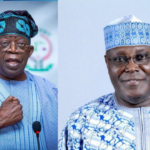
    The Democratic Front (TDF) has pointed to the defection of the son of former Vice President Atiku Abubakar to the All Progressives Congress (APC) as a message that Nigerians cannot afford to ignore.

    In a statement signed by its Chairman, Mallam Danjuma Muhammad, and Secretary, Chief Wale Adedayo, TDF insisted that it was proof of Atiku’s waning political influence even in his immediate family.

    It said: “Our attention has been drawn to a media report on the defection of the son of former Vice President Atiku Abubakar, Abbah Abubakar Atiku, from the opposition Peoples’ Democratic Party (PDP) to the All Progressives Congress (APC).

    “The bold decision made by the former VP’s son did not come to us at The Democratic Front, and indeed keen watchers of Nigeria’s politics as a surprise.

    “From our observations, the political popularity and goodwill of former Vice President Abubakar have been on a steady decline since he opted out of the ruling APC to pursue a presidential ambition that was clearly antithetical to the North-South rotational order of Nigerian presidency.

    “Similarly, Atiku’s dismal performance as an embattled Vice President to former President Olusegun Obasanjo raised a lot of unanswered questions around his personal integrity, which grossly eroded his political popularity and public appeal, resulting in persistent defeat in several presidential elections, including that of 2023.

    “Being the most politically active member of former Vice President Atiku Abubakar’s nuclear family, Abba Abubakar Atiku’s defection to join other members of the APC that are currently working for the reelection of President Bola Ahmed Tinubu is indeed a major setback for the father, no matter how much his media aides try to spin it.”

    It also noted that the former Vice President is not the only ADC leader who failed to convince their children about their new political platform.

    “We note that former Vice President Atiku Abubakar is not alone, because other ADC leaders like Senator David Mark and Mallam Nasir El Rufai do have their children representing the ruling APC in the Federal House of Representatives, and have since refused to join the opposition.

    “TDF believes that the simulacrum of harmony that unified the trio of Atiku, Mark, and El Rufai in the family rejection saga, is rooted in their conspiracy to displace President Tinubu for their selfish interests.

    “Having failed in his repeated attempts to convince the electorates to endorse him as Nigeria’s President in the last three decades, Atiku has become a nit-picker, who criticises government over irrelevant issues to elicit public attention, in his self-styled opportunistic opposition against the result-oriented Tinubu administration.

    “Meanwhile, former Senate President David Mark and former Kaduna State Governor Nasiru El Rufai are in a cohort championing a league of directionless critics to promote a MeToo opposition campaign that irrationally opposes everything Tinubu does, without providing concrete alternatives. This is precisely the reason Atiku’s son left the opposition party to join the APC.

    “We welcome Abba Abubakar’s decision to dump his father’s political camp in favor of President Tinubu’s reelection bid, and we also call on the children of both Senator Mark and El Rufai to remain steadfast and supportive of the second-term bid of the Tinubu administration, so that Nigeria can sustain the gains of the ongoing reforms in achieving socio-economic prosperity and political stability,” TDF added.

    End

  • Engineers confirm the ongoing construction of an underwater rail line that will join continents through a deep-sea tunnel


    Writes with an easy, open-road sensibility, weaving impressions from towns, long drives, and changing seasons. His style lingers on atmosphere and the subtle pull of place, often finding meaning in ordinary scenes and moments.

    At first you don’t see it.

    Just a grey smear on the horizon, cranes like metal insects, and the low hum that never really stops. Then your eyes adjust and you notice the ships anchored in a perfect line, the barges with strange cargo, the bright-orange helmets bobbing like buoys. Somewhere below all this noise and water, machines the size of cathedrals are eating through the seabed, metre by metre. Engineers on the deck speak quietly, the way people do in churches or at the start of a storm.

    On the screen in the control cabin, the seabed appears as a ghostly blue curve. A blinking dot shows where the tunnel-boring machine is. A few pixels to the left: another continent. What they’re building here sounds like science fiction told by a tired geologist after two coffees too many. An underwater rail line. A deep-sea tunnel that will join continents. And the strange part is, it’s not a concept anymore. It’s already under construction.

    The day engineers stopped saying “if” and started saying “when”

    The first thing you notice when you speak with the engineers is not the technology. It’s the way they talk about distance. They don’t say “thousands of kilometres” like the rest of us. They say “forty minutes by high‑speed train”. They see two continents not as separate worlds, but as two stations waiting to be linked by a straight line of steel and concrete under the sea.

    Out on the platform, a project manager points at the water and grins. “The tunnel’s already there,” he says. “It’s just rock we haven’t moved yet.” That sentence hangs in the salty air. Somewhere between arrogance and pure faith.

    To understand what this underwater rail line means, you have to imagine the commute of the future. A designer in one continent taking a morning train to a client meeting across the sea, coffee in hand, barely looking up from her tablet. A family deciding, almost on a whim, to spend a weekend on another continent because the travel time is shorter than today’s intercity routes. On a global map, the new line looks like a single hair-thin scratch across blue. On the ground, it reshapes how people think about borders.

    Freeze one day from this future and zoom in. In the early morning, cargo trains full of fresh food roll silently through the tunnel, sensors watching every axle. Later, high-speed passenger trains hit speeds that used to belong only to airplanes. The numbers are brutal: billions of dollars, years of work, pressures that would crush a submarine. Yet the daily experience will feel almost boring. You step in. You sit down. You scroll your feed. You arrive.

    Historically, almost every big tunnel project sounded ridiculous at first. The Channel Tunnel between the UK and France was mocked for decades. Tokyo’s underwater sections were called impossible. This new deep-sea rail link goes even further: deeper water, longer distance, more complex geology. Engineers are not just digging; they’re threading a needle through layers of rock and sediment that have never seen light.

    The science behind it is both brutal and elegant. Massive tunnel‑boring machines, with cutting heads wider than a city bus, chew through the seabed at a few dozen metres per day. Behind them, crews install concrete segments like a giant Lego set, sealing the tube as they advance. Sensors line every wall, listening for the slightest shift or leak. *A tunnel like this is less a structure and more a living system, constantly monitored, constantly adjusted.* The line between geology and engineering blurs in the dark.

    How you build a train line where humans can’t survive

    Every morning starts with a ritual. Not incense, but checklists. Air quality, water pressure, sensor readings, machine temperatures. In the control room, a wall of screens shows the health of the tunnel like a giant ECG. Green dots mean everything’s breathing normally. Yellow calls for a closer look. Red means somebody’s running somewhere right now.

    Far below, workers move in and out of pressurised capsules to reach the tunnel face. They spend limited hours in high-pressure environments to avoid damage to their bodies, then move back to normal pressure slowly. It’s a dance with physics that leaves no room for improvisation. One forgotten valve, one rushed decompression, and the human cost becomes very real. The rail line might belong to the future, but the risk is painfully present‑day.

    One engineer likes to show visitors a small glass sphere on his desk. Inside, a model of a tunnel ring. “That’s what’s between you and millions of tonnes of water,” he says, half joking. In reality, of course, it’s many layers: steel, concrete, membranes, pumps, emergency drains. But the feeling stays. You remember that glass sphere the first time you imagine yourself inside a train, deep under the sea, trusting calculations you’ll never see.

    We all know that moment when a train stops in a dark tunnel and conversations fade, just for a second. Down here, that pause becomes amplified by the thought of the ocean above. This is why safety is not a chapter at the end of the plan but the spine that holds everything together. Twin tunnels, emergency cross‑passages every few hundred metres, independent power feeds, evacuation areas carved into the rock. The design assumes that things will go wrong at some point—and then asks, again and again: “What happens next?”

    Statistically, modern rail tunnels are among the safest places you can be. They burn less fuel than cars, emit less carbon than planes, and offer far more control than a highway. Still, fear doesn’t always listen to statistics. That’s where design comes in: lighting that avoids that endless void feeling, clear signage in multiple languages, ventilation that keeps the air fresh, not stale. Tiny details decide whether a passenger relaxes with a book or counts the minutes to daylight.

    That’s also why these mega‑projects are tested in ways most people never hear about. Full‑scale fire drills with dummy trains. Controlled flooding simulations. Weeks of running empty test trains day and night, just to see what breaks. Engineers quietly admit that the list of “what ifs” never really ends. New technology means new kinds of failure—and new safeguards to invent.

    On the big picture level, this underwater link is about more than getting from A to B. It’s an economic artery waiting to open. Trade routes shorten. Air traffic patterns shift. Secondary cities along the line suddenly find themselves at the centre of something global. Real estate agents are already whispering about “future tunnel towns”, even while excavators are still chewing rock.

    Yet there’s a quieter layer: culture. Students choosing universities across the sea because the trip feels like a train ride, not a migration. Couples living on different continents but treating distance like a long suburban line. Tourism that doesn’t need a boarding gate. It’s easy to roll your eyes, but if you’ve seen what one bridge or subway line can do to a region, you know this isn’t just marketing talk.

    Behind the dream: methods, mistakes and the human side of a mega‑tunnel

    From a distance, mega-projects look like they’re driven only by cranes and cash. Up close, they live or die based on coordination. The method that keeps this underwater rail line moving is almost boring: relentless, disciplined communication. Daily coordination calls between marine crews, tunnelling teams, rail engineers, environmental experts. Everyone sees the same data, the same 3D model, the same risks board.

    On site, one practice keeps coming up in conversations: walking the line. Senior engineers, usually buried in spreadsheets and simulations, physically visit the tunnel segments, the marine platforms, the staging yards. They talk to the people holding the drills and the sensors. Things surface that never appear in a report. A tiny vibration. A weird sound. A feeling that something’s “off”. Soyons honnêtes : personne ne fait vraiment ça tous les jours sur tous les chantiers, mais sur celui‑ci, they’re trying.

    Another invisible method is the “stop rule”. Any worker, from the newest hire to the project director, has the explicit power to halt operations if something feels dangerous or unclear. On paper, it’s a common policy. In reality, it demands a culture where a 23‑year‑old diver can look at a schedule worth millions and say one word: “Stop.” That kind of culture doesn’t show up in glossy presentations. You sense it when a supervisor listens instead of snapping back.

    Where there’s this much ambition, there are also predictable mistakes. One of the most frequent? Underestimating the emotional reaction of the public. Engineers talk in probabilities and safety factors; passengers feel in images. Deep sea, darkness, pressure, disaster movies. Communication teams learned quickly that endless diagrams won’t change that. They started using virtual‑reality tours, opening control rooms for visits, letting people “ride” the future line long before the first train rolls.

    Another recurring error is treating the environment like a line in the budget instead of a design principle. Early in the project, local fishers complained about noise and ship traffic. Marine biologists raised alarms about sediment plumes. The old reflex is to handle this as PR. Here, part of the engineering team now works almost full‑time on “quiet construction” techniques and real‑time impact tracking. It’s not perfect. It’s also not optional anymore.

    For people following this from afar, a different mistake lurks: assuming this tunnel will magically solve everything. Congestion, emissions, regional inequality—all fixed by one heroic piece of infrastructure. Reality isn’t that generous. A tunnel is a tool. How we plan cities, set ticket prices, design connecting lines, that’s where the long‑term story will be written.

    “You don’t really build a tunnel between continents,” one senior engineer told me. “You build trust. In your calculations, in your team, in the idea that something this crazy is worth the risk.”

    Those words could sound like a slogan, yet they came at the end of a fourteen‑hour shift, eyes red from screens and salty wind. Trust is fragile in a place where one misjudged drill can flood a chamber. It’s built slowly, with redundancies, with painful reviews after every minor incident. It’s also built by admitting what scares you. Several engineers quietly admitted they wouldn’t ride the first public train. Not because they don’t believe in the tunnel, but because they know too well what went into it.

    What makes this project different: unprecedented depth and length under open sea.

    What keeps it moving: real‑time data, cross‑disciplinary teams, harsh internal critique.

    What could derail it: political shifts, budget fatigue, a single high‑profile incident.

    There’s also a more personal layer we rarely talk about. People build their lives around projects like this. Children grow up with parents on rotating shifts, holidays bent around construction milestones, relationships stretched across time zones. These sacrifices don’t appear on the cost sheet, yet they shape the culture that ultimately keeps passengers safe. Behind the machines and metrics, this is just a group of humans trying to do something no one’s done at this scale.

    What this deep‑sea line says about the way we want to live

    The idea that you could wake up on one continent, cross an ocean underground and have lunch on another feels like a plot twist from an optimistic sci‑fi novel. At the same time, it fits a quiet trend: we’re shrinking not just distances, but excuses. “It’s too far” turns into “it’s one train away”. That changes friendships, careers, how long you stay in a place before moving on.

    There’s a catch, of course. The same project that opens borders also concentrates power. Cities with a station on this line will draw talent and investment like magnets. Places left off the map may feel even more remote. Every drawn line is, by definition, also a cut. Choosing where to stop the tunnel is as political as building it in the first place.

    The environmental story is equally tangled. A fast, electric rail connection under the sea is cleaner than thousands of short‑haul flights over it. Still, the construction footprint is massive: steel, concrete, ships, noise, disruption. The honest question isn’t “Is this good or bad for the planet?” but “Compared to what? And over how many decades?” Those are the messy conversations that rarely fit into a headline, yet they’re exactly the ones worth having over dinner.

    One thing stands out when you stand by the water and watch the cranes move: the whole project is an act of faith. Faith that our models are good enough. That future generations will still want to travel. That cooperation between countries won’t crumble halfway through. On some level, this tunnel is less about trains and more about the story we tell ourselves: that we can still do big, hard, shared things without tearing each other apart.

    Maybe that’s why images of underwater rail lines trend so hard on social feeds. People aren’t just clicking on engineering diagrams. They’re clicking on a feeling: the idea that on the other side of the sea there’s no longer an “elsewhere”, just the next stop. Whether that excites you or scares you says a lot about how you see the future.

    Years from now, children will probably roll their eyes when adults mention “the time before the tunnel”, the way some teenagers today can’t imagine airports without self‑check‑in. For them, crossing continents by rail will be mundane, even slightly boring. Yet under their everyday boredom lies a huge, risky bet that a group of engineers, divers, welders and planners are making right now, in the dark, below the waves.

    Standing on the pier as the sun drops, the site looks almost calm from a distance. Just another industrial silhouette against an orange sky. You’d never guess that below, in the rock and pressure and data, people are quietly teaching two continents how to shake hands. Not with a bridge you can point at in postcards, but with a hidden line of steel where someone, one day soon, will yawn, check their messages, and cross an ocean without even seeing it.

    Point cléDétailIntérêt pour le lecteurUnderwater rail line under constructionEngineers are actively boring a deep‑sea tunnel to connect two continents by high‑speed trainUnderstand how a once‑sci‑fi idea is quietly becoming a real travel optionSafety and engineering methodsRedundant tunnels, real‑time monitoring, strict “stop rules”, high‑pressure work protocolsGain confidence in how risks are managed when travelling deep under the oceanImpact on daily life and the planetNew commutes, shifting economies, cleaner alternative to short‑haul flights, but huge build footprintWeigh how this mega‑project could change your work, travel habits and environmental choices

    FAQ :

    Is this underwater rail tunnel really being built right now?Yes. The project has left the drawing board and entered active construction, with tunnel‑boring machines already carving routes under the seabed and marine works visible from the surface.

    Will it be safe to travel deep under the sea by train?The design uses twin tunnels, multiple escape passages, heavy monitoring and strict international standards. No system is risk‑free, but modern rail tunnels have a strong safety record compared with road and air travel.

    How long will the journey between continents actually take?Current projections suggest travel times closer to a short regional flight than a long haul, turning what used to be a major trip into something that fits comfortably in a working day.

    Is this better for the environment than flying?Over its lifetime, a high‑capacity electric rail link can cut emissions compared with thousands of flights. The trade‑off is a very heavy construction footprint up front, which experts are still debating and measuring.

    When will regular passengers be able to use the tunnel?Large sections may open in phases over the next decade or so, but exact dates depend on construction progress, political agreements and rigorous testing before any public trains run.

    (Dylan Hartwell

    Writes with an easy, open-road sensibility, weaving impressions from towns, long drives, and changing seasons. His style lingers on atmosphere and the subtle pull of place, often finding meaning in ordinary scenes and moments.)

    /

  • Gunmen kidnap expatriate, kill policeman in Ibadan

    Gunmen kidnap expatriate, kill policeman in Ibadan


    Unknown gunmen on Saturday invaded Aqua Triton Company in Ogunmakin, near Ibadan, the Oyo State capital, abducting an expatriate and killing a police officer attached to him.

    Spokesman of the Oyo State Police Command and a Deputy Superintendent of Police, DSP Ayanlade Olayinka, confirmed this.

    In a statement made available to journalists in Ibadan on Saturday, Olayinka said the police officer was killed while repelling the attack, adding that some of the abductors sustained gunshot injuries.

    He said: “There was an attack at Aqua Triton Company in Ogunmakin, near Ibadan, where unidentified gunmen stormed the facility in a commando-style operation.

    “One police officer tragically died while repelling the attack, injuring some assailants, and the Chinese expatriate principal was abducted.”

    Olayinka said the command’s Commissioner, CP Femi Haruna, ordered the Assistant Commissioner in charge of Operations to lead anti-kidnapping and tactical teams to the scene.

    According to him, bush-combing operations are ongoing, while investigations continue to rescue the victim and arrest those responsible.

  • Onyeme Charges APC Members to Secure Voter’s Cards

    Onyeme Charges APC Members to Secure Voter’s Cards


    ​The Deputy Governor of Delta State, Sir Monday Onyeme, Ph.D, has charged members of the All Progressives Congress (APC) to ensure they obtain their voter’s cards from the Independent National Electoral Commission (INEC).

    ​He gave the charge on Friday at Ibabu, Onicha-Ukwuani, while addressing political office holders and leaders of the APC in Ndokwa West Local Government Area.

    ​According to him, “politics is a game of numbers; therefore, we should not play with numbers, we must take the registration exercise seriously.

    “It is not enough to register with the APC without having your voter’s card.

    “As the biggest party by population, we must also have voting strength, which can only be through our voters cards.

    “It is a good thing that our party is united, especially in Ndokwa West, and I want to thank you for doing so well.

    ‘The commitment of all leaders should translate into convincing our people to register with both our party and INEC.

    “I thank you for the cooperation and unity, making our party formidable in Ndokwa West, let us continue this cooperation, as it is the key to making meaningful progress.”

    ​The Chairman of the APC in the area, Chief Greg Onah, thanked the Deputy Governor for ensuring party unity and attracting more members.

    ​He disclosed, “the e-registration of APC members started in Delta State because of the confidence the party has in our Governor, Rt. Hon. Sheriff Oborevwori; our own Deputy Governor, we are proud of your input in governance, you should not relent in encouraging our people to be politically active.

    ‘Everyone of voting age in Ndokwa West is keen on joining the APC, so our area can be 100 percent APC, and we are encouraging them to also register with INEC.”

    ​The Chairman of the Ndokwa West Local Government Council, Chief Obi Nzete, also noted that the Deputy Governor’s interest in political enlightenment is encouraging more people to register with the party and INEC.

    ​Attendees included Hon. Charles Emetulu, Chief Festus Ochonogor, Engr. Dan Ossai, Chief Ben Ogwu, Barr. Emmanuel Egri-Okwaji, Ogbuefi Lucky Okuji, and Mr. Onyeka Idima (representing Hon. Eugene Okolocha), among others.

  • Hajia NihnotaLLAHI Abike Lawal Fondly Remembered as Son, Alh. Jibril Olaide Holds One Year Remembrance 

    Hajia NihnotaLLAHI Abike Lawal Fondly Remembered as Son, Alh. Jibril Olaide Holds One Year Remembrance 

    (Late Alhaja Nihmotallai Abike Lawal)


    By Olatunji Kazeem ( Imam Ailaka)

    Ede ( Osun) The Deputy Clerk of the Osun State House of Assembly, Alhaji Jibril Olaide Lawal on Friday marked one -year remembrance anniversary of his late mother, Alhaja Nihmotallai Abike Lawal, describing her life as one of sacrifice, love and enduring inspiration.

    The memorial, which began with a prayer session by the Muslim faithful, praised the virtues of late Abike Lawal saying : ” While death brings pain but remembering her for a life lived with faith and uprightness offer consolation to the bereaved.

    .

    The clerics used the occasion to admonish the gathering to care for their parents as Alhaji Laide Lawal did, particularly in old age, describing neglect of parents as morally wrong and spirituality costly.

    ” There are benefits attached to caring for one’s parents as our mothers pray for us and it’s believed those prayers are needed in our daily dealings.

    Speeking with flowerburdnews on the sidelines of the event, Alh Lawal said the family was celebrating a woman who gave her all to raise her children despite enormous personal challenges of that time.

    ” Today is memorable for us because we are celebrating a woman who gave birth to us and sacrificed everything to ensure we succeeded in life. Adding that the family ensured she was well cared for while alive and accorded her a befitting burial.

    He affirmed that the memory of their mother popularity known as IYA- TOTAL remained indelible, noting that her prayers and words of encouragement continued to guide them.

    He thanked Allah for preserving their household since her passing, saying they had not experienced any misfortune in their dealings.

    Dr Lanre Siyanbola, a Director in the office of Osun State Auditor General, said ” losing a mother is an indescribable experience, filled with grief and sorrow” .

    As we gather here today to pay tribute to our Mama’s life, I also advise the Baba Raji Adeleke, Olorigogoro and other dinasty to remain united and uphold the values their mother stood for.

    Family relations from Olateju, Olorigogoro, Oluroumbi, Apoaro and Abogunde compounds gathered to honour the late Matriarch, was commended for business ethics, philanthropy and strict adherence to the wish of her husband till their separation.

    Alhaja Neemotallai Abike Lawal aged 120, was born in 1905 and died on January 15 and buried the following day, blessed with many children including Dr Tajudeen Adedeji Adeleke, Chief Dupe Adeleke, Pastor Timothy Adeleke, Governor Ademola Adeleke and Olaide Lawal Adeleke and many others.


    About Flowerbudnews
    Established by Hon.  Biola Lawal, a former Acting Managing Director of the News Agency of Nigeria (NAN), FLOWERBUDNEWS is a consortium of active veteran journalists, experienced Multimedia broadcast experts and image makers.

    We are drawn from both public and private  sectors of Nigeria’s media Industry with a common  determination to enhance the practice of responsible journalism..

    Lawal, on his part, is also a former Honourable Commissioner for Information,Youth, Sports and Culture of Osun state, his home state.

    Biola Lawal had also successfully served two tenures as Press Secretary to the ECOMOG Force Commander in Liberia during the Liberian and Sierra Leone Civil wars. He was an outstanding NAN Defence and War Correspondent for many years.

    The retired NAN Acting Boss holds the honour of being the only journalist that served two terms on the ECOMOG international assignment due to his high professionalism and decency.

    He is a Co-Author of the book; ECOMOG, A BOLD ATTEMPT AT REGIONAL PEACEKEEPING! Edited Mrs Magaret Voght.  The book remains the most. factual, detailed and authentic book on the ECOWAS sponsored ECOMOG Military operation.

  • Vodi Advocates Prompt Tax Payment, Aligns with Renewed Hope Agenda, Infrastructure revolution in FCT

    Vodi Advocates Prompt Tax Payment, Aligns with Renewed Hope Agenda, Infrastructure revolution in FCT


    By Danladi Ahmed

    Abuja (FLOWERBUDNEWS):  Celebrity fashion designer, popularly called Seyi Vodi, has advocated prompt payment of taxes to fast-track the actualisation of President Bola Ahmed Tinubu’s Renewed Hope Agenda and accelerate infrastructural development in the Federal Capital Territory (FCT).

    Vodi made the call during a visit to the Corporate Headquarters of the Federal Capital Territory Internal Revenue Service (FCT-IRS) on Friday, where he filed his Annual Tax Return, a statement by Mustapha Sumailag, Head, Corporate Communications, FCT-IRS has disclosed.

    He urged business owners in the FCT and across the country to discharge their civic responsibility by voluntarily paying their taxes to facilitate the development of the territory and the nation at large.

    According to him, tax payment remains a key driver of sustainable development, noting that increased compliance would further enhance the capacity of government to meet the developmental needs of citizens.

    “It is noble to pay your taxes because this is the money the government uses for infrastructural development and the provision of public services to the people.

    “I am urging my fellow business owners, especially tailors, to come forward and voluntarily discharge this civic responsibility for the progress of the FCT and Nigeria as a whole.

    “I must commend the Minister of the Federal Capital Territory, Barrister Nyesom Wike, for the giant strides recorded within two years in office. I have been a resident of the FCT for the past 25 years, since my NYSC days. I know what the FCT used to be and what it is today.

    “The infrastructural development under the present FCT Minister is unprecedented, particularly in road construction and security. The projects are visible; only the blind would fail to see how the capital city has been transformed,” he stated.

    In his remarks, the Acting Executive Chairman of the FCT-IRS, Mr Michael Ango, commended the fashion designer for taking the bold step of voluntarily visiting the Service to file his Annual Tax Return without coercion.

    Ango described Vodi’s action as worthy of emulation by other business owners and high-net-worth individuals in the FCT, noting that he is the first High Net-Worth Individual to file his Annual Tax Return for the year.

    He further appealed to the celebrity to extend the campaign for voluntary tax compliance among his peers, encouraging them to come forward and fulfil their civic responsibility for the progress of the territory.

    “The Minister has transformed Abuja into a world-class capital city, and citizens must support this progress by living up to their responsibilities so the FCT Administration will have adequate resources to do more,” he said.

    Ango also pledged that the Service would present Vodi with a letter of commendation in recognition of his compliance as the first High Net-Worth Individual to file his Annual Tax Return this year.


  • Peter Obi Manipulating Media to Undermine New Tax Law – Group

    Peter Obi Manipulating Media to Undermine New Tax Law – Group


    By Iyiola Olalere

    The Democratic Front (TDF) has accused the former presidential candidate of the Labour Party, Peter Obi, of desperation in a bid to undermine the new tax laws.

    In a statement signed by its Chairman, Mallam Danjuma Muhammad, and Secretary, Chief Wale Adedayo, the group accused the former Anambra governor of ignorantly jumping on issues raised by a notable audit firm on the tax reforms, KPMG.

    It said: “We are, however, not surprised that a politician who thrives on soundbites like Peter Obi, whose political value has been grossly reduced to media headlines, will hastily assume that a KPMG advisory implies imperfections in the tax law that should warrant the suspension of the law.

    “It is indeed irresponsible and unethical that Peter Obi did not even wait to know the outcome of KMPG’s meeting with the Executive Chairman of the Nigeria Revenue Service (NRS) over the observations raised in the newsletter, before he rushed into the public space with his uninformed opinion.

    “TDF is, however, ecstatic that the meeting of seasoned tax administrators between the NRS and the KMPG delegation has helped the accounting firm to better understand the new tax laws before releasing the statement, which Obi hastily weaponised to create public doubt and distrust around the new tax law.

    “We believe that KMPG’s appreciation and commendation for the new tax law and its implementation by the government was a bitter pill for Peter Obi and his gang of spin doctors, who have perfected the art of undermining the truth to promote negative narratives about Nigeria.

    “It is to the credit of the Tinubu administration and Nigeria, that the KMPG team concluded by saying the initial apprehension over the tax laws has been significantly allayed by clarifications from the NRS. And that the ongoing economic reforms and tax laws are both necessary and timely.

    “Obi and his band of revisionists would no doubt be disappointed further to know that KMPG formally expressed regrets over its initial misunderstanding of some provisions of the tax law and pledged its continuous professional engagement in support of an effective tax administration in Nigeria.”

    The group accused the former governor of hypocrisy especially as he presided over a tax policy that impoverished his people.

    “For historical reference, we want to recall that, as governor, Peter Obi implemented a harsh tax policy that was devoid of human face, without consideration for the unemployed and the underage, in Anambra State.

    “This particular maladministration by his government triggered an increase in the poverty rate in the state from 41.4% in 2003 to 53.7% in 2009.

    “And, this he did at a time he moved his personal funds to tax havens abroad, a development that was later exposed in the Pandora Papers published by an international consortium of Journalists.

    “The public reaction that greeted Obi’s harsh tax policy in Anambra State was spontaneous. We recall that Eke Awka market traders closed the entire market and staged a massive demonstration on the 11th of June 2013.

    “Subsequently, over one thousand traders stormed the Anambra State House of Assembly complex to demand a reversal of his harsh levies, and the impeachment of Peter Obi as governor.

    “Therefore, if Obi is impulsively encouraged by his selective amnesia and innate hypocrisy to think that Nigerians would oppose a policy that graciously exempts the poor and low-income earners from paying tax, he’s committing a grave mistake.

    “Because the new tax law was subjected to public scrutiny and broad stakeholder- consultations across the national spectrum before it was legislated into law through a transparent and democratic process. No tax law or policy in Nigeria’s history was exposed to public inquest and robust engagement like the new tax law, ” it added.

    TDF insisted that no tax law in the country’s history had been subjected to the sort of scrutiny it was subjected to.

    End

  • Etsu KIYI Hails Wike, Describes Minister as a Lover of Abuja Rural Dwellers

    Etsu KIYI Hails Wike, Describes Minister as a Lover of Abuja Rural Dwellers

    (FCT Minister, HE Barr. Wike)

    – The Etsu Commends President Bola Ahmed Tinubu for ”his respectable foresight in appointing a dedicated and hardworking Nigerian like Barr. Wike as FCT Minister,::


    By Biola Lawal
    KIYI (Kuje, Abuja) Flowerbudnews): The Sarki of KIYI, an agrarian village in the Federal Capital Territory ( FCT), Etsu Jibrin Shaba has commended FCT Minister, Barr. Nyesom Wike for what he described his ”unprecedented infrastructural achievements in the FCT ”.

    Etsu Shaba, who was speaking in an exclusive interview with FLOWERBUDNEWS in his palace in KIYI on Friday particularly commended Minister Wike for ”his interest in opening up Abuja rural areas through provision of well-built roads in different parts of FCT interior and countrysides”.

    ”We have had many FCT Ministers before His Excellency, Barr. Wike. but I make bold with all sincerity, to say that Barr. Wike stands tall and far above his predecessors with his achievements among we, the indigenes of Abuja who are majorlly in the FCT rural areas.”

    ”You can see the incredibly beautiful work he is doing with the dualisation of our road running from our Area Council Headquarters, KUJE, passing through at least three villages of Chibiri, KIYI and Chukuku to link Gwangwalada,” Etsu Shaba stated.

    ”Let me tell you, for decades, we have been hearing about award of contracts for the construction of this very important road, but no serious work was ever done on it. Some will start, only to disappear after a while, ” the Monarch recalled.

    ” Then Minister Wike arrived on the scene and the narration changed. We saw contractors mobilised to site and work began in earnest, and the rest is there for all to see – a beautiful dualised carriage way gradually nearing completion,” Etsu Shaba stressed.

    ”What the Minister has done for us, we will never forget. Our people are very grateful to the Minister, and we urge him to continue to work hard and do more for our people,’: the Etsu said.

    He also commended President Bola Ahmed Tinubu for ”his respectable foresight in appointing a dedicated and hardworking Nigerian like Barr. Wike as FCT Minister,:: adding ” I personally urged the President to retain the Minister even beyond 2027′:.

    The Monarch counselled the Minister to intensify his personal monitoring of ongoing road projects in the rural areas to ensure that contractors did not compromise the high quality and standard of the ongoing projects.

    KIYI, a predominantly Gwari village is highly peaceful, accommodating to visitors and is privileged to house the second Tabligh Dawaah Morcas (Centre) in the federal Capital Territory (FCT).   (FLOWERBUDNEWS)


    About Flowerbudnews
    Established by Hon.  Biola Lawal, a former Acting Managing Director of the News Agency of Nigeria (NAN), FLOWERBUDNEWS is a consortium of active veteran journalists, experienced Multimedia broadcast experts and image makers.

    We are drawn from both public and private  sectors of Nigeria’s media Industry with a common  determination to enhance the practice of responsible journalism..

    Lawal, on his part, is also a former Honourable Commissioner for Information,Youth, Sports and Culture of Osun state, his home state.

    Biola Lawal had also successfully served two tenures as Press Secretary to the ECOMOG Force Commander in Liberia during the Liberian and Sierra Leone Civil wars. He was an outstanding NAN Defence and War Correspondent for many years.

    The retired NAN Acting Boss holds the honour of being the only journalist that served two terms on the ECOMOG international assignment due to his high professionalism and decency.

    He is a Co-Author of the book; ECOMOG, A BOLD ATTEMPT AT REGIONAL PEACEKEEPING! Edited Mrs Magaret Voght.  The book remains the most. factual, detailed and authentic book on the ECOWAS sponsored ECOMOG Military operation.


  • A MORNING OF CARNAGE

    A MORNING OF CARNAGE


    By Femi Fani-Kayode

    Sixty years ago, in the early hours of the morning of January 15th 1966, a coup d’etat took place in Nigeria which resulted in the murder of a number of leading political figures and senior army officers.

    This was the first coup in the history of our country and 98 per cent of the officers that planned and led it were from a particular ethnic nationality in the country.

    According to Max Siollun, a notable and respected historian whose primary source of information was the Police report compiled by the Police’s Special Branch after the failure of the coup, during the course of the investigation and after the mutineers had been arrested and detained, names of the leaders of the mutiny were as follows:

    Major Emmanuel Arinze Ifeajuna,

    Major Chukwuemeka Kaduna Nzeogwu,

    Major Chris Anuforo,

    Major Tim Onwutuegwu,

    Major Chudi Sokei,

    Major Adewale Ademoyega,

    Major Don Okafor,

    Major John Obieno,

    Captain Ben Gbuli,

    Captain Emmanuel Nwobosi,

    Captain Chukwuka,

    and Lt. Oguchi.

    It is important to point out that I saw the Special Branch report myself and I can confirm Siollun’s findings.

    These were indeed the names of ALL the leaders of the January 15th 1966 mutiny and all other lists are FAKE.

    The names of those that they murdered in cold blood or abducted were as follows.

    Sir Abubakar Tafawa Balewa, the Prime Minister of Nigeria (murdered),

    Sir Ahmadu Bello, the Sardauna of Sokoto and the Premier of the Old Northern Region (murdered),

    Sir Kashim Ibrahim, the Shettima of Borno and the Governor of the Old Northern Region (abducted),

    Chief Samuel Ladoke Akintola, the Aare Ana Kakanfo of Yorubaland and the Premier of the Old Western Region (murdered),

    Chief Remilekun Adetokunboh Fani-Kayode SAN, Q.C. CON, the Balogun of Ife, the Deputy Premier of the Old Western Region, the Regional Minister for Local Government and Chieftaincy Affairs and my beloved father (abducted),

    Chief Festus Samuel Okotie-Eboh, the Oguwa of the Itsekiris and the Minister of Finance of Nigeria (murdered),

    Brigadier Samuel Adesujo Ademulegun, Commander of the 1st Brigade, Nigerian Army (murdered),

    Brigadier Zakariya Maimalari, Commander of the 2nd Brigade, Nigerian Army (murdered),

    Colonel James Pam (murdered),

    Colonel Ralph Sodeinde (murdered),

    Colonel Arthur Unegbe (murdered),

    Colonel Kur Mohammed (murdered),

    Lt. Colonel Abogo Largema (murdered),

    Alhaja Hafsatu Bello, the wife of the Sardauna of Sokoto (murdered),

    Alhaji Zarumi, traditional bodyguard of the Sardauna of Sokoto (murdered),

    Mrs. Lateefat Ademulegun, the wife of Brigadier Ademulegun who was 8 months pregnant at the time (murdered),

    Ahmed B. Musa (murdered),

    Ahmed Pategi (murdered),

    Sgt. Daramola Oyegoke (murdered),

    Police Constable Yohana Garkawa (murdered),

    Police Constable Musa Nimzo (murdered),

    Police Constable Akpan Anduka (murdered),

    Police Constable Hagai Lai (murdered),

    and Police Constable Philip Lewande (murdered).

    In order to reflect the callousness of the mutineers permit me to share under what circumstances some of their victims were murdered and abducted.

    Sir Abubakar Tafawa Balewa was abducted from his home, beaten, mocked, tortured, forced to drink alcohol, humiliated and murdered after which his body was dumped in a bush along the Lagos-Abeokuta road.

    Sir Ahmadu Bello was killed in the sanctity of his own home with his wife Hafsatu and his loyal security assistant Zurumi.

    Zurumi drew his sword to defend his principal whilst Hafsatu threw her body over her dear husband in an attempt to protect him from the bullets.

    Chief S. L. Akintola was gunned down as he stepped out of his house in the presence of his family and Chief Festus Okotie-Eboh was beaten, brutalised, abducted from his home, maimed and murdered and his body was dumped in a bush.

    …Brigadier Zakariya Maimalari had held a cocktail party in his home the evening before which was attended by some of the young officers that went back to his house early the following morning and murdered him.

    Brigadier Samuel Ademulegun was shot to death at home, in his bedroom and in his matrimonial bed along with his eight-month pregnant wife Lateefat.

    Colonel Shodeinde was murdered in Ikoyi hotel whilst Col. Pam was abducted from his home and murdered in a bush.

    Most of the individuals that were killed that morning were subjected to a degree of humiliation, shame and torture that was so horrendous that I am constrained to decline from sharing them in this contribution.

    The mutineers came to our home as well which at that time was the official residence of the Deputy Premier of the Old Western Region and which remains there till today.

    After storming our house and almost killing my brother, sister and me, they beat, brutalised and abducted my father Chief Remi Fani-Kayode.

    What I witnessed that morning was traumatic and devastating and, of course, what the entire nation witnessed was horrific.

    It was a morning of carnage, barbarity and terror.

    Those events set in motion a cycle of carnage which changed our entire history and the consequences remain with us till this day.

    It was a sad and terrible morning and one of blood and slaughter.

    My recollection of the events in our home is as follows.

    At around 2.00 a.m. my mother, Chief (Mrs.) Adia Aduni Fani-Kayode, came into the bedroom which I shared with my older brother, Rotimi and my younger sister Toyin. I was six years old at the time.

    My other older brother, Akinola, whom we fondly reffered to as Akins, was not with us that night because he was a border at Kings College, Lagos whilst my other younger sister Tolulope Fani-Kayode was not born until one year later!

    The lights had been cut off by the mutineers so we were in complete darkness and all we could see and hear were the headlights from three or four large and heavy trucks with big loud engines.

    The official residence of the Deputy Premier had a very long drive so it took the vehicles a while to reach us.

    We saw four sets of headlights and heard the engines of four lorries drive up the drive-way.

    The occupants of the lorries, who were uniformed men who carried torches, positioned themselves and prepared to storm our home whilst calling my fathers name and ordering him to come out.

    My father courageously went out to meet them after he had called us together, prayed for us and explained to us that since it was him they wanted he must go out there.

    He explained that he would rather go out to meet them and, if necessary, meet his death than let them come into the house to shoot or harm us all.

    The minute he stepped out they brutalised him. I witnessed this. They beat him, tied him up and threw him into one of the lorries.

    The first thing they said to him as he stepped out was “where are your thugs now Fani-Power?”

    My father’s response was typical of him, sharp and to the point. He said, “I don’t have thugs, only gentlemen.”

    I think this annoyed them and made them brutalise him even more. They tied him up, threw him in the back of the lorry and then stormed the house.

    When they got into the house they ransacked every nook and cranny, shooting into the ceiling and wardrobes.

    They were very brutal and frightful and we were terrified.

    My mother was screaming and crying from the balcony because all she could do was focus on her husband who was in the back of the truck downstairs. There is little doubt that she loved him more than life itself.

    “Don’t kill him, don’t kill him!!” she kept screaming at them. I can still visualise this and hear her voice pleading, screaming and crying.

    I didn’t know where my brother or sister were at this point because the house was in total chaos.

    (CONTINUED B