



Ocean Ambassadors Foundation exposes 200 students to rail-sea logistics, supply chain opportunities
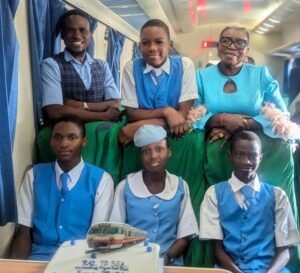
Lagos, March 26, 2026, The Ocean Ambassadors Foundation (OAF) has trained 200 students on rail-to-sea careers to enhance their understanding of logistics and supply chain operations in the marine and blue economy.
The Founder of OAF, Mrs Violet Williams, disclosed this during the foundation’s first quarter rail-to-sea career programme held at the Nigerian Railway Corporation (NRC) headquarters on Thursday in Lagos.
She said the foundation engaged the students in a technical rail-to-sea tour, exposing them to the practical aspects of multimodal transport, supply chain and logistics.
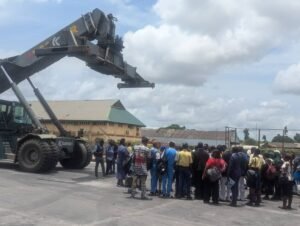
“The students have seen the process of loading coaches with cargo coming directly from the port and transloaded into coaches for export and distribution to coastal communities,” Williams said.
She stressed the need for rail linkages across ports in the country to achieve efficient multimodal transport and faster connections to dry ports.
Williams also emphasised the need for targeted interventions to expand rail-to-sea supply chain careers in the maritime industry.
She urged students and teachers to remain committed to developing careers in the maritime sector.
The OAF founder further highlighted the importance of educating young people on maritime activities as part of efforts to prepare them to address industry challenges from an early stage.
Also speaking, the Deputy Director, Training and Human Resources, NRC, Dr Harriet Nweke, enlightened the students on the benefits and opportunities in rail transportation.
She encouraged them to consider careers in the railway sector and to actively participate during the technical sessions.
In his remarks, Mr Femi Adedotun, a lecturer in the Department of Railway Engineering, Yaba College of Technology, described rail-to-sea as a key component of the marine and blue economy.
Adedotun urged the students to take Science, Technology, Engineering, Arts and Mathematics (STEAM) subjects seriously to remain relevant in the sector.
He explained that the rail network comprises freight and passenger services, noting that rail transport moves cargo, for example, from Apapa Port to other parts of the country, thereby reducing the number of trucks on the roads.
“A train consists of locomotives, coaches and wagons, while the blue economy refers to the sustainable use of ocean resources for economic growth, which relies on integrated intermodal transport linking ports to inland rail systems to reduce congestion and carbon emissions.
“Rail is three times more efficient than trucks. One train can replace hundreds of trucks, reducing port congestion and carbon footprint.
“Sea and rail systems can be sustained when aligned with global goals to protect the marine ecosystem by streamlining land-based logistics,” Adedotun said.
Speaking on multimodal systems, he said there was a need for more innovators to integrate rail, land and sea transport as a unified system, while promoting green transport solutions from the oceanfront to inland rail networks.
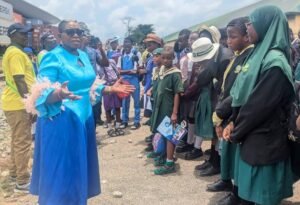
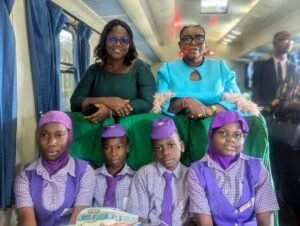
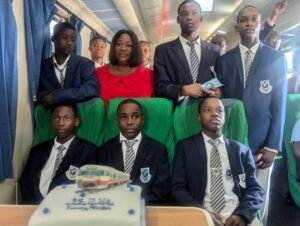
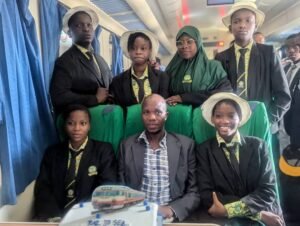
Our correspondent reports that 21 schools, with a total of 200 students, participated in the training.
The students engaged in a series of lectures and a technical tour to Agege on a standard gauge railway, as well as Ebute-Metta, where cranes loaded cargo onto trucks for delivery.
The students and their teachers also asked questions and received responses from facilitators.