








Association advocates adoption of green chemistry for sustainable development
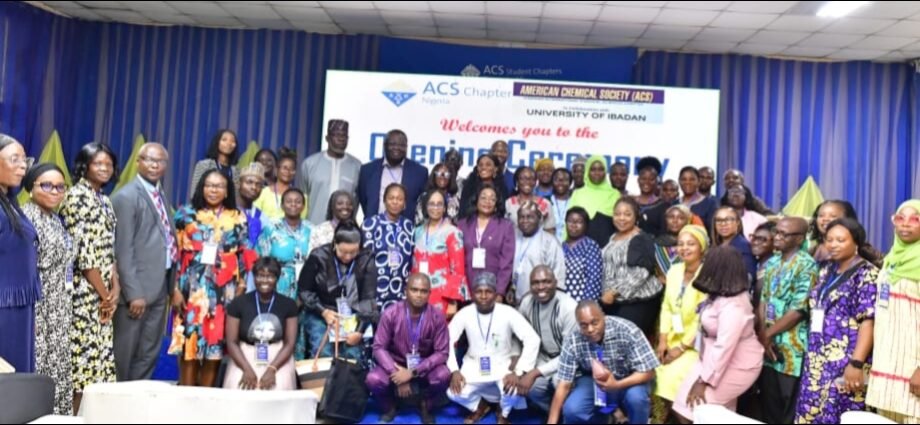
Participants of the concluded 11th Annual Symposium of the American Chemical Society (ACS) Nigeria International Chemical Sciences have called for the adoption of green chemistry principles and sustainable practices as key drivers of national growth and innovation.
The association underscored the critical role of chemistry in advancing sustainable development in Nigeria and beyond.
This is contained in a communique issued at the end of the annual symposium, themed “Emerging Technologies in Chemistry for Sustainable Development,” was held at the International Conference Centre, University of Ibadan, Oyo State, Nigeria.
The event brought together renowned academics, researchers, industry experts, and policymakers from across the globe.
The gathering provided a platform to explore emerging technologies in chemistry and their applications for sustainable growth and societal development.
In her opening remarks, the Chairman of the Local Organising Committee (LOC), Prof. Ganiyat Oloyede, highlighted the city’s rich academic heritage.
Oloyede expressed appreciation to the ACS Nigeria International Chapter for granting the University of Ibadan the hosting rights for this year’s edition and emphasized the importance of interdisciplinary collaboration and innovation in addressing global challenges.
Speaking at the event, the Chairman of ACS Nigeria, Prof. Edu J. Inam, noted that the symposium theme was carefully chosen to explore new pathways through which chemistry can address pressing global issues, particularly climate change, environmental sustainability, energy security, and public health.
She called for innovative thinking, rigorous interrogation of knowledge, and the translation of ideas into actionable solutions.
Prof. Inam also highlighted the Chapter’s achievements in student chapter expansion, mentorship, research visibility, and global engagement, while encouraging young chemists and early-career researchers to transform scientific knowledge into practical innovations.
The symposium also featured keynote and plenary lectures highlighting cutting-edge developments in sustainable and translational chemistry. In his keynote lecture, Prof. Franklin Aigbirhio of the University of Cambridge, UK, discussed the development and application of novel radiopharmaceuticals for Positron Emission Tomography (PET), emphasizing their potential for early disease detection and treatment monitoring.
Dr. Nevila Jana of MCPHS University, USA, presented a collaborative approach to malaria research, underscoring the value of interdisciplinary learning and problem-solving.
Dr. Mary Anti Chama from the University of Ghana emphasized sustainable chemical practices, including green chemistry, renewable energy integration, and waste valorisation.
Additional presentations included Dr. Martins S. Oderinde of Bristol Myers Squibb, USA, who explored photocatalysis as a powerful tool for sustainable organic synthesis, and Dr. Femi F. Oloye of the University of Pittsburgh at Bradford, USA, who delivered a keynote lecture on catalysts and their industrial relevance.
Another highlight was the Student Symposium, themed “From Laboratory to Society: Student Innovation in Sustainable Chemical Technology,” which reinforced the importance of translating laboratory research into societal impact.
The session provided a platform for students to showcase innovative projects focused on sustainability, entrepreneurship, and practical relevance.
The symposium also honoured outstanding contributions to STEM research, education, and sustainable chemistry, with awards presented to Prof. Kayode Adebowale; Dr. Oluwaserimi Ajetunmobi; Chief Dotun Sanusi; Engr. Bolarinwa Olowe James; Chief Saheed Oladele; and Prof. Oyewusi Gureje.
These recognitions reflected ACS Nigeria’s commitment to celebrating leadership, impact, and service in science and education.
The symposium was declared opened by Minister of Innovation, Science and Technology, Dr. Kingsley Tochukwu Udeh (SAN), who emphasized the pivotal role of chemistry in Nigeria’s sustainable development.
Represented by Dr. Stella C. Igwilo, Director and Head of Chemical Technology in the Ministry, the Minister expressed concern over the country’s limited progress in chemical technology and value-addition processes despite abundant natural resources.
He outlined a three-pronged strategy to address this gap: strengthening local content and value addition, increasing strategic investment in research and development, and promoting green chemistry and sustainable practices.
The Minister further urged the ACS Nigeria Chapter to serve as a technical advisory hub for government and industry in shaping policy, setting standards, and validating emerging technologies.
He reaffirmed the Federal Government’s commitment to strengthening Nigeria’s science and innovation ecosystem and emphasized the need for chemistry-driven solutions in healthcare, industrial competitiveness, energy transition, and environmental protection.
A panel session moderated by Dr. Sederra Ross of the ACS Green Chemistry Institute examined Green Chemistry and Sustainable Environmental Technologies: Balancing Innovation, Profitability, and Societal Impact.
A workshop on effective academic publishing, facilitated by Thieme Publishers with a virtual lecture by Dr. Yingxiao Cai, provided participants with training in research writing, peer review, and publishing ethics. Coordinated by Prof. Atim Johnson, the student-focused activities enhanced research communication skills, collaboration, and innovation capacity among emerging chemists.
At the conclusion of the event, participants issued several recommendations, including strengthening research infrastructure, promoting industry–academia partnerships, and accelerating the adoption of renewable energy solutions.
The symposium ultimately highlighted the importance of collaborative action in translating scientific research into practical solutions for a sustainable Nigeria.